
Instructors creating online courses have long faced a tradeoff: use text-based materials that are easy to update, or invest in engaging but time-consuming video formats. As a result, learners often get either flexibility or immersion, but rarely both.
“In a field that moves as fast as artificial intelligence, it’s important to be able to update material frequently,” says David Joyner, executive director of online education in the College of Computing. “That’s usually a problem because re-recording means going back into the studio and trying to make the new content fit in with the old.”
Joyner’s latest massive open online course (MOOC), Foundations of Generative AI, uses artificial intelligence to solve that challenge. Images for the course are created using Sora and DALL·E 3, while early drafts of quizzes were generated by GPT-5. The course also uses Grady, an AI autograder that provides feedback on open-ended essays.
The most striking innovation is DAI-vid (pronounced day-eye-vid), a video avatar of Joyner that leads the instruction. To create it, Joyner uploaded a five-minute clip of himself to the generative AI platform HeyGen, along with course scripts and other inputs. The result is a lifelike digital instructor who can let Joyner update his lessons far more easily.
“With AI, we can just modify the text and have the updated video pop right out,” Joyner says. “It takes minutes at my desk instead of an hour in the studio.”
This approach allows Joyner to keep course materials current and produce new videos entirely on his own. “It’s strange, but in a lot of ways this course feels more like it’s mine than the ones where I’m on camera,” he says. “Because AI lets me handle every part of production myself, the finished product feels like my complete work.”
Joyner sees this experiment as an example of AI’s potential to enhance human talent rather than replace it. “Give me AI and I can do five times more than I could alone,” he says. “But give it to our professional video producers, and they will still far outpace me, because expertise matters most. AI just amplifies it.”
Foundations of Generative AI is now available on edX, and the same material is also part of the OMSCS course CS7637: Knowledge-Based AI.
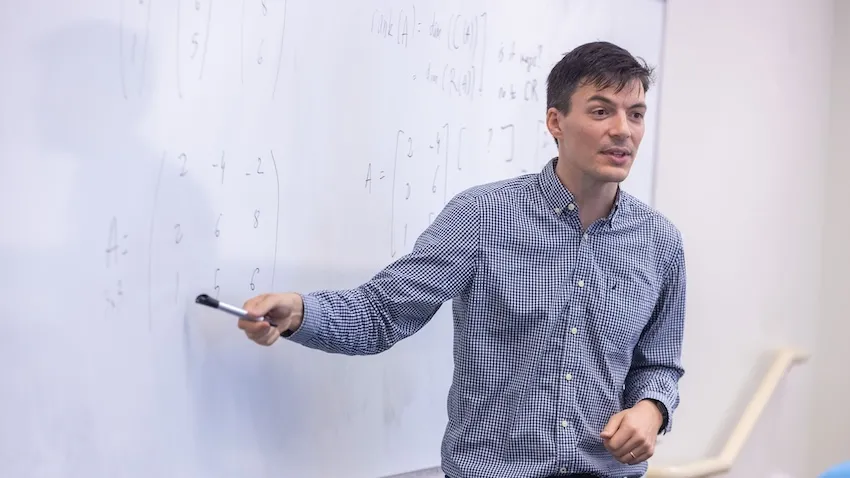
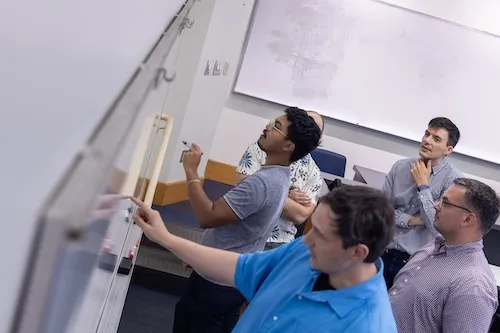
Students in machine learning and linear algebra courses this semester are learning from one of Georgia Tech’s most celebrated instructors.
Raphaël Pestourie has earned back-to-back selections to the Institute’s Course Instructor Opinion Survey (CIOS) honor roll, placing him among the top-ranked teachers for Fall 2024 and Spring 2025.
By returning to the classroom this semester to teach two more courses, Pestourie continues to leverage proven experience to mentor the next generation of researchers in his field.
“Students played a very important part in the survey process, and I thank them for making the classes great,” said Pestourie, an assistant professor in the School of Computational Science and Engineering (CSE).
“I'm incredibly grateful that students shared their feedback so that I could go the extra mile to not only apply my expertise to teach in ways that I think work, but transform my instruction to reach students in the most impactful way I can.”
CIOS honor rolls recognize instructors for outstanding teaching and educational impact, based on student feedback provided through end-of-course surveys.
Student praise of Pestourie’s CSE 8803: Scientific Machine Learning class placed him on the Fall 2024 CIOS honor roll. He earned selection to the Spring 2025 honor roll for his instruction of CX 4230: Computer Simulation.
CSE 8803 is a graduate-level, special topics class that Pestourie created around his field of expertise. Scientific machine learning involves merging two traditionally distinct fields: scientific computing and machine learning.
In scientific computing, researchers build and use models based on established physical laws. Machine learning differs in that it employs data-driven models to find patterns without prior assumptions. Combining the two fields opens new ways to analyze data and solve challenging problems in science and engineering.
Pestourie organized student-focused scientific machine learning symposiums in Fall 2023 and 2024. CSE 8803 students work on projects throughout the course and present their work at these symposiums. Pestourie will use the same approach this semester.
Compared to CSE 8803, CX 4230 is an undergraduate course that teaches students how to create computer models of complex systems. A complex system has many interacting entities that influence each other’s behaviors and patterns. Disease spread in a human network is one example of a complex system.
CX 4230 is a required course for computer science students studying the Modeling & Simulation thread. It is also an elective course in the Scientific and Engineering Computing minor.
“I see 8803 as my educational baby. Being acknowledged for it with a CIOS honor roll felt great,” Pestourie said.
“In a way, I'm prouder of CX 4230 because it was a large, undergraduate regular offering that I was teaching for the first time. The honor roll selection came almost as a surprise.”
To be eligible for the honor roll recognition, instructors must have a minimum CIOS response rate of 70%. Composite scores for three CIOS items are then used to rank instructors. Those items are:
- Instructor’s respect and concern for students
- Instructor’s level of enthusiasm about the course
- Instructor’s ability to stimulate interest in the subject matter
Georgia Tech’s Center for Teaching and Learning (CTL) and the Office of Academic Effectiveness present the CIOS Honor Rolls. CTL recognizes honor roll recipients at its Celebrating Teaching Day events, held annually in March.
CTL offers the Class of 1969 Teaching Fellowship, in which Pestourie participated in the 2024-2025 cohort. The program aims to broaden perspectives with insight into evidence-based best practices and exposure to new and innovative teaching methods.
The fellowship offers one-on-one consultations with a teaching and learning specialist. Cohorts meet weekly in the fall semester and monthly in the spring semester for instruction seminars.
The fellowship facilitates peer observations where instructors visit other classrooms, exchange feedback, and learn effective techniques to try in their own classes.
“I'm very grateful for the Class of 1969 fellowship program and to Karen Franklin, who coordinates it,” Pestourie said. “The honor roll is not just a one-person award. Support from the Institute and other people in the program made it happen.”
Like in Fall 2023 and 2024, Pestourie is teaching CSE 8803: Scientific Machine Learning again this semester. Additionally, he teaches CSE 8801: Linear Algebra, Probability, and Statistics.
Linear algebra and applied probability are among the fundamental subjects in modern data science. Like his scientific machine learning class, Pestourie created CSE 8801. This semester marks the second time Pestourie is teaching the course since Fall 2024.
Pestourie designed CSE 8801 as a refresher course for newer graduate students. This addresses a point of need to help students get off to a good start at Georgia Tech. By offering guidance early in their graduate careers, Pestourie’s work in the classroom also aims to cultivate future collaborators and serve his academic community.
“I see teaching as our one shot at making a good first impression as a research field and a community,” he said.
“I see my work as a teacher as training my future colleagues, and I see it as my duty to our community to do my best in attracting the best talent toward our research field.”
News Contact
Bryant Wine, Communications Officer
bryant.wine@cc.gatech.edu

Graphic Representation of networked system: Adobe Stock
A recently awarded $20 million NSF Nexus Supercomputer grant to Georgia Tech and partner institutes promises to bring incredible computing power to the CODA building. But what makes this supercomputer different and how will it impact research in labs on campus, across disciplinary units, and across institutions?
Purpose Built for AI Discovery
Nexus is Georgia Tech’s next-generation supercomputer, replacing the HIVE. Most operational high-performance computing systems utilized for research were designed before the explosion in Machine Learning and AI. This revolution has already shown successes for scientific research and data analysis in many domains, but the compute power, complex connectivity, and data storage needs for these systems have limited their access to the academic research community. The Nexus supercomputer design process retained a robust HPC system as a base while integrating artificial intelligence, machine learning and large-scale data science analysis from the ground up.
Expert Support for Faculty and Researchers
The Institute for Data Engineering and Science (IDEaS) and the College of Computing house the Center for Artificial Intelligence in Science and Engineering (ARTISAN) group. This team has collective experience in working with national computational, cloud, commercial and institutional resources for computational activities, and decades of experience in scientific tools that aid in assisting both teaching and research faculty. Nexus is the next logical step, bringing together everything they’ve learned to build a national resource optimized for the future of AI-driven science.
Principal Research Scientist for the ARTISAN team, Suresh Marru, highlighted the need for this new resource, “AI is a core part of the Nexus vision. Today, researchers often spend more time setting up experiments, managing data, or figuring out how to run jobs on remote clusters than doing science. With Nexus, we’re flipping that script. By embedding AI into the platform, we help automate routine tasks, suggest optimal ways to run simulations, and even assist in generating input or analyzing results. This means researchers can move faster from question to insight. Instead of wrestling with infrastructure, they can focus on discovery.”
An Accessible AI Resource for GT & US Scientific Research
90% of Nexus capacity will be made available to the national research community through the NSF Advanced Computing Systems & Services (ACSS) program. Researchers from across the country, at universities, labs, and institutions of all sizes, will have access to this next-generation AI-ready supercomputer. For Georgia Tech research faculty and staff, the new system has multiple benefits:
- 10% of the time on the machine will be available for use by Georgia Tech researchers
- Nexus will allow GT researchers a chance to try out the latest hardware for AI computing
- Thanks to cyberinfrastructure tools from the ARTISAN group, Nexus will be easier to access than previous NSF supercomputers
Interim Executive Director of IDEaS and Regents' Professor David Sherrill notes, "Nexus brings Georgia Tech's leadership in research computing to a whole new level. It will be the first NSF Category I Supercomputer hosted on Georgia Tech's campus. The Nexus hardware and software will boost research in the foundations of AI, and applications of AI in science and engineering."
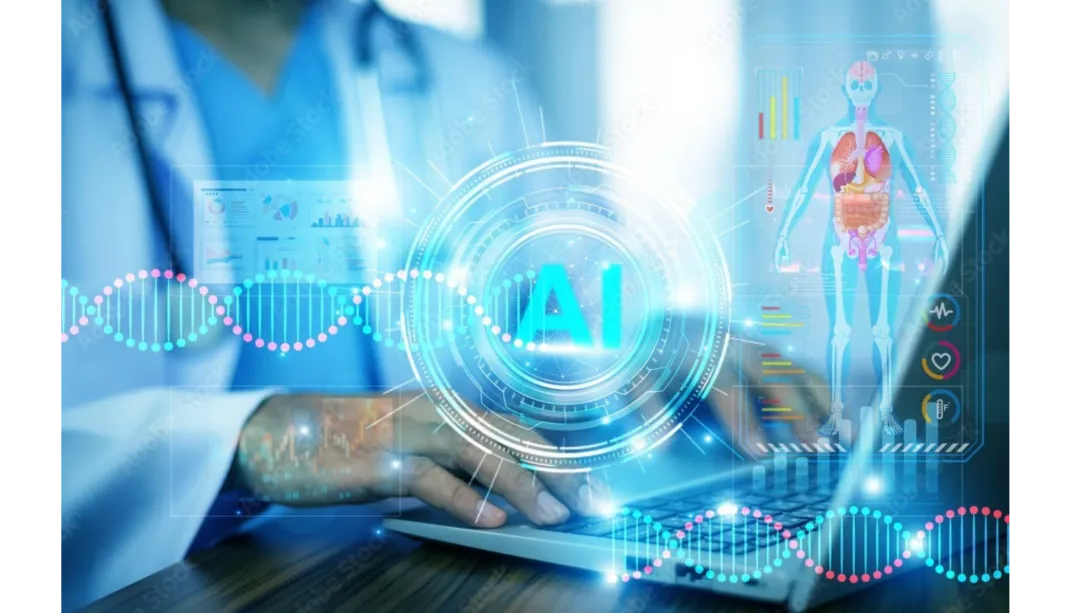
An illustration representing a doctor working with an AI-powered health device.
In the morning, before you even open your eyes, your wearable device has already checked your vitals. By the time you brush your teeth, it has scanned your sleep patterns, flagged a slight irregularity, and adjusted your health plan. As you take your first sip of coffee, it’s already predicted your risks for the week ahead.
Georgia Tech researchers warn that this version of AI healthcare imagines a patient who is "affluent, able-bodied, tech-savvy, and always available." Those who don’t fit that mold, they argue, risk becoming invisible in the healthcare system.
The Ideal Future
In their study, published in the Proceedings of the ACM Conference on Human Factors in Computing Systems, the researchers analyzed 21 AI-driven health tools, ranging from fertility apps and wearable devices to diagnostic platforms and chatbots. They used sociological theory to understand the vision of the future these tools promote — and the patients they leave out.
“These systems envision care that is seamless, automatic, and always on,” said Catherine Wieczorek, a Ph.D. student in human-centered computing in the School of Interactive Computing and lead author of the study. “But they also flatten the messy realities of illness, disability, and socioeconomic complexity.”
Four Futures, One Narrow Lens
During their analysis, the researchers discovered four recurring narratives in AI-powered healthcare:
- Care that never sleeps. Devices track your heart rate, glucose levels, and fertility signals — all in real time. You are always being watched, because that’s framed as “care.”
- Efficiency as empathy. AI is faster, more objective, and more accurate. Unlike humans, it doesn’t get tired or biased. This pitch downplays the value of human judgment and connection.
- Prevention as perfection. A world where illness is avoided through early detection if you have the right sensors, the right app, and the right lifestyle.
- The optimized body. You’re not just healthy, you’re high-performing. The tech isn’t just treating you; it’s upgrading you.
“It’s like healthcare is becoming a productivity tool,” Wieczorek said. “You’re not just a patient anymore. You’re a project.”
Not Just a Tool, But a Teammate
This study also points to a critical transformation in which AI is no longer just a diagnostic tool; it’s a decision-maker. Described by the researchers as “both an agent and a gatekeeper,” AI now plays an active role in how care is delivered.
In some cases, AI systems are even named and personified, like Chloe, an IVF decision-support tool. “Chloe equips clinicians with the power of AI to work better and faster,” its promotional materials state. By framing AI this way — as a collaborator rather than just software — these systems subtly redefine who, or what, gets to be treated.
“When you give AI names, personalities, or decision-making roles, you’re doing more than programming. You’re shifting accountability and agency. That has consequences,” said Shaowen Bardzell, chair of Georgia Tech’s School of Interactive Computing and co-author of the study.
“It blurs the boundaries,” Wieczorek noted. “When AI takes on these roles, it’s reshaping how decisions are made and who holds authority in care.”
Calculated Care
Many AI tools promise early detection, hyper-efficiency, and optimized outcomes. But the study found that these systems risk sidelining patients with chronic illness, disabilities, or complex medical needs — the very people who rely most on healthcare.
“These technologies are selling worldviews,” Wieczorek explained. “They’re quietly defining who healthcare is for, and who it isn’t.”
By prioritizing predictive algorithms and automation, AI can strip away the context and humanity that real-world care requires.
“Algorithms don’t see nuance. It’s difficult for a model to understand how a patient might be juggling multiple diagnoses or understand what it means to manage illness, while also navigating other important concerns like financial insecurity or caregiving. They are predetermined inputs and outputs,” Wieczorek said. “While these systems claim to streamline care, they are also encoding assumptions about who matters and how care should work. And when those assumptions go unchallenged, the most vulnerable patients are often the ones left out.”
AI for ALL
The researchers argue that future AI systems must be developed in collaboration with those who don’t fit in the vision of a “perfect patient.”
“Innovation without ethics risks reinforcing existing inequalities. It’s about better tech and better outcomes for real people,” Bardzell said. “We’re not anti-innovation. But technological progress isn’t just about what we can do. It’s about what we should do — and for whom.”
Wieczorek and Bardzell aren’t trying to stop AI from entering healthcare. They’re asking AI developers to understand who they’re really serving.
Funding:
This work was supported by the National Science Foundation (Grant #2418059).
News Contact
Michelle Azriel, Sr. Writer-Editor
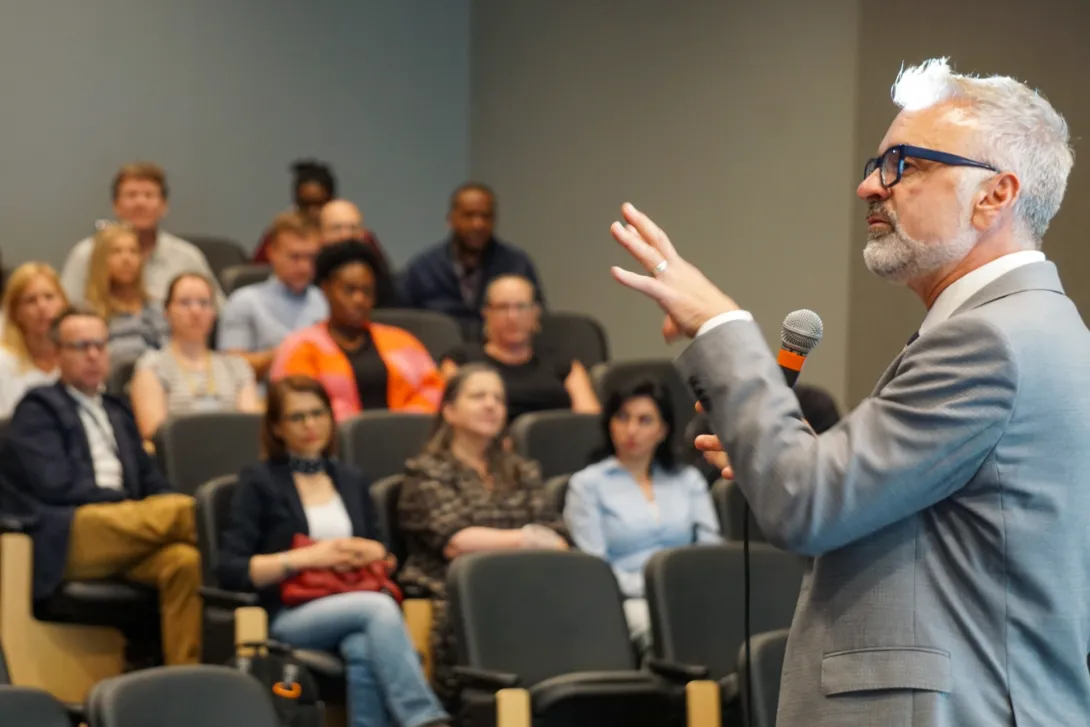
In the first town hall with its new Dean, College of Lifetime Learning colleagues came together to explore a central question: what does it mean to learn, and how can that spirit shape the way we work?
Bill Gaudelli, Ed.D., joined the College Aug. 1 as the inaugural dean. He brings more than 35 years of experience as an educator, researcher, and academic administrator to this role.
Rather than beginning with charts or plans, the Dean opened with two polls. The first asked: What did you learn? What did you notice about your learning? How did you feel before, during, and after? The second posed a broader challenge: What is a learning organization? Colleagues shared learning experiences that ran along a fairly common path: anticipation, uncertainty, frustration, and, ultimately, accomplishment.
“Not one of you said I had no emotional response to the learning. Not a person. There was joy. There was a lot of laughter. And everyone had something to share because that is how fundamental learning is,” Dean Gaudelli observed. “And so, as a learning organization. We've got to think about how we meet the moment and the learner in a context that's totally new. We've got to figure that out in a new space, using new tools, recognizing that the desire to learn is permanent in humans.”
With these shared experiences in mind, Gaudelli introduced the concept of a learning organization, drawing from Peter Senge’s landmark work The Fifth Discipline. He outlined the five disciplines (personal mastery, mental models, shared vision, team learning, and systems thinking) and invited colleagues to see them not as abstract theory, but as a practical framework for how the College might operate.
Becoming a learning organization, Dean Gaudelli said, is not a label but a way of working: embracing curiosity, being adaptable, questioning assumptions, and understanding that the whole is stronger than its individual parts. “If we’re going to promote learning in the world, then we have to be learning ourselves,” he noted. That means committing to continuous improvement, viewing mistakes as opportunities, and aligning every role with a shared purpose.
This vision brings to life the College’s mission to support learning across the lifespan and positions the College to respond to a rapidly changing educational landscape. By building systems and culture that make learning continuous, collaborative, and transformative, Gaudelli sees an opportunity to lead not just in what the College teaches, but in how it works together.
Dr. Roslyn Martin, Director of Professional Education Programs for the College and GTPE , later reflected on the meeting. “It was powerful to reflect on the learning journey and experience the process organically to deepen our understanding,” she shared. “And I’m excited about this pivotal chapter for Georgia Tech, as the College creates more impactful learning experiences and pathways to transformative education for communities around the globe!”
In the months ahead, the College will begin crafting a new strategic plan rooted in these ideas. Gaudelli encouraged everyone to take an active role in shaping the future. His closing challenge: learn something new in the coming month, and not for the skill alone, but for the insight into how you learn. That awareness, he said, is the foundation for building a true learning organization.
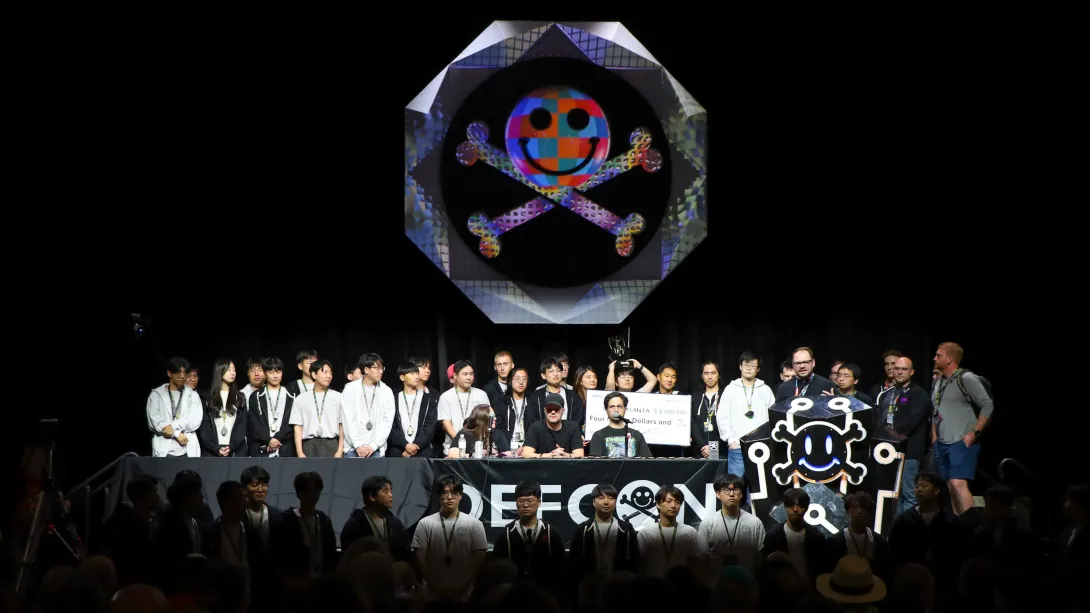
Team Atlanta, a group of Georgia Tech students, faculty, and alumni, achieved international fame on Friday when they won DARPA’s AI Cyber Challenge (AIxCC) and its $4 million grand prize.
AIxCC was a two-year long competition to create an artificial intelligence (AI) enabled cyber reasoning system capable of autonomously finding and patching vulnerabilities.
“This is a once in a generation competition organized by DARPA about how to utilize recent advancements in AI to use in security related tasks,” said Georgia Tech Professor Taesoo Kim.
“As hackers we started this competition as AI skeptics, but now we truly believe in the potential of adopting large language models (LLM) when solving security problems."
The Atlantis system was Team Atlanta’s submission. Atlantis is a fuzzer- or an automated software that finds vulnerabilities or bugs- and enhanced it with several different types of LLMs.
While developing the system, Team Atlanta reported the heat put out by the GPU rack was hot enough to roast marshmallows.
The team was comprised of hackers, engineers, and cybersecurity researchers. The Georgia Tech alumni on the team also represented their employers which include KAIST, POSTECH, and Samsung Research. Kim is also the vice president of Samsung Research.
News Contact
John Popham
Communications Officer II at the School of Cybersecurity and Privacy

Juba Ziani is on a mission to change how the world thinks about data in artificial intelligence. An assistant professor in Georgia Tech’s H. Milton Stewart School of Industrial and Systems Engineering (ISyE), Ziani has secured a $425,000 National Science Foundation (NSF) grant to explore how smart incentives can lead to higher-quality, more widely shared datasets. His work forms part of a $1 million NSF collaboration with Columbia University computer science professor Augustin Chaintreau and senior personnel Daniel Björkegren, aiming to challenge outdated ideas and shape a more reliable future for AI.
Artificial intelligence (AI) increasingly shapes critical decisions in everyday life, from who sees a job posting or qualifies for a loan, to who is granted bail in the criminal justice system. These systems rely on historical data to learn patterns and make predictions. For example, an applicant might be approved for a loan because an AI system recognizes that previous borrowers with similar credit histories successfully repaid. But when the underlying training data is incomplete or low-quality, the consequences can be serious, disproportionately affecting those from groups historically excluded from such opportunities.
Ziani's research will explore how the economic value of data, combined with the effects of data markets and network dynamics, can lead to incentives that naturally improve dataset robustness. By identifying the conditions under which the supposed efficiency trade-off disappears, Ziani and his collaborators hope to open the door to more reliable and equitable AI systems.
Traditionally, researchers have assumed that making AI-assisted decision-making more robust and representative comes at the expense of efficiency. This assumption treats training data as fixed and unchangeable, which can place limits on the potential of AI systems. But as large-scale data platforms grow and the exchange of data becomes more accessible, the conventional trade-off between robustness and efficiency may no longer apply.
“Our project demonstrates how carefully designing incentives—both for data producers and data buyers—can enhance the quality and robustness of datasets without compromising performance,” said Ziani. “This has the potential to fundamentally reshape the way AI systems are trained and how data is collected, shared, and valued.”
With this work, Ziani aims to advance both the theory and practice of AI and data economics, ensuring that as AI continues to transform society, and does so in a way that is fair, accurate, and trustworthy.
News Contact
Erin Whitlock Brown, Communications Manager II
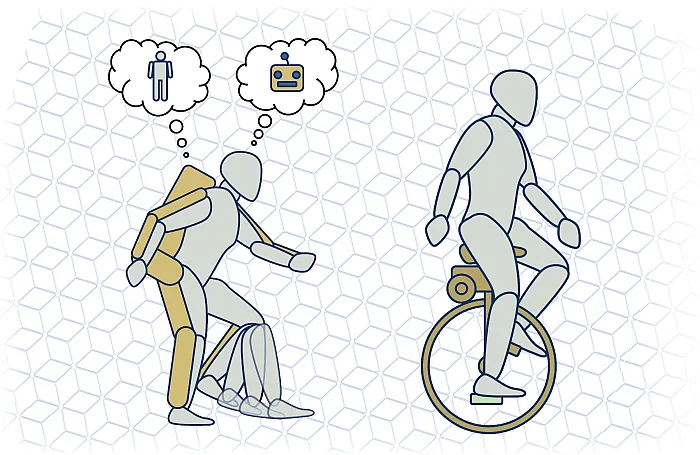
Research into tailored assistive and rehabilitative devices has seen recent advancements but the goal remains out of reach due to the sparsity of data on how humans learn complex balance tasks. To address this gap, a collaborating team of interdisciplinary faculty from Florida State University and Georgia Tech have been awarded ~$798,000 by the NSF to launch a study to better understand human motor learning as well as gain greater understanding into human robot interaction dynamics during the learning process.
Led by PI: Taylor Higgins, Assistant Professor, FAMU-FSU Department of Mechanical Engineering, partnering with Co-PIs Shreyas Kousik, Assistant Professor, Georgia Tech, George W. Woodruff School of Mechanical Engineering, and Brady DeCouto, Assistant Professor, FSU Anne Spencer Daves College of Education, Health, and Human Sciences, the research will use the acquisition of unicycle riding skill by participants to gain a better grasp on human motor learning in tasks requiring balance and complex movement in space. Although it might sound a bit odd, the fact that most people don’t know how to ride a unicycle, and the fact that it requires balance, mean that the data will cover the learning process from novice to skilled across the participant pool.
Using data acquired from human participants, the team will develop a “robotics assistive unicycle” that will be used in the training of the next pool of novice unicycle riders. This is to gauge if, and how rapidly, human motor learning outcomes improve with the assistive unicycle. The participants that engage with the robotic unicycle will also give valuable insight into developing effective human-robot collaboration strategies.
The fact that deciding to get on a unicycle requires a bit of bravery might not be great for the participants, but it’s great for the research team. The project will also allow exploration into the interconnection between anxiety and human motor learning to discover possible alleviation strategies, thus increasing the likelihood of positive outcomes for future patients and consumers of these devices.
Author
-Christa M. Ernst
This Article Refers to NSF Award # 2449160
News Contact
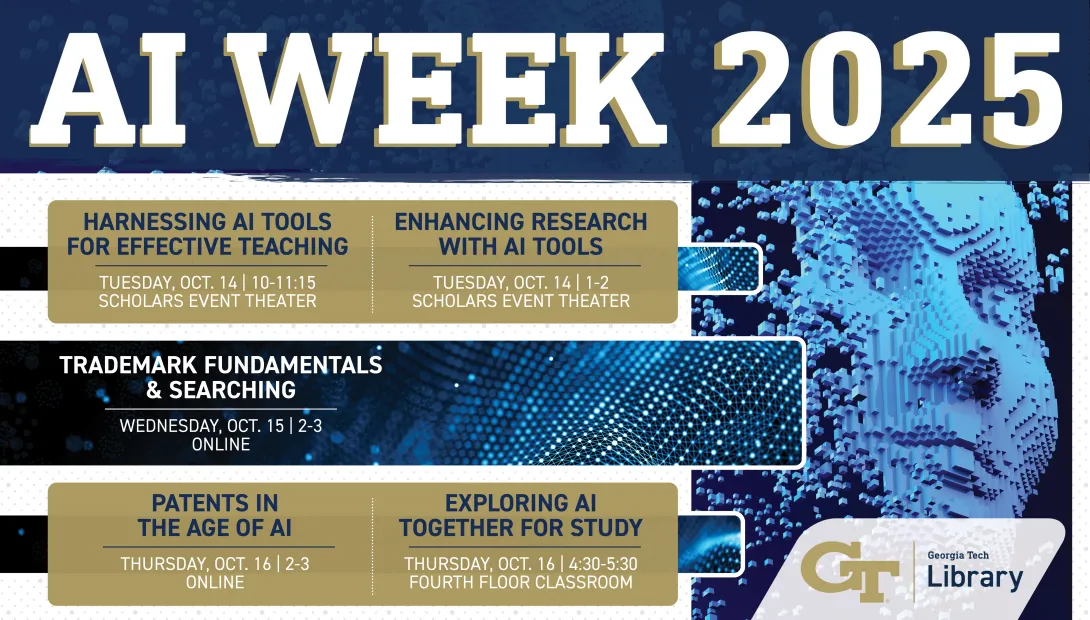
Join the Georgia Tech Library in person and virtually Tuesday Oct. 14 through Thursday, Oct. 16 for our Inaugural AI Week, a mix of panel discussions and seminars aimed at celebrating and investigating the myriad ways researchers, students and faculty harness the burgeoning technology.
“We’re thrilled to bring this slate of events, discussions and learning opportunities to campus focused on the game-changing use of artificial intelligence happening across the Institute,” said Dean Leslie Sharp. “The Library has brought together industry experts, student practitioners and research faculty to offer a varied and intriguing set of learning opportunities for our community.”
AI Week 2025 will include five separate in-person and online events, including:
- Faculty Panel Discussion: Harnessing AI Tools to Make Teaching More Effective and Engaging
Oct. 14 | 10:30-11:15 a.m.
Scholars Event Network, first floor Price Gilbert
- Panel Discussion: Enhancing Research with AI Tools
Oct. 14 | 1-2 p.m.
Scholars Event Network, first floor Price Gilbert
- Trademark Fundamentals and Searching (ONLINE)
Oct. 15 | 2-3 p.m.
Online
- Patents in the Age of AI: Navigating the Changing Landscape (ONLINE)
Oct. 16 | 2-3 p.m.
Online
- Exploring AI Together for Study, Copilot and Firefly
Oct. 16 | 4:30-5:30 p.m.
Crosland Tower Fourth Floor Classroom

The idea of people experiencing their favorite mobile apps as immersive 3D environments took a step closer to reality with a new Google-funded research iniative at Georgia Tech.
A new approach proposed by Tech researcher Yalong Yang uses generative artificial intelligence (GenAI) technologies to convert almost any mobile or web-based app into a 3D environment.
That includes application software programs from Microsoft and Adobe as well as any social media (Tiktok), entertainment (Spotify), banking (PayPal), or food service app (Uber Eats) and everything in between.
Yang aims to make the 3D environments compatible with augmented and virtual reality (AR/VR) headsets and smart glasses. He believes his research could be a breakthrough in spatial computing and change how humans interact with their favorite apps and computer systems in general.
“We’ll be able to turn around and see things we want, and we can grab them and put them together,” said Yang, an assistant professor in the School of Interactive Computing. “We’ll no longer use a mouse to scroll or the keyboard to type, but we can do more things like physical navigation.”
Yang’s proposal recently earned him recognition as a 2025 Google Research Scholar. Along with converting popular social apps, his platform will be able to instantly render Photoshop, MS Office, and other workplace applications in 3D for AR/VR devices.
“We have so many applications installed in our machines to complete all the various types of work we do,” he said. “We use Photoshop for photo editing, Premiere Pro for video editing, Word for writing documents. We want to create an AR/VR ecosystem that has all these things available in one interface with all apps working cohesively to support multitasking.”
Filling The Gap With AI
Just as Google’s Veo and Open AI’s Sora use generative-AI to create video clips, Yang believes it can be used to create interactive, immersive environments for any Android or Apple app.
“A critical gap in AR/VR is that we do not have all those existing applications, and redesigning all those apps will take forever,” he said. “It’s urgent that we have a complete ecosystem in VR to enable us to do the work we need to do. Instead of recreating everything from scratch, we need a way to convert these applications into immersive formats.”
The Google Play Store boasts 3.5 million apps for Android devices, while the Apple Store includes 1.8 million apps for iOS users.
Meanwhile, there are fewer than 10,000 apps available on the latest Meta Quest 3 headset, leaving a gap of millions of apps that will need 3D conversion.
“We envision a one-click app, and the (Android Package Kit) file output will be a Meta APK that you can install on your MetaQuest 3,” he said.
Yang said major tech companies like Apple have the resources to redesign their apps into 3D formats. However, small- to mid-sized companies that have created apps either do not have that ability or would take years to do so.
That’s where generative-AI can help. Yang plans to use it to convert source code from web-based and mobile apps into WebXR.
WebXR is a set of application programming interfaces (APIs) that enables developers to create AR/VR experiences within web browsers.
“We start with web-based content,” he said. “A lot of things are already based on the web, so we want to convert that user interface into Web XR.”
Building New Worlds
The process for converting mobile apps would be similar.
“Android uses an XML description file to define its user-interface (UI) elements. It’s very much like HTML on a web page. We believe we can use that as our input and map the elements to their desired location in a 3D environment. AI is great at translating one language to another — JavaScript to C-sharp, for example — so that can help us in this process.”
If generative-AI can create environments, the next step would be to create a seamless user experience.
“In a normal desktop or mobile application, we can only see one thing at a time, and it’s the same for a lot of VR headsets with one application occupying everything. To live in a multi-task environment, we can’t just focus on one thing because we need to keep switching our tasks, so how do we break all the elements down and let them float around and create a spatial view of them surrounding the user?”
Along with Assistant Professor Cindy Xiong, Yang is one of two researchers in the School of IC to be named a 2025 Google Research Scholar.
Four researchers from the College of Competing have received the award. The other two are Ryan Shandler from the School of Cybersecurity and Privacy and Victor Fung from the School of Computational Science and Engineering.