

Graphic of a circuit board with a set of interconnects leading to a cloud
The Cloud Hub, a key initiative of the Institute for Data Engineering and Science (IDEaS) at Georgia Tech, recently concluded a successful Call for Proposals focused on advancing the field of Generative Artificial Intelligence (GenAI). This initiative, made possible by a generous gift funding from Microsoft, aims to push the boundaries of GenAI research by supporting projects that explore both foundational aspects and innovative applications of this cutting-edge technology.
Call for Proposals: A Gateway to Innovation
Launched in early 2024, the Call for Proposals invited researchers from across Georgia Tech to submit their innovative ideas on GenAI. The scope was broad, encouraging proposals that spanned foundational research, system advancements, and novel applications in various disciplines, including arts, sciences, business, and engineering. A special emphasis was placed on projects that addressed responsible and ethical AI use.
The response from the Georgia Tech research community was overwhelming, with 76 proposals submitted by teams eager to explore this transformative technology. After a rigorous selection process, eight projects were selected for support. Each awarded team will also benefit from access to Microsoft’s Azure cloud resources..
Recognizing Microsoft’s Generous Contribution
This successful initiative was made possible through the generous support of Microsoft, whose contribution of research resources has empowered Georgia Tech researchers to explore new frontiers in GenAI. By providing access to Azure’s advanced tools and services, Microsoft has played a pivotal role in accelerating GenAI research at Georgia Tech, enabling researchers to tackle some of the most pressing challenges and opportunities in this rapidly evolving field.
Looking Ahead: Pioneering the Future of GenAI
The awarded projects, set to commence in Fall 2024, represent a diverse array of research directions, from improving the capabilities of large language models to innovative applications in data management and interdisciplinary collaborations. These projects are expected to make significant contributions to the body of knowledge in GenAI and are poised to have a lasting impact on the industry and beyond.
IDEaS and the Cloud Hub are committed to supporting these teams as they embark on their research journeys. The outcomes of these projects will be shared through publications and highlighted on the Cloud Hub web portal, ensuring visibility for the groundbreaking work enabled by this initiative.
Congratulations to the Fall 2024 Winners
- Annalisa Bracco | EAS "Modeling the Dispersal and Connectivity of Marine Larvae with GenAI Agents" [proposal co-funded with support from the Brook Byers Institute for Sustainable Systems]
- Yunan Luo | CSE “Designing New and Diverse Proteins with Generative AI”
- Kartik Goyal | IC “Generative AI for Greco-Roman Architectural Reconstruction: From Partial Unstructured Archaeological Descriptions to Structured Architectural Plans”
- Victor Fung | CSE “Intelligent LLM Agents for Materials Design and Automated Experimentation”
- Noura Howell | LMC “Applying Generative AI for STEM Education: Supporting AI literacy and community engagement with marginalized youth”
- Neha Kumar | IC “Towards Responsible Integration of Generative AI in Creative Game Development”
- Maureen Linden | Design “Best Practices in Generative AI Used in the Creation of Accessible Alternative Formats for People with Disabilities”
- Surya Kalidindi | ME & MSE “Accelerating Materials Development Through Generative AI Based Dimensionality Expansion Techniques”
- Tuo Zhao | ISyE “Adaptive and Robust Alignment of LLMs with Complex Rewards”
News Contact
Christa M. Ernst - Research Communications Program Manager
christa.ernst@research.gatech.edu


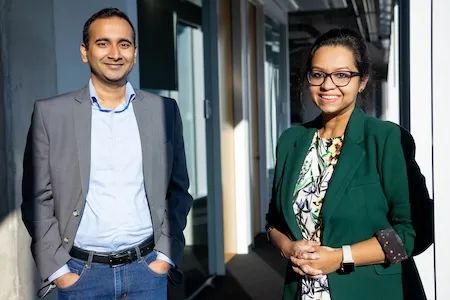
A research group is calling for internet and social media moderators to strengthen their detection and intervention protocols for violent speech.
Their study of language detection software found that algorithms struggle to differentiate anti-Asian violence-provoking speech from general hate speech. Left unchecked, threats of violence online can go unnoticed and turn into real-world attacks.
Researchers from Georgia Tech and the Anti-Defamation League (ADL) teamed together in the study. They made their discovery while testing natural language processing (NLP) models trained on data they crowdsourced from Asian communities.
“The Covid-19 pandemic brought attention to how dangerous violence-provoking speech can be. There was a clear increase in reports of anti-Asian violence and hate crimes,” said Gaurav Verma, a Georgia Tech Ph.D. candidate who led the study.
“Such speech is often amplified on social platforms, which in turn fuels anti-Asian sentiments and attacks.”
Violence-provoking speech differs from more commonly studied forms of harmful speech, like hate speech. While hate speech denigrates or insults a group, violence-provoking speech implicitly or explicitly encourages violence against targeted communities.
Humans can define and characterize violent speech as a subset of hateful speech. However, computer models struggle to tell the difference due to subtle cues and implications in language.
The researchers tested five different NLP classifiers and analyzed their F1 score, which measures a model's performance. The classifiers reported a 0.89 score for detecting hate speech, while detecting violence-provoking speech was only 0.69. This contrast highlights the notable gap between these tools and their accuracy and reliability.
The study stresses the importance of developing more refined methods for detecting violence-provoking speech. Internet misinformation and inflammatory rhetoric escalate tensions that lead to real-world violence.
The Covid-19 pandemic exemplified how public health crises intensify this behavior, helping inspire the study. The group cited that anti-Asian crime across the U.S. increased by 339% in 2021 due to malicious content blaming Asians for the virus.
The researchers believe their findings show the effectiveness of community-centric approaches to problems dealing with harmful speech. These approaches would enable informed decision-making between policymakers, targeted communities, and developers of online platforms.
Along with stronger models for detecting violence-provoking speech, the group discusses a direct solution: a tiered penalty system on online platforms. Tiered systems align penalties with severity of offenses, acting as both deterrent and intervention to different levels of harmful speech.
“We believe that we cannot tackle a problem that affects a community without involving people who are directly impacted,” said Jiawei Zhou, a Ph.D. student who studies human-centered computing at Georgia Tech.
“By collaborating with experts and community members, we ensure our research builds on front-line efforts to combat violence-provoking speech while remaining rooted in real experiences and needs of the targeted community.”
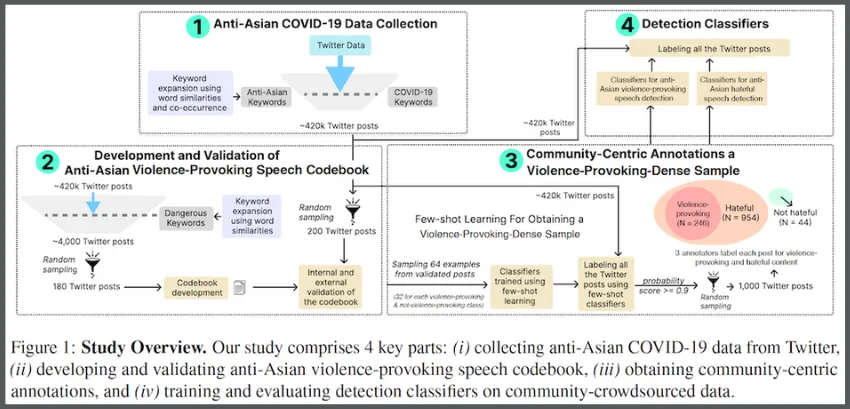
The researchers trained their tested NLP classifiers on a dataset crowdsourced from a survey of 120 participants who self-identified as Asian community members. In the survey, the participants labeled 1,000 posts from X (formerly Twitter) as containing either violence-provoking speech, hateful speech, or neither.
Since characterizing violence-provoking speech is not universal, the researchers created a specialized codebook for survey participants. The participants studied the codebook before their survey and used an abridged version while labeling.
To create the codebook, the group used an initial set of anti-Asian keywords to scan posts on X from January 2020 to February 2023. This tactic yielded 420,000 posts containing harmful, anti-Asian language.
The researchers then filtered the batch through new keywords and phrases. This refined the sample to 4,000 posts that potentially contained violence-provoking content. Keywords and phrases were added to the codebook while the filtered posts were used in the labeling survey.
The team used discussion and pilot testing to validate its codebook. During trial testing, pilots labeled 100 Twitter posts to ensure the sound design of the Asian community survey. The group also sent the codebook to the ADL for review and incorporated the organization’s feedback.
“One of the major challenges in studying violence-provoking content online is effective data collection and funneling down because most platforms actively moderate and remove overtly hateful and violent material,” said Tech alumnus Rynaa Grover (M.S. CS 2024).
“To address the complexities of this data, we developed an innovative pipeline that deals with the scale of this data in a community-aware manner.”
Emphasis on community input extended into collaboration within Georgia Tech’s College of Computing. Faculty members Srijan Kumar and Munmun De Choudhury oversaw the research that their students spearheaded.
Kumar, an assistant professor in the School of Computational Science and Engineering, advises Verma and Grover. His expertise is in artificial intelligence, data mining, and online safety.
De Choudhury is an associate professor in the School of Interactive Computing and advises Zhou. Their research connects societal mental health and social media interactions.
The Georgia Tech researchers partnered with the ADL, a leading non-governmental organization that combats real-world hate and extremism. ADL researchers Binny Mathew and Jordan Kraemer co-authored the paper.
The group will present its paper at the 62nd Annual Meeting of the Association for Computational Linguistics (ACL 2024), which takes place in Bangkok, Thailand, Aug. 11-16
ACL 2024 accepted 40 papers written by Georgia Tech researchers. Of the 12 Georgia Tech faculty who authored papers accepted at the conference, nine are from the College of Computing, including Kumar and De Choudhury.
“It is great to see that the peers and research community recognize the importance of community-centric work that provides grounded insights about the capabilities of leading language models,” Verma said.
“We hope the platform encourages more work that presents community-centered perspectives on important societal problems.”
Visit https://sites.gatech.edu/research/acl-2024/ for news and coverage of Georgia Tech research presented at ACL 2024.
News Contact
Bryant Wine, Communications Officer
bryant.wine@cc.gatech.edu
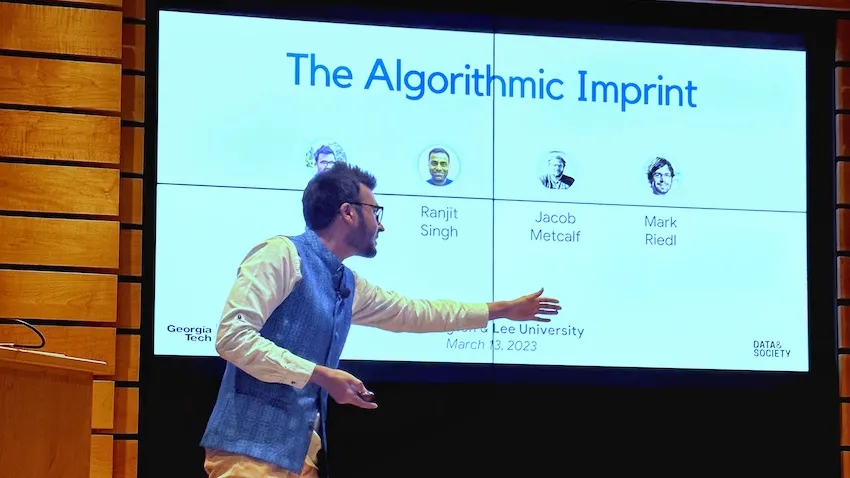
A Georgia Tech researcher will continue to mitigate harmful post-deployment effects created by artificial intelligence (AI) as he joins the 2024-2025 cohort of fellows selected by the Berkman-Klein Center (BKC) for Internet and Society at Harvard University.
Upol Ehsan is the first Georgia Tech graduate selected by BKC. As a fellow, he will contribute to its mission of exploring and understanding cyberspace, focusing on AI, social media, and university discourse.
Entering its 25th year, the BKC Harvard fellowship program addresses pressing issues and produces impactful research that influences academia and public policy. It offers a global perspective, a vibrant intellectual community, and significant funding and resources that attract top scholars and leaders.
The program is highly competitive and sought after by early career candidates and veteran academic and industry professionals. Cohorts hail from numerous backgrounds, including law, computer science, sociology, political science, neuroscience, philosophy, and media studies.
“Having the opportunity to join such a talented group of people and working with them is a treat,” Ehsan said. “I’m looking forward to adding to the prismatic network of BKC Harvard and learning from the cohesively diverse community.”
While at Georgia Tech, Ehsan expanded the field of explainable AI (XAI) and pioneered a subcategory he labeled human-centered explainable AI (HCXAI). Several of his papers introduced novel and foundational concepts into that subcategory of XAI.
Ehsan works with Professor Mark Riedl in the School of Interactive Computing and the Human-centered AI and Entertainment Intelligence Lab.
Ehsan says he will continue to work on research he introduced in his 2022 paper The Algorithmic Imprint, which shows how the potential harm from algorithms can linger even after an algorithm is no longer used. His research has informed the United Nations’ algorithmic reparations policies and has been incorporated into the National Institute of Standards and Technology AI Risk Management Framework.
“It’s a massive honor to receive this recognition of my work,” Ehsan said. “The Algorithmic Imprint remains a globally applicable Responsible AI concept developed entirely from the Global South. This recognition is dedicated to the participants who made this work possible. I want to take their stories even further."
While at BKC Harvard, Ehsan will develop a taxonomy of potentially harmful AI effects after a model is no longer used. He will also design a process to anticipate these effects and create interventions. He said his work addresses an “accountability blindspot” in responsible AI, which tends to focus on potential harmful effects created during AI deployment.
News Contact
Nathan Deen
Communications Officer
School of Interactive Computing
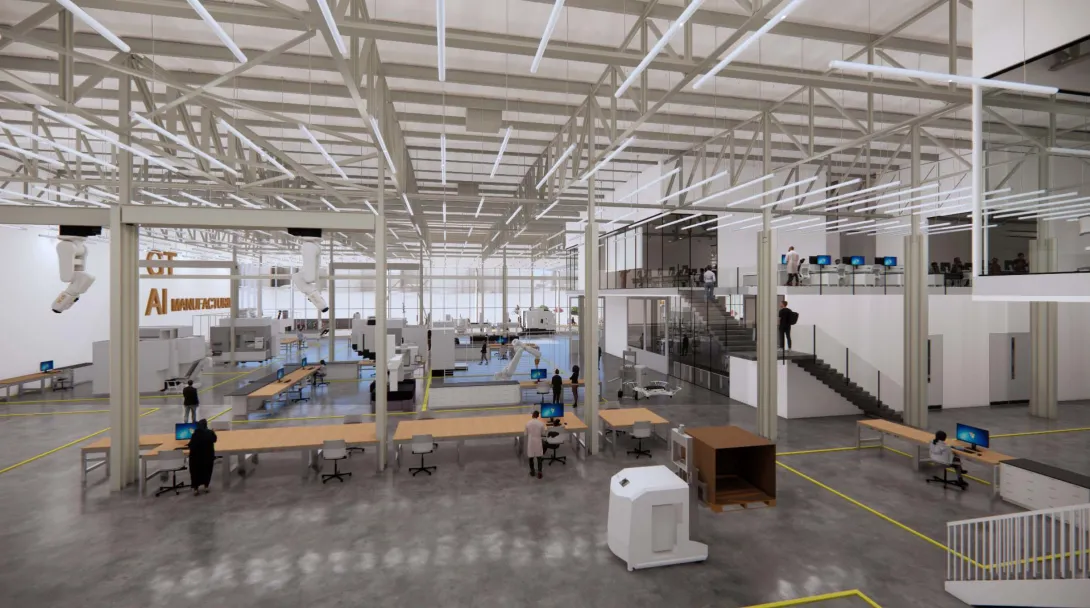
An early rendering of the main expanded research area at the Advanced Manufacturing Pilot Facility (Credit: Lord Aeck Sargent).
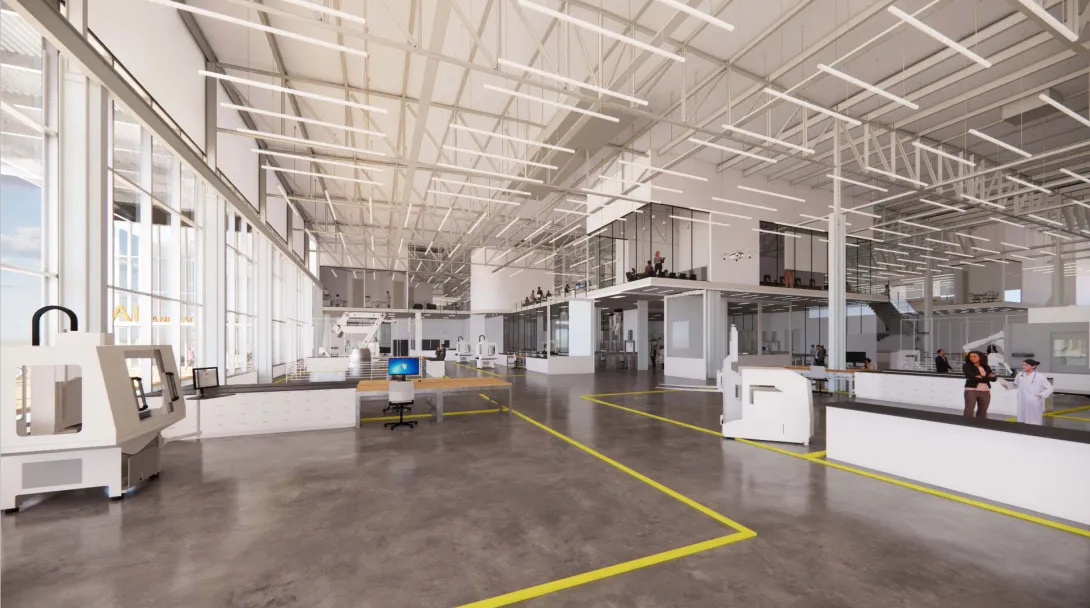
An early rendering of the main expanded research area at the Advanced Manufacturing Pilot Facility (Credit: Lord Aeck Sargent).
When it comes to manufacturing innovation, the “valley of death” — the gap between the lab and the industry floor where even the best discoveries often get lost — looms large.
“An individual faculty’s lab focuses on showing the innovation or the new science that they discovered,” said Aaron Stebner, professor and Eugene C. Gwaltney Jr. Chair in Manufacturing in the George W. Woodruff School of Mechanical Engineering. “At that point, the business case hasn't been made for the technology yet — there's no testing on an industrial system to know if it breaks or if it scales up. A lot of innovation and scientific discovery dies there.”
The Georgia Tech Manufacturing Institute (GTMI) launched the Advanced Manufacturing Pilot Facility (AMPF) in 2017 to help bridge that gap.
Now, GTMI is breaking ground on an extensive expansion to bring new capabilities in automation, artificial intelligence, and data management to the facility.
“This will be the first facility of this size that's being intentionally designed to enable AI to perform research and development in materials and manufacturing at the same time,” said Stebner, “setting up GTMI as not just a leader in Georgia, but a leader in automation and AI in manufacturing across the country.”
AMPF: A Catalyst for Collaboration
Located just north of Georgia Tech’s main campus, APMF is a 20,000-square-foot facility serving as a teaching laboratory, technology test bed, and workforce development space for manufacturing innovations.
“The pilot facility,” says Stebner, “is meant to be a place where stakeholders in academic research, government, industry, and workforce development can come together and develop both the workforce that is needed for future technologies, as well as mature, de-risk, and develop business cases for new technologies — proving them out to the point where it makes sense for industry to pick them up.”
In addition to serving as the flagship facility for GTMI research and the state’s Georgia AIM (Artificial Intelligence in Manufacturing) project, the AMPF is a user facility accessible to Georgia Tech’s industry partners as well as the Institute’s faculty, staff, and students.
“We have all kinds of great capabilities and technologies, plus staff that can train students, postdocs, and faculty on how to use them,” said Stebner, who also serves as co-director of the GTMI-affiliated Georgia AIM project. “It creates a unique asset for Georgia Tech faculty, staff, and students.”
Bringing AI and Automation to the Forefront
The renovation of APMF is a key component of the $65 million grant, awarded to Georgia Tech by the U.S. Department of Commerce’s Economic Development Administration in 2022, which gave rise to the Georgia AIM project. With over $23 million in support from Georgia AIM, the improved facility will feature new workforce training programs, personnel, and equipment.
Set to complete in Spring 2026, the Institute’s investment of $16 million supports construction that will roughly triple the size of the facility — and work to address a major roadblock for incorporating AI and automation into manufacturing practices: data.
“There’s a lot of work going on across the world in using machine learning in engineering problems, including manufacturing, but it's limited in scale-up and commercial adoption,” explained Stebner.
Machine learning algorithms have the potential to make manufacturing more efficient, but they need a lot of reliable, repeatable data about the processes and materials involved to be effective. Collecting that data manually is monotonous, costly, and time-consuming.
“The idea is to automate those functions that we need to enable AI and machine learning” in manufacturing, says Stebner. “Let it be a facility where you can imagine new things and push new boundaries and not just be stuck in demonstrating concepts over and over again.”
To make that possible, the expanded facility will couple AI and data management with robotic automation.
“We're going to be able to demonstrate automation from the very beginning of our process all the way through the entire ecosystem of manufacturing,” said Steven Sheffield, GTMI’s senior assistant director of research operations.
“This expansion — no one else has done anything like it,” added Steven Ferguson, principal research scientist with GTMI and managing director of Georgia AIM. “We will have the leading facility for demonstrating what a hyperconnected and AI-driven manufacturing enterprise looks like. We’re setting the stage for Georgia Tech to continue to lead in the manufacturing space for the next decade and beyond.”
News Contact
Audra Davidson
Research Communications Program Manager
Georgia Tech Manufacturing Institute

Professor Jun Ueda in the George W. Woodruff School of Mechanical Engineering and robotics Ph.D. student Heriberto Nieves.
Hepatic, or liver, disease affects more than 100 million people in the U.S. About 4.5 million adults (1.8%) have been diagnosed with liver disease, but it is estimated that between 80 and 100 million adults in the U.S. have undiagnosed fatty liver disease in varying stages. Over time, undiagnosed and untreated hepatic diseases can lead to cirrhosis, a severe scarring of the liver that cannot be reversed.
Most hepatic diseases are chronic conditions that will be present over the life of the patient, but early detection improves overall health and the ability to manage specific conditions over time. Additionally, assessing patients over time allows for effective treatments to be adjusted as necessary. The standard protocol for diagnosis, as well as follow-up tissue assessment, is a biopsy after the return of an abnormal blood test, but biopsies are time-consuming and pose risks for the patient. Several non-invasive imaging techniques have been developed to assess the stiffness of liver tissue, an indication of scarring, including magnetic resonance elastography (MRE).
MRE combines elements of ultrasound and MRI imaging to create a visual map showing gradients of stiffness throughout the liver and is increasingly used to diagnose hepatic issues. MRE exams, however, can fail for many reasons, including patient motion, patient physiology, imaging issues, and mechanical issues such as improper wave generation or propagation in the liver. Determining the success of MRE exams depends on visual inspection of technologists and radiologists. With increasing work demands and workforce shortages, providing an accurate, automated way to classify image quality will create a streamlined approach and reduce the need for repeat scans.
Professor Jun Ueda in the George W. Woodruff School of Mechanical Engineering and robotics Ph.D. student Heriberto Nieves, working with a team from the Icahn School of Medicine at Mount Sinai, have successfully applied deep learning techniques for accurate, automated quality control image assessment. The research, “Deep Learning-Enabled Automated Quality Control for Liver MR Elastography: Initial Results,” was published in the Journal of Magnetic Resonance Imaging.
Using five deep learning training models, an accuracy of 92% was achieved by the best-performing ensemble on retrospective MRE images of patients with varied liver stiffnesses. The team also achieved a return of the analyzed data within seconds. The rapidity of image quality return allows the technician to focus on adjusting hardware or patient orientation for re-scan in a single session, rather than requiring patients to return for costly and timely re-scans due to low-quality initial images.
This new research is a step toward streamlining the review pipeline for MRE using deep learning techniques, which have remained unexplored compared to other medical imaging modalities. The research also provides a helpful baseline for future avenues of inquiry, such as assessing the health of the spleen or kidneys. It may also be applied to automation for image quality control for monitoring non-hepatic conditions, such as breast cancer or muscular dystrophy, in which tissue stiffness is an indicator of initial health and disease progression. Ueda, Nieves, and their team hope to test these models on Siemens Healthineers magnetic resonance scanners within the next year.
Publication
Nieves-Vazquez, H.A., Ozkaya, E., Meinhold, W., Geahchan, A., Bane, O., Ueda, J. and Taouli, B. (2024), Deep Learning-Enabled Automated Quality Control for Liver MR Elastography: Initial Results. J Magn Reson Imaging. https://doi.org/10.1002/jmri.29490
Prior Work
Robotically Precise Diagnostics and Therapeutics for Degenerative Disc Disorder
Related Material
Editorial for “Deep Learning-Enabled Automated Quality Control for Liver MR Elastography: Initial Results”
News Contact
Christa M. Ernst |
Research Communications Program Manager |
Topic Expertise: Robotics, Data Sciences, Semiconductor Design & Fab |
New research from Georgia Tech is giving scientists more control options over generative artificial intelligence (AI) models in their studies. Greater customization from this research can lead to discovery of new drugs, materials, and other applications tailor-made for consumers.
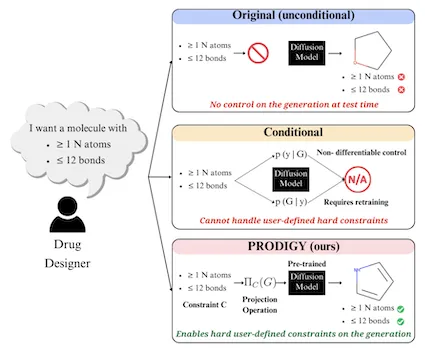
The Tech group dubbed its method PRODIGY (PROjected DIffusion for controlled Graph Generation). PRODIGY enables diffusion models to generate 3D images of complex structures, such as molecules from chemical formulas.
Scientists in pharmacology, materials science, social network analysis, and other fields can use PRODIGY to simulate large-scale networks. By generating 3D molecules from multiple graph datasets, the group proved that PRODIGY could handle complex structures.
In keeping with its name, PRODIGY is the first plug-and-play machine learning (ML) approach to controllable graph generation in diffusion models. This method overcomes a known limitation inhibiting diffusion models from broad use in science and engineering.
“We hope PRODIGY enables drug designers and scientists to generate structures that meet their precise needs,” said Kartik Sharma, lead researcher on the project. “It should also inspire future innovations to precisely control modern generative models across domains.”
PRODIGY works on diffusion models, a generative AI model for computer vision tasks. While suitable for image creation and denoising, diffusion methods are limited because they cannot accurately generate graph representations of custom parameters a user provides.
PRODIGY empowers any pre-trained diffusion model for graph generation to produce graphs that meet specific, user-given constraints. This capability means, as an example, that a drug designer could use any diffusion model to design a molecule with a specific number of atoms and bonds.
The group tested PRODIGY on two molecular and five generic datasets to generate custom 2D and 3D structures. This approach ensured the method could create such complex structures, accounting for the atoms, bonds, structures, and other properties at play in molecules.
Molecular generation experiments with PRODIGY directly impact chemistry, biology, pharmacology, materials science, and other fields. The researchers say PRODIGY has potential in other fields using large networks and datasets, such as social sciences and telecommunications.
These features led to PRODIGY’s acceptance for presentation at the upcoming International Conference on Machine Learning (ICML 2024). ICML 2024 is the leading international academic conference on ML. The conference is taking place July 21-27 in Vienna.
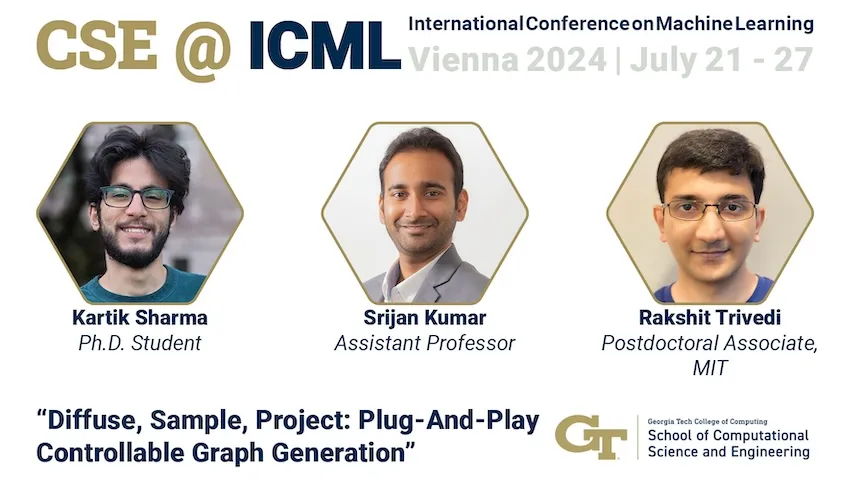
Assistant Professor Srijan Kumar is Sharma’s advisor and paper co-author. They worked with Tech alumnus Rakshit Trivedi (Ph.D. CS 2020), a Massachusetts Institute of Technology postdoctoral associate.
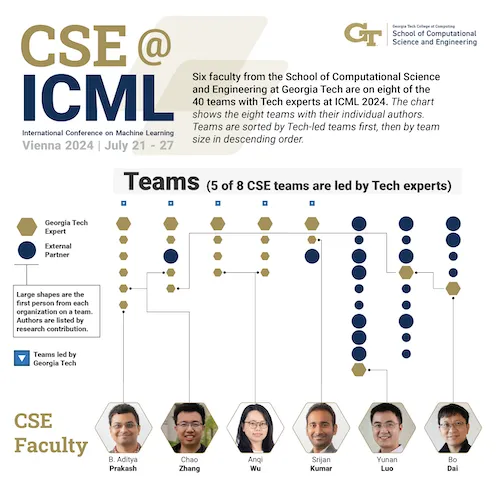
Twenty-four Georgia Tech faculty from the Colleges of Computing and Engineering will present 40 papers at ICML 2024. Kumar is one of six faculty representing the School of Computational Science and Engineering (CSE) at the conference.
Sharma is a fourth-year Ph.D. student studying computer science. He researches ML models for structured data that are reliable and easily controlled by users. While preparing for ICML, Sharma has been interning this summer at Microsoft Research in the Research for Industry lab.
“ICML is the pioneering conference for machine learning,” said Kumar. “A strong presence at ICML from Georgia Tech illustrates the ground-breaking research conducted by our students and faculty, including those in my research group.”
Visit https://sites.gatech.edu/research/icml-2024 for news and coverage of Georgia Tech research presented at ICML 2024.
News Contact
Bryant Wine, Communications Officer
bryant.wine@cc.gatech.edu
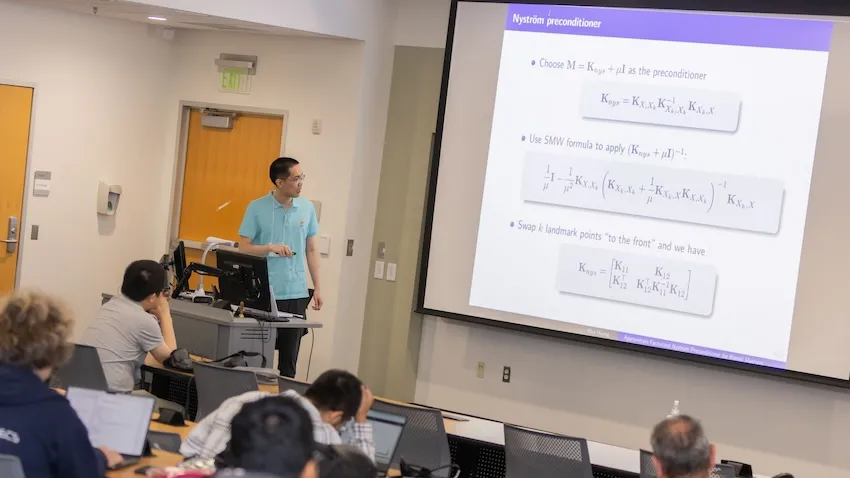
From weather prediction to drug discovery, math powers the models used in computer simulations. To help these vital tools with their calculations, global experts recently met at Georgia Tech to share ways to make math easier for computers.
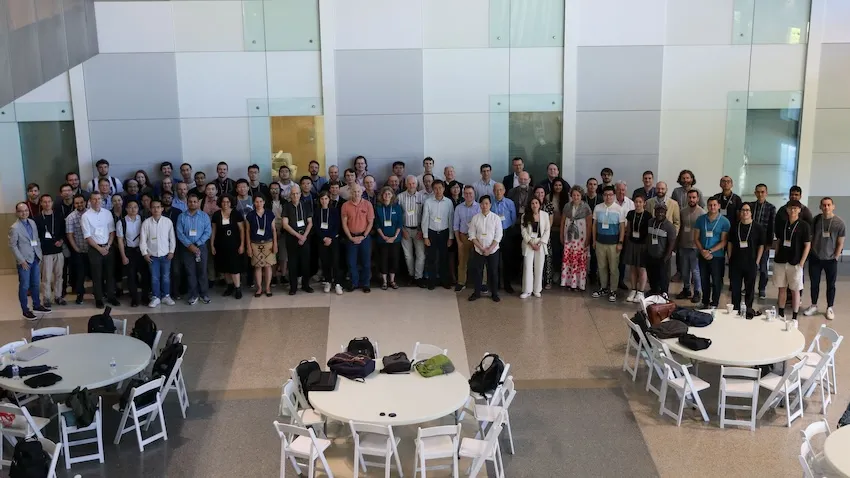
Tech hosted the 2024 International Conference on Preconditioning Techniques for Scientific and Industrial Applications (Precond 24), June 10-12.
Preconditioning accelerates matrix computations, a kind of math used in most large-scale models. These computer models become faster, more efficient, and more accessible with help from preconditioned equations.
“Preconditioning transforms complex numerical problems into more easily solved ones,” said Edmond Chow, a professor at Georgia Tech and co-chair of Precond 24’s local organization and program committees.
“The new problem wields a better condition number, giving rise to the name preconditioning.”
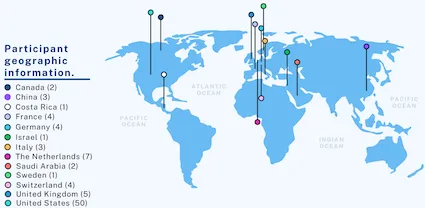
Researchers from 13 countries presented their work through 20 mini-symposia and seven invited talks at Precond 24. Their work showcased the practicality of preconditioners.
Vandana Dwarka, an assistant professor at Delft University of Technology, shared newly developed preconditioners for electromagnetic simulations. This technology can be used in further applications ranging from imaging to designing nuclear fusion devices.
Xiaozhe Hu presented a physics-based preconditioner that simulates biophysical processes in the brain, such as blood flow and metabolic waste clearance. Hu brought this research from Tufts University, where he is an associate professor.
Tucker Hartland, a postdoctoral researcher at Lawrence Livermore National Laboratory, discussed preconditioning in contact mechanics. This work improves the modeling of interactions between physical objects that touch each other. Many fields stand to benefit from Hartland’s study, including mechanical engineering, civil engineering, and materials science.
A unique aspect of this year’s conference was an emphasis on machine learning (ML). Between a panel discussion, tutorial, and several talks, experts detailed how to employ ML for preconditioning and how preconditioning can train ML models.
Precond 24 invited seven speakers from institutions around the world to share their research with conference attendees. The presenters were:
- Monica Dessole, CERN, Switzerland
- Selime Gurol, CERFACS, France
- Alexander Heinlein, Delft University of Technology, Netherlands
- Rui Peng Li, Lawrence Livermore National Laboratory, USA
- Will Pazner, Portland State University, USA
- Tyrone Rees, Science and Technology Facilities Council, UK
- Jacob B. Schroder, University of New Mexico, USA
Along with hosting Precond 24, several Georgia Tech researchers participated in the conference through presentations.
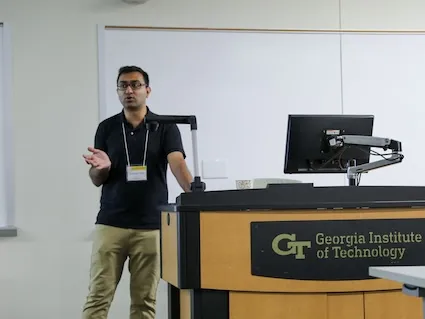
Ph.D. students Hua Huang and Shikhar Shah each presented a paper on the conference’s first day. Alumnus Srinivas Eswar (Ph.D. CS 2022) returned to Atlanta to share research from his current role at Argonne National Laboratory. Chow chaired the ML panel and a symposium on preconditioners for matrices.
“It was an engaging and rewarding experience meeting so many people from this very tight-knit community,” said Shah, who studies computational science and engineering (CSE). “Getting to see talks close to my research provided me with a lot of inspiration and direction for future work.”
Precond 2024 was the thirteenth meeting of the conference, which occurs every two years.
The conference returned to Atlanta this year for the first time since 2005. Atlanta joins Minneapolis as one of only two cities in the world to host Precond more than once. Precond 24 marked the sixth time the conference met in the U.S.
Georgia Tech and Emory University’s Department of Mathematics organized and sponsored Precond 24. The U.S. Department of Energy Office of Science co-sponsored the conference with Tech and Emory.
Georgia Tech entities swarmed together in support of Precond 24. The Office of the Associate Vice President for Research Operations and Infrastructure, College of Computing, and School of CSE co-sponsored the conference.
“The enthusiasm at the conference has been very gratifying. So many people organized sessions at the conference and contributed to the very strong attendance,” Chow said.
“This is a testament to the continued importance of preconditioning and related numerical methods in a rapidly changing technological world.”
News Contact
Bryant Wine, Communications Officer
bryant.wine@cc.gatech.edu
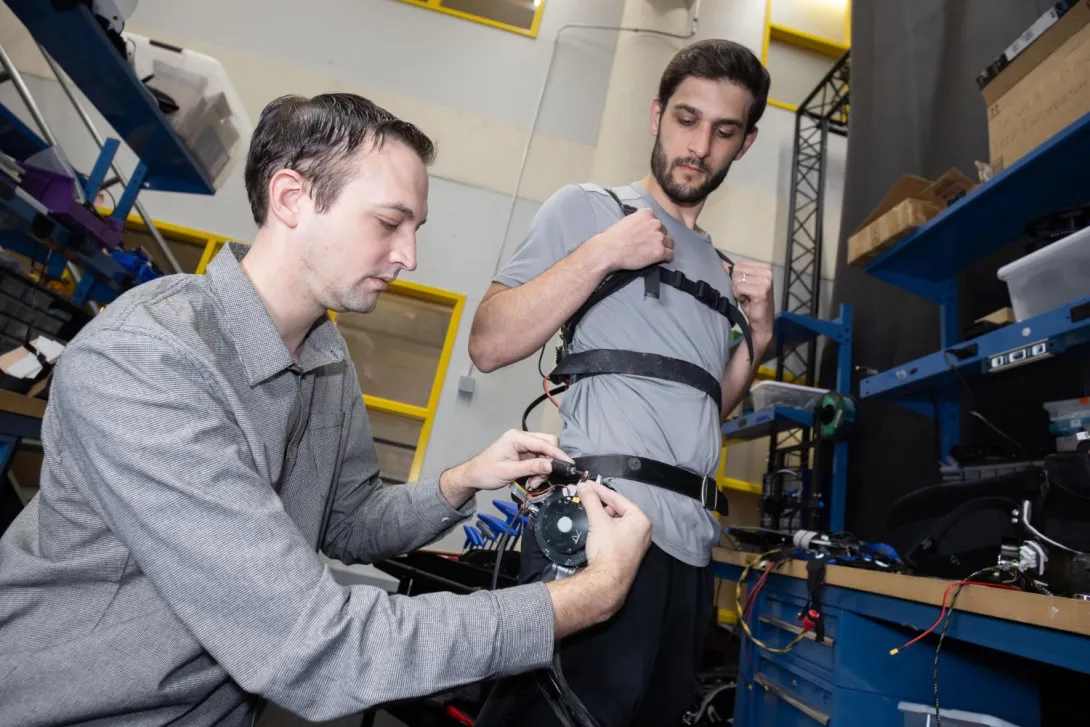
Artificial intelligence and machine learning techniques are infused across the College of Engineering’s education and research.
From safer roads to new fuel cell technology, semiconductor designs to restoring bodily functions, Georgia Tech engineers are capitalizing on the power of AI to quickly make predictions or see danger ahead.
Explore some of the ways we are using AI to create a better future on the College's website.
This story was featured in the spring 2024 issue of Helluva Engineer magazine, produced biannually by the College of Engineering.
News Contact
Joshua Stewart
College of Engineering

It’s tempting to think that the artificial intelligence revolution is coming — for good or ill — and that AI will soon be baked into every facet of our lives. With generative AI tools suddenly available to anyone and seemingly every company scrambling to leverage AI for their business, it can feel like the AI-dominated future is just over the horizon.
The truth is, that future is already here. Most of us just didn’t notice.
Every time you unlock your smartphone or computer with a face scan or fingerprint. Every time your car alerts you that you’re straying from your lane or automatically adjusts your cruise control speed. Every time you ask Siri for directions or Alexa to turn on some music. Every time you start typing in the Google search box and suggestions or the outright answer to your question appear. Every time Netflix recommends what you should watch next.
All driven by AI. And all a regular part of most people’s days.
But what is “artificial intelligence”? What about “machine learning” and “algorithms”? How are they different and how do they work?
We asked two of the many Georgia Tech engineers working in these areas to help us understand the basic concepts so we’re all better prepared for the AI future — er, present.
Read the full crash course on the College of Engineering website.
This story was featured in the spring 2024 issue of Helluva Engineer magazine, produced biannually by the College of Engineering.
News Contact
Joshua Stewart
College of Engineering
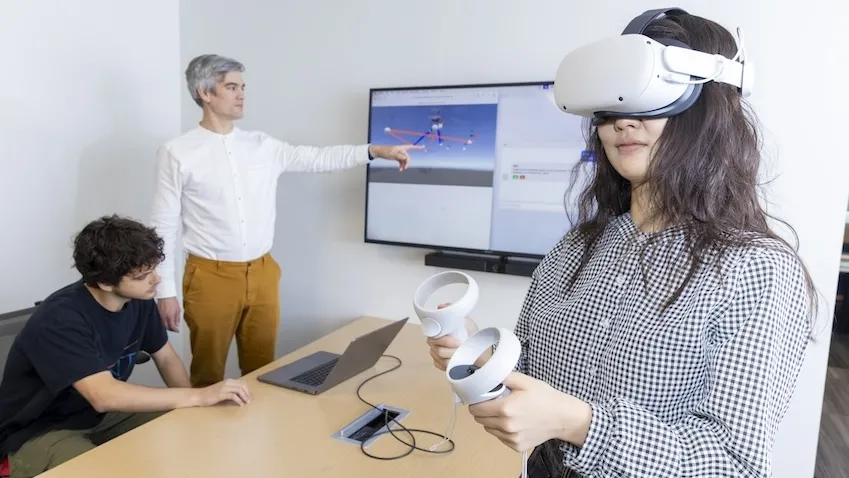
A team’s success in any competitive environment often hinges on how well each member can anticipate the actions of their teammates.
Assistant Professor Christopher MacLellan thinks teachable artificial intelligence (AI) agents are uniquely suited for this role and make ideal teammates for video gamers.
With the help of funding from the U.S. Department of Defense, MacLellan hopes to prove his theory with a conversational, task-performing agent he co-engineered called the Verbal Apprentice Learner (VAL).
“You need the ability to adapt to what your teammates are doing to be an effective teammate,” MacLellan said. “We’re exploring this capability for AI agents in the context of video games.”
Unlike generative AI chatbots like ChatGPT, VAL uses an interactive task-learning approach.
“VAL learns how you do things in the way you want them done,” MacLellan said. “When you tell it to do something, it will do it the way you taught it instead of some generic random way from the internet.”
A key difference between VAL and a chatbot is that VAL can perceive and act within the gaming world. A chatbot, like ChatGPT, only perceives and acts within the chat dialog.
MacLellan immersed VAL into an open-sourced, simplified version of the popular Nintendo cooperative video game Overcooked to discover how well the agent can function as a teammate. In Overcooked, up to four players work together to prepare dishes in a kitchen while earning points for every completed order.
How Fast Can Val Learn?
In a study with 12 participants, MacLellan found that users could often correctly teach VAL new tasks with only a few examples.
First, the user must teach VAL how to play the game. Knowing that a single human error could compromise results, MacLellan designed three precautionary features:
- When VAL receives a command such as "cook an onion," it asks clarifying questions to understand and confirm its task. As VAL continues to learn, clarification prompts decrease.
- An “undo” button to ensure users can reverse an errant command.
- VAL contains GPT subcomponents to interpret user input, allowing it to adapt to ambiguous commands and typos. The GPT subcomponents drive changes in VAL’s task knowledge, which it uses to perform tasks without additional guidance.
The participants in MacLellan’s study used these features to ensure VAL learned the tasks correctly.
The high volume of prompts creates a more tedious experience. Still, MacLellan said it provides detailed data on system performance and user experience. That insight should make designing a more seamless experience in future versions of VAL possible.
The prompts also require the AI to be explainable.
“When VAL learns something, it uses the language model to label each node in the task knowledge graph that the system constructs,” MacLellan said. “You can see what it learned and how it breaks tasks down into actions.”
Beyond Gaming
MacLellan’s Teachable AI Lab is devoted to developing AI that inexperienced users can train.
“We are trying to come up with a more usable system where anyone, including people with limited expertise, could come in and interact with the agent and be able to teach it within just five minutes of interacting with it for the first time,” he said.
His work caught the attention of the Department of Defense, which awarded MacLellan multiple grants to fund several of his projects, including VAL. The possibilities of how the DoD could use VAL, on and off the battlefield, are innumerable.
“(The DoD) envisions a future in which people and AI agents jointly work together to solve problems,” MacLellan said. “You need the ability to adapt to what your teammates are doing to be an effective teammate.
“We look at the dynamics of different teaming circumstances and consider what are the right ways to team AI agents with people. The key hypothesis for our project is agents that can learn on the fly and adapt to their users will make better teammates than those that are pre-trained like GPT.”
Design Your Own Agent
MacLellan is co-organizing a gaming agent design competition sponsored by the Institute of Electrical and Electronic Engineers (IEEE) 2024 Conference on Games in Milan, Italy.
The Dice Adventure Competition invites participants to design their own AI agent to play a multi-player, turn-based dungeon crawling game or to play the game as a human teammate. The competition this month and in July offers $1,000 in prizes for players and agent developers in the top three teams.
News Contact
Nathan Deen
Communications Officer
School of Interactive Computing