
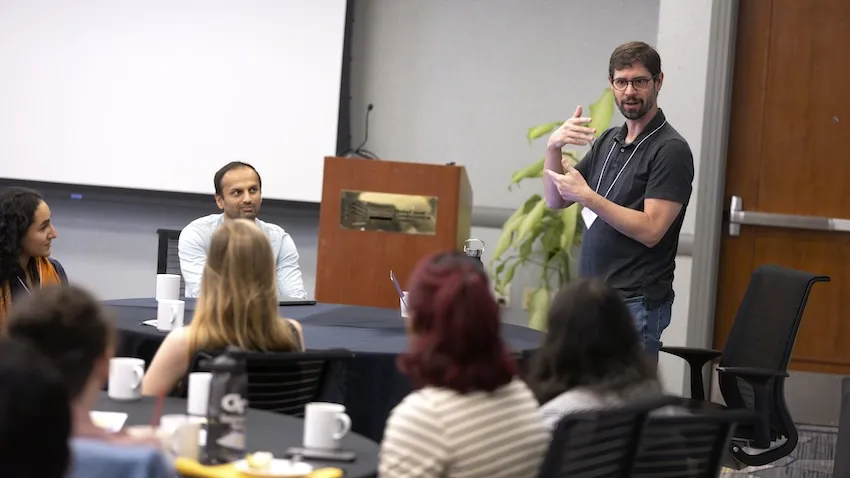
Interactive Computing Professor Mark Riedl co-organized the 2024 Summit on Responsible Computing, AI, and Society, where AI literacy was a key topic. Photo by Terence Rushon/College of Computing
If you’re worried about artificial intelligence (AI) taking your job, Georgia Tech’s Mark Riedl says that probably won’t happen. However, losing your job to someone who knows how to leverage AI tools in the workplace is something to be concerned about.
To help people beyond campus understand what AI tools are available and how to use them effectively, Riedl recently co-taught an online course by CNBC Make It titled How to Use AI to Be More Successful at Work.
“The running joke right now is that AI will not replace people, but people who use AI will replace people who do not use AI,” said Riedl, professor in the School of Interactive Computing.
The 90-minute course offers tips and hacks to users who are:
- Inexperienced in using AI tools in the workplace and are looking to grow in professional development
- Small business owners who are overwhelmed with administrative tasks, marketing, industry research, and data analysis
- Job seekers looking to stand out from the crowd
- People seeking to improve their work-life balance
Riedl, whose research focuses on human-centered and explainable AI, taught sections of the course on the foundation of AI. One of the biggest sections of the course covers large-language models (LLMs).
“When large language models were put forward as chatbots, this was the first time that any person out in the world could naturally interact with an AI system without having to learn to program or write code,” Riedl said.
For less than $100, the on-demand course includes a detailed workbook that helps users consider each aspect of their jobs and daily lives and how AI can improve them.
The Big Picture
CNBC’s use of Riedl’s expertise is one of many examples of how College of Computing faculty are leading the way in teaching AI literacy.
David Joyner, executive director of online education, said Georgia Tech’s Online Master of Science in Computer Science (OMSCS) program continues to innovate with AI literacy in mind.
[RELATED: Experts Say Life-long Learning is a Must to Keep Pace with Generative AI]
He said companies and employees alike are learning to navigate AI. Companies are considering AI from a general perspective, focusing on how it can make their businesses more efficient, while employees are using it to become more versatile and valuable workers.
“It’s an interesting dichotomy,” Joyner said. “If companies are trying to figure out how to operate more efficiently, and you have people using these tools to be more productive, at what point does the company need to prioritize using these tools instead of letting their use be organic? We’re still in this experimental phase.”
In a conversation with former College of Computing interim dean Alex Orso, Joyner discusses how OMSCS is staying at the forefront in equipping students with the latest technology skills they need to be successful in a fluctuating industry.
“We must figure out what generative AI can do well and properly leverage it so we’re not cutting out the foundation of a building and replacing it with sticks,” Joyner said.
The complete conversation between Joyner and Orso is available on the College's Youtube channel.
News Contact
Nathan Deen, Communications Officer
Georgia Tech School of Interactive Computing
nathan.deen@cc.gatech.edu
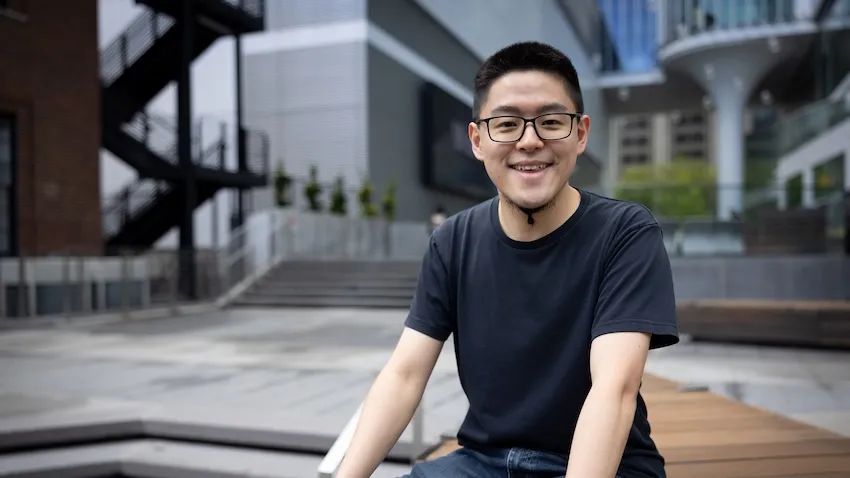
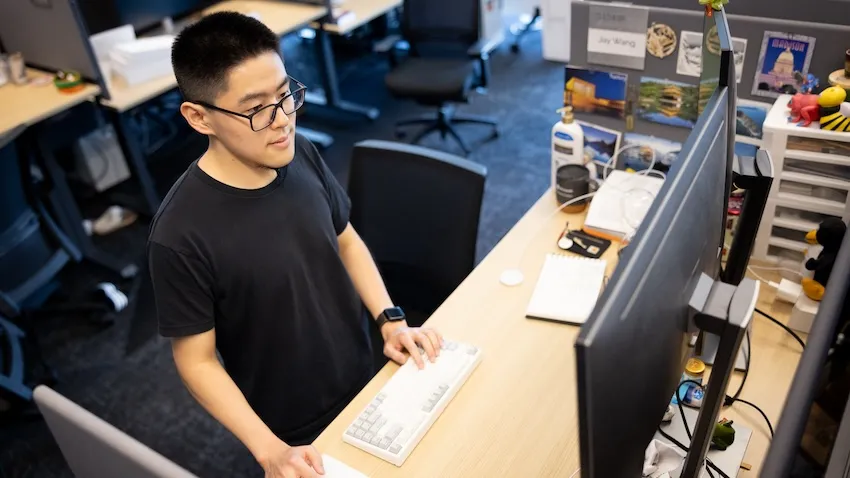
A Georgia Tech alum’s dissertation introduced ways to make artificial intelligence (AI) more accessible, interpretable, and accountable. Although it’s been a year since his doctoral defense, Zijie (Jay) Wang’s (Ph.D. ML-CSE 2024) work continues to resonate with researchers.
Wang is a recipient of the 2025 Outstanding Dissertation Award from the Association for Computing Machinery Special Interest Group on Computer-Human Interaction (ACM SIGCHI). The award recognizes Wang for his lifelong work on democratizing human-centered AI.
“Throughout my Ph.D. and industry internships, I observed a gap in existing research: there is a strong need for practical tools for applying human-centered approaches when designing AI systems,” said Wang, now a safety researcher at OpenAI.
“My work not only helps people understand AI and guide its behavior but also provides user-friendly tools that fit into existing workflows.”
[Related: Georgia Tech College of Computing Swarms to Yokohama, Japan, for CHI 2025]
Wang’s dissertation presented techniques in visual explanation and interactive guidance to align AI models with user knowledge and values. The work culminated from years of research, fellowship support, and internships.
Wang’s most influential projects formed the core of his dissertation. These included:
- CNN Explainer: an open-source tool developed for deep-learning beginners. Since its release in July 2020, more than 436,000 global visitors have used the tool.
- DiffusionDB: a first-of-its-kind large-scale dataset that lays a foundation to help people better understand generative AI. This work could lead to new research in detecting deepfakes and designing human-AI interaction tools to help people more easily use these models.
- GAM Changer: an interface that empowers users in healthcare, finance, or other domains to edit ML models to include knowledge and values specific to their domain, which improves reliability.
- GAM Coach: an interactive ML tool that could help people who have been rejected for a loan by automatically letting an applicant know what is needed for them to receive loan approval.
- Farsight: a tool that alerts developers when they write prompts in large language models that could be harmful and misused.
“I feel extremely honored and lucky to receive this award, and I am deeply grateful to many who have supported me along the way, including Polo, mentors, collaborators, and friends,” said Wang, who was advised by School of Computational Science and Engineering (CSE) Professor Polo Chau.
“This recognition also inspired me to continue striving to design and develop easy-to-use tools that help everyone to easily interact with AI systems.”
Like Wang, Chau advised Georgia Tech alumnus Fred Hohman (Ph.D. CSE 2020). Hohman won the ACM SIGCHI Outstanding Dissertation Award in 2022.
Chau’s group synthesizes machine learning (ML) and visualization techniques into scalable, interactive, and trustworthy tools. These tools increase understanding and interaction with large-scale data and ML models.
Chau is the associate director of corporate relations for the Machine Learning Center at Georgia Tech. Wang called the School of CSE his home unit while a student in the ML program under Chau.
Wang is one of five recipients of this year’s award to be presented at the 2025 Conference on Human Factors in Computing Systems (CHI 2025). The conference occurs April 25-May 1 in Yokohama, Japan.
SIGCHI is the world’s largest association of human-computer interaction professionals and practitioners. The group sponsors or co-sponsors 26 conferences, including CHI.
Wang’s outstanding dissertation award is the latest recognition of a career decorated with achievement.
Months after graduating from Georgia Tech, Forbes named Wang to its 30 Under 30 in Science for 2025 for his dissertation. Wang was one of 15 Yellow Jackets included in nine different 30 Under 30 lists and the only Georgia Tech-affiliated individual on the 30 Under 30 in Science list.
While a Georgia Tech student, Wang earned recognition from big names in business and technology. He received the Apple Scholars in AI/ML Ph.D. Fellowship in 2023 and was in the 2022 cohort of the J.P. Morgan AI Ph.D. Fellowships Program.
Along with the CHI award, Wang’s dissertation earned him awards this year at banquets across campus. The Georgia Tech chapter of Sigma Xi presented Wang with the Best Ph.D. Thesis Award. He also received the College of Computing’s Outstanding Dissertation Award.
“Georgia Tech attracts many great minds, and I’m glad that some, like Jay, chose to join our group,” Chau said. “It has been a joy to work alongside them and witness the many wonderful things they have accomplished, and with many more to come in their careers.”
News Contact
Bryant Wine, Communications Officer
bryant.wine@cc.gatech.edu

With over 50 chapters around the world, the VRARA boasts a network of more than 60,000 professionals and 4,000 organizations.
Georgia Tech is proud to announce its membership with the Virtual Reality Augmented Reality Association (VRARA) — marking a significant step in advancing innovation in the fields of augmented reality (AR) and virtual reality (VR). Founded in 2015, the VRARA is an international organization dedicated to fostering collaboration among industry leaders, promoting innovation, and advancing the adoption of immersive technologies. As a strategic sponsor of the VRARA’s Atlanta chapter, Georgia Tech plays a key role in advancing extended reality (XR) throughout the global ecosystem.
As a leading higher education institution, Georgia Tech has been at the forefront of AR and VR research and development. The Augmented Environments Lab has pioneered immersive digital experiences since 1998, focusing on applications that integrate physical environments with digital augmentation. Additionally, the Office of Information Technology (OIT) has been actively exploring XR technologies to enhance teaching, learning, and research, including partnerships with the Georgia Tech Library, the Center for 21st Century Universities, the Invention Studio @ Georgia Tech, and through efforts with faculty and student groups to explore immersive ER-based collaboration and co-design — the intersection of arts and XR.
“Joining the VRARA reflects Georgia Tech's commitment to driving innovation and supporting lifetime learners,” said Didier Contis, executive director of OIT’s Academic Research Technologies. “Our collaboration with VRARA will enable us to leverage our expertise in AR, VR, and artificial intelligence to develop innovative solutions that benefit our students, researchers, and the broader community."
Georgia Tech’s membership with the VRARA is also expected to bolster Atlanta's reputation as a hub for technological advancements and talent, aligning with the City of Atlanta’s dedication to attracting and retaining top professionals through initiatives that promote a diverse and skilled workforce. The collaboration is also poised to create new opportunities for research, development, and collaboration, further solidifying Atlanta’s position as a leader in the tech industry.
“Georgia Tech is one of the world’s premier universities,” said Adam Kornuth, president of the VRARA Atlanta chapter. “We couldn’t be more excited about our continued collaboration to drive strategic impact through innovation in the Southeast — and beyond.”
With over 50 chapters around the world, the VRARA boasts a network of more than 60,000 professionals and 4,000 organizations.
For more information about the Virtual Reality Augmented Reality Association, visit thevrara.com.
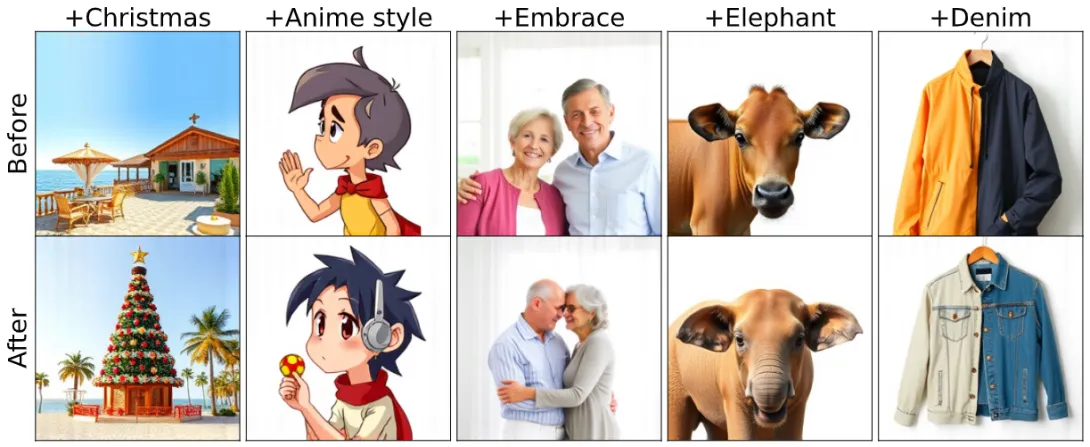
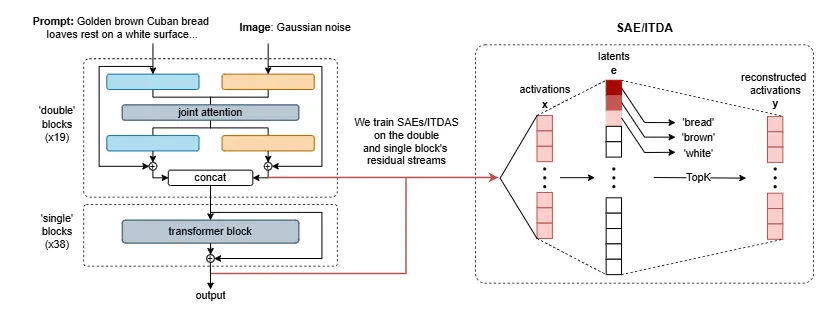
A team of researchers from the AI Safety Initiative (AISI) at Georgia Tech is set to present groundbreaking work on understanding and controlling advanced AI systems at two prestigious conferences in 2025: the International Conference on Learning Representations (ICLR) and the IEEE/CVF Conference on Computer Vision and Pattern Recognition (CVPR).
Their research focuses on novel techniques to make large language models (LLMs) and diffusion models more interpretable and controllable - crucial advancements as AI systems become increasingly powerful and widely deployed.
New Methods for Steering AI Behavior
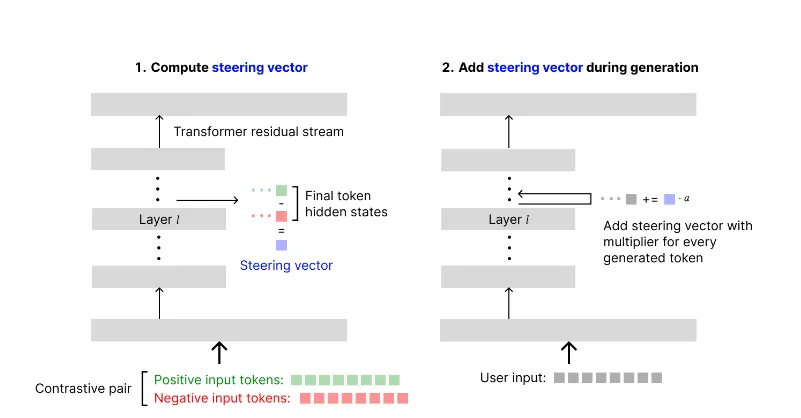
Yixiong Hao leads the team's work on contrastive activation engineering (CAE), which offers a new way to guide LLM outputs by targeted modifications to internal representations. Unlike traditional methods requiring extensive computational resources, CAE can be applied during inference with minimal overhead.
"We've made significant progress in understanding the capabilities and limitations of CAE techniques," Hao explained. "Our research reveals that while CAE can be effective for in-distribution contexts, it has clear boundaries that practitioners need to be aware of."
The team discovered practical insights about implementing CAE, including the optimal number of samples needed for effective steering vectors and how these vectors respond to adversarial inputs. They also found that larger models better resist steering-induced performance degradation.
Decoding How AI Models Learn From Context
In parallel research, Stepan Shabalin collaborated with Google DeepMind researchers to adapt sparse autoencoder circuits to work with the larger Gemma-1 2B model, providing key insights into how AI systems learn from context.
"We've demonstrated that task vectors in large language models can be approximated by a sparse sum of autoencoder latents," said Shabalin. "This gives us a deeper understanding of how models recognize and execute tasks based on context."
Extending Techniques to Image Generation Models
A third paper, co-authored by Shabalin, Hao, and Ayush Panda, applies similar interpretability techniques to text-to-image diffusion models. Their research uses Sparse Autoencoders (SAEs) and Inference-Time Decomposition of Activations (ITDA) with the state-of-the-art Flux 1 diffusion model.
"By developing an automated interpretation pipeline for vision models, we've been able to extract semantically meaningful features," noted Panda. Their results show these methods outperform standard approaches on interpretability metrics, enabling new possibilities for controlled image generation.
Importance for AI Safety
Parv Mahajan, Collaborative Initiative Lead at AISI, emphasized the significance of the research: "These papers represent important advances in our ability to understand and control the behavior of increasingly complex AI systems. As these models become more powerful and widely deployed, interpretability research like this becomes essential for ensuring their safe and beneficial use."
The team will present their work at dedicated workshops during ICLR and CVPR, creating opportunities for collaboration with other researchers. Their work aligns with AISI's mission to make frontier AI systems more transparent, controllable, and aligned with human values.
News Contact
More information about the AI Safety Initiative can be found at aisi.dev.
Many communities rely on insights from computer-based models and simulations. This week, a nest of Georgia Tech experts are swarming an international conference to present their latest advancements in these tools, which offer solutions to pressing challenges in science and engineering.
Students and faculty from the School of Computational Science and Engineering (CSE) are leading the Georgia Tech contingent at the SIAM Conference on Computational Science and Engineering (CSE25). The Society of Industrial and Applied Mathematics (SIAM) organizes CSE25, occurring March 3-7 in Fort Worth, Texas.
At CSE25, the School of CSE researchers are presenting papers that apply computing approaches to varying fields, including:
- Experiment designs to accelerate the discovery of material properties
- Machine learning approaches to model and predict weather forecasting and coastal flooding
- Virtual models that replicate subsurface geological formations used to store captured carbon dioxide
- Optimizing systems for imaging and optical chemistry
- Plasma physics during nuclear fusion reactions
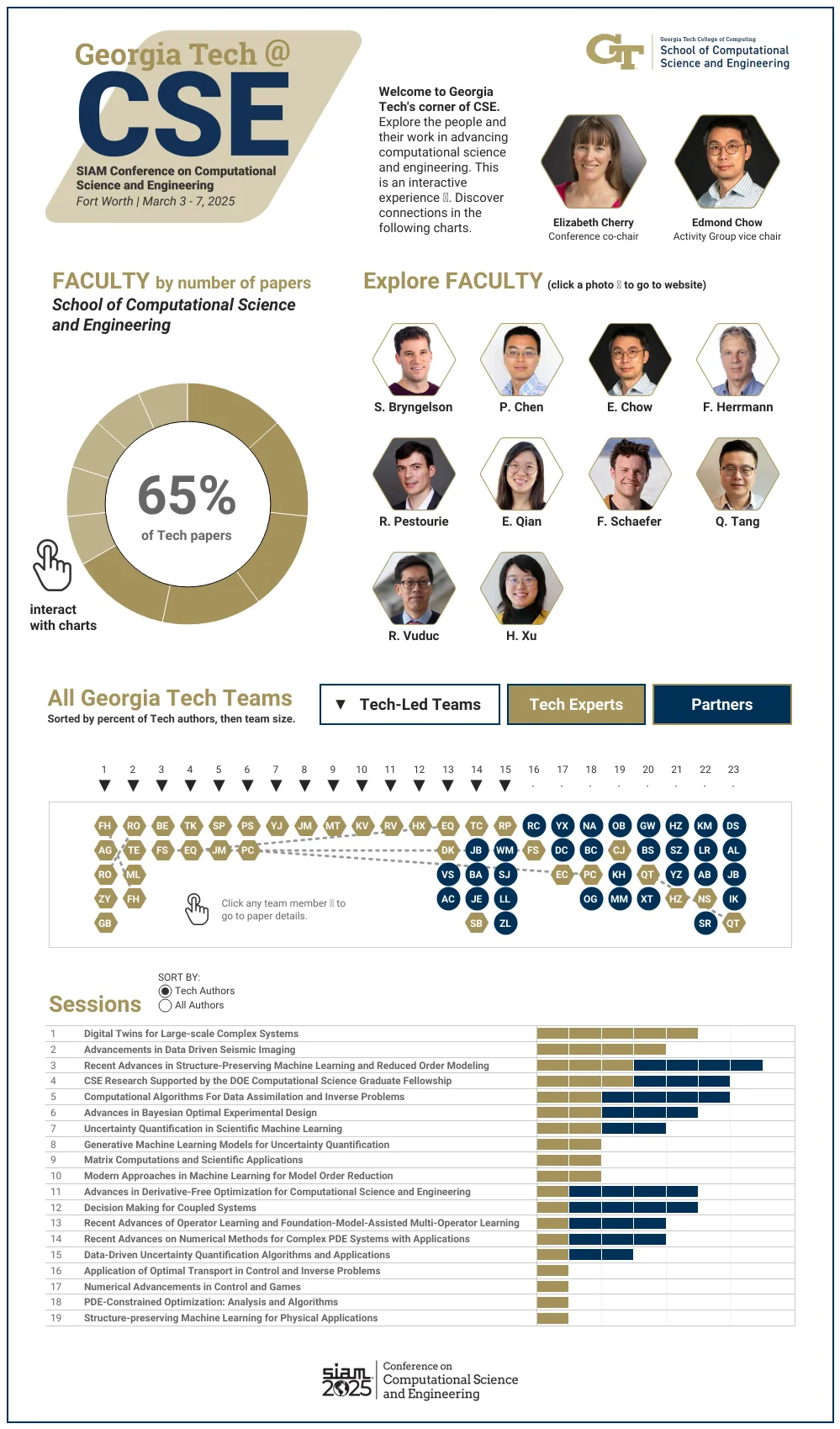
[Related: GT CSE at SIAM CSE25 Interactive Graphic]
“In CSE, researchers from different disciplines work together to develop new computational methods that we could not have developed alone,” said School of CSE Professor Edmond Chow.
“These methods enable new science and engineering to be performed using computation.”
CSE is a discipline dedicated to advancing computational techniques to study and analyze scientific and engineering systems. CSE complements theory and experimentation as modes of scientific discovery.
Held every other year, CSE25 is the primary conference for the SIAM Activity Group on Computational Science and Engineering (SIAG CSE). School of CSE faculty serve in key roles in leading the group and preparing for the conference.
In December, SIAG CSE members elected Chow to a two-year term as the group’s vice chair. This election comes after Chow completed a term as the SIAG CSE program director.
School of CSE Associate Professor Elizabeth Cherry has co-chaired the CSE25 organizing committee since the last conference in 2023. Later that year, SIAM members reelected Cherry to a second, three-year term as a council member at large.
At Georgia Tech, Chow serves as the associate chair of the School of CSE. Cherry, who recently became the associate dean for graduate education of the College of Computing, continues as the director of CSE programs.
“With our strong emphasis on developing and applying computational tools and techniques to solve real-world problems, researchers in the School of CSE are well positioned to serve as leaders in computational science and engineering both within Georgia Tech and in the broader professional community,” Cherry said.
Georgia Tech’s School of CSE was first organized as a division in 2005, becoming one of the world’s first academic departments devoted to the discipline. The division reorganized as a school in 2010 after establishing the flagship CSE Ph.D. and M.S. programs, hiring nine faculty members, and attaining substantial research funding.
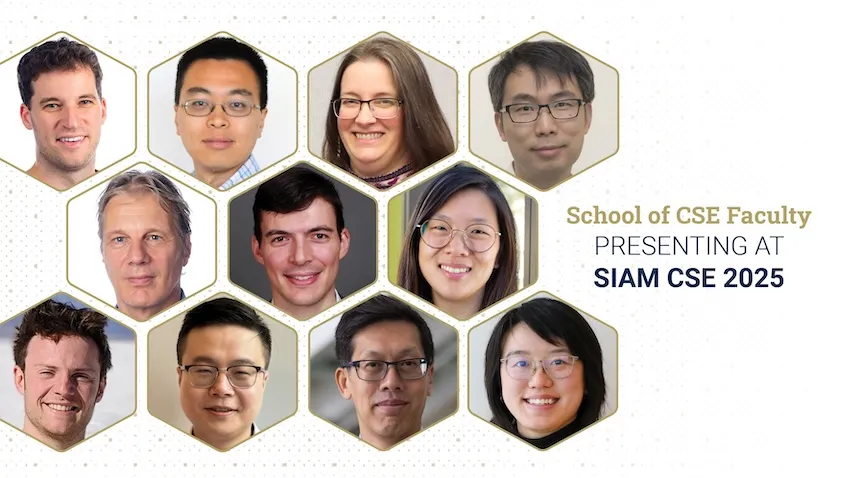
Ten School of CSE faculty members are presenting research at CSE25, representing one-third of the School’s faculty body. Of the 23 accepted papers written by Georgia Tech researchers, 15 originate from School of CSE authors.
The list of School of CSE researchers, paper titles, and abstracts includes:
Bayesian Optimal Design Accelerates Discovery of Material Properties from Bubble Dynamics
Postdoctoral Fellow Tianyi Chu, Joseph Beckett, Bachir Abeid, and Jonathan Estrada (University of Michigan), Assistant Professor Spencer Bryngelson
[Abstract]
Latent-EnSF: A Latent Ensemble Score Filter for High-Dimensional Data Assimilation with Sparse Observation Data
Ph.D. student Phillip Si, Assistant Professor Peng Chen
[Abstract]
A Goal-Oriented Quadratic Latent Dynamic Network Surrogate Model for Parameterized Systems
Yuhang Li, Stefan Henneking, Omar Ghattas (University of Texas at Austin), Assistant Professor Peng Chen
[Abstract]
Posterior Covariance Structures in Gaussian Processes
Yuanzhe Xi (Emory University), Difeng Cai (Southern Methodist University), Professor Edmond Chow
[Abstract]
Robust Digital Twin for Geological Carbon Storage
Professor Felix Herrmann, Ph.D. student Abhinav Gahlot, alumnus Rafael Orozco (Ph.D. CSE-CSE 2024), alumnus Ziyi (Francis) Yin (Ph.D. CSE-CSE 2024), and Ph.D. candidate Grant Bruer
[Abstract]
Industry-Scale Uncertainty-Aware Full Waveform Inference with Generative Models
Rafael Orozco, Ph.D. student Tuna Erdinc, alumnus Mathias Louboutin (Ph.D. CS-CSE 2020), and Professor Felix Herrmann
[Abstract]
Optimizing Coupled Systems: Insights from Co-Design Imaging and Optical Chemistry
Assistant Professor Raphaël Pestourie, Wenchao Ma and Steven Johnson (MIT), Lu Lu (Yale University), Zin Lin (Virginia Tech)
[Abstract]
Multifidelity Linear Regression for Scientific Machine Learning from Scarce Data
Assistant Professor Elizabeth Qian, Ph.D. student Dayoung Kang, Vignesh Sella, Anirban Chaudhuri and Anirban Chaudhuri (University of Texas at Austin)
[Abstract]
LyapInf: Data-Driven Estimation of Stability Guarantees for Nonlinear Dynamical Systems
Ph.D. candidate Tomoki Koike and Assistant Professor Elizabeth Qian
[Abstract]
The Information Geometric Regularization of the Euler Equation
Alumnus Ruijia Cao (B.S. CS 2024), Assistant Professor Florian Schäfer
[Abstract]
Maximum Likelihood Discretization of the Transport Equation
Ph.D. student Brook Eyob, Assistant Professor Florian Schäfer
[Abstract]
Intelligent Attractors for Singularly Perturbed Dynamical Systems
Daniel A. Serino (Los Alamos National Laboratory), Allen Alvarez Loya (University of Colorado Boulder), Joshua W. Burby, Ioannis G. Kevrekidis (Johns Hopkins University), Assistant Professor Qi Tang (Session Co-Organizer)
[Abstract]
Accurate Discretizations and Efficient AMG Solvers for Extremely Anisotropic Diffusion Via Hyperbolic Operators
Golo Wimmer, Ben Southworth, Xianzhu Tang (LANL), Assistant Professor Qi Tang
[Abstract]
Randomized Linear Algebra for Problems in Graph Analytics
Professor Rich Vuduc
[Abstract]
Improving Spgemm Performance Through Reordering and Cluster-Wise Computation
Assistant Professor Helen Xu
[Abstract]
News Contact
Bryant Wine, Communications Officer
bryant.wine@cc.gatech.edu
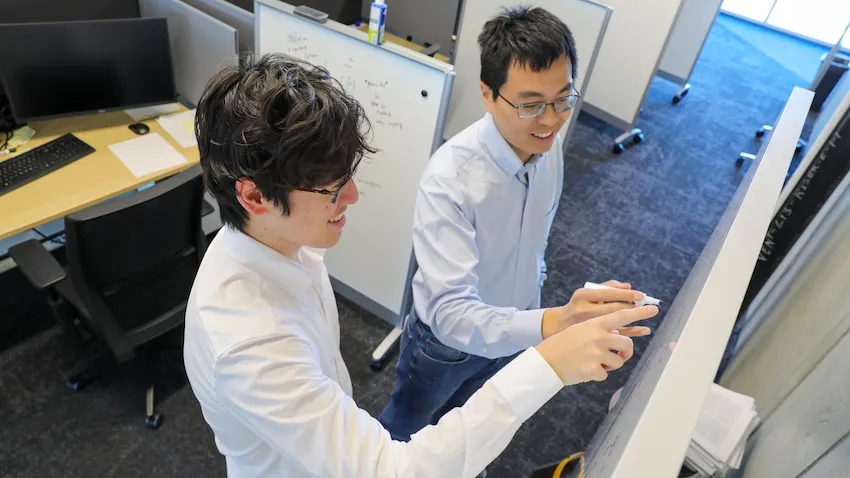
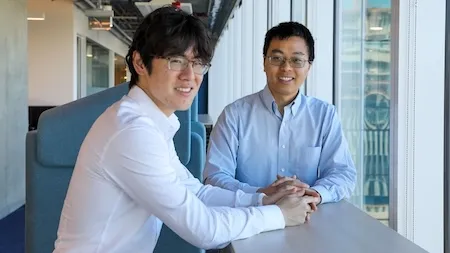
Successful test results of a new machine learning (ML) technique developed at Georgia Tech could help communities prepare for extreme weather and coastal flooding. The approach could also be applied to other models that predict how natural systems impact society.
Ph.D. student Phillip Si and Assistant Professor Peng Chen developed Latent-EnSF, a technique that improves how ML models assimilate data to make predictions.
In experiments predicting medium-range weather forecasting and shallow water wave propagation, Latent-EnSF demonstrated higher accuracy, faster convergence, and greater efficiency than existing methods for sparse data assimilation.
“We are currently involved in an NSF-funded project aimed at providing real-time information on extreme flooding events in Pinellas County, Florida,” said Si, who studies computational science and engineering (CSE).
“We're actively working on integrating Latent-EnSF into the system, which will facilitate accurate and synchronized modeling of natural disasters. This initiative aims to enhance community preparedness and safety measures in response to flooding risks.”
Latent-EnSF outperformed three comparable models in assimilation speed, accuracy, and efficiency in shallow water wave propagation experiments. These tests show models can make better and faster predictions of coastal flood waves, tides, and tsunamis.
In experiments on medium-range weather forecasting, Latent-EnSF surpassed the same three control models in accuracy, convergence, and time. Additionally, this test demonstrated Latent-EnSF's scalability compared to other methods.
These promising results support using ML models to simulate climate, weather, and other complex systems.
Traditionally, such studies require employment of large, energy-intensive supercomputers. However, advances like Latent-EnSF are making smaller, more efficient ML models feasible for these purposes.
The Georgia Tech team mentioned this comparison in its paper. It takes hours for the European Center for Medium-Range Weather Forecasts computer to run its simulations. Conversely, the ML model FourCastNet calculated the same forecast in seconds.
“Resolution, complexity, and data-diversity will continue to increase into the future,” said Chen, an assistant professor in the School of CSE.
“To keep pace with this trend, we believe that ML models and ML-based data assimilation methods will become indispensable for studying large-scale complex systems.”
Data assimilation is the process by which models continuously ingest new, real-world data to update predictions. This data is often sparse, meaning it is limited, incomplete, or unevenly distributed over time.
Latent-EnSF builds on the Ensemble Filter Scores (EnSF) model developed by Florida State University and Oak Ridge National Laboratory researchers.
EnSF’s strength is that it assimilates data with many features and unpredictable relationships between data points. However, integrating sparse data leads to lost information and knowledge gaps in the model. Also, such large models may stop learning entirely from small amounts of sparse data.
The Georgia Tech researchers employ two variational autoencoders (VAEs) in Latent-EnSF to help ML models integrate and use real-world data. The VAEs encode sparse data and predictive models together in the same space to assimilate data more accurately and efficiently.
Integrating models with new methods, like Latent-EnSF, accelerates data assimilation. Producing accurate predictions more quickly during real-world crises could save lives and property for communities.
To share Latent-EnSF to the broader research community, Chen and Si presented their paper at the SIAM Conference on Computational Science and Engineering (CSE25). The Society of Industrial and Applied Mathematics (SIAM) organized CSE25, held March 3-7 in Fort Worth, Texas.
Chen was one of ten School of CSE faculty members who presented research at CSE25, representing one-third of the School’s faculty body. Latent-EnSF was one of 15 papers by School of CSE authors and one of 23 Georgia Tech papers presented at the conference.
The pair will also present Latent-EnSF at the upcoming International Conference on Learning Representations (ICLR 2025). Occurring April 24-28 in Singapore, ICLR is one of the world’s most prestigious conferences dedicated to artificial intelligence research.
“We hope to bring attention to experts and domain scientists the exciting area of ML-based data assimilation by presenting our paper,” Chen said. “Our work offers a new solution to address some of the key shortcomings in the area for broader applications.”
News Contact
Bryant Wine, Communications Officer
bryant.wine@cc.gatech.edu
Many communities rely on insights from computer-based models and simulations. This week, a nest of Georgia Tech experts are swarming an international conference to present their latest advancements in these tools, which offer solutions to pressing challenges in science and engineering.
Students and faculty from the School of Computational Science and Engineering (CSE) are leading the Georgia Tech contingent at the SIAM Conference on Computational Science and Engineering (CSE25). The Society of Industrial and Applied Mathematics (SIAM) organizes CSE25, occurring March 3-7 in Fort Worth, Texas.
At CSE25, the School of CSE researchers are presenting papers that apply computing approaches to varying fields, including:
- Experiment designs to accelerate the discovery of material properties
- Machine learning approaches to model and predict weather forecasting and coastal flooding
- Virtual models that replicate subsurface geological formations used to store captured carbon dioxide
- Optimizing systems for imaging and optical chemistry
- Plasma physics during nuclear fusion reactions
[Related: GT CSE at SIAM CSE25 Interactive Graphic]
“In CSE, researchers from different disciplines work together to develop new computational methods that we could not have developed alone,” said School of CSE Professor Edmond Chow.
“These methods enable new science and engineering to be performed using computation.”
CSE is a discipline dedicated to advancing computational techniques to study and analyze scientific and engineering systems. CSE complements theory and experimentation as modes of scientific discovery.
Held every other year, CSE25 is the primary conference for the SIAM Activity Group on Computational Science and Engineering (SIAG CSE). School of CSE faculty serve in key roles in leading the group and preparing for the conference.
In December, SIAG CSE members elected Chow to a two-year term as the group’s vice chair. This election comes after Chow completed a term as the SIAG CSE program director.
School of CSE Associate Professor Elizabeth Cherry has co-chaired the CSE25 organizing committee since the last conference in 2023. Later that year, SIAM members reelected Cherry to a second, three-year term as a council member at large.
At Georgia Tech, Chow serves as the associate chair of the School of CSE. Cherry, who recently became the associate dean for graduate education of the College of Computing, continues as the director of CSE programs.
“With our strong emphasis on developing and applying computational tools and techniques to solve real-world problems, researchers in the School of CSE are well positioned to serve as leaders in computational science and engineering both within Georgia Tech and in the broader professional community,” Cherry said.
Georgia Tech’s School of CSE was first organized as a division in 2005, becoming one of the world’s first academic departments devoted to the discipline. The division reorganized as a school in 2010 after establishing the flagship CSE Ph.D. and M.S. programs, hiring nine faculty members, and attaining substantial research funding.
Ten School of CSE faculty members are presenting research at CSE25, representing one-third of the School’s faculty body. Of the 23 accepted papers written by Georgia Tech researchers, 15 originate from School of CSE authors.
The list of School of CSE researchers, paper titles, and abstracts includes:
Bayesian Optimal Design Accelerates Discovery of Material Properties from Bubble Dynamics
Postdoctoral Fellow Tianyi Chu, Joseph Beckett, Bachir Abeid, and Jonathan Estrada (University of Michigan), Assistant Professor Spencer Bryngelson
[Abstract]
Latent-EnSF: A Latent Ensemble Score Filter for High-Dimensional Data Assimilation with Sparse Observation Data
Ph.D. student Phillip Si, Assistant Professor Peng Chen
[Abstract]
A Goal-Oriented Quadratic Latent Dynamic Network Surrogate Model for Parameterized Systems
Yuhang Li, Stefan Henneking, Omar Ghattas (University of Texas at Austin), Assistant Professor Peng Chen
[Abstract]
Posterior Covariance Structures in Gaussian Processes
Yuanzhe Xi (Emory University), Difeng Cai (Southern Methodist University), Professor Edmond Chow
[Abstract]
Robust Digital Twin for Geological Carbon Storage
Professor Felix Herrmann, Ph.D. student Abhinav Gahlot, alumnus Rafael Orozco (Ph.D. CSE-CSE 2024), alumnus Ziyi (Francis) Yin (Ph.D. CSE-CSE 2024), and Ph.D. candidate Grant Bruer
[Abstract]
Industry-Scale Uncertainty-Aware Full Waveform Inference with Generative Models
Rafael Orozco, Ph.D. student Tuna Erdinc, alumnus Mathias Louboutin (Ph.D. CS-CSE 2020), and Professor Felix Herrmann
[Abstract]
Optimizing Coupled Systems: Insights from Co-Design Imaging and Optical Chemistry
Assistant Professor Raphaël Pestourie, Wenchao Ma and Steven Johnson (MIT), Lu Lu (Yale University), Zin Lin (Virginia Tech)
[Abstract]
Multifidelity Linear Regression for Scientific Machine Learning from Scarce Data
Assistant Professor Elizabeth Qian, Ph.D. student Dayoung Kang, Vignesh Sella, Anirban Chaudhuri and Anirban Chaudhuri (University of Texas at Austin)
[Abstract]
LyapInf: Data-Driven Estimation of Stability Guarantees for Nonlinear Dynamical Systems
Ph.D. candidate Tomoki Koike and Assistant Professor Elizabeth Qian
[Abstract]
The Information Geometric Regularization of the Euler Equation
Alumnus Ruijia Cao (B.S. CS 2024), Assistant Professor Florian Schäfer
[Abstract]
Maximum Likelihood Discretization of the Transport Equation
Ph.D. student Brook Eyob, Assistant Professor Florian Schäfer
[Abstract]
Intelligent Attractors for Singularly Perturbed Dynamical Systems
Daniel A. Serino (Los Alamos National Laboratory), Allen Alvarez Loya (University of Colorado Boulder), Joshua W. Burby, Ioannis G. Kevrekidis (Johns Hopkins University), Assistant Professor Qi Tang (Session Co-Organizer)
[Abstract]
Accurate Discretizations and Efficient AMG Solvers for Extremely Anisotropic Diffusion Via Hyperbolic Operators
Golo Wimmer, Ben Southworth, Xianzhu Tang (LANL), Assistant Professor Qi Tang
[Abstract]
Randomized Linear Algebra for Problems in Graph Analytics
Professor Rich Vuduc
[Abstract]
Improving Spgemm Performance Through Reordering and Cluster-Wise Computation
Assistant Professor Helen Xu
[Abstract]
News Contact
Bryant Wine, Communications Officer
bryant.wine@cc.gatech.edu
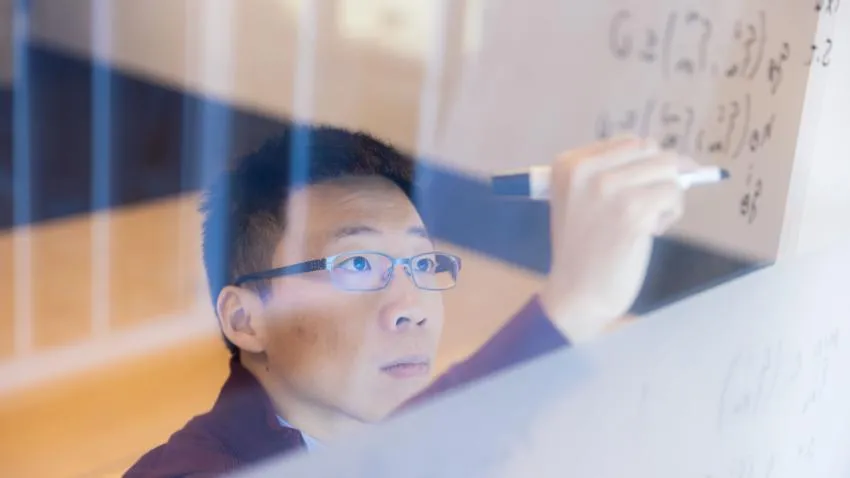
Assistant Professor Glen Chou is launching research initiatives to develop algorithms enabling autonomous systems to learn and adapt while acting with safety and security assurances. Photo by Terence Rushin, College of Computing
Every year, people in California risk their lives battling wildfires, but in the future, machines powered by artificial intelligence will be on the front lines, not firefighters.
However, this new generation of self-thinking robots will need security protocols to ensure they aren’t susceptible to hackers. To integrate such robots into society, they must come with assurances that they will behave safely around humans.
It begs the question: can you guarantee the safety of something that doesn’t exist yet? It’s something Assistant Professor Glen Chou hopes to accomplish by developing algorithms that will enable autonomous systems to learn and adapt while acting with safety and security assurances.
He plans to launch research initiatives, in collaboration with the School of Cybersecurity and Privacy and the Daniel Guggenheim School of Aerospace Engineering, to secure this new technological frontier as it develops.
“To operate in uncertain real-world environments, robots and other autonomous systems need to leverage and adapt a complex network of perception and control algorithms to turn sensor data into actions,” he said. “To obtain realistic assurances, we must do a joint safety and security analysis on these sensors and algorithms simultaneously, rather than one at a time.”
This end-to-end method would proactively look for flaws in the robot’s systems rather than wait for them to be exploited. This would lead to intrinsically robust robotic systems that can recover from failures.
[RELATED: New Algorithm Teaches Robots Through Human Perspective]
Chou said this research will be helpful in other domains, including advanced space exploration. If a space rover is sent to one of Saturn’s moons, for example, it needs to be able to act and think independently of scientists on Earth.
Aside from fighting fires and exploring space, this technology could perform maintenance in nuclear reactors, automatically maintain the power grid, and make autonomous surgery safer. It could also bring assistive robots into the home, enabling higher standards of care.
This is a challenging domain where safety, security, and privacy concerns are paramount due to frequent, close contact with humans.
This will start in the newly established Trustworthy Robotics Lab at Georgia Tech, which Chou directs. He and his Ph.D. students will design principled algorithms that enable general-purpose robots and autonomous systems to operate capably, safely, and securely with humans while remaining resilient to real-world failures and uncertainty.
Chou earned dual bachelor’s degrees in electrical engineering and computer sciences as well as mechanical engineering from the University of California, Berkeley, in 2017, a master’s and Ph.D. in electrical and computer engineering from the University of Michigan in 2019 and 2022, respectively.
He was a postdoc at the Massachusetts Institute of Technology Computer Science & Artificial Intelligence Laboratory before joining Georgia Tech in November 2024. He received the National Defense Science and Engineering Graduate fellowship program, NSF Graduate Research fellowships, and was named a Robotics: Science and Systems Pioneer in 2022.
News Contact
J.P. Popham, Communications Officer
Georgia Tech
School of Cybersecurity & Privacy
john.popham@cc.gatech.edu
Men and women in California put their lives on the line when battling wildfires every year, but there is a future where machines powered by artificial intelligence are on the front lines, not firefighters.
However, this new generation of self-thinking robots would need security protocols to ensure they aren’t susceptible to hackers. To integrate such robots into society, they must come with assurances that they will behave safely around humans.
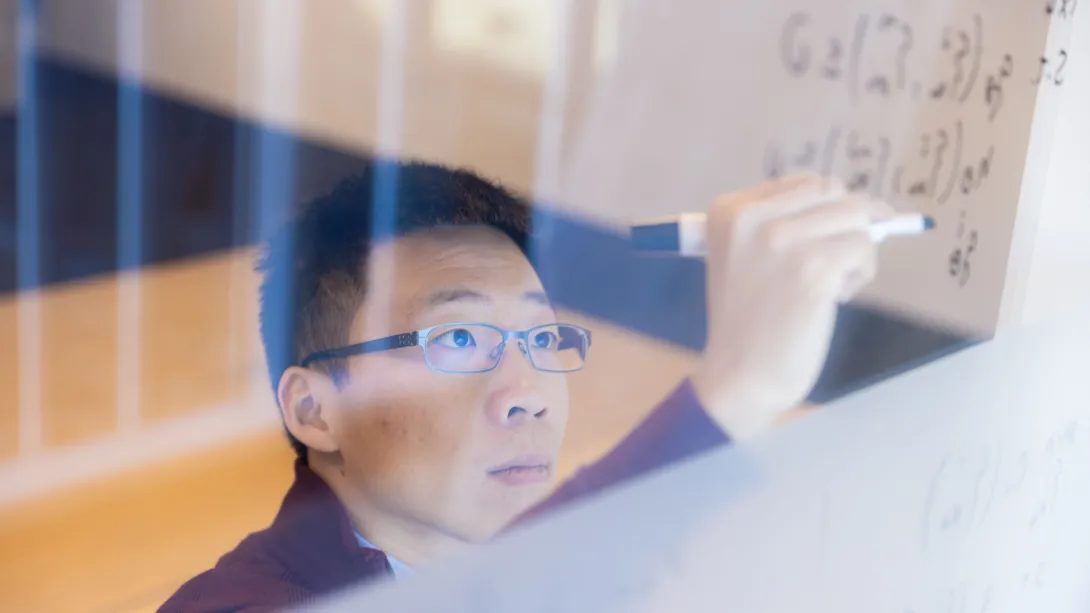
It begs the question: can you guarantee the safety of something that doesn’t exist yet? It’s something Assistant Professor Glen Chou hopes to accomplish by developing algorithms that will enable autonomous systems to learn and adapt while acting with safety and security assurances.
He plans to launch research initiatives, in collaboration with the School of Cybersecurity and Privacy and the Daniel Guggenheim School of Aerospace Engineering, to secure this new technological frontier as it develops.
“To operate in uncertain real-world environments, robots and other autonomous systems need to leverage and adapt a complex network of perception and control algorithms to turn sensor data into actions,” he said. “To obtain realistic assurances, we must do a joint safety and security analysis on these sensors and algorithms simultaneously, rather than one at a time.”
This end-to-end method would proactively look for flaws in the robot’s systems rather than wait for them to be exploited. This would lead to intrinsically robust robotic systems that can recover from failures.
Chou said this research will be useful in other domains, including advanced space exploration. If a space rover is sent to one of Saturn’s moons, for example, it needs to be able to act and think independently of scientists on Earth.
Aside from fighting fires and exploring space, this technology could perform maintenance in nuclear reactors, automatically maintain the power grid, and make autonomous surgery safer. It could also bring assistive robots into the home, enabling higher standards of care.
This is a challenging domain where safety, security, and privacy concerns are paramount due to frequent, close contact with humans.
This will start in the newly established Trustworthy Robotics Lab at Georgia Tech, which Chou directs. He and his Ph.D. students will design principled algorithms that enable general-purpose robots and autonomous systems to operate capably, safely, and securely with humans while remaining resilient to real-world failures and uncertainty.
Chou earned dual bachelor’s degrees in electrical engineering and computer sciences as well as mechanical engineering from University of California Berkeley in 2017, a master’s and Ph.D. in electrical and computer engineering from the University of Michigan in 2019 and 2022, respectively. He was a postdoc at MIT Computer Science & Artificial Intelligence Laboratory prior to joining Georgia Tech in November 2024. He is a recipient of the National Defense Science and Engineering Graduate fellowship program, NSF Graduate Research fellowships, and was named a Robotics: Science and Systems Pioneer in 2022.
News Contact
John (JP) Popham
Communications Officer II
College of Computing | School of Cybersecurity and Privacy
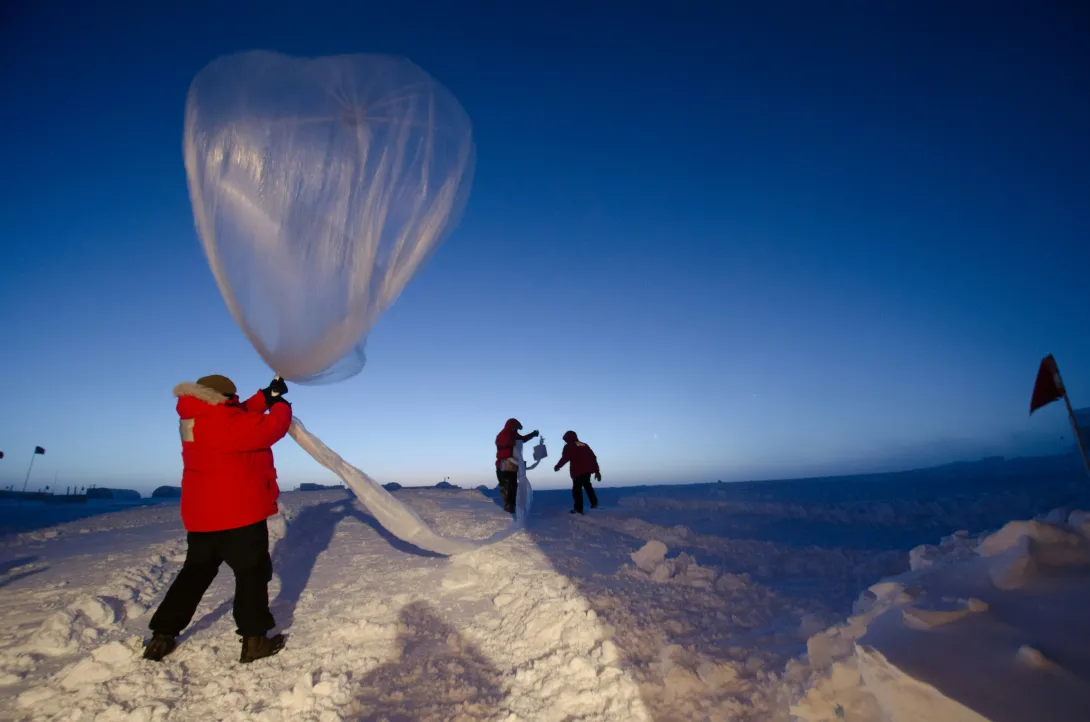
Researchers launch a a lightweight, balloon-borne instrument to collect data. "To keep advancing, we need scientists who can determine what data we need, collect that data, and solve problems," Bracco says. (NOAA)
Exponential growth in big data and computing power is transforming climate science, where machine learning is playing a critical role in mapping the physics of our changing climate.
“What is happening within the field is revolutionary,” says School of Earth and Atmospheric Sciences Associate Chair and Professor Annalisa Bracco, adding that because many climate-related processes — from ocean currents to melting glaciers and weather patterns — can be described with physical equations, these advancements have the potential to help us understand and predict climate in critically important ways.
Bracco is the lead author of a new review paper providing a comprehensive look at the intersection of AI and climate physics.
The result of an international collaboration between Georgia Tech’s Bracco, Julien Brajard (Nansen Environmental and Remote Sensing Center), Henk A. Dijkstra (Utrecht University), Pedram Hassanzadeh (University of Chicago), Christian Lessig (European Centre for Medium-Range Weather Forecasts), and Claire Monteleoni (University of Colorado Boulder), the paper, ‘Machine learning for the physics of climate,’ was recently published in Nature Reviews Physics.
“One of our team’s goals was to help people think deeply on how climate science and AI intersect,” Bracco shares. “Machine learning is allowing us to study the physics of climate in a way that was previously impossible. Coupled with increasing amounts of data and observations, we can now investigate climate at scales and resolutions we’ve never been able to before.”
Connecting hidden dots
The team showed that ML is driving change in three key areas: accounting for missing observational data, creating more robust climate models, and enhancing predictions, especially in weather forecasting. However, the research also underscores the limits of AI — and how researchers can work to fill those gaps.
“Machine learning has been fantastic in allowing us to expand the time and the spatial scales for which we have measurements,” says Bracco, explaining that ML could help fill in missing data points — creating a more robust record for researchers to reference. However, like patching a hole in a shirt, this works best when the rest of the material is intact.
“Machine learning can extrapolate from past conditions when observations are abundant, but it can’t yet predict future trends or collect the data we need,” Bracco adds. “To keep advancing, we need scientists who can determine what data we need, collect that data, and solve problems.”
Modeling climate, predicting weather
Machine learning is often used when improving climate models that can simulate changing systems like our atmosphere, oceans, land, biochemistry, and ice. “These models are limited because of our computing power, and are run on a three-dimensional grid,” Bracco explains: below the grid resolution, researchers need to approximate complex physics with simpler equations that computers can solve quickly, a process called ‘parameterization’.
Machine learning is changing that, offering new ways to improve parameterizations, she says. “We can run a model at extremely high resolutions for a short time, so that we don’t need to parameterize as many physical processes — using machine learning to derive the equations that best approximate what is happening at small scales,” she explains. “Then we can use those equations in a coarser model that we can run for hundreds of years.”
While a full climate model based solely on machine learning may remain out of reach, the team found that ML is advancing our ability to accurately predict weather systems and some climate phenomena like El Niño.
Previously, weather prediction was based on knowing the starting conditions — like temperature, humidity, and barometric pressure — and running a model based on physics equations to predict what might happen next. Now, machine learning is giving researchers the opportunity to learn from the past. “We can use information on what has happened when there were similar starting conditions in previous situations to predict the future without solving the underlying governing equations,” Bracco says. “And all while using orders-of-magnitude less computing resources.”
The human connection
Bracco emphasizes that while AI and ML play a critical role in accelerating research, humans are at the core of progress. “I think the in-person collaboration that led to this paper is, in itself, a testament to the importance of human interaction,” she says, recalling that the research was the result of a workshop organized at the Kavli Institute for Theoretical Physics — one of the team’s first in-person discussions after the Covid-19 pandemic.
“Machine learning is a fantastic tool — but it's not the solution to everything,” she adds. “There is also a real need for human researchers collecting high-quality data, and for interdisciplinary collaboration across fields. I see this as a big challenge, but a great opportunity for computer scientists and physicists, mathematicians, biologists, and chemists to work together.”
Funding: National Science Foundation, European Research Council, Office of Naval Research, US Department of Energy, European Space Agency, Choose France Chair in AI.
DOI: https://doi.org/10.1038/s42254-024-00776-3
News Contact
Written by Selena Langner