
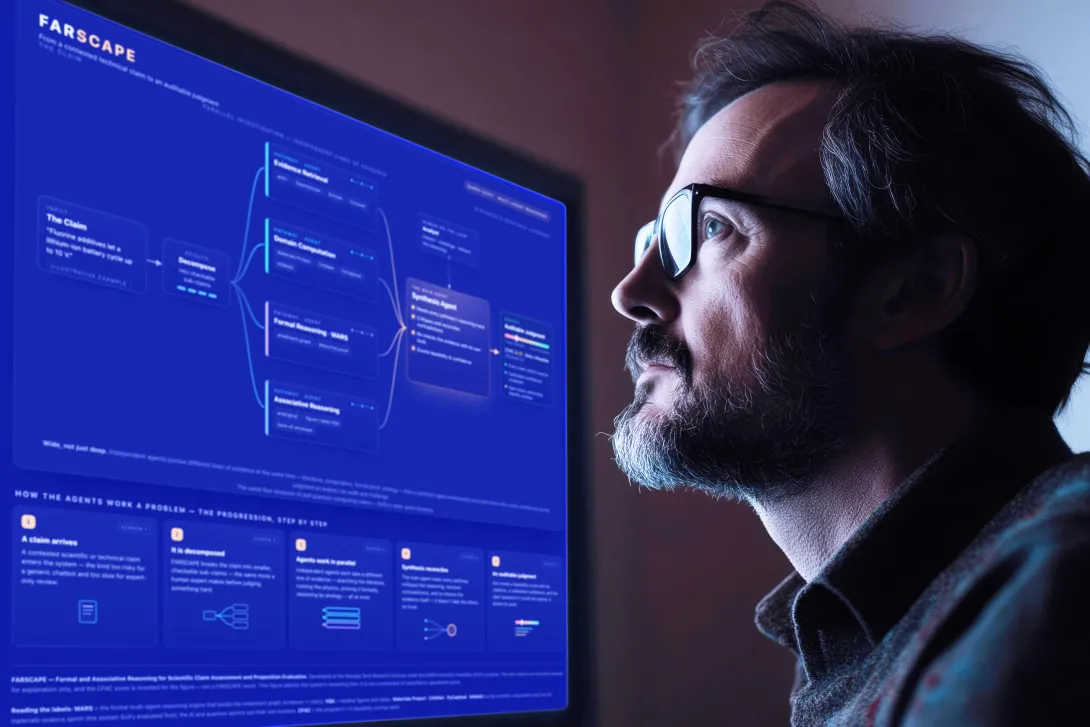
FARSCAPE provides a new way to evaluate a wide range of scientific and technical claims. The chart shows the step-by-step process.
Advances in materials science and drug discovery increasingly depend on robotic laboratories that synthesize and test candidate compounds without human intervention. Artificial intelligence models can now propose custom materials and potential drug molecules far faster than robotic labs can physically test them. The resulting pools of candidate materials dramatically outstrip the availability of experimental testing.
Deciding which candidates deserve scarce laboratory time is itself a hard problem. It requires weighing scientific plausibility against practical constraints — likely impact, expected effectiveness, and eventual manufacturability — considerations that are difficult to apply consistently across thousands of candidates.
An artificial intelligence (AI) program developed at the Georgia Tech Research Institute (GTRI) could provide a new way to narrow that hypothesis pool down to a rate that robotic laboratories can actually test, and more broadly, to evaluate a wide range of scientific and technical claims that would otherwise overwhelm human assessment.
Known as FARSCAPE, the program was developed to support a research project organized by the U.S. Defense Advanced Research Projects Agency (DARPA) to evaluate a broad range of feasibility questions. By breaking down challenging questions into smaller components that can be evaluated by a team of independent computer agents, FARSCAPE uses a “chain of thought” approach to provide answers in the form of probabilities. It then helps humans check the rationales for its assessment.
Read the full article on the Georgia Tech Research Institute news page
News Contact
gtri.media@gtri.gatech.edu
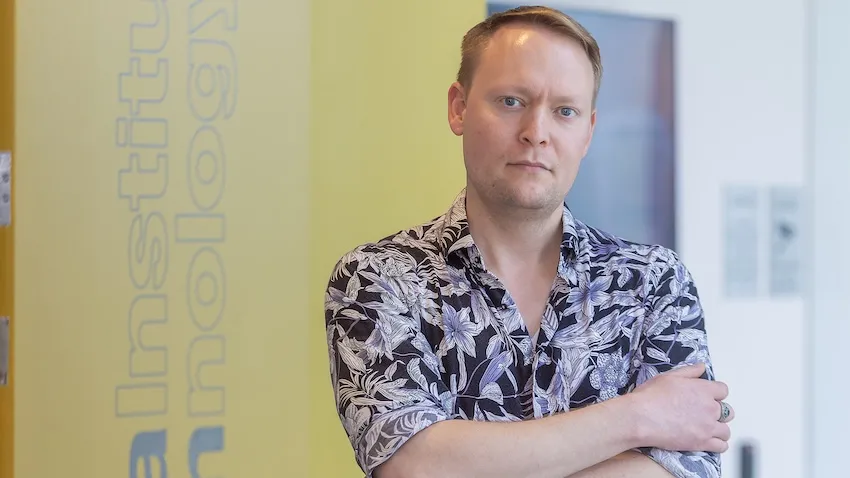
Jesse Thomason has seen his research evolve over the last decade.
It began with a focus on helping computer systems incorporate human language into their perception of the world. Could a robot tell humans that a heavy object is straining its arm? Does it know that a container makes a sound when it is picked up or dropped?
Now, Thomason’s research has become more human-centered, which is one reason he feels at home as he joins the faculty at Georgia Tech’s School of Interactive Computing as an associate professor.
Thomason comes to Georgia Tech after spending five years as an assistant professor at the University of Southern California’s Thomas Lord Department of Computer Science.
He will move his Grounding Language in Actions, Multimodal Observation, and Robots (GLAMOR) lab to Tech. The lab explores methods for connecting natural language processing to robotics.
While pursuing his computer science Ph.D. at the University of Texas, Thomason researched early NLP systems before large-language models such as ChatGPT and Google Gemini were introduced.
Thomason then expanded into robotics to explore how roboticists can create new ways to communicate with robots using computational representations of language.
“The idea was you could do something that looked like robot programming without as much engineering work if you used one of these coding modules to create a language-code interface,” Thomason said.
When OpenAI and Google released their commercial LLMs in 2022, Thomason felt a seismic shift.
“That area of NLP and robotics became more crowded and accessible with the advent of (LLMs),” Thomason said. “It created a huge inroad to roboticists being able to plug and play language technologies in a way they couldn’t before. Robotics hardware has also become much cheaper and more standardized.”
But as LLMs became universal tools accessible to everyone, Thomason said he started thinking more about how he could improve optimization for users.
“I became most interested in how language interfaces, starting in 2022, were suddenly everywhere,” he said. “Everybody had a chatbot on their phone. I wanted to see what we could do as researchers to make the interaction between an AI system like a language model and a person smoother and more beneficial.”
Thomason said he felt he needed a new environment where end users were at the center of the technology design process. He was drawn to the School of Interactive Computing for its reputation in human-computer interaction research.
“That was a big factor in my decision to move to the School of Interactive Computing, where you value that kind of human-centered computing,” he said.
“With the strong HCI researchers here, I have an opportunity to learn more from my colleagues about how to run high-quality human-subject studies, conduct participatory design, and identify actual users of a potential system and talk to them about what would be helpful.”
What can artificial intelligence (AI) do to protect software from cyberattacks?
Georgia Tech researchers spent two years helping to answer that question through DARPA’s AI Cyber Challenge (AIxCC), a competition designed to test whether AI could identify and fix security vulnerabilities in real-world software.
Now, they are sharing what they learned with the cybersecurity community.
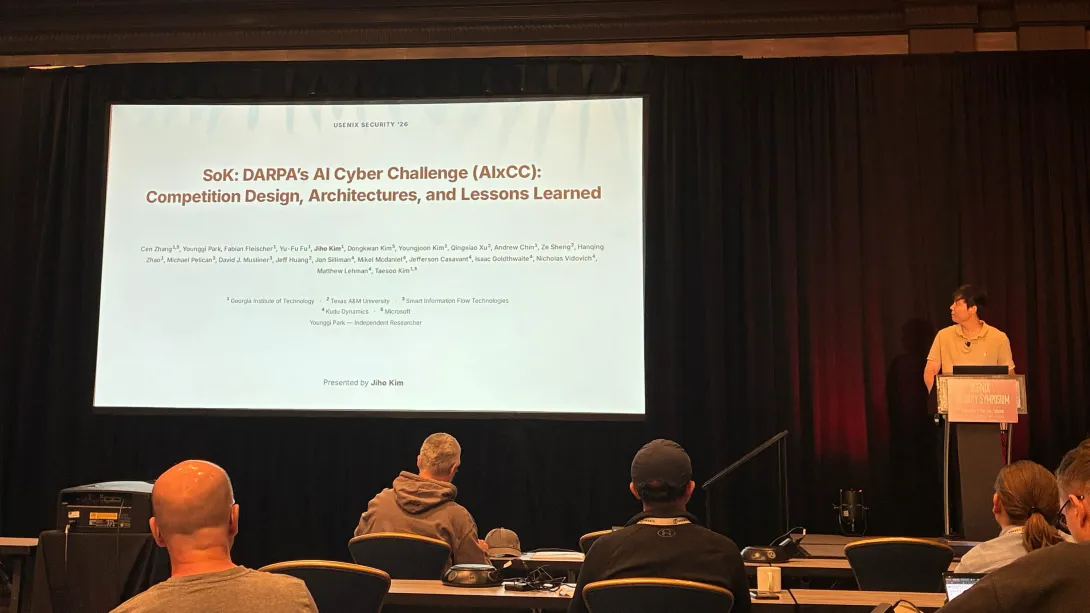
Their paper, SoK: DARPA’s AI Cyber Challenge (AIxCC): Competition Design, Architectures, and Lessons Learned, was presented at USENIX Security 2026, one of the world's leading cybersecurity conferences. The paper was selected as a runner-up for the conference’s distinguished paper award, placing it among 36 recognized papers from 362 accepted papers out of 3,028 submissions.
The paper examines how the seven finalist teams approached the competition and what the results reveal about the future of AI-powered cybersecurity.
Putting AI to the Test
AIxCC challenged teams to build Cyber Reasoning Systems (CRSs) that could operate with minimal human assistance to identify software vulnerabilities, develop fixes, and determine whether security alerts were real threats.
The teams had 143 hours to analyze 53 software projects during the final competition.
Georgia Tech’s Team Atlanta, which won the competition, used an approach that combined multiple AI agents with traditional security tools. Other teams used different approaches, including applying AI for specific tasks or building highly autonomous AI agents.
The variety of systems provided researchers with a rare opportunity to compare different approaches to AI-powered cybersecurity.
Lesson from the Competition
One of the biggest lessons was that reliability matters as much as intelligence.
Some systems were highly capable but struggled to remain operational while analyzing large, complicated software projects. The strongest systems were often those that could work reliably throughout the competition.
The researchers also found that AI and traditional security tools have different strengths. Traditional tools were still effective at finding common bugs, while AI performed better at reasoning through more complex problems.
However, AI-generated fixes remain a major challenge.
Researchers found that 38% to 46% of AI-generated patches were semantically incorrect. This means a patch might stop a security problem but also break a feature or create another problem.
The results show that AI can play an important role in cybersecurity, but human experts are still needed to verify the safety of AI-generated fixes.
Sharing the Lessons
Cen Zhang, the paper’s first author, said the research offers a unique look at the competition by combining lessons from the finalist teams, organizers, and DARPA’s data.
“This paper provides a unique angle on how AIxCC was designed, the techniques teams used, and what the scores reveal and conceal,” Zhang said.
Jiho Kim presented the paper at USENIX Security 2026. He said the presentation was an opportunity to share lessons from two years of work with the broader cybersecurity community.
“Seeing the strong interest and thoughtful questions from the audience made the experience particularly rewarding,” Kim said.
The researchers say they hope the lessons from AIxCC will help guide the next generation of cybersecurity tools.
News Contact
John Popham
Communications Officer for the School of Cybersecurity and Privacy
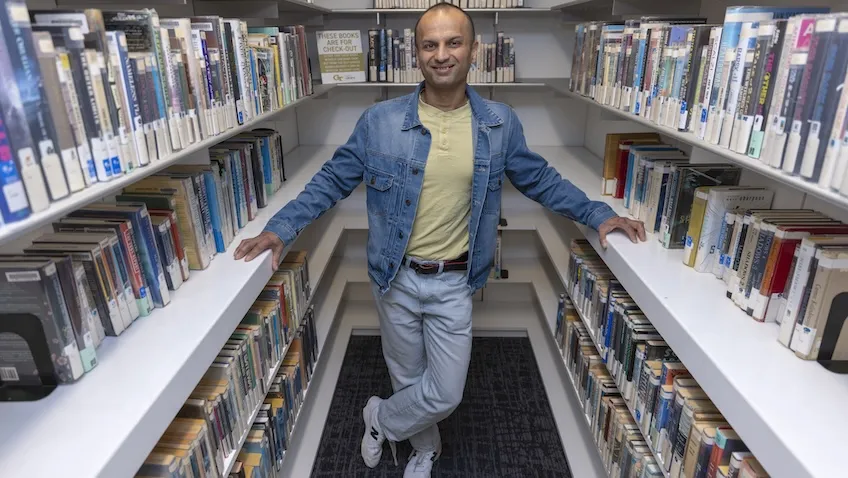
The release of the 2026 film adaptation of The Odyssey sparked intense debate among historians and classical scholars about its accuracy in depicting ancient Greece.
However, new artificial intelligence (AI) models developed at Georgia Tech may soon weigh in on the debate, providing a richer, more accurate understanding of what classical structures looked like than ever before.
The new AI and machine learning models developed by GT researchers will provide archaeologists and classical architecture experts with better analytical tools for studying temples, theaters, homes, and other structures from ancient Greece.
These models could enable researchers to draw conclusions and make new discoveries in a fraction of the time required to identify and analyze archaeological data using traditional statistical methods.
Kartik Goyal and Myrsini Mamoli received a $225,000 grant from the National Endowment of the Humanities earlier this year to support interdisciplinary collaboration, including the development of the models.
Goyal is an assistant professor in Tech’s School of Interactive Computing. He researches how natural language processing can benefit humanities scholars, including analyzing historical texts to make new discoveries.
Mamoli, a native of Greece, is an architectural historian and joint lecturer in the School of Architecture and School of History and Sociology . She conducted early research on how computational methods can help reconstruct historical architectural remains while earning her Ph.D. in architecture from Tech.
Mamoli is one of hundreds of researchers who spend their summers each year studying archaeological sites and monuments in Greece or Italy. She is among a select few working at the Ancient Agora in Athens.
“The Agora is where the political buildings of Athens emerged, and democracy was born, so it’s one of the most important sites in the classical world,” said Mamoli.
“Having been excavated by the American School of Classical Studies in Athens for almost 100 years, it’s the most well-funded, systematically explored, and most digitally well-documented site.”
More than 180,000 artifacts have been uncovered at the Ancient Agora.
The physical structures that have survived for thousands of years, along with recorded data and references in ancient texts, are the primary sources scholars rely on to determine what buildings might have looked like in antiquity.
Mamoli said identifying and studying all comparable structures and formulating hypotheses about them takes years. Every discovery made at the Agora since 1933 has a digitized record, leaving a massive amount of data to sort through.
AI can comb through it in a matter of moments and help researchers fill the gaps.
“Anything I want to look at, I can access it online, but the process of going through and connecting the dots and identifying certain design principles like proportions and material is tedious. Imagine if we could feed this data into an AI model that would automatically discover the connections.”
Mamoli said architecture has its own “language” that can be analyzed as a shape grammar. This visual, rule-based mathematical concept is used to generate designs in that language. Each architectural style has its own shape grammar.
Mamoli’s work as a Ph.D. student involved manually computing this information to generate 2D visualizations. Now, she hopes Goyal’s models will enable the instant conversion of data into more subjective and accurate visualizations.
“You encode these design principles and then apply them recursively, and you come up with various possible reconstructions,” she said. “Making these rules is time-consuming, so we hope with AI, a whole fresh approach can happen where AI can discover the rules by looking at the data at scale.”
Goyal has already used similar methods to analyze early modern English printed books and identify their printing origins. When Mamoli approached him about collaborating with her, he believed the same process could be applied to reconstructing classical buildings.
“Ancient texts and historical architecture records can help us fill in the blanks,” Goyal said.
“These systems can automatically infer patterns from the fragmentary plans described in various texts. To automatically generate a proposed reconstruction, we are deploying machine learning techniques. They make the model not just think about producing tokens or pixels, but also about the aesthetic and geometric features.”
Goyal said he’s aware some humanities scholars have expressed concern that AI could compromise scholarly integrity. Large-language models, for example, can struggle to account for cultural nuances and often inject biased hallucinations into their output.
“This is reflected in many problems in the humanities that I’m working on — the need for AI systems to be more transparent and more easily modifiable,” he said. “If we run these models blindly, we risk incorporating undetected bias.”
Mamoli said it’s important to limit the scope of AI and think of it as a tool.
“I strongly believe that AI should not replace the human brain,” she said. “I don’t see it replacing the scholarly work that is being done. I see it as assisting it.
For archaeologists, it may be necessary.
With so many sites being excavated, it could be the best way to keep track of hundreds of thousands of artifacts and use them to gain a clearer historical understanding.
“Right now, I am working in the Section Iota in the Agora of Athens,” said Mamoli.
“This is a disturbed site with artifacts from all over the Agora because people have moved them for secondary uses. What if an AI model could instantly create a map to trace that movement and show exactly where these fragments came from?”


Most people know turbulence as the force that can make airplane flights bumpy. Scientists recognize it as one of the most important, yet unsolved, problems in physics.
Despite decades of research, the chaotic nature of turbulence makes it difficult to predict and control. This challenge impedes more than smoother air travel. Solving the turbulence problem could lead to advances in areas ranging from sustainable energy to training a smarter workforce for the era of artificial intelligence (AI).
To advance understanding of turbulence, the National Science Foundation is establishing a new, $30 million Science and Technology Center (STC) at Michigan State University. Georgia Tech is among eight universities supporting the center.
Assistant Professor Qi Tang will join the STC for Transformative Explorations in Multi-Physics and Engineering of Scientific Turbulence (TEMPEST). TEMPEST, launching on Sept. 1, aims to build trustworthy, predictive models of real-world turbulence.
Tang will lead TEMPEST’s modeling and scientific machine learning (ML) efforts. NSF will fund Tang and Georgia Tech with over $1 million from the center’s five-year, $30 million award.
By understanding and predicting turbulence, TEMPEST can unlock new applications, with a focus on fusion energy and national security. The center will also generate long-term research projects with applications in air and space flight, manufacturing, chemistry, and broaden science education and AI fluency.
“Turbulence has resisted prediction for a century,” said Tang, a faculty member in the School of Computational Science and Engineering (CSE).
“STC TEMPEST aims to develop a unified, predictive science that advances fusion energy, improves hypersonic technologies, and deepens our understanding of how stars created the elements that make up our world and ourselves. For everyday people, the center points toward abundant clean energy and faster, more efficient flight."
Turbulence is the motion of a fluid characterized by chaotic changes in pressure and speed. Turbulent flows can occur across all scales, from interactions between subatomic particles to astrophysical scales, including supernovas, black holes, and cosmic rays.
While turbulent flows are common and occur naturally, scientists still do not fully understand them. Small changes in a turbulent flow can produce dramatically different outcomes. Combined with the countless interactions across multiple scales of time and space, this makes turbulence extraordinarily difficult to predict.
“Rather than studying individual pieces of this enormously complex problem in isolation, we are bringing together theory, experimentation, computation and artificial intelligence to develop a deeper understanding of turbulence across scales,” said Michael Murillo, an MSU professor and the director of TEMPEST.
“Our goal is not simply to understand turbulence better, but to make it predictable and controllable in ways that will enable new technologies and scientific discoveries.”
The NSF TEMPEST award supports students and researchers at Michigan State University, Auburn University, Baylor University, Georgia Tech, San José State University, Texas A&M University-Corpus Christi, University of Rochester, and Yale University to combine theory, computation, AI techniques, and experimentation to build trustworthy predictive models of real-world turbulence for high-consequence applications.
Additional partners include Los Alamos National Laboratory, Sandia National Laboratories, Lawrence Livermore National Laboratory, Pacific Fusion, and General Atomics.
Together, TEMPEST researchers will build more accurate and reliable physics-grounded models. The center will test new ideas against real-world observations, then use those results to refine the models.
Tang contributes expertise in ML, scientific computing, and plasma physics to STC TEMPEST.
Earlier this year, Tang received an Early Career Research award from the Department of Energy’s Office of Science. He is using the award to build ML and data science tools that help scientists analyze massive datasets from fusion experiments and simulations.
This interdisciplinary approach is intended to move science from understanding why turbulence behaves as it does to predicting how it will behave. Through prediction and simulation, scientists could eventually engineer solutions to control turbulence in real-world scenarios.
The center will make its data and software broadly available and engage the public through museum exhibitions, immersive media, and educational programs that are expected to reach more than 10,000 K-12 students annually. TEMPEST will also help train an AI-fluent scientific workforce prepared to tackle complex problems across disciplines.
“One reason I am excited to work in TEMPEST is because it aligns perfectly with our School of CSE mission. As a discipline, CSE complements theory and experimentation as a mode of scientific discovery,” Tang said.
“We build computational models to simulate scientific and engineering concepts, like turbulence in this case, so that we can test theories that are too difficult, expensive, or risky for physical experiments.”
News Contact
Bryant Wine, Communications Officer
bryant.wine@cc.gatech.edu
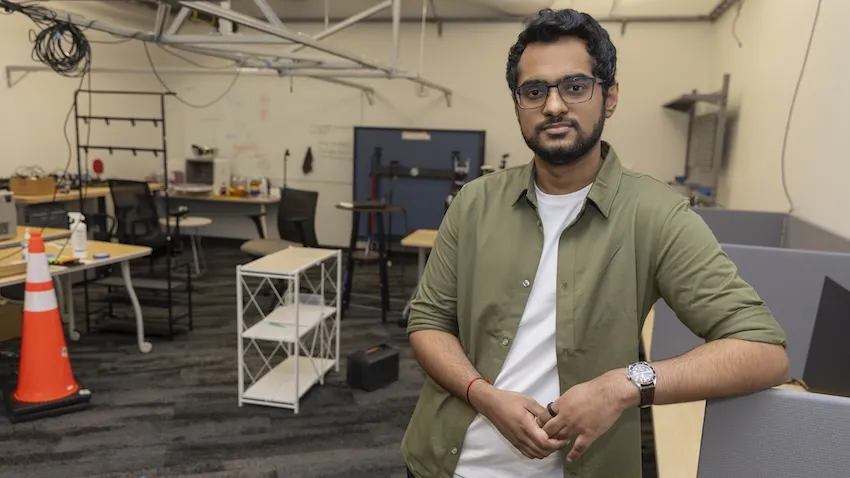
When Siddharth Karamcheti watches robot demonstration videos, he pays attention to how close humans are to the robot.
Karamcheti said there are times when he doesn’t see any humans at all. Those instances reinforce the perception that robots are replacing humans rather than assisting them.
“You have humanoid robots doing things like folding laundry, and you see videos of it on social media,” Karamcheti said. “It bothers me that in all these videos, I see the robot doing these tasks alone without a single person around them. True human-robot collaboration is missing.”
As he joins the Georgia Tech School of Interactive Computing as an assistant professor, Karamcheti seeks to improve human-robot collaboration and maximize output through his research.
Karamcheti comes to Tech after earning his Ph.D. in computer science (CS) from Stanford University. He also holds bachelor’s degrees in CS and literary arts from Brown University.
In addition to human-robot interaction, he has conducted research on fine-tuning vision-language-action (VLA) models.
VLAs are artificial intelligence (AI) systems typically built by fine-tuning vision-language models (VLMs) or large language models (LLMs). They use visual perception, natural language, and physical action to perform tasks.
“I have a high-level vision of what I think robotics should be, but there are many winding paths I like to take along the way as I try to understand why something works the way it does,” Karamcheti said.
Karamcheti said his vision was inspired by the movie Iron Man and by how the main character, Tony Stark, interacts with robots in his lab.
“I don’t want a robot that replaces all the work I’m doing in my life,” he said. “I want a robot that’s embedded in my life like my laptop or smartphone.
“They’re making it possible for me to do more things. I also want to make it so that robots start doing more and learning more when I leave the room.”
Karamcheti said the School of IC is a “dream” job for him because of its renowned faculty in human-robot interaction. It’s the ideal place to keep humans at the center of his research.
“We must design models around interaction and the idea that there’s going to be a person in the room. Robots don’t need to be perfect at any one thing. They just need to be able to ask for help when it’s needed and learn from those teaching interactions.”
Karamecheti said many robotics researchers are pursuing robots that are as close to perfect as possible so they can operate without human oversight. However, the amount of money and data needed to get there is substantial.
“I think you see diminishing returns with scale. If a robot performs tasks correctly 90% of the time, the data required to go from 90% to 95% is much less than that required to go from 95% to 99%. Many robotics companies and labs are investing to reach a 99% success rate,” he said.
Karamcheti added that the pursuit of perfection shouldn’t prevent a robot from being deployed. They could be deployed at 95% and increase their success rate by working with and learning from humans.
“Once I have a robot that’s 95% capable, I understand that 5% of failures will occur for a specific task. If I know a human is always going to be near the robot, I can design a system that sequences tasks and anticipates human intervention.”
Karamcheti is recruiting students to join his lab who bring new perspectives to robotics.
“I’m looking for students who aren’t afraid to challenge common assumptions and who enjoy hacking and building,” he said. “I want to work with students who have strong opinions about how robotics should look.”
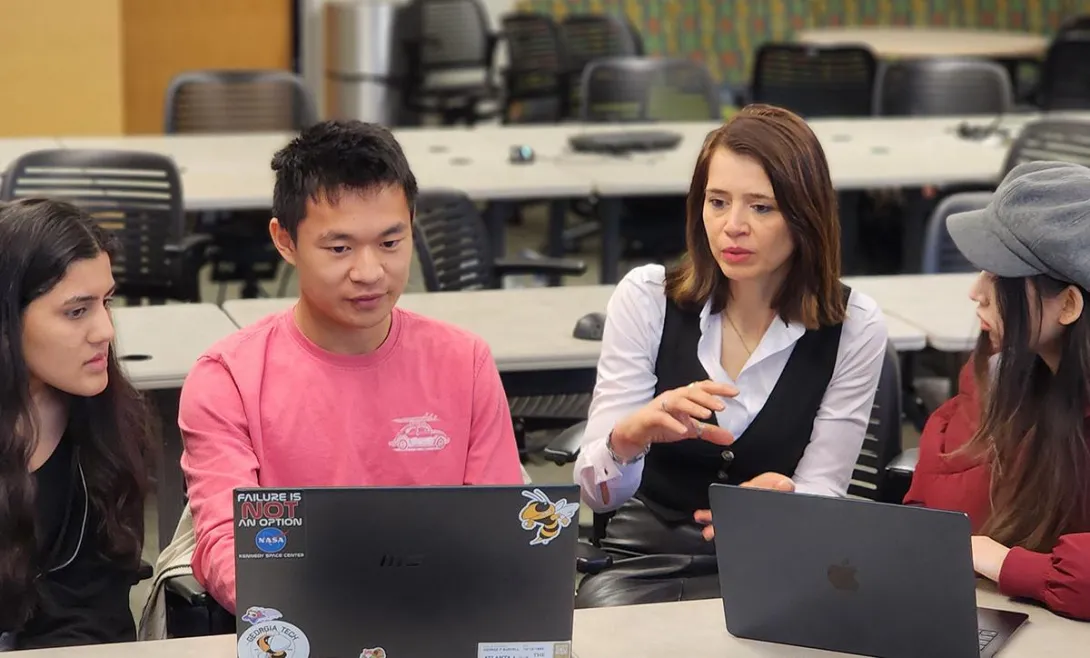
Georgia Tech is introducing a new Academic AI Strategy and launching a new Academic AI Playbook. This marks the next step in the Institute's efforts to prepare students for an AI-enabled future while supporting innovation across teaching and learning.
The Academic AI Strategy establishes a shared vision for how artificial intelligence can support faculty-led innovation while preparing students for a future in which AI will play an increasingly important role across professions, industries, and society
Rooted in academic freedom, the strategy reflects Georgia Tech's commitment to ensuring students are prepared to use AI effectively, thoughtfully, and responsibly while empowering faculty and staff to explore new approaches to teaching, learning, and discovery. The strategy recognizes that decisions about AI in academic settings are best informed by faculty expertise and disciplinary judgment.
Led by Provost and Executive Vice President for Academic Affairs Raheem Beyah, the strategy was shaped by faculty, staff, students, and academic leaders from across the Institute. It focuses on three priorities: AI Fluency for Every Student, AI Innovation Across the Academic Enterprise, and Institutional Leadership and Engagement.
"Artificial intelligence is transforming nearly every industry and profession our graduates will enter," said Beyah. "Georgia Tech has a responsibility to ensure our students are prepared not only to work with these technologies, but to understand their possibilities, limitations, and impacts. This strategy provides a road map for helping our community engage with AI in ways that advance learning, discovery, and societal good."
Helping bring that vision into practice is the Academic AI Playbook, led by David Joyner, interim vice provost for AI in Education. The effort began as a campus-wide initiative to better understand how our instructional community was using, teaching, and responding to AI in Georgia Tech courses. Faculty were invited to share examples of how they were incorporating AI into instruction, teaching AI concepts within their disciplines, and adapting coursework to reflect AI’s growing influence across society.
What began as an effort to inform future planning evolved into an opportunity to capture and share the wide range of work already underway across Georgia Tech.
"In order to understand what the Institute should do regarding AI in education, we needed to understand what faculty were already doing," said Joyner. "While higher education has been wrestling with the impact of AI, Georgia Tech faculty have turned hundreds of classes into micro-laboratories to explore how these technologies can support teaching and learning."
The first edition of the playbook features 67 faculty-authored articles representing every College at Georgia Tech, along with 20 lessons drawn from classroom experience. The collection includes examples of faculty using AI to support instruction, teaching students how AI is shaping their fields, and redesigning assignments and learning experiences for an increasingly AI-enabled world. Together, the articles provide practical, discipline-specific insights that faculty can adapt to their own teaching contexts.
As additional resources, examples, and opportunities for engagement emerge, the Institute will continue sharing guidance and fostering conversations that help faculty shape how AI should and should not be used in the classroom.
News Contact
Julian Hills, Executive Communications Specialist, Institute Communications
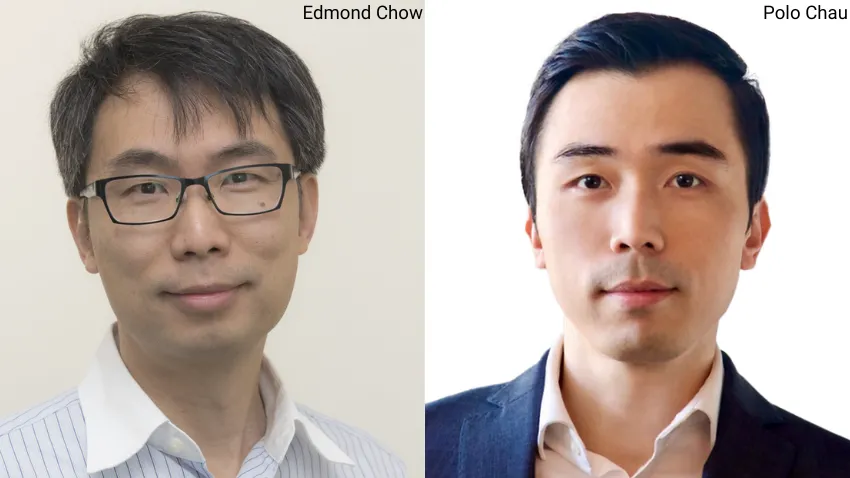
Georgia Tech’s School of Computational Science and Engineering (CSE) has undergone remarkable expansion in recent years, doubling its faculty, broadening its programs and curriculum, and strengthening its reputation as a leading research hub.
Now, as Professor Edmond Chow prepares to teach at Georgia Tech-Europe for the 2026-2027 academic year, Professor Polo Chau is stepping into the role of associate chair to help guide the School’s next phase of growth.
Their leadership transition comes at a time when demand for expertise in artificial intelligence (AI), data science and analytics, and high-performance computing accelerates across industry, government, and academia.
“On behalf of the students, faculty, and staff of CSE, I extend our heartfelt gratitude to Edmond for his years of dedicated service as associate chair,” said School of CSE Regents’ Professor and Chair Haesun Park.
“Polo is a respected leader, an accomplished scholar, and a passionate advocate for our community. I am confident he will build on Edmond’s strong foundation to guide the School's continued success.”
The School of CSE associate chair helps lead faculty development, academic planning, and new initiatives. These responsibilities include course scheduling, teaching assignments, and reviewing proposals for new courses.
Rapid growth defined Chow’s tenure as associate chair, which started in summer 2021.
As associate chair, Chow led CSE’s faculty recruiting committee. The School hired 15 new professors during his term, doubling the faculty in that span.
Chow’s relationship with new hires didn’t end with recruiting. Each new professor needed support to onboard smoothly, which he helped facilitate by pairing new hires with faculty mentors in the School.
Chow helped new and veteran faculty alike design courses centered on their expertise and the field's emerging needs. As a result, he broadened and enriched the CSE curriculum at Georgia Tech.
Chow led CSE’s effort to secure space in the Coda Building to accommodate so many new faculty and students. With his help, the School added the east wing of the 13th floor and space for four labs on the fifth floor.
While at Georgia Tech-Europe, Chow will teach CS 7545: Machine Learning Theory and CS 1371: Computing for Engineers.
Chow is a fellow of the Society for Industrial and Applied Mathematics (SIAM). Like CSE, the professional society recognized Chow’s leadership and administrative talents, selecting him for several roles.
With his associate chair responsibilities concluded, Chow will focus more on his role as SIAM’s vice president for programs. He also co-chairs the organizing committee for the SIAM Conference on CSE, to be held Feb. 22-26, 2027, in Pittsburgh.
Previously, Chow served as vice chair of the SIAM Activity Group on CSE from 2025 to 2026. He co-chaired the organizing committee for SIAM’s 2022 annual meeting.
"It has been an honor to serve CSE,” Chow said. “I am also inspired to have worked alongside others, including Haesun, who care so much for the School.”
Since joining Georgia Tech in 2012, Chau has distinguished himself as a leading expert in data science and AI.
Chau’s research combines machine learning and visualization to create scalable, interactive tools. His lab has developed applications for studying massive datasets, interpreting complex AI models, and solving real-world problems in cybersecurity, human-centered AI, graph visualization and mining, and social good.
Chau has taught CSE 4242/6242: Data and Visual Analytics since 2013. The course has grown into the world's largest semester-long university class on the subject. More than 19,600 students have taken the course throughout its history.
Alongside his research and teaching, Chau has held several leadership roles at Georgia Tech.
Since 2014, Chau has served as associate director of Georgia Tech’s M.S. Analytics program. The program celebrated its 10th anniversary in 2024, when he received the Innovator Award for his leadership and pioneering approaches to analytics education.
In 2019, Chau accepted roles as director of industry relations for the Institute for Data Engineering and Science (IDEaS) and as associate director of corporate relations for the Machine Learning Center (ML@GT). Chau recently stepped down from his leadership positions with IDEaS and ML@GT to accommodate his responsibilities as CSE’s associate chair.
“I enjoy building deep connections with people, and this role provides a lot of opportunities to do that,” Chau said. “Faculty development helps my colleagues build the careers that they want, and collectively shape CSE’s future. That’s what I look forward to the most.”
News Contact
Bryant Wine, Communications Officer
bryant.wine@cc.gatech.edu
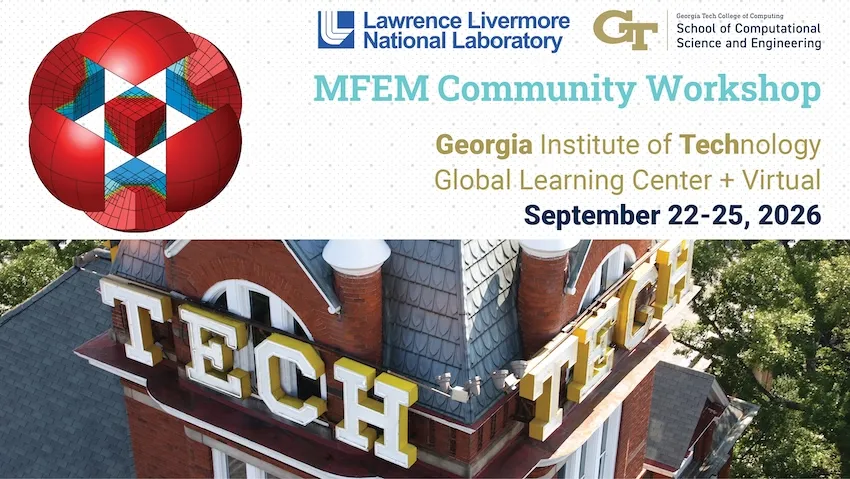
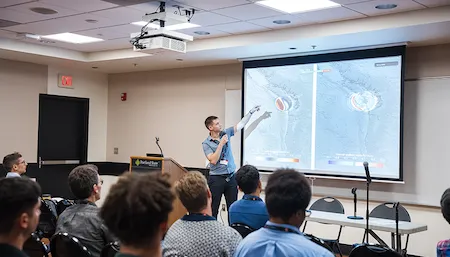
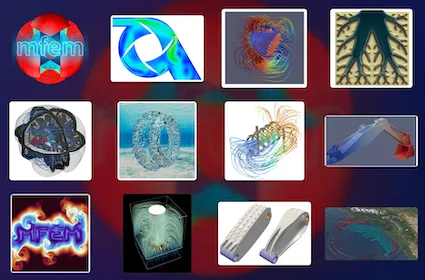
Before building a fusion reactor, designing a new aircraft, or forecasting tsunamis, scientists and engineers test their ideas using computer simulations. The people who create and use the software that powers these simulations are meeting in Atlanta this fall to share best practices and improve their tools.
Georgia Tech is hosting the 2026 MFEM (Modular Finite Element Methods) Community Workshop, Sept. 22-25. MFEM supports research in computational physics, earth systems modeling, engineering, energy, and other fields.
The four-day workshop is being held at the Georgia Tech Global Learning Center and will focus on improving software for scientific computing and discovery. Participants can also attend online. Registration for the workshop is open through Sept. 11.
“We're very excited and grateful for the opportunity to have this workshop at Georgia Tech,” said Tzanio Kolev, a computational mathematician at Lawrence Livermore National Laboratory (LLNL).
“Georgia Tech has a great reputation in our field, and hosting at universities is a great way to connect with students. We see students as our future colleagues who will improve MFEM for generations to come.”
MFEM is an open-source software library for solving equations in computational models. Scientists and engineers use it to build and test virtual designs on some of the world’s most powerful supercomputers before creating real-world prototypes.
In fact, MFEM powered a tsunami early-warning model that ran on El Capitan, the world’s second-fastest supercomputer. The framework completed a simulation in a fraction of a second, 10 billion times faster than conventional algorithms. Kolev was part of the team that won the 2025 Gordon Bell Prize for the project.
MFEM’s impact extends beyond its original developers. The AWS Center for Quantum Computing uses the software as the foundation for a tool called Palace. This project runs 3D electromagnetic simulations to aid in the design of quantum computing hardware.
“These workshops have been very beneficial for both the broader user community and also for MFEM developers,” said Kolev.
“Every workshop, we are surprised by the ways people are building on our work, seeing what incredible, interesting, amazing things they do with it.”
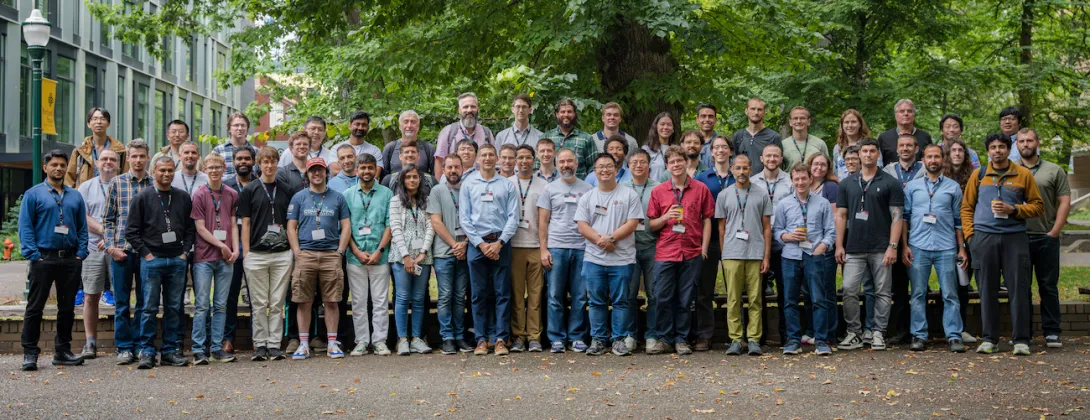
Next month’s workshop at Georgia Tech will connect MFEM users and developers from national laboratories, academia, government, and industry.
The United Kingdom Atomic Energy Authority joins LLNL and Georgia Tech in sponsoring this year’s workshop. Nearly 20 scientists from Department of Energy (DOE) laboratories are attending in person. They represent LLNL, Los Alamos National Laboratory, Princeton Plasma Physics Laboratory, and the Naval Nuclear Laboratory.
The workshop’s first day features a free, hybrid tutorial. LLNL’s High Performance Computing Innovation Center will lead the tutorial, helping new users get started with MFEM and learn what the software can do. The tutorial requires separate registration for virtual participants.
The workshop will also host a simulation and visualization contest. Participants can submit images and videos of simulations using MFEM, which will be posted in a gallery. The workshop organizers will select an overall winner.
Further workshop activities include:
- MFEM news and roadmap for future projects
- Talks from application developers
- Student-user lightning talks
- In-person poster sessions
- Office hours with MFEM experts
The MFEM workshop highlights the role open-source software plays in scientific discovery.
By making tools freely available, researchers can build on each other’s work rather than starting from scratch. This shared approach can accelerate innovation, improve software, and make advanced computing tools accessible to a wider community.
Georgia Tech hosts a Center for Scientific Software Engineering and an Open-Source Program Office. This year’s workshop connects these units with the MFEM community to help put the software into the hands of more researchers across science and engineering.
“The MFEM workshop aims to foster collaboration among all MFEM users and developers,” said Qi Tang, a workshop organizer and assistant professor in the School of Computational Science and Engineering.
“Hosting its annual community workshop brings researchers from DOE laboratories, universities, and industry to campus, giving Georgia Tech faculty and students direct access to experts from the field.”
News Contact
Bryant Wine, Communications Officer
bryant.wine@cc.gatech.edu
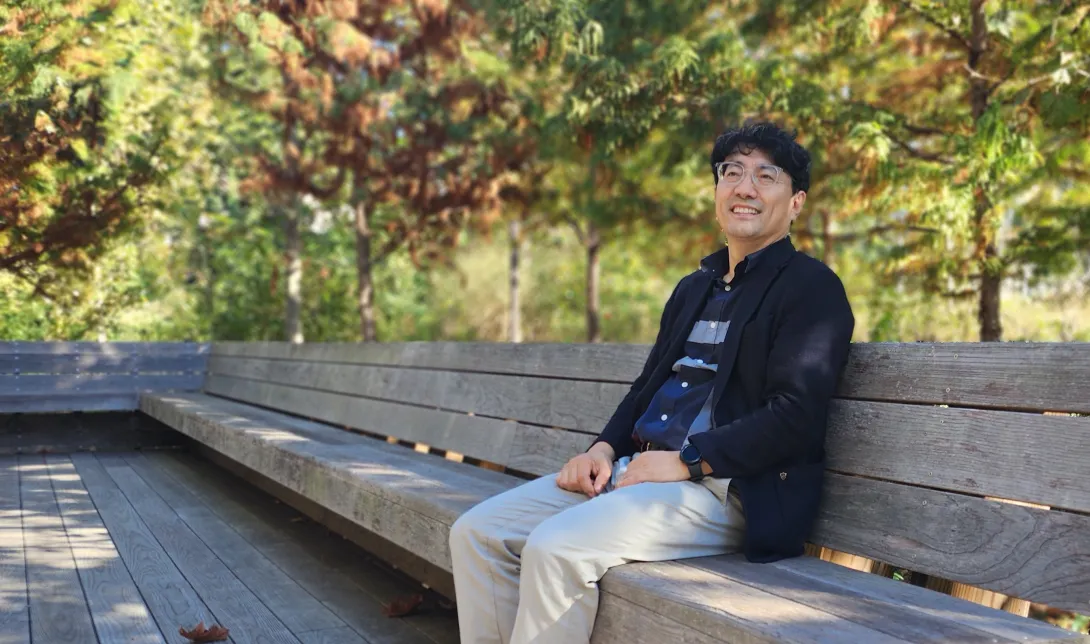
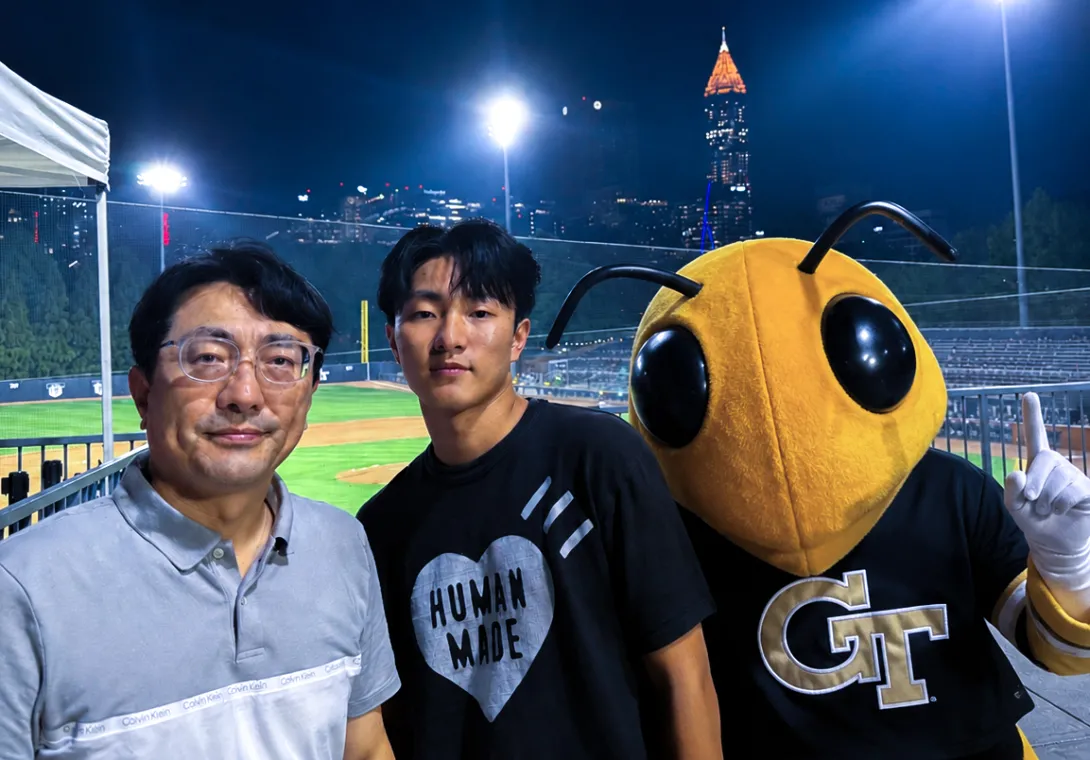
In his native South Korea, Sanghyun Jang served as director of the Education Data Center at the Korea Education and Research Information Service (KERIS), where he developed policies governing the use of artificial intelligence in education.
To inform that work, he has researched beyond his home country, asking how higher education institutions, including those traditionally data-driven, can evolve in the age of AI and how they are responding to that change. He brought this question with him to Georgia Tech.
With an academic background in computer engineering and a specialization in computer vision, a core technology behind modern AI, he has worked with AI-related concepts and technologies long before they became widely commercialized and part of everyday life.
Where Data Meets AI
“I have long believed that data would become the 'oil' of the future—a critical resource driving innovation, economic growth, and decision-making. That belief naturally led me to focus on data governance and AI, which I see as essential to the future of education, industry, and society,” he said.
Jang's research on data-informed institutional decision-making in the age of AI underscores the need for thoughtfully designed data governance to ensure data accuracy and trustworthiness and to protect personal information.
At universities, Jang has observed practices that fragment data production and management, including colleges pursuing independent projects, siloed administrative practices that discourage interdepartmental sharing, and passive approaches to its exchange due to concerns about personal data protection. As a result, a centralized data governance framework is necessary to oversee and coordinate data across the institution.
The biggest challenge with AI in higher education “is not how fast you adopt AI—it’s whether you can govern it responsibly. Without clear policies and accountability, rapid adoption can create more problems than benefits,” he said.
AI in Practice at Tech
In South Korea, Georgia Tech has long been recognized as one of the world's leading innovation-driven universities, particularly in applied technology and research. Because Jang's work focuses on higher-education innovation, he was already familiar with Tech’s reputation before coming here as a visiting scholar at the Center for 21st Century Universities (C21U) in the College of Lifetime Learning in October 2025. In fact, he recommended Georgia Tech to his son during his college search.
Jang first connected with C21U at the 1EdTech 2022 Digital Credential Summit and later reached out to explore collaboration, which led to his invitation. From day one, he set out to observe how the Institute integrates diverse forms of institutional data across campus and uses it to support student success and inform broader decision-making in the age of AI.
Alongside Director of Research in Education Innovation Jeonghyun (Jonna) Lee, he has facilitated virtual seminars and advanced cross-institutional knowledge exchange between Georgia Tech and Korean institutions. He also collaborated with Lee on a project to explore learner personas over their lifetimes and to design recommendations for a learning platform to support them. Because Jang has expertise in lifelong learning research and policy in Korea, his input has greatly benefited this project.
“There is real momentum toward building thoughtful, shared approaches to AI,” Jang said, reflecting on campus discussions. He also noted that the Institute invites scholars to host seminars and conferences, offering opportunities to hear expert perspectives and incorporate them into institutional practice.
A few months into his residency, he presented “Strategies for Using Data and AI in Education” at a C21U Learning Lab. The session brought together leaders from AI-related units across the Institute, demonstrating that they are actively exchanging ideas and working toward better AI policies and guidelines.
Based on what he has seen at Georgia Tech, Jang views the Institute’s efforts to implement AI usage guidelines as a strong example. For him, it is particularly significant that the policy treats AI as a technology that affects “teaching and learning, research, and everyday operations,” he said. “It treats AI as part of the entire institution—not just a classroom issue.”
“While some institutions approach AI primarily through a 'ban or allow' framework, Georgia Tech combines controlled access, experimentation, training, and security review,” he added.
One aspect that stood out was that responsible data stewardship is embedded in everyday research practice, not just in formal governance procedures. Georgia Tech provides researchers with a clear, structured pathway for using de-identified institutional data, with appropriate oversight and training. “Responsible access to data is what makes meaningful research possible,” he said.
Rethinking What Matters
On a personal level, Jang’s time at Tech made him realize that the future of institutional research will be defined not by data collection alone but by an institution’s capacity to connect data, governance, human judgment, and AI to support better decisions for students, faculty, and society. One way he has seen this at the Institute is by preserving space for individual initiative and innovation while fostering collaboration within the Institute and beyond.
“People take ownership of their work while enjoying the freedom to explore,” he said. “This drives innovation at the Institute and across its fields, thereby amplifying each individual’s impact.”
During his time here, he has participated in seminars and conversations across campus. Jang would like to bring back to South Korea the strong collaboration among higher education institutions, local communities, and industry that he observed in Atlanta and at Tech. His son, Ricky Jang, a third-year Yellow Jacket majoring in industrial engineering, recently participated in a program in partnership with Invest Atlanta to address challenges facing the local community. The students presented their project outcomes and received feedback in the mayor's presence. In some cases, students’ ideas were accepted on the spot, later leading to business development by companies or policy initiatives at the city government level.
“This showed me that Tech’s education extends beyond classroom knowledge. It offers practical, problem-solving learning experiences that connect academic knowledge to real-world community challenges,” Jang said. “Experiences like this create a powerful ecosystem in which universities, industry, and communities work closely to solve problems and drive innovation. I believe this model could have a significant positive impact in South Korea as well.”
Specifically, Jang plans to recommend to the policy team of the South Korean government's Regional Innovation System & Education (RISE) initiative that they examine the Institute’s collaborative model and consider incorporating its practices into future policy design and implementation. “Such benchmarking could help build a more sustainable regional innovation ecosystem and reduce the long-standing imbalance between the capital region and the rest of the country,” he said.
His time at Georgia Tech has provided him with valuable data for his ongoing research and unexpected opportunities. In South Korea, his work consumed most of his time, including frequent business trips, leaving little time for himself. By contrast, although Atlanta’s traffic has been challenging, the campus and reduced work travel have given him more time and space to reflect.
“My experience at Tech has broadened my understanding of AI’s role in society—not just as a technology, but as a tool that must be guided by trust, responsibility, and public engagement,” Jang said. “Surrounded by nature and spending more time with my family, I find myself thinking every day about how AI and humans should collaborate and coexist, and about the essence of humanity, the redefinition of work, and the role of education—questions I keep returning to.”
News Contact
Yelena M. Rivera-Vale
Communications Manager
College of Lifetime Learning
Georgia Institute of Technology