
May. 25, 2023
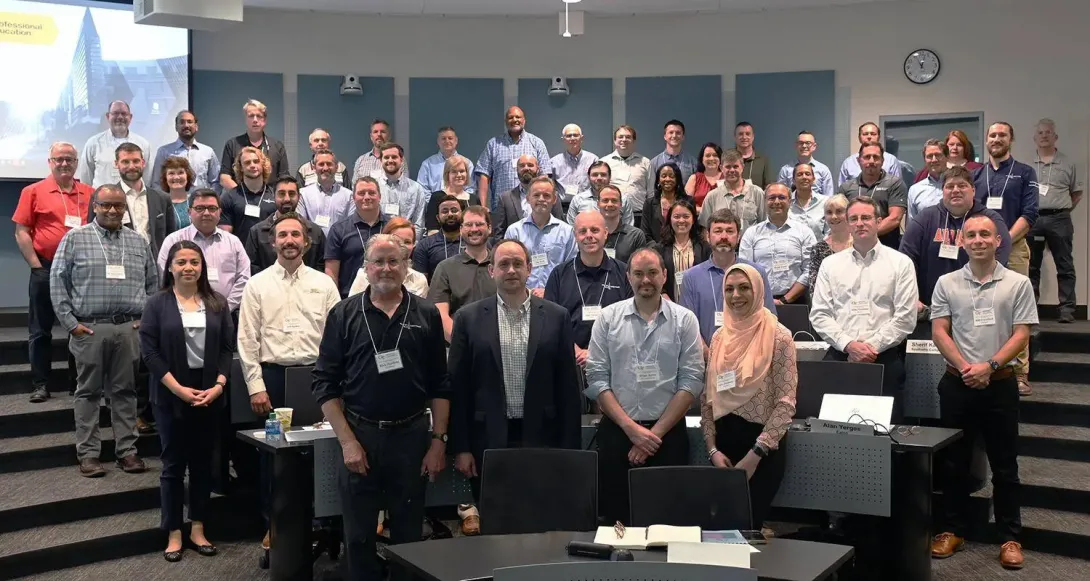
The NEETRAC advisory board meeting on May 17, at Georgia Tech. New NEETRAC Director Joe Hagerman (front row, second to left) was introduced to the board during the meetings.
As the nation's power grid undergoes a transformative shift with historic investment in clean energy, Joe Hagerman understands the importance of this moment for the National Electric Energy Testing, Research and Applications Center (NEETRAC). It presents the center with a distinct opportunity to showcase expertise, drive progress, and actively shape the future of the grid.
NEETRAC, a leading research and testing resource for the electric energy industry, housed under the Georgia Tech School of Electrical and Computer Engineering (ECE), has announced the appointment of Hagerman as its director, starting June 1.
“Under the leadership of former Director Rick Hartlein, NEETRAC has established itself as a trusted authority in testing and research for the electric power industry,” said Hagerman. “Thanks to this reputation, we are now poised to take a leading role in the country's de-carbonization and re-electrification priorities. The potential for strengthening our ties with the Institute, the state of Georgia, and federal entities is a once in a lifetime opportunity.”
Hagerman joins NEETRAC after directing the Energy, Policy, and Innovation Center (EPICenter), a division of the Strategic Energy Institute.
Prior to Georgia Tech, Hagerman served as a section head at the U.S. Department of Energy’s Oak Ridge National Laboratory. He also has served as the deputy chief scientist of the ;National Rural Electric Cooperative Association and as a senior policy advisory at the U.S. Office of Energy’s Energy Efficiency and Renewable Energy.
“As NEETRAC prepares for the next phase of its journey, Joe's passion, visionary approach, and bridge-building abilities will be indispensable for success,” said Arijit Raychowdhury, professor and Steve W. Chaddick School Chair in ECE. “His policy work and technical expertise in grid systems speak for themselves, especially regarding emerging areas like renewables, connected equipment, and cybersecurity. I’m thrilled to have Joe leading the way.”
The Right Time for Growth
The domestic demand for electricity continues to steadily rise because of the government's ambitious renewable and carbon-free energy objectives, the increased electrification of transportation and heating, and the growing demand for digitally connected devices.
Add this to an aging power grid, and incentives and investments for making the grid stronger and more resilient are at an all-time high for the electric power industry.
Hagerman looks to leverage his governmental research reputation and knowledge of the Georgia Tech landscape to enhance NEETRAC's existing strengths and explore new opportunities. He seeks to establish new connections — both inside and outside of the Institute — for the center, enabling it to effectively drive innovation and address the evolving needs of the industry.
“The power grid stands as a remarkable feat of human engineering, and its sheer physical scale is incredible,” said Hagerman. “Incorporating changes is not as simple as flipping a switch. It requires extensive knowledge and countless hours of rigorous testing. Thankfully, NEETRAC and Georgia Tech possess an abundance of expertise — and a world class staff — that can be harnessed to navigate these challenges successfully.”
An Invaluable Industry Resource
For more than 25 years, NEETRAC — located just south of the Atlanta campus, near the Hartsfield-Jackson Atlanta International Airport — has played a vital role in facilitating collaboration between the electric energy industry and academia.
Everything connected to the power grid — even power poles to bucket trucks — can be tested and researched at the center. NEETRAC’s experienced engineers and technicians seek to deliver innovative, effective solutions to all problems related to the transmission and distribution of electric energy.
As a membership-supported center, NEETRAC's member companies comprise utilities that represent around 65% of U.S. electric customers, along with manufacturers who contribute significantly to the products and services offered in the electric utility industry.
“NEETRAC is much more than a testing laboratory to us,” said Sherif Kamel, vice president of New Product Development at Southwire, a NEETRAC member organization. “The deep knowledge and expertise that NEETRAC uses to support our industry’s needs is unparalleled.”
This diverse membership base promotes collaboration and knowledge exchange, keeping NEETRAC at the forefront of industry challenges, advancements, and opportunities.
Sherif, NEETRAC's advisory board chair and a member of the search committee that recommended Hagerman, stated that NEETRAC's staff and facilities aid Southwire in developing, improving, and supporting customers. Additionally, the center enhances the credibility and proficiency of the company's test results. Southwire was founded in 1937 by Roy Richards, a graduate of Georgia Tech, and is a NEETRAC founding member.
Future Potential
Hagerman stressed that with so much uncertainty regarding the future of the domestic power grid, one thing is clear: To evolve NEETRAC will need to enhance its relationship with the industry and scale to help its current and future members throughout North America.
“There’s excitement in not knowing how everything will unfold,” he said. “It’s important for us to be nimble and ready to adapt, but to also use our position to anticipate the needs of our members and provide value and insights to our partners.”
According to Hagerman, the future services of NEETRAC could be driven by several important factors, namely the integration of renewable energy sources, ensuring the security of the grid both in physical and cyber aspects, and harnessing the power of big data.
Investing and expanding in the expertise of NEETRAC's skilled scientists and engineers, its technical staff, and its administrative staff is arguably the most crucial approach to meeting the uncertain demands of the future.
“By nurturing the talents and skills of the team and by incorporating an inclusive approach, we all work toward the shared future of NEETRAC and the Institute. We are all one Georgia Tech,” said Hagerman. “NEETRAC’s role in that future is defined by its cutting-edge evaluations, its world class research, and its continued support of innovation for a resilient and secure domestic power grid for all.”
News Contact
Dan Watson
Jul. 12, 2023
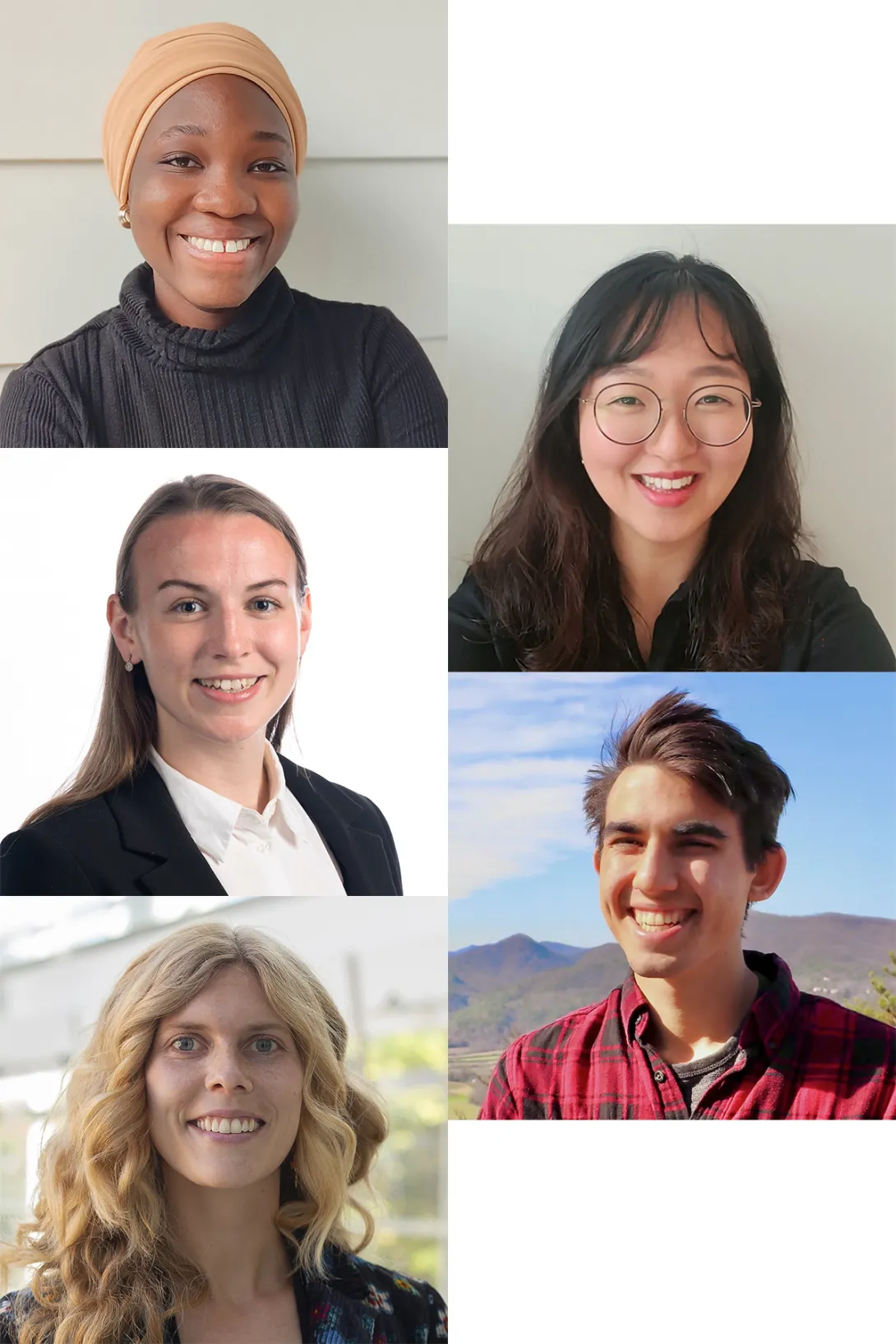
Montage of portraits. R to L, Top to Bottom: Aminat Ambelorun, Min-kyeong (Min) Cha, Allannah Duffy, Eric Greenlee, and Spenser Wipperfurth
The third class of Brook Byers Institute for Sustainable Systems (BBISS) Graduate Fellows has been selected. The BBISS Graduate Fellows Program provides graduate students with enhanced training in sustainability, team science, and leadership in addition to their usual programs of study. Each 2-year fellowship is funded by a generous gift from Brook and Shawn Byers and is additionally guided by a Faculty Advisory Board. The students apply their skills and talents, working directly with their peers, faculty, and external partners on long-term, large team, sustainability relevant projects. They are also afforded opportunities to organize and host seminar series, develop their professional networks, publish papers, draft proposals, and develop additional skills critical to their professional success and future careers leading research teams.
The 2023 class of Brook Byers Institute for Sustainable Systems Graduate Fellows are:
- Aminat A. Ambelorun - Ph.D. student, School of Earth and Atmospheric Sciences, College of Sciences, Advisor: Alex Robel
- Min-kyeong (Min) Cha - Ph.D. student, School of Public Policy, Ivan Allen College of Liberal Arts, Advisor: Daniel Matisoff
- Allannah Duffy - Ph.D. student, George W. Woodruff School of Mechanical Engineering, College of Engineering, Advisor: Srinivas Garimella
- Eric Greenlee, Ph.D. student, School of Computer Science, College of Computing, Advisor: Ellen Zagura
- Spenser Wipperfurth, Ph.D. student, Ocean Science and Engineering, organized by the Schools of Biology, Civil and Environmental Engineering, and Earth and Atmospheric Sciences, MBA, Scheller College of Business, Advisor: Kevin Haas
Additional information about the BBISS Graduate Fellows Program, and about the first class of BBISS Graduate Fellows is available at https://research.gatech.edu/sustainability/grad-fellows-program.
News Contact
Brent Verrill, Research Program Communications Manager, BBISS
Jul. 11, 2023
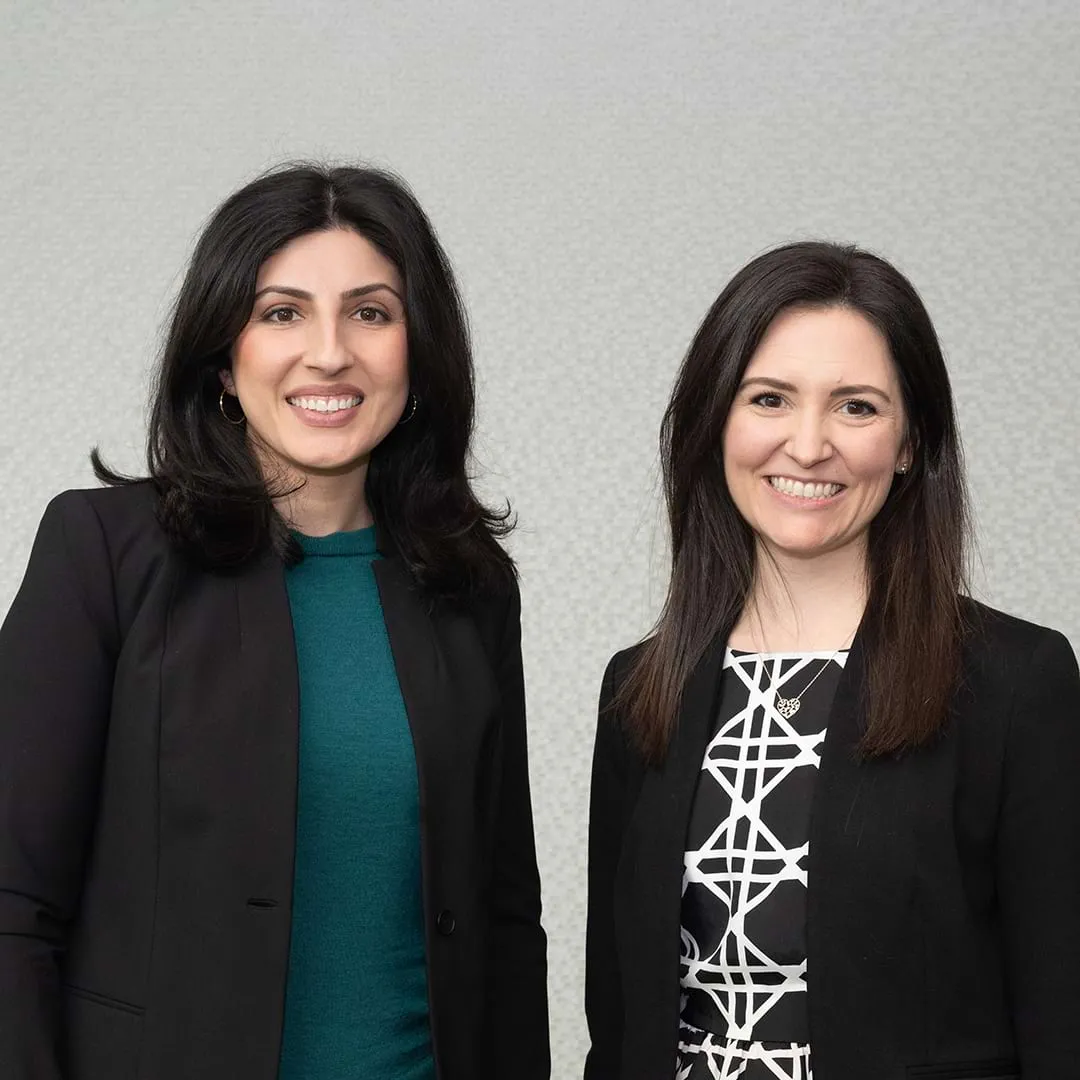
In Good Company founders Sarah Naumann (MBA ’23) and Amanda Shojaee (IA ’14, MBA ’23) want to change the narrative of disability in the workplace by helping to create a new vision for what teams can look like. Supported (or inclusive) employment includes accommodations for those with disabilities so they can succeed on the job. The founders have witnessed how supported employment can create positive outcomes for employers, disabled employees, teams, and customers alike. On March 31, 2023, In Good Company placed third in the Sustainable-X Showcase. With the help of prize money, investment, and participation in a startup launch program, the In Good Company founders are working to achieve their mission. Andre Calmon and Karthik Ramachandran, co-directors of Sustainable-X (a partnership of the Ray C. Anderson Center for Sustainable Business and CREATE-X), asked the founders to share their startup journey.
Where does the story for this startup begin?
Sarah Naumann (SN): I’ll start with a story from my senior year in high school. I had an extra elective to fill, so I signed up to be a student aid for the special education class. Every time I entered that classroom was a reset to the way I saw the world. On any given day, I might have been a moody teenager, grumpy about having a bad hair day or not getting the lead in the school musical. But the students in this class challenged and humbled me – and brought me joy. I signed up to be an aid because I thought they needed me, but in fact I needed them.
What is one of your favorite memories from that experience?
SN: I went to a big school in Texas with a lot of overachievers. But the special ed classroom was tucked away in the corner of a back hall. The teacher knew I was involved in the arts. She said, “These students have never been in the spotlight. Would you mind helping to make them shine?” We ended up putting on a show. It was spectacular!
How has your allyship with your friends with disabilities informed your life goals?
SN: My friend from high school, Michael, has Down Syndrome . Back in high school, he said his dream was to go to college, get a job, and have a family. Those are the same things I wanted. When we got together ten years after graduation, I realized I had done almost all those things while Michael had done none. I became determined to change the narrative for people with disabilities by making them a part of the heartbeat of society – in jobs and communities. And I want to rally as many people as possible to join in this story!
How has this passion made an impact in your career choices?
SN: I started my career as a teacher to students with learning differences, but realized there was more that I wanted to do beyond the walls of my classroom. I decided to come to Scheller to get my MBA so I could acquire the skills I was lacking in order to work towards a more scalable solution. I’ve had some amazing mentors in the social impact space – like Terry Blum and Dóri Pap [faculty director and managing director, respectively, of the Institute for Leadership and Social Impact]. They’ve helped me to try to solve the problem I care about through social entrepreneurship. In the first year of my MBA, they taught me about customer discovery, which meant listening to the problem before creating a solution. The art of listening has really informed how I begin to approach a solution.
What did customer discovery teach you?
SN: I wanted to tackle social isolation in the adult population and had a very specific vision for a solution. However, when I was doing customer discovery, I discovered that of all the adults with disabilities who are job seekers in the U.S., 80% have not found employment. Many of them are going above and beyond to prepare themselves for the job market by participating in IPSE [Inclusive Post-Secondary Education] programs, working with job coaches, etc. I saw room for growth in the area of support on the employer’s side. I realized I was in a unique position to leverage my Scheller College network to solve an employment problem. I could connect the dots between employers and a potential workforce.
Amanda, how did you and Sarah first meet?
Amanda Shojaee (AS): We connected in Spring 2022 in our Collaborative Product Development class, taught by Karthik Ramachandran. I discovered Sarah’s passion for solving business problems in a socially impactful way. We realized that with her vision and my drive to investigate, discover, and iterate on solutions, we made a great team. While I saw a lot of social good in Sarah’s idea, I also spotted a strong case to be made for this just making good business sense. It’s a win-win.
Sarah, how did Amanda become your business co-founder?
SN: Being a solopreneur is lonely and tiring. I got so worn out doing all the work on my own that I almost pulled the plug indefinitely. Then, something truly miraculous happened. Amanda (who had no idea how close I was to pausing this endeavor) approached me. She had heard about my business idea. She said, “I like your idea. Can you use me?” Partnering with Amanda, who brought new energy and ideas, has been one of the greatest gifts in this whole process.
How does your startup aim to solve the nation’s labor shortage by connecting employers with an inclusive workforce?
AS: In Good Company prepares employers to receive candidates with disabilities. We’d love to see more businesses shift their view of inclusive employment from a “nice to have” to a “must have.” Our observation is that employers, particularly those in the service industries, are in need of fresh talent, and here we have a talented group seeking employment. Through our first-hand experience, we have witnessed the positive impact of a safe and inclusive environment where everyone feels welcome, resulting in satisfied customers and an improved team dynamic.
Describe the journey of developing your startup.
AS: I researched Census Bureau data to see what industry is suffering the most from the labor shortage. The food and service industry jumped out right away. Scheller is in a neighborhood with plenty of restaurants to learn from, so our discovery began without any delay. We thought that surely at least one restaurant would be interested in solving an old problem with a new solution. El Viñdeo Local was one of the first restaurants we walked into. We asked one of the owners, Robert Kaster, if they had any labor challenges. He said they had a problem with chronically vacant positions. It was hard to get someone to interview. Then, if someone was hired, it was hard to get them to continue working past the second week. We asked Robert if he would be open to embracing a new method to solve this problem – by hiring a disabled person. Robert said that one of his values as a business owner was to employ as diverse a team as possible, but he didn’t know how to act on it.
How did you partner with El Viñedo Local?
SN: Amanda and I developed a plan to teach Robert and his business partner Keith Miller best practices for employing people with disabilities. A high school classmate of a friend of ours, Ryan, who has autism, was unemployed and looking for work. Robert and Keith agreed to interview him for a job. We provided insight on how to conduct the interview to be sure it was in a format that would set both Ryan and them up for success. This accommodating interview also provided clarity to the owners so they could best understand how to place Ryan meaningfully and provide him with the accommodations he’d need to succeed on the job, such as breaking his shifts up into more but shorter periods of time. We told them to ask questions that would benefit everyone. Things like: Describe the ideal work environment where you would thrive. Are you a solo worker or team player?
AS: The restaurant was having trouble keeping inventory organized and restocked. In the interview, Robert and Keith discovered that Ryan is gifted at checklists and likes to work alone. They decided to pull inventory-related tasks off the plates of other team members to shape a new role that was well suited for Ryan. Since Ryan started working in January, the other team members have been able to do their jobs better. And Ryan is doing a great job organizing the storage room. He reports when the stock of an item is low. He also makes sure the owners don’t overbuy items, which helps them save money. Ryan is helping the restaurant just like they are helping him.
How did you become involved in Sustainable-X?
SN: When we heard about the Sustainable-X Showcase, we decided to go for it. We’d never formally pitched and thought it would be a great experience. Preparing for and participating in the Showcase bolstered our confidence, sense of purpose, and desire to commit long term to this business. Amanda and I were both quickly approaching graduation, but both of us were having a hard time finding job opportunities that we were excited about. We kept thinking about our business, but our biggest hang-up was money.
AS: Sustainable-X gave us a platform to be among like-minded problem solvers. When we won third place and found out there was an investment opportunity attached, we were in shock. We realized we could actually do the business full time.
SN: If not for Sustainable-X, we would be in corporate jobs in the day and working on our business in the evening. Now I get to focus on helping this population I deeply care about full time, and I couldn’t be happier.
Would you like to acknowledge any other Georgia Tech people or resources who have helped you?
AS: In addition to those already mentioned, we’d like to acknowledge Female Founders, the MBA Entrepreneurship Club, the MBA Women in Business Club, and our professors Astrid Marioni and Manpreet Hora who helped shape our understanding of entrepreneurship and service operations. Their course content is now coming to life for us!
What are you both focusing on now?
AS: Placing in the Showcase gave us the opportunity to participate in the 12-week CREATE-X startup launch program this summer. It’s a full-time job! We are attending lectures about pricing, marketing strategy, and the like, and are immediately putting what we learn into practice with In Good Company. We’re expanding to the hospitality industry as we have connected with some wonderful leaders in this space who also value inclusive employment. We’re even attending their annual conference in Las Vegas next week to continue building connections in this space to build custom solutions for this group.
SN: To walk this scary road of entrepreneurship while being surrounded by people who want to see our company succeed has been amazing. We know the work will be hard, but we’re just in awe of the many gifts that have already showered down. Classmates have given their time to help us work through pricing, build out the brand, and review decks. My boyfriend built our website for us in two days and has offered his startup expertise. Professors, guest speakers, and business community members have become our mentors and advocates. All of this makes taking the next leaps of faith a bit easier knowing that we are “in good company!”
News Contact
acsb@scheller.gatech.edu
Jun. 12, 2023
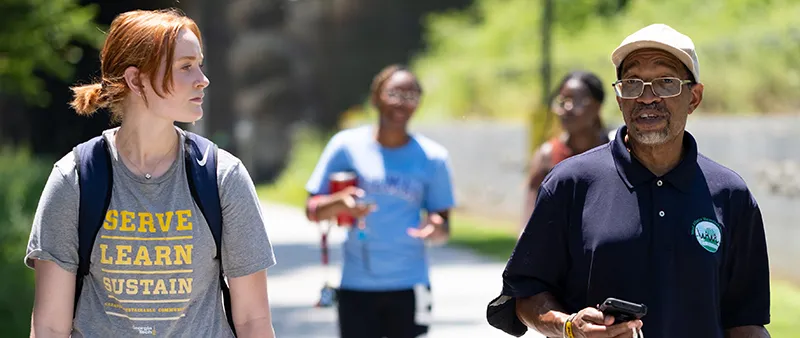
A student wearing a "Serve-Learn-Sustain" tee shirt walks along a campus walkway with a Georgia Tech faculty member. Photo Credit Ben Gray, AJC.
The Vice President for Interdisciplinary Research (VPIR) and the Office of Undergraduate Education (OUE) are excited to announce an institutionalization plan for Serve-Learn-Sustain (SLS) that will advance two of Georgia Tech’s Institute Strategic Plan (ISP) initiatives - Sustainability Next and Transformative Teaching and Learning (TTL) - and strengthen our service learning, community engagement, and sustainability ecosystems at Georgia Tech. Established as Georgia Tech’s last Quality Enhancement Plan (QEP), SLS launched in 2016 as a unit in OUE and concluded its official QEP work in 2021. Its work on the QEP earned Georgia Tech a commendation from the Southern Association of Colleges and Schools Commission on Colleges and established a strong foundation to build on moving forward.
Effective July 1, 2023, the current SLS team will establish a new center, the Center for Sustainable Communities Research and Education (CSCRE), under the VPIR. The Brook Byers Institute for Sustainable Systems (BBISS), which is serving as a hub for coordinating Georgia Tech’s Sustainability Next Strategic Plan initiative, will serve as the administrative home for the new center.
CSCRE will collaborate with the sustainability cluster of the Interdisciplinary Research Institutes (IRIs), including BBISS, the Strategic Energy Institute (SEI), and the Renewable Bioproducts Institute (RBI), as well as Infrastructure and Sustainability, another key Sustainability Next hub, to enhance Georgia Tech’s competitiveness in applying for grants that require meaningful community partnerships as a key component of their research and education plans. It will also continue to support sustainable communities education, in close collaboration with the Center for Teaching and Learning (CTL), OUE, and Education and Learning, to assure the continuity of SLS’s signature programs.
Established as Georgia Tech’s last QEP, Serve-Learn-Sustain launched in 2016 as a unit in OUE and concluded its official QEP work in 2021. Georgia Tech earned a commendation from the Southern Association of Colleges and Schools Commission on Colleges in 2021 for the “exceptional execution” of the 2016 QEP, citing, among other things, that the program “inspired a closer dialogue among faculty regarding research and instructional practices, and thus serves as a model of how a QEP can transform an academic culture.”
To continue advancing and scaling undergraduate service learning and community engagement as a high-impact practice, OUE will establish a new service learning team, as a priority that supports the Transformative Teaching and Learning ISP initiative. Institutionalizing the service-learning functions of SLS within OUE and aligning it with other high impact practices - such as undergraduate research, student innovation programs, first-year seminars, co-op and internships, and learning communities - will position these programs to work collectively in support of the development of Georgia Tech’s next QEP, which will begin in 2025.
Thank you to the SLS staff and to everyone who has collaborated with and supported the work that SLS has spearheaded to make Georgia Tech a better place for our students, our faculty and staff, and our surrounding communities. We look forward to continuing to advance this work, together.
News Contact
Brent Verrill, Research Communications Program Manager, BBISS
May. 24, 2023
Georgia Tech’s Sustainability Next Institute Strategic Plan initiative launched an annual seed grant program totaling $250,000 to support interdisciplinary or transdisciplinary climate and sustainability research. The overarching goals of the initiative are to nurture promising areas for future large-scale collaborative sustainability research, research translation, and/or high-impact outreach; to provide mid-career faculty with leadership and community building opportunities; and to broaden and strengthen the Georgia Tech sustainability community as a whole.
The Brook Byers Institute for Sustainable Systems (BBISS), which is administering the initiative modeled after the Office of the Executive Vice President for Research’s (EVPR) “Moving Teams Forward” and “Forming Teams” programs, put out a call for proposals this Spring. Proposal reviewers consisting of academic and research faculty at Georgia Tech were invited and assigned to review a minimum of three proposals each. The complete panel of reviewers discussed the relative merits of each proposal and made recommendations to the Interim Executive Director and Deputy Director of the BBISS. Ultimately three were chosen in the “Moving Teams Forward” category, and three in the “Forming Teams” category.
“I’m delighted that the transdisciplinary focus of the call achieved its purpose – accelerating team-based climate work that strengthens our community-engaged research infrastructure and HBCU partnerships with an emphasis on community engagement,” said Beril Toktay, interim executive director of the BBISS.
The proposals selected for funding are:
Moving Teams Forward
- Collaborative Approaches to Research Engagement (CARE): Building and Validating a Community-Centered Realist Approach to Human Subjects Recruitment; Lewis Wheaton (BIOL), Karen Minyard (Georgia State), Jennifer Hirsch (Center for Serve-Learn-Sustain), Melanie J Clark (Office of Research Integrity); Chris Parker (Georgia State), and Lea T. Marzo.
- Nurturing Climate-Aware Knowledge Networks for Environmental Justice-Oriented Design; Neha Kumar (INTA), Vishal Sharma (IAC), Anjali Karol Mohan (Integrated Design, India), Bonnie Nardi (UC Irvine), Aaditeshwar Seth (IIT Delhi), and Gayathri Muraleedharan (Integrated Design, India).
- Urban Heat Atlanta - Moving Forward; Brian Stone (SCRP), Christopher Le Dantec (IAC), Russell Clark (College of Computing), Kim Cobb (Brown University), Jairo Garcia (College of Design), and Na’Taki Jelks (Spelman University).
Forming Teams
- Building a Virtual Sustainability Lab for Climate Adaptation in Megacities – Urban Flood Modeling as a Prototype; Yi Deng (EAS), Xiaoming Huo (ISYE), and Jian Luo (CEE).
- Low-carbon Building Materials for Climate Adaptation and Mitigation; Ebenezer Fanijo (BC), Ece Erdogmus (BC), Kimberly Kurtis (CEE), and Giovanni Loreto (Kennesaw State).
- Heritage BIM and Sustainable Tourism; Danielle Willkens (ARCH), Junshan Liu (Auburn University), Maria Jose Viñals (Universitat Politècnica de València, Spain), Russell T. Gentry (ARCH), and Ece Erdogmus (BC).
The second round for this call is now open for the Fall of 2023, with submissions due on September 15. Details and application instructions can be found on InfoReady.
News Contact
Susan Ryan, Program and Operations Manager, BBISS
Apr. 25, 2023
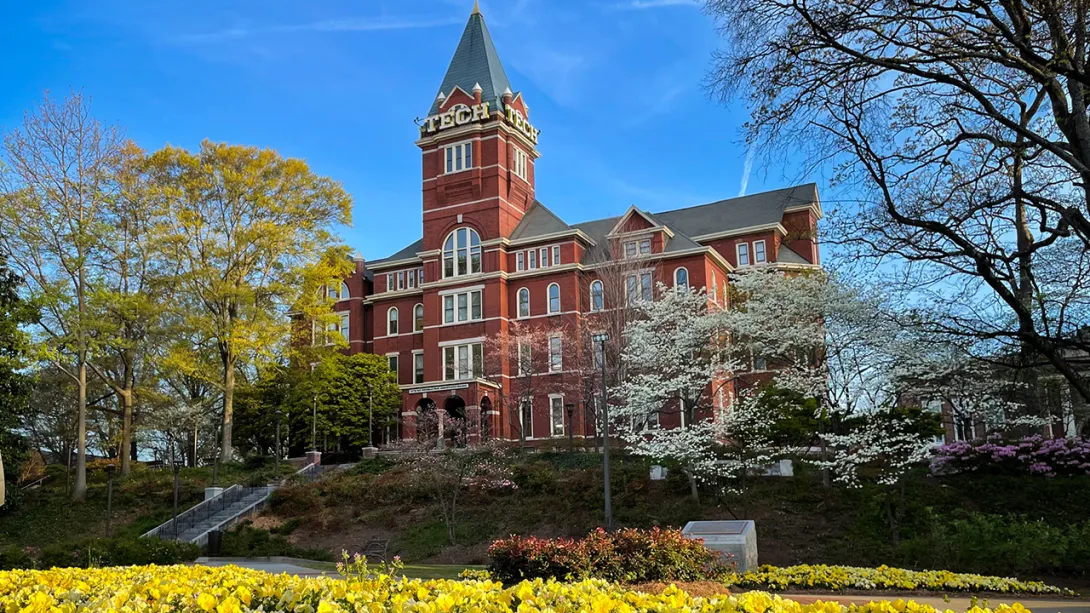
The 2022-23 Micro-Grants Community-Based Research awardees presented their findings at the second annual symposium, held on April 18, 2023, in the auditorium of the Kendeda Building for Innovative Sustainable Design, which is the region’s first Living Building. Ten teams presented to faculty, staff, students, and student family members. The topics were wide ranging, and dealt with both practical and theoretical issues. The work surpassed all expectations for quality and quantity.
Devised by the Kendeda Building Advisory Board and sponsored by the Brook Byers Institute for Sustainable Systems and the Kendeda Building, the Micro-Grants Research Program solicits proposals for very small scale ($50 to $500), short term, sustainability related, research studies to be conducted by members of the Georgia Tech community. Community investigators are encouraged to explore ways in which the Georgia Tech campus can continue to innovate, demonstrate, prove, and promote the adoption of best and next practices in regenerative design and operations. Researchers were also encouraged to use the United Nations Sustainable Development Goals as a framework for research design. All members of the Georgia Tech community were encouraged to apply. The program especially sought proposals from students and staff that had little or no prior research experience.
The program has four objectives:
- to expand scientific thinking and the understanding of the research process amongst those not (yet) directly involved in scientific research;
- to bolster the use of the campus as a living laboratory;
- to give voice to people and communities outside of research that have culturally novel perspectives on problems and their possible solutions, and to create new pathways for partnering with them; and
- to seed novel ideas and nurture nascent investigators.
The 2022-23 awardees and the titles of their projects are:
- Alex Lomis, Devi Patel, and Dr. Jung-Ho Lewe, "Design and Development of a Low-Cost and Highly-Scaleable Occupancy Counter to Optimize the Utilization of HVAC Resources"
- Kaitlyn Tran, Shivani Potdar, and Amanda Janusz, "Bird Safe Campus"
- Ricardo Martinez, "Chiropterans at Georgia Tech"
- Elizabeth Umanah, "Reimagining Eco-Friendly Parking Lot Design Through Simulations"
- Lujain Diab, Ally Kimpling, Jenna Sitta, Marcus Morris, Skylar Ryan, Dr. Jennifer Leavey, and Steve Place, "A Greener Grey: “Ironing” Out Issues in Greywater Systems"
- Jun Wang and Yilun Zha, "Kendeda’s Educational Role in Waste Management and Recycling"
- Siddharth Sivakumarun, "Investigating Capacity for Regenerative Energy through Foot Traffic"
- Alexandra Rodriguez Dalmau and John Fortner, "Recognition of Insect Species in the Georgia Tech campus with Machine Learning"
- Gray Simmons, Kevin Leach, and Dr. Jung-Ho Lewe, "IOT Climate Sensor Development for HVAC Efficiency Analysis"
- Kaylin Cross, Pranav Jothi, Maanas Kumar, Brian Wu, Savannah Howard, and Sheng Dai, "Prototyping Bio-inspired Geothermal Energy Recovery for Space Heating and Cooling"
More details and links to all the presentations are available at this web page.
News Contact
Brent Verrill, Research Communications Program Manager, BBISS
Apr. 24, 2023

A project rendering for the New York Climate Exchange (The Exchange) on Governors Island in New York City. The center is slated to open in 2028.
Georgia Tech will be a key partner for the New York Climate Exchange (The Exchange), a first-of-its-kind international center for developing and deploying dynamic solutions to the global climate crisis. In addition to convening the world’s leaders and climate experts, The Exchange will address the social and practical challenges created by climate change — including commercially viable research and ideas that lead to immediate action on local and global levels.
“Today's climate issues are urgent, and environmental justice and ecological sustainability necessitate action from leaders across the world,” said Chaouki Abdallah, executive vice president for research at Georgia Tech. “As a core partner of The Exchange, Georgia Tech will provide research expertise in the areas of energy, urban planning, biological ecosystems, public policy, and more, and we look forward to playing an instrumental role in bringing its mission to fruition.”
Georgia Tech researchers are studying glacial melt, coral growth, sea level rise, and other climate concerns in the state of Georgia and around the world and will share their data and research results with partners at The Exchange. Likewise, research at The Exchange will be applicable for towns and cities across Georgia, allowing state leaders to take advantage of economic opportunities that arise when climate change is addressed head on.
In addition to contributing critical research across the many areas of climate change, Georgia Tech leads major initiatives that are focused on solving the crises laid out in the UN’s Sustainable Development Goals. Generation 2 Reinvented Toilet (G2RT) — a solution to the world’s water and sanitation problem — is led by Shannon Yee, associate professor in the George W. Woodruff School of Mechanical Engineering at Georgia Tech. This cost-effective, globally scalable reinvented toilet with built-in human waste treatment will ensure that drinking water stays clean and will improve public health around the world.
Georgia Tech is also a leading partner of the Ocean Visions – UN Decade Collaborative Center for Ocean-Climate Solutions, an international center headquartered at the Georgia Aquarium that aims to co-design, develop, test, fund, and deliver scalable and equitable ocean-based solutions to reduce the effects of climate change and build climate-resilient marine ecosystems and coastal communities. Championed at Georgia Tech by Susan Lozier, dean and Betsy Middleton and John Clark Sutherland Chair in the College of Sciences, the Center also supports opportunities to accelerate ocean-based carbon dioxide removal research and advance sustainable ocean economies.
“We are looking forward to contributing and demonstrating some of the engineering sustainability solutions that have been developed at Georgia Tech with New York City and the world,” said Yee. “Many of the technical and economic solutions that serve the state of Georgia, the coastal city of Savannah, and the urban center of Atlanta can also serve the urban harbor of New York City. Similarly, the innovations and economic opportunities that address climate change can be shared with and benefit Georgia. This collaboration embodies the concept of an exchange where we share with one another.”
As The Exchange’s anchor institution, Stony Brook University will build and operate the center which will be located on Governors Island in New York City. The center is slated to open in 2028.
“It is becoming clear year after year in New York, and around the world, that the impacts of climate change are real and are here,” said Kevin Reed, associate dean for Research and associate professor in the School of Marine and Atmospheric Sciences at Stony Brook. “By partnering with communities, industries, governments, and universities, The Exchange will help to accelerate the implementation of urban solutions to these climate impacts through an interactive research ecosystem where community engagement is paramount. As a climate scientist, I recognize that New Yorkers need solutions to the climate crisis now, and The Exchange will help to make that a reality.”
News Contact
Georgia Parmelee | georgia.parmelee@gatech.edu
Mar. 29, 2023
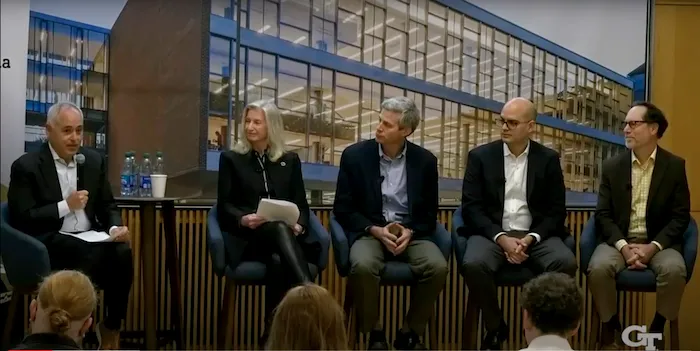
In the latest installment of his unscripted video series, President Cabrera led a panel of Georgia Tech faculty including Marilyn Brown, Regents' and Brook Byers Professor of Sustainable Systems in the School of Public Policy, Tim Lieuwen, Regents’ Professor and executive director of the Strategic Energy Institute, Andre Calmon, assistant professor at the Scheller College of Business, and Brian Stone, professor at the School of City & Regional Planning, in a discussion on the policies, technologies, and planning that can help us achieve the best quality of life while also maintaining a global climate that remains within healthy limits.
News Contact
Brent Verrill, Research Communications Program Manager
Feb. 07, 2023
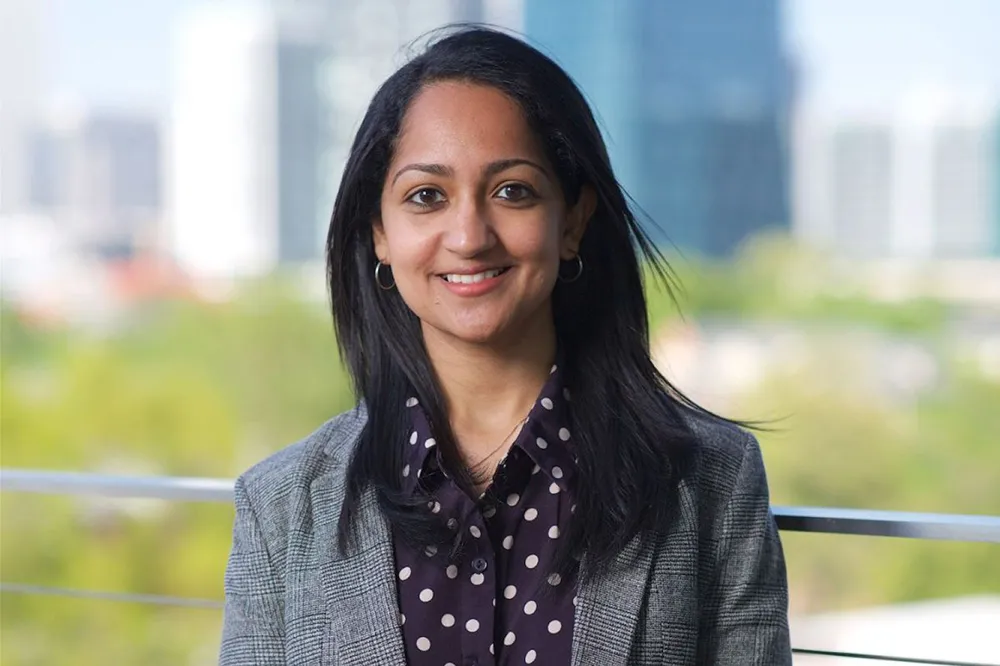
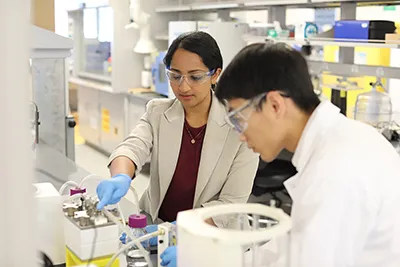
Akanksha Menon, assistant professor in the George W. Woodruff School of Mechanical Engineering, has been awarded a prestigious Faculty Early Career Development (CAREER) Award from the National Science Foundation’s (NSF) Division of Chemical, Bioengineering, Environmental and Transport Systems (CBET).
Menon directs the Water–Energy Research Lab (WERL) at Georgia Tech, which focuses on applying thermal science and functional materials to develop sustainable energy and water technologies.
"I am incredibly honored to receive an NSF CAREER award," said Menon. "I remember attending the College of Engineering panel on writing a successful NSF proposal wondering if I would be able to do this, and here I am with a CAREER award on my first try!"
Menon’s NSF CAREER project, “Nonequilibrium effects in thermochemical energy storage: linking microstructure to thermal transport,” aims to bridge our understanding of structure-property relationships in thermochemical materials across different lengths and timescales.
Currently, thermal loads (e.g., space conditioning and hot water) account for 50% of the energy consumption in buildings. To match energy demand with supply especially from renewables, a thermal battery can be used that stores and releases energy as heat. Among the different storage materials, thermochemical salt hydrates are promising as they have a higher energy density compared to phase change or sensible storage materials. However, these salt hydrates experience mechanical stress and hygrothermal instabilities that reduce their energy density as the thermal battery is cycled (charge-discharge).
Menon aims to provide a mechanistic understanding of the key factors governing thermochemical phase transitions and their impact on coupled heat-and-mass transport, which will eventually enable the development of reversible thermal batteries with long-term stability to decarbonize buildings.
Menon's research will be complemented by two education and outreach efforts. She will provide interdisciplinary and experiential learning opportunities for traditionally underrepresented students in Science, Technology, Engineering, and Mathematics (STEM) from the high school to graduate levels, as well as curriculum development for teachers to increase knowledge about energy storage broadly.
Menon’s award of $607,000 over five years will provide support for both her research and education and outreach efforts.
"The funding allows me to bring on a Ph.D. student to grow our efforts in decarbonizing heat, and it also supports my educational and outreach goals – all of which is what motivated me to become a faculty member," she said.
The CAREER Program offers the NSF’s most prestigious awards in support of early-career faculty who have the potential to serve as academic role models in research and education and to lead advances in the mission of their department or organization.
Menon joined Georgia Tech as an assistant professor in 2021. Prior, she was a Rosenfeld Postdoctoral Fellow at Lawrence Berkeley National Laboratory, where she worked on hybrid membrane-thermal desalination processes using solar energy. She also contributed to the development of thermal energy storage materials for high-temperature industrial process heat. Menon completed her Ph.D. at Georgia Tech, where she developed semiconducting polymers and new device architectures for thermoelectric energy harvesting. She holds a bachelor's degree from Texas A&M University at Qatar and a master’s degree in mechanical engineering from Georgia Tech.
Feb. 09, 2023
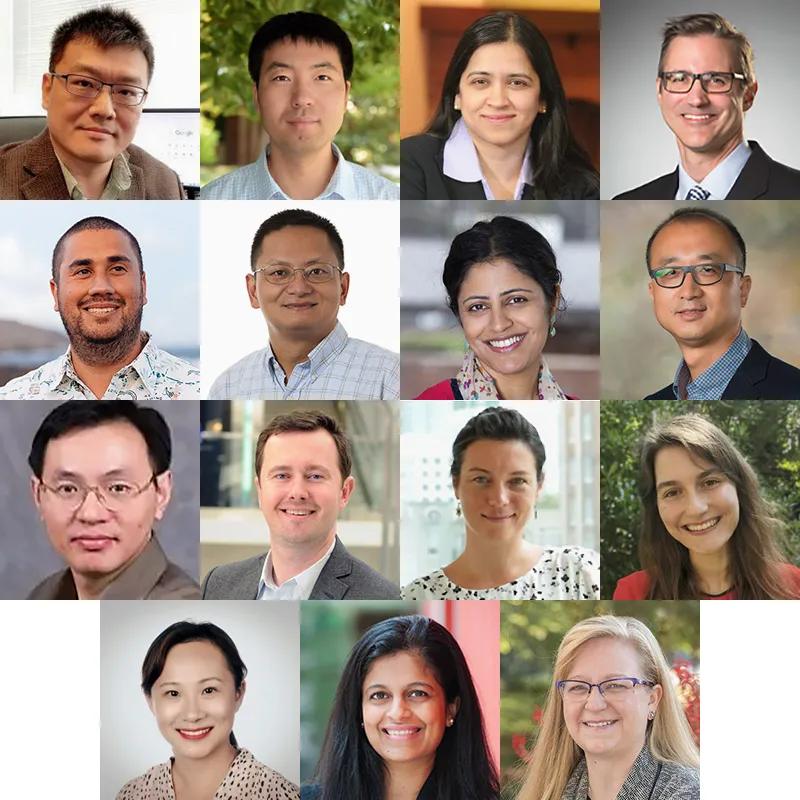
Ten projects have been chosen for the Brook Byers Institute for Sustainable Systems (BBISS) Initiative Leads program. Project themes include climate adaptation and mitigation solutions, innovation and social impact, computation and design approaches to sustainability, sustainable development, and conservation. BBISS Initiative Leads receive $10,000 in discretionary funds to advance their project.
The projects chosen involve 15 faculty members hailing from all 6 of the colleges at Georgia Tech. Several of the projects are also joint initiatives with other Georgia Tech Interdisciplinary Research Institutes (IDEAS, IPAT, and SEI), the Ray C. Anderson Center for Sustainable Business, or the Office of Sustainability.
The Initiative Leads and projects are:
- Michael Helms - ME, “Nature’s Voice: Amplifying the Narrative of Biologically Inspired Sustainable Design at Georgia Tech”
- Josiah Hester - Interactive Computing, “Computational Sustainability”
- Co-Leads Xiaoming Huo - ISYE, and Yi Deng – EAS, “Microclimate Monitoring and Prediction at Georgia Tech”
- Jian Luo - CEE, “Coastal Urban Flooding in a Changing Climate”
- Brigitte Stepanov - Modern Languages, “Energy Today, Tomorrow: Illuminating the Effect of Energy Power Dynamics on the Environment”
- Co-Leads Anjali Thomas – INTA, and Shatakshee Dhongde - ECON, “SEEDS (Southeast Exchange of Development Studies) 2023 Conference at Georgia Tech”
- Co-Leads Danielle Willkens - Arch, and Junshan Liu – Auburn University, “Sustainable Tourism, Petra”
- Co-Leads Yuanzhi Tang - EAS, and Hailong Chen – ME, “Sustainable Resources for Clean Energy”
- Co-Leads Dori Pap - Institute for Leadership and Social Impact, and Neha Kumar – Interactive Computing/INTA, “Collaborative Social Impact”
- Alex Oettl - COB, “A Sustainability-Focused Stream of the Creative Destruction Lab”
The Initiative Leads program has several overarching goals. BBISS aims to cultivate promising topics for future large-scale collaborative sustainability research, research translation, and/or high-impact outreach; to provide (mostly mid-career) faculty with leadership and community building opportunities; and to broaden and strengthen the BBISS sustainability community as a whole.
News Contact
Brent Verrill, Research Communications Program Manager, BBISS