
Sep. 06, 2025
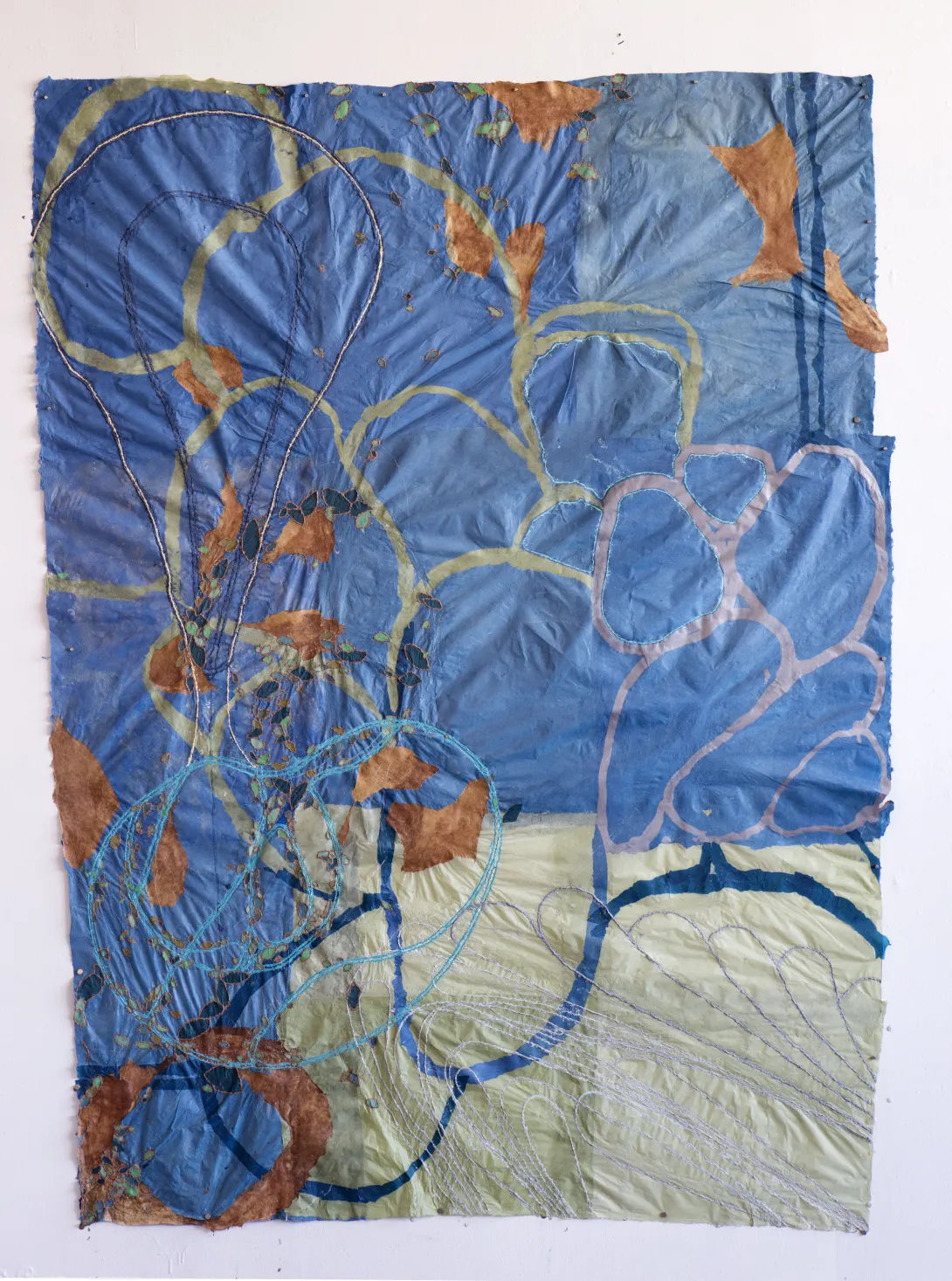
New Exhibition Series Honors Decades of Creative Exploration
ATLANTA, Georgia (August 25, 2025) -- Legacies in Paper: Nancy Cohen, Sara Garden Armstrong, & Helen Hiebert is on view at the Robert C. Williams Museum of Papermaking, September 4, 2025, through January 30, 2026. The exhibit brings together the work of three artists who have incorporated hand papermaking into their artistic practices for years. Nancy Cohen, Sara Garden Armstrong, and Helen Hiebert each describe a formative period of searching for versatile materials with the ability to take on the qualities required for two and three-dimensional work; could mimic textures of nature and the body; and could facilitate installation work of various scales. Individually, each artist found that the unique medium of hand papermaking could be transformed to encompass their visions, and it quickly became integral to their artwork.
Armstrong, Cohen, and Hiebert build on the legacy of a community of artists pushing the craft of papermaking forward into contemporary forms. They bring unique voices to the medium: Hiebert’s luminous constructions explore the interplay of light and structure; Cohen’s sculptural works reflect ecological fragility and resilience; and Armstrong’s immersive environments blur the boundaries between the organic and the engineered. Together, their works speak to the transformative potential of paper—not only as a surface for expression but as a sculptural, spatial, and conceptual force. Through their hands, paper becomes a language of memory, a vessel of emotion, and a bridge between past and present.
Join the museum staff and featured artists for a reception, 4-7 pm, Thursday, September 4, 2025 at 500 Tenth St. NW, Atlanta, GA 30332. This event is free and open to the public.
A full listing of associated programs can be found at https://paper.gatech.edu/program-listing
Sara Garden Armstrong received her Master of Fine Arts from the University of Alabama and a Master of Art Education from UAB. A past recipient of the Joan Mitchell Foundation CALL (Creating a Living Legacy) project, Armstrong’s national and international exhibition record extends over a period of more than 40 years. Her artist’s books can be found in the collections of the Museum of Modern Art, New York, and the Victoria and Albert Museum, London, among others. Atrium commissions have focused on scientific phenomena and their interactions with the human condition. Armstrong currently lives and works in Birmingham, Alabama.
Nancy Cohen has an M.F.A. from Columbia University and a B.F.A from Rochester Institute of Technology. Awards include a Pollock Krasner Foundation Grant, The Murry Reich Distinguished Artist Award and six fellowships from the New Jersey State Council on the Arts. Museum collections include the Asheville Art Museum, Memphis Brooks Museum, Montclair Museum, NJ State Museum, Smith College Museum, Tang Teaching Museum, Weatherspoon Art Gallery, Yale University Art Gallery and the Zimmerli Museum. Cohen has completed large scale paper installations for the Noyes Museum, the Katonah Museum, the Power Point Gallery at Duke University and New Jersey City University, The CODA Museum in the Netherlands and the NTCRI Museum of Craft Design in Taiwan. She lives in Jersey City, New Jersey.
Helen Hiebert is a Colorado artist who constructs installations, sculptures, films, artists’ books and works in paper using handmade paper as her primary medium. She teaches, lectures and exhibits her work internationally and online, and is the author of several how-to books about papermaking and papercrafts. Helen has an extensive network of paper colleagues around the world and her interest in how things are made (from paper) keeps her up-to-date on current paper trends, which she writes about in her weekly blog called The Sunday Paper. She interviews papermakers and paper artists on her podcast Paper Talk, and she holds an annual paper retreat and papermaking master classes in her Red Cliff studio.
Sep. 05, 2025
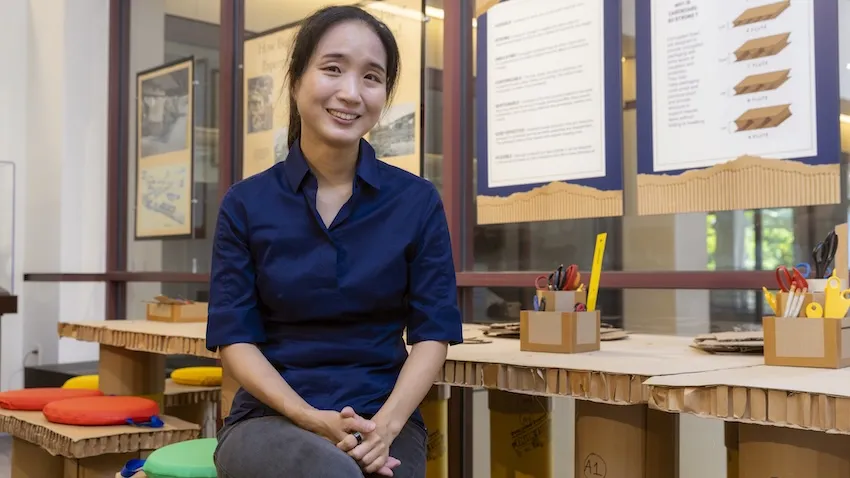
A new educational initiative is set to teach Atlanta high school students how to create electronics, wearable devices, and other technologies that are built on paper and craft materials.
Workshops hosted by the Robert C. Williams Museum of Papermaking and led by Georgia Tech Assistant Professor HyunJoo Oh will introduce about 60 students from Atlanta Public Schools to paper-based electronics through hands-on workshops.
The Williams Museum will open an exhibit titled “The Future of Paper” that displays designs created in the workshop alongside visionary examples of paper-based technologies from Georgia Tech researchers.
The exhibit, funded by the National Science Foundation, is slated to open to the public in 2027.
Oh is a researcher with joint appointments in the School of Interactive Computing and the School of Industrial Design. She leads the Computational Design and Craft (CoDe Craft) Group at Georgia Tech, where her team integrates everyday craft materials with computing to support creative exploration.
Oh believes paper could be widely used to support prototyping printed circuit boards (PCBs) as a sustainable alternative to silicon. While silicon is the most prominent material used by technology companies to build computer chips, it isn’t biodegradable. And it can be harmful to the environment and contribute to e-waste.
Paper, however, provides an eco-friendly platform for printing conductive traces and mounting small electronic components. With the expansion of printed electronic tools and techniques, paper and similar materials have become more popular among technologists who develop sensing technologies and wearable devices.
“It’s widely available and accessible,” Oh said. “I can’t think of anything more affordable and approachable that young makers and the broader maker community can use for circuits than paper.
“Printed electronics traditionally required expensive equipment, but with recent innovation in materials science, conductive materials such as conductive pens and paint available in local arts and crafts stores can be used to build circuits on paper. We can also print circuits using a regular office inkjet printer with silver ink.”
Shared Vision
Shortly after arriving at Georgia Tech in 2019, Oh knew she had to develop a project that would let her partner with the Williams Museum.
“I was captivated by the museum’s space and its celebration of paper,” she said. “I wanted a collaboration that would integrate technology in a way that complemented and respected the museum’s existing beauty.”
Museum director Virginia Howell said the project was a perfect match for the museum, which has documented the history of papermaking since it was founded in 1939 by the Massachusetts Institute of Technology. Georgia Tech became the new home of the museum in 2003.
With more than 100,000 objects in its collection — some dating back as far as 2,000 years ago — the museum is unique, Howell said. Most papermaking museums are typically located at an historic mill, but the Williams Museum covers the history of papermaking.
Howell said that before she met Oh, she had been looking for an exhibit that would display the possible future of papermaking.
“We do the past of paper fantastically well, and we do the present of paper well through our changing exhibitions,” Howell said. “The future of paper is something we haven’t spent a lot of time interpreting.”
Crafting the Future
Oh and Howell agree that young people will shape that future. Oh said paper is commonly linked to art in the education sphere. As the material’s use in technology increases, however, it can funnel the interests of students toward engineering and computing.
Incorporating paper and craft materials can invite more students to explore engineering and computing concepts. After all, a circuit board created on paper isn’t so different from one built on a silicon PCB, Oh said.
“This approach can excite the kind of students who usually feel disconnected from electronics and computing,” she said. “It gives those who only see themselves as creative or artistic a way to enjoy technology and resonate with it.
“Usually when I work with young students, especially girls, if I start with something technical, their interest wanes. But when I present those same ideas through art using familiar materials like paper, they become more engaged and confident. That’s when they start to flourish.”
Oh and Howell will hold three rounds of 10-week workshops for the students — spring 2026, fall 2026, and spring 2027. The best designs from those workshops will be displayed in the exhibit.
“They’ll feel more comfortable with computing and engineering as an introductory experience,” Howell said. “When they successfully build on it and realize they did this on a sheet of paper, it’s exciting to think what they’ll do when they get more sophisticated tools and access.”
News Contact
Nathan Deen