
Jun. 30, 2022

“Thirty years ago not many folks were interested or thinking about sustainability. BBISS was. At Georgia Tech, we do cover many areas in sustainability, and right now after 30 years, BBISS has the history and the ability that can provide expertise to those that are seeking solutions.”
Chaouki Abdallah, Executive Vice President for Research
The Brook Byers Institute for Sustainable Systems (BBISS) is one of Georgia Tech’s 10 interdisciplinary research institutes.
News Contact
Brent Verrill, Research Communications Program Manager
Jun. 30, 2022
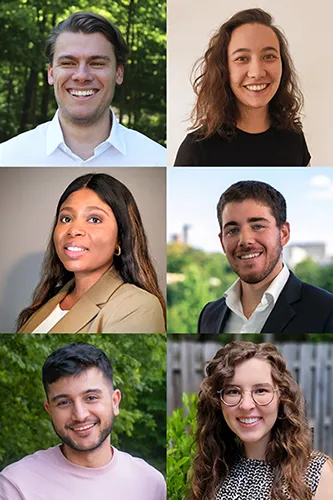
The second class of Brook Byers Institute for Sustainable Systems (BBISS) Graduate Fellows has been selected. The BBISS Graduate Fellows Program provides graduate students with enhanced training in sustainability, team science, and leadership in addition to their usual programs of study. Each two-year fellowship is funded by a generous gift from Brook and Shawn Byers and is additionally guided by a Faculty Advisory Board. The students apply their skills and talents, working directly with their peers, faculty, and external partners on long-term, large team, sustainability relevant projects. They are also afforded opportunities to organize and host seminar series, develop their professional networks, publish papers and draft proposals, and develop additional skills critical to their professional success and future careers leading research teams.
The 2022 class of Brook Byers Institute for Sustainable Systems Graduate Fellows are:
- Oliver Chapman - Ph.D. student, School of Public Policy, Ivan Allen College of Liberal Arts
- Megan Conville - Ph.D. student, School of City and Regional Planning, College of Design
- Carlos Fernandez - Ph.D. student, George W. Woodruff School of Mechanical Engineering, College of Engineering
- Sarah Roney - Ph.D. student, School of Biological Sciences
- Olianike Olaomo - Ph.D. student, School of History and Sociology, Ivan Allen College of Liberal Arts
- Vishal Sharma - Ph.D. student, School of Interactive Computing, College of Computing
The Faculty Advisory Board for the BBISS Graduate Fellows is composed of the faculty who submitted the students' nominations. Nominations for Class III of the BBISS Graduate Fellows program will open in the Spring 2023. It is expected that 6 to 8 scholars will be selected for next year’s group.
The Faculty Advisory Board for the inaugural class are:
Updates and outcomes will be posted to the BBISS website as the project progresses. Additional information is available at https://research.gatech.edu/sustainability/grad-fellows-program.
News Contact
Brent Verrill, Research Communications Program Manager
May. 09, 2022
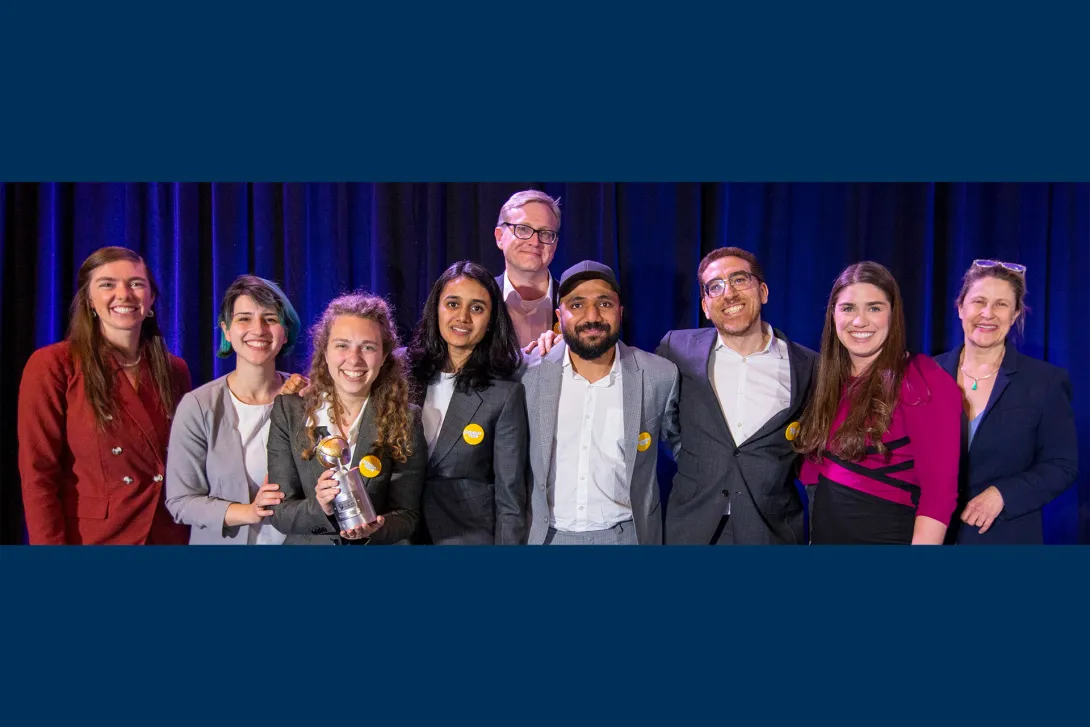
The Georgia Tech student team, "English Avenue Yellow Jackets", is the 2022 Design Challenge Residential Division Grand Winner for the Department of Energy's Solar Decathlon. They also took home first place in the contest's new Retrofit Housing division. Their winning entry retrofitted a 102-year-old house in Atlanta's English Avenue neighborhood.
"The target was to retrofit an existing house to net zero," Aayushi Mody, the team lead said. "And, well, we exceeded the target by making it net positive. The house basically generates more energy than it utilizes." But, Mody explained, that's just the beginning.
In addition to a net positive retrofit, the English Avenue Yellow Jackets provided solutions for rainwater harvesting and graywater reuse, a financial model that included land trust subsidies, and an additional 60 years' worth of projected weather data that proved the house would stay net positive even in cases of extreme weather.
Full Story...
News Contact
Ann Hoevel, Director of Communications, College of Design
Jan. 12, 2022
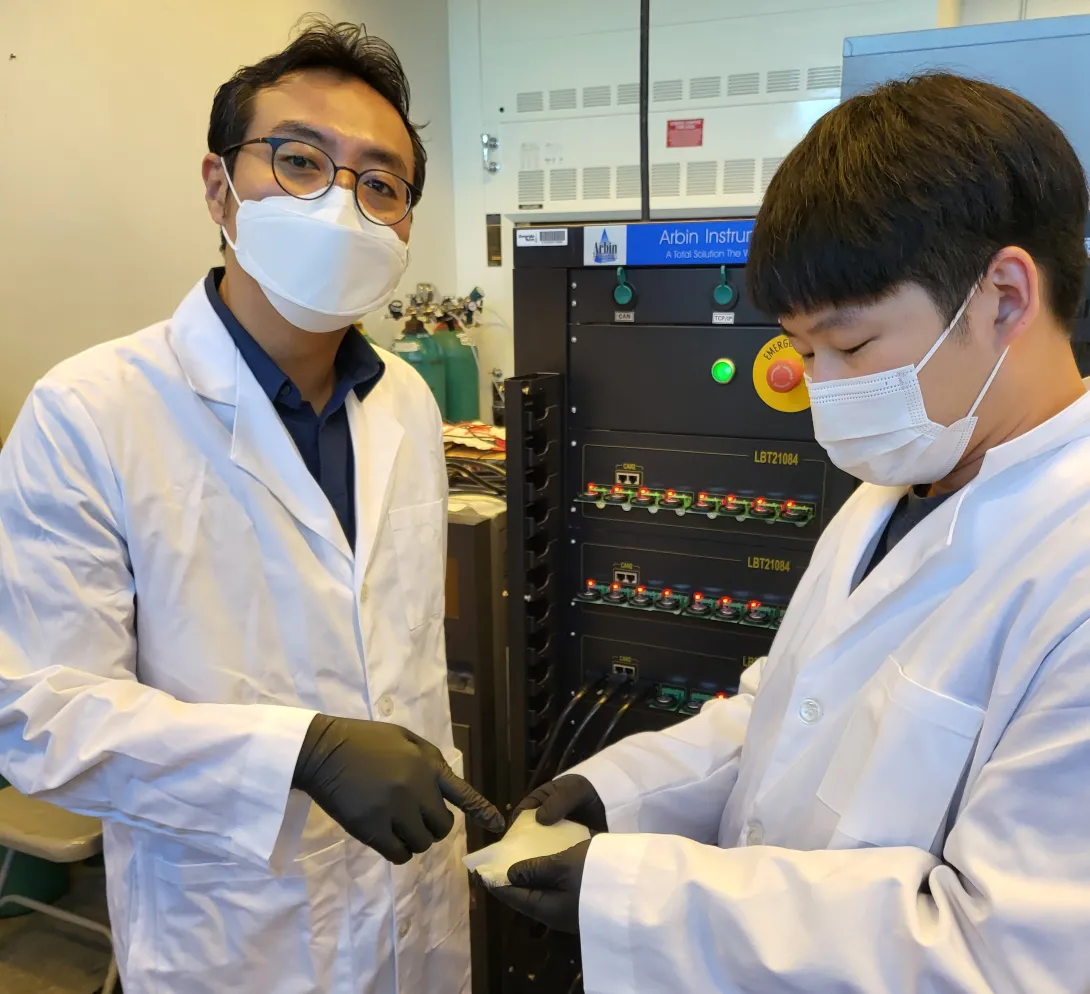

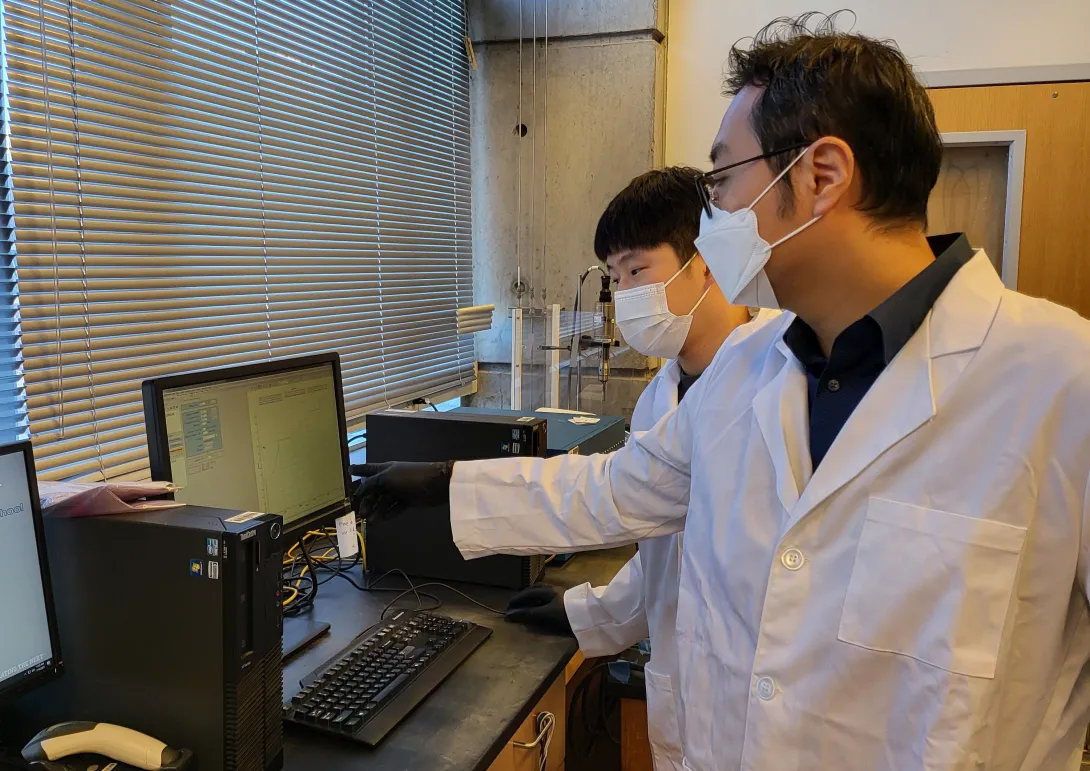
For electric vehicles (EVs) to become mainstream, they need cost-effective, safer, longer-lasting batteries that won’t explode during use or harm the environment. Researchers at the Georgia Institute of Technology may have found a promising alternative to conventional lithium-ion batteries made from a common material: rubber.
Elastomers, or synthetic rubbers, are widely used in consumer products and advanced technologies such as wearable electronics and soft robotics because of their superior mechanical properties. The researchers found that the material, when formulated into a 3D structure, acted as a superhighway for fast lithium-ion transport with superior mechanical toughness, resulting in longer charging batteries that can go farther. The research, conducted in collaboration with the Korea Advanced Institute of Science and Technology, was published Wednesday in the journal Nature.
In conventional lithium-ion batteries, ions are moved by a liquid electrolyte. However, the battery is inherently unstable: even the slightest damage can leak into the electrolyte, leading to explosion or fire. The safety issues have forced the industry to look at solid-state batteries, which can be made using inorganic ceramic material or organic polymers.
“Most of the industry is focusing on building inorganic solid-state electrolytes. But they are hard to make, expensive and are not environmentally friendly,” said Seung Woo Lee, associate professor in the George W. Woodruff School of Mechanical Engineering, who is part of a team of researchers who have uncovered a rubber-based organic polymer superior to other materials. Solid polymer electrolytes continue to attract great interest because of their low manufacturing cost, non-toxicity and soft nature. However, conventional polymer electrolytes do not have sufficient ionic conductivity and mechanical stability for reliable operation of solid-state batteries.
Novel 3D Design Leads to Jump in Energy Density, Performance
Georgia Tech engineers have solved common problems (slow lithium-ion transport and poor mechanical properties) using the rubber electrolytes. The key breakthrough was allowing the material to form a three-dimensional (3D) interconnected plastic crystal phase within the robust rubber matrix. This unique structure has resulted in high ionic conductivity, superior mechanical properties and electrochemical stability.
This rubber electrolyte can be made using a simple polymerization process at low temperature conditions, generating robust and smooth interfaces on the surface of electrodes. These unique characteristics of the rubber electrolytes prevent lithium dendrite growth and allow for faster moving ions, enabling reliable operation of solid-state batteries even at room temperature.
“Rubber has been used everywhere because of its high mechanical properties, and it will allow us to make cheap, more reliable and safer batteries,” said Lee.
“Higher ionic conductivity means you can move more ions at the same time,” said Michael Lee, a mechanical engineering graduate researcher. “By increasing specific energy and energy density of these batteries, you can increase the mileage of the EV.”
The researchers are now looking at ways to improve the battery performance by increasing its cycle time and decreasing the charging time through even better ionic conductivity. So far, their efforts have seen a two-time improvement in the battery's performance / cycle time.
The work could enhance Georgia’s reputation as a center for EV innovation. SK Innovation, a global energy and petrochemical company, is funding additional research of the electrolyte material as part of its ongoing collaboration with the Institute to build next-generation solid-state batteries that are safer and more energy dense than conventional LI-ion batteries. SK Innovation recently announced construction of a new EV battery plant in Commerce, Georgia, expected to produce an annual volume of lithium-ion batteries equal to 21.5 Gigawatt-hours by 2023.
“All-solid-state batteries can dramatically increase the mileage and safety of electric vehicles. Fast-growing battery companies, including SK Innovation, believe that commercializing all-solid-state batteries will become a game changer in the electric vehicle market,” said Kyounghwan Choi, director of SK Innovation’s next-generation battery research center. “Through the ongoing project in collaboration with SK Innovation and Professor Seung Woo Lee of Georgia Tech, there are high expectations for rapid application and commercialization of all-solid-state batteries."
CITATION: M. Lee, et. al, "Elastomeric electrolytes for high-energy solid-state lithium batteries," (Nature, 2022) https://doi.org/10.1038/s41586-021-04209-4
***
The Georgia Institute of Technology, or Georgia Tech, is a top 10 public research university developing leaders who advance technology and improve the human condition. The Institute offers business, computing, design, engineering, liberal arts, and sciences degrees. Its nearly 44,000 students representing 50 states and 149 countries, study at the main campus in Atlanta, at campuses in France and China, and through distance and online learning. As a leading technological university, Georgia Tech is an engine of economic development for Georgia, the Southeast, and the nation, conducting more than $1 billion in research annually for government, industry, and society.
News Contact
Anne Wainscott-Sargent (404-435-5784)
Aug. 18, 2021

The Goldia Mae Burchfield Memorial Scholarship is open for contributions again this year. It was established last year to support students in pursuit of their undergraduate degree. Ms. Burchfield, mother to Brook Byers Institute for Sustainable Systems Financial Manager, Gay Burchfield, died of COVID-19 on June 8th, 2020, at the age of 80, in Starkville, Mississippi. She lived a life of service to those in her community, with a particular emphasis on education.
The Burchfield family selected sophomore Catherine Shamanski in the College of Psychology to receive a $200 scholarship. Shamanski will serve as a Team Leader in a section of the GT-1000 class, helping incoming first year students to find their footing on campus.
Ms. Goldia was years ahead of her time. During the segregation era, her family moved from rural Mississippi to a larger town where she could pursue her high school education, which she completed in 1958. She wanted to join the military only to discover that women of color were not eligible to serve. She worked as a part-time custodian in a local bank for 35 years, as well as numerous odd jobs to care for her family and her community. She and her husband had several small businesses in their hometown, one of which was “Burchfield Recreation,” aka “The Pool Hall.” The pool hall also served as an ad-hoc after-school care for many families with working parents. Ms. Goldia provided meals, advice, and discipline, sometimes working extra odd jobs to finance those additional expenses. She would also put together care packages with stipends for the young people of her community who were college bound. If asked what her greatest achievements were, she would say that she was a great mom, provided free meals to many, greeted everyone with a heartfelt smile, and genuinely cared for everyone she encountered.
Donations by check should be made payable to the Georgia Tech Foundation, Inc., with "Goldia Mae Burchfield Memorial Scholarship" noted on the check or in a separate note, and should be mailed to: Georgia Tech Foundation, Inc., 760 Spring Street, NW, Suite 400, Atlanta, GA 30308.
On-line gifts can be made at https://development.gatech.edu, using the ‘GIVE NOW’ button and following directions provided. In the ‘Other Designation’ box, enter “Goldia Mae Burchfield Memorial Scholarship.” Each donor will be acknowledged by the Georgia Tech Foundation, and a list of all donors will be shared with the Burchfield family.
News Contact
Brent Verrill, Research Communications Program Manager, BBISS
Feb. 10, 2020


Four Georgia Institute of Technology faculty members have been elected as new members of the National Academy of Engineering (NAE). Marilyn Brown, Thomas Kurfess, Susan Margulies, and Alexander Shapiro join 83 other new NAE members for 2020 when they are formally inducted during a ceremony at the academy’s annual meeting on Oct. 4 in Washington, D.C.
Election of new NAE members, the culmination of a yearlong process, recognizes individuals who have made outstanding contributions to "engineering research, practice, or education, including, where appropriate, significant contributions to the engineering literature" and to "the pioneering of new and developing fields of technology, making major advancements in traditional fields of engineering, or developing/implementing innovative approaches to engineering education."
“It’s the honor of a lifetime to be recognized by the National Academy of Engineering for the impact we’ve have on understanding lung injuries in the critical care unit and traumatic brain injuries in children,” said Margulies, chair of the Wallace H. Coulter Department of Biomedical Engineering at Georgia Tech and Emory University and, with Brown, one of just three women on the Georgia Tech faculty accorded NAE membership – one of the highest professional distinctions an engineer can receive.
“Our work is deeply collaborative, and I am grateful to the engineers, scientists, physicians, and patients who are partners in our journey,” Margulies added.
Margulies, a researcher in the Petit Institute for Bioengineering and Bioscience at Tech and a Georgia Research Alliance Eminent Scholar in Injury Biomechanics at Emory, was elected, “for elaborating the traumatic injury thresholds of brain and lung in terms of structure-function mechanisms,” according to the NAE announcement.
Using an integrated biomechanics approach, Margulies’ research program spans the micro-to-macro scales in two distinct areas, traumatic brain injury and ventilator-induced lung injury. Her work has generated new knowledge about the structural and functional responses of the brain and lungs to their mechanical environment. Margulies came to Georgia Tech in 2017 from the University of Pennsylvania, where she’d been a professor of bioengineering, and had earned her Master of Science in Engineering and Ph.D. in Bioengineering.
Brown, a Regents and Brook Byers Professor of Sustainable Systems in the School of Public Policy, was co-recipient of the Nobel Peace Prize in 2007 (for co-authorship of the Intergovernmental Panel on Climate Change Working Group III Assessment Report on Mitigation of Climate Change, Chapter 6).
She joined Georgia Tech in 2006 after a career at the U.S. Department of Energy's Oak Ridge National Laboratory, where she led several national climate change mitigation studies and became a leader in the analysis and interpretation of energy futures in the United States. Her research at Tech focuses on the design and impact of policies aimed at accelerating the development and deployment of sustainable energy technologies, emphasizing the electric utility industry. She was elected to NAE “for bridging engineering, social and behavioral sciences, and policy studies to achieve cleaner electric energy.”
Brown, who earned her Ph.D. at the Ohio State University, co-founded and chaired the Southeast Energy Efficiency Alliance, served two terms as a presidential appointee on the board of the Tennessee Valley Authority – the nation’s largest public power provider – and also served two terms on the U.S. Department of Energy’s Electricity Advisory Committee, where she led the Smart Grid Subcommittee.
“The most rewarding feature of my career has been working toward solutions with colleagues across disciplines,” Brown said.
Shapiro is the Russell Chandler III Chair and professor in the H. Milton Stewart School of Industrial and Systems Engineering, where his research is focused on stochastic programming, risk analysis, simulation-based optimization, and multivariate statistical analysis.
In 2013, he was awarded the INFORMS Khachiyan Prize for lifetime achievements in optimization. He received the 2018 Dantzig Prize from the Mathematical Optimization Society and the Society for Industrial and Applied Mathematics.
Since earning his Ph.D. in applied mathematics-statistics from Israel’s Ben-Gurion University of the Negev in 1981, Shapiro has made substantial contributions to the fields of optimization and large-scale, stochastic programming, and he was elected to NAE “for contributions to the theory, computation, and application of stochastic programming.”
Kurfess is professor and HUSCO/Ramirez Distinguished Chair in Fluid Power and Motion Control in the George W. Woodruff School of Mechanical Engineering, where he has helped guide the evolution of technology as a pioneer in the digital transformation of manufacturing.
Improving manufacturing technology is a pursuit that has roots in his childhood. “I grew up in my father’s machine shop,” said Kurfess, who has a special fondness for mom-and-pop operations. He was elected by the NAE “for development and implementation of innovative digital manufacturing technologies and system architectures.”
“I’m proud that the work we do has a positive impact on small and medium-sized enterprises, which are about 99% of the manufacturing operations, as well as large operations,” said Kurfess, who earned all of his degrees at MIT. “Our work targets people who are implementing the digital thread in manufacturing, and what the digital thread will do is make sure those smaller enterprises, those mom and pops, can have access to the latest and greatest technologies.”
Research News
Georgia Institute of Technology
177 North Avenue
Atlanta, Georgia 30332-0181 USA
Media Relations Contact: John Toon (404-894-6986) (jtoon@gatech.edu).
Writer: Jerry Grillo
News Contact
John Toon
Research News
(404) 894-6986
Sep. 19, 2018

Dunn Family Professor and Professor of Operations Management at Scheller College of Business, Atalay Atasu, has co-authored an article in the Harvard Business Review discussing the opportunities and barriers for companies to participate in the circular economy. Recent passage of the European Union's Circular Economy Package will mandate the reuse of products in many different categories. This article outlines the three major strategies that have proven successful for companies which have already implemented circular economy business models. Three brief case studies are also provided.
News Contact
Prof. Atalay Atasu, Dunn Family Professor, Scheller College of Business
Mar. 12, 2018

Anderson Interface Professor of Natural Systems, Valerie Thomas has been awarded the Class of 1934 Outstanding Interdisciplinary Activities Award by the Faculty Honors Committee. The award was established to recognize Georgia Tech faculty who have made significant interdisciplinary contributions to teaching and research. Professor Thomas has been active in a wide variety of research areas including nuclear arms control, energy policy, high-energy physics, environmental sustainability, and technology assessment. Her collaborations are equally varied, including colleagues from academia, and the public and private sectors. The nature of her collaborations and diverse subject expertise has resulted in research that engages the public and has had meaningful impacts in policy making. The award will be presented at the annual Georgia Tech Faculty and Staff Honors Luncheon to be held on Wednesday, April 11, 2018.
Professor Thomas holds a joint appointment in the H. Milton Stewart School of Industrial & Systems Engineering and in the School of Public Policy at Georgia Tech. Dr. Thomas's research interests include energy systems, sustainability, industrial ecology, technology assessment, international security, and science and technology policy. Her current research projects include the environmental impacts of biofuels and electricity system policy and planning. Dr. Thomas is a member of the USDA/DOE Biomass Research and Development Technical Advisory Committee. In 2004-2005, she was the American Physical Society Congressional Science Fellow. Dr. Thomas is a Fellow of the American Association for the Advancement of Science, and of the American Physical Society, and has been a Member of the U.S. EPA Science Advisory Board. She is currently a member of the board of the Southeast Energy Efficiency Alliance and a member of the Federation of American Scientists Board of Experts. She has previously worked at the Department of Engineering and Public Policy at Carnegie Mellon University, and at Princeton University’s Environmental Institute. Dr. Thomas received a B.A. in physics from Swarthmore College and a Ph.D. in theoretical physics from Cornell University.
News Contact
Brent Verrill, Communications Manager, BBISS