

Georgia Tech researchers, educators, students, and industry leaders met at Exhibition Hall on Sept. 28 for the Tech AI Symposium to address the challenge of turning AI research into practical tools.
Two morning panels explored research collaboration and workforce adaptation, while an afternoon student poster session and a concurrent Tech AI Career Fair connected the discussions with research and career opportunities.
For Tim Brown, Georgia Tech’s academic program director for AI, helping people find the right expertise is a practical starting point. When people ask how to become involved in AI research and partnerships, he said, Tech AI can help connect their interests with researchers and projects.
“We get these inquiries every day,” Brown said. He encouraged students to share their résumés and areas of interest, and to seek out faculty whose research methods and fields of study align with their goals.
Tech AI’s broader purpose is to help industry, government, and other organizations move from research ideas to AI systems they can put to use. Part of the university-wide Georgia Tech AI ecosystem, Tech AI draws on expertise across the Institute’s colleges and schools, interdisciplinary research institutes, AI institutes, advanced computing infrastructure, and the Georgia Tech Research Institute (GTRI).

The "How Tech AI Collaborates" panel, moderated by Brown, examined what it takes to make those partnerships work, particularly when research depends on sensitive information or creates intellectual property.
Belinda Vogel, research engagement manager for the Georgia Tech Manufacturing Institute and the Renewable Bioproducts Institute, described plans to open advanced manufacturing capabilities to remote users in academia and industry. Such access could extend the reach of research facilities, but it also raises questions about how companies can benefit from AI while keeping their data private.
Kevin Dalmeijer, a senior research associate in Georgia Tech’s H. Milton Stewart School of Industrial and Systems Engineering and managing director of the NSF AI Institute for Advances in Optimization, described safeguards used in projects involving sensitive or controlled data. Those measures can restrict where information is stored, how students access it, and which AI tools they can use.
Dalmeijer also discussed internships that divide a student’s time between Georgia Tech research and work embedded within a company. Establishing clear boundaries at the outset, he said, helps distinguish academic research from company-specific implementations and clarifies expectations for data and intellectual property.
Brown brought Ajay Upadhyaya, Tech AI’s associate director for research administration, from the audience into the discussion to explain another approach. Upadhyaya described developing foundational models with synthetic data, allowing students to publish academic work, then defining separate ownership for work incorporating a company’s proprietary data. He emphasized the importance of clearly specifying those boundaries.
The panel also looked toward emerging computing capabilities. Jeffrey Young, a Georgia Tech principal research scientist working with the Partnership for an Advanced Computing Environment, discussed how AI could help researchers improve quantum systems and determine how best to map applications onto quantum hardware. His remarks pointed to a relationship in which AI can support the development of other computing technologies, even as researchers continue exploring their potential.
The second panel, “Workforce Adaptation in the Age of AI,” shifted the focus to the people learning and working with these tools. Moderator Leigh Hopkins, assistant director of Georgia Tech’s Center for Economic Development Research, described a workforce being asked to adapt while the technology itself rapidly changes.
David Joyner, Georgia Tech’s interim vice provost for AI in Education and executive director of its Online Master of Science in Computer Science program, said AI familiarity is moving toward becoming an expected professional skill. He compared that transition with an earlier era when applicants listed typing speed on their résumés before such capabilities became “baseline.”
People still need the knowledge and judgment to do the underlying work themselves, Joyner said. Learning to use AI must be paired with learning to evaluate its output and avoid overreliance on the technology.
Georgia Tech faculty are exploring that balance through classroom experimentation, from changing assignments to developing tools tailored to particular courses. Joyner described the Academic AI Playbook as a way to share what individual instructors tried, the challenges they encountered, and what others might learn from their experiences. The 2026 edition includes 67 faculty-authored articles and 20 lessons drawn from classroom experience.
Joyner also raised a longer-term question for employers and educators: If AI takes on tasks traditionally assigned to entry-level employees, how will those employees gain the experience needed to advance? He suggested that evaluating work, framing problems, and defining clear requirements will become increasingly important as people take responsibility for directing AI-assisted work.
Georgia Tech alum Brian Greene, an operations and supply-chain executive, brought the discussion back to organizational decision-making. Companies can become so focused on acquiring an AI tool, he said, that they overlook the business need it is supposed to address.
“What’s the problem you’re trying to solve?” Greene asked. He urged organizations to begin with that question and work backward to the capabilities and partnerships they need. For smaller businesses with limited resources, choosing a tool without a clear purpose can be especially costly.
Narayanan (KK) Krishnakumar, chief technology officer at Delta Air Lines, offered examples of AI at work in a large organization. He described systems that help optimize baggage routing and generative AI tools that summarize information for customer-service employees. Across those applications, he emphasized the continuing need to verify AI-generated information.
For both Krishnakumar and Greene, the qualities employers value remain the same as they have traditionally been: curiosity, problem-solving, collaboration, and an ability to deliver results. AI fluency adds to those capabilities while making sound judgments about data and answers all the more necessary.

The afternoon poster session demonstrated how widely those questions now reach. Student projects explored trustworthy optimization, AI agents and responsible design alongside research on education, city planning and biomedical diagnostics. Other work addressed materials discovery and sustainable material selection, quantum chemistry, signal analysis, and AI that could support aging in place.
A well-attended career fair ran simultaneously with the symposium. In a large auditorium filled with company booths, students lined up to meet employers as both sides sought to connect research with potential positive industry outcomes.
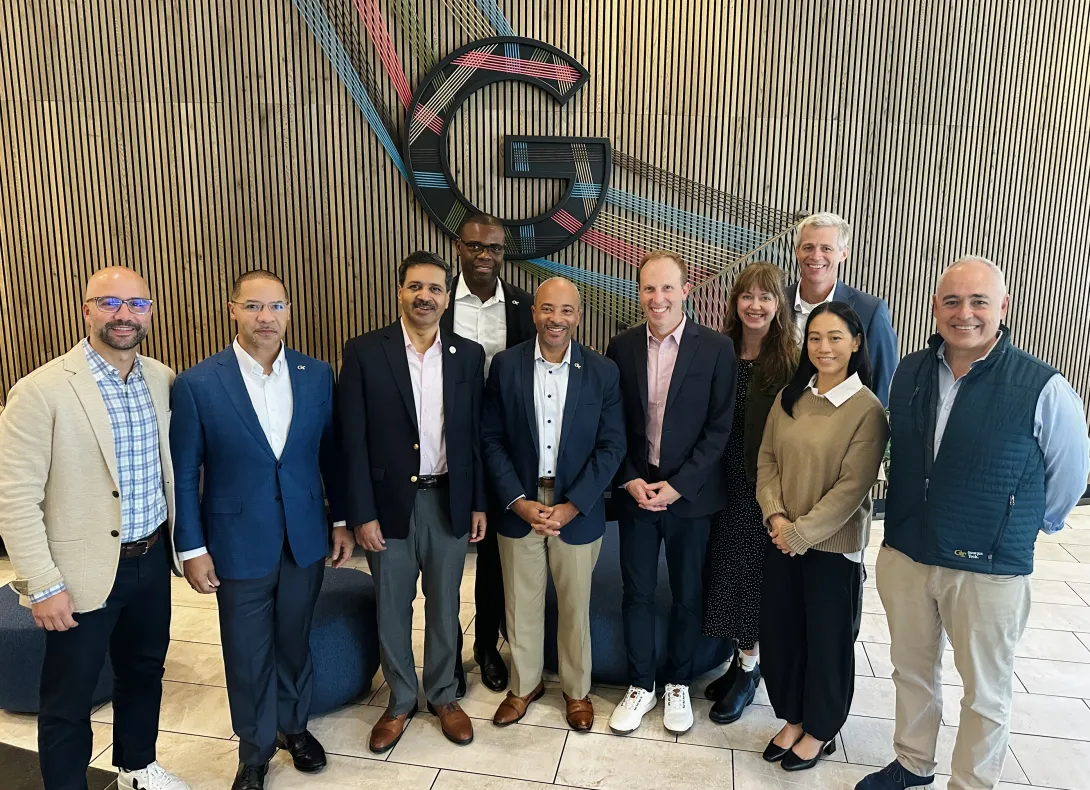
Georgia Tech Leadership Visit to Google Headquarters on Sept. 2026.
ATLANTA — Georgia Tech has received an initial $2.25M for the first year of the program, marking the beginning of a $5 million overall commitment from Google.org to help more scientists across the country use artificial intelligence (AI) to advance their research.
AI is helping scientists analyze massive datasets, test ideas faster, and tackle complex problems. But many researchers lack the computing power, tools, or training to use it, and tools built for one computing system often won't work on another. The three-year initiative will make powerful AI tools and computing resources easier for researchers to access, use, and share.
“AI has the potential to reshape how science is done, but that transformation should not be limited to a small number of researchers or institutions,” said Tim Lieuwen, executive vice president for Research at Georgia Tech. “With this investment from Google.org, we can equip researchers at institutions across the U.S. with the tools, training and reusable infrastructure they need to put AI to work, broadening access to these capabilities and accelerating discovery.”
The funding enables Georgia Tech to develop at least 15 AI research tools and workflows scientists can share and reuse. The Institute will also fund 15 research projects — five per year — and provide technical support to approximately 30 additional research teams across the country. By the end of this initiative, Georgia Tech expects 25 to 30 institutions to be actively using the shared tools.
Training will be a major part of the effort, with more than 300 researchers and faculty learning how to use AI in their research and teaching. The program will focus on institutions that have historically had less access to powerful computing, so more researchers can take part in AI-driven science.
The work will be led by Georgia Tech’s Institute for Data Engineering and Science (IDEaS) and the Center for AI in Science and Engineering, a joint center of IDEaS and the College of Computing. The initiative will build on Nexus, Georgia Tech’s new National Science Foundation-funded AI supercomputer, and connect researchers with Google’s advanced AI computing technology. Together, these resources will make it easier for scientists to use AI tools across different computing systems and share their work with researchers at other institutions.
“One of the biggest opportunities in AI isn’t just to make individual researchers faster. It’s to change the underlying economics of scientific discovery by making leading AI models and capabilities accessible to far more researchers and institutions,” said Sepi Hejazi Moghadam, Head of Foundations of Science, Google.org. “Georgia Tech is a true lighthouse institution, and this investment is designed to build a lasting foundation that expands access to these advanced AI capabilities. By partnering deeply with Georgia Tech to close the capacity gap, we’re helping ensure that scientists across the country, regardless of their institution’s size or historical funding, can harness AI to tackle some of the world’s most pressing challenges.”
The announcement comes as Georgia Tech and the City of Atlanta convene leaders from business, academia, technology, investment, and government for Avant South and the inaugural Atlanta AI Summit. These efforts reflect a broader push across Georgia Tech and the region to expand access to AI tools and high-performance computing to solve real-world problems.
News Contact
Georgia Tech Media Relations

ATLANTA — Together, Georgia Tech and Emory University are investing more than $1 billion in artificial intelligence (AI), building one of the nation’s most robust AI ecosystems in the city of Atlanta.
The combined commitment — approximately $600 million from Emory and more than $575 million from Georgia Tech — strengthens Atlanta’s competitiveness for new business growth, skilled workers, investment, and federal research funding.
The institutions contribute unique capabilities that span the full AI innovation pipeline. Georgia Tech’s investments focus on advanced computing, AI discovery, and workforce development — with the goal of developing leaders who will shape AI use for human good. Emory’s investments cultivate AI talent, healthcare innovation, and technology applications in medicine, business, law, the humanities, and ethics. Additionally, Georgia Tech and Emory will collaborate where their strengths intersect, creating new opportunities for research partnerships, talent development, industry engagement, and AI-enabled innovation.
“Georgia is poised to be a national leader in advanced, responsible AI development that can be counted on to produce the talent, infrastructure, and innovation companies need,” said Georgia Tech President Ángel Cabrera. “The combined strengths of Georgia Tech and Emory will help make Atlanta a leading AI hub that drives breakthrough discoveries, launches new ventures, powers industries, and fuels economic growth.”
“Atlanta is unique because of what we can accomplish together,” said Emory University President Christopher L. Augostini. “The collaboration between our universities and leaders in government and business allows us to identify and respond to the opportunities AI offers our state to accelerate discovery and improve lives. The combination of Emory’s expertise in the liberal arts and health sciences with Georgia Tech’s leadership in technology and engineering makes our region a national leader in AI.”
Building What Companies Need
The investments come as the White House Office of Science and Technology Policy’s Science: A New Golden Age calls for stronger partnerships, advanced scientific infrastructure, and AI-enabled discovery to strengthen American innovation.
As AI reshapes industries, companies need more than technology. They need AI-skilled talent, advanced computing power, research expertise, and the ability to turn AI into real-world solutions. Georgia Tech and Emory are investing across all four:
- Building computing power: Georgia Tech’s investments include advanced computing infrastructure in Tech Square, a campuswide computing platform, and a new AI supercomputer (Nexus) that will be launched in October. The infrastructure, funded jointly by Georgia Tech, industry, and the National Science Foundation, provides advanced computing resources for students, faculty, and researchers applying AI to pressing challenges.
- Building talent: Georgia Tech’s AI Makerspace gives more than 6,000 students each year the opportunity for hands-on AI experience, while nearly half of Emory’s approximately $600 million investment has gone toward recruiting and retaining talent and experts in Atlanta.
- Building research expertise: Emory’s AI.Humanity initiative brings together more than 250 faculty members across eight schools and colleges. Georgia Tech’s AI ecosystem encompasses every discipline: computing, engineering, science, business, design, and the liberal arts. This includes multiple National Science Foundation AI Institutes advancing AI in areas such as energy, supply chains, healthcare, aging, and education.
- Building real-world applications: Emory Healthcare is already using AI to enhance patient care. Emory’s AI.Health institute applies AI to cancer, kidney disease, and other health challenges, contributing to three spinoff companies and 40 licensed technologies. Georgia Tech’s Tech AI brings together companies and government partners with leading researchers to accelerate AI adoption in industry and government. These investments strengthen Atlanta’s capacity to turn AI research into new companies, stronger industries, and economic growth.
Expanding Opportunity Across Georgia
Georgia Tech and Emory are working to extend the benefits of AI beyond their campuses, preparing Georgians in every county to build the skills needed in a rapidly changing economy.
- Preparing people for an AI-driven workforce: Georgia Tech’s College of Lifetime Learning is developing new approaches to continuing education, upskilling, and reskilling workers so they can adapt and grow throughout their careers. The Institute is also working with K–12 schools, universities, technical colleges, communities, and industry to expand pathways into education and employment. Emory’s AI + You Georgia is similarly bringing free AI education and workforce training to communities across the state.
- Bringing AI to Georgia manufacturers: Georgia Tech leads Georgia AIM, a statewide initiative backed by nearly $100 million in federal, state, and private support that brings together industry, universities, technical colleges, and communities to advance AI-enabled manufacturing and build the workforce to support it.
- Building the next generation of manufacturing talent: Georgia Tech recently joined Foundry School, a national initiative preparing engineers, technicians, entrepreneurs, and industry leaders for advanced manufacturing — building on Georgia Tech’s existing work connecting students, industry, and workforce partners with advanced manufacturing research.
Building a National Center for Applied AI
These collective investments support a larger ambition articulated by the Atlanta Mayor’s Office: making Atlanta a top five technology and entrepreneurship hub and a national center of excellence for applied AI.
This fall, Avant South, Atlanta’s premier AI event, will convene Atlanta’s business and technology leaders, researchers, entrepreneurs, investors, and government and civic leaders to strengthen the connections and collaboration driving Atlanta’s rise as a leading technology hub.
Within Avant South, an invitation-only AI Summit will focus on accelerating Atlanta’s emergence as a national center of excellence for applied AI — harnessing the region’s research, talent, industry, and investment to create new companies, accelerate innovation, and drive economic growth.
Why This Investment Matters for Georgia
Together, these investments are already:
- Creating high-quality jobs by building a strong pipeline of AI-skilled talent.
- Attracting and retaining companies by pairing talent with advanced computing, research, and real-world applications.
- Preparing Georgia’s workforce for AI-enabled industries and advanced manufacturing.
- Accelerating medical and scientific breakthroughs while moving new technologies into practical use.
- Improving healthcare for patients in Georgia by moving medical and scientific advances from the lab into practice.
- Bringing federal research funding and private investment into Georgia.
- Expanding access to AI education and technology across the state.
- Driving innovation in key industries including healthcare, logistics, manufacturing, energy, and national security.
- Strengthening Atlanta’s position as a leading technology hub and national center for applied AI.
Georgia Tech and Emory are helping to establish Atlanta as a national center for applied AI. Their investments combine research expertise, talent, computing infrastructure, and real-world applications. The result is new opportunities for innovation, economic growth, and long-term competitiveness throughout Georgia.
News Contact
Media Contacts:
Georgia Tech: media@gatech.edu
Emory University: news@emory.edu
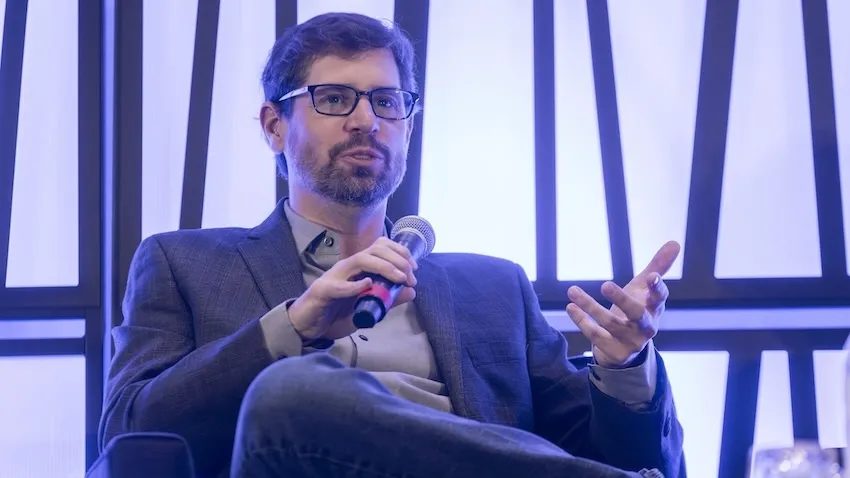
As more people turn to large-language models (LLMs) during personal crises, the companies behind them are engineering these AI-powered models to be more personal, empathetic, and understanding when prompts indicate a user is in emotional distress.
The trend is raising concern about how well prepared ChatGPT, Claude, Gemini, and other popular LLMs are to provide appropriate emotional support.
To address this concern, Georgia Tech researchers have developed a new neural framework that examines how different training sources influence empathy and social reasoning within these AI-powered models.
“A lot of people are using LLMs to help process the death of a loved one, or maybe their girlfriend broke up with them, or their boyfriend cheated on them,” said Glenn Matlin, a Ph.D. student in the School of Interactive Computing.
Matlin said the new framework he and a Georgia Tech-led research team have developed audits neural networks with an LLM and estimates the influence documents, transcripts, and other data sources have on a model’s output.
“We’re trying to connect the data to outputs, which is helpful for us in understanding where the information a language model produces comes from,” he said.
Matlin is the lead author of a new paper examining model sourcing for social reasoning and how models mimic human behavior in conversations. The paper will be presented this week at the Conference on Language Modeling in San Francisco.
Matlin said the findings suggest that an objective tone in its output indicates that a model places greater importance on textbooks or similar neutral training sources. An empathetic tone suggests the model values sources with dialogue and conversational examples more.
“We find that models tend to learn better from interpersonal dialogue when it comes to social reasoning,” he said. “Models that are good at social reasoning will rely less on textbooks about human emotions and more on FAQs or customer service dialogue.
“It can read all it wants from texts that explain anger, but that wouldn’t help it determine whether someone is angry.”
Professor Mark Riedl, Matlin’s advisor, said that knowing which sources models value most could enable engineers to alter their behavior.
“The question is, in this vast ocean of documents in this neural network, which ones become important in certain situations, and which ones don’t,” Riedl said.
“This leads to the potential for interventions in how we train the model. If we want more empathy, we might look to see where it learns empathy and give it more of those documents, fewer of them, or other documents.”
Riedl said the framework can audit an LLM’s sourcing for advice on any topic, from financial to medical.
“We want to help people make more informed decisions about whether they should use AI for a particular task,” he said.
“You might make a different decision about whether to trust the AI’s recommendation if you knew how a skill was learned and which documents influenced that decision. The first step is knowing how it learns, where it learns from, and what documents tend to lead to certain behaviors.”
The findings that Matlin, Riedl, and their collaborators have made so far came through a partnership with the Allen AI Institute (Ai2), which allowed them to audit their open-sourced LLM, Olmo 3.
While not as large as ChatGPT or Claude, Olmo 3’s training data comprises over a billion documents.
Matilin said it’s impossible to know why ChatGPT or Claude behave in certain ways because their parent companies do not disclose their training data. However, Matlin’s study may help researchers to make better guesses about what’s happening behind the scenes.
He added that the study is the first of its kind and scale on an academic level.
“This is the first one that’s ever been done for an open data model of that type,” he said. “We’re providing a view into neural networks that is hard to come by without being in the corporate setting.”
Amazon and the Georgia Institute of Technology announced today the launch of the Georgia Tech–Amazon Science Hub, reinforcing a shared commitment to advancing cutting-edge research through academic–industry collaboration. The Hub builds on extensive existing collaborations between Georgia Tech and Amazon over the past decade. As part of the collaboration, Amazon will provide funding for joint research projects and community-building initiatives designed to accelerate scientific ambitions.
"The most meaningful breakthroughs happen when intelligent hardware and thoughtful software come together to genuinely help people,” said Tapas Roy, vice president of Device Software and Services at Amazon. “Georgia Tech's world-class expertise in robotics and engineering, paired with Amazon's work in on-device intelligence and artificial intelligence, will accelerate our understanding of systems that can both respond to prompts and anticipate customer needs. I'm excited to see how this collaboration advances the science of how humans and intelligent machines work together.”
The Hub’s initial focus areas will explore challenges in autonomous systems, next-generation logistics infrastructure, and low-Earth-orbit communications, drawing on Georgia Tech’s well-known interdisciplinary research approach.
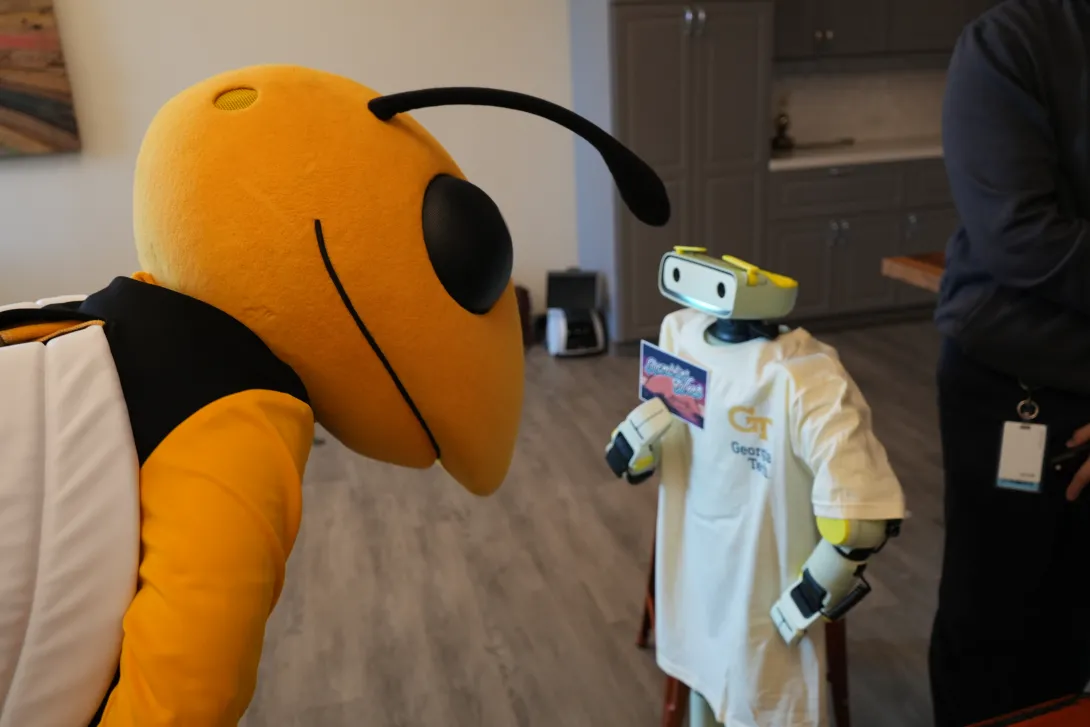
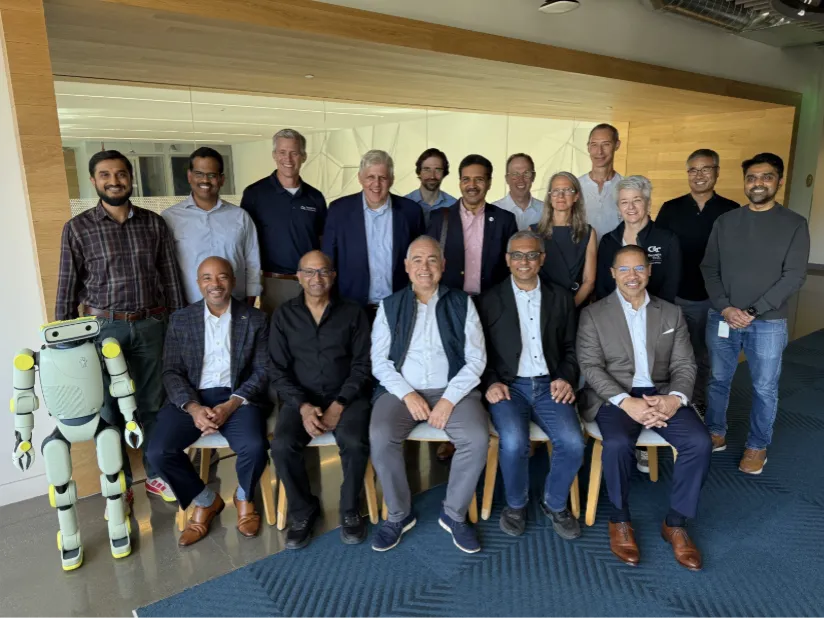
Georgia Tech is also joining the Fauna Robotics' ecosystem, using the Sprout research platform to study how humans and robots can live, work, and play side by side. This collaboration opens new ways to study mobility, perception, manipulation, and human-robot interaction. Leadership and alumni recently celebrated the launch at Lab 126, with guest appearances from Sprout and Buzz, the Georgia Tech mascot.
The Hub will support:
• Joint research projects between Georgia Tech faculty and Amazon scientists across scientific disciplines
• Regular symposia and workshops to foster collaboration between researchers from both institutions and the broader Atlanta tech community
• Community outreach programs designed to broaden participation from interdisciplinary scholars and innovators
“Georgia Tech and Amazon have worked together for years across research, technology, and student development," said Tim Lieuwen, Georgia Tech executive vice president for Research. "This new hub puts our partnership to work for Georgia. It connects research, education, and industry in ways that will strengthen our state’s innovation economy and create new opportunities for our students.”
About Georgia Tech
Georgia Institute of Technology is one of the nation’s top public research universities, preparing leaders who advance technology and improve the human condition. The Institute serves more than 56,000 students from all 50 states and over 146 countries and drives innovation and economic growth through research that benefits Georgia, the nation, and the world.
About Amazon in Georgia
Since 2010, Amazon has invested more than $30 billion in Georgia, supporting more than 30,000 full- and part-time jobs. Amazon’s research and technology teams in the Atlanta area work on challenges spanning supply chain optimization, logistics technology, and cloud computing. The establishment of the Georgia Tech–Amazon Science Hub further deepens Amazon’s engagement with one of the nation’s leading research institutions.
About Fauna Robotics
Fauna Robotics builds Sprout, a development platform designed to put advanced robotics capabilities into the hands of researchers and developers. Sprout gives builders hands-on access to study mobility, perception, motor control, and manipulation with the ambition to deploy robots into human-centric spaces.
News Contact
Media contact: media@gatech.edu
Artificial intelligence may operate in the digital world, but it leaves a massive and very real physical and societal footprint. What does AI’s rapid growth mean for the future of humanity? How can it be steered towards a more prosperous future for all?
The Ivan Allen College of Liberal Arts will host a series of four events, the AI & Society Series, to bring together scholars, practitioners, industry leaders, and the Georgia Tech community to explore some of the most consequential questions surrounding artificial intelligence and their potential solutions. Through the interdisciplinary lens of the liberal arts, the series will examine AI's physical infrastructure, its influence on research and discovery, its evolving role in human relationships, and its impact on creativity and creative industries.
“Considering technology from a humanistic perspective has never been more necessary,” said Amanda Murdie, dean of the Ivan Allen College of Liberal Arts. “AI has so much potential to be positive and transformational, but we should prioritize understanding and mitigating the challenges it creates in its wake.”
The series will kick off with “We, the People, and AI: The Future of Data, Energy, Health, and Human Rights” on Oct. 8 at 6:30 p.m. in the John Lewis Student Center’s Walter G. Ehmer Theater. This event will explore the infrastructure behind AI — from data centers and energy consumption to environmental and societal impacts.
Panelists include Wendy H. Wong, Professor, University of British Columbia – Okanagan Campus; Caroline Gwynn Monagle, Vice President, Strategic Initiatives, R1 RCM; and Marilyn A. Brown, Regents and Brook Byers Professor, Jimmy and Rosalynn Carter School of Public Policy, Georgia Institute of Technology
Wong’s research examines global governance, technology, human rights, and civil society. Her book We, the Data: Human Rights in the Digital Age explores how Big Data and artificial intelligence challenge traditional understandings of human rights and won the 2024 Balsillie Prize for Public Policy.
Monagle leads strategic initiatives at R1 RCM, a healthcare technology and services company, in an industry undergoing rapid technological transformation. A Georgia Tech alumna, Monagle’s leadership experience at the intersection of healthcare, technology, strategy, and organizational change brings an industry perspective to the conversation about AI's impact on health and society.
Brown’s research examines energy policy, efficiency, electricity systems, clean-energy technologies, and resilience, providing critical expertise on the rapidly growing relationship between artificial intelligence, energy demand, infrastructure, and sustainability. Before joining Georgia Tech, she held leadership roles at Oak Ridge National Laboratory and later served as a presidentially appointed member of the Tennessee Valley Authority Board.
Upcoming events in the AI & Society Series include:
AI and Academic Research: The Future of Discovery
Wednesday, Nov. 4 | 6:30 – 9 p.m.
Georgia Tech Hotel & Conference Center – Grand Ballrooms
AI, Human Empathy, and Relationships: Is AI a Better Partner?
Wednesday, Feb. 10, 2027 | 6:30 – 9 p.m.
Historic Academy of Medicine
AI and Creativity: Creative Industries in Flux
Wednesday, April 14, 2027 | 6:30–9:00 p.m.
Walter G. Ehmer Theater (Atlantic)
News Contact
Megan McRainey
megan.mcrainey@gatech.edu
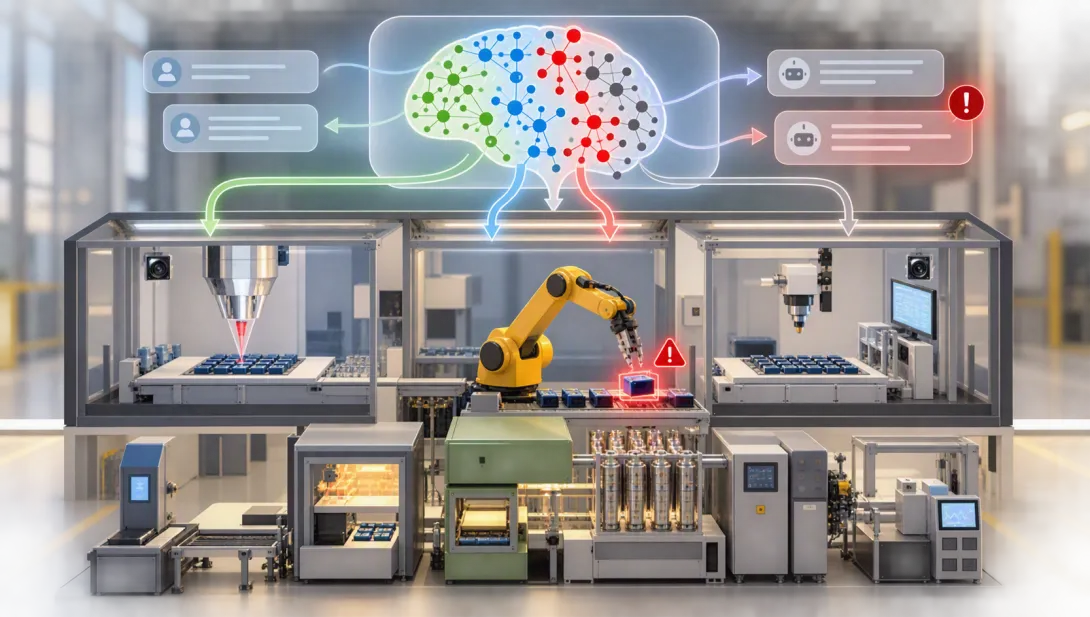
Let’s say you ask ChatGPT a question that stumps it, or a Waymo vehicle encounters something unusual in the road, or an autonomous factory faces an unexpected disruption.
Most people would recognize that something unexpected has happened and adjust accordingly.
For machines, it’s not always that simple.
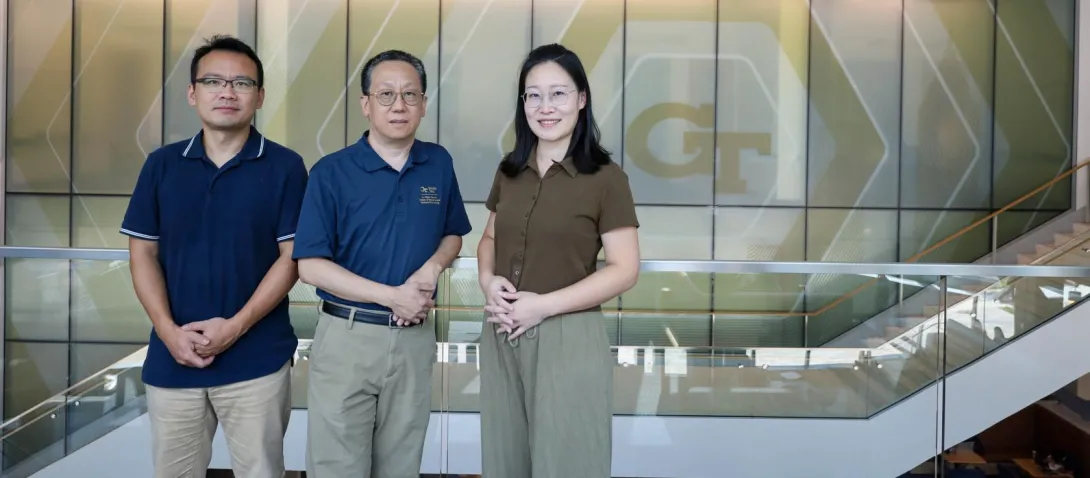
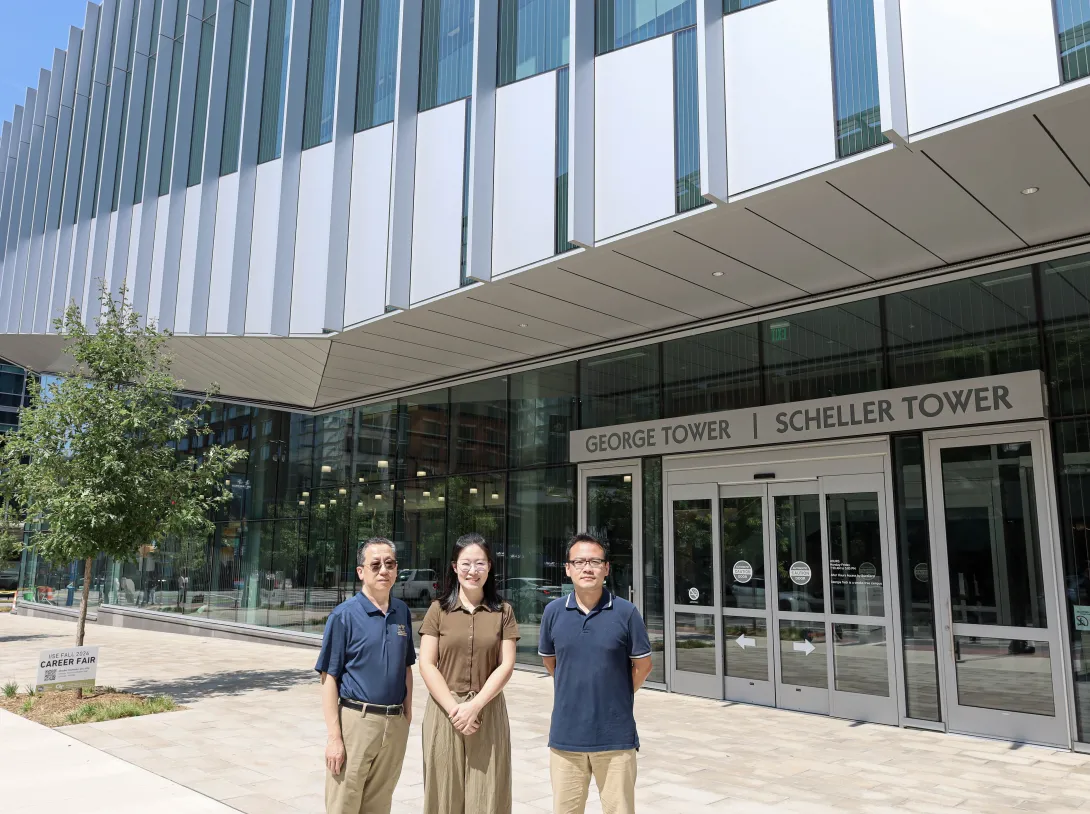
Researchers at Georgia Tech’s H. Milton Stewart School of Industrial and Systems Engineering (ISyE) are addressing this very challenge: how can autonomous systems recognize when something unexpected has happened, determine whether it matters, and decide how to respond?
In a recent paper published in the INFORMS Journal on Data Science, the research team introduced a new framework called Mutual Information Surprise, designed to help machines identify meaningful surprises in complex environments. The work could help lay the foundation for AI agents, robots, and autonomous systems that can better navigate unexpected situations, avoid costly mistakes, and make more informed decisions when faced with situations they weren’t designed or trained to handle.
"Traditional automation systems are designed to follow instructions. They do not have a sense of surprise. Machines follow a predetermined recipe and produce the expected result," said Yu Ding, the Anderson-Interface Chair and professor in ISyE, who is leading this project. " Intelligent agents, however, must do more than simply follow instructions. They need to recognize when their current understanding or reasoning process has become inadequate. Humans routinely use surprise for this purpose. An autonomous machine needs an analogous computational capability."
This research concept was jointly worked out by Xiao Liu, the David M. McKenney Family Associate Professor, as well as a former postdoctoral fellow in ISyE, Yinsong Wang, and Ph.D. student Quan Zeng.
While several methods already exist to measure surprise in machines, such as the "Shannon Surprise" and "Bayesian Surprise," the ISyE team saw limitations in both approaches.
Shannon Surprise tends to focus on the rarity of an event, while Bayesian Surprise focuses on how much a new observation changes a system's beliefs.
To illustrate the limitations of existing surprise measures, Ding pointed to the examples of someone noticing a specific type of car parked nearby or a student who consistently earns top grades but suddenly performs poorly on an exam.
Existing surprise measures don't always flag the right kinds of moments to be surprised, Ding said. To the examples given, the Shannon Surprise would flag the specific car parked nearby, although people typically wouldn’t be surprised by that event. Conversely, people would be surprised by the student performing poorly, but the Bayesian Surprise would not flag it.
"We introduce this new surprise definition because it measures the gain of knowledge and epistemic progression, thus capturing the right moments when a system should be surprised and ignoring the moments when it shouldn't," Ding added.
The framework could eventually help systems determine when to continue as planned or when to stop and reassess, whether that's an AI assistant struggling to answer a question, a robot encountering a situation it has never seen before, or an autonomous factory detecting a disruption that could affect production and require human intervention.
Looking ahead, the ISyE research team is exploring potential applications in engineering autonomous systems and is developing a proposal for federally funded programs.
News Contact
Anna Akins, Communications Manager I
Researcher photos taken by Medha Gollakoti, ISyE student assistant.
AI illustration created using Microsoft Copilot.

Artificial intelligence (AI) is becoming increasingly vital to the nation’s power grid. However, AI tools meant to help energy companies manage the grid, plan for future needs, and respond to problems also create new security and safety concerns.
Saman Zonouz, an associate professor in Georgia Tech’s School of Cybersecurity and Privacy and the School of Electrical and Computer Engineering, is helping address those concerns as a member of a planning committee for the National Academies of Sciences, Engineering, and Medicine.
Since May 2026, Zonouz has served on the planning committee for an upcoming public workshop on integrating AI into the electricity system. The workshop is scheduled for Oct. 26 and will convene experts to discuss how to safely and reliably use AI across the power grid.
The workshop will explore how AI is used today, the challenges of integrating AI into existing power systems, and how people and AI can work together. The event will also examine relationships between AI and cybersecurity, data centers, workforce development, and future research.
For Zonouz, cybersecurity and resilience are key parts of the conversation.
“AI is both a shield and a target for the grid,” Zonouz said.
Zonouz leads Georgia Tech’s Cyber-Physical Systems Security Research Laboratory. The lab’s research, much of it funded by the U.S. Department of Energy, investigates how AI can protect power systems from cyberattacks.
One recent initiative combines AI with detailed knowledge about power system operations to detect attacks in near real time. Another project sought to identify security weaknesses in solar inverters and other devices that connect energy sources, such as solar panels, to the power grid.
Regardless of the challenge, Zonouz and his lab work to identify and fix these weaknesses before attackers can exploit them. Despite their best efforts, however, Zonouz said that some AI tools meant to secure a system can create new ways for attackers to target a power grid.
The lab has demonstrated in several studies that AI systems can be tricked by false or manipulated data. Attackers can also target the software and systems that AI depends on. As AI becomes more advanced, some systems may even be able to modify grid operations.
This raises an important question: What happens if an AI system fails or is attacked?
“That is why the right frame is resilience,” Zonouz said.
For Zonouz, the goal is not to create an AI system that can never fail or be attacked. It’s to build a trustworthy power grid that can continue operating safely even if an AI system fails or is compromised.
Zonouz will bring his perspective to the National Academies workshop. In addition to helping organize the event, he will lead a session on cybersecurity and resilience. He will also help summarize the workshop’s key takeaways during the closing session. The workshop will be held virtually in late October.
“Lessons learned from the electricity grid can be applied to other critical infrastructure as AI monitoring and control tools continue to advance and become more common,” he said.
News Contact
Communications Officer at the School of Cybersecurity and Privacy
Artificial intelligence (AI) can prompt a student to reconsider an answer. It can also help a healthcare professional practice responding to a challenging workplace event.
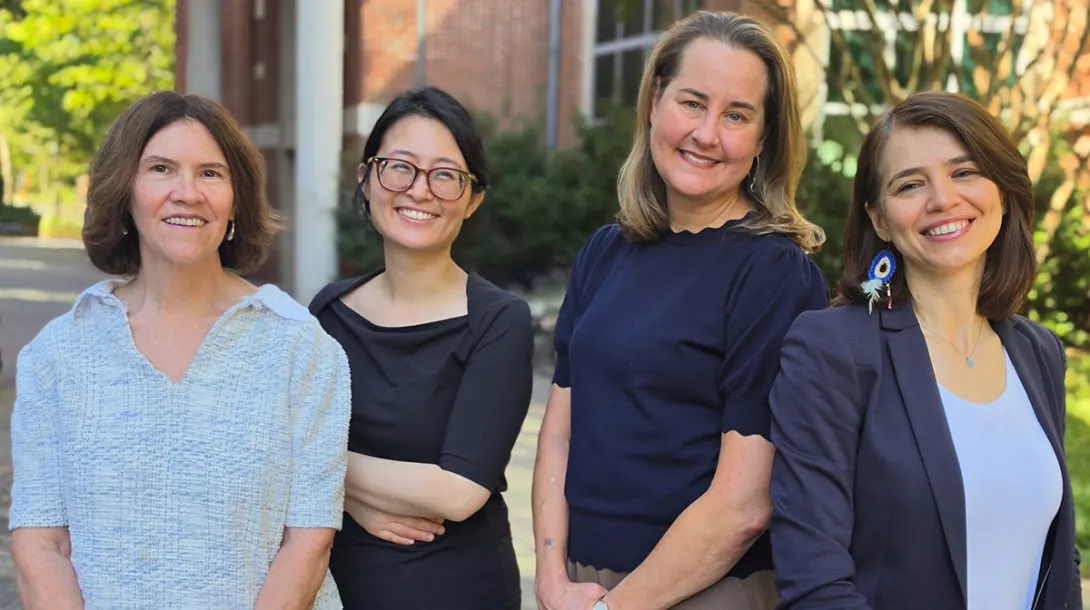
Two Georgia Tech projects explore those distinct possibilities. College of Lifetime Learning researchers Meryem Yilmaz Soylu and Jeonghyun “Jonna” Lee collaborated with School of Biological Sciences lecturer Lesley Baradel to study AI-facilitated Socratic dialogue in large courses. In a separate project, Karen Peterson, a principal lecturer in the College of Lifetime Learning, used AI to develop clinical scenarios, pronunciation feedback, and vocabulary exercises for healthcare communication courses.
Both projects are featured in Georgia Tech’s first Academic AI Playbook, which shares practical examples of how faculty are using AI to support specific learning goals.
Encouraging Students to Think More Deeply
“One of the things that interested me most was the opportunity to extend meaningful academic conversations beyond the time and space available in a classroom,” Baradel said. “Using Socratic Mind in my classroom showed me how AI can facilitate reflection and discussion at a scale difficult to achieve through one-on-one interactions alone.”
Socratic Mind is an AI-powered conversational assessment tool developed by researchers in Georgia Tech’s College of Computing and College of Lifetime Learning. The team piloted the tool with more than 700 students in online and in-person courses. Their research examined whether AI could help students engage more deeply with course concepts by prompting them to explain their reasoning, apply their knowledge, and identify gaps in their understanding.
In Using AI-Facilitated Socratic Dialogue for Formative Learning in Large Undergraduate Courses, Baradel, Yilmaz Soylu, and Lee document the long-term collaboration among the instructor, researchers, and students to better understand how the tool may influence learning at cognitive and behavioral levels.
“Being part of the AI Playbook is especially meaningful because it allows us to share the idea behind the project and what we learned from putting it into practice with colleagues across Tech,” Yilmaz Soylu said. “Readers will see outcomes from research guided by student feedback and interaction data, which continually refined the activity and helped us better understand what makes AI-supported dialogue significant for learning.”
Building Communication Skills by Practice
In AI-Supported Healthcare Communication Training, Peters describes how she used AI to provide healthcare professionals and nurses with opportunities to develop communication skills through learning activities. Those skills include AIDET (Acknowledge, Introduce, Duration, Explanation, and Thank You) and SBAR (Situation, Background, Assessment, and Recommendation). She used generative AI to identify relevant healthcare vocabulary, develop instructional materials, create realistic clinical scenarios, and design activities tailored to students’ vocabulary gaps.
“One of the most important lessons from this work is that AI should be used to support a specific learning objective, not simply because the technology is available,” Peterson said. “When implemented intentionally, AI can help create more personalized opportunities for practice and feedback while supporting the learning goals that matter most.”
Keeping Learning at the Center
Results from the Socratic Mind pilot indicated that AI could promote greater engagement when it challenges students to think through and revise their ideas rather than simply providing answers. Peterson’s work expanded access to authentic healthcare communication experiences, giving learners opportunities to engage in workplace interactions that are difficult to replicate with traditional instructional materials.
“Beyond the classroom outcomes, the Socratic Mind project generated valuable insights into how students engage with AI-guided educational experiences,” Lee said. “Those findings contribute to a growing body of research that helps educators better understand when and how generative AI can support meaningful learning and inform its thoughtful use in higher education.”
Together, these projects demonstrate that AI’s value in education goes beyond efficiency or automation. Whether prompting students to reflect more deeply on course concepts or helping healthcare professionals practice high-stakes communication, the most effective applications are grounded in clear learning goals. AI can enrich teaching and learning when intentionally designed to support meaningful engagement, practice, and feedback.
“Rather than replacing existing teaching practices, AI prompted me to reconsider which aspects of the learning experience benefit most from human expertise and which can be enhanced by technology,” Peterson said. “It also opened new possibilities for designing learning experiences that are both responsive and scalable.”
Interim Vice Provost for AI in Education David A. Joyner and Nimisha Roy, a lecturer in the School of Computing Instruction, edited the 2026 edition of the Georgia Tech Academic AI Playbook. The authors of the featured articles, Peterson, Baradel, Yilmaz Soylu, and Lee, hope their work will inspire new ideas for using AI thoughtfully and purposefully to support teaching and learning.
News Contact
Yelena M. Rivera-Vale
Communications Manager
College of Lifetime Learning
Georgia Institute of Technology
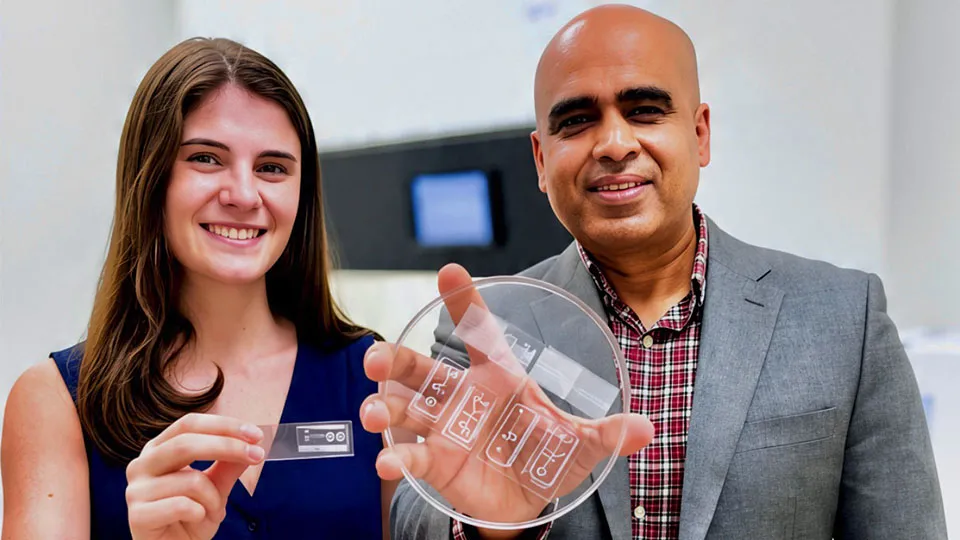
Ankur Singh will lead Georgia Tech’s new ETHOS initiative to advance New Approach Methodologies (NAMs) and transform drug discovery through human-relevant systems. Singh is pictured alongside Ph.D. student Olivia Jones, holding a human immune organ engineered on-a-chip, a breakthrough innovation developed at Georgia Tech to model complex immune responses outside the body.
Before a promising new therapy can reach a patient, researchers need to answer a deceptively simple question: Will it work?
For decades, part of the answer has come from animal testing. Animal models have helped scientists make countless medical advances and understand how potential treatments behave in a living system. But they also present scientific and ethical challenges, including one unavoidable limitation: A mouse isn't a human. This limitation is one reason many promising drug candidates fail during human clinical trials.
Now, Georgia Tech is launching a new Institute-wide initiative focused on technologies that help researchers close that gap by studying human health and disease in ways that more closely reflect human biology. This interdisciplinary venture, called Emerging Technologies for Human-Oriented Systems (ETHOS), will advance human-centered research technologies, including new approach methodologies (NAMs) that improve prediction of human responses and support the development of safer, more effective therapies.
“ETHOS reflects Georgia Tech's commitment to advancing innovative approaches to some of society's most pressing health challenges,” said Executive Vice President for Research Tim Lieuwen. “By bringing together expertise from across the Institute and investing in technologies that more closely reflect human biology, we have an opportunity to accelerate discovery, strengthen translation, and help shape the future of biomedical research."
Unifying Research
Supported by the Office of the Executive Vice President for Research, ETHOS is built on an interdisciplinary framework that connects researchers across Georgia Tech and with clinical and translational partners. The initiative draws on expertise in bioengineering, materials science, device engineering, computing, and data science. It will be led jointly by the Parker H. Petit Institute for Bioengineering and Bioscience (IBB) and the Institute for Data Engineering and Science (IDEaS).
“What sets Georgia Tech apart is our ability to unify deep expertise in foundational life sciences, bioengineering, and materials science with artificial intelligence and data science,” said Vice President for Interdisciplinary Research Julia Kubanek. “ETHOS creates a framework for connecting those strengths, fostering new collaborations, and enabling researchers to tackle complex health challenges in ways that no single discipline could accomplish alone.”
Ankur Singh, Carl Ring Family Professor in the George W. Woodruff School of Mechanical Engineering and Wallace H. Coulter Department of Biomedical Engineering at Georgia Tech and Emory University (BME), will lead ETHOS in his new administrative role as deputy director of IBB. Although ETHOS is a new initiative, Georgia Tech researchers have already begun building a NAMs community through an institutional task force and other collaborative efforts. That momentum will continue with the 2027 Suddath Symposium, which will focus on NAMs and bring researchers together across disciplines.
“Georgia Tech has expertise across the full spectrum of these approaches, from AI and computational modeling to engineered tissues and experimental systems,” said JC Gumbart, Dunn Family Professor in the School of Physics. “ETHOS gives us a framework to connect those strengths and accelerate human-centered biomedical research.”
Gumbart co-led the NAMs task force and is co-organizing the symposium with Shuichi Takayama, a Georgia Research Alliance Eminent Scholar and chair of regenerative engineering medicine within BME.
Advancing Discovery
What are new approach methodologies, or NAMs, and how can they help researchers address human health challenges?
NAMs include both physical models, such as organoids and organ-on-chip technologies, and computational models that use artificial intelligence. Each approach has its own advantages and limitations.
Organoids and organ-on-chip are living tissue systems grown in the lab that mimic key features of human biology and help researchers study how the body may respond to new drugs or treatments. These models allow researchers to observe biological responses in human tissue systems, but they are limited by the steep cost of time and resources required to create them.
Computational models take advantage of AI and supercomputing technology to rapidly explore and predict thousands of possibilities. They use existing datasets to examine complex relationships at scale and simulate how potential changes might affect a system. Though these simulations can provide a large-scale prediction of what might happen, they can’t provide evidence of how cells actually respond.
ETHOS emphasizes a bidirectional approach that combines engineered biological systems with predictive computational models. For instance, a scientist who is testing a new drug on an organoid may use AI to predict how the drug could affect a larger population with differing demographics. Conversely, a researcher using a computational model may use an organ-on-chip experiment to validate (or disprove) the computer’s prediction.
“These human platforms allow us to look broad — exploring how therapies behave across populations — and look deep, engineering precise models that reflect an individual patient’s unique health profile,” Singh said.
Leading the Way
The adaptability of NAMs gives researchers a more human-centered way to study — and hopefully one day treat — some of humanity’s most pervasive health problems, such as cancer, cardiovascular disease, autoimmune diseases, neurological disorders, infection, and more. Therapies developed using NAMs could be broad-use solutions that impact entire populations or tailored treatments for personalized healthcare. By bringing together strengths in engineering, computing, data science, and the life sciences, ETHOS positions Georgia Tech to help shape the future of NAMs research and technology development.
“The next generation of medical research increasingly relies on models that are both more human and more intelligent. Georgia Tech's strength lies in connecting the physical and digital worlds of biology,” Singh said. “That closed loop between human biology and computation gives us a powerful advantage in developing the next generation of non-animal models for research and drug development.”
The initiative will also include the development of a platform designed to connect researchers across the Institute and help them identify complementary expertise, shared experimental systems, and collaborative funding opportunities. The digital matchmaking system, along with pilot research and technology development, AI integration, grant development, and community building, makes ETHOS a potentially groundbreaking program launching at an opportune time.
“ETHOS is an initiative of convergence. Few institutions combine strengths in advanced human tissue systems, engineering, AI, and data science at the scale of Georgia Tech. ETHOS provides a framework to unite those capabilities and accelerate biomedical discovery and translation,” Singh said.
ETHOS is designed to strengthen connections between fundamental research and real-world health applications. By developing research models that more closely reflect human biology, the initiative could help researchers identify promising therapies earlier and better understand how they may perform in people. ETHOS could also strengthen collaborations among Atlanta's academic, clinical, and industry partners, creating new opportunities for translational research and technology development.
News Contact
Ashlie Bowman | Communications Manager
Parker H. Petit Institute for Bioengineering and Bioscience