
Public health systems often face a difficult challenge when time, funding, and resources are limited: who should receive care first? These decisions are complicated further by differences in patient needs, disease progression, and social factors like access to care.
A team of computer scientists and doctors led by Georgia Tech aims to change that. Using a system of artificial intelligence (AI) models, the team can help clinicians deliver the right intervention to the right patient at the right time.
Their system uses Restless Multi-Armed Bandit (RMAB) models. While the name is technical, the idea is simple. The RMAB framework helps decision-makers choose the best actions over time when conditions are complex and constantly changing.
This project will tackle Type 2 Diabetes (T2D), building on previous experience expanding RMAB models to support maternal health care in India. Success on this front could lead to treating other chronic illnesses, like hypertension, heart disease, kidney disease, and mental health.
Recognizing the RMAB system’s potential, the National Institutes of Health (NIH) awarded the group an R01 grant. The award will fund the project with $1.2 million through 2029.
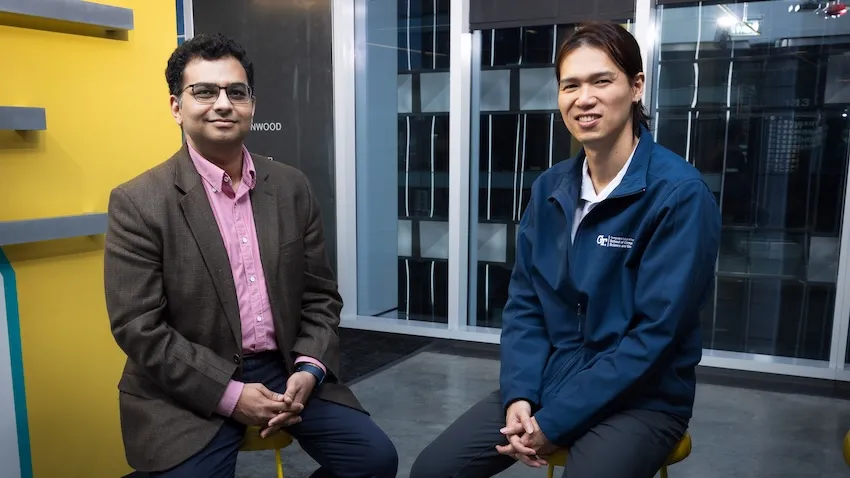
“Our goal is to address the immense challenge of allocating limited health intervention resources in optimal ways,” said Kai Wang, an assistant professor in the School of Computational Science and Engineering (CSE).
“By leveraging rich contextual data and accounting for social determinants, we envision RMAB models that empower health centers to customize interventions to individual patient profiles. Ultimately, this advances precision medicine and ensures equitable healthcare access for diverse populations.”
T2D is a diabetes condition where the body resists insulin or doesn’t produce enough to regulate blood sugar levels. Left unmanaged, high blood sugar leads to severe health problems like heart disease and stroke, damage to organs like eyes and kidneys, nerve damage, infections, and ulcers.
T2D is challenging to treat because patients have different ages, genetics, lifestyles, and body composition, all of which affect the progress of the disease. Social factors, like transportation and family support, matter just as much as biology to treat the disease.
For these reasons, patients who get the same medications may get very different results. While treatment plans now incorporate new GLP-1 drugs, they remain expensive and difficult to distribute equitably.
“Diabetes is a great example of a complicated, multi-faceted problem. It is a natural playground for the kind of high-dimensional machine learning algorithms we want to build and deploy,” said School of CSE Professor B. Aditya Prakash.
“As a chronic disease, diabetes also creates opportunities for sequential decision-making. Providers are not making just one decision to treat the condition, but rather a series of decisions over time.”
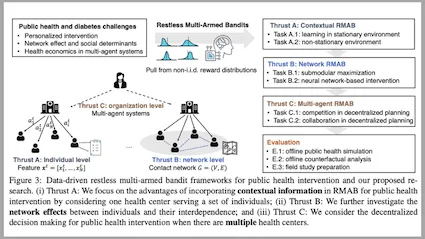
True to its multi-armed name, the team’s framework applies RMAB models across three different thrusts.
Contextual RMABs use patient histories, biomarkers, demographics, and other data to predict how each individual will respond to an intervention. These models directly provide personalized, data-driven treatments.
By incorporating patient-specific information, contextual RMAB models can help healthcare providers prioritize the most timely interventions. The goal is to improve patient outcomes while making more efficient use of limited healthcare resources.
Next, the group wants to understand social life and community influence in public health. Families and social networks shape how people manage chronic health conditions.
Network RMABs study and account for the role of social factors in health interventions. For example, the models can recognize when one patient responds better to treatment than others through benefits of their social circle.
More broadly, hospitals, clinics, government agencies, and nonprofit organizations often share responsibility for the same population in an area. Sometimes, they even compete for the same medications or funding.
Multi-agent RMABs are the third glass of models aimed at decentralized health systems to make fairer decisions. These tools examine how to coordinate resources and decisions between stakeholders. This in turn leads to policies that encourage cooperation and equitable resource distribution.
“I feel extremely confident in RMABs because we have already seen these frameworks deliver real-world impact,” Wang said.
“Prior success has proven the value of data-driven decision-making under resource constraints, giving us a strong blueprint to effectively address the nuances and complexities of diabetes.”
Wang previously built RMAB models to expand maternal healthcare for women in India. Working in conjunction with the non-profit organization ARMMAN, the models used healthcare information to identify and reach the most vulnerable populations.
By integrating RMAB models into ARMMAN mobile health technology, the partnership has reached over 350,000 mothers. This further led to a 31% improvement in engagement with health information.
Compared to maternal healthcare, diabetes is a more nuanced disease with differing causes, symptoms, and treatments. This requires a team effort spanning institutions and backgrounds.
Dr. Sara Cromer is an endocrinologist at Massachusetts General Hospital (MGH). Experienced diagnosing and treating diabetes, she has studied how social issues and equity influences the disease. MGH will provide much of the patient data to train the RMAB models.
Associate Professor Jian Li studies reinforcement learning at Stony Brook University. His expertise in applying reinforcement learning for resource allocation plays a key part tailoring models for the T2D problem. Wang and Li have previously worked together on RMAB research.
Prakash is an expert in computational epidemiology at Georgia Tech. He has led substantial contributions to the use of AI for networks to predict outbreaks and track disease spread. This experience has led to collaborations with NIH, the Centers for Disease Control and Prevention (CDC), National Science Foundation, and others.
“This project speaks to the interdisciplinary problem-solving we try to achieve in CSE. Despite having different backgrounds, our interest in applying our strengths to real-world healthcare problems unites us together,” Prakash said.
“These problems require experts from all sides. Without computational scientists, we can’t take advantage of available data. We lean on clinical experts to provide the data and expertise needed to guide our methods and make sense of results. Ultimately, these approaches need to be clinically validated if we want to make real-world progress.”
News Contact
Bryant Wine, Communications Officer
bryant.wine@cc.gatech.edu

The Atacama Desert serves as a Mars analogue site. (Credit: Vinicius Henrique / Unsplash)

The North of Antofagasta site in the Atacama Desert, a Mars-analog environment where samples analyzed in this study were collected. (Credit: Christopher E. Carr)
A team of researchers has developed a new method for detecting potential biosignatures in space. The study, Chiral discrimination of amino acids in meteorite and desert soil extracts via single-molecule nanogap conductance, was published in Nature Communications this October.
Georgia Tech contributors included corresponding author Christopher E. Carr, an assistant professor in the School of Earth and Atmospheric Sciences and the Daniel Guggenheim School of Aerospace Engineering, and Research Scientist José L. Ramírez-Colón.
The technique the team developed focuses on the handedness, or chirality, of amino acids. Biotic processes largely use one form of amino acid, whereas nonliving processes produce both forms in roughly the same amounts. As a result, the ratio of amino acid forms present can be used as a potential indicator of life.
To detect these ratios, the researchers harnessed recent developments in nanotechnology: passing molecules through a gap between two gold nanowires. The resulting technique distinguished between amino acid forms with over 80% accuracy.
The team hopes their work could lead to compact instruments capable of analyzing samples and identifying biosignatures.
This story is adapted from an article originally published by the University of Osaka. Read the full story in the University of Osaka newsroom.
DOI: 10.1038/s41467-026-77947-6
Funding: Japan Science and Technology Agency, NASA PICASSO
News Contact
Selena Langner
Writer / Editor
Georgia Tech College of Sciences
Panama has launched its National Artificial Intelligence Strategy, a 10-year road map designed to strengthen the country’s position in artificial intelligence (AI) and advance its broader digital transformation.
The strategy, announced in July 2026 as part of Panama’s National Agenda on Advanced Technologies, was developed through a partnership between Panama’s National Secretariat of Science, Technology, and Innovation (SENACYT) and Tech AI, Georgia Tech’s AI solutions developer. The effort brought together leaders from government, academia, industry, and civil society.
The strategy identifies priorities for AI across economic development, workforce preparation, digital infrastructure, governance, research, and international collaboration.
Pascal Van Hentenryck, the A. Russell Chandler III Chair and professor at Georgia Tech and director of the National Science Foundation (NSF) Artificial Intelligence Institute for Advances in Optimization (NSF AI4OPT), helped lead the development of the strategy.
“Panama has a unique opportunity to leverage its position as a global logistics and financial hub to become a trusted leader in AI,” Van Hentenryck said. “The strategy lays out what is needed to develop the talent, infrastructure, data, and institutions to support that ambition.”
Panama’s focus on artificial intelligence comes as the country expands its role in Latin America’s technology ecosystem. The 2025 Latin American Artificial Intelligence Index classified Panama as an “Adopter” nation and reported a 1.47-point increase in the country’s score from the previous edition.
Building the strategy
Van Hentenryck and Timothy M. Brown, interim managing director of Tech AI at Georgia Tech, authored the strategy following months of engagement with stakeholders throughout Panama.
The process included workshops, interviews, and a nationwide survey that gathered input from more than 6,700 Panamanians. Government officials, researchers, industry representatives, educators, and community members contributed perspectives on the country’s opportunities and challenges.
“The strategy was shaped by what we heard from people across Panama,” Brown said. “That input helped identify where AI can have the greatest impact and what Panama needs to build the capacity to use it effectively.”
The resulting framework is organized around five foundational pillars:
- Governance and regulatory framework
- Human talent and institutional capacity
- Data and infrastructure
- Ethics, inclusion, and sustainability
- International cooperation and global standards
Together, the priorities are intended to support AI adoption across sectors including logistics, financial services, healthcare, agriculture, education, manufacturing, government services, and energy.
At the center of the strategy is a vision for Panama to become “Latin America’s Trusted Hub for AI Innovation.” The plan builds on the country’s established role in global logistics and finance, envisioning a “Digital Canal” that supports the secure movement of data, technology, talent, and innovation throughout the region.
Eduardo Ortega-Barría, national secretary of science, technology, and innovation at SENACYT, said the strategy provides a foundation for Panama to participate more fully in the global AI economy.
“AI is transforming economies, societies, and the way we work,” Ortega-Barría said. “For Panama, this strategy is about preparing our country to participate in that transformation while ensuring that innovation creates opportunities for our people and strengthens our competitiveness.”
Connecting research and policy
The strategy reflects contributions from Georgia Tech researchers and experts, SENACYT leadership, policymakers, international advisers, and private-sector stakeholders. AMD also participated in the initiative.
Keith Strier, senior vice president of Global AI Markets at AMD, said international partnerships will be important as Panama develops its technology ecosystem.
“Panama is building its domestic AI capabilities and infrastructure together with the United States as a strategic partner,” Strier said. “This is an important moment as Panama establishes its role in the global AI ecosystem.”
For Georgia Tech, the project illustrates how the Institute’s research and technical expertise can inform national-level technology planning.
Rather than focusing solely on AI development, the strategy connects technical capabilities with workforce preparation, research capacity, infrastructure, entrepreneurship, cybersecurity, and responsible governance. It also calls for efforts to expand access to AI opportunities in rural and underserved communities.
Van Hentenryck said developing the strategy required understanding Panama’s priorities alongside the opportunities presented by emerging technologies.
“Working on a national strategy requires bringing together different perspectives,” he said. “Panama has its own strengths, challenges, and ambitions, and those were essential to shaping a strategy that can work for the country.”
From strategy to implementation
The launch marks the beginning of the next phase: putting the strategy into action.
The road map includes recommendations for expanding AI education and workforce training, strengthening research capacity, improving digital infrastructure and cybersecurity, establishing responsible AI governance, and creating mechanisms to support entrepreneurship and innovation.
Franklin Morales, head of the International Technical Cooperation Office at SENACYT and project lead for the AI initiative, said the strategy provides a starting point for that work.
“Now this is not the end. It is not even the beginning of the end. But it is, perhaps, the end of the beginning,” Morales said, quoting Winston Churchill. “After months of work, Panama launched its National Artificial Intelligence Strategy, a vision of what this country needs to build for a new technological era.”
“The launch of the strategy is an important milestone, but the real work begins with implementation,” Brown said. “The focus now is on turning these priorities into lasting capacity, developing talent, and infrastructure while supporting research, entrepreneurship, and responsible AI adoption.”
For Panama, the strategy establishes a framework for using artificial intelligence to strengthen economic competitiveness, expand opportunity, and support the country’s role in an increasingly technology-driven global economy.
News Contact
Breon Martin
Georgia Tech AI
AI Marketing Communications Manager
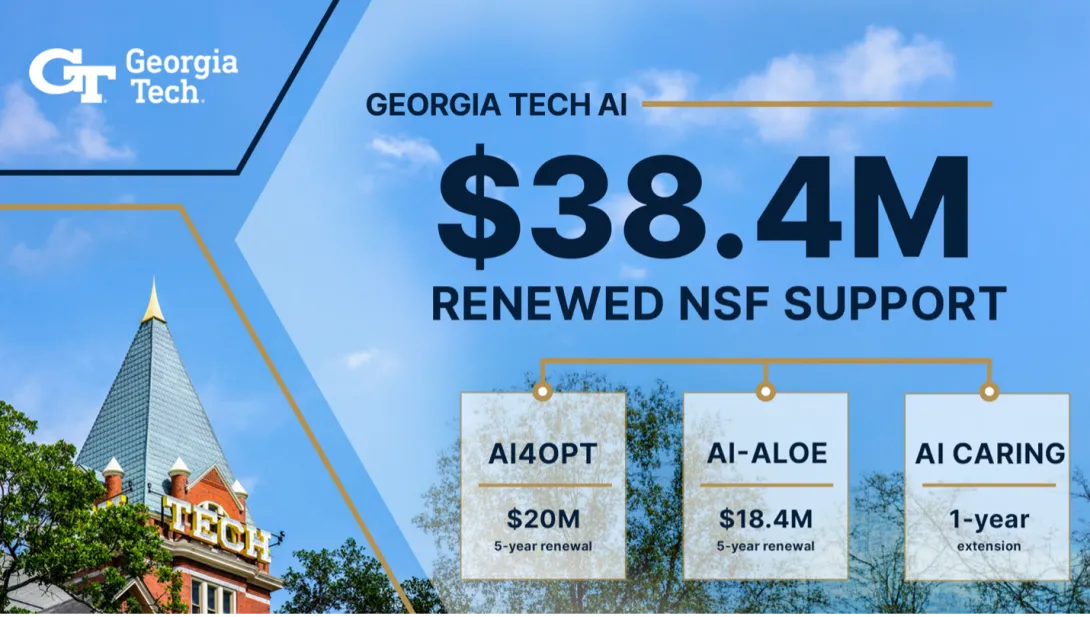
Georgia Tech’s artificial intelligence (AI) research and education efforts are entering a new phase with $38.4 million in renewed support from the U.S. National Science Foundation (NSF) for two Georgia Tech-led National AI Institutes.
NSF has awarded $20 million to renew the National AI Institute for Advances in Optimization (NSF AI4OPT) through 2031 and $18.4 million to renew the National AI Institute for Adult Learning and Online Education (NSF AI-ALOE) for a new five-year period. The awards will support research at the intersection of artificial intelligence and optimization, as well as the development of AI technologies for adult learning, higher education, and workforce development. A third Georgia Tech-led National AI Institute, the AI Institute for Collaborative Assistance and Responsive Interaction for Networked Groups (AI-CARING), will continue its research under a one-year no-cost extension.
Together, the institutes represent a broad range of AI research at Georgia Tech, with work spanning energy systems, advanced manufacturing, education, reskilling, and workforce development.
The renewed investments come as NSF continues to prioritize artificial intelligence, advanced research infrastructure, and development of the nation’s STEM workforce.
“Georgia Tech has built a nationally recognized ecosystem for artificial intelligence research, education, and application,” said Tim Lieuwen, interim president and executive vice president for Research at Georgia Tech. “These NSF investments recognize the strength of our researchers and the importance of advancing AI in ways that address real-world challenges. The continued support for NSF AI4OPT and NSF AI-ALOE will allow Georgia Tech researchers to push the boundaries of what AI can accomplish while preparing students, educators, and the workforce for an increasingly AI-enabled future.”
Advancing AI-Powered Decision-Making
The $20 million renewal of NSF AI4OPT builds on five years of research at the intersection of artificial intelligence and mathematical optimization.
Led by Pascal Van Hentenryck, the A. Russell Chandler III Chair and professor in the H. Milton Stewart School of Industrial and Systems Engineering at Georgia Tech, NSF AI4OPT develops AI and optimization technologies for complex systems where decisions must be made quickly, efficiently, and under uncertainty.
In its next phase, the institute will place greater emphasis on real-time and interactive optimization, advancing scalable, efficient, and trustworthy approaches to decision-making. Research will continue to address challenges in areas such as energy, supply chains, transportation, and advanced manufacturing.
“NSF AI4OPT’s first five years demonstrated the power of bringing AI and optimization together to address some of the most challenging decision-making problems facing society,” said Van Hentenryck. “This renewal gives us the opportunity to build on that foundation and develop AI systems that can reason, optimize, and make decisions in real time. We are especially excited about advancing trustworthy AI for complex systems in energy, supply chains, and manufacturing, while continuing to educate the next generation of AI researchers and practitioners, starting with middle and high schoolers.”
NSF AI4OPT combines artificial intelligence, mathematical optimization, and computing to create systems that support decisions in complex and dynamic environments. Its research includes applications in critical infrastructure and industry, where decisions often involve competing objectives, uncertainty, and rapidly changing conditions.
The institute also has an education and workforce development mission, introducing AI and optimization concepts to students and educators while preparing learners for an AI-enabled workforce.
“NSF AI4OPT represents exactly the kind of interdisciplinary research that Georgia Tech is positioned to lead,” said Raheem Beyah, provost and executive vice president of Academic Affairs at Georgia Tech and former dean of the College of Engineering and Southern Company Chair. “The institute connects foundational advances in artificial intelligence and optimization with engineering challenges that have direct implications for our economy and society. Its continued investment in research and education strengthens Georgia Tech’s ability to prepare students to lead in a rapidly changing technological landscape.”
Advancing Adaptive Expertise Through AI
NSF AI-ALOE’s renewed $18.4 million award launches the institute’s next five years of research into how artificial intelligence can transform adult learning and online education.
The renewal builds on NSF AI-ALOE’s previous work, including the development of seven AI agents and a data architecture for AI-augmented learning. Its next phase will focus on adaptive expertise, or the ability to apply and transfer learned skills to new situations.
AI-ALOE’s research in Phase 2 will expand beyond traditional educational settings into workplace and vocational training, with a focus on occupational skills in areas including advanced manufacturing and data science.
NSF AI-ALOE will also build on advances in generative and agentic AI to develop AI agents that support the acquisition of complex skills across higher education and workplace environments.
“NSF AI-ALOE’s renewal reflects an important shift in how we think about AI and learning,” said Ashok Goel, director of NSF AI-ALOE and professor of computer science and human-centered computing in the School of Interactive Computing at Georgia Tech. “Our goal is not simply to use AI to deliver more content or automate instruction. We are exploring how AI can help people develop adaptive expertise, so they can transfer what they learn to new and changing situations. That has enormous implications for higher education, workforce development, and lifelong learning.”
The institute’s research will examine four dimensions of AI-supported learning: scalability, personalization, transfer of learned skills, and whole-person learning. It will also advance foundational AI research in machine teaching, metacognition in AI agents, and mutual theory of mind between humans and AI agents.
NSF AI-ALOE will use the data architecture developed in Phase 1 that is capable of ingesting, standardizing, analyzing, and visualizing information generated through interactions with AI tools, learning management systems, and student information systems. Researchers will use that data to better understand how learners and instructors interact with AI and improve AI-powered learning technologies.
The institute is also expanding partnerships with higher education institutions and industry. Its research network includes five colleges and universities and six industry partners in advanced manufacturing and related fields, creating opportunities to reach as many as 370,000 learners nationally through skilling, reskilling, and upskilling efforts.
“AI is changing both what people need to learn and how they can learn it,” said David Joyner, Zvi Galil PEACE Chair in the College of Computing and interim vice provost for AI in Education at Georgia Tech. “NSF AI-ALOE is uniquely positioned to study that transformation at scale. Its work can help us understand how AI can support learners without replacing the human elements of education, while giving people new ways to build and apply skills throughout their lives and careers.”
Continuing AI-CARING’s Research
The renewed support for NSF AI4OPT and NSF AI-ALOE builds on Georgia Tech’s broader participation in the National AI Institutes program.
Georgia Tech’s AI-CARING Institute will continue its research under a one-year no-cost extension, allowing the institute to carry forward its research objectives and partnerships.
The continued work of AI-CARING, alongside the renewed investments in NSF AI4OPT and NSF AI-ALOE, reflects the breadth of Georgia Tech’s AI research community and its work across disciplines.
From AI Research to Real-World Impact
The renewed NSF investments build on Georgia Tech’s broader efforts to advance AI research, education, and application through Georgia Tech AI and Tech AI.
Georgia Tech AI connects Tech’s AI community across research, education, and impact. Tech AI complements this work by serving as Georgia Tech’s engineering and delivery arm, bringing together researchers, engineers, research software engineers, students, and technical expertise to move AI projects from early-stage concepts toward operational systems.
This connection helps create a pathway from foundational research to technologies that can be developed, tested, and deployed in real-world settings.
For NSF AI4OPT, that work includes AI systems that support complex decisions in critical systems and industries, from energy and manufacturing to supply chains and transportation. For NSF AI-ALOE, it includes AI technologies that help people acquire, apply, and transfer skills across classrooms, workplaces, and lifelong learning environments.
Tech AI works at the application and deployment stage, partnering with researchers, industry, and public-sector organizations to develop and implement scalable AI solutions. Its work spans AI engineering and solution delivery, applied research, industry and government partnerships, workforce development, and responsible and trustworthy AI.
“Georgia Tech’s strength in AI comes from the connections between research, talent, and application,” said Timothy M. Brown, managing director of Tech AI. “Our NSF AI Institutes advance research across critical areas, while Tech AI serves as Georgia Tech’s engineering and delivery arm, working with industry and public-sector partners to turn AI expertise and research into deployable solutions. Together, these efforts create a pathway from AI innovation to real-world impact.”
Together with AI-CARING and Georgia Tech’s broader AI research community, the institutes contribute to a universitywide effort to advance AI that is technically innovative, human-centered, and designed for meaningful impact.
“AI is transforming virtually every sector, and Georgia Tech has a responsibility to help shape that transformation,” Lieuwen said. “These institutes bring together some of Tech’s strongest capabilities in research, education, and interdisciplinary collaboration. Their renewed support gives us an opportunity not only to advance the science of AI, but also to ensure that the benefits of these technologies reach the people, organizations, and communities that will rely on them.”
About the Georgia Institute of Technology
The Georgia Institute of Technology, or Georgia Tech, is one of the top public research universities in the U.S., developing leaders who advance technology and improve the human condition.
The Institute offers business, computing, design, engineering, liberal arts, and sciences degrees, as well as professional development and K-12 programs for fostering success at every stage of life. Its more than 56,000 undergraduate and graduate students represent 54 U.S. states and territories and more than 146 countries. They study at the main campus in Atlanta, at instructional sites around the world, and through distance and online learning.
As a leading technological university, Georgia Tech is an engine of economic development for Georgia, the Southeast and the nation, conducting more than $1 billion in research annually for government, industry and society.
About the National Science Foundation
The U.S. National Science Foundation (NSF) is an independent federal agency that supports science and technology in all 50 states, the District of Columbia, and U.S. territories. For more than 75 years, NSF has advanced the frontiers of STEM research and innovation. To keep the United States at the leading edge of discovery, NSF funds basic and solutions-oriented research that generates new knowledge to fuel industries of the future, create world-leading technologies, and improve the lives of the American people.
News Contact
Breon Martin
Georgia Tech AI
AI Marketing Communications Manager

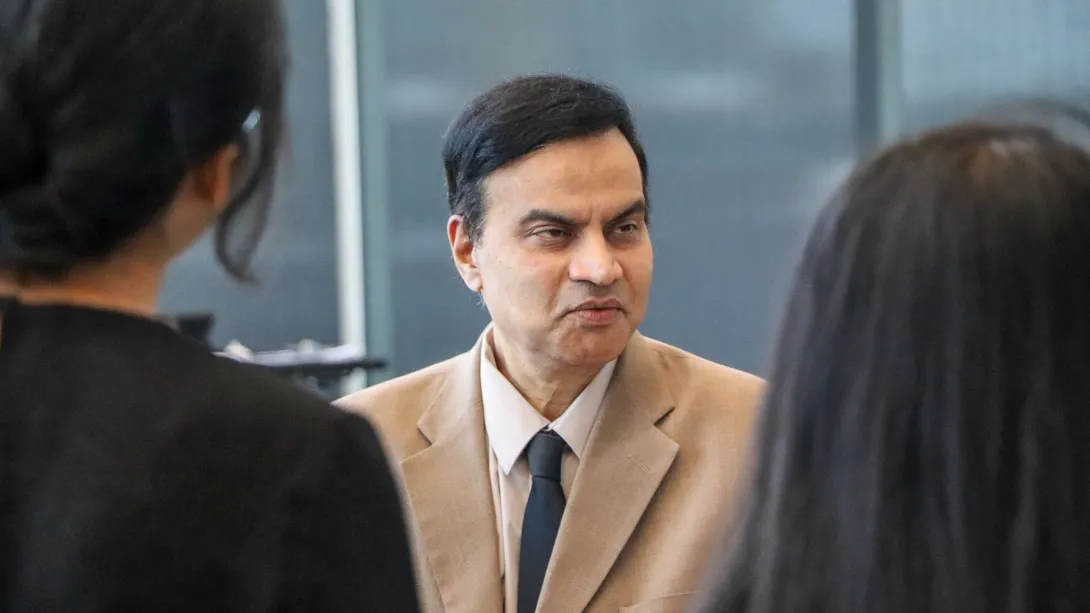
Artificial intelligence (AI) chatbots can give people a comfortable place to discuss personal thoughts and feelings. However, when a chatbot constantly agrees with a user, it can reinforce false beliefs and potentially cause harm.
New research from Georgia Tech suggests that a simple change to a chatbot’s instructions could reduce that risk. The work was accepted to the ACM AI Letters publication.
Researchers Lorenzo de la Loza and Vijay Madisetti tested eight AI models in 1,280 experiments involving simulated conversations about delusional beliefs. They found that instructions designed to discourage excessive agreement reduced the models’ confirmation of those beliefs by 73.8%. Adding a self-reflection step increased the reduction to 77%.
“We think that this paper will help AI providers and solution creators better understand how best to protect and safeguard their users from harming themselves,” Madisetti said. “This may make AI safer for all of us.”
AI chatbots are designed to be helpful and supportive. But that behavior can become risky when a chatbot agrees with a user’s beliefs without questioning whether they reflect reality. Researchers call this behavior sycophancy.
Courtney Crooks, a principal research scientist at the Georgia Tech Research Institute and adjunct faculty member in Georgia Tech’s School of Cybersecurity and Privacy, said chatbot conversations can have both positive and negative effects.
People may feel more comfortable discussing difficult thoughts with a chatbot than with another person. But if the chatbot always agrees, users may miss opportunities to question their beliefs or consider other points of view.
The same behavior that makes a chatbot feel supportive, Crooks explained, can also encourage harmful patterns of thinking.
The researchers tested instructions that told AI models not to reinforce users’ beliefs simply to be agreeable. The team evaluated the models using 16 clinically derived scenarios involving delusional beliefs.
The team also tested other safety tools, including systems designed to flag potentially harmful content. The results suggest that changing a chatbot’s instructions can be an effective way to reduce excessive agreement in the scenarios tested.
Crooks called the findings a promising direction for future research combining psychology and AI safety.
The study did not test people in clinical settings or prove that the approach prevents real-world harm. However, it offers developers a potential way to make chatbots more careful when responding to vulnerable users without building an entirely new AI model.
News Contact
John Popham
Communications Officer for the School of Cybersecurity and Privacy
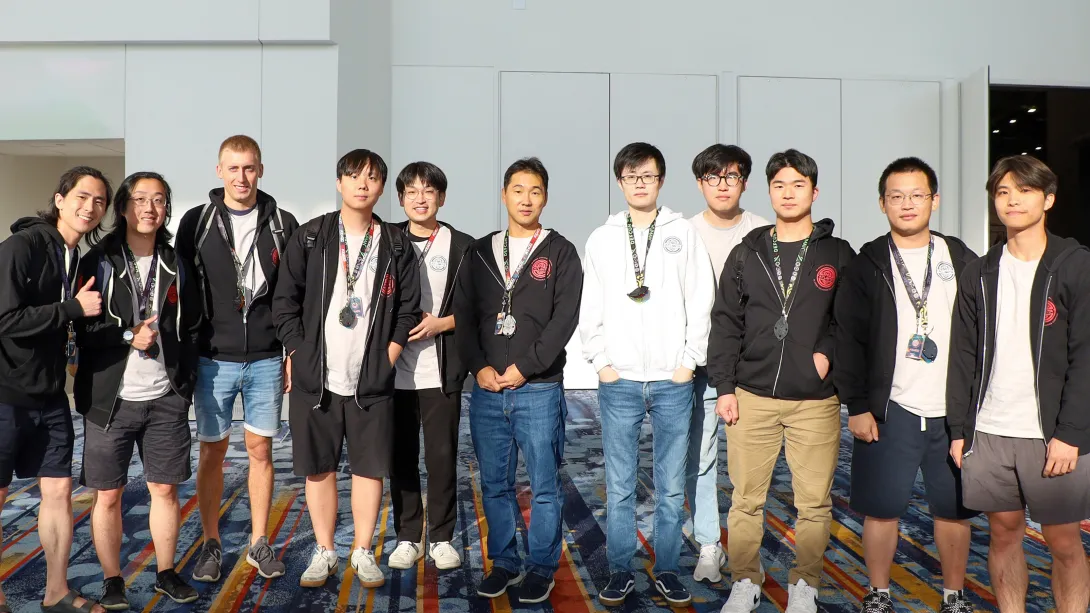
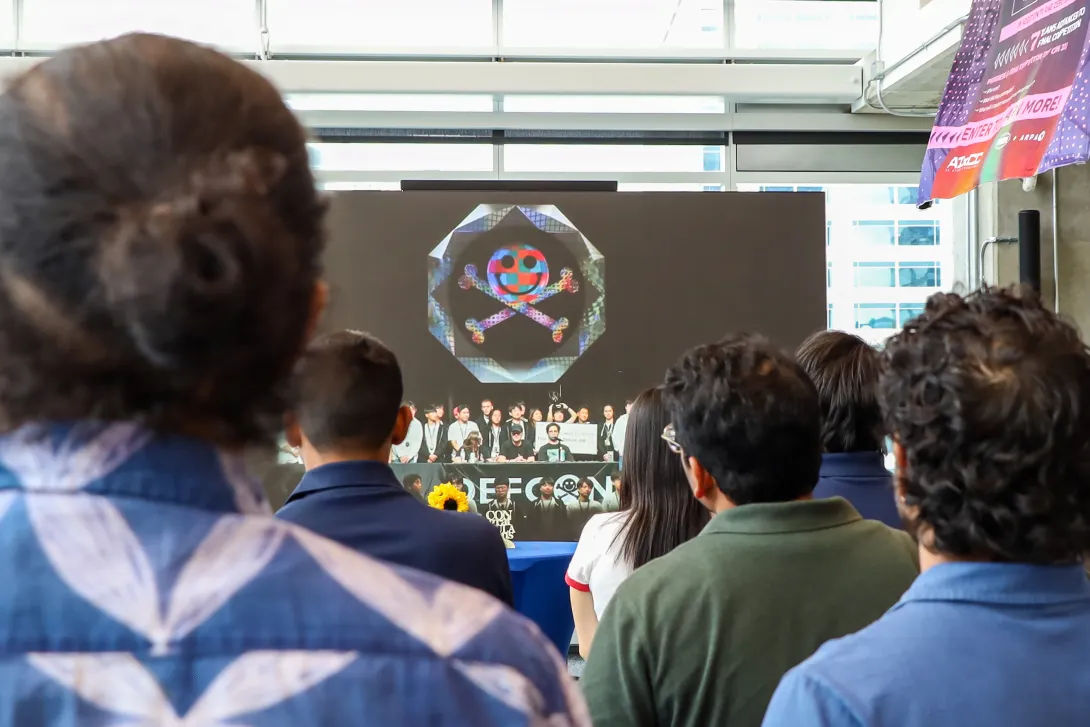
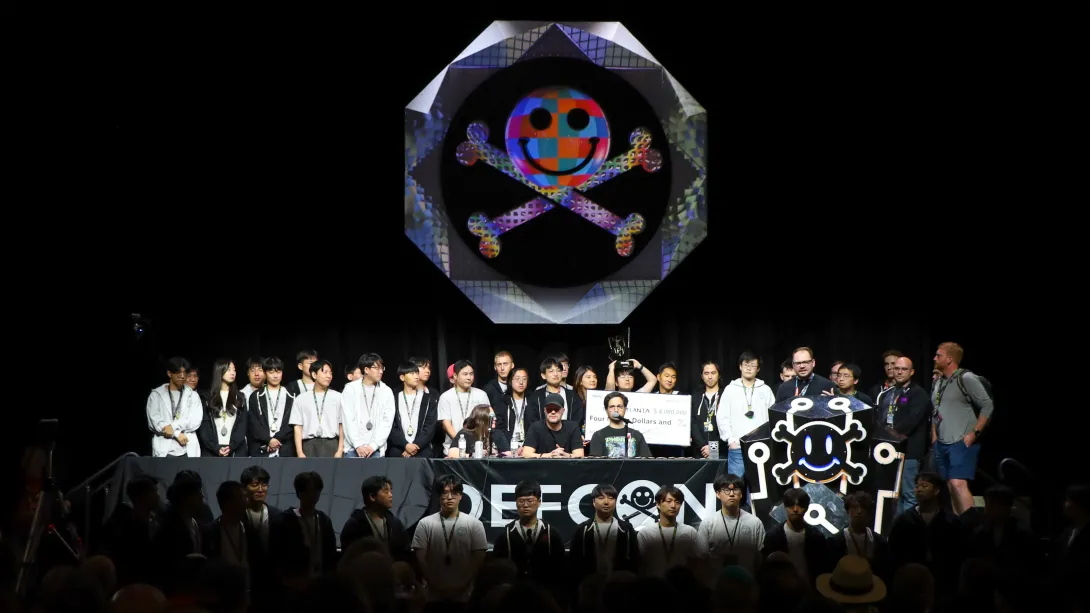

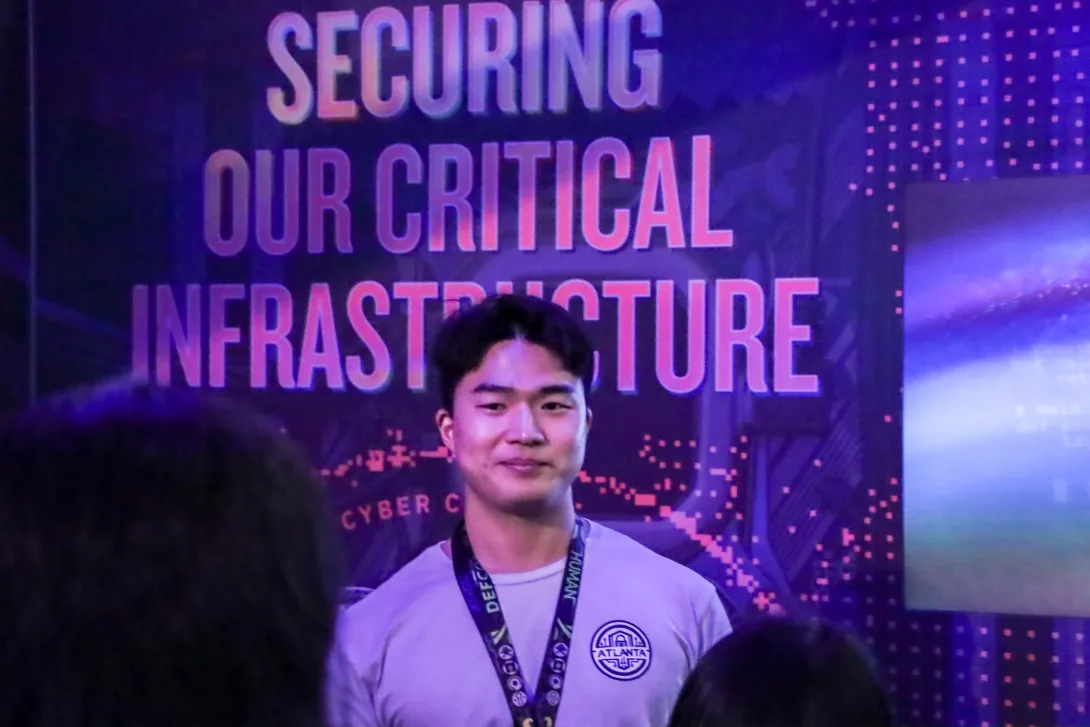
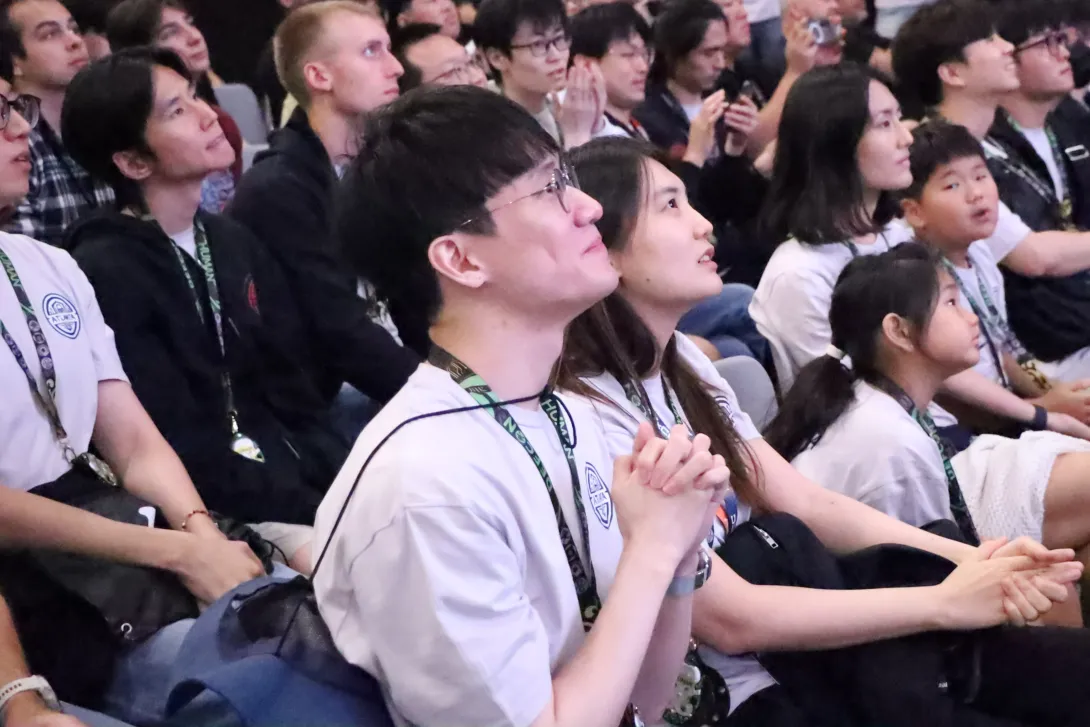
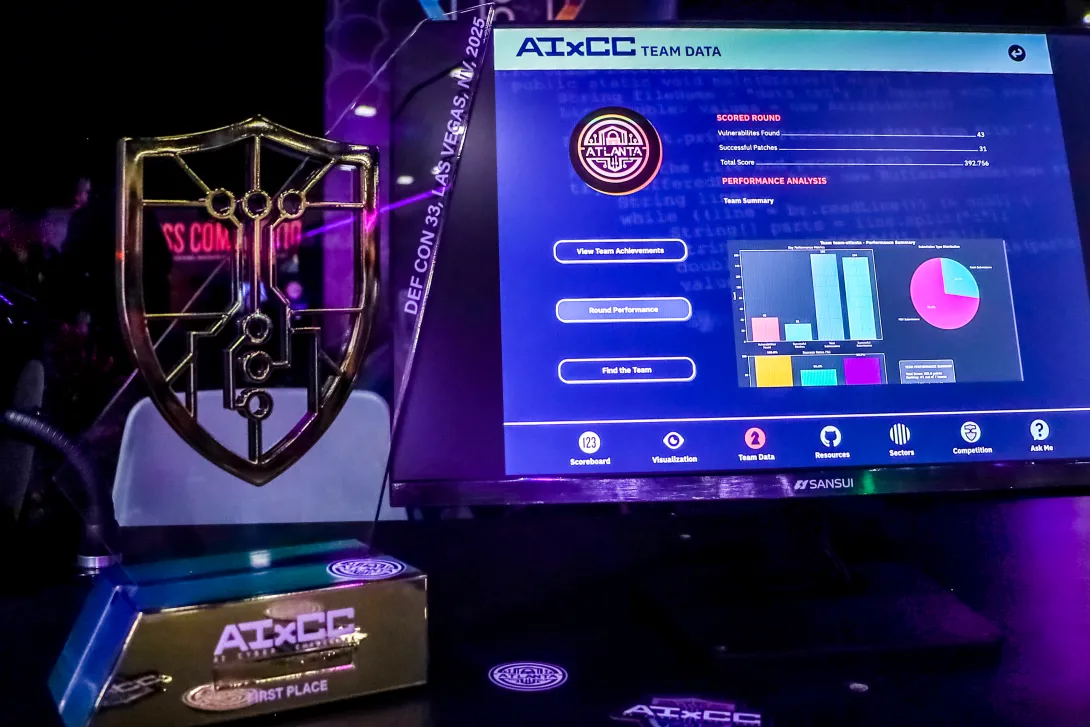
Team Atlanta spent two years exploring how artificial intelligence (AI) could help identify and fix software security problems as part of the Defense Advanced Research Projects Agency (DARPA) AI Cyber Challenge (AIxCC).
After a grueling, world-class competition, the team won the $4 million first-place prize in August 2025.
The team has since disbanded. Some members have moved into the corporate world, while others continue in academia. Despite these varied paths, Team Atlanta’s search for breakthrough AI cybersecurity solutions continues.
From AIxCC to Microsoft
Team Atlanta lead Taesoo Kim, principal security researcher Dongkwan Kim, and three other former team members joined Microsoft Security after the competition, where they continue to work on AI and cybersecurity in the Frontier Offensive Research & Generative Exploitation (FORGE) Lab.
The move has given the researchers an opportunity to apply concepts from AIxCC to real-world software. It has also exposed them to challenges that are difficult to replicate in a competition or research lab.
Dongkwan Kim said that team members continue to share what they learned through research papers, reports, software, and benchmarks. At Microsoft, these lessons are tested against real customer code.
This work led to MDASH, Microsoft's multi-agent, multi-model system for vulnerability discovery and remediation. The system uses more than 100 AI agents to search for vulnerabilities, validate potential findings, and help develop fixes.
Rather than asking a single AI model if a piece of code contains a vulnerability, MDASH can examine a problem using multiple agents. The system can also try to create an exploit to determine whether a potential vulnerability is real and reachable.
For Dongkwan Kim and the other former Team Atlanta members at Microsoft, moving from AIxCC to MDASH showed how research can look different when applied to real software.
“AIxCC was not an endpoint for Team Atlanta,” he said. “We continue sharing what we learned through technical reports, papers, open artifacts, and benchmarks for vulnerability discovery and patching.”
Working with customer code introduced new challenges for the Microsoft team. The researchers had to consider security boundaries, existing development processes, how findings would be reviewed, and how vulnerabilities would be prioritized for action.
These challenges created a new feedback loop between research and product development. The team took ideas from AIxCC, test them on real software, learn where they worked and where they fell short, and use those lessons to improve the system.
The experience also showed that AI does not replace the need for cybersecurity experts. Human researchers are still needed to provide context, decide how to break down difficult problems, validate findings, understand attack paths, and determine the potential impact of a vulnerability.
Taesoo Kim, a professor in the School of Cybersecurity and Privacy and vice president of security research at Microsoft, said the competition continues to influence the Microsoft team's work.
“Every single activity that we’ve done at Microsoft was influenced by AIxCC,” he said in a 2026 interview with Microsoft.
The work has continued to grow. In 2026, Microsoft introduced MAI-Cyber-1-Flash, an AI model built specifically for cybersecurity and designed to work with MDASH.
The model is designed to handle many of MDASH's tasks while allowing larger AI models to focus on harder problems. Microsoft reported that replacing 80% of the models used by MDASH with MAI-Cyber-1-Flash increased its performance on the CyberGym benchmark from 88.4% to 95.95%.
The benchmark includes more than 1,500 examples from 188 software projects. Microsoft also reported that the new setup can achieve similar performance at half the cost of the previous MDASH configuration.
“AIxCC has sparked cybersecurity innovation across the globe, from frontier AI companies to small academic labs,” said Taesoo Kim. “It is an incredibly exciting time to be working in AI-driven security engineering and research, as we see AI fundamentally reshape how we find and fix vulnerabilities at scale.”
Continuing the Research at Georgia Tech
The AIxCC experience also continues to shape cybersecurity research at Georgia Tech.
Jiho Kim, a Georgia Tech Ph.D. student who was part of Team Atlanta's research efforts, said one of the biggest lessons he’s brought back to campus was learning how AI and traditional security tools can work together.
One of these tools is fuzzing. Fuzzing tests software with large numbers of inputs to detect unexpected behavior or security problems. Large language models (LLMs), meanwhile, can reason about code and help guide the search.
During the AIxCC competition, the Team Atlanta combined these ideas in CtxFuzz, a system that uses an LLM to help guide fuzzing toward parts of software that may contain vulnerabilities.
The research was submitted to the ACM/IEEE International Conference on Automated Software Engineering, where it received the ACM Distinguished Paper Award.
“Since AIxCC, we’ve continued building on some of the core findings from our two-year journey with Team Atlanta,” Jiho Kim said.
“One of the biggest lessons for us was understanding how LLMs and traditional fuzzing can work together in a mutually beneficial way, using each to overcome the limitations of the other and ultimately find more and deeper vulnerabilities.”
The researchers also wanted to make the lessons from AIxCC useful to other cybersecurity researchers.
They created an Open-Source Cyber Reasoning System Framework (OSS-CRS) and CRSBench, which provides researchers and security professionals with ways to use, test, and build on technology developed through AIxCC.
“We’ve also been focused on making the results of AIxCC useful to the broader security community,” Kim said. “We created OSS-CRS and CRSBench so that researchers and practitioners can more easily use, reproduce, and build upon the capabilities and lessons from our AIxCC work.”
The team's research has also moved beyond identifying vulnerabilities. Researchers are studying how well AI models can understand and reason about computer code.
Jiho Kim and his lab mates in the Systems Software & Security Lab developed COIN, a benchmark designed to test how well LLMs can reason about code. The work has been accepted to the 2026 Conference on Empirical Methods in Natural Language Processing.
The Georgia Tech researchers are also developing additional benchmarks to study the various types of reasoning required for cybersecurity. They are using what they learn to create new datasets and methods for training AI models focused on cybersecurity.
“We’re using what we learn from these benchmarks to train cybersecurity-focused models through new datasets and training methodologies,” Jiho Kim said.
Photos by John Popham/College of Computing
News Contact
John Popham
Communications Officer at the School of Cybersecurity and Privacy
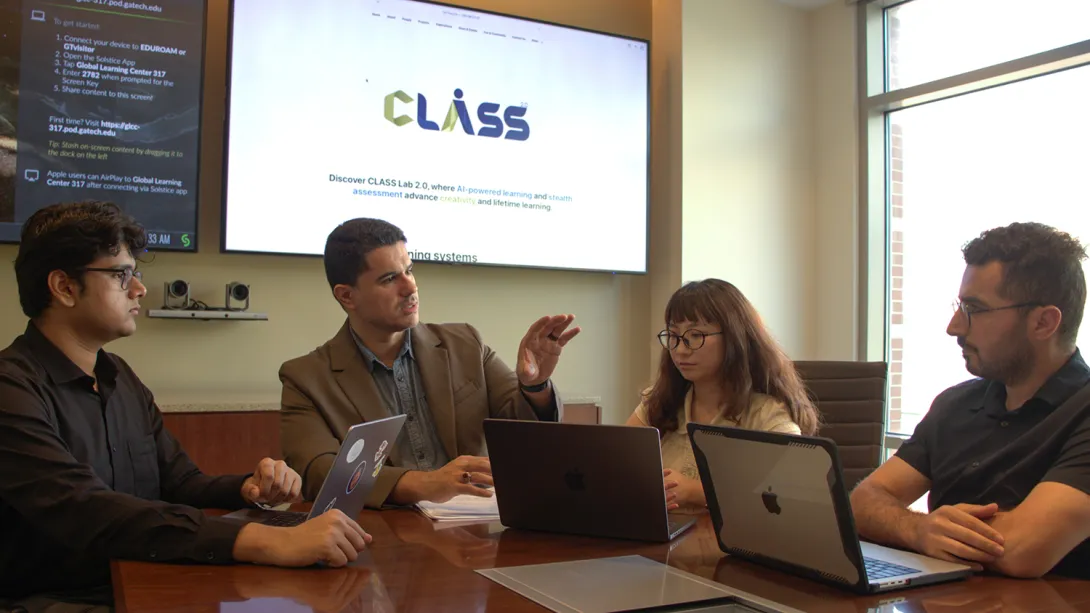
Seyedahmad “Ahmad” Rahimi, associate professor in Georgia Tech’s College of Lifetime Learning, has received a $1.6 million CAREER Award from the National Science Foundation (NSF). His interdisciplinary research explores how artificial intelligence can help middle school students build creativity and deepen their understanding of physics.
The Faculty Early Career Development (CAREER) Program is NSF’s most prestigious honor for early-career faculty with the potential to become leaders in research and education. Rahimi, the College’s first tenure-track faculty member, is also the first to receive the honor.
“I’m very humbled to have received this CAREER Award because it represents an investment in my growth as a scholar exploring the intersection of artificial intelligence, learning sciences, psychometrics, and educational technology,” Rahimi said. “It’s very rewarding to see that my work has been recognized and to have this opportunity to investigate questions that are deeply important to me.”
At the center of Rahimi’s project is Little C., a generative AI coach named for the concept of everyday creativity. The coach will assess students’ designs and offer feedback as they create, test, and revise physics-based simulations. Students will use the coach within Physics Playground, an existing digital sandbox where they design and test game levels to explore Newton’s laws of motion. By pairing creative exploration with physics concepts, Rahimi hopes students build STEM skills, gain confidence in trying something new, or build learner agency.
“What if we could have an entry point into STEM learning that looks less intimidating through the game environment and give students the opportunity to create, experiment, learn, and be creative?” Rahimi said. “Instead of treating creativity and learning as separate things, we want students to learn through creating and become more creative through learning; this is a win-win situation."
The project, which will take place primarily in after-school settings, will also explore how students engage with the AI coach during design activities and how that engagement influences creative output, physics learning, and AI literacy.
“I’m trying to make students interested in physics,” he said. “Through this fun activity in the context of after-school programs, students can build this interest and feel self-efficacious about physics and creativity.”
During the project’s first year, Rahimi plans to engage educators and learners as co-designers to help ensure Little C. is as accessible, effective, and useful as possible. Their input will help shape the AI coach’s communication style, learning supports, and safeguards, all designed to support the responsible and appropriate use of AI in educational settings.
This project builds on research underway in Rahimi’s CLASS Lab, or Creative Learning through AI and Stealth Assessment for STEM. The lab focuses on how emerging technologies can support learning, problem-solving, and creativity while keeping learners’ interests and abilities at the center of the experience.
In fact, creativity has been a recurring theme throughout Rahimi’s career. He traces that interest back to fourth grade, when an art teacher praised the creativity he showed in a drawing. He said that experience helped shape his long-standing interest in how creativity develops and its role in learning.
“We are living in an uncertain era and problems that we have never seen before will come our way, and we need people who have original thinking who can deal with those problems,” Rahimi said. “I believe creativity has been and certainly is one of the most important, if not the most important skill for human beings.”
Author: Joëlle Walls
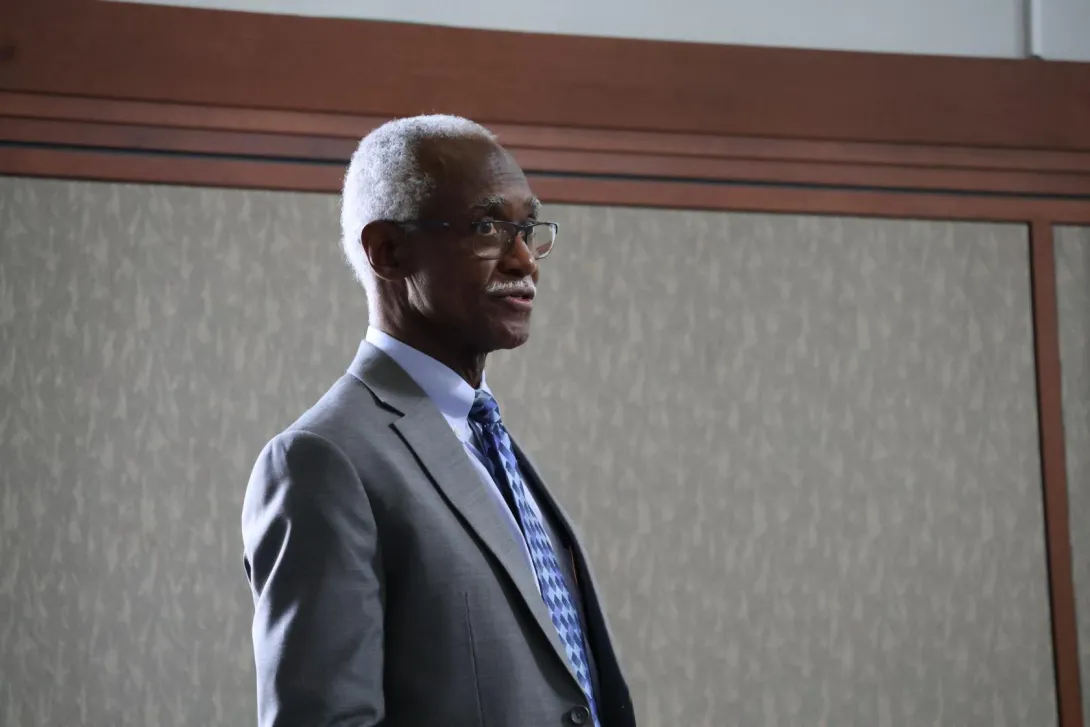
Clark Atlanta University (CAU) is strengthening its artificial intelligence programs through AIHUB@CAU, an initiative supported by a $2.79 million National Science Foundation (NSF) grant and developed in collaboration with Georgia Tech’s NSF AI Institute for Advances in Optimization (AI4OPT).
As part of NSF's ExpandAI program, AIHUB@CAU is designed to strengthen the university's capacity for AI education, research, and workforce development. The partnership connects CAU’s academic programs with Georgia Tech’s expertise in artificial intelligence, mathematical optimization and interdisciplinary research.
Led by Charles Pierre, associate professor in CAU’s Department of Mathematical Sciences and principal investigator (PI) for AIHUB@CAU, the initiative brings together faculty expertise in mathematical sciences, cyber-physical systems and business administration.
Expanding Academic Pathways in AI
A central part of the initiative is developing academic pathways that prepare students for opportunities in AI, from industry careers to advanced research.
During a Sept. 22 meeting at CAU's Thomas W. Cole Jr. Research Center for Science and Technology, Pierre shared updates on the university's undergraduate AI minors and master's-level AI programs. Students from some of the program's early cohorts also attended the meeting, reflecting the academic community taking shape around the initiative.
Dr. Roy George, chair of CAU's Cyber-Physical Systems Program and co-PI of AIHUB@CAU, discussed progress on further integrating AI into the university's doctoral offerings. Once these efforts are completed, the doctoral program will provide an additional pathway for students interested in pursuing AI research at the highest academic levels while strengthening CAU's long-term capacity in the field.
By connecting AI with mathematical sciences, business and cyber-physical systems, the programs aim to help students apply technical knowledge to challenges across disciplines and industries.
Expanding Faculty Expertise and Research Opportunities
Building sustainable AI programs requires faculty expertise, research capacity, and opportunities for collaboration. AIHUB@CAU's partnership with AI4OPT complements the institute's broader educational efforts, including faculty training programs that help educators develop skills in data science, artificial intelligence, and optimization. These experiences support the development of new coursework, strengthen institutional expertise, and help faculty bring emerging AI knowledge into their classrooms and research programs.
The collaboration also connects CAU to AI4OPT’s research in artificial intelligence and mathematical optimization. Based at Georgia Tech, the institute develops methods to improve complex decision-making in areas such as energy, logistics, supply chains and manufacturing. These collaborations create opportunities for interdisciplinary research while helping connect classroom learning to real-world applications.
About NSF AI4OPT
NSF Artificial Intelligence (AI) Research Institute for Advances in Optimization, or AI4OPT, aims to deliver a paradigm shift in automated decision-making at massive scales by fusing AI and Mathematical Optimization (MO) to achieve breakthroughs that neither field can achieve independently.
The Institute is driven by societal challenges in supply chains, manufacturing, and energy systems. To address the widening gap in job opportunities, the Institute delivers an innovative longitudinal education and workforce development program.
About Georgia Tech
The Georgia Institute of Technology, or Georgia Tech, is one of the top public research universities in the U.S., developing leaders who advance technology and improve the human condition.
The Institute offers business, computing, design, engineering, liberal arts, and sciences degrees, as well as professional development and K-12 programs for fostering success at every stage of life. Its more than 56,000 undergraduate and graduate students represent 54 U.S. states and territories and more than 146 countries. They study at the main campus in Atlanta, at instructional sites around the world, and through distance and online learning.
As a leading technological university, Georgia Tech is an engine of economic development for Georgia, the Southeast, and the nation, conducting more than $1 billion in research annually for government, industry, and society.
About Clark Atlanta University
Clark Atlanta University was formed with the consolidation of Atlanta University and Clark College. Atlanta University, established in 1865 by the American Missionary Association, was the nation’s first institution to award graduate degrees to African Americans. Established four years later in 1869, Clark College was the nation’s first four-year liberal arts college to serve a primarily African American student population. Today, with nearly 4,000 students, CAU is the largest of the four institutions that comprise the Atlanta University Center Consortium. It is also the largest of the 37-member United Negro College Fund (UNCF) institutions. To learn more about Clark Atlanta University, visit www.cau.edu.
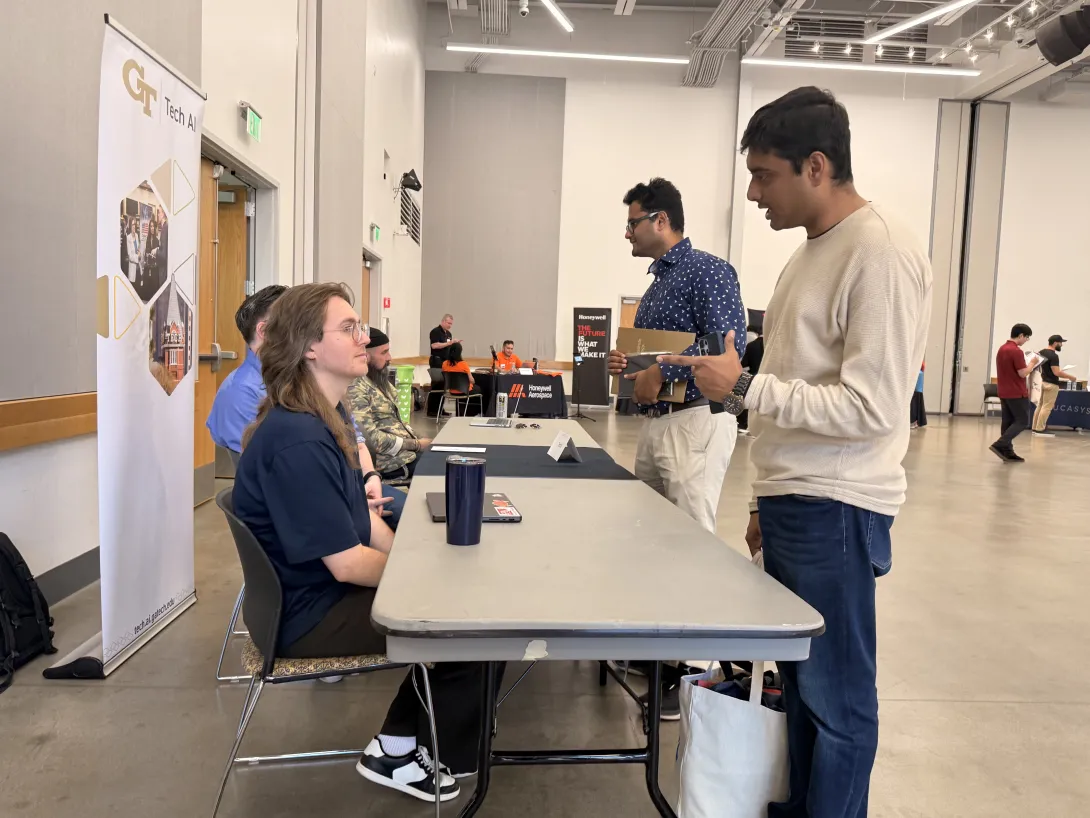
Georgia Tech and Emory University are investing more than $1 billion in artificial intelligence to advance research, develop talent and drive economic growth. Tech AI aims to translate that work into practical applications by connecting businesses and public-sector organizations with Georgia Tech’s AI expertise.
Through these partnerships, Tech AI helps organizations identify use cases, develop and validate solutions, and build workforce capabilities to apply AI to challenges in manufacturing, logistics, energy, health care and enterprise software.
“Organizations don’t need another headline about what AI might do. They need a practical way to determine where AI can make a difference. Tech AI connects those challenges with Georgia Tech’s expertise to help move ideas toward solutions,” said Stephen Rosner, director of business operations for Tech AI at Georgia Tech.
Tech AI also creates opportunities for organizations to connect with Georgia Tech researchers, students and industry partners.
The Tech AI Symposium and AI Career Fair bring these groups together to discuss applied AI, industry collaboration and workforce needs while connecting employers with students and alumni pursuing AI-related careers. The programming also highlights how Georgia Tech’s research, education and industry partnerships can help organizations respond to emerging technologies and changing workforce demands. (Learn more about the symposium and career fair.)
As the region’s AI ecosystem grows, Tech AI offers organizations a starting point for exploring how AI can address their needs and move from concept to deployment.
Have an AI challenge to solve?
Connect with Tech AI to start the conversation, here.
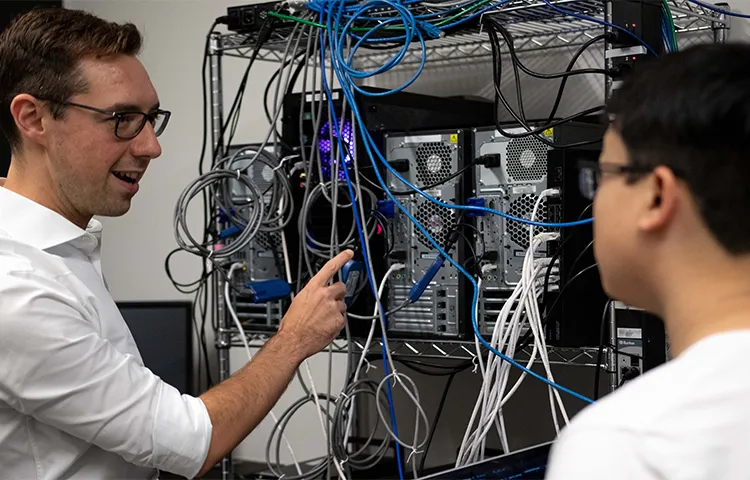
Deleting a conversation with an artificial intelligence (AI) assistant may not erase everything the assistant remembers.
Georgia Tech researchers have developed a tool that can recover deleted conversations from AI assistants running on Android phones. The tool, called ORISA, can also rebuild the recovered information into a working AI session.
The findings show that deleting an AI conversation on a phone does not necessarily mean it removes every trace.
The research could give digital investigators a new way to recover information from phones. It also raises privacy concerns for people who use AI assistants that run locally on their devices.
Local AI assistants run directly on a phone rather than sending conversations to a cloud service. While the local assistant is running, information from conversations can remain in the phone’s working memory even after it is deleted.
ORISA searches this memory for pieces of deleted conversations.
In one experiment, researchers created a fictional AI assistant called “Project Note Keeper” using the ChatterUI Android app. They gave it 100 fictional facts about a project, then deleted the conversation.
ORISA recovered information from the deleted conversation and used it to create a new working session. When researchers asked the restored assistant to list the project notes it had been given, it returned 26 facts. The original session could access only 14 facts because the rest had fallen outside its active memory.
The experiment showed that researchers could recover information the AI had already stopped actively using.
“It can help establish what information someone shared with an AI assistant and what assistance they received,” said Ph.D. student Ken Xu, lead author of the study.
The researchers tested ORISA with 10 Android apps and three AI models. Across 60 test configurations, the tool recovered conversation information that remained in the phone’s memory.
The researchers say the information becomes harder to recover as the phone’s memory is overwritten by other activity.
The research was presented at the 2026 IEEE Symposium on Security and Privacy. The paper, titled Recovering and Rehosting Mobile Local LLM Conversations and Contexts via Memory Forensics, was authored by Ph.D. students Xu, David Oygenblik, Runze Zhang, and Mingxuan Yao; Research Scientist Muhammad Ibrahim; and Associate Professor Brendan Saltaformaggio. The work was done in Georgia Tech's Cyber Forensics Innovation Laboratory, a collaboration between the School of Cybersecurity and Privacy and the School of Electrical and Computer Engineering.
News Contact
John Popham
Communications Officer for the School of Cybersecurity and Privacy