
Georgia Tech Research highlights the top moments of the year.
Before new technologies end up in your doctor’s office or car, they start in a Georgia Tech lab. Our work creates medical breakthroughs. Our studies help people better understand our changing climate. Our innovations create technologies that shift the paradigms of possibility. Here’s a look at some of our 2025 discoveries — and the people behind them.
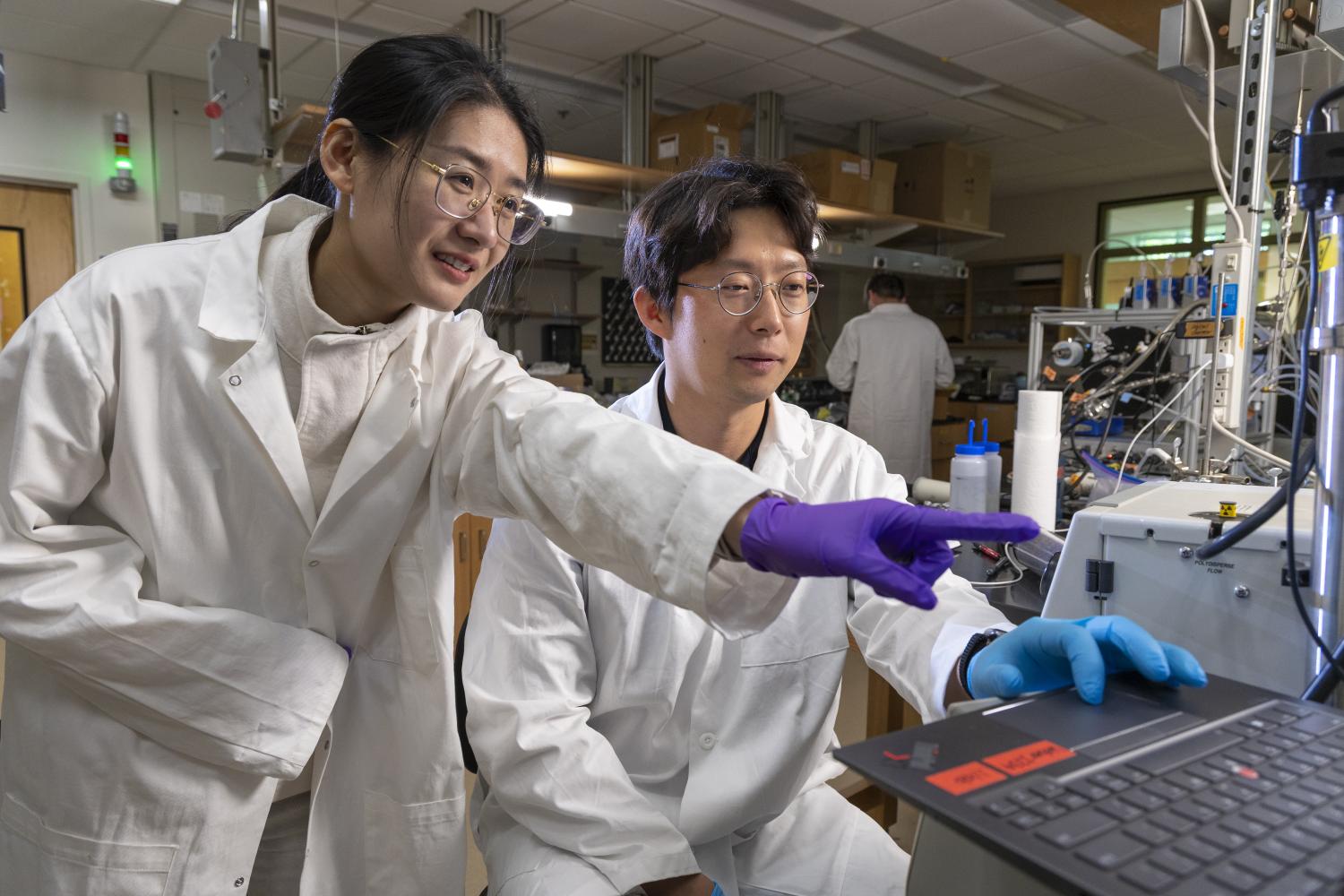
Graduate student Lifei Yin (left) and postdoctoral researcher Minhan Park (right) analyze aerosols captured in ancient ice. In the School of Earth and Atmospheric Sciences, in Assistant Professor Pengfei Liu’s lab, researchers drill into the Antarctic ice core to determine the air quality of the distant past.
Photo by Christopher McKenney
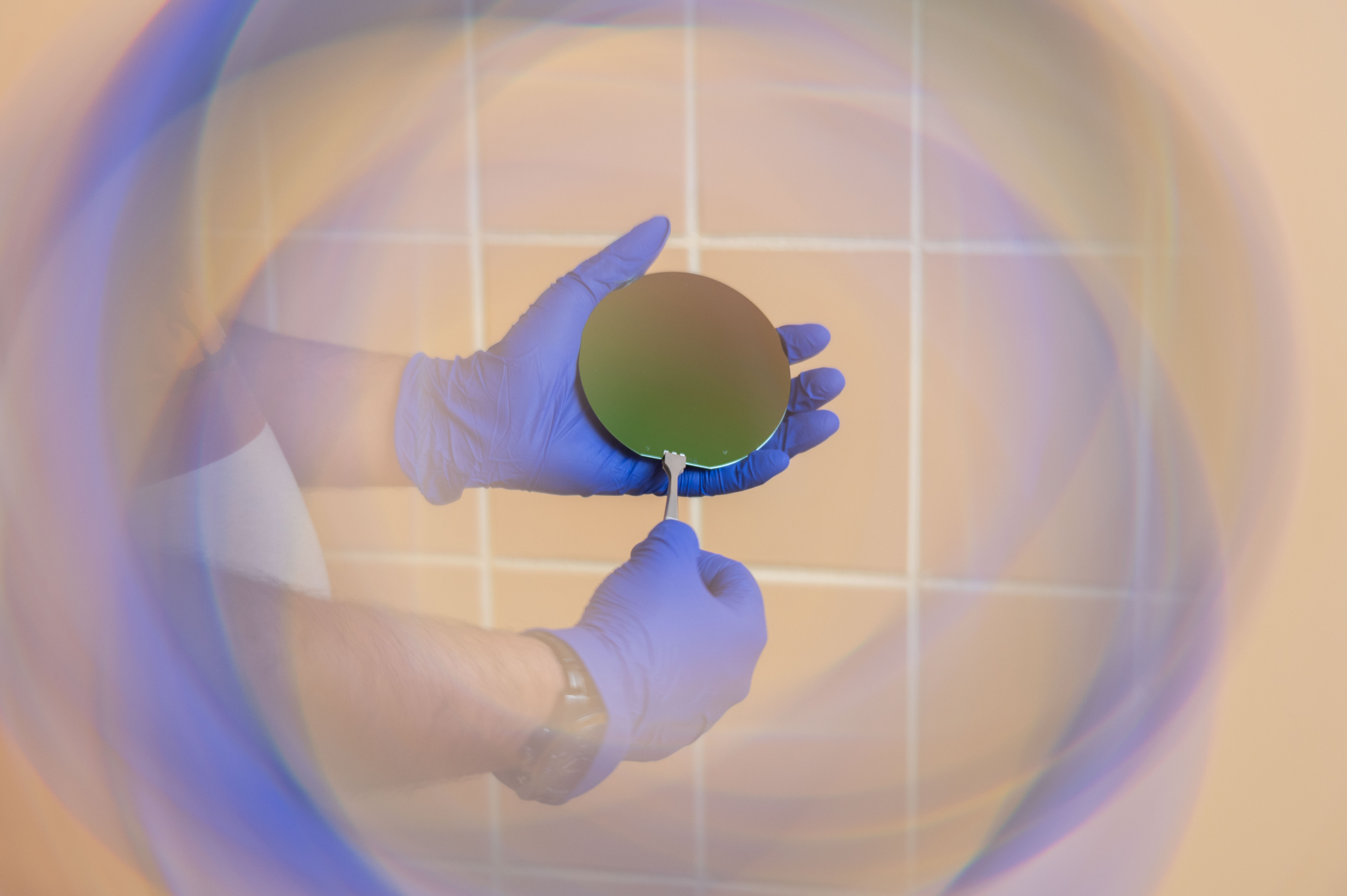
With $5.3 million in DARPA funding, School of Electrical and Computer Engineering Professor Ali Adibi is looking to light, not electricity, to move data faster and more efficiently in next-generation electronics. Adibi’s team is building a new 3D optical system that can send data quickly, with little loss, using small components. It’s designed to connect many chips without signals interfering with each other.
Photo by Allison Carter
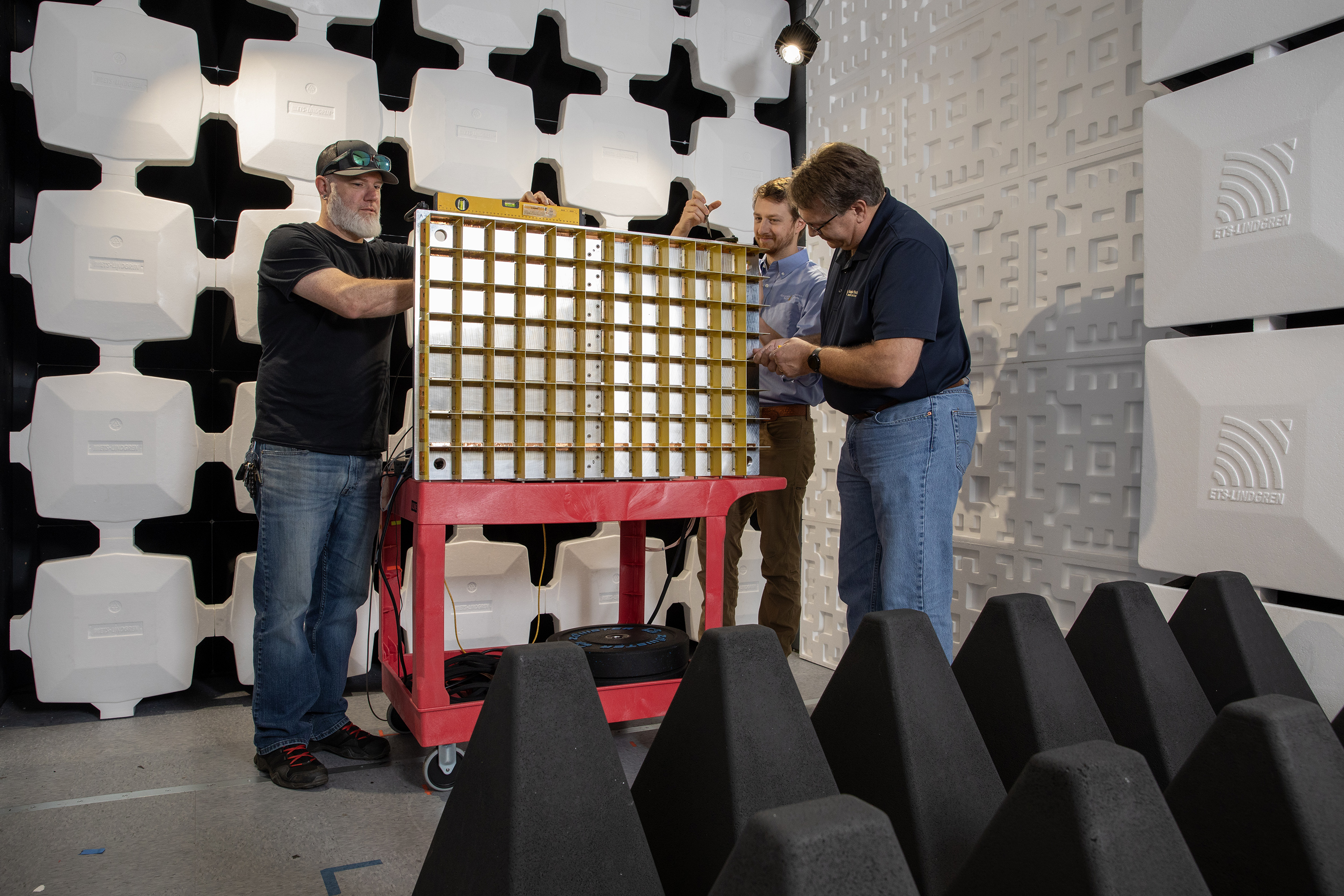
The Georgia Tech Research Institute and AV built a new digital antenna that can track multiple hypersonic test signals at once, on land or in the air. This is a big leap for Pentagon flight testing tech. Here, researchers prepare to test this antenna in a GTRI lab.
Photo by Sean McNeil
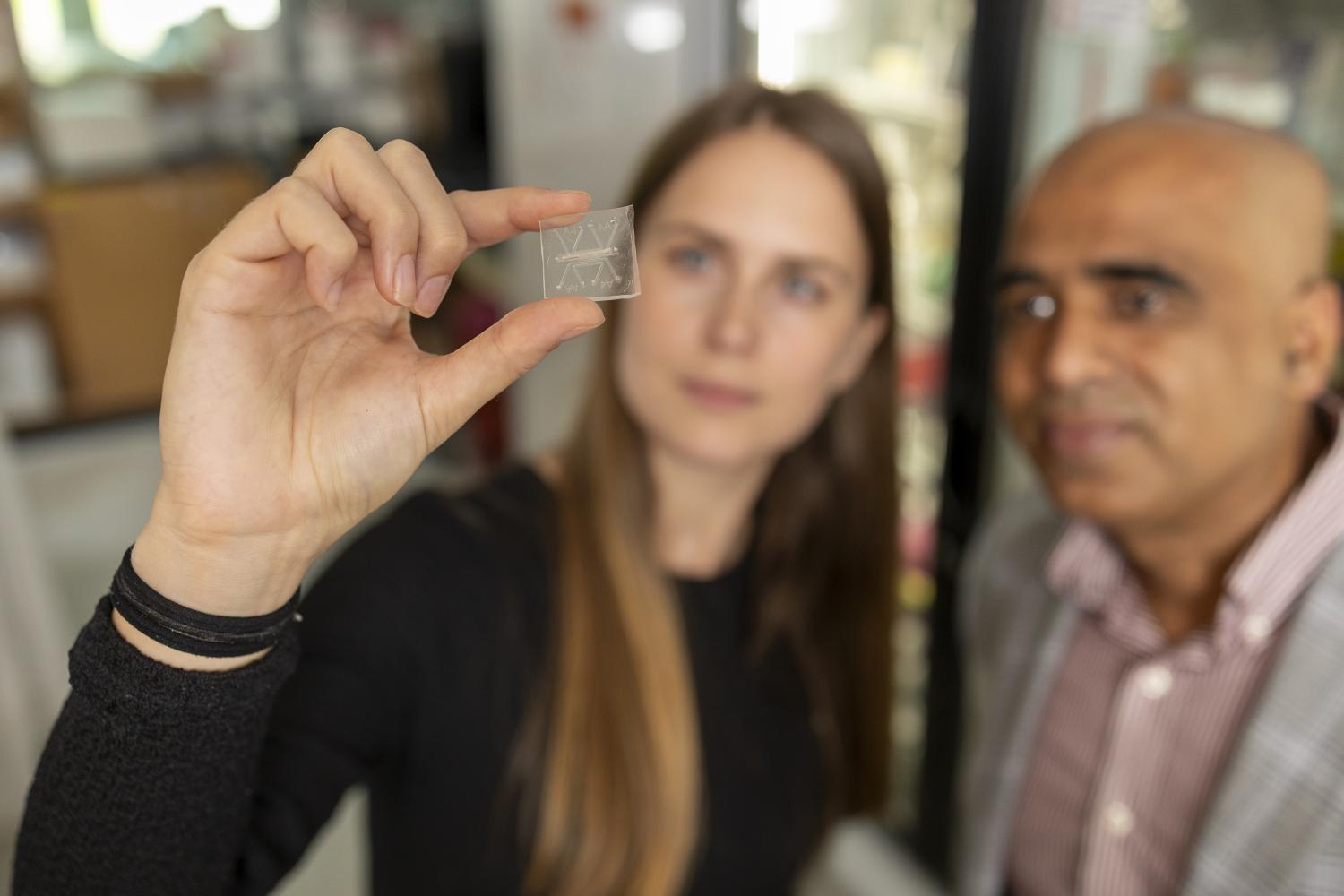
Georgia Tech’s Center for Immunoengineering Director Ankur Singh and Rachel Ringquist examine a microscopic lung-on-a-chip that has a built-in immune system. Lung-on-a-chip platforms give researchers a window into organ behavior.
About the size of a postage stamp, the chips are etched with tiny channels and lined with living human cells. The researchers’ innovation entailed adding a working immune system — the missing piece that turns a chip into a true model of how the lungs fight disease. Now, researchers can watch how lungs respond to threats, how inflammation spreads, and how healing begins.
Photo by Christopher McKenney
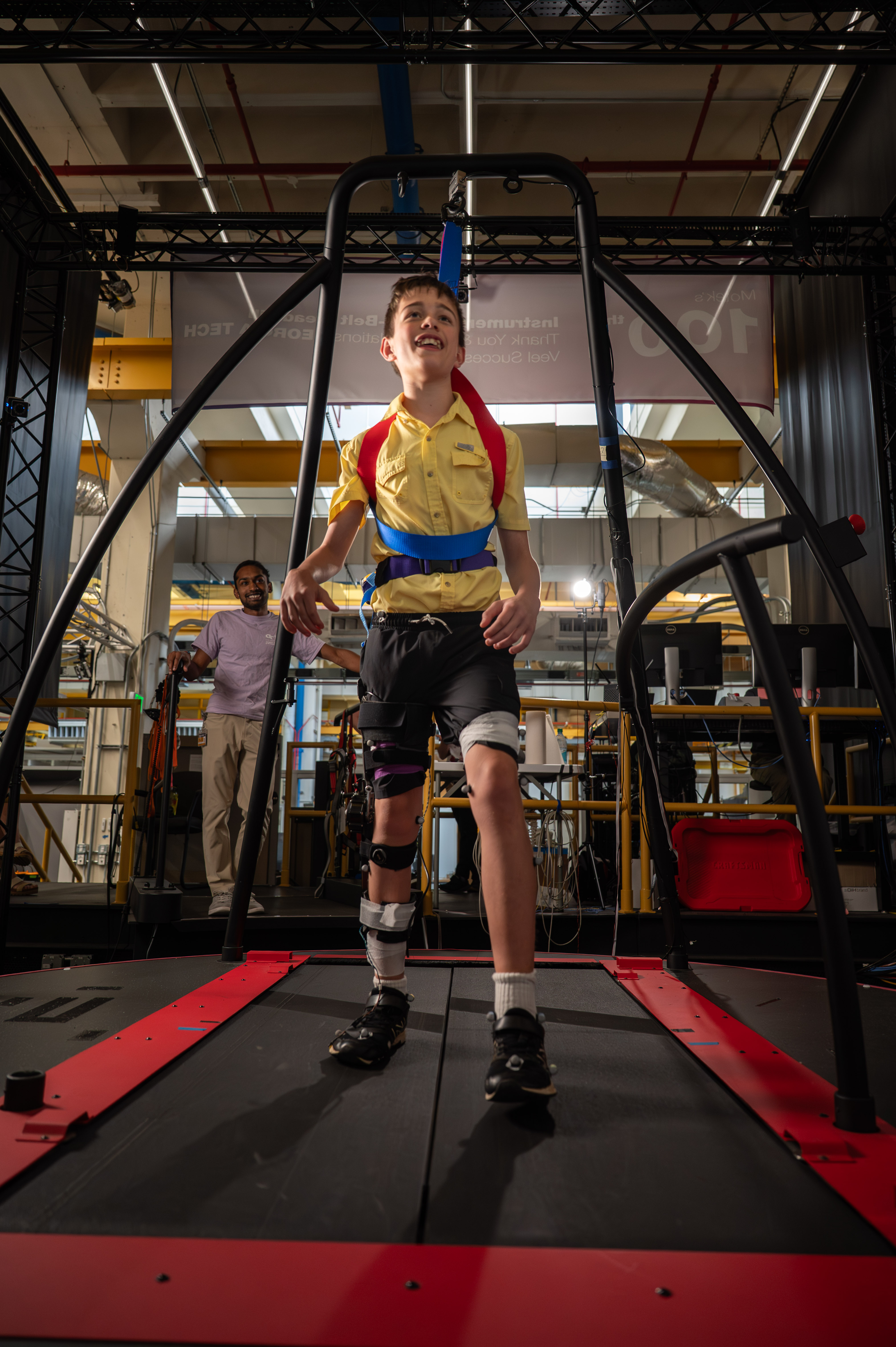
Case Neel, 13, is a busy kid who loves coding and robotics, captains his school’s quiz bowl team, and lives with his family on a farm northwest of Atlanta. He also has cerebral palsy — and for the past four years, he has played a key role in improving one of the most exciting medical devices, an exoskeleton, at Georgia Tech. The pediatric knee exoskeleton is designed to help children and adolescents walk with increased stability and mobility, and Case’s data enables the researchers to analyze the exoskeleton’s performance.
Photo by Rob Felt
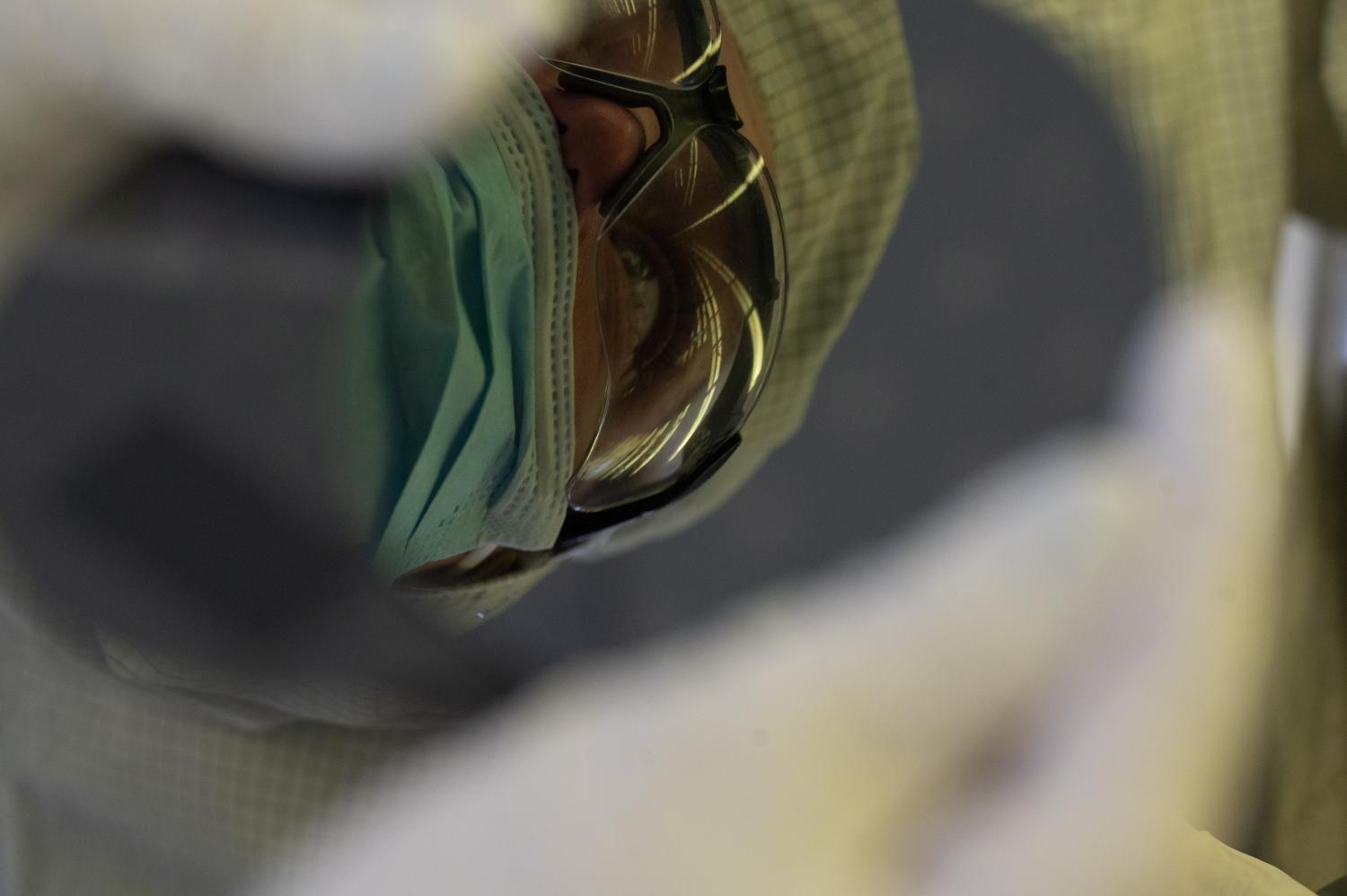
A researcher works in Georgia Tech’s 28,500-square-foot cleanroom, the largest in the Southeast.
Photo by Joya Chapman
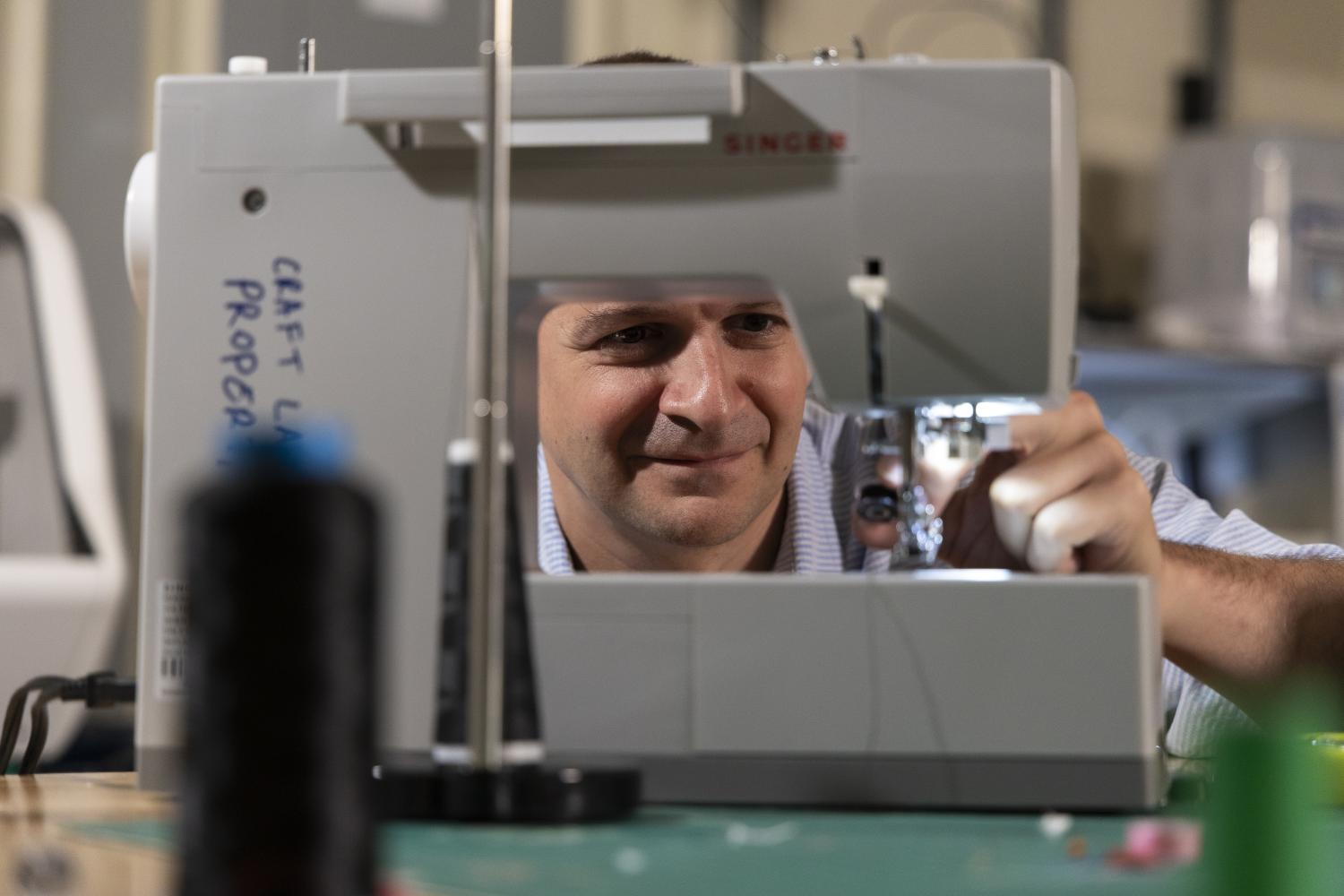
Scott Gilliland, a senior research scientist in Georgia Tech’s Institute for People and Technology (IPaT), has played a key role in developing ubiquitous computing technologies. IPaT connects researchers across disciplines to turn innovative ideas into practical applications. It’s a natural fit for Gilliland, whose work blends human-centered design with small computers built into everyday devices to perform specific tasks. Gilliland often uses a sewing machine to integrate embedded technology into wearable prototypes.
Photo by Christopher McKenney

Writer/Media Contact: Tess Malone | tess.malone@gatech.edu
Photos: Allison Carter, Joya Chapman, Rob Felt, Christopher McKenney, Sean McNeil
Copy Editor: Stacy Braukman
 The Year in Photos: Georgia Tech Research looks back at 2024
 Research for Real Life
 Unexpected Paths