A water-treatment technology can work in a laboratory and still be a long way from providing cleaner water. Before it can help remove contaminants from drinking water and wastewater, it must be turned into a product, tested outside the lab, and shown to work in the water-treatment systems that serve people and communities.
Minus Filtration, a startup commercializing Georgia Tech research, is working through that process with a membrane developed in the lab of Yongsheng Chen, the Bonnie W. and Charles W. Moorman IV professor in the School of Civil and Environmental Engineering and director of the Nutrients, Energy, and Water (NEW) Center for Agriculture Technology. The technology acts as a highly selective filter, allowing water to pass through while holding back PFAS and other unwanted substances.
PFAS, short for per- and polyfluoroalkyl substances, are a large group of human-made chemicals that break down slowly and can be difficult to remove from water. Some treatment methods have particular difficulty capturing smaller compounds known as short-chain PFAS.
“Minus filtration means we remove contaminants from the water without adding more chemicals,” Chen said.
The membrane began as research in Chen’s lab, but moving it toward the market has involved several areas within Georgia Tech’s Office of Commercialization. Technology Licensing helped protect the intellectual property and licensed three Georgia Tech patents related to the technology to Minus Filtration.
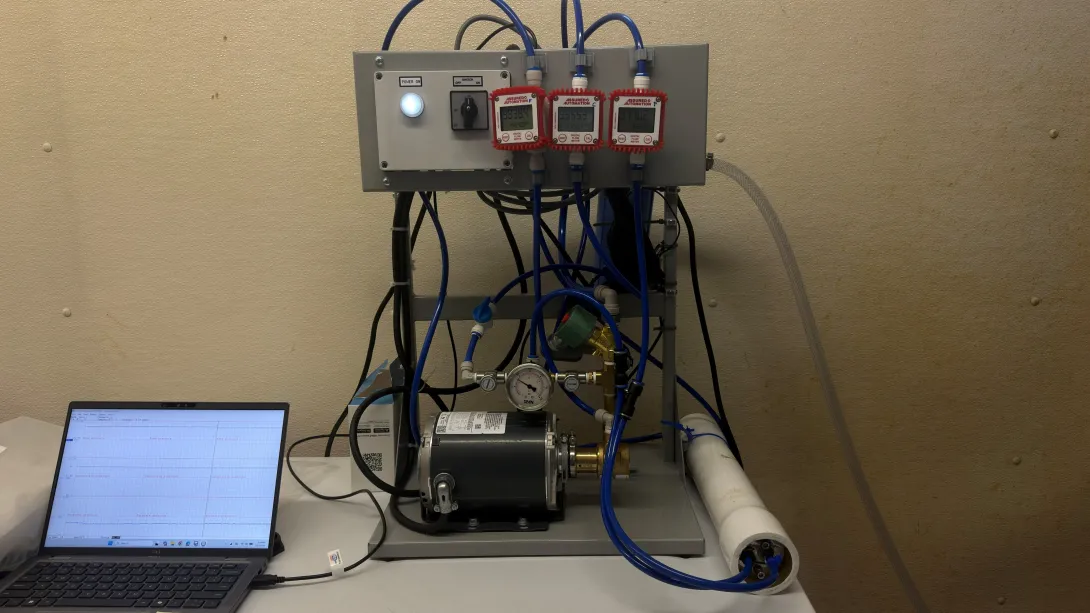
A $48,716 Phase 1 grant from the Georgia Research Alliance supported the next stage of development. Minus Filtration worked with Chen’s lab to turn a small membrane sample into a compact, rolled cartridge similar to those used in commercial water-treatment systems. Known as a spiral-wound element, the design fits a large amount of membrane material into a relatively small space.
Beyond lab development, Quadrant-i, another unit within the Office of Commercialization that supports startups based on Georgia Tech intellectual property, has worked with Minus Filtration on customer discovery, funding plans, and its path to market.
“Quadrant-i helped us connect the technical work to what customers need,” said Jia Rong Li, co-founder of Minus Filtration. “That support prepared us to move from a small lab sample toward a system we could test in the field.”
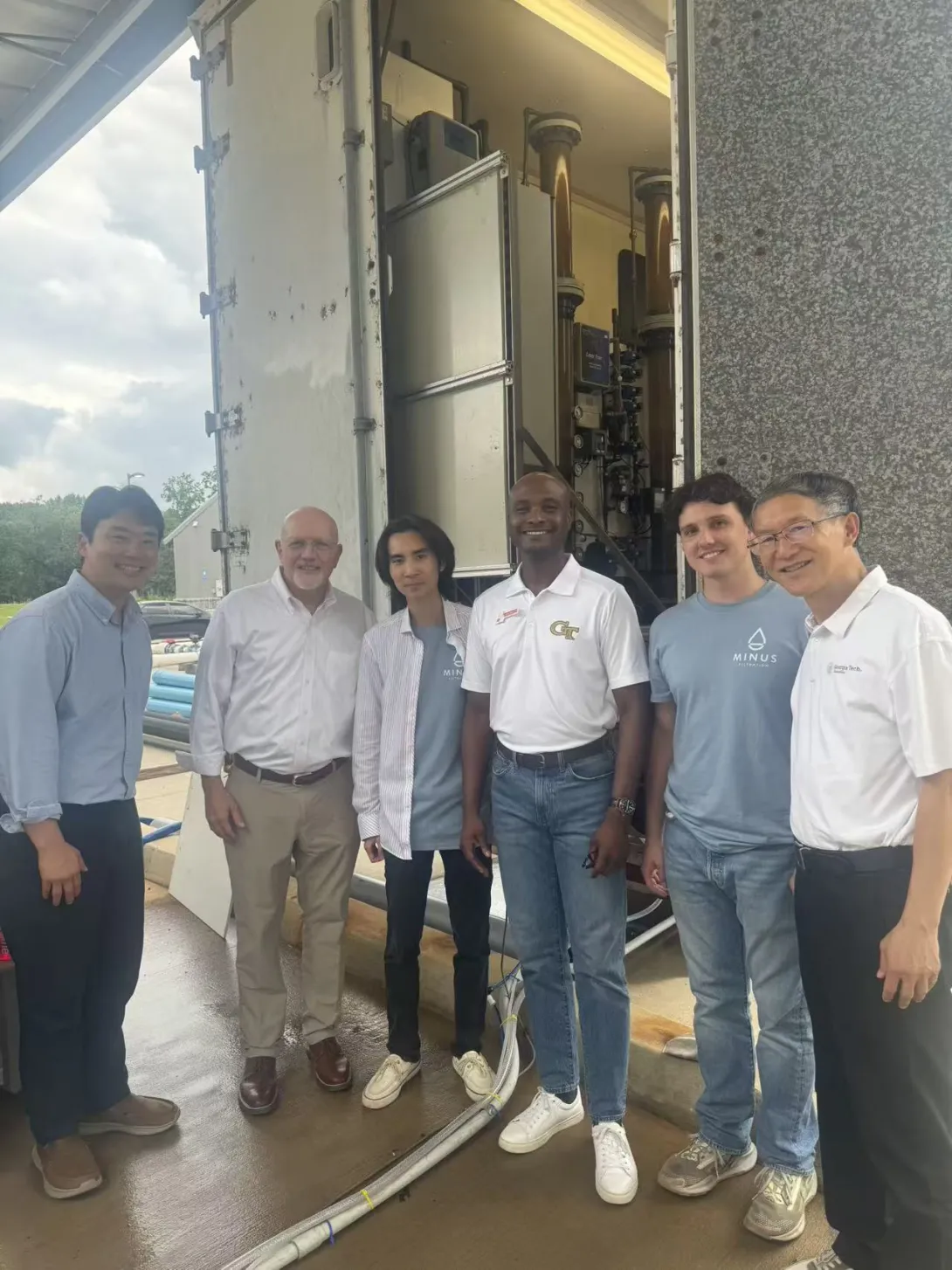
The team completed a two-week pilot at The Water Tower, a water innovation center in Gwinnett County, with the industrial and commercial water treatment company WaterTectonics. Minus Filtration tested its membrane using water from operating facilities, including wastewater from a power plant and water that had already undergone advanced treatment.
The field test showed that the membrane could work with wastewater in equipment similar to what treatment facilities already use. In a single pass, the membrane removed up to 99% of long-chain PFAS and more than 90% of certain short-chain PFAS.
Testing also showed that the membrane could remove common metals while operating at lower pressure than some traditional systems, which could reduce energy use. The Water Tower and Eurofins Scientific independently verified the results.
“The results are very promising,” Chen said. “We can not only remove the long-chain PFAS, but also the short-chain PFAS to ensure drinking water is safer for the community.”
The pilot also gave Minus Filtration evidence it could take to prospective customers as it pursued larger testing opportunities. “Field testing showed that the technology could work with water from operating facilities in a format customers recognize,” said Richard Gruber, principal at Quadrant-i. “We are helping the team build on that progress by identifying the funding, partners, and customer opportunities needed to move toward larger deployments.”
The pilot results have helped Minus Filtration move into customer testing. The company has a memorandum of understanding with a large Midwest drinking-water utility for additional pilots and is conducting a paid study for a large industrial company headquartered in Georgia. That study could lead to a larger paid pilot. Utilities in the Northeast have also expressed interest in the membrane, while two water engineering firms are exploring potential sales, engineering, and system design partnerships with the company.
Minus Filtration is also working with The Water Tower and the Electric Power Research Institute on a grant proposal to test the membrane with wastewater from the power, food, and beverage industries. These opportunities remain in the early stages, but they show that utilities, companies, and industry partners are beginning to evaluate how the technology could meet their water-treatment needs.
The company currently makes small membrane cartridges for benchtop testing, treatability studies, and pilot-scale applications. Treating greater volumes of water will require larger membrane sheets and systems. Minus Filtration plans to have a larger cartridge ready for commercial pilots by the second quarter of 2027, followed by a format for full-scale water-treatment installations. The company and Quadrant-i are considering the mix of private investment and grant funding needed for that work, and Minus Filtration has applied for a $250,000 Georgia Research Alliance Development grant.
Full-scale deployment remains, but the technology has moved well beyond the laboratory. With support from Technology Licensing, the Georgia Research Alliance, and Quadrant-i, the membrane has progressed from a small research sample to a field-tested system that utilities and industrial customers are beginning to evaluate.
News Contact
Lacey Cameron
lacey.cameron@gatech.edu