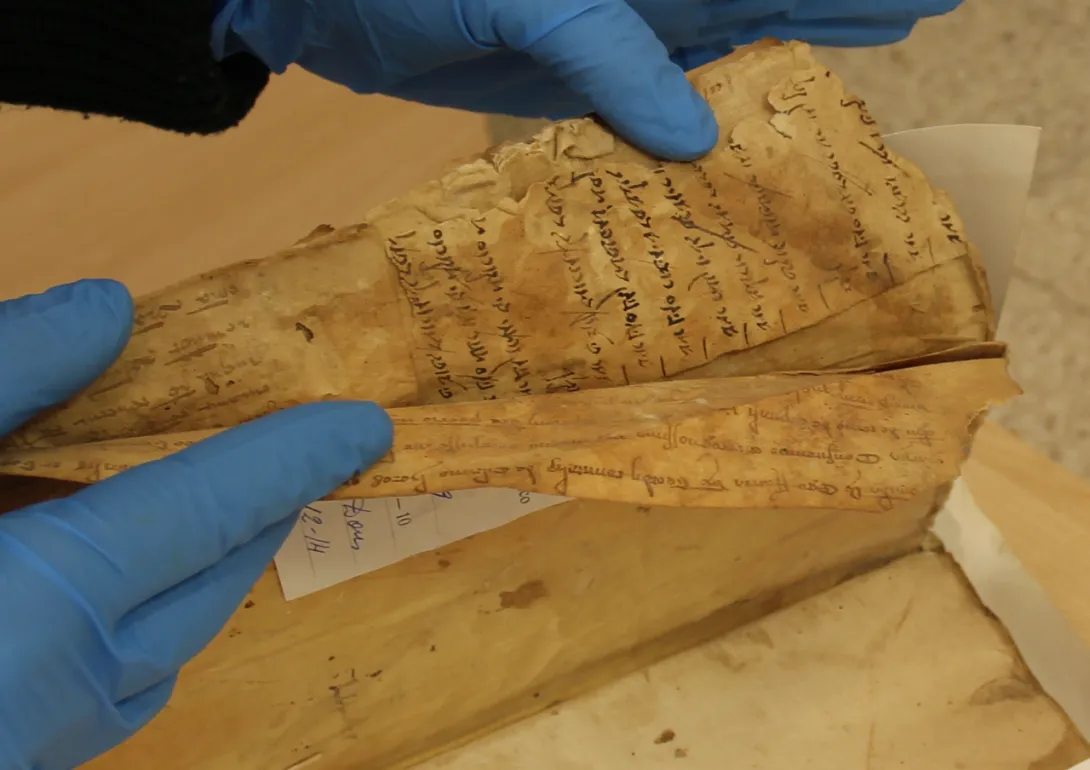
An example of a hidden manuscript in a book binding from "Piel Sobre Tabla," BNE, (Creative Commons)
When the Jewish community was expelled from much of the Iberian Peninsula in 1492, many of their books stayed behind and served a new purpose. Paper was too valuable to throw away, so texts were often reused to build bindings or covers for other books.
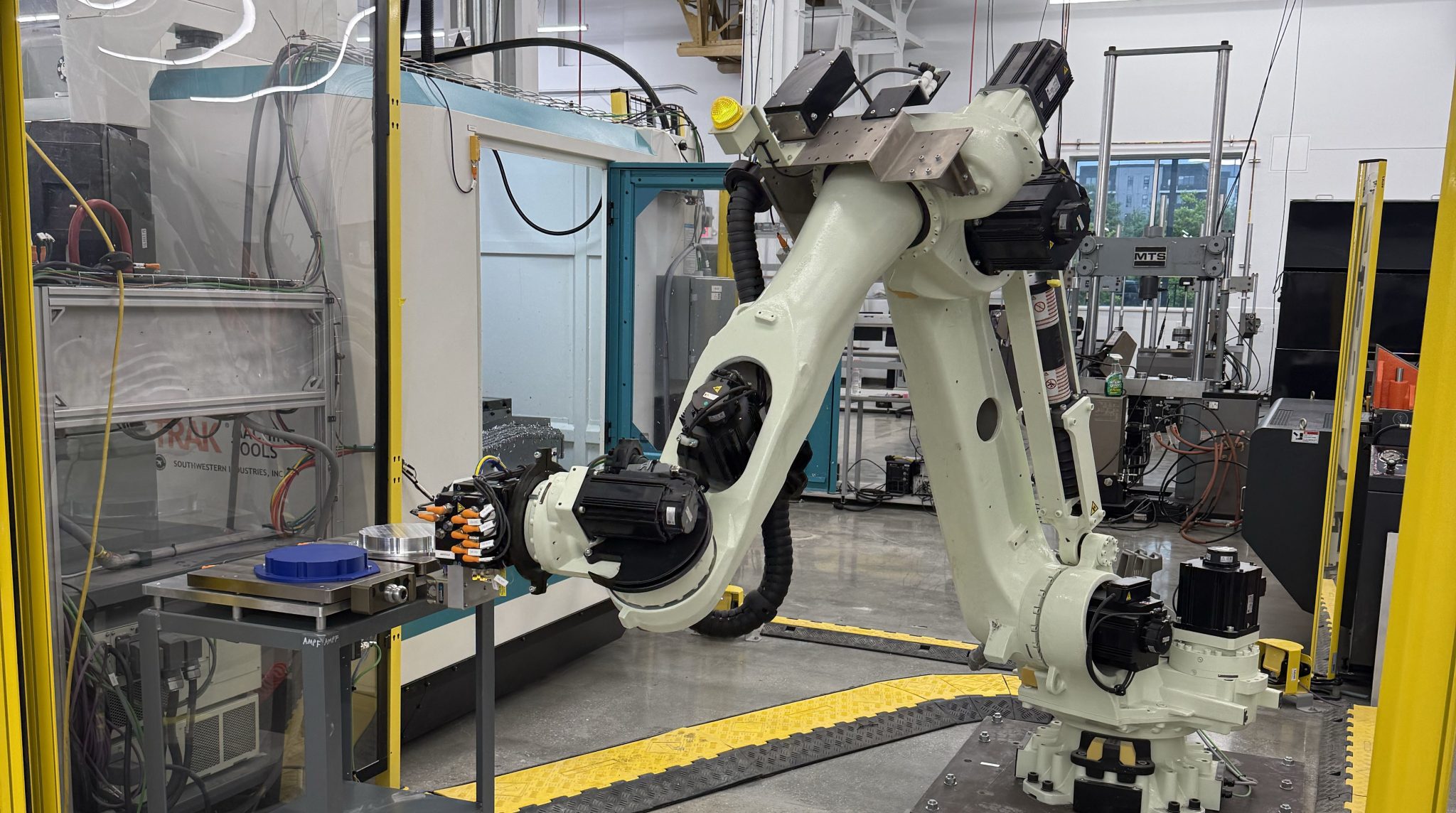
Centuries later, Jewish texts can still be found inside book covers in Catalonia. But intact volumes remain much more difficult to investigate without damaging them. Researchers are exploring terahertz imaging, a nonionizing technique that uses electromagnetic radiation between the microwave and infrared regions of the spectrum, to detect writing beneath the surface without taking the binding apart.
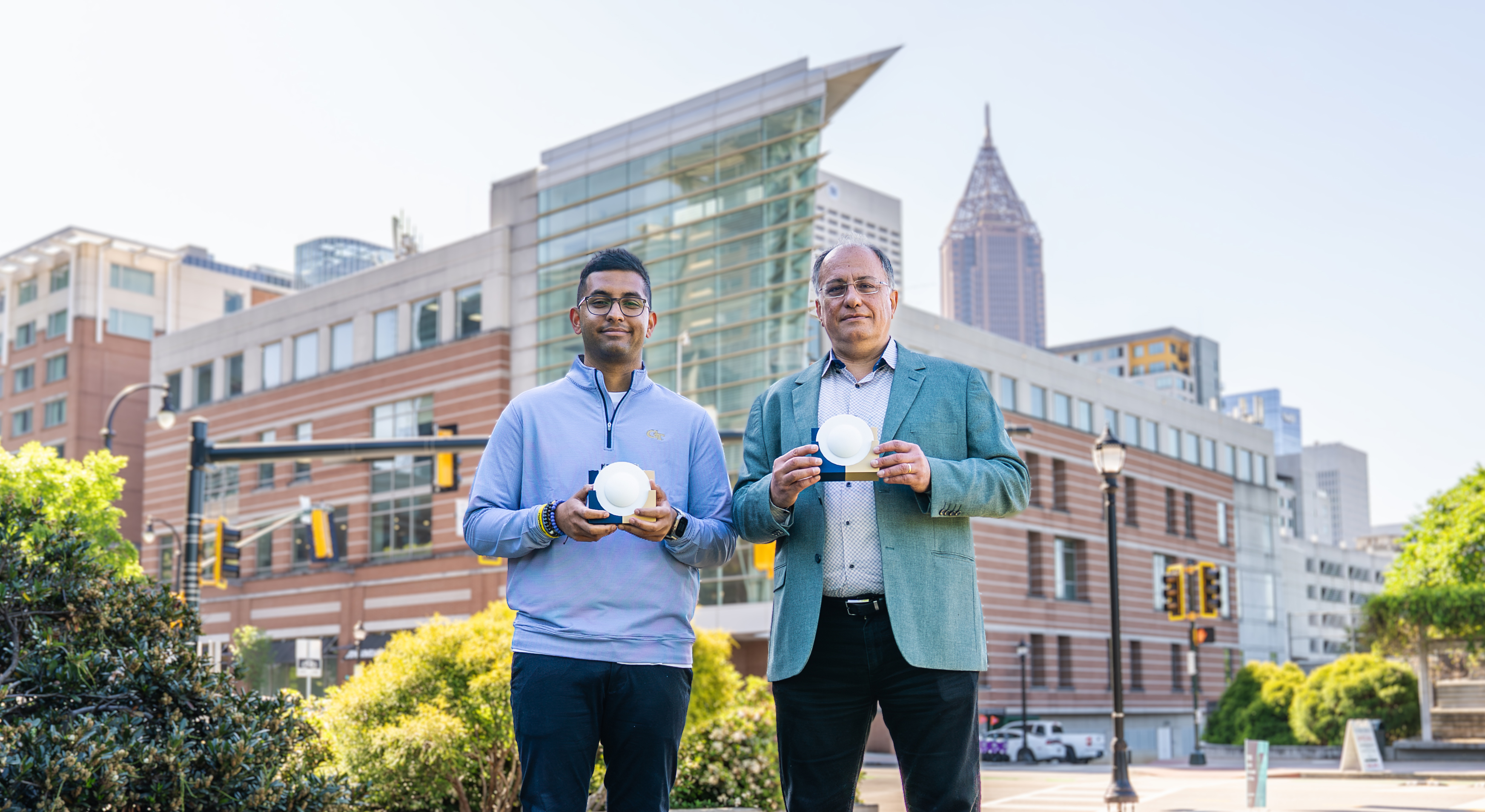
A National Endowment for the Humanities Collaborative Research planning award with the Binational Science Foundation supports this research. School of Electrical and Computer Engineering Professor David Citrin and collaborator Leor Jacobi, senior lecturer in Bar-Ilan University’s Department of Jewish Art, will build partnerships with archives in Catalonia and test the technology on historical materials.
Hidden History
The project grew from Citrin’s nearly 10 years of work using terahertz imaging to examine art and archaeological objects, including paper, glass, and ceramics.
Citrin’s team has already tested whether terahertz imaging can distinguish text buried within layers of paper. Previous experiments distinguished iron-gall-ink characters written on opposite sides of a single sheet and on two stacked sheets without separating them. But medieval pasteboard bindings can contain up to 20 recycled sheets, so the researchers still need to determine how well the technique will perform on thicker stacks and on aged, varied historical materials.
“If we could find new texts inside materials, this opens up all kinds of possibilities,” he said.
Imaging the interior is only part of the challenge. Researchers also need to determine which ink traces belong to which surface or layer of paper. That’s where machine learning can help. The team records terahertz measurements across a sample, producing depth-sensitive data. In recent experiments, a convolutional neural network classified whether ink appeared on the front, back, both sides, or neither side of a sheet. Extending that approach to multilayer historical bindings is one of the next steps.
“It’s those two things together, the measurement and the machine learning, that have made this work,” Citrin said.
The researchers don’t necessarily need to decipher every word buried within a binding to determine if it is valuable for further research. Citrin said identifying Hebrew characters, for example, could help researchers flag promising book covers for closer study. Ultimately, the goal is to develop an approach that could be applied across large collections.
“These bindings are archives within archives,” Jacobi said. “If terahertz imaging lets us identify hidden manuscript fragments without dismantling the binding, we can search collections on a scale that was previously impossible.”
The potential extends beyond these texts. The same approach could also reveal Arabic, Latin, Catalan, and other centuries-old texts preserved in reused materials. Identifying where fragments originated geographically could help historians understand how manuscripts and books traveled, offering insights into mediaeval and early modern intellectual life and trade. Studying the construction of the bindings themselves can also provide useful information for art history and conservation.
For Citrin, that intersection between engineering and history is part of the appeal. He has a longstanding interest in art history and believes projects like this one extend scientific research beyond the laboratory.
“I think it’s important to bridge the gap between the humanities and STEM,” he said. “Humanities questions can push imaging technology toward problems it would not otherwise encounter, while engineering can give scholars access to evidence that has been inaccessible for centuries.”
If the technique ultimately works on historical materials, it could let scholars search for hidden texts without sacrificing the binding relics that preserved them.
News Contact
Tess Malone, Senior Research Writer/Editor
tess.malone@gatech.edu