
Andrei Fedorov and his team have found a way to take some of the guesswork out of mass spectrometry imaging (MSI), potentially giving scientists better tools to explore the molecules that influence our health.
A small sample of human tissue can hold a remarkable amount of information.
Researchers can use it to search for molecular clues associated with cancer, investigate the chemical landscape of the brain, or determine where a drug travels after it enters the body. Mass spectrometry imaging, or MSI, helps answer those questions by mapping where different molecules are located within tissue.
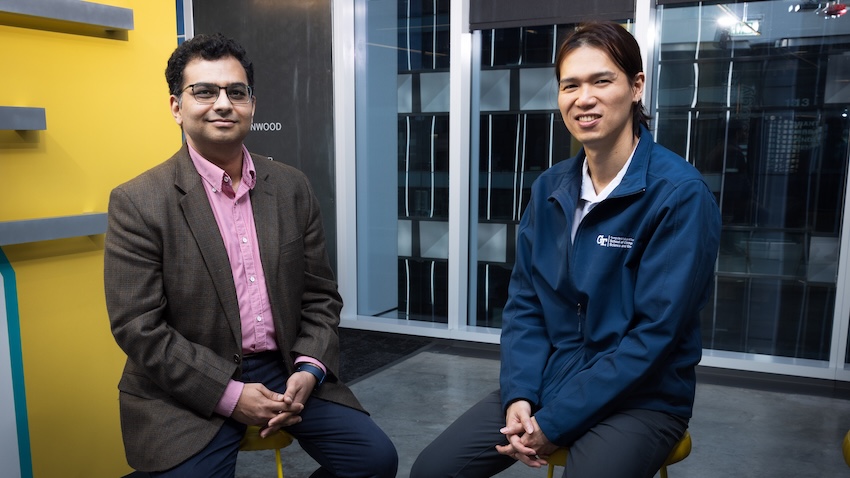
But there's a catch. Despite MSI's sophisticated capabilities, finding the right conditions to get useful results can still require a considerable amount of trial and error. Georgia Tech professor Andrei Fedorov and Ph.D. student John Sentmanat are working to change that.
“Mass spectrometry imaging is probably the most powerful tool to enable new discoveries in cell biology and protein biochemistry. It helps provide a direct insight not only to how the body works but also the underlying cause of disease,” said Fedorov, Associate Chair for Graduate Studies and Rae S. and Frank H. Neely Chair in the George W. Woodruff School of Mechanical Engineering. “But the techniques for using it were evolving in a very empirical manner guided by experience and intuition. It’s like shooting arrows in the dark.”
In response to this barrier, the team has developed what Fedorov likens to a recipe, a framework designed to help researchers understand how different ingredients and conditions work together to produce the molecular information they want. Published in Analytical Chemistry, the approach could make MSI more predictable and give scientists a better starting point for developing new ways to study the molecular workings of the human body.
“This paper provides a very simple recipe that everyone can read and use. You don’t need to be a chef, or in this case, be able to write complicated equations,” Fedorov said. “It even allows you to come up with a new recipe using our model as the base.”
Though the framework was designed to be accessible to researchers across the field, Fedorov and Sentmanat didn’t set out to solve a problem for the scientific community — they were trying to solve one in their own lab.
Gathering Ingredients
In 2020, Fedorov, who is also a faculty member in the Parker H. Petit Institute for Bioengineering and Bioscience, was awarded $1.2 million from the National Institutes of Health (NIH) for the development of a new imaging instrument that could change the study of tumor growth, disease progression, and cell function.
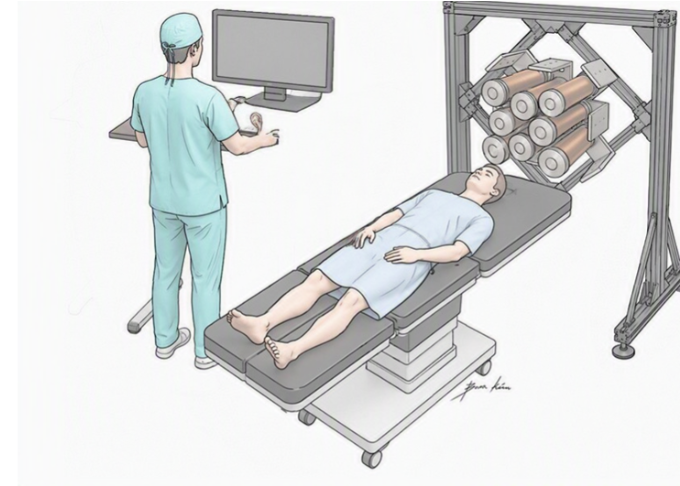
The technology, called BeamMap, has continued to develop with additional support from the National Science Foundation Engineering Research Center for Cell Manufacturing Technologies (CMaT), led in part by Georgia Tech. By bringing together multiple imaging techniques, including MSI, BeamMap allows researchers to study both the physical surface of a biological sample and its molecular makeup.
While developing the instrument, Fedorov and Sentmanat encountered the same challenge that has made MSI difficult to optimize: Under some conditions, they successfully extracted the molecules they wanted to study. Under others, they damaged a sample without getting the information they needed. Rather than continue relying on trial and error, the team decided they needed a theory that could point them toward the right conditions.
“As we continued developing the instrument, we realized we needed to develop a theory to identify the optimal operating conditions,” Sentmanat said. “What began as an effort to fine-tune our own technology led to a broader theory that can be applied to a wide range of other approaches.”
Writing the Recipe
To build the recipe, the team returned to the basic physics that determines when molecules leave a sample and become available for detection. They distilled those complex interactions into a simpler framework, then compared its predictions with experimental data from previously published studies. When the framework held up across different MSI approaches, the researchers realized the recipe could be useful well beyond their own lab.
“It's all measurable data that any scientist in this field would be able to use,” Fedorov said. “It’s like having a magic tool that allows you, all of a sudden, not to be blind.”
Next on the Menu
Fedorov sees the new framework as one step toward making MSI easier to understand and use. By giving researchers a better starting point for choosing how to operate an MSI system, the recipe could help them spend less time searching for the right conditions and more time using the technology to answer biological questions.
That could become increasingly important as medicine moves toward understanding disease and treatment at the molecular level.
“More and more, physicians base their diagnoses on much more specific molecular information,” Fedorov said. “The drugs of the future will not be this little pill that you will be given; they will be your own immune cells. Your diagnostic tools have to match that future.”
For now, the framework is intended primarily as a tool for researchers. But by helping scientists make better use of technologies like MSI, Fedorov hopes the work can contribute to discoveries that ultimately improve how diseases are understood, detected, and treated.
Season to Taste
Like any recipe, the framework leaves room for adjustment. The team deliberately simplified some of the complex physics behind MSI to make the framework practical for other researchers, which means it is designed to point them toward promising conditions rather than predict exactly what will happen in every experiment.
“The theory provides a recipe that researchers can adapt by adding their own flavors,” Sentmanat said. “Rather than prescribing an exact solution, it offers a framework for identifying the right ingredients and refining the conditions to achieve the best results.”
Researchers can adapt that starting point to their own instruments, samples, and questions. What began as an effort to improve BeamMap could ultimately help others refine existing MSI technologies or develop new approaches of their own.
“It’s kind of empowering.”
News Contact
Ashlie Bowman | Communications Manager
Parker H. Petit Institute for Bioengineering and Bioscience