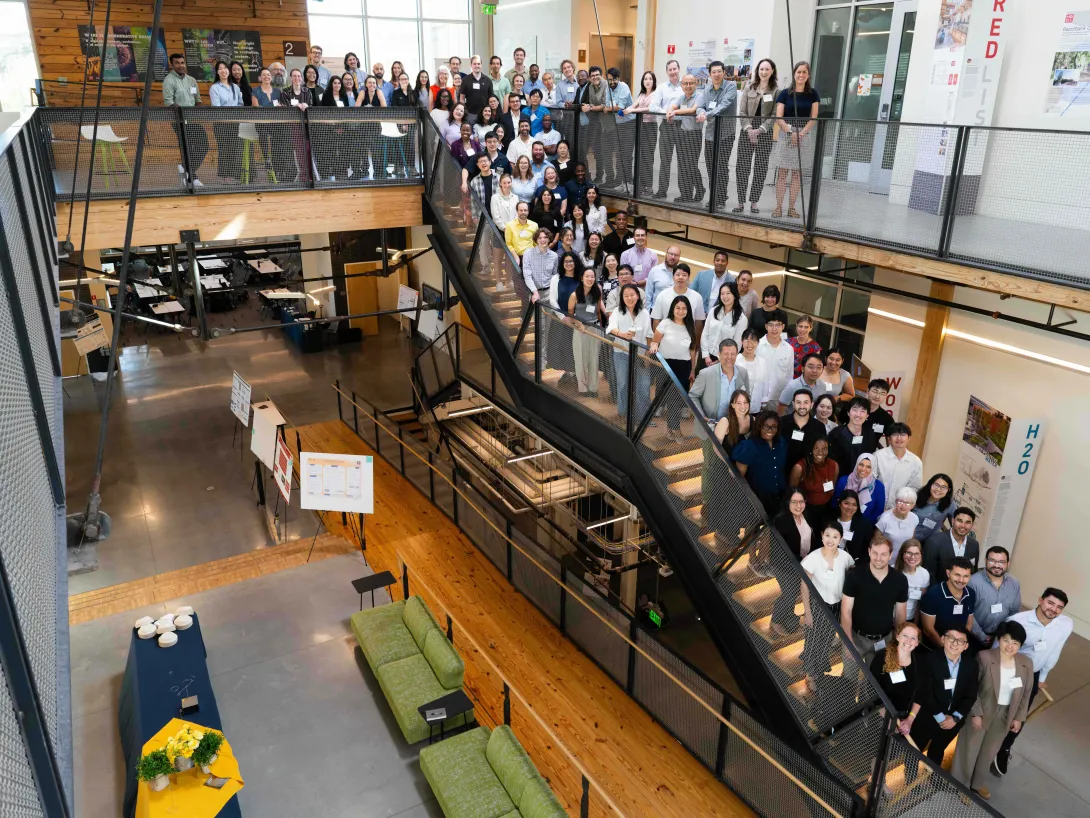
2026 MES Workshop Participants at the Kendeda Building for Innovative Design at Georgia Tech
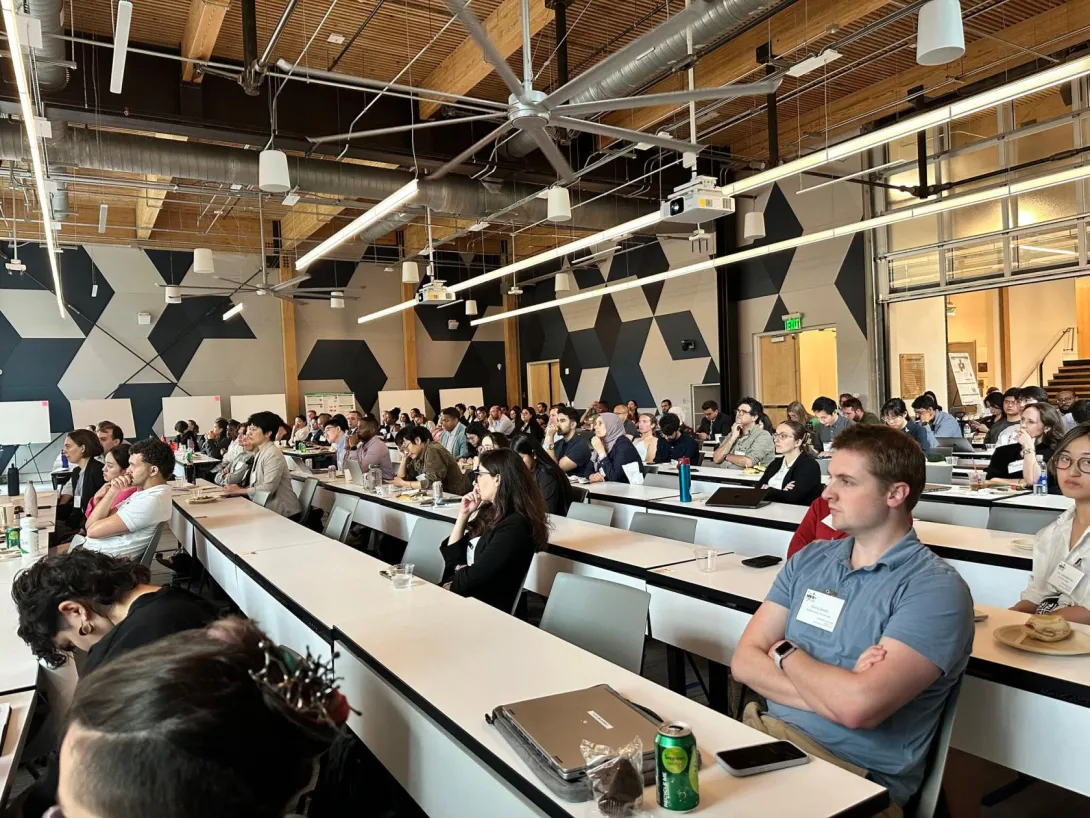
Participants at the 2026 Macro-Energy Systems Workshop held August 11-13 at Georgia Tech
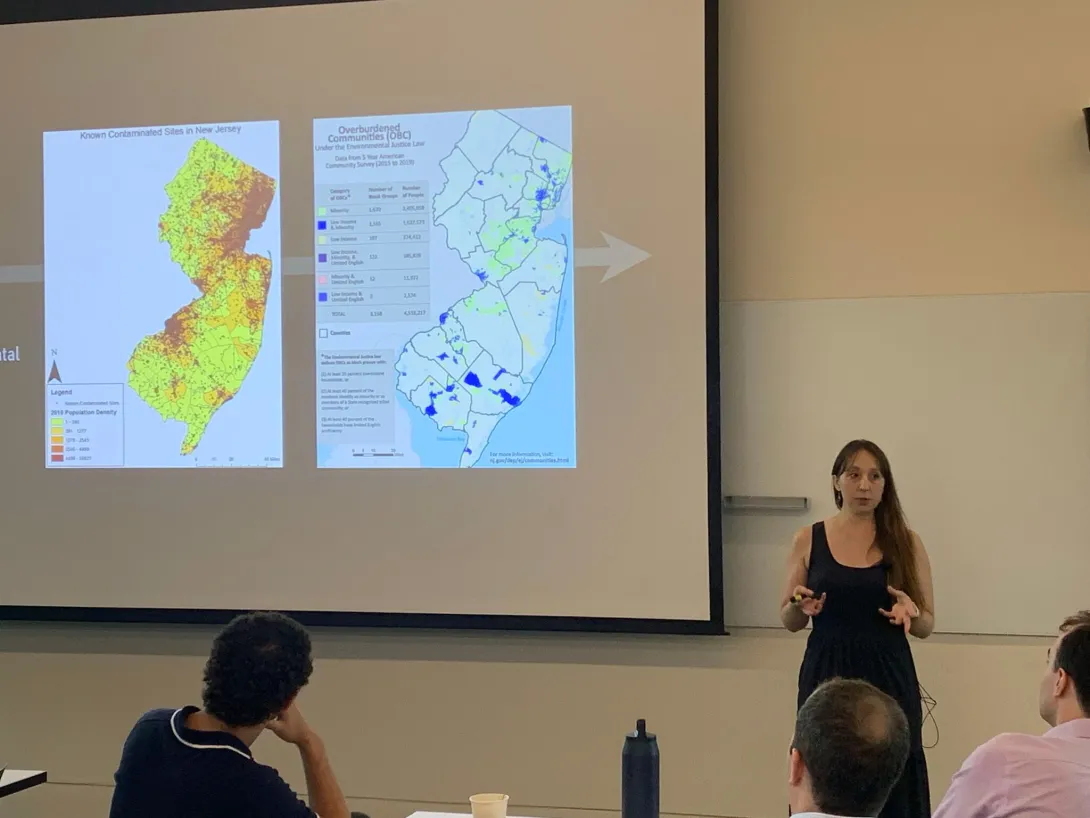
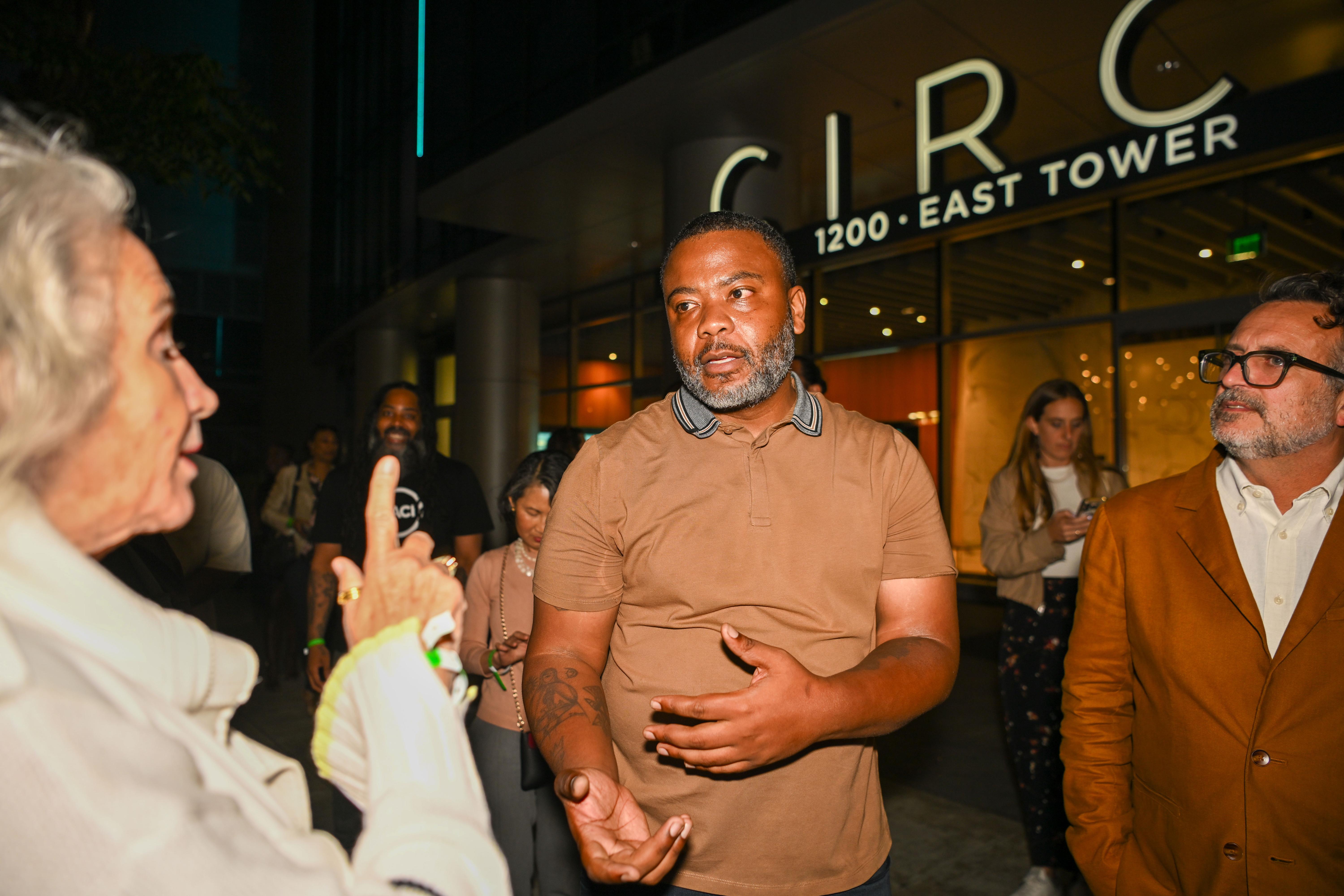
Erin Mayfield, assistant professor at Dartmouth College's Thayer School of Engineering gives a keynote at the 2026 MES Workshop.
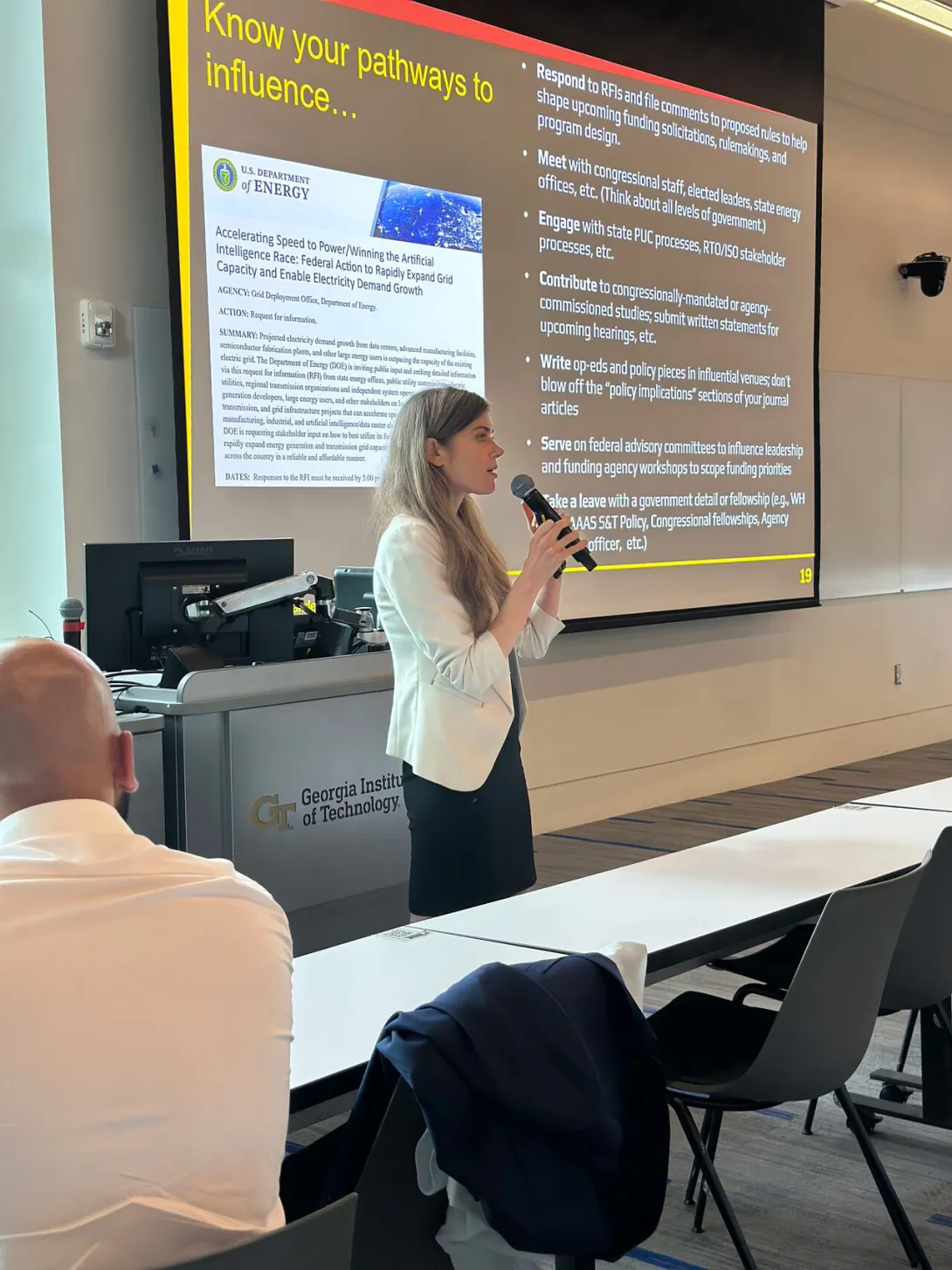
Kelly Sanders, professor of civil and environmental engineering at the University of Southern California gives a keynote at the 2026 MES Workshop
Students, researchers, and energy professionals from across North America and Europe gathered at Georgia Tech Aug. 13 – 14 for the fourth Macro-Energy Systems (MES) Workshop. The biennial MES workshop is led by the Macro Energy Systems Society, which promotes research and education in macro-energy systems and helps translate MES work into policy and practice.
Hosted at the Georgia Tech Kendeda Building for Innovative Sustainable Design, the workshop was organized by a committee of researchers and practitioners from across the macro-energy systems community. The committee was chaired by Micah Ziegler, assistant professor in the School of Chemical and Biomolecular Engineering and the Jimmy and Rosalynn Carter School of Public Policy.
The two-day workshop brought together more than 130 participants and featured lightning talks, poster presentations, interactive learning sessions, and keynote addresses that strengthened connections across the macro-energy systems research community.
“The energy challenges facing society today are increasingly interconnected, and solving them requires a systems-level perspective,” said Christine Conwell, director of planning and operations at the Georgia Tech Strategic Energy Institute. “Supporting events like the MES Workshop, which provides a unique space for academic collaboration and knowledge sharing, aligns with the Strategic Energy Institute’s commitment to advancing research and workforce development that support more resilient and effective energy solutions.”
The workshop received financial support from the Alfred P. Sloan Foundation, which supports research and education in science, technology, engineering, math, and economics. Through its Energy and Environment program, the foundation helps advance interdisciplinary research and collaboration across the macro-energy systems field.
“The Macro-Energy Systems Workshop has become a significant forum for interdisciplinary energy systems researchers to share and discuss their work,” said Evan Michelson, director of the Alfred P. Sloan Foundation’s Energy and Environment program. “We were especially glad to help ensure participation from early-career researchers spanning a wide range of institutions, providing them access to the collaborations and conversations that will help them develop as scientists.”
Graduate students and postdoctoral scholars played a central role in this year's workshop, presenting research on energy system planning, grid reliability, technology deployment, energy transitions, and policy. Their sessions gave the early-career researchers opportunities to share new approaches to studying large-scale energy systems, interact with faculty and industry experts, refine research ideas, and build collaborations beyond their home institutions.
“This year, we significantly expanded the MES Workshop to include more early-career scholars,” said Ziegler. “The workshop provides a great opportunity for young researchers to develop ideas, connections, and a better understanding of how to design research to have a positive impact on the world.”
The workshop also featured keynote presentations from Kelly Sanders, professor of civil and environmental engineering at the University of Southern California, and Erin Mayfield, assistant professor at Dartmouth College's Thayer School of Engineering. Both speakers discussed insights from their experience contributing to policymaking and highlighted opportunities for energy systems research to inform policy decisions.
Interactive sessions led by Michelle Graff, assistant professor in the Georgia Tech Jimmy and Rosalynn Carter School of Public Policy encouraged participants to consider how macro-energy systems research can more effectively inform and support policymakers and other decision-makers. Graff developed and facilitated the sessions, with support from Morgan Edwards, assistant professor of public affairs from the University of Wisconsin-Madison, and Micah Ziegler. The first session explored how researchers can identify policy windows and position their work to inform decision-making at the right time. The second focused on matching research to the appropriate audiences and jurisdictions, highlighting opportunities to inform policy at the state and local levels.
News Contact
Priya Devarajan | SEI Communications Manager