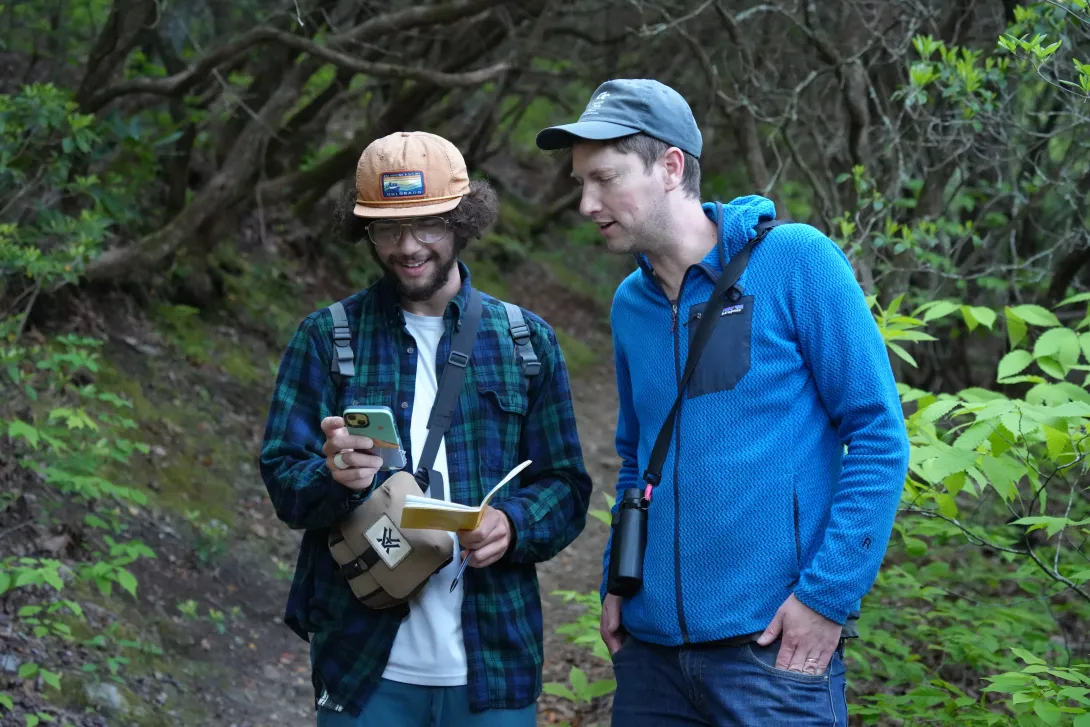
Benjamin Freeman (right) collecting data on native birds with a student on Rabun Bald in North Georgia. (Photo Credit: Jess Hunt-Ralston)
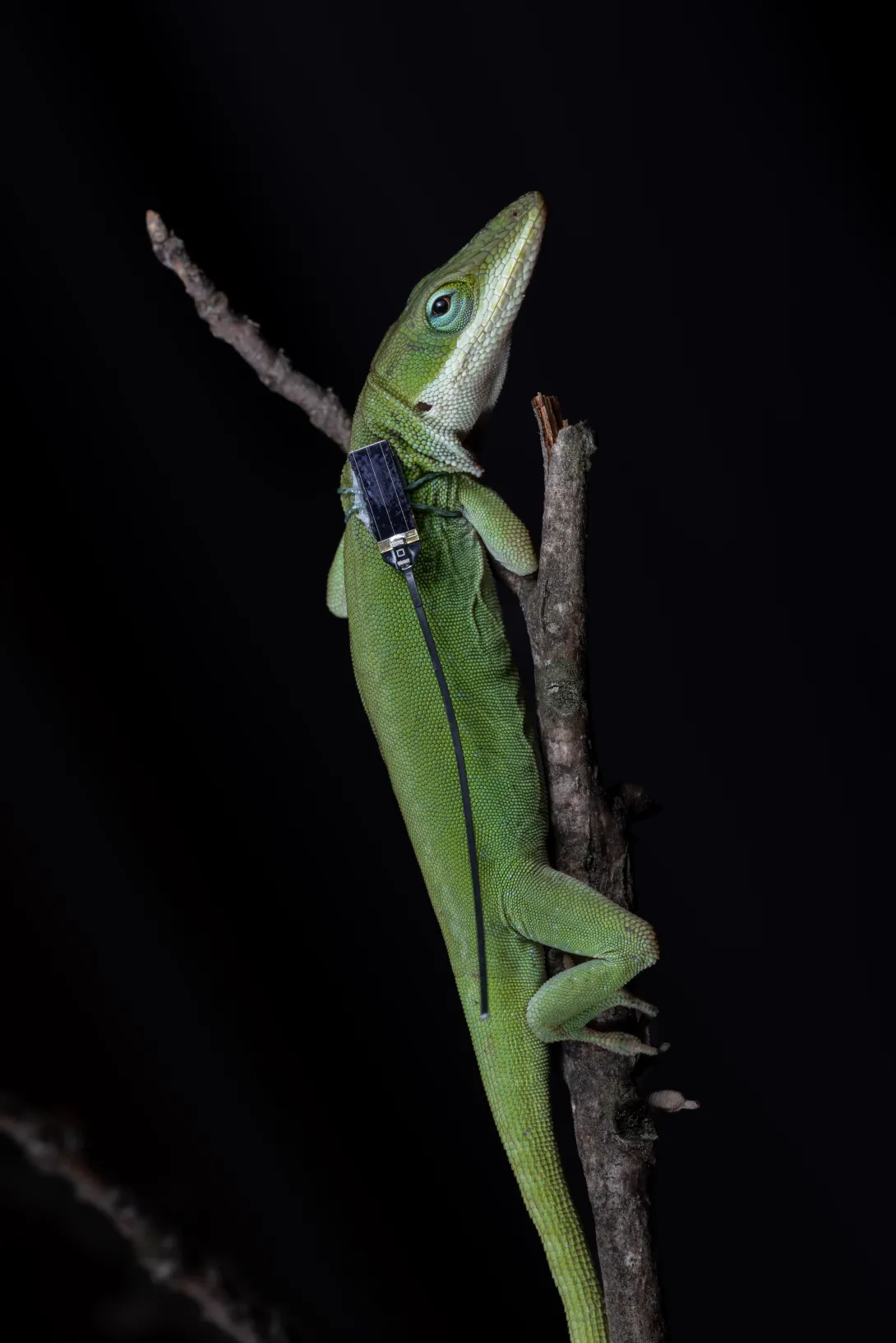
A lizard wearing a tracking sensor which weighs just three-hundredths of a gram — the same as a two grains of rice. (Photo Credit: Jon Suh)
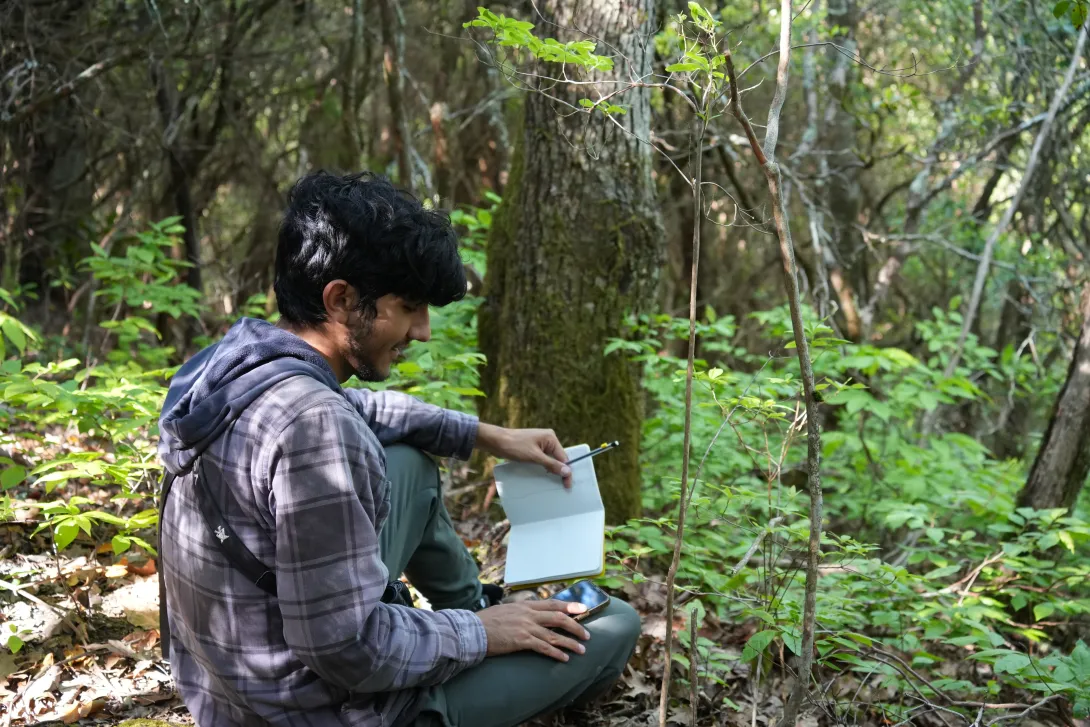
A volunteer collects data on native birds during a fieldwork trip led by Benjamin Freeman. (Photo Credit: Jess Hunt-Ralston)
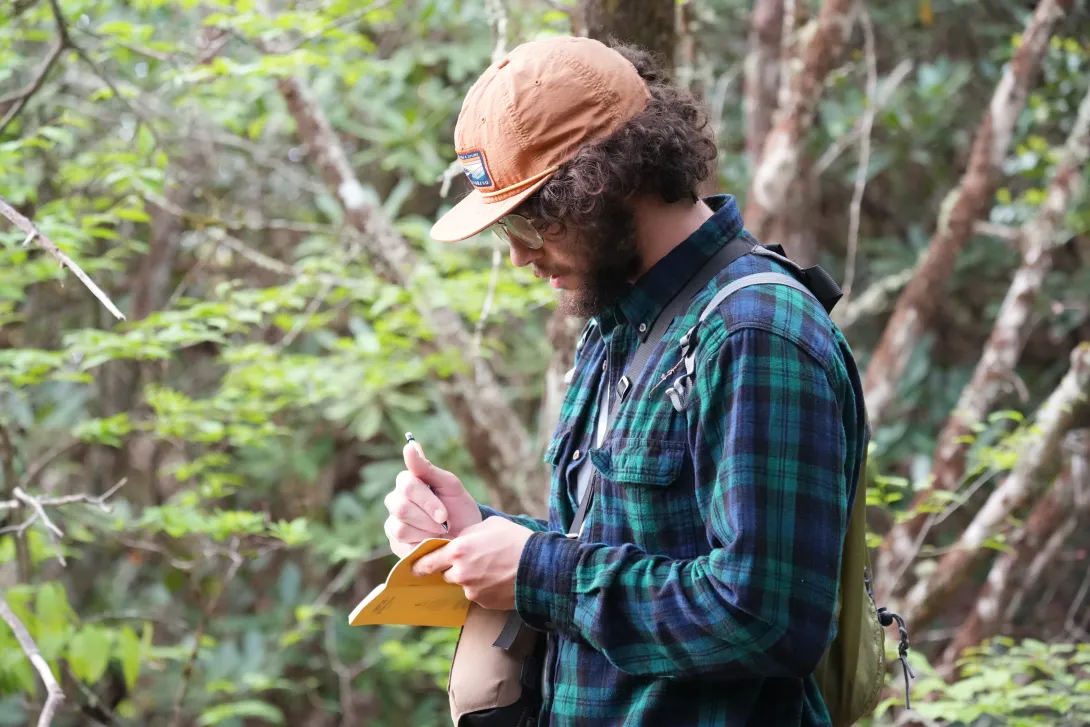
A Georgia Tech student collecting data on native birds during a fieldwork trip led by Benjamin Freeman. (Photo Credit: Jess Hunt-Ralston)
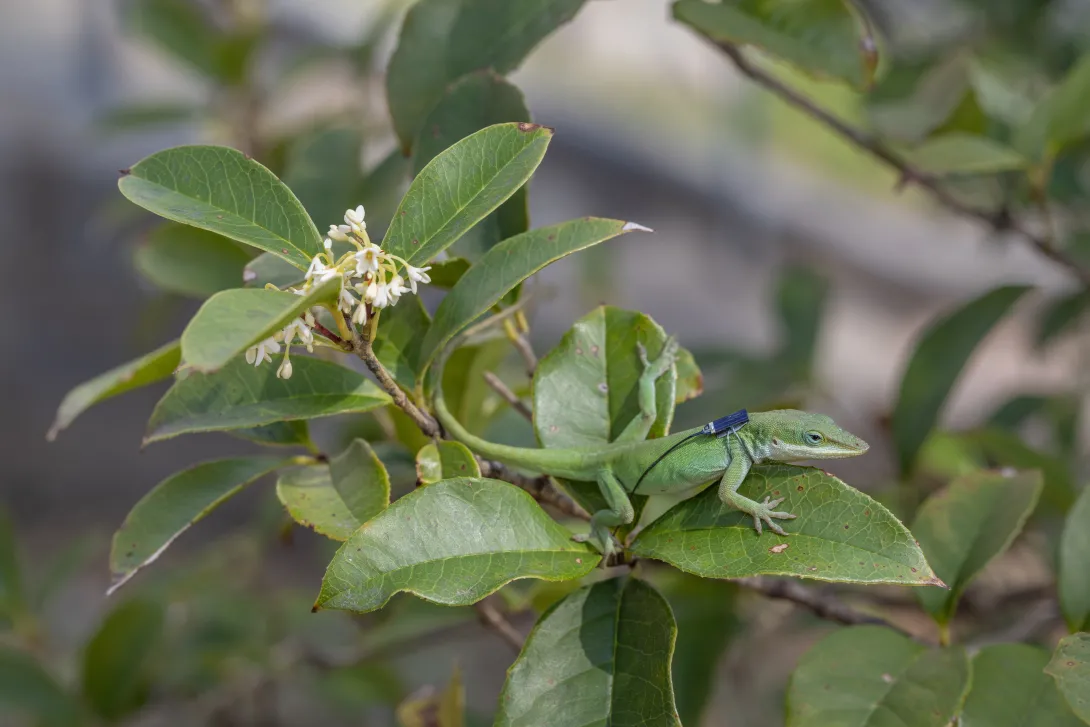
A green anole wearing an ultra-lightweight sensor backpack. (Photo Credit: Jon Suh)
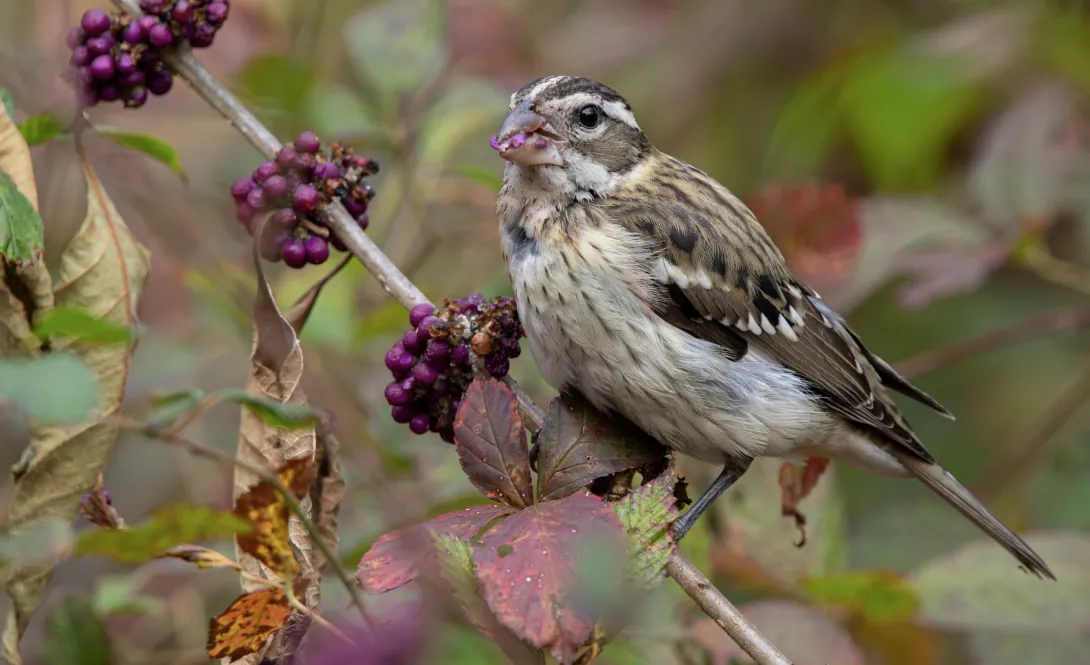
Wildlife abounds on Georgia Tech's campus, including this red-breasted grosbeak. (Photo Credit: Pranav Gokhale)
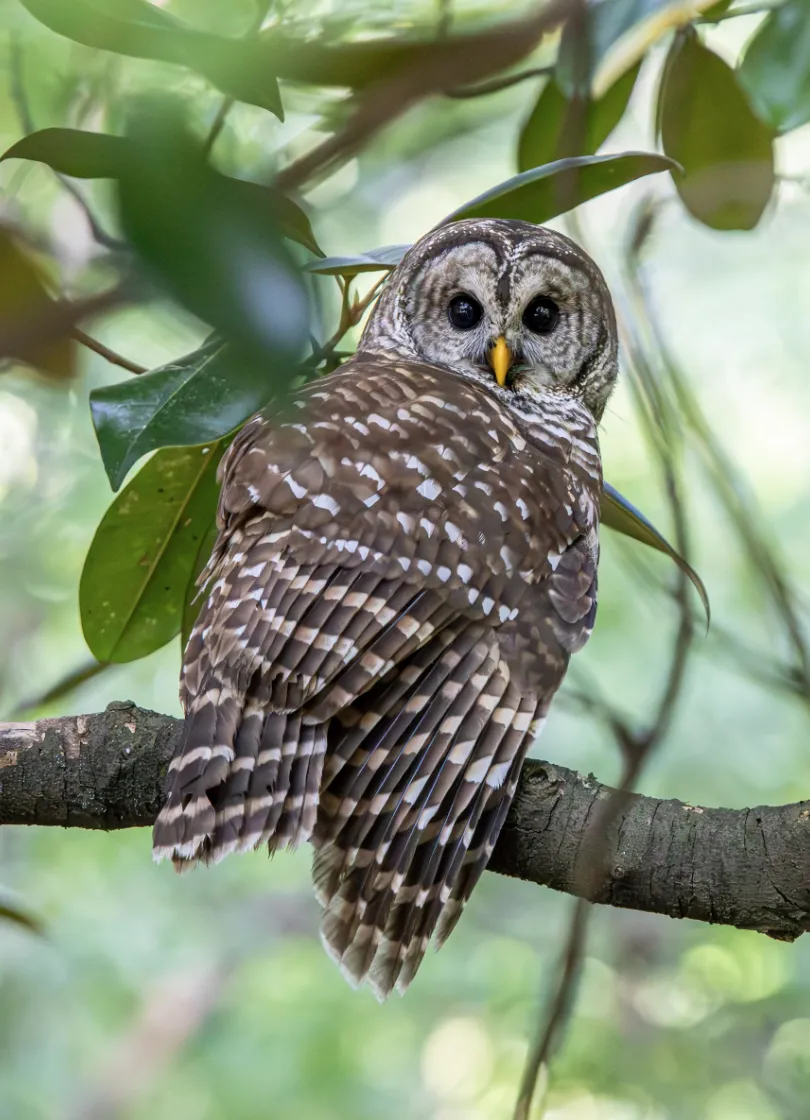
A barred owl on Georgia Tech’s campus. (Photo Credit: Pranav Gokhale)
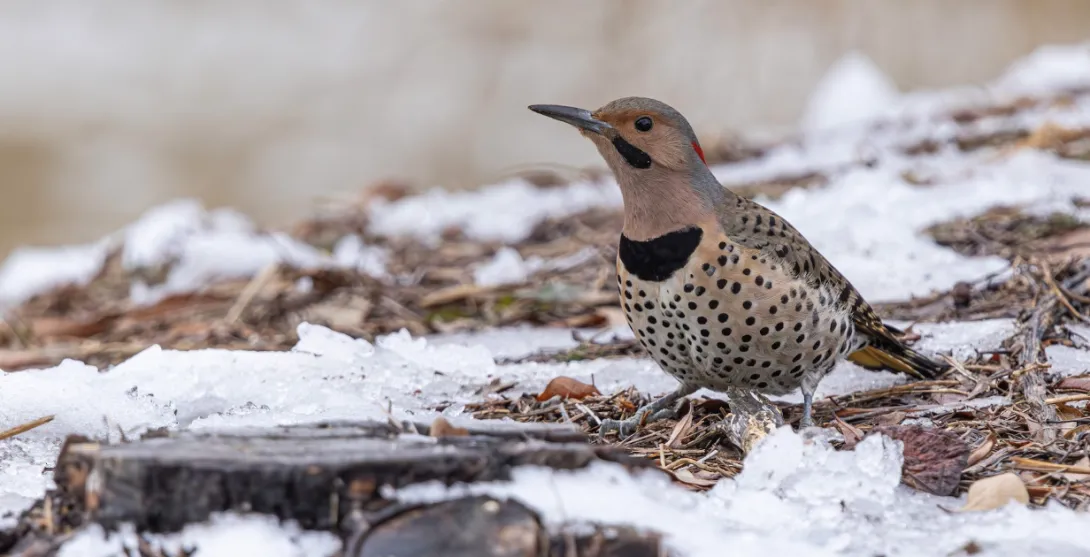
A northern flicker on Georgia Tech’s campus (Photo Credit: Pranav Gokhale)
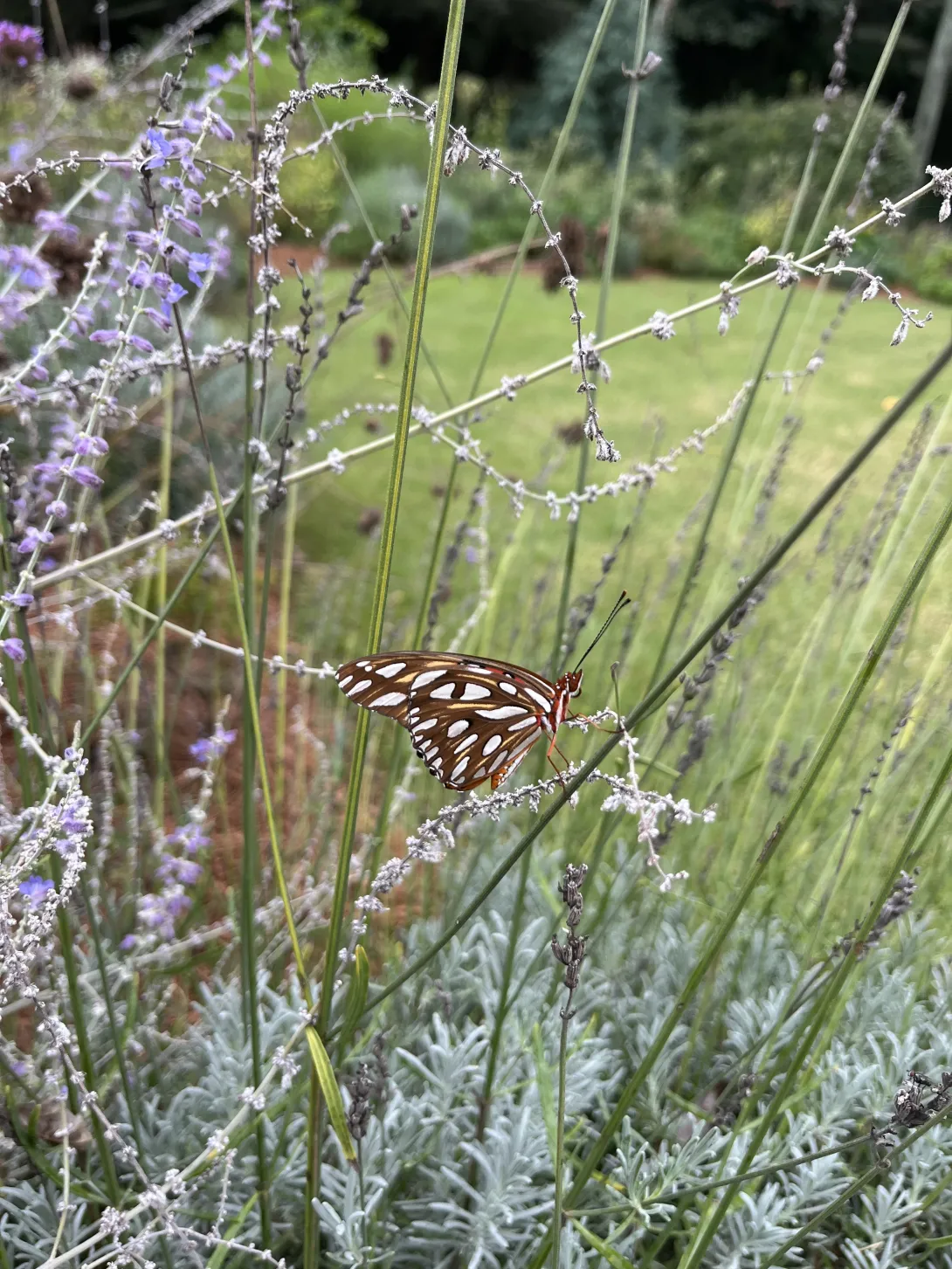
Gulf fritillary butterflies pass through Atlanta on their fall migration, and are one of the species students will track. (Photo Credit: Jess Hunt-Ralston)
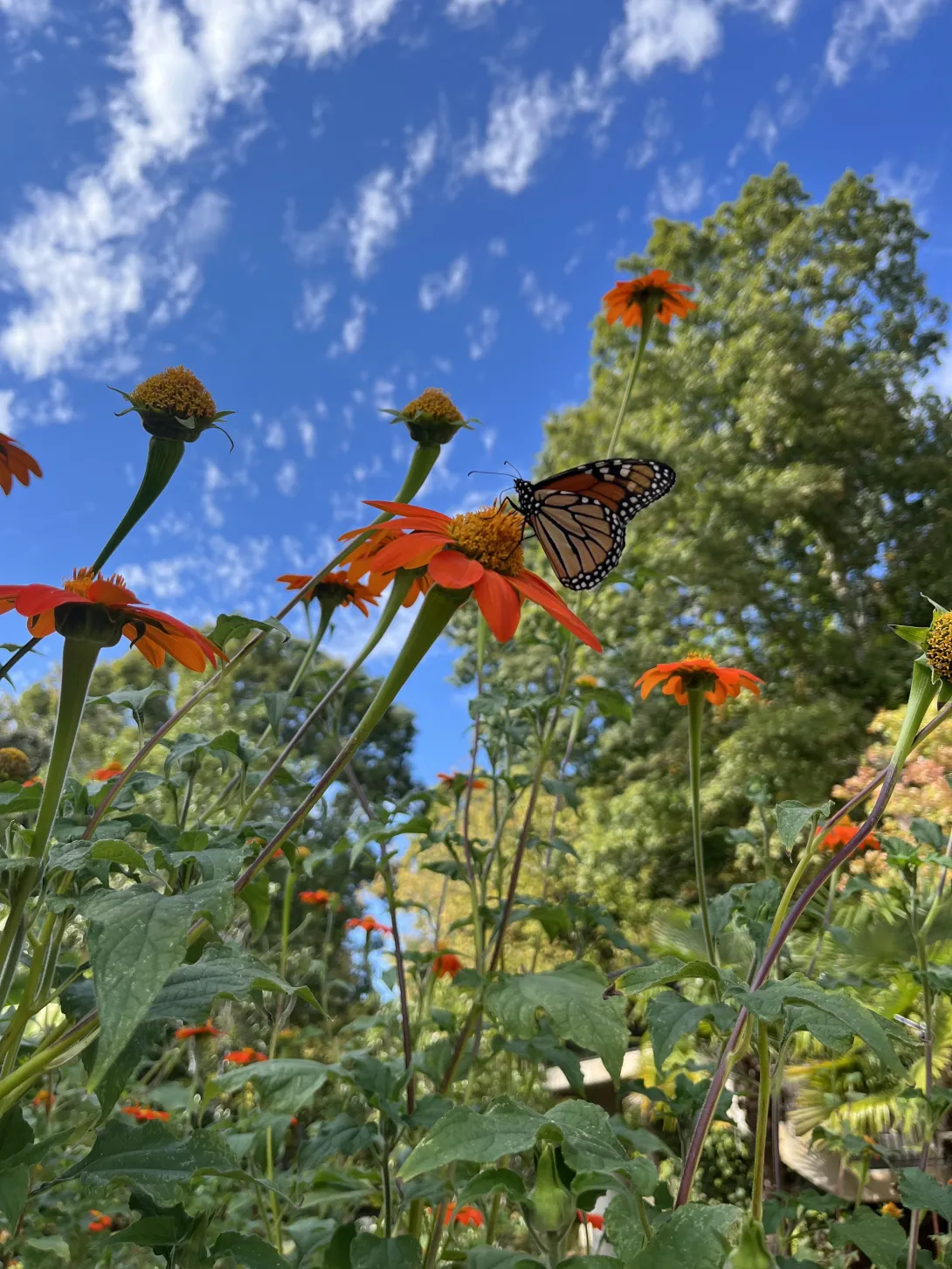
Students will tag monarch butterflies when they migrate through the EcoCommons. (Photo Credit: Jess Hunt-Ralston)
What’s a lizard’s favorite tree? Where do monarch butterflies stop as they migrate through Atlanta? And how can urban areas make room for wildlife?
Soon, Georgia Tech students will be investigating these questions and more. A new initiative from the School of Biological Sciences is transforming Georgia Tech’s campus into a living laboratory for urban biodiversity research, with students at its center.
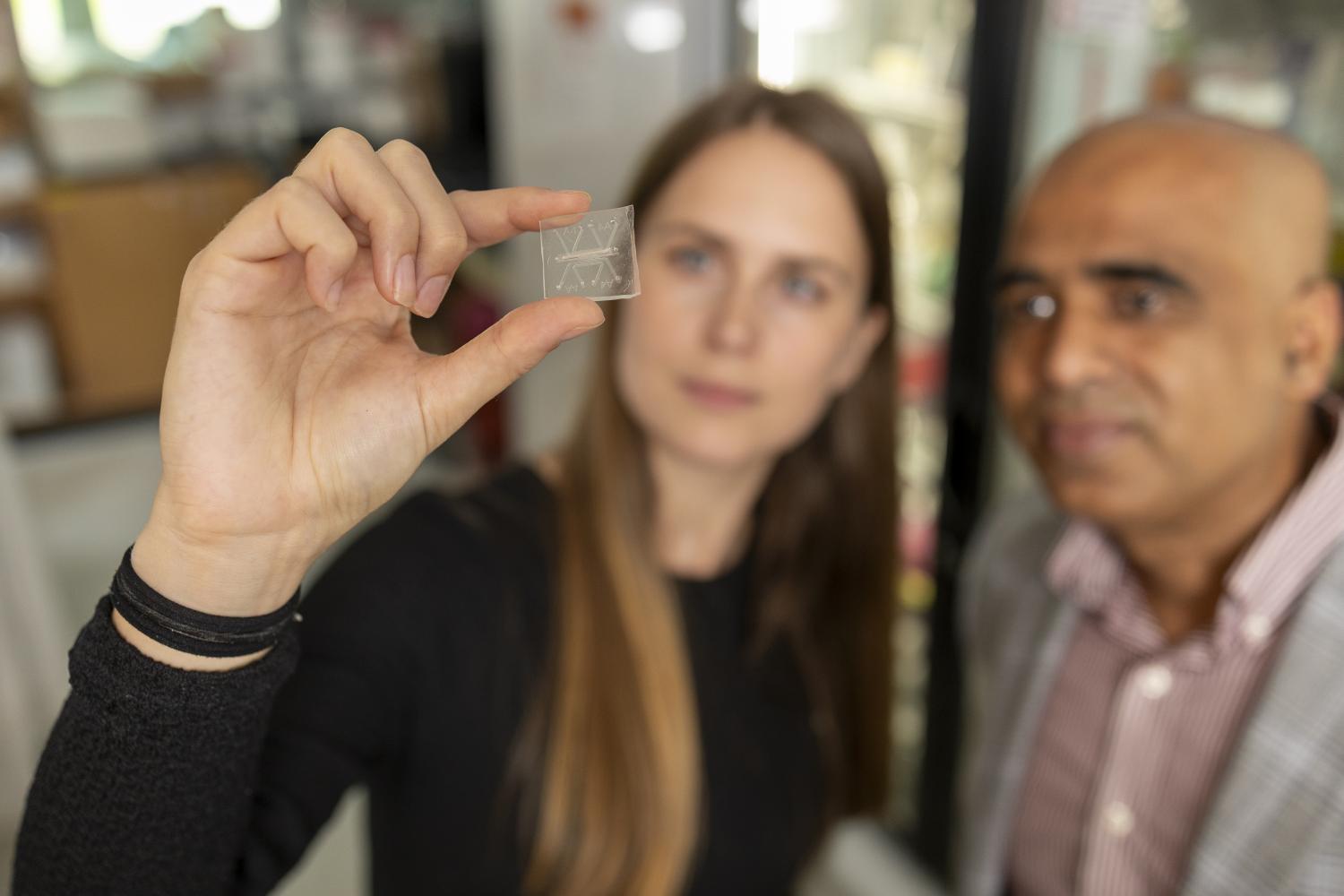
Using tiny Bluetooth-enabled trackers, students will tag and track butterflies, lizards, and birds. They’ll use the same groundbreaking new technology being employed by conservation biologists worldwide, including Benjamin Freeman and James Stroud, who are bringing their experience with large-scale wildlife tracking to the new campus initiative. Both Stroud and Freeman are Elizabeth Smithgall Watts Early Career Assistant Professors in the School of Biological Sciences and co-leads of the new project.
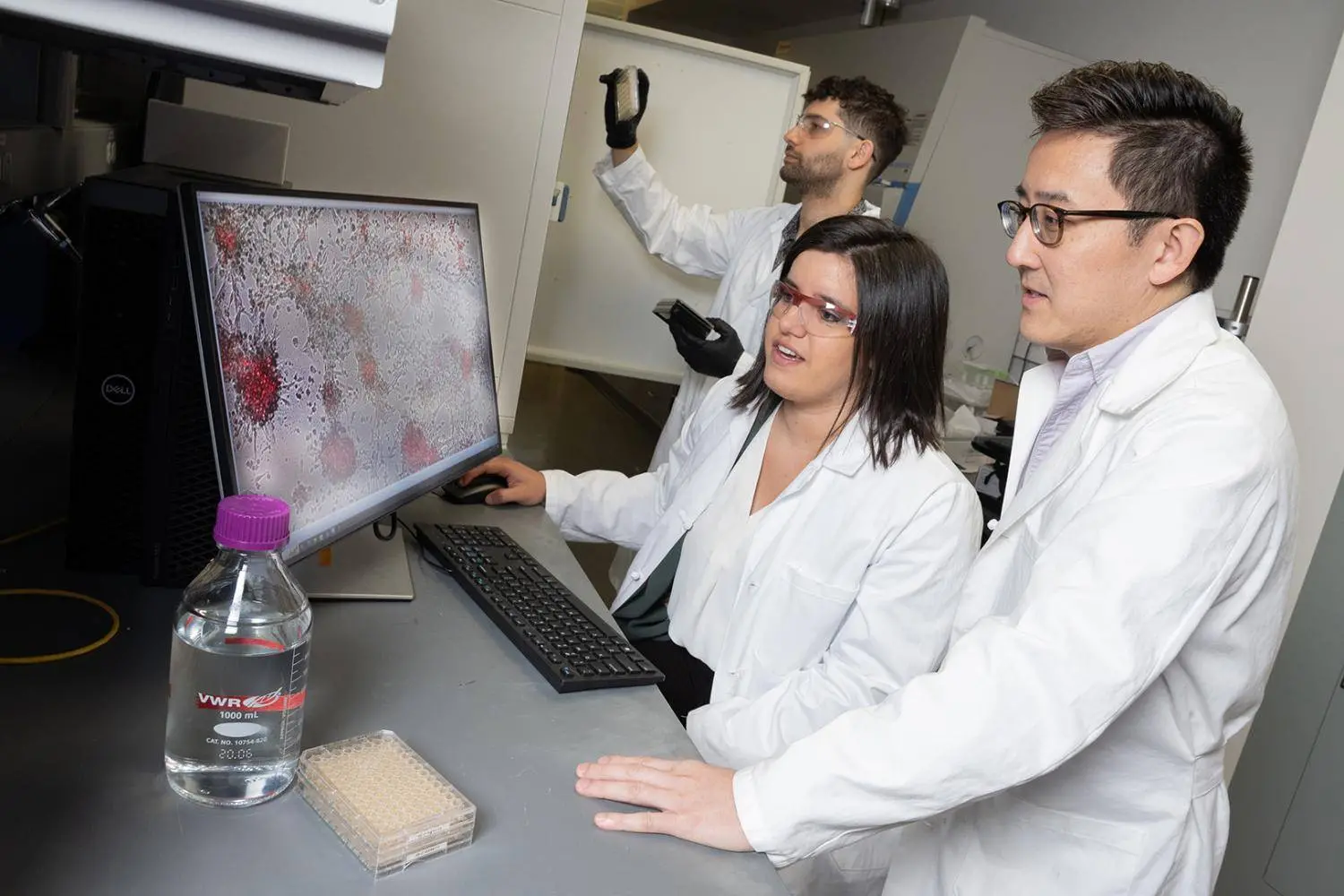
“Recording animal behavior in the wild is one of the final frontiers in ecology and evolution research,” says Stroud. “This new tracking technology will allow students to design and conduct research projects and learn data collection, spatial analysis, statistical modeling, and scientific communication — all while investigating real conservation questions about urban wildlife corridors, migration patterns, and habitat use.”
The program aims to involve more than 800 students each year across multiple programs and degree paths. “The big idea is to connect Georgia Tech undergraduates with cutting-edge science on campus, and to get them involved with all facets of this research,” Freeman says. Beyond ecology and biology, students will learn to engineer sensor technology, build data visualization tools using computer science, and analyze urban planning decisions through a public policy lens.
“Over the next year, undergraduates will begin deploying these tracking systems and conducting preliminary data analysis, but what’s really exciting is how this project can build on itself,” Freeman adds. “In five years, the Georgia Tech community will have built a dynamic campus biodiversity map — one that anyone can access to see hundreds of tagged birds, lizards, and butterflies moving across campus.”
Tracking Wildlife at New Scales
There’s no shortage of animals on Georgia Tech’s campus — the Stroud Lab recently surveyed a population of green anole lizards in the Kendeda Building EcoCommons area, counting about 50 individuals. That presents a unique opportunity to tag and track each individual, he says, allowing students to study behavioral and ecological questions at the population level.
Freeman will help students tag northern mockingbirds, northern cardinals, eastern bluebirds, and eastern towhees, in addition to migratory birds that pass through campus in the spring and fall. “We’ll also tag monarch butterflies and gulf fritillary butterflies as they migrate through the EcoCommons in fall,” he says.
Both Freeman and Stroud have deep experience with the technology. For more than a decade, Stroud has pioneered one of the longest-running evolutionary studies of its kind: catching, documenting, and releasing each of the roughly 1,000 lizards living on “Lizard Island.” In 2025, he was awarded a Packard Fellowship to equip each lizard on the island with tiny sensor backpacks to document their behaviors and movements in real time.
In Ecuador, Freeman is building a similar project with support from a Packard Fellowship — a living laboratory spanning thousands of meters along the flanks of “Tech Mountain,” from lowland rainforest to cloud forest. Leveraging the same technology Georgia Tech students will use on campus, he is tagging and monitoring the daily movements of tropical birds and mapping their movements against microclimate sensors placed on the mountain’s slopes. It’s the first project of its kind.
“One of the most exciting things is how accessible this new technology is,” he says. “When it’s deployed on Georgia Tech’s campus, students will get to play a role in every single stage of the research.”
Connecting Campus and Community
At Georgia Tech, that research will build on the living laboratory already centered in the Kendeda Building EcoCommons, where environmental conditions like wind, temperature, humidity, and soil quality are monitored by a variety of sensors. Students are already monitoring environmental data through the popular Living Building Science Vertically Integrated Program (VIP) course.
Considering climate information alongside animal movement patterns will offer a unique window into how animals respond to changing conditions, Stroud explains. “How do these environmental factors affect animals, and how can we use that information to support wildlife as our campus continues to develop?” he asks. “With this new data, students can lead projects to answer these questions and more.”
Freeman and Stroud also hope that the Kendeda Building’s accessible location will make the research a visible part of campus life, giving community members and visitors the opportunity to encounter the project firsthand.
“This work can have a meaningful impact far beyond the classroom,” Freeman says. “By understanding how wildlife uses the spaces around us, we can better support it in a changing world, all while training and empowering the next generation of scientists and leaders.”
News Contact
Selena Langner
Writer / Editor
Georgia Tech College of Sciences