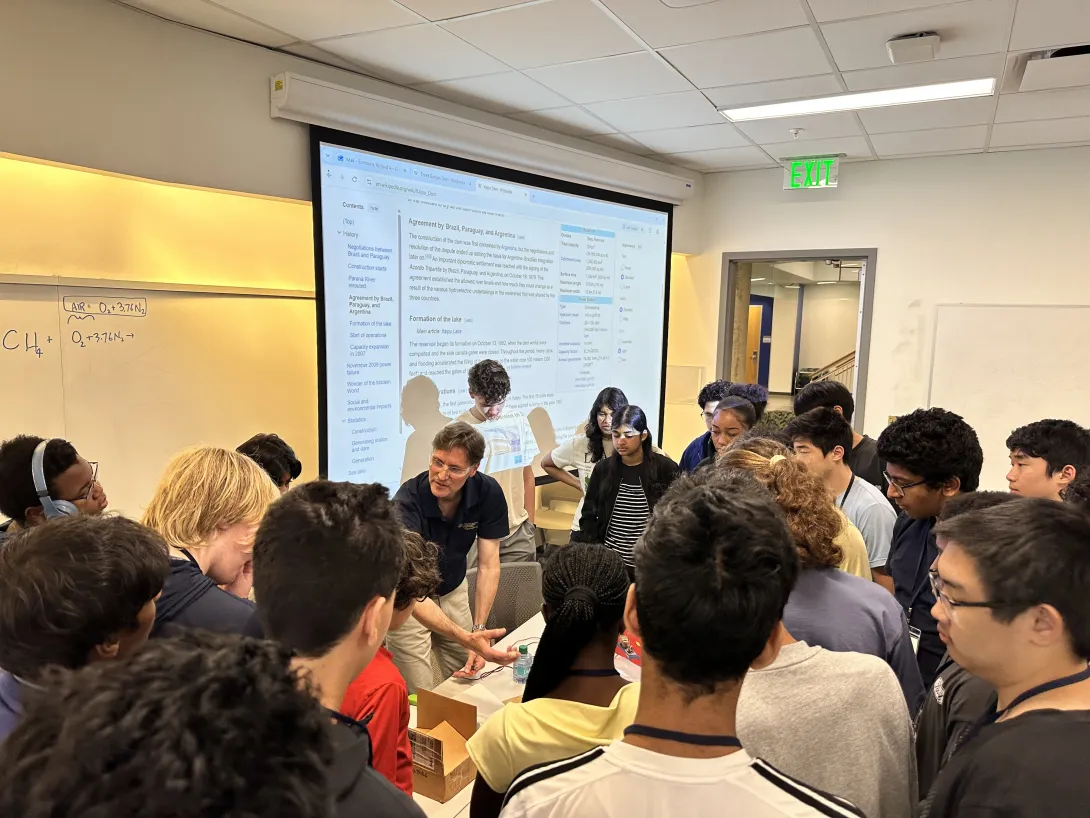
Rich Simmons, SEI's Director of Research and Studies, teaches at the Energy Unplugged camp
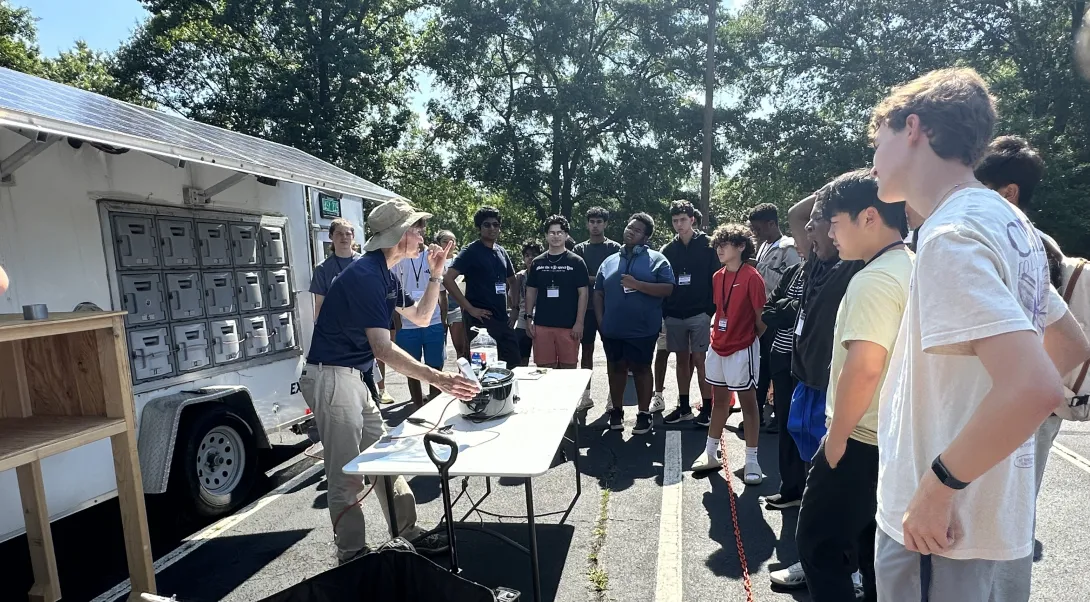
Rich Simmons, teaches energy production and consumption with The Footprint Project's solar trailor
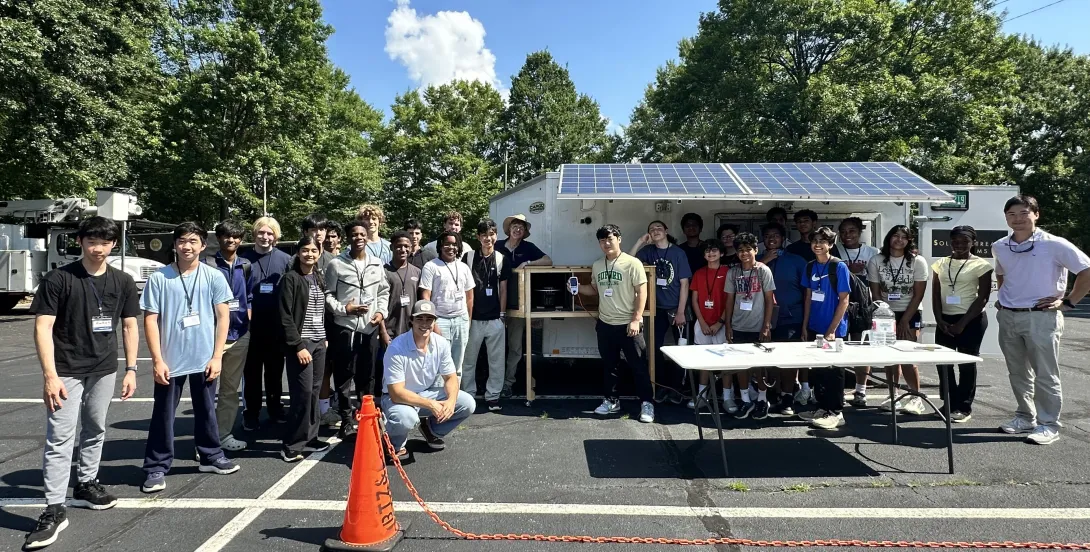
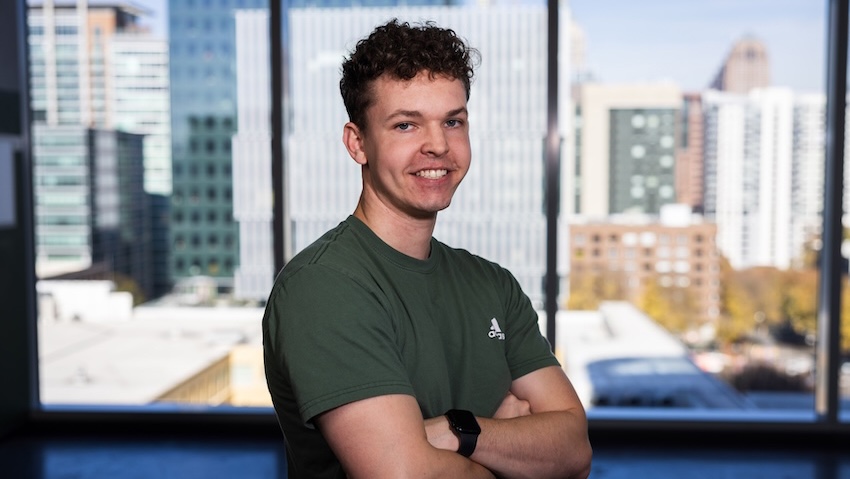
Group picture of the 2026 Energy Unplugged camp participants with Rich Simmons, camp director and student assistants William Nudd and Alvaro Hucker
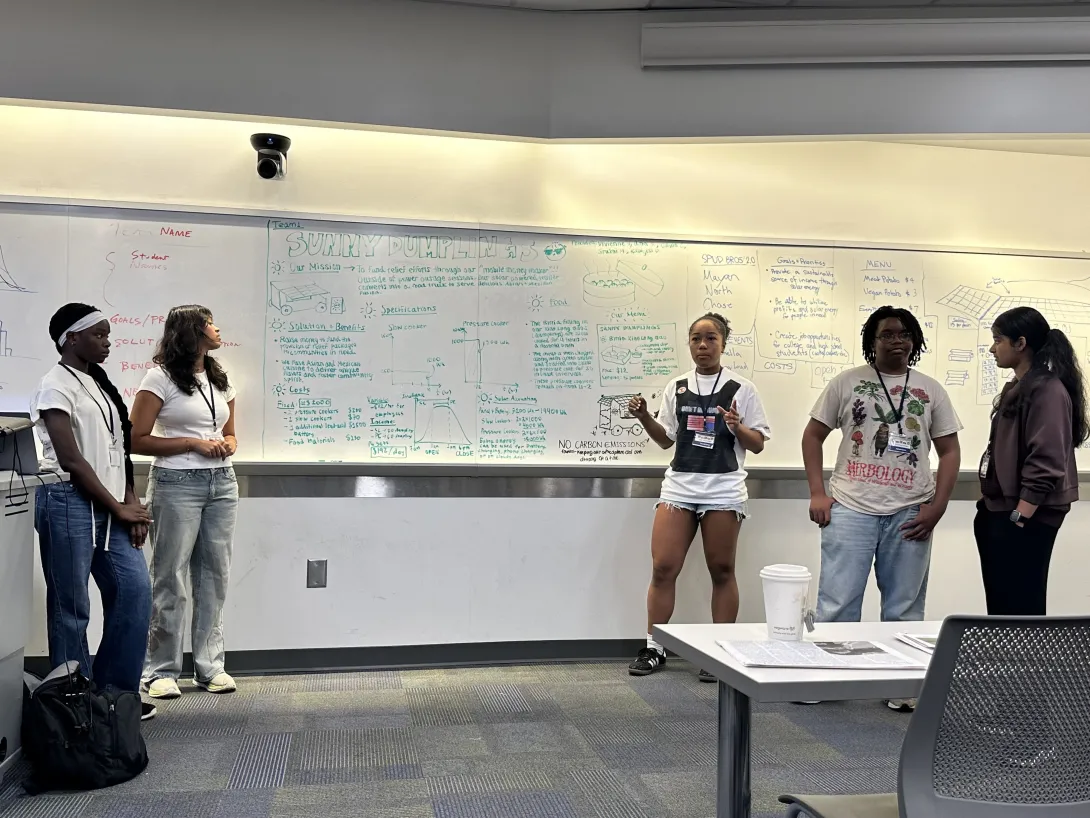
Energy Unplugged camp participants presenting their group project
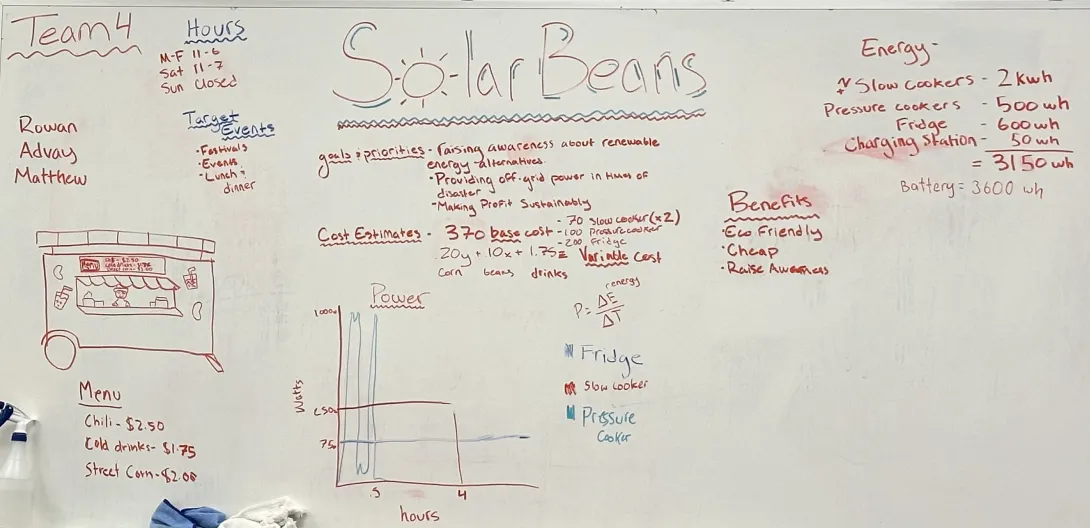
A group project presented at the Energy Unplugged camp
Each summer, Georgia Tech’s campus becomes a destination for eager high school students interested in exploring the future of energy. This year, the highly sought-after Energy Unplugged camp, a collaboration between the Strategic Energy Institute (SEI), the Energy Policy and Innovation Center, and CEISMC, attracted students from across the country, including California and Texas, for an immersive, hands-on experience in real-world energy systems.
Blending engineering challenges, field experiences, and team-based design projects, the weeklong program in June gave students a dynamic introduction to energy, sustainability, and engineering innovation and a rare opportunity to engage directly with the technologies, infrastructure, people, and ideas that help power the world.
“Our goal is to get outside of the classroom, have fun, and demonstrate how a STEM education can literally help turn on lightbulbs,” said SEI’s director of Research and Studies, Rich Simmons, who also directs Energy Unplugged. “Through hands-on learning, field trips, and real-world experiences, these creative students are learning that everyone can play a role in our energy future. Along the way, they are gaining a deeper understanding of the tradeoffs and challenges engineers face and learning from experts about pathways to an energy career.”
Mousetrap-Powered Cars
Putting those ideas into practice from day one, the camp began with an engineering challenge in which students designed and constructed mousetrap-powered cars. Using the stored potential energy of a mousetrap spring to propel their vehicles, participants explored how energy is converted from one form to another and identified sources of friction and inefficiency that affect the distance traveled. The activity encouraged students to think like engineers, iteratively testing and refining their designs to improve results.
Engineering Optimization and Tradeoffs
Similar problem-solving skills were put to the test during an RC car optimization challenge. Equipped with a battery-powered vehicle and energy-monitoring systems, students were tasked with completing a driving course while maximizing their score by balancing speed, energy consumption, safety, and cargo capacity. Participants had the option to add weights and tennis balls to increase potential points, but doing so increased the risk of penalties from dropped cargo, missed obstacles, or vehicle rollovers. The exercise highlighted the tradeoffs engineers routinely face when optimizing systems under competing constraints.
“The overall interest in green energy among youth is increasing, so having demonstrations and experiments as well as some high-level lectures on the actual science was a great way to engage the students,” said student assistant William Nudd, a senior in mechanical engineering who assisted with the camp. “When I was in their shoes, I had never attended a physics class, so the camp was definitely getting them a step ahead and did a great job introducing and showcasing key concepts related to energy: How does my home get electricity? Where does energy come from? How do power plants operate?”
Trivia, Demos, and Scavenger Hunts
Additional activities throughout the week included energy-themed trivia competitions, a steam engine demonstration, a solar microgrid exercise, and a campus scavenger hunt. Together, they reinforced classroom concepts through interactive learning and encouraged students to connect technical principles with practical applications.
Field Trips to Power Plants
While these activities taught foundational concepts, a highlight of the camp was a series of field trips that allowed students to observe large-scale energy infrastructure in operation. Participants toured the Georgia Power McDonough-Atkinson Plant, where they learned how combined-cycle power plants generate electricity using both gas and steam turbines to improve efficiency. Students also visited the Morgan Falls hydroelectric facility, getting an up-close view of the massive generators and equipment used to convert the energy of flowing water into electricity.
Campus Tours
In addition to exploring regional energy infrastructure, students were introduced to Georgia Tech’s innovation ecosystem through visits to campus makerspaces and research facilities, including the Flowers Invention Studio and The Kendeda Building for Innovative Sustainable Design. Students explored one of the nation’s most advanced examples of sustainable building design during a guided tour of The Kendeda Building, which generates 200% of the energy it consumes. Here they learned how energy efficiency, renewable generation, and resource conservation can be integrated into the built environment.
Final Projects
To bring together the concepts explored throughout the week, students worked in teams on a final design challenge centered around a solar-powered disaster relief trailer on loan from the Footprint Project. Equipped with photovoltaic panels and battery storage, the trailer was originally designed to provide off-grid power during emergencies. Students were challenged to identify additional uses for the system during periods when disaster response was not required. Many teams proposed sustainable food truck businesses powered by the trailer’s solar energy system.
Teams also evaluated cooking technologies such as pressure cookers and slow cookers, comparing energy consumption, power requirements, efficiency, and operating costs. Students examined how energy demand aligned with available solar generation and battery storage while conducting economic analyses to determine business viability and profitability. The project integrated engineering, economics, and sustainability principles while encouraging creative thinking and collaborative problem-solving.
“Energy Unplugged is an inspiring demonstration of how hands-on engineering experiences can spark curiosity and passion in the next generation of STEM leaders,” said student assistant Alvaro Hucker, a senior mechanical engineering student. “Working with this group and seeing the fun they were having brought back fond memories of my own childhood. It was an amazing experience.”
Student Contributors: Alvaro Hucker, Senior, Mechanical Engineering and William Nudd, Senior, Mechanical Engineering.
News Contact
Priya Devarajan | SEI Communicatios Program Manager
Student Contributors: Alvaro Hucker, Senior, Mechanical Engineering and William Nudd, Senior, Mechanical Engineering.