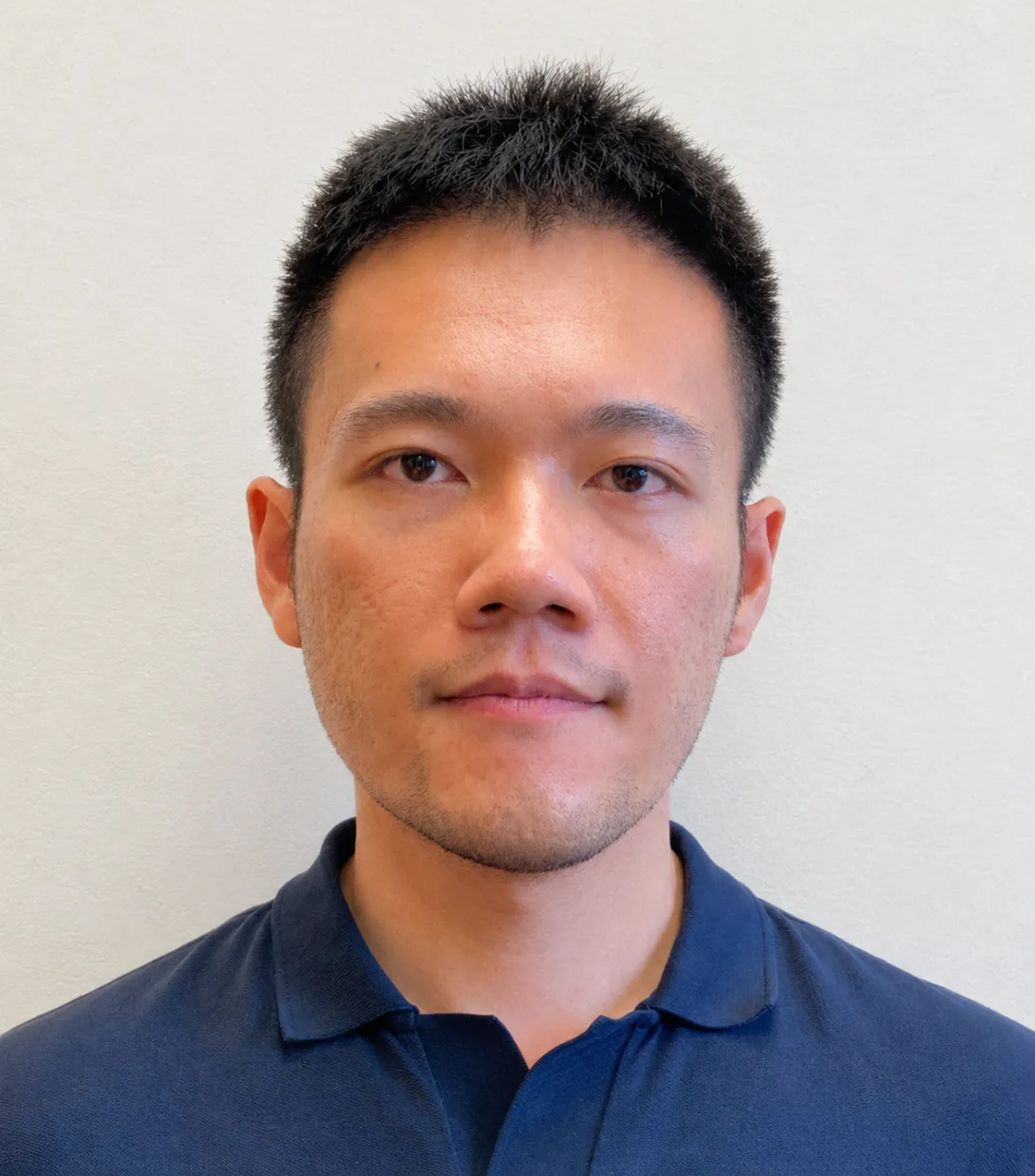
Wei Zhu, assistant professor in the School of Mathematics, has been awarded a five-year, $500,000 CAREER Award from the National Science Foundation (NSF). The CAREER Award, NSF’s most prestigious honor for early-career faculty, helps promising researchers establish a foundation for a lifetime of leadership in their fields. Zhu’s award will support research and education initiatives focused on artificial intelligence (AI).
“I am very honored and excited to receive the NSF CAREER Award,” says Zhu. “This award will support research by my fantastic team of students and post-doctoral researchers and give me the opportunity to carry out education and outreach programs that expand our impact.”
Advancing AI Applications
Since joining Georgia Tech in 2024, Zhu’s research has focused on the mathematical foundations of machine learning and their applications in science and engineering.
With support from the CAREER Award, Zhu and his team will explore the two-way relationship between data and structure in machine learning. They aim to understand how known structures in scientific and engineering problems (e.g., symmetries or physical constraints) can help machine learning models learn more accurately and efficiently from limited data. They will also study how machine learning can uncover hidden structures directly from data, revealing patterns or principles that may not be known in advance.
The project focuses on settings where large amounts of high-quality data are difficult or expensive to obtain, as is often the case in science and engineering. Using mathematical analysis, Zhu and his team will examine how much data is required to accurately learn a model, how structural information can reduce this data requirement, and how much data is needed to reliably identify a model’s underlying structure.
According to Zhu, this approach could reduce the amount of data and time needed to build and test accurate models, leading to more reliable, interpretable, and efficient AI for scientific discovery.
“Such advances align with national AI priorities and help strengthen the mathematical foundations needed for future scientific and engineering applications of AI,” he says.
Expanding AI Literacy
Zhu believes it is important to help students understand AI, noting that they must learn how to interpret and evaluate its outputs rather than accept them uncritically.
“AI has increasingly become incorporated into many fields of study,” he says. “Institutions must determine how to best integrate it into education while also teaching students how it works. The AI education and outreach components of my project aim to help prepare students for careers at the intersection of mathematics, computing, and science.”
Zhu’s CAREER Award will support educational initiatives at multiple levels, including new graduate and undergraduate courses on machine learning. It will also support a machine learning boot camp for high school students, organized by the School of Mathematics in collaboration with Emory University’s Department of Mathematics. The boot camp seeks to introduce students to foundational ideas in AI and machine learning, with an emphasis on the mathematical principles needed to understand and responsibly use these tools.
News Contact
Writer: Lindsay C. Vidal