May. 29, 2026
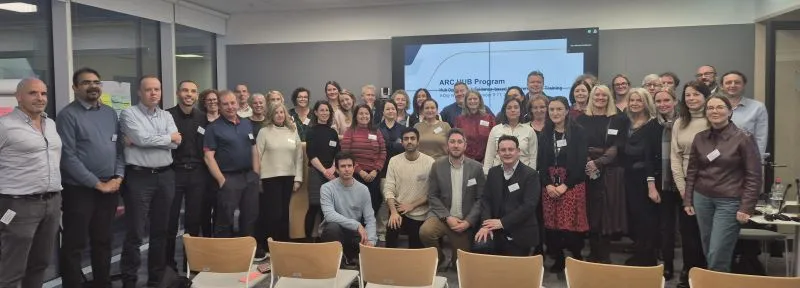
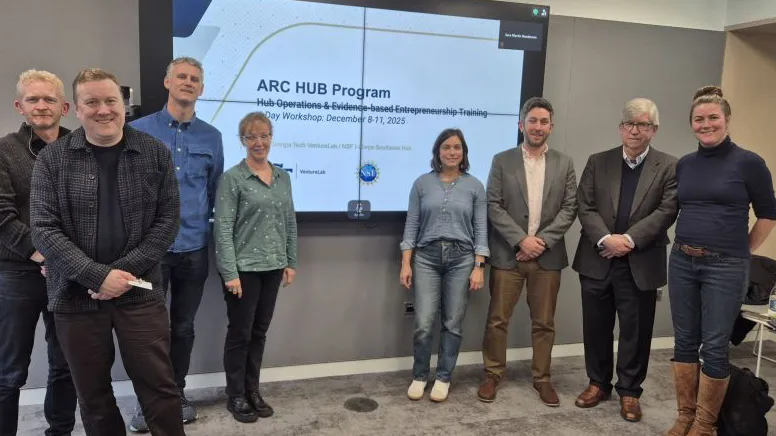
Participants from Research Ireland's ARC Hub program joined VentureLab leaders Keith McGregor, Melissa Heffner, and Sara Martin Henderson for a multiday evidence-based entrepreneurship training designed to strengthen research commercialization capabilities across Ireland.
Through a global collaboration with Research Ireland, VentureLab is helping to shape how institutions around the world approach research commercialization and innovation.
Turning research into real-world impact depends on strong ideas and on the systems and people that guide those ideas forward. As universities invest more heavily in commercialization, many face a common challenge: how to equip teams with the tools and expertise to support innovation from the ground up.
At Georgia Tech, VentureLab is working to address that gap.
“At the core of this work is helping researchers and the teams that support them make better, evidence-based decisions about how ideas move from the lab into the real world,” said Keith McGregor, director of VentureLab.
Building Global Partnerships
Through a recent collaboration with Research Ireland, VentureLab shared its approach to evidence-based entrepreneurship with leaders behind Ireland’s ARC Hub program, an initiative designed to accelerate research into real-world applications across areas including therapeutics, information and communications technology, and health tech.
“The goal is to support cutting-edge research that has the potential to be commercialized and help that happen at an accelerated pace,” said Alice Vajda, scientific program manager at Research Ireland.
A Train-the-Trainer Approach
Rather than working directly with researchers, VentureLab led a multiday training for ARC Hub leadership and operations teams. The training focused on a “train-the-trainer” model, providing participants with the frameworks and tools to guide research teams through the commercialization process.
“This collaboration is about more than a single training; it’s about equipping teams with the tools and mindset to support researchers over time,” said Melissa Heffner, associate director at VentureLab, who helped lead the training alongside Sara Martin Henderson, principal at VentureLab and lead regional instructor for the NSF I-Corps Southeast Hub.
The sessions emphasized practical application, including coaching strategies and real-world scenarios designed to help teams more effectively manage and support research projects with commercial potential.
“It was very practical and hands-on, focused on how to coach researchers and apply these approaches in a real-world setting,” Vajda said.
For Theo Little, development support manager with the ARC Hub for ICT at Technological University Dublin, the training reinforced a more structured and evidence-based approach to supporting research teams. “The VentureLab team shared their journey, including the mistakes, and allowed us to learn from them,” he said.
While not every approach could be applied directly across different program structures, the underlying principles have still influenced how teams approach their work. “Testing assumptions and engaging with stakeholders early has been really important. It’s better to learn quickly what works and what doesn’t,” Little said.
Shifting How Teams Think About Innovation
While the collaboration is still in its early stages, Research Ireland leaders say the training has already influenced them.
“It really informed how our teams think about best practices and how they support research as it moves toward commercialization,” said Aisling McEvoy, head of enterprise partnerships at Research Ireland. “It was a very valuable and thought-provoking experience.”
Looking Ahead
The collaboration reflects a broader shift in how innovation ecosystems are built. Increasingly, institutions are focusing not only on developing founders but also on strengthening the systems that support them.
For VentureLab, the partnership highlights the growing global influence of Georgia Tech’s commercialization ecosystem and reinforces VentureLab’s role as a leader in evidence-based entrepreneurship and innovation training.