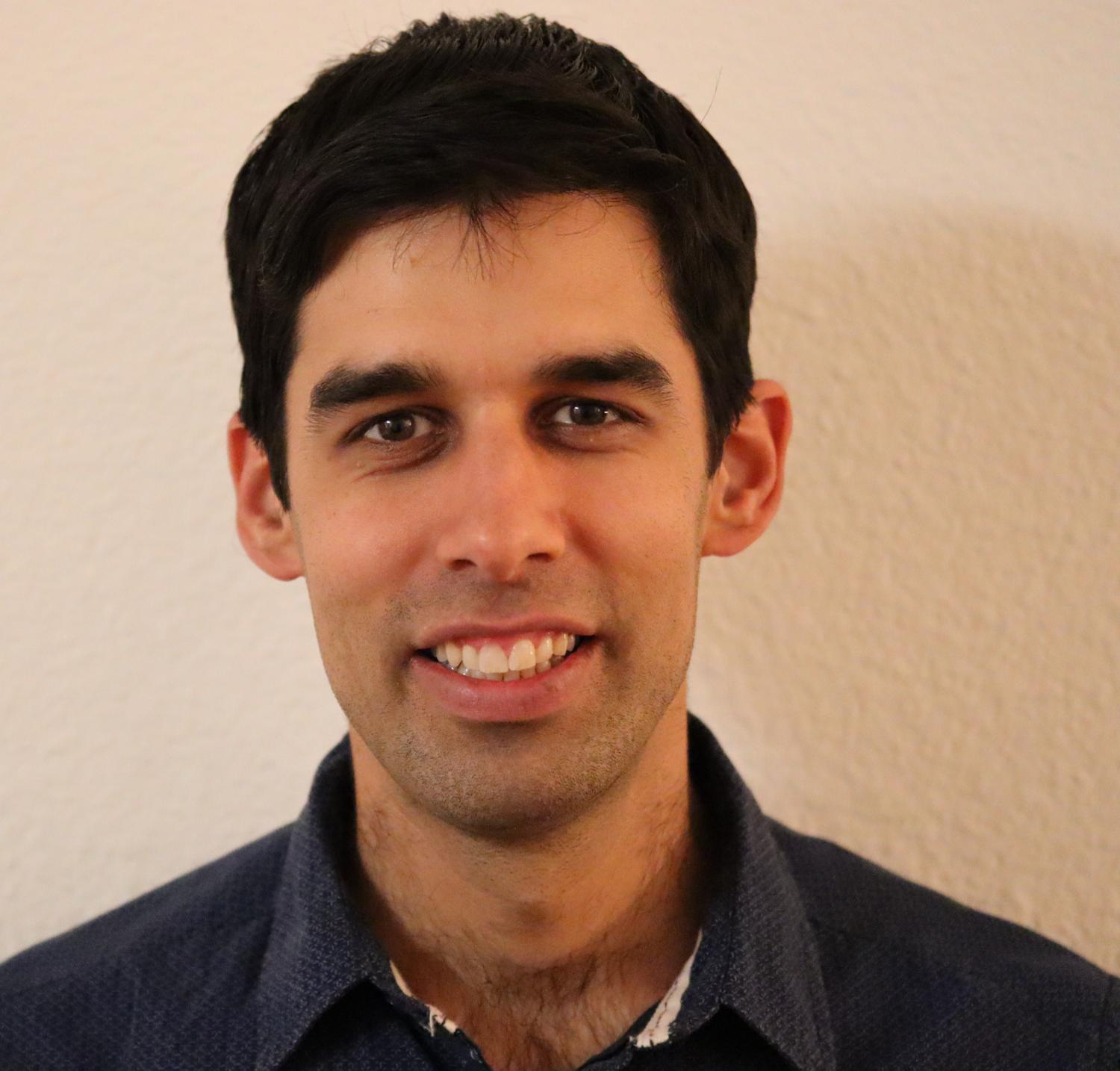
Vicki Wysocki
This research is shared jointly with the Ohio State University newsroom.
Scientists have captured the most detailed structural images to date of a specific type of protein’s DNA repair process. The research could reveal ways to inhibit the effects of the BRCA1 and BRCA2 gene mutations that heighten the risk for breast, ovarian, and other cancers.
“This work lets us see, step by step, one mechanism by which cancer cells could manage to repair their DNA when BRCA genes mutate and fail,” says study co-author Vicki Wysocki, who is chair of the Georgia Tech School of Chemistry and Biochemistry. “By capturing this process in detail, this study opens the door to understanding how those cancerous cells survive and how treatments might disrupt that mechanism.”
Designated as a Breakthrough Article, the study Mechanism of single-strand annealing from native mass spectrometry and cryo-EM structures of RAD52 homolog Mgm101 was recently published in Nucleic Acids Research.
In addition to Wysocki, who is a professor in the School of Chemistry and Biochemistry and a professor emerita at Ohio State University, the Georgia Tech research team included co-first author Zihao Qi, a Ph.D. candidate in the Wysocki Lab.
They were joined by Ohio State researchers co-first author Carter Wheat and senior author Charles Bell, who is a professor of biological chemistry and pharmacology in the College of Medicine. Additional authors include Metro High School student Miqdad Hussain and CAS researcher Katerina Zakharova.
When BRCA Fails
Normally, BRCA genes help prevent cancer by acting as tumor suppressors — producing proteins that help repair broken DNA. When cancer cells lack the tumor-suppression function of normal BRCA genes, research has shown that a protein called RAD52 performs DNA repair.
Since RAD52 allows cancer cells to survive and replicate without tumor suppression, researchers have wondered if blocking it would kill the cancerous cells. Blocking RAD52, however, requires fully understanding its repair activities, which have been difficult to capture with even the most sophisticated techniques.
DNA strands break every day in cells, which is why proteins exist to fix the breaks and keep cellular processes running smoothly, the team says. But because repairs must happen quickly and human proteins are often more complex than their ancestral counterparts, even the most advanced imaging equipment can’t capture every step in the process.
In order to understand RAD52 better, the research team turned to its ancestral protein, Mgm101, to observe several key steps in its DNA repair process.
A Clearer Image
The team decided to leverage multiple types of imaging. Wysocki’s lab at Georgia Tech conducted native mass spectrometry and mass photometry, using light to measure masses of protein-DNA complexes. The results showed that the ancestral protein Mgm101 assembled from a single copy of itself into a large multi-unit ring composed of 19 copies of the protein.
“This ring is essentially a template,” Wysocki explains. “The first strand of DNA can come down, and then the second strand comes on and starts being annealed to the first strand.” Annealing occurs when two single strands of DNA come together to form the characteristic double helix structure.
The findings were supported by what Bell’s lab determined using cryogenic electron microscopy, observing structures floating in solution and frozen in a thin layer of ice.
“RAD52 high-resolution structures have been determined with single-stranded DNA, but not with the two DNAs that it’s trying to anneal,” Bell says. “Its job is to bind single-stranded DNA and anneal it to its complement sequence. It’s been captured structurally, but only in a few states relevant to the reaction.”
“Here, we have more of the states along the full pathway from substrate, to intermediate and product. And the duplex intermediate is a conformation that’s never been seen before.”
Previously, researchers were unsure if this DNA repair process used one protein ring or two rings working together, the team says. Their findings show that just one ring is used — and that this is likely consistent across different species.
Paths to Treatment
Next, the team plans to try capturing the same phases of the DNA repair process with RAD52 from humans. A clearer understanding of how this family of proteins binds to DNA strands and coaxes them back together after a break provides insights for drug targets that could halt the process in cancer cells empowered by mutated BRCA genes, they say.
“It’s still a proposed mechanism: Just because we see these snapshots of the process doesn’t mean we know all the details, but we do have the best snapshots for any protein that does this single-strand annealing,” says Bell. “This focuses our strategies for drug development.”
DOI: https://doi.org/10.1093/nar/gkag320
Funding: This work was supported by the U.S. National Science Foundation and the National Institutes of Health. The cryo-EM data were collected at Ohio State’s Center for Electron Microscopy and Analysis and processed using the Ohio Supercomputer Center.