
As doctors increasingly rely on computational approaches to examine and treat patients, Georgia Tech is building its expertise at the intersection of healthcare, computer vision, and artificial intelligence (AI).
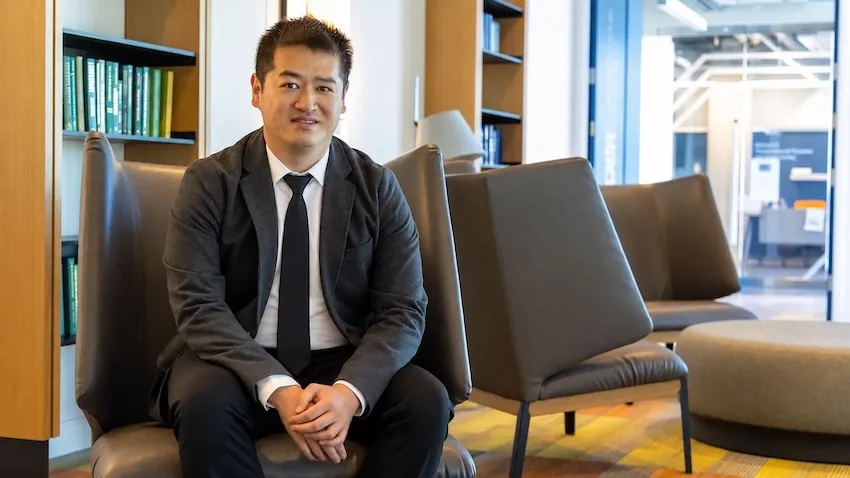
Jiayun (Peter) Wang began his tenure-track career on Oct. 15 as an assistant professor in the School of Computational Science and Engineering (CSE).
At Georgia Tech, Wang will develop new AI tools to help doctors make better use of complex medical data. His research aims to transform information from medical images, clinical measurements, and patient records into clearer insights that improve diagnosis, treatment, and patient care.
“I’m excited to build a lab at Georgia Tech, and to work with students and collaborators on new ideas,” Wang said. “I hope our research can connect fundamental advances in AI with real challenges in healthcare and science.”
Before starting at Georgia Tech, Wang conducted postdoctoral research at Caltech and worked as a senior research scientist at Accenture. He earned his Ph.D. in 2023 from the University of California, Berkeley.
Much of Wang’s healthcare research builds on computer vision, which enables machines to interpret images and videos.
For example, lung ultrasound is a fast, portable, and radiation-free way to check breathing problems. However, a drawback is that images can be hard to read.
Wang led the development of LUNA, an AI method that converts raw ultrasound signals into maps showing how air is distributed in the lungs. This approach makes bedside lung exams more consistent and easier to interpret.
Wang has also used AI to improve another common type of medical imaging: MRI.
MRI scans can take time to complete, and analyzing the results can take even longer. Patients may find it uncomfortable to lie still in a scanner and waiting for results can add stress during an already difficult time. Long scans and reviews can also make it harder for doctors to schedule procedures and consult specialists.
To overcome this shortfall, Wang worked on a team that built a single, flexible AI model that reconstructs high-quality MRI images from fewer measurements across different scanning settings. Along with enabling faster scans, the approach preserves the details doctors need to make informed decisions.
Surgeon training is another way Wang has helped doctors using computer vision techniques.
During robot-assisted surgery, trainees receive guidance from experienced surgeons. However, it is difficult to know what advice improves techniques. A surgical-training study that Wang co-authored combined video and spoken feedback to assess trainee learning.
Wang has used less serious clinical conditions to improve quality of life through AI. Dry eye is one of the most common reasons people visit eye clinics, yet the condition is difficult to assess.
Working with collaborators at UC Berkeley, Wang studied AI methods to analyze patient information alongside images of tiny glands in the eyelids. This work contributed to AI tools that assist in diagnosing ocular surface diseases and predicting dry eye onset based on lifestyle factors.
Beyond healthcare, Wang also works to make AI easier to train and use. His research helps models learn from images without extensive human labeling and build strong systems that require less computing power.
“Medical measurements are often noisy, incomplete, or difficult to interpret. Yet they can carry information that matters for doctors and patients,” said Wang.
“I’m motivated by the opportunity to combine what we know about the physical world with new learning methods to build AI systems that are more reliable and useful.”
Looking ahead, Wang is building the SWI Lab (science, world models, and intelligence) at Georgia Tech.
The lab develops AI “world models” that learn how physical and biological systems behave, predict how they change, and help researchers draw insights from incomplete measurements. This work connects fundamental AI advances with challenges in medicine and science.
Ph.D. students Xinsong Feng and Wentao Zhou joined SWI Lab this fall as its inaugural members. The lab welcomes prospective students, research interns, and visitors interested in world models and Wang’s work.
“The opportunity to work across computing, engineering, and science attracted me most to Georgia Tech,” Wang said.
“The most interesting problems often require both new AI ideas and deep knowledge of their applications. I look forward to studying those problems through new relationships and collaborations.”
News Contact
Bryant Wine, Communications Officer
bryant.wine@cc.gatech.edu
Public health systems often face a difficult challenge when time, funding, and resources are limited: who should receive care first? These decisions are complicated further by differences in patient needs, disease progression, and social factors like access to care.
A team of computer scientists and doctors led by Georgia Tech aims to change that. Using a system of artificial intelligence (AI) models, the team can help clinicians deliver the right intervention to the right patient at the right time.
Their system uses Restless Multi-Armed Bandit (RMAB) models. While the name is technical, the idea is simple. The RMAB framework helps decision-makers choose the best actions over time when conditions are complex and constantly changing.
This project will tackle Type 2 Diabetes (T2D), building on previous experience expanding RMAB models to support maternal health care in India. Success on this front could lead to treating other chronic illnesses, like hypertension, heart disease, kidney disease, and mental health.
Recognizing the RMAB system’s potential, the National Institutes of Health (NIH) awarded the group an R01 grant. The award will fund the project with $1.2 million through 2029.
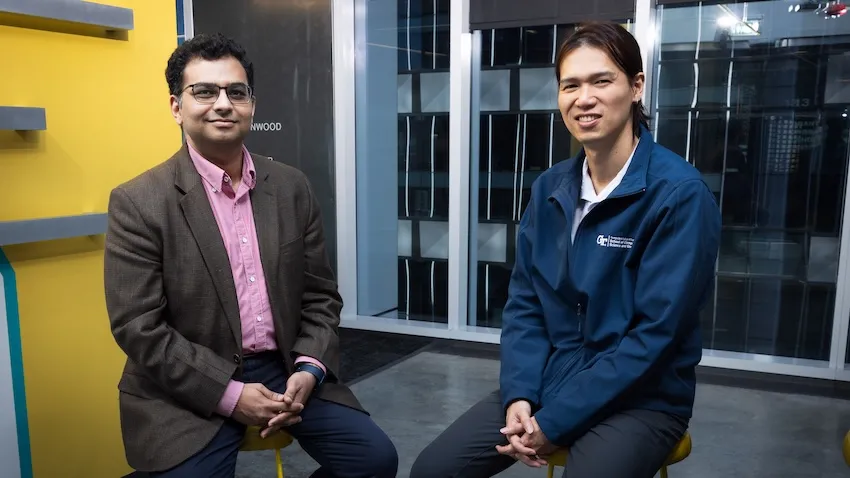
“Our goal is to address the immense challenge of allocating limited health intervention resources in optimal ways,” said Kai Wang, an assistant professor in the School of Computational Science and Engineering (CSE).
“By leveraging rich contextual data and accounting for social determinants, we envision RMAB models that empower health centers to customize interventions to individual patient profiles. Ultimately, this advances precision medicine and ensures equitable healthcare access for diverse populations.”
T2D is a diabetes condition where the body resists insulin or doesn’t produce enough to regulate blood sugar levels. Left unmanaged, high blood sugar leads to severe health problems like heart disease and stroke, damage to organs like eyes and kidneys, nerve damage, infections, and ulcers.
T2D is challenging to treat because patients have different ages, genetics, lifestyles, and body composition, all of which affect the progress of the disease. Social factors, like transportation and family support, matter just as much as biology to treat the disease.
For these reasons, patients who get the same medications may get very different results. While treatment plans now incorporate new GLP-1 drugs, they remain expensive and difficult to distribute equitably.
“Diabetes is a great example of a complicated, multi-faceted problem. It is a natural playground for the kind of high-dimensional machine learning algorithms we want to build and deploy,” said School of CSE Professor B. Aditya Prakash.
“As a chronic disease, diabetes also creates opportunities for sequential decision-making. Providers are not making just one decision to treat the condition, but rather a series of decisions over time.”
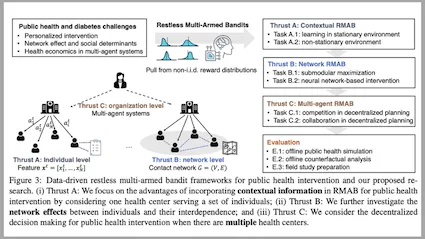
True to its multi-armed name, the team’s framework applies RMAB models across three different thrusts.
Contextual RMABs use patient histories, biomarkers, demographics, and other data to predict how each individual will respond to an intervention. These models directly provide personalized, data-driven treatments.
By incorporating patient-specific information, contextual RMAB models can help healthcare providers prioritize the most timely interventions. The goal is to improve patient outcomes while making more efficient use of limited healthcare resources.
Next, the group wants to understand social life and community influence in public health. Families and social networks shape how people manage chronic health conditions.
Network RMABs study and account for the role of social factors in health interventions. For example, the models can recognize when one patient responds better to treatment than others through benefits of their social circle.
More broadly, hospitals, clinics, government agencies, and nonprofit organizations often share responsibility for the same population in an area. Sometimes, they even compete for the same medications or funding.
Multi-agent RMABs are the third glass of models aimed at decentralized health systems to make fairer decisions. These tools examine how to coordinate resources and decisions between stakeholders. This in turn leads to policies that encourage cooperation and equitable resource distribution.
“I feel extremely confident in RMABs because we have already seen these frameworks deliver real-world impact,” Wang said.
“Prior success has proven the value of data-driven decision-making under resource constraints, giving us a strong blueprint to effectively address the nuances and complexities of diabetes.”
Wang previously built RMAB models to expand maternal healthcare for women in India. Working in conjunction with the non-profit organization ARMMAN, the models used healthcare information to identify and reach the most vulnerable populations.
By integrating RMAB models into ARMMAN mobile health technology, the partnership has reached over 350,000 mothers. This further led to a 31% improvement in engagement with health information.
Compared to maternal healthcare, diabetes is a more nuanced disease with differing causes, symptoms, and treatments. This requires a team effort spanning institutions and backgrounds.
Dr. Sara Cromer is an endocrinologist at Massachusetts General Hospital (MGH). Experienced diagnosing and treating diabetes, she has studied how social issues and equity influences the disease. MGH will provide much of the patient data to train the RMAB models.
Associate Professor Jian Li studies reinforcement learning at Stony Brook University. His expertise in applying reinforcement learning for resource allocation plays a key part tailoring models for the T2D problem. Wang and Li have previously worked together on RMAB research.
Prakash is an expert in computational epidemiology at Georgia Tech. He has led substantial contributions to the use of AI for networks to predict outbreaks and track disease spread. This experience has led to collaborations with NIH, the Centers for Disease Control and Prevention (CDC), National Science Foundation, and others.
“This project speaks to the interdisciplinary problem-solving we try to achieve in CSE. Despite having different backgrounds, our interest in applying our strengths to real-world healthcare problems unites us together,” Prakash said.
“These problems require experts from all sides. Without computational scientists, we can’t take advantage of available data. We lean on clinical experts to provide the data and expertise needed to guide our methods and make sense of results. Ultimately, these approaches need to be clinically validated if we want to make real-world progress.”
News Contact
Bryant Wine, Communications Officer
bryant.wine@cc.gatech.edu
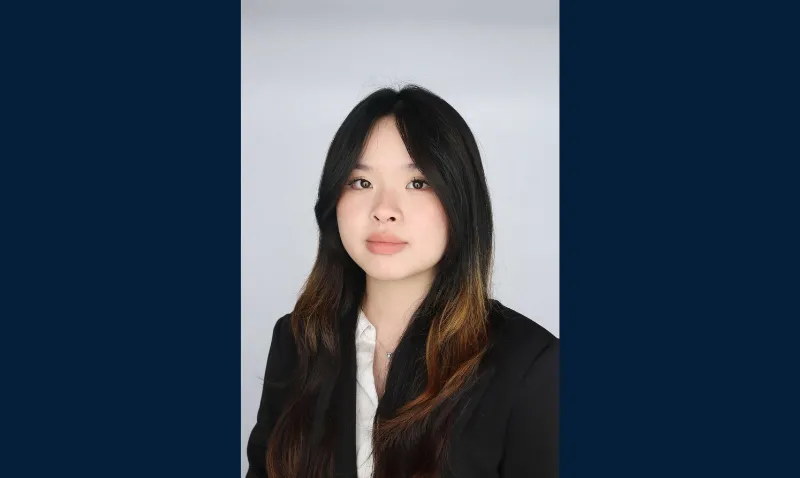
Ashley Ni first came to BridgeUP STEM as a high school student, joining in the 2024-2025 academic year. Now she is a computer science student, returning to the program as a Helen Fellow and serving as the first BridgeUP STEM participant to experience the program as both a scholar and a fellow.
As a high school student at Global Impact Academy in Fairburn, Georgia, Ni worked with four professors, spending about two months with each and exploring different areas of computing.
“It was really cool being able to experience the different forms of computing and their significance,” Ni said. “One day I would be playing AI literacy games with Dr. Judith Uchidiuno, then the next day I’d be training my own ML model with Dr. Sonia Chernova.”
BridgeUP STEM is a College of Computing program that guides first-generation and low-income students by moving them beyond the traditional classroom. Funded by the Helen Gurley Brown Foundation, the program provides early, hands-on exposure to coding skills and computing research activities.
Ni was interested in technology and STEM but planned to pursue a career in healthcare after high school because she considered it a more practical path. However, in her junior year, she stepped out of her comfort zone and chose a path that felt foreign to her.
“BridgeUP really helped me through my journey. It allowed me to see what computing was all about and made me confident in my choice to switch paths,” she said.
Now, as a Helen Fellow, Ni continues to explore the intersection of computing and health through research in the lab of School of Interactive Computing Associate Professor Rosa Arriaga. She is working on TEAMMAIT, an artificial intelligence (AI) assistant project focused on understanding how mental health clinicians interact with AI.
Georgia Tech researchers are developing TEAMMAIT as an AI teammate for mental health work, with the goal of providing insights and feedback to help mental health professionals.
Along with lab-based research, Ni’s fellowship also connects her with the current BridgeUP STEM cohort.
“I’d say this role is both a mentorship and a research role because, in addition to the research work, I’ll also be assisting Dr. Arriaga in the spring semester by mentoring her research seminars with the BridgeUP STEM scholars,” Ni said.
Ni says that returning to the program has already felt nostalgic, especially at the first BridgeUP STEM meeting of the semester.
“I met Dr. Judith as well as the people from her lab who also recognized me. It made me feel very happy seeing how enthusiastic these new scholars are, and it feels like so much yet so little has changed,” Ni said.
For Ni, returning as a fellow is an opportunity to share the experience that helped her find a new direction. She hopes it can encourage other students who may be uncertain about their paths.
“BridgeUP STEM is a program that is near and dear to me. It allowed me to find myself and build a path for my future career goals,” she said.
“I wanted to return to BridgeUP STEM as a Helen Fellow because I would like to inspire those coming after me and share my story with them. I want to let them know that it’s never too late to go for what they’re truly passionate about even if you feel like it’s a race against time.”
Her advice to students now beginning their BridgeUP journey is to ask questions, talk to the researchers, and make the most of the experience.
As she returns to the program with a new perspective, Ni carries one lesson from her time as a scholar: “Time flies and you should make the most of it.”
News Contact
Emily Smith
emily.smith@cc.gatech.edu
Graphic healthcare Icon
The Institute for Data Engineering and Science (IDEaS) at Georgia Tech in collaboration with Amazon Web Services has launched its upskilling initiative with the inauguration of the first cohort of the IDEaS & AWS Accelerator Program. This program is designed to provide the campus research community with hands-on experience with AWS tools and instruction from AWS experts in the application of AI assisted workflows to enable and support their teams.
The fall cohort of 18 researchers will participate in a free, fully remote, 5-week program running from October the 12th through November the 13th. The fall 2026 curriculum focuses on biomedical and health themes. Topics in the course range from foundational themes such as understanding how to implement effective workflows with agents to technical topics such as AI/ML analysis of data sets, medical imaging and classification with AI/ML, and using AI to optimize infrastructure spending.
The AWS Accelerator Program will be hosting a spring session, with the topic in discussion. To receive information about the spring workshop, and all of the resources for research from IDEaS, sign up for our weekly update here.
News Contact
christa M. Ernst
Many scientific breakthroughs begin with long-term research investments. Government agencies often play a central role in this process, supporting work that addresses national priorities while laying the foundation for future innovations.
This summer, M.S. student Joey Cuthbert contributed to this mission through an internship at the Air Force Research Laboratory (AFRL). Upon returning to campus, Cuthbert reflected on his internship and what he learned working alongside researchers in government and the defense community.
Student: Joey Cuthbert
Research Interests: Machine learning (ML), model-based systems engineering
Degree Program: M.S. in Computational Science and Engineering, home unit in H. Milton Stewart School of Industrial and Systems Engineering
2026 Internship: Sensors Directorate Internship Program with Air Force Research Laboratory (AFRL) and the National Air and Space Intelligence Center (NASIC), Beavercreek, Ohio
What about AFRL interested you in applying for and accepting an internship there?
The Sensors Directorate Internship Program (SDIP) provided a unique opportunity to work alongside mentors from AFRL and NASIC on a defense-related research project over a 14-week internship. This aligned with my desire to work on applied ML research in the defense sector and allowed me to better understand the ins and outs of government and government-contracting work. The program provided competitive pay and housing throughout the program, which was a huge plus for me.
How well did your coursework and experience at Georgia Tech prepare you for your AFRL internship?
My experience and coursework at Georgia Tech helped me a great deal this summer. I believe my understanding of ML has greatly improved over the past two semesters, which helped me complete my internship project. All of my experiments ran on high-performance computing (HPC) systems, and I felt I had a head start since I completed an HPC class last spring.
What did you work on while interning at AFRL?
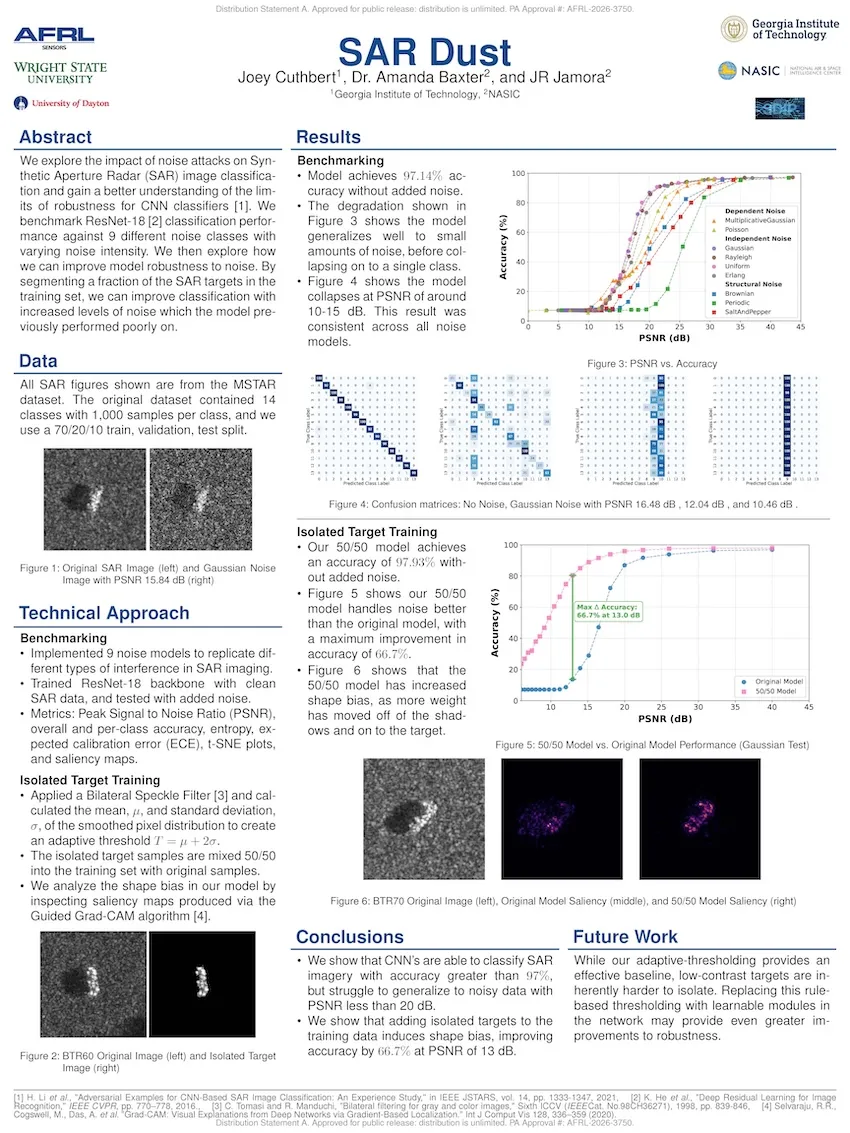
I worked on an image-classification robustness project for convolutional neural networks (CNNs) using synthetic aperture radar (SAR) data. I built a robustness benchmark by testing a model against nine types of noise, and used it to show how we can effectively increase robustness by inducing shape-bias in the model during training.
Do you have a favorite memory or remarkable achievement from your internship?
During the summer, we went on a tour of nearby Wright-Patterson Air Force Base, where we visited the sensors directorate buildings and checked out some of their labs. I also received the best poster presentation award among approximately 40 interns.
Overall, how helpful was this internship toward your studies at Georgia Tech and career as an aspiring researcher?
This program provided great strides toward my research career goals. My coursework has provided a great foundation in ML, and I was able to apply this knowledge to a project. The internship offered me lots of autonomy, as well as time to explore different paths to find results.
From what you learned on your internship, how important are government agencies in progressing research and scientific discovery?
I believe government agencies are massively valuable in advancing research and scientific discovery, especially within the defense sector. All work at AFRL has the goal of giving warfighters the greatest advantage possible. This often entails looking 10 to 20 years into the future of science and technology and trying to get there as fast as possible.
News Contact
Bryant Wine, Communications Officer
bryant.wine@cc.gatech.edu
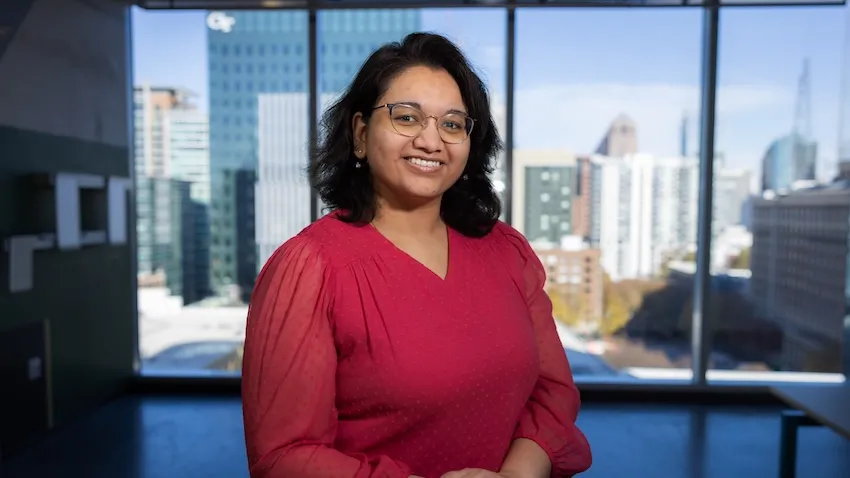
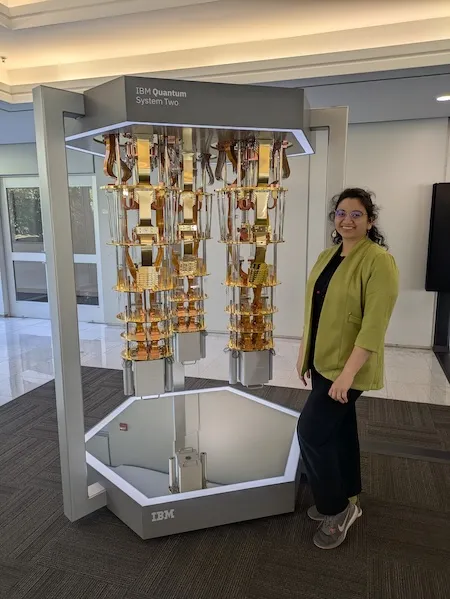
Academic researchers often focus on advancing fundamental knowledge, while industry puts that knowledge into practice. This summer, Ph.D. student Mansi Phute experienced both sides of the process during an internship focused on making artificial intelligence (AI) safe, trustworthy, and reliable.
Upon returning to Georgia Tech, Phute reflected on her summer internship and what it taught her about the evolving relationship between research and industry.
Student: Mansi Phute
Research Interests: Machine learning (ML) robustness and artificial intelligence (AI) safety
Degree Program: Ph.D. in Computer Science
Faculty Advisor: School of CSE Professor and Associate Chair Polo Chau
2026 Internship: International Business Machines (IBM), San Jose, California
What about IBM interested you in applying for and accepting an internship there?
IBM is often at the forefront of AI safety, my field of interest, and has a culture that encourages exploratory and fundamental research. I felt this would give me a closer look at cutting-edge industry approaches without compromising on my research interests or my progress toward my thesis.
How well did your coursework and experience at Georgia Tech prepare you for your IBM internship?
My experience at Georgia Tech was very helpful in preparing me for IBM. My coursework and other academic experiences certainly transferred over, but I believe that the wide range of people I met during those courses and what I learned from them helped me connect and relate strongly with people at IBM. Being conversant in different fields of research really helped me interact better with IBM coworkers and feel comfortable in a new environment.
What did you work on while interning at IBM?
I worked on IBM’s AI Foundations team, focusing on the security of multimodal agent communication during my internship. This is an important problem as we see an increase in agents applied in many use cases. It was also closely aligned with my research interests of AI safety.
Do you have a favorite memory or remarkable achievement from your internship?
One of my favorite moments was presenting my work to a broad, cross-team audience of technical and non-technical members. Afterward, my manager told me I was good at explaining my research to people with varying levels of familiarity with the domain. This feedback meant a lot to me because communicating clearly across different audiences is a skill I've deliberately worked to improve. So, hearing that the effort was paying off was very rewarding.
Overall, how helpful was this internship toward your studies at Georgia Tech and your career as an aspiring researcher?
This internship was very valuable for my development as an aspiring researcher. I worked alongside accomplished people in the AI safety field on projects that aligned closely with my research interests. I also saw how those same projects connect to a company's broader business priorities, a perspective that isn’t easily available in academic settings. I shared many fruitful discussions with people working in safety, policy, and alignment, which gave me a much clearer sense of how industry approaches these issues compared to the more academic-oriented framing I am used to.
Based on what you learned during your internship, how important is private industry in progressing research and scientific discovery?
Working in private industry was a fascinating experience. I come away believing that industry plays an important role in advancing research, especially in AI, where companies have access to computing resources that are less prohibitive than in academic environments. I also think that because private industry has a strong hand in implementing and deploying research, understanding industry priorities can help us frame and design our research in ways that complement industry applications. This ensures research has a bigger impact, particularly in the domain of ML safety and reliability.
News Contact
Bryant Wine, Communications Officer
bryant.wine@cc.gatech.edu
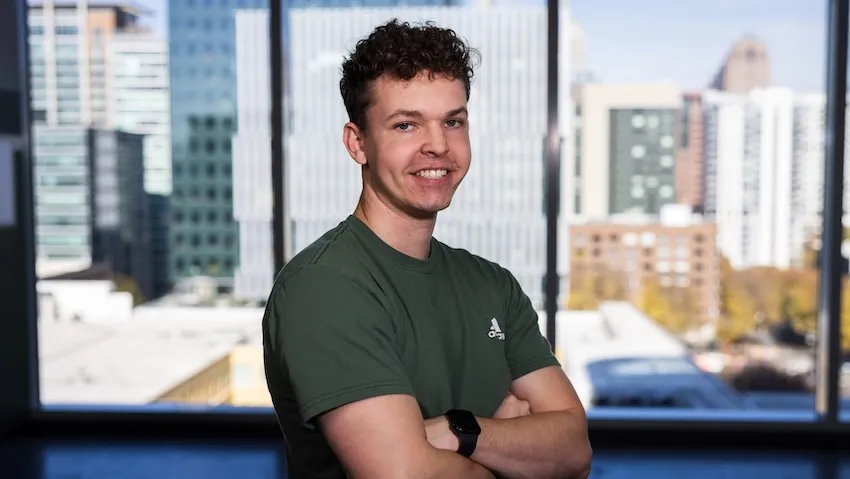
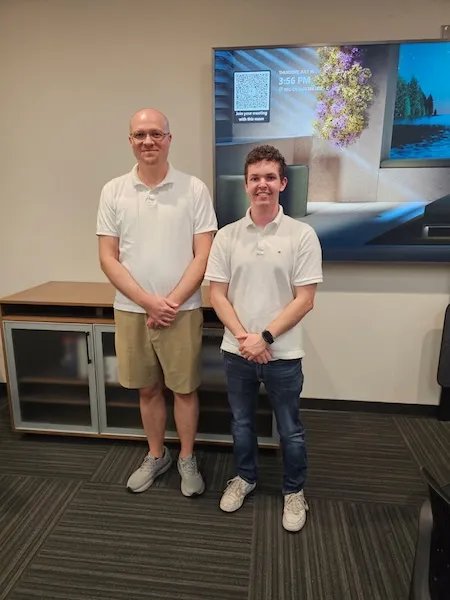
National laboratories play a critical role in advancing science, developing energy technologies, and ensuring national security. This summer, Ph.D. student Tage Burnett contributed to that mission firsthand during an internship at Oak Ridge National Laboratory (ORNL) in Tennessee.
The internship provided Burnett with valuable insight into national laboratory research and reinforced skills he developed through his studies at Georgia Tech. When he returned to campus, we asked Burnett to share more about his internship and what he learned.
Student: Tage Burnett
Research Interests: Fusion energy, computational plasma physics, high-performance computing, and structure-preserving machine learning
Degree Program: Ph.D. in Computational Science and Engineering
Faculty Advisor: School of CSE Assistant Professor Qi Tang
2026 Internship: Oak Ridge National Laboratory, Oak Ridge, Tennessee
Many people are unfamiliar with national laboratories, like ORNL. Could you explain the purpose of these institutions and why they are important?
The Department of Energy (DOE) national laboratories are responsible for moving forward science and technology in the United States and solving high-consequence challenges in science, energy, and national security. They work on both applied and theoretical research with both short-term and long-term returns. ORNL has eight core research areas: biology and environment, energy science, fusion and fission, isotopes, physical sciences, national security, neutron science, and supercomputing. I was an intern in the supercomputing division.
How well did coursework and experience at Georgia Tech prepare you for your ORNL internship?
My coursework at Georgia Tech was vital in my preparation for this internship. I wrote highly parallel code where I leaned heavily on what I learned in CSE 6220: High-Performance Computing. I also worked on numerical methods which required an understanding of partial differential equations and numerical linear algebra which I also learned at Georgia Tech from classes like CSE 6643: Numerical Linear Algebra and a space plasma physics course.
What did you work on while interning at ORNL?
At ORNL, I was a developer on the Adaptive Sparse Grid Discretization (ASGarD) codebase. The code uses adaptive sparse grids and the Discontinuous Galerkin method to beat the curse of dimensionality and solve high-dimensional partial differential equations (PDEs). The code is designed to simulate fully kinetic plasmas in up to 6-dimensional phase space. My project was to implement an iterative method to solve the efficiently solve the Poisson equation within the codebase. This project gave me hands on experience with linear algebra, numerical PDEs, parallel computing and software engineering which was invaluable to my development as a CSE researcher.
Do you have a favorite memory or remarkable achievement from your internship?
My favorite memory from my internship was spending time with the other ORNL interns outside of work. There was an amazing group of interns at ORNL, and it was great getting to know them. One particularly good memory was when we went out to a restaurant with live music and played laser tag during our last week of the internship to celebrate our time at ORNL. The achievement I am most proud of was getting a working, highly efficient version of the Poisson solver into ASGarD. The ASGarD codebase is open source, so I hope other plasma physics researchers will use the code and find it helpful for their research.
While interning, you were selected for a GEM Fellowship, which Georgia Tech and ORNL nominated you for. What does this fellowship mean to you and is there anything you would like to say to your supporters?
To me, receiving the GEM Fellowship indicates that other people recognize the hard work I am doing, and they believe in my ability to meaningfully contribute to the field. Having this support from GEM, ORNL, and Georgia Tech gives me greater confidence in myself and my potential and inspires me to put my all into my work. I would like all my supporters to know that I am so grateful for the opportunity you have given me to be a part of the excellent community of researchers within GEM, ORNL, and Georgia Tech. I will do my very best to make your support worthwhile!
Overall, how helpful was this internship toward your studies at Georgia Tech and career as an aspiring researcher?
The internship was extremely important to both my studies at Georgia Tech and my career as a researcher. The hands-on experience I gained is irreplaceable and it helped me to apply all the skills I have developed throughout my education. I am also optimistic that the internship will open doors for me when I am seeking a job post-graduation.
News Contact
Bryant Wine, Communications Officer
bryant.wine@cc.gatech.edu

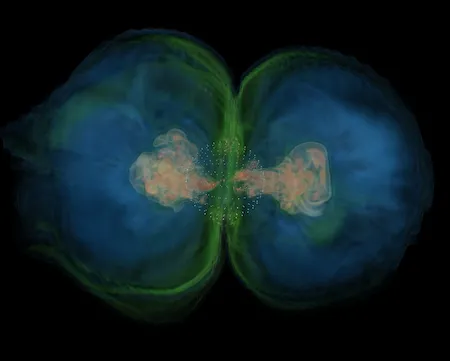
Most people know turbulence as the force that can make airplane flights bumpy. Scientists recognize it as one of the most important, yet unsolved, problems in physics.
Despite decades of research, the chaotic nature of turbulence makes it difficult to predict and control. This challenge impedes more than smoother air travel. Solving the turbulence problem could lead to advances in areas ranging from sustainable energy to training a smarter workforce for the era of artificial intelligence (AI).
To advance understanding of turbulence, the National Science Foundation is establishing a new, $30 million Science and Technology Center (STC) at Michigan State University. Georgia Tech is among eight universities supporting the center.
Assistant Professor Qi Tang will join the STC for Transformative Explorations in Multi-Physics and Engineering of Scientific Turbulence (TEMPEST). TEMPEST, launching on Sept. 1, aims to build trustworthy, predictive models of real-world turbulence.
Tang will lead TEMPEST’s modeling and scientific machine learning (ML) efforts. NSF will fund Tang and Georgia Tech with over $1 million from the center’s five-year, $30 million award.
By understanding and predicting turbulence, TEMPEST can unlock new applications, with a focus on fusion energy and national security. The center will also generate long-term research projects with applications in air and space flight, manufacturing, chemistry, and broaden science education and AI fluency.
“Turbulence has resisted prediction for a century,” said Tang, a faculty member in the School of Computational Science and Engineering (CSE).
“STC TEMPEST aims to develop a unified, predictive science that advances fusion energy, improves hypersonic technologies, and deepens our understanding of how stars created the elements that make up our world and ourselves. For everyday people, the center points toward abundant clean energy and faster, more efficient flight."
Turbulence is the motion of a fluid characterized by chaotic changes in pressure and speed. Turbulent flows can occur across all scales, from interactions between subatomic particles to astrophysical scales, including supernovas, black holes, and cosmic rays.
While turbulent flows are common and occur naturally, scientists still do not fully understand them. Small changes in a turbulent flow can produce dramatically different outcomes. Combined with the countless interactions across multiple scales of time and space, this makes turbulence extraordinarily difficult to predict.
“Rather than studying individual pieces of this enormously complex problem in isolation, we are bringing together theory, experimentation, computation and artificial intelligence to develop a deeper understanding of turbulence across scales,” said Michael Murillo, an MSU professor and the director of TEMPEST.
“Our goal is not simply to understand turbulence better, but to make it predictable and controllable in ways that will enable new technologies and scientific discoveries.”
The NSF TEMPEST award supports students and researchers at Michigan State University, Auburn University, Baylor University, Georgia Tech, San José State University, Texas A&M University-Corpus Christi, University of Rochester, and Yale University to combine theory, computation, AI techniques, and experimentation to build trustworthy predictive models of real-world turbulence for high-consequence applications.
Additional partners include Los Alamos National Laboratory, Sandia National Laboratories, Lawrence Livermore National Laboratory, Pacific Fusion, and General Atomics.
Together, TEMPEST researchers will build more accurate and reliable physics-grounded models. The center will test new ideas against real-world observations, then use those results to refine the models.
Tang contributes expertise in ML, scientific computing, and plasma physics to STC TEMPEST.
Earlier this year, Tang received an Early Career Research award from the Department of Energy’s Office of Science. He is using the award to build ML and data science tools that help scientists analyze massive datasets from fusion experiments and simulations.
This interdisciplinary approach is intended to move science from understanding why turbulence behaves as it does to predicting how it will behave. Through prediction and simulation, scientists could eventually engineer solutions to control turbulence in real-world scenarios.
The center will make its data and software broadly available and engage the public through museum exhibitions, immersive media, and educational programs that are expected to reach more than 10,000 K-12 students annually. TEMPEST will also help train an AI-fluent scientific workforce prepared to tackle complex problems across disciplines.
“One reason I am excited to work in TEMPEST is because it aligns perfectly with our School of CSE mission. As a discipline, CSE complements theory and experimentation as a mode of scientific discovery,” Tang said.
“We build computational models to simulate scientific and engineering concepts, like turbulence in this case, so that we can test theories that are too difficult, expensive, or risky for physical experiments.”
News Contact
Bryant Wine, Communications Officer
bryant.wine@cc.gatech.edu
Georgia Tech’s School of Computational Science and Engineering (CSE) has undergone remarkable expansion in recent years, doubling its faculty, broadening its programs and curriculum, and strengthening its reputation as a leading research hub.
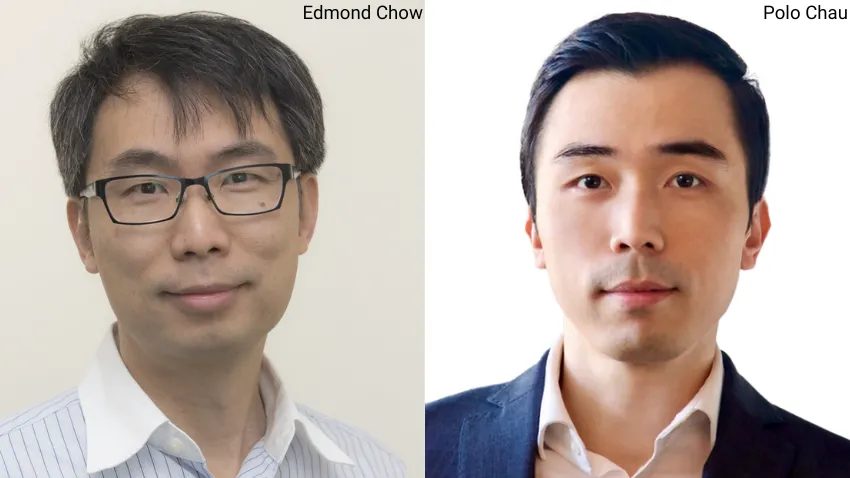
Now, as Professor Edmond Chow prepares to teach at Georgia Tech-Europe for the 2026-2027 academic year, Professor Polo Chau is stepping into the role of associate chair to help guide the School’s next phase of growth.
Their leadership transition comes at a time when demand for expertise in artificial intelligence (AI), data science and analytics, and high-performance computing accelerates across industry, government, and academia.
“On behalf of the students, faculty, and staff of CSE, I extend our heartfelt gratitude to Edmond for his years of dedicated service as associate chair,” said School of CSE Regents’ Professor and Chair Haesun Park.
“Polo is a respected leader, an accomplished scholar, and a passionate advocate for our community. I am confident he will build on Edmond’s strong foundation to guide the School's continued success.”
The School of CSE associate chair helps lead faculty development, academic planning, and new initiatives. These responsibilities include course scheduling, teaching assignments, and reviewing proposals for new courses.
Rapid growth defined Chow’s tenure as associate chair, which started in summer 2021.
As associate chair, Chow led CSE’s faculty recruiting committee. The School hired 15 new professors during his term, doubling the faculty in that span.
Chow’s relationship with new hires didn’t end with recruiting. Each new professor needed support to onboard smoothly, which he helped facilitate by pairing new hires with faculty mentors in the School.
Chow helped new and veteran faculty alike design courses centered on their expertise and the field's emerging needs. As a result, he broadened and enriched the CSE curriculum at Georgia Tech.
Chow led CSE’s effort to secure space in the Coda Building to accommodate so many new faculty and students. With his help, the School added the east wing of the 13th floor and space for four labs on the fifth floor.
While at Georgia Tech-Europe, Chow will teach CS 7545: Machine Learning Theory and CS 1371: Computing for Engineers.
Chow is a fellow of the Society for Industrial and Applied Mathematics (SIAM). Like CSE, the professional society recognized Chow’s leadership and administrative talents, selecting him for several roles.
With his associate chair responsibilities concluded, Chow will focus more on his role as SIAM’s vice president for programs. He also co-chairs the organizing committee for the SIAM Conference on CSE, to be held Feb. 22-26, 2027, in Pittsburgh.
Previously, Chow served as vice chair of the SIAM Activity Group on CSE from 2025 to 2026. He co-chaired the organizing committee for SIAM’s 2022 annual meeting.
"It has been an honor to serve CSE,” Chow said. “I am also inspired to have worked alongside others, including Haesun, who care so much for the School.”
Since joining Georgia Tech in 2012, Chau has distinguished himself as a leading expert in data science and AI.
Chau’s research combines machine learning and visualization to create scalable, interactive tools. His lab has developed applications for studying massive datasets, interpreting complex AI models, and solving real-world problems in cybersecurity, human-centered AI, graph visualization and mining, and social good.
Chau has taught CSE 4242/6242: Data and Visual Analytics since 2013. The course has grown into the world's largest semester-long university class on the subject. More than 19,600 students have taken the course throughout its history.
Alongside his research and teaching, Chau has held several leadership roles at Georgia Tech.
Since 2014, Chau has served as associate director of Georgia Tech’s M.S. Analytics program. The program celebrated its 10th anniversary in 2024, when he received the Innovator Award for his leadership and pioneering approaches to analytics education.
In 2019, Chau accepted roles as director of industry relations for the Institute for Data Engineering and Science (IDEaS) and as associate director of corporate relations for the Machine Learning Center (ML@GT). Chau recently stepped down from his leadership positions with IDEaS and ML@GT to accommodate his responsibilities as CSE’s associate chair.
“I enjoy building deep connections with people, and this role provides a lot of opportunities to do that,” Chau said. “Faculty development helps my colleagues build the careers that they want, and collectively shape CSE’s future. That’s what I look forward to the most.”
News Contact
Bryant Wine, Communications Officer
bryant.wine@cc.gatech.edu
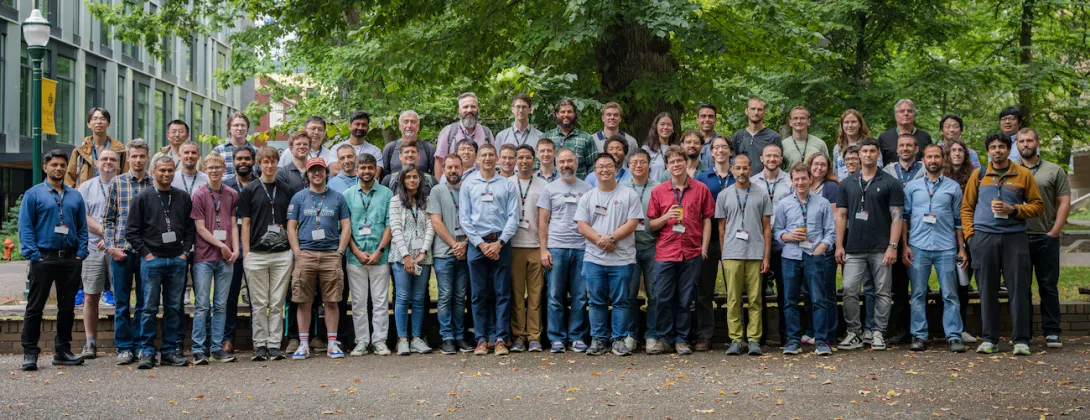
Before building a fusion reactor, designing a new aircraft, or forecasting tsunamis, scientists and engineers test their ideas using computer simulations. The people who create and use the software that powers these simulations are meeting in Atlanta this fall to share best practices and improve their tools.
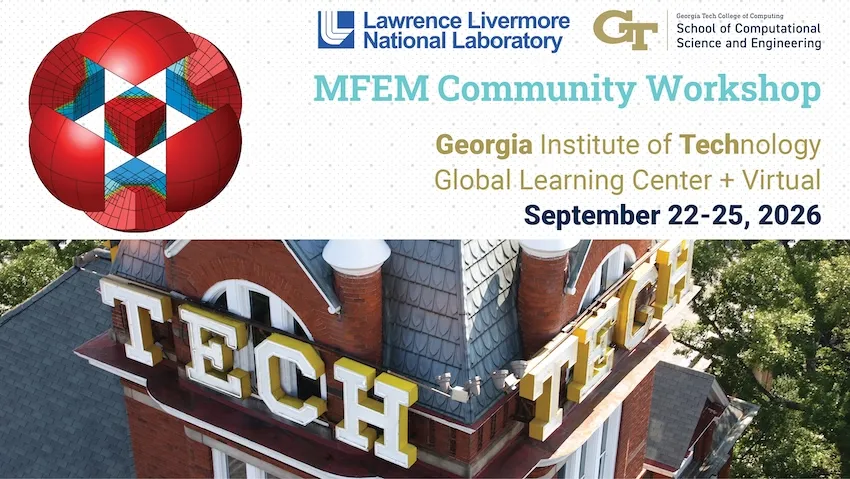
Georgia Tech is hosting the 2026 MFEM (Modular Finite Element Methods) Community Workshop, Sept. 22-25. MFEM supports research in computational physics, earth systems modeling, engineering, energy, and other fields.
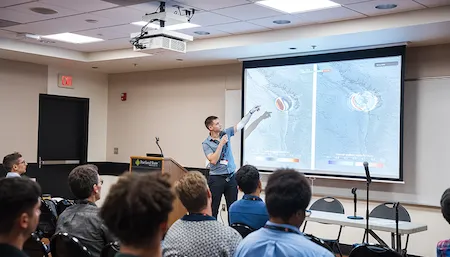
The four-day workshop is being held at the Georgia Tech Global Learning Center and will focus on improving software for scientific computing and discovery. Participants can also attend online. Registration for the workshop is open through Sept. 11.
“We're very excited and grateful for the opportunity to have this workshop at Georgia Tech,” said Tzanio Kolev, a computational mathematician at Lawrence Livermore National Laboratory (LLNL).
“Georgia Tech has a great reputation in our field, and hosting at universities is a great way to connect with students. We see students as our future colleagues who will improve MFEM for generations to come.”
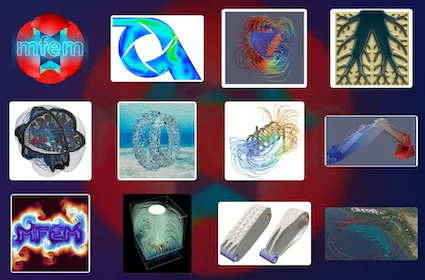
MFEM is an open-source software library for solving equations in computational models. Scientists and engineers use it to build and test virtual designs on some of the world’s most powerful supercomputers before creating real-world prototypes.
In fact, MFEM powered a tsunami early-warning model that ran on El Capitan, the world’s second-fastest supercomputer. The framework completed a simulation in a fraction of a second, 10 billion times faster than conventional algorithms. Kolev was part of the team that won the 2025 Gordon Bell Prize for the project.
MFEM’s impact extends beyond its original developers. The AWS Center for Quantum Computing uses the software as the foundation for a tool called Palace. This project runs 3D electromagnetic simulations to aid in the design of quantum computing hardware.
“These workshops have been very beneficial for both the broader user community and also for MFEM developers,” said Kolev.
“Every workshop, we are surprised by the ways people are building on our work, seeing what incredible, interesting, amazing things they do with it.”
Next month’s workshop at Georgia Tech will connect MFEM users and developers from national laboratories, academia, government, and industry.
The United Kingdom Atomic Energy Authority joins LLNL and Georgia Tech in sponsoring this year’s workshop. Nearly 20 scientists from Department of Energy (DOE) laboratories are attending in person. They represent LLNL, Los Alamos National Laboratory, Princeton Plasma Physics Laboratory, and the Naval Nuclear Laboratory.
The workshop’s first day features a free, hybrid tutorial. LLNL’s High Performance Computing Innovation Center will lead the tutorial, helping new users get started with MFEM and learn what the software can do. The tutorial requires separate registration for virtual participants.
The workshop will also host a simulation and visualization contest. Participants can submit images and videos of simulations using MFEM, which will be posted in a gallery. The workshop organizers will select an overall winner.
Further workshop activities include:
- MFEM news and roadmap for future projects
- Talks from application developers
- Student-user lightning talks
- In-person poster sessions
- Office hours with MFEM experts
The MFEM workshop highlights the role open-source software plays in scientific discovery.
By making tools freely available, researchers can build on each other’s work rather than starting from scratch. This shared approach can accelerate innovation, improve software, and make advanced computing tools accessible to a wider community.
Georgia Tech hosts a Center for Scientific Software Engineering and an Open-Source Program Office. This year’s workshop connects these units with the MFEM community to help put the software into the hands of more researchers across science and engineering.
“The MFEM workshop aims to foster collaboration among all MFEM users and developers,” said Qi Tang, a workshop organizer and assistant professor in the School of Computational Science and Engineering.
“Hosting its annual community workshop brings researchers from DOE laboratories, universities, and industry to campus, giving Georgia Tech faculty and students direct access to experts from the field.”
News Contact
Bryant Wine, Communications Officer
bryant.wine@cc.gatech.edu