
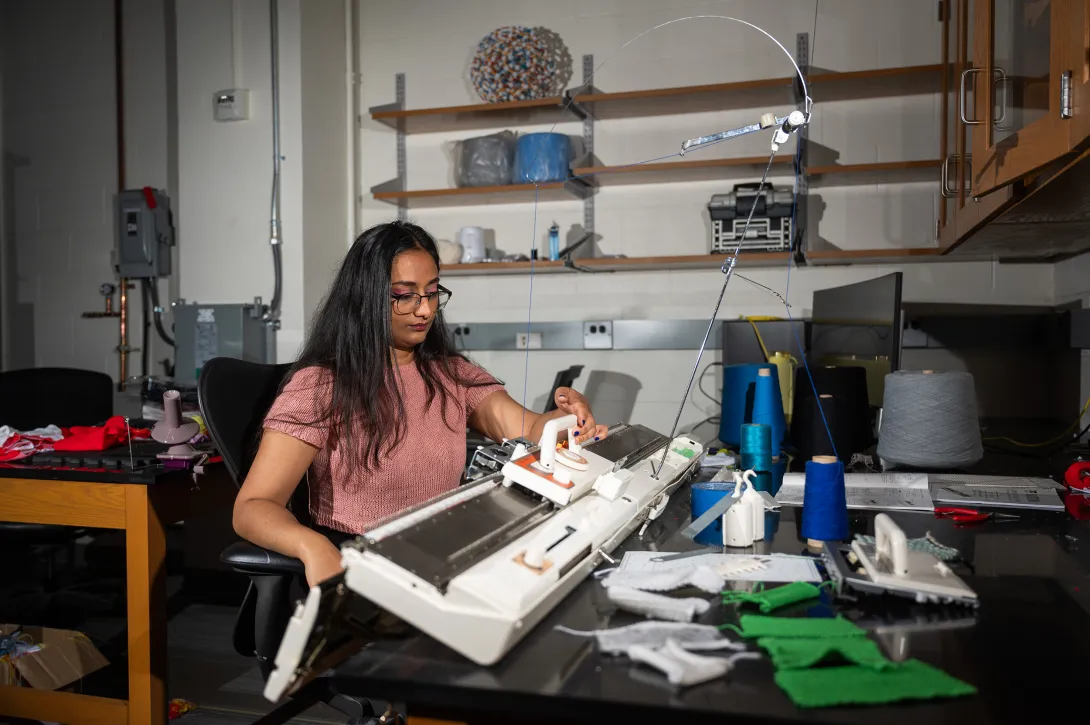
Krishma Singal operates the knitting machine she used to create fabric samples for the study. Singal, the first author of the study, recently graduated from Georgia Tech with her Ph.D. Credit: Allison Carter.
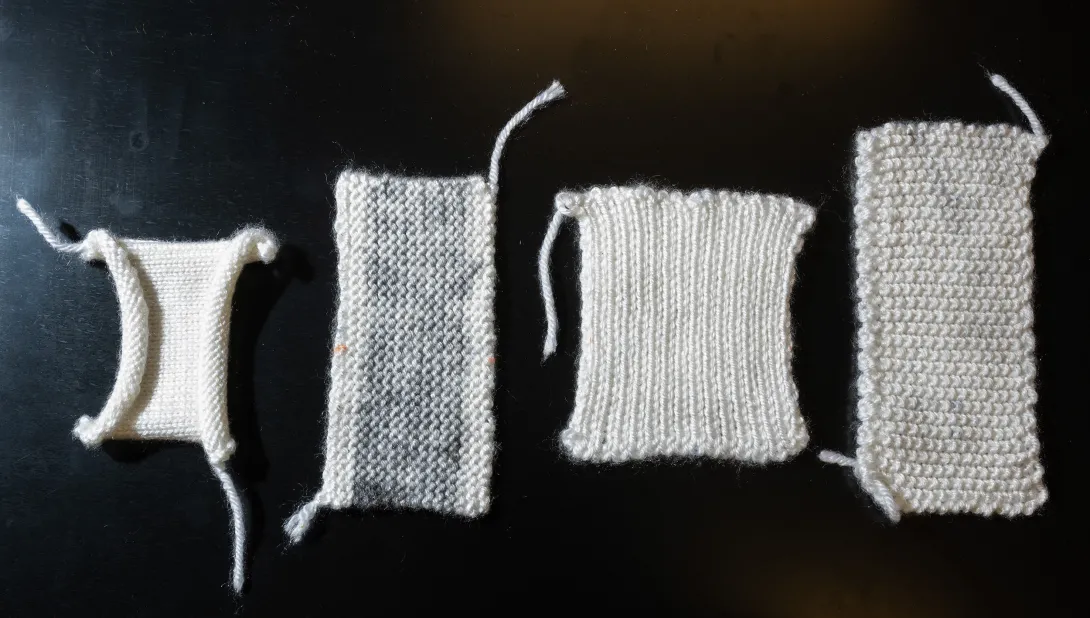
The team created their own fabric samples using a variety of stitch patterns. From left to right, the fabrics are stockinette, garter, rib, and seed. Each sample has the same number of stitch rows and columns, showing how stitch patterns can profoundly impact behavior, elasticity, and shape. Credit: Allison Carter
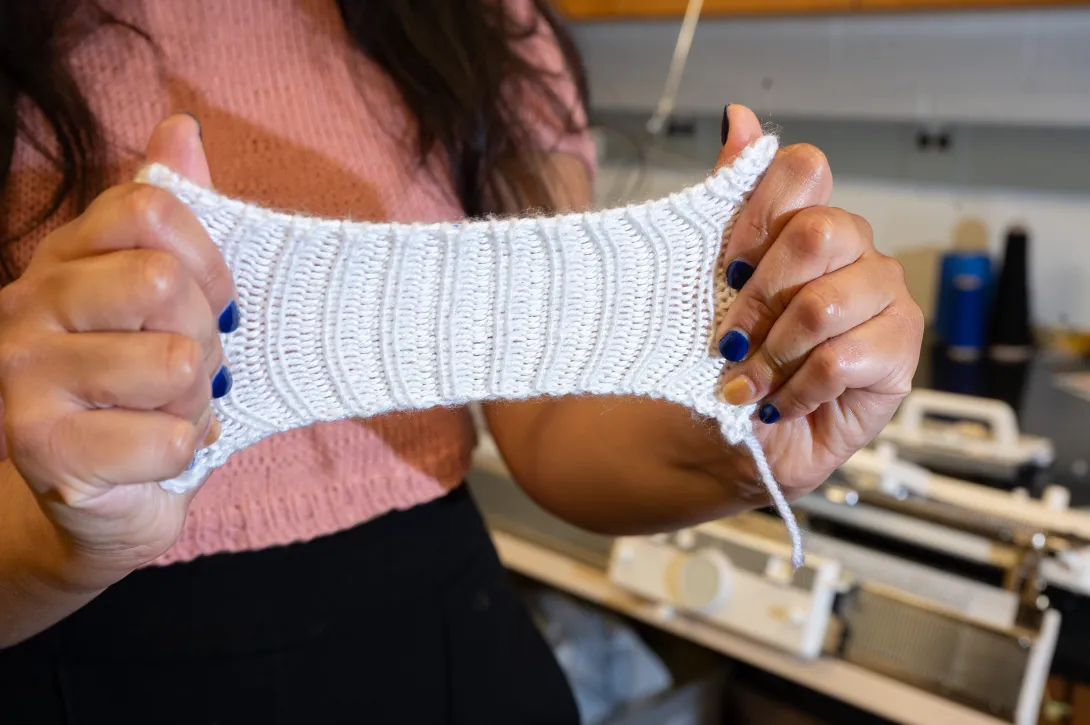
Many types of yarn are not very stretchy, yet once knit into a fabric, the fabric exhibits emergent elastic behavior. Credit: Allison Carter
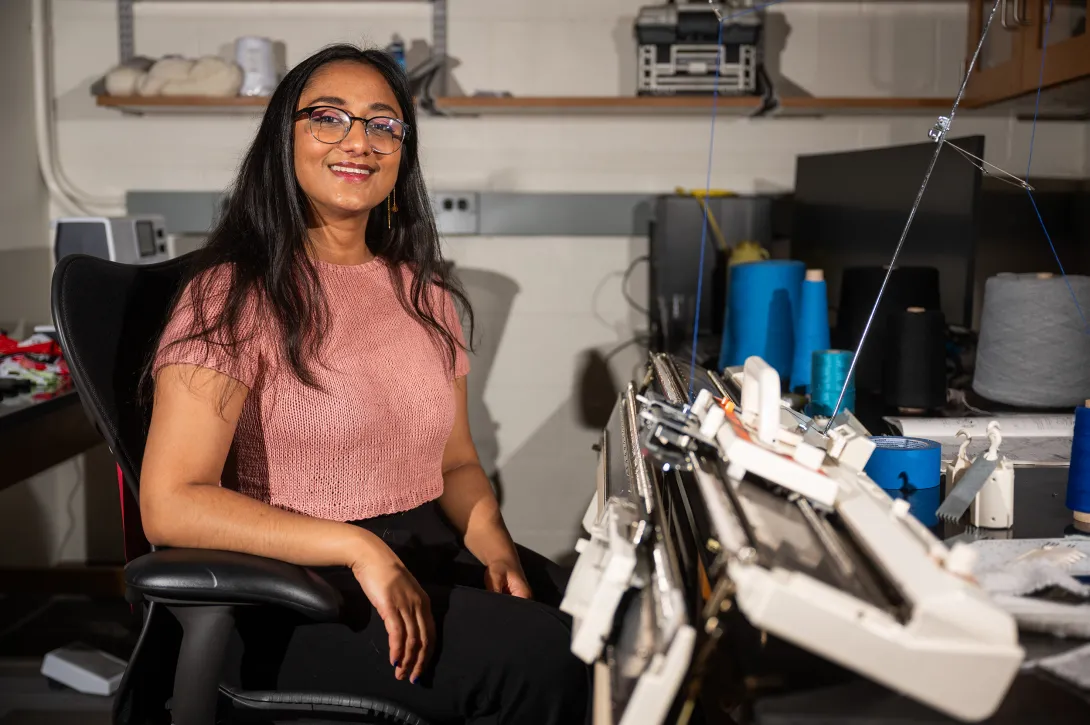
Krishma Singal with the knitting machine she used to create fabric samples for the study. Credit: Allison Carter.
Knitting, the age-old craft of looping and stitching natural fibers into fabrics, has received renewed attention for its potential applications in advanced manufacturing. Far beyond their use for garments, knitted textiles are ideal for designing and fabricating emerging technologies like wearable electronics or soft robotics — structures that need to move and bend.
Knitting transforms one-dimensional yarn into two-dimensional fabrics that are flexible, durable, and highly customizable in shape and elasticity. But to create smart textile design techniques that engineers can use, understanding the mechanics behind knitted materials is crucial.
Physicists from the Georgia Institute of Technology have taken the technical know-how of knitting and added mathematical backing to it. In a study led by Elisabetta Matsumoto, associate professor in the School of Physics, and Krishma Singal, a graduate researcher in Matsumoto’s lab, the team used experiments and simulations to quantify and predict how knit fabric response can be programmed. By establishing a mathematical theory of knitted materials, the researchers hope that knitting — and textiles in general — can be incorporated into more engineering applications.
Their research paper, “Programming Mechanics in Knitted Materials, Stitch by Stitch,” was published in the journal Nature Communications.
“For centuries, hand knitters have used different types of stitches and stitch combinations to specify the geometry and ‘stretchiness’ of garments, and much of the technical knowledge surrounding knitting has been handed down by word of mouth,” said Matsumoto.
But while knitting has often been dismissed as unskilled, poorly paid “women’s work,” the properties of knits can be more complex than traditional engineering materials like rubbers or metals.
For this project, the team wanted to decode the underlying principles that direct the elastic behavior of knitted fabrics. These principles are governed by the nuanced interplay of stitch patterns, geometry, and yarn topology — the undercrossings or overcrossings in a knot or stitch. "A lot of yarn isn’t very stretchy, yet once knit into a fabric, the fabric exhibits emergent elastic behavior," Singal said.
“Experienced knitters can identify which fabrics are stretchier than others and have an intuition for its best application,” she added. “But by understanding how these fabrics can be programmed and how they behave, we can expand knitting’s application into a variety of fields beyond clothing.”
Through a combination of experiments and simulations, Matsumoto and Singal explored the relationships among yarn manipulation, stitch patterns, and fabric elasticity, and how these factors work together to affect bulk fabric behavior. They began with physical yarn and fabric stretching experiments to identify main parameters, such as how bendable or fluffy the yarn is, and the length and radius of yarn in a given stitch.
They then used the experiment results to design simulations to examine the yarn inside a stitch, similar to an X-ray. It is difficult to see inside stitches during the physical measurements, so the simulations are used to see what parts of the yarn have interacted with other parts. The simulations are used to recreate the physical measurements as accurately as possible.
Through these experiments and simulations, Singal and Matsumoto showed the profound impact that design variations can have on fabric response and uncovered the remarkable programmability of knitting. "We discovered that by using simple adjustments in how you design a fabric pattern, you can change how stretchy or stiff the bulk fabric is," Singal said. "How the yarn is manipulated, what stitches are formed, and how the stitches are patterned completely alter the response of the final fabric."
Matsumoto envisions that the insights gleaned from their research will enable knitted textile design to become more commonly used in manufacturing and product design. Their discovery that simple stitch patterning can alter a fabric’s elasticity points to knitting’s potential for cutting-edge interactive technologies like soft robotics, wearables, and haptics.
“We think of knitting as an additive manufacturing technique — like 3D printing, and you can change the material properties just by picking the right stitch pattern,” Singal said.
Matsumoto and Singal plan to push the boundaries of knitted fabric science even further, as there are still numerous questions about knitted fabrics to be answered.
"Textiles are ubiquitous and we use them everywhere in our lives," Matsumoto said. "Right now, the hard part is that designing them for specific properties relies on having a lot of experience and technical intuition. We hope our research helps make textiles a versatile tool for engineers and scientists too."
Note: Sarah Gonzalez (Georgia Tech) and Michael Dimitriyev (Texas A&M) are also co-first authors of the study.
Citation: Singal, K., Dimitriyev, M.S., Gonzalez, S.E. et al. Programming mechanics in knitted materials, stitch by stitch. Nat Commun 15, 2622 (2024).
DOI: https://doi.org/10.1038/s41467-024-46498-z
Funding: Research Corporation for Science Advancement, National Science Foundation, and the Alfred P. Sloan Foundation
News Contact
Catherine Barzler, Senior Research Writer/Editor
Institute Communications

A new in-depth analysis shows that users who reply to misinformation about the Covid-19 vaccine on X, formerly known as Twitter, with a positive attitude, politeness, and strong evidence are more likely to encourage others to disbelieve the incorrect information.
Researchers from three Georgia Tech schools found the most effective way to confront vaccine misinformation on the X platform.
They also created a predictive tool to show users whether their reply will succeed in changing minds or backfire and reinforce the misinformation. It can also pinpoint well-meaning replies meant to contradict misinformation but that interfere with social correction.
A research paper with the full findings will be presented this week at the ACM Web Science Conference in Stuttgart, Germany.
Like white blood cells attacking a virus, social media users have been known to band together and debunk online misinformation being spread online in a phenomenon researchers call social correction.
The success rate of social correction on most social media sites has not been determined. However, researchers now have a clearer picture of how successful user input can be on X.
Their method uses a blend of artificial intelligence with a dataset of 1.5 million tweets containing misinformation about the Covid-19 vaccine. The researchers then studied user replies to misinformation as well as the consequences of those replies.
In the paper, the researchers write that their data set pre-dates the rollout of X’s community notes feature, which allows users to submit corrections to posts on the platform. They point out that this system restricts users from responding to fact-checking text and labels and does not reflect the large flow of information on the site.
As one of the first taxonomies of user social correction on the X platform, the researchers hope will aid future fact-checking efforts. While the paper only focused on text posts in the English language, it is a framework that can be expanded to address the growing threat of misinformation online.
Corrective or Backfire: Characterizing and Predicting User Response to Social Correction was co-authored by Ph.D. students Bing He and Yingchen (Eric) Ma and their advisors Regents’ Entrepreneur Mustaque Ahamad, a professor with joint appointments in the School of Cybersecurity and Privacy and the School of Computer Science, and School of Computational Science and Engineering Assistant Professor Srijan Kumar.
News Contact
JP Popham, Communications Officer
Georgia Tech
School of Cybersecurity and Privacy

Yongsheng Chen, Bonnie W. and Charles W. Moorman IV Professor in Georgia Tech's School of Civil and Environmental Engineering, has been awarded a $300,000 National Science Foundation (NSF) grant to spearhead efforts to enhance sustainable agriculture practices using innovative AI solutions.
The collaborative project, named EAGER: AI4OPT-AG: Advancing Quad Collaboration via Digital Agriculture and Optimization, is a joint effort initiated by Georgia Tech in partnership with esteemed institutions in Japan, Australia, and India. The project aims to drive advancements in digital agriculture and optimization, ultimately supporting food security for future generations.
Chen, who also leads the Urban Sustainability and Resilience Thrust for the NSF Artificial Intelligence Research Institute for Advances in Optimization (AI4OPT), is excited about this new opportunity. "I am thrilled to lead this initiative, which marks a significant step forward in harnessing artificial intelligence (AI) to address pressing issues in sustainable agriculture," he said.
Highlighting the importance of AI in revolutionizing agriculture, Chen explained, "AI enables swift, accurate, and non-destructive assessments of plant productivity, optimizes nutritional content, and enhances fertilizer usage efficiency. These advancements are crucial for mitigating agriculture-related greenhouse gas emissions and solving climate change challenges."
To read the full agreement, click here.
News Contact
Breon Martin
AI Research Communications Manager
Georgia Tech
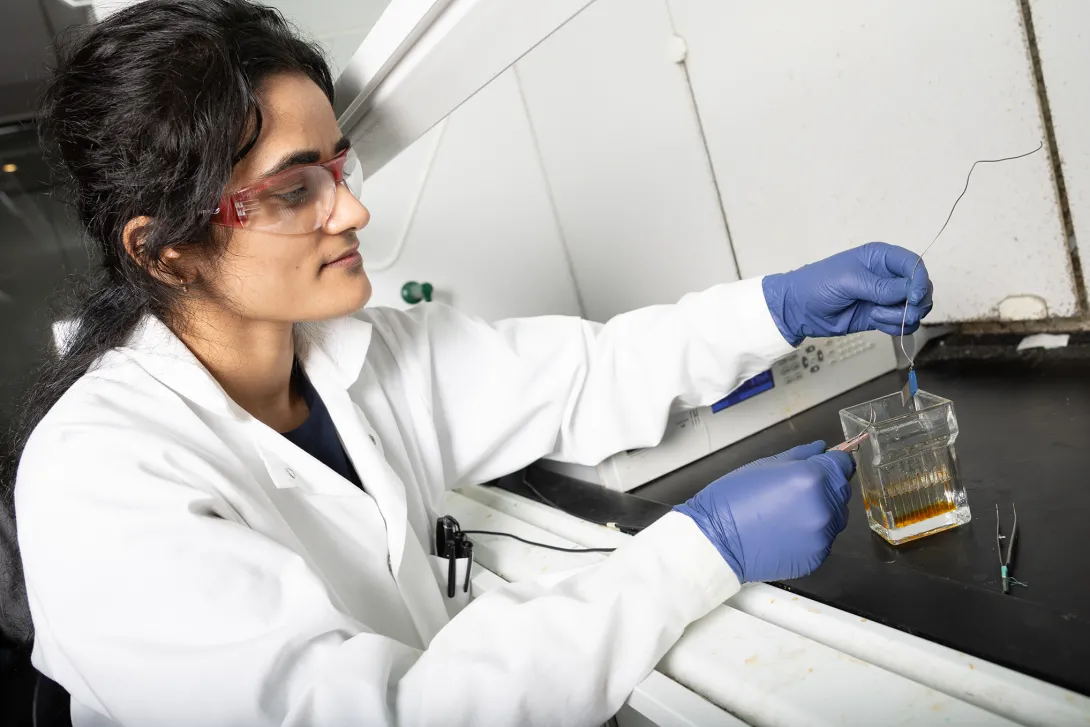
Postdoctoral scholar Anuja Tripathi examines a small sample of stainless steel after an electrochemical etching process she designed to create nano-scale needle-like structures on its surface. A second process deposits copper ions on the surface to create a dual antibacterial material. (Photo: Candler Hobbs)
An electrochemical process developed at Georgia Tech could offer new protection against bacterial infections without contributing to growing antibiotic resistance.
The approach capitalizes on the natural antibacterial properties of copper and creates incredibly small needle-like structures on the surface of stainless steel to kill harmful bacteria like E. coli and Staphylococcus. It’s convenient and inexpensive, and it could reduce the need for chemicals and antibiotics in hospitals, kitchens, and other settings where surface contamination can lead to serious illness.
It also could save lives: A global study of drug-resistant infections found they directly killed 1.27 million people in 2019 and contributed to nearly 5 million other deaths — making these infections one of the leading causes of death for every age group.
Researchers described the copper-stainless steel and its effectiveness May 20 in the journal Small.
News Contact
Joshua Stewart
College of Engineering
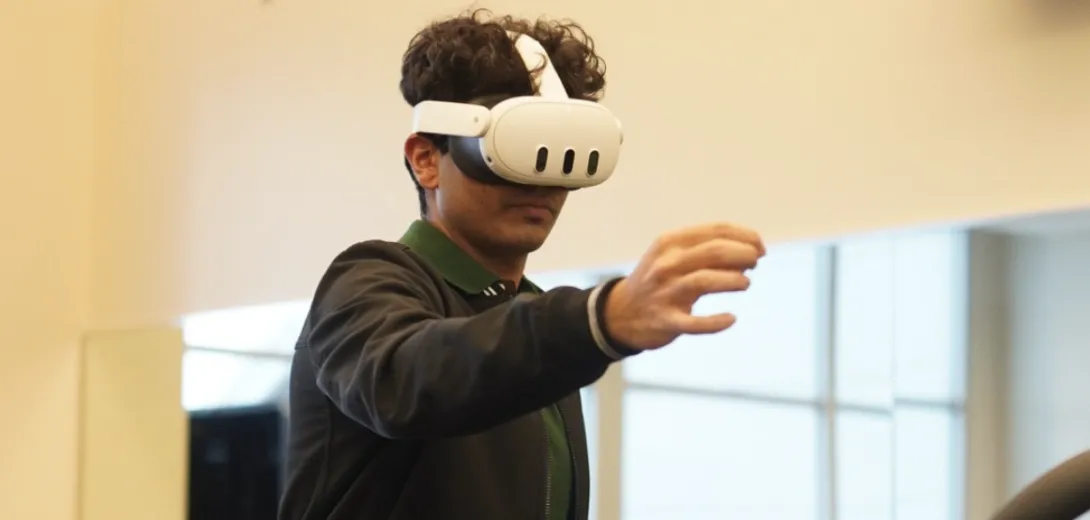
Parth Arora is the founder of Third Dimension Fitness, a platform for gamified cardio through mixed reality, which was recently acquired by Elbo, an education-focused company based in Singapore. He began his company as a project in the summer of 2022. Since then, it has gained thousands of users and made thousands in revenue each month. Arora is a senior in computer science. He participated in the Spring 2024 Startup Launch, the first cohort to be held outside of the summer program. Below is a Q&A with Arora.
Did you always want to be an entrepreneur?
I always did. I had my first company, an educational technology app, when I was 16, which ran for about two years. I ended it in my first year of college. I'm from India originally and the vision was to provide resources to the larger mass market of India for extracurricular activities. But, we realized there wasn't a business model. When we tried to make money, we started serving the rich kids. When we tried to serve the market, we didn't make money, which doesn't make investors happy, though we did end up making enough money to repay them.
That didn't stop me; it just gave me more lessons.
What other experience in entrepreneurship have you had?
I've been involved in entrepreneurship communities at Georgia Tech forever. I was co-director of Startup Exchange, which is where I met a lot of really driven people. I got a chance to build their fellowship program and initiate their first pitch competition, which is now called Summit. I've collaborated with CREATE-X for different events, and I try to attend any event hosted by CREATE-X, Startup Exchange, or ATDC.
Why did you choose to join the spring cohort of Startup Launch this year?
CREATE-X provides everything you need, like legal support, financial support, sales support, mentors, and an introduction to VCs, which is why I decided to join the Launch program. I think all of that boosted our startup’s growth.
Why did you feel like acquisition was the way to go for your company?
I think because I always knew this wasn’t “the” thing I was going to do. This summer I'll be starting to work for Apple on their VisionPro team, and it has a direct conflict-of-interest. They wanted me to stop working on this for a while. So, I felt like this might be a good time to explore the acquisition. We had really rich content, which had proven to work. We had curated that content after hundreds of customer interviews, and we had advisors from Nike, Disney, and Netflix. I knew that was a strong point, so that's why I knew that acquisition would be a good exit.
What support have you had in taking the acquisition path?
Seth [Radman, who has had multiple exits himself and is a Startup Launch alumnus] has been guiding me professionally for a while. I met him at previous events through Startup Exchange, but then he recently came to a CREATE-X event. Rahul [Saxena, CREATE-X director], has also been a great support for me since day one. He was the one who suggested Startup Launch to me.
In December of last year, we started monetizing. We were testing different things. It was helpful to share the numbers and the data points with Rahul, mentors, and other people in my cohort so that I was not blindsided, and I could take actions based on the educated analysis of a database. It helped me drive down our customer acquisition cost, increase our customer lifetime value, and didn't keep me in my own bubble.
How were you okay with letting that product go?
It was a tough decision; it was my baby. I'd been working on it 10 to 15 hours a day, at least for the last few months. Rahul and Seth convinced me that if this is not the thing you want to do long-term and you know the market isn't big enough, you should move on to the next thing and put your time and energy there.
I had to use my brain, and not my heart.
What's the biggest piece of advice that you've received as you developed your company?
Try to never lie to yourself, which is harder than it seems. I've built two companies and worked with several others, and I still lie to myself. When you love your product so much, it's very easy to lie to yourself about how there is a market for it, or people are using it. I think even in the future, I’ll probably be caught doing that, but the best way I've found to overcome that is to surround yourself with people who can tell you when you are doing it and help you see your company the way it is instead of the way you want it to be.
How has this decision affected you so far?
My lifestyle has completely changed, from looking at a dashboard every 10 to 15 minutes, seeing how the product is doing, and burning so many fires every 30 minutes, to being pretty chill. Like, what am I supposed to think about before I go to bed? What am I supposed to do now? Who are the customers I am supposed to be thinking about? It's been interesting, but I think this gives me space to now work on that next venture and have more time to think about what I want to do next.
Do you think you'll want to return to entrepreneurship in the future?
Yes, for sure. All the money I received from the acquisition will also fuel my next venture. My main goal is to grow in this industry. I'm an entrepreneur at heart, so I will be returning to the space soon or building products that people like.
How are you celebrating this win?
I did celebrate it on our last day with Rahul, my amazing mentor, Margaret [Weniger, who founded Rising Tide], and the other cohort members. I will be celebrating it with a few of my friends because my 21st birthday is coming around, so I'll be celebrating these occasions together.
But I don't want to take the money out from the company or for anything else, because it’s for my next venture. It shouldn't change my lifestyle at all, so I've kept all that money in a separate place.
What encouragement would you give to students interested in pursuing a startup?
Relative to other colleges, we have a cushion, a sense of security that we will get good jobs. Entrepreneurship is a riskier and more unpredictable path, which I've seen, and I'm personally experiencing right now having to choose between Big Tech versus entrepreneurship. But once you start building it and when you hear from your first customer how you affected the way they live, then there's no going back. Statistically, you'll probably fail, but you won't know until you start building; and if you do fail, it’ll teach you so many valuable lessons that are applicable in whatever career path you choose.
CREATE-X will launch its 12th cohort of Startup Launch on Aug. 29 at 5 p.m. in the Georgia Tech Exhibition Hall. Register today to secure your spot.
Interested in becoming a CREATE-X supporter? Startup Launch is made possible by contributions to Transforming Tomorrow, a $2 billion comprehensive campaign designed to secure resources that will advance the Institute and its impact, and by the continued engagement of our entrepreneurial ecosystem. Learn more about philanthropy at Georgia Tech and donate by visiting transformingtomorrow.gatech.edu.
To become a mentor in CREATE-X, visit the CREATE-X mentorship page. Any other inquiry may be sent to create-x@groups.gatech.edu. We appreciate your help and commitment to supporting our students in research and innovation.
News Contact
Breanna Durham
Marketing Strategist
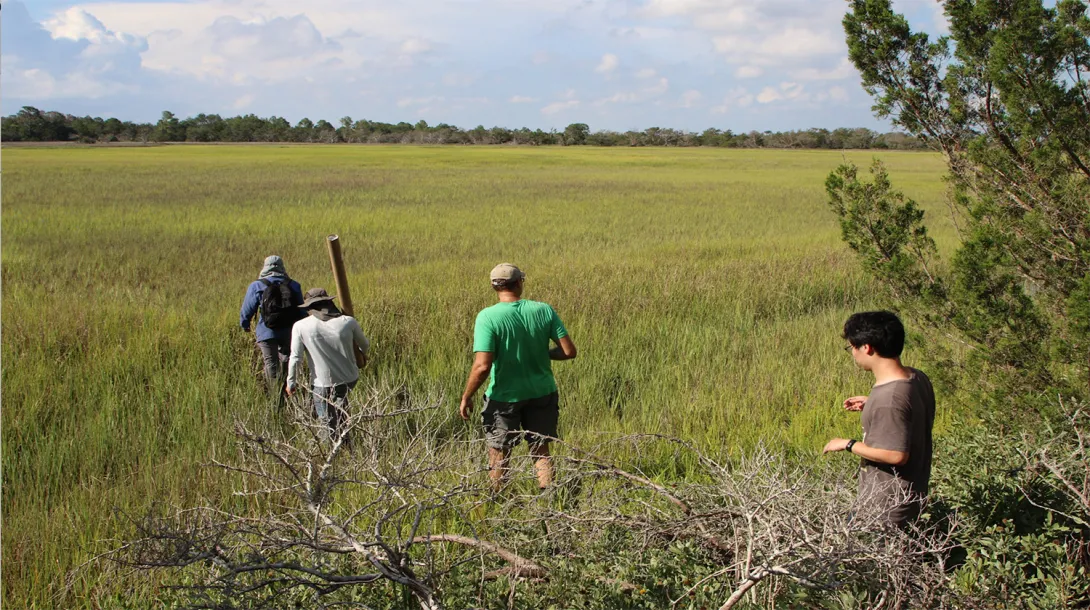
Georgia Tech researchers surveying field sites in the salt marshes of Sapelo Island, Georgia.
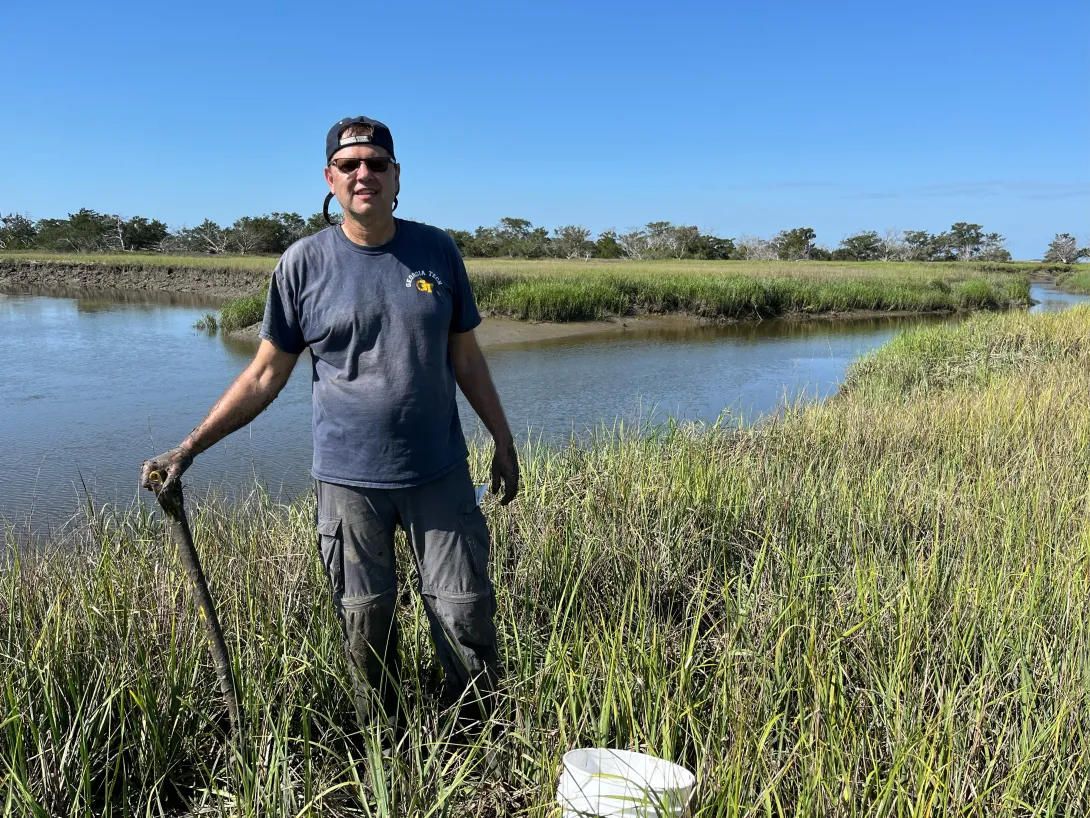
Joel Kostka, the Tom and Marie Patton Distinguished Professor and associate chair for Research in the School of Biological Sciences.
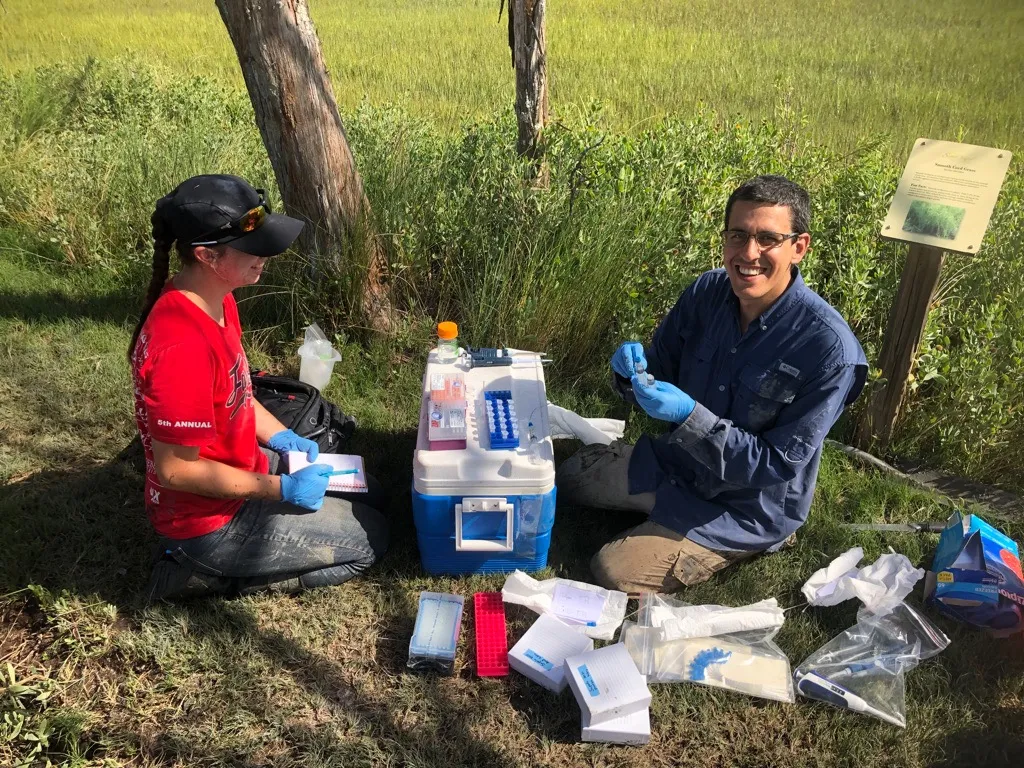
Georgia Tech postdoctoral fellow Jose Rolando (right) and graduate student Gabrielle Krueger prepare samples for chemical analysis in the field at Sapelo Island, Georgia.
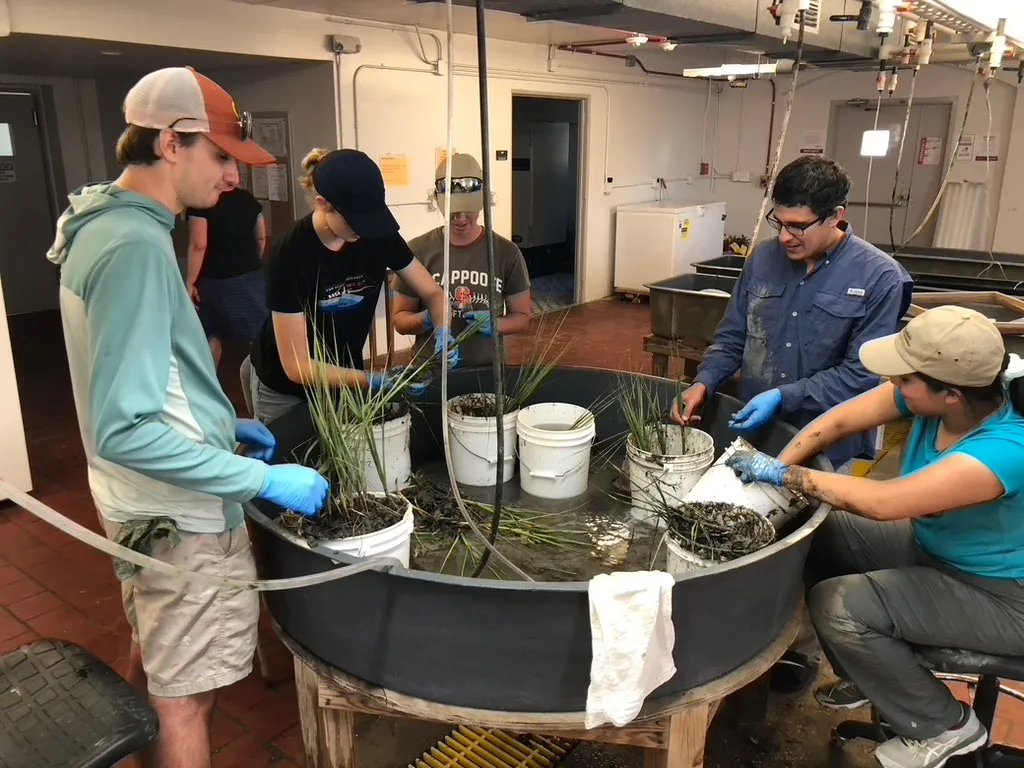
Researchers washing cordgrass roots for microbial analysis.
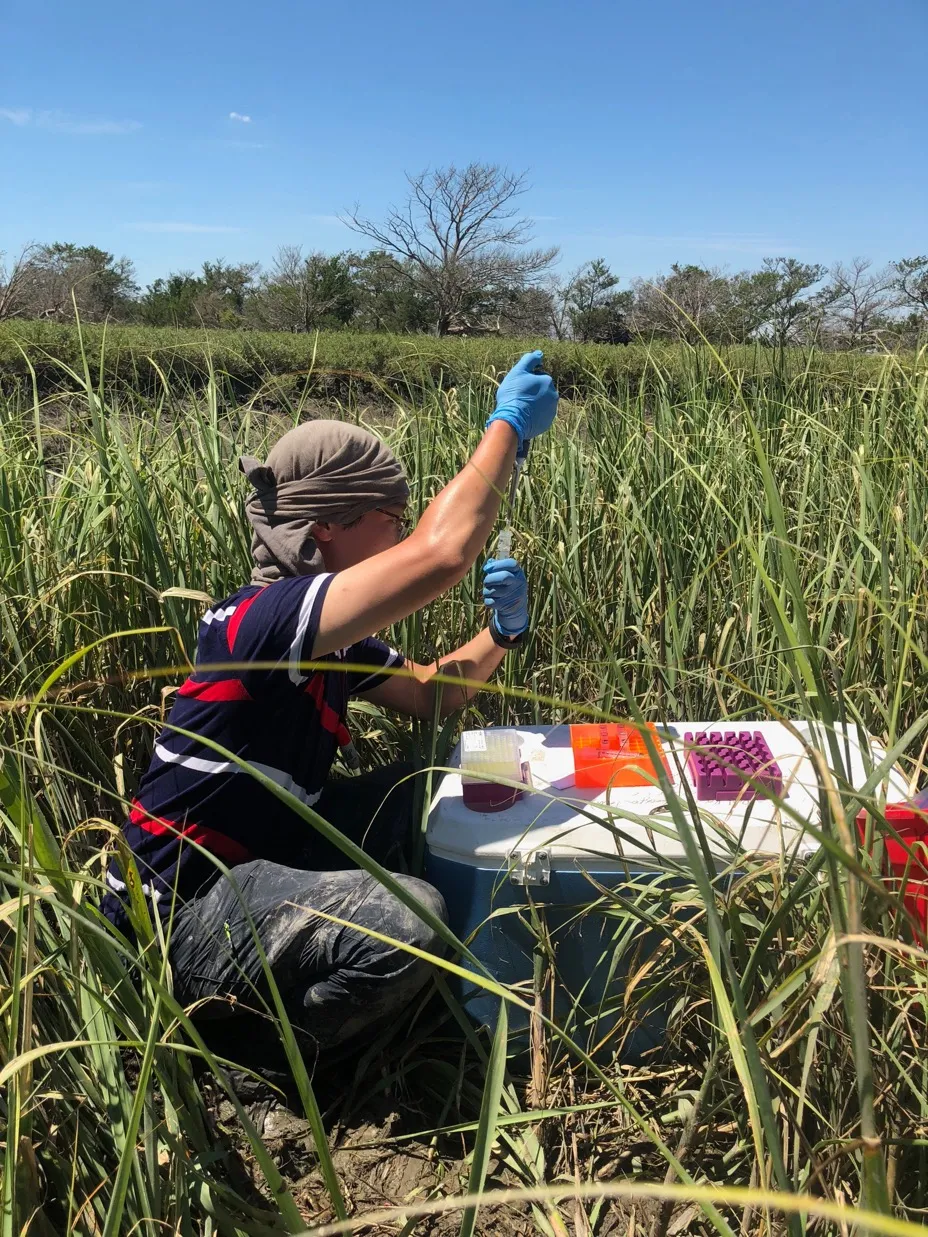
Georgia Tech graduate student Tianze Song collects porewater samples for chemical analysis in the marsh on Sapelo Island, Georgia.
Georgia’s saltwater marshes — living where the land meets the ocean — stretch along the state’s entire 100-mile coastline. These rich ecosystems are largely dominated by just one plant: grass.
Known as cordgrass, the plant is an ecosystem engineer, providing habitats for wildlife, naturally cleaning water as it moves from inland to the sea, and holding the shoreline together so it doesn’t collapse. Cordgrass even protects human communities from tidal surges.
Understanding how these plants stay healthy is of crucial ecological importance. For example, one known plant stressor prevalent in marsh soils is the dissolved sulfur compound, sulfide, which is produced and consumed by bacteria. But while the Georgia coastline boasts a rich tradition of ecological research, understanding the nuanced ways bacteria interact with plants in these ecosystems has been elusive. Thanks to recent advances in genomic technology, Georgia Tech biologists have begun to reveal never-before-seen ecological processes.
The team’s work was published in Nature Communications.
Joel Kostka, the Tom and Marie Patton Distinguished Professor and associate chair for Research in the School of Biological Sciences, and Jose Luis Rolando, a postdoctoral fellow, set out to investigate the relationship between the cordgrass Spartina alterniflora and the microbial communities that inhabit their roots, identifying the bacteria and their roles.
“Just like humans have gut microbes that keep us healthy, plants depend on microbes in their tissues for health, immunity, metabolism, and nutrient uptake,” Kostka said. “While we’ve known about the reactions that drive nutrient and carbon cycling in the marsh for a long time, there’s not as much data on the role of microbes in ecosystem functioning.”
Out in the Marsh
A major way that plants get their nutrients is through nitrogen fixation, a process in which bacteria convert nitrogen into a form that plants can use. In marshes, this role has mostly been attributed to heterotrophs, or bacteria that grow and get their energy from organic carbon. Bacteria that consume the plant toxin sulfide are chemoautotrophs, using energy from sulfide oxidation to fuel the uptake of carbon dioxide to make their own organic carbon for growth.
“Through previous work, we knew that Spartina alterniflora has sulfur bacteria in its roots and that there are two types: sulfur-oxidizing bacteria, which use sulfide as an energy source, and sulfate reducers, which respire sulfate and produce sulfide, a known toxin for plants,” Rolando said. “We wanted to know more about the role these different sulfur bacteria play in the nitrogen cycle.”
Kostka and Rolando headed to Sapelo Island, Georgia, where they have regularly conducted fieldwork in the salt marshes. Wading into the marsh, shovels and buckets in hand, the researchers and their students collected cordgrass along with the muddy sediment samples that cling to their roots. Back at the field lab, the team gathered around a basin filled with creek water and carefully washed the grass, gently separating the plant roots.
Next, they used a special technique involving heavier versions of chemical elements that occur in nature as tracers to track the microbial processes. They also analyzed the DNA and RNA of the microbes living in different compartments of the plants.
Using a sequencing technology known as shotgun metagenomics, they were able to retrieve the DNA from the whole microbial community and reconstruct genomes from newly discovered organisms. Similarly, untargeted RNA sequencing of the microbial community allowed them to assess which microbial species and specific functions were active in close association with plant roots.
Using this combination of techniques, they found that chemoautotrophic sulfur-oxidizing bacteria were also involved in nitrogen fixation. Not only did these bacteria help plants by detoxifying the root zone, but they also played a crucial role in providing nitrogen to the plants. This dual role of the bacteria in sulfur cycling and nitrogen fixation highlights their importance in coastal ecosystems and their contribution to plant health and growth.
"Plants growing in areas with high levels of sulfide accumulation tend to be smaller and less healthy," said Rolando. "However, we found that the microbial communities within Spartina roots help to detoxify the sulfide, enhancing plant health and resilience."
Local to Global Significance
Cordgrasses aren’t just the main player in Georgia marshes; they also dominate marsh landscapes across the entire Southeast, including the Carolinas and the Gulf Coast. Moreover, the researchers found that the same bacteria are associated with cordgrass, mangrove, and seagrass roots in coastal ecosystems across the planet.
"Much of the shoreline in tropical and temperate climates is covered by coastal wetlands,” Rolando said. “These areas likely harbor similar microbial symbioses, which means that these interactions impact ecosystem functioning on a global scale."
Looking ahead, the researchers plan to further explore the details of how marsh plants and microbes exchange nitrogen and carbon, using state-of-the-art microscopy techniques coupled with ultra-high-resolution mass spectrometry to confirm their findings at the single-cell level.
"Science follows technology, and we were excited to use the latest genomic methods to see which types of bacteria were there and active,” Kostka said. “There's still much to learn about the intricate relationships between plants and microbes in coastal ecosystems, and we are beginning to uncover the extent of the microbial complexity that keeps marshes healthy.”
Citation: Rolando, J.L., Kolton, M., Song, T. et al. Sulfur oxidation and reduction are coupled to nitrogen fixation in the roots of the salt marsh foundation plant Spartina alterniflora. Nat Commun 15, 3607 (2024).
DOI: https://doi.org/10.1038/s41467-024-47646-1
Funding: This work was supported in part by an institutional grant (NA18OAR4170084) to the Georgia Sea Grant College Program from the National Sea Grant Office, National Oceanic and Atmospheric Administration, US Department of Commerce, and by a grant from the National Science Foundation (DEB 1754756).
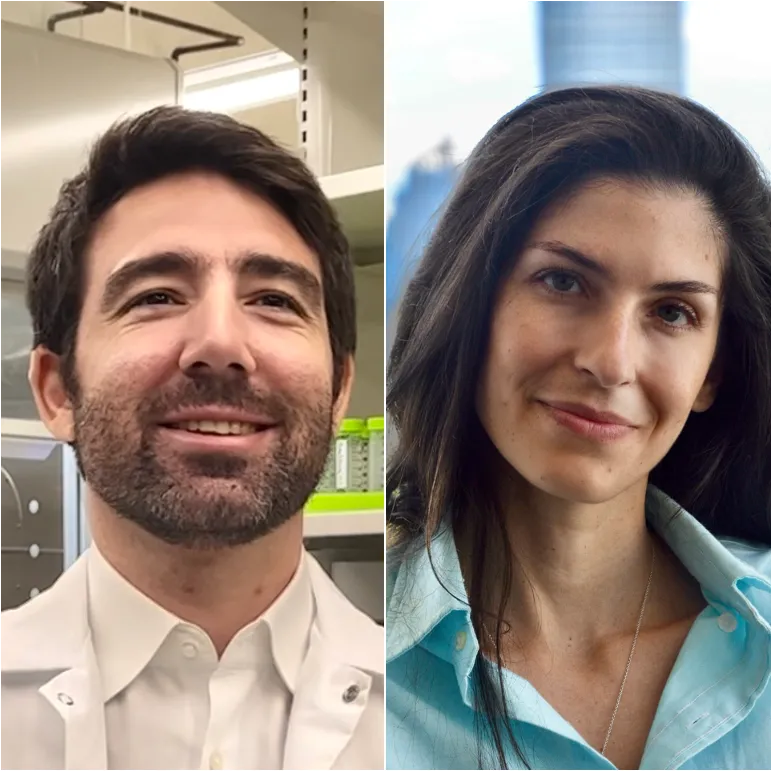
Patricia Stathatou and Christos Athanasiou at Georgia Tech
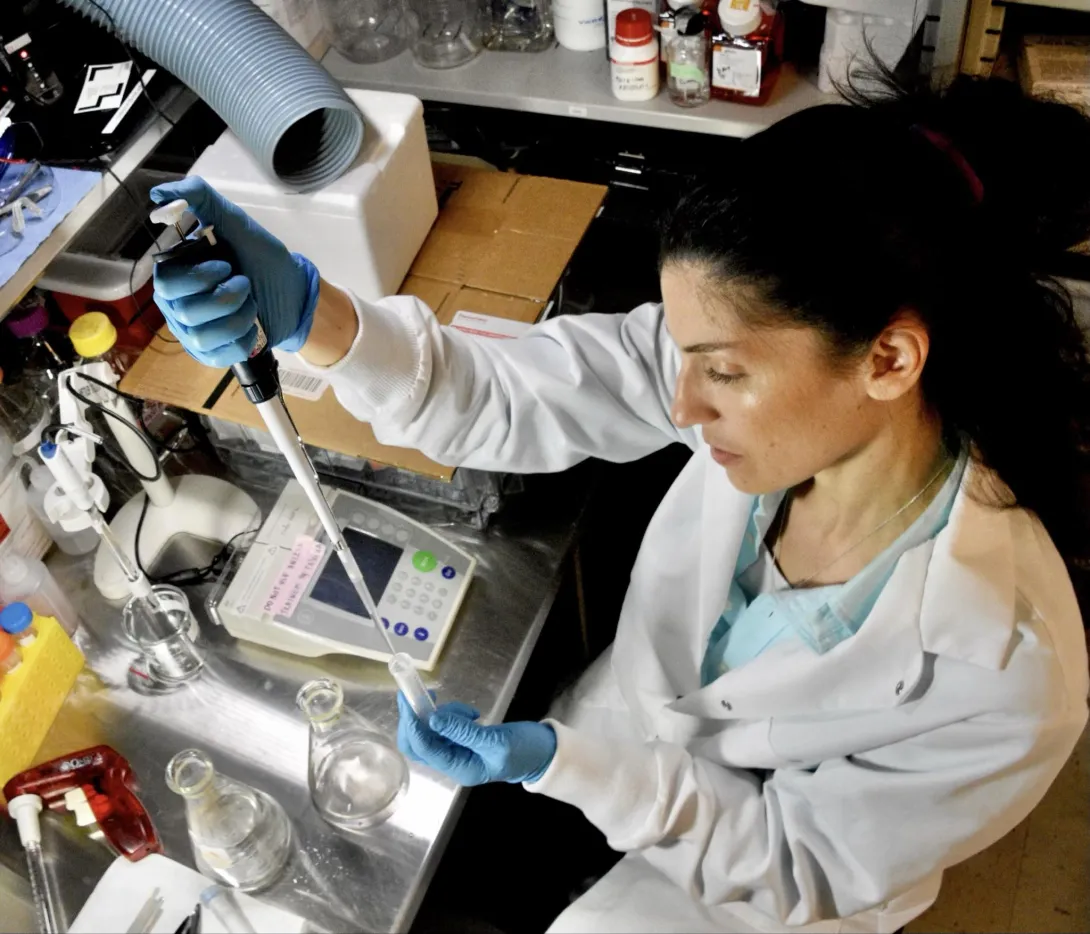
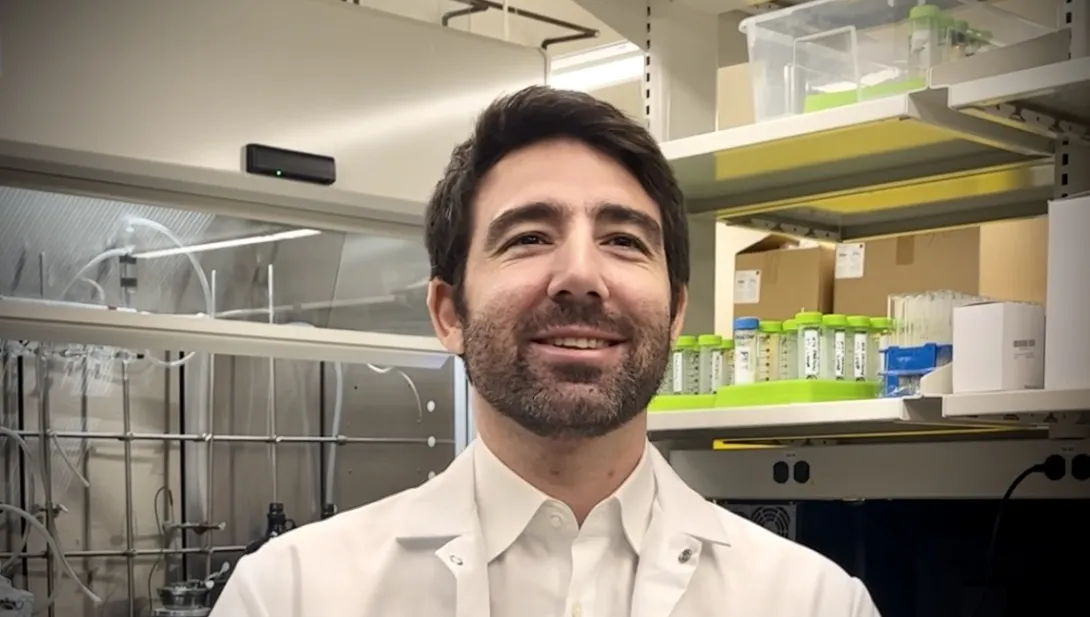

When looking for an environmentally friendly and cost-effective way to clean up contaminated water and soil, Georgia Tech researchers Patricia Stathatou and Christos Athanasiou turned to yeast. A cheap byproduct from fermentation processes — e.g., something your local brewery discards in mass quantities after making a batch of beer — yeast is widely known as an effective biosorbent. Biosorption is a mass transfer process by which an ion or molecule binds to inactive biological materials through physicochemical interactions.
When they initially studied this process, Stathatou and Athanasiou found that yeast can effectively and rapidly remove trace lead — at challenging initial concentrations below one part per million — from drinking water. Conventional water treatment methods either fail to eliminate lead at these low levels or result in high financial and environmental costs to do so. In a paper published today in RSC Sustainability, the researchers show how this process can be scaled.
“If you put yeast directly into water to clean it, you will need an additional treatment step to remove the yeast from the water afterward,” said Stathatou, a research scientist at the Renewable Bioproducts Institute and an incoming assistant professor at the School of Chemical and Biomolecular Engineering. “To implement this process at scale without requiring additional separation steps, the yeast cells need a housing.”
“Additionally, because yeast is abundant— in some cases, brewers even pay companies to haul it away as a waste byproduct — this process gives the yeast a second life,” said Athanasiou, an assistant professor in the Daniel Guggenheim School of Aerospace Engineering. “It’s a plentiful low, or even negative, value resource, making this purification process inexpensive and scalable.”
To develop a housing for the yeast, Stathatou and Athanasiou partnered with MIT chemical engineers Devashish Gokhale and Patrick S. Doyle. Gokhale and Stathatou are the lead authors of this new study that demonstrates the yeast water purification process’s scalability.
“We decided to make these hollow capsules— analogous to a multivitamin pill — but instead of filling them up with vitamins, we fill them up with yeast cells,” Gokhale said. “These capsules are porous, so the water can go into the capsules and the yeast are able to bind all of that lead, but the yeast themselves can’t escape into the water.”
The yeast-laden capsules are sufficiently large, about half a millimeter in diameter, for easy separation from water by gravity. This means they can be used to make packed-bed bioreactors or biofilters, with contaminated water flowing through these hydrogel-encased yeast cells and coming out clean.
Stathatou and Athanasiou envision using these hydrogel yeast capsules in small biofilters consumers can put on their kitchen faucets, or biofilters large enough to fit municipal or industrial wastewater treatment systems. But to enable such scalability, the yeast-laden capsules’ ability to withstand the force generated by water flowing inside such systems needed to be studied as well.
To determine this, Athanasiou tested the capsules’ mechanical robustness, which is how strong and sturdy they are in the presence of waterflow forces. He found they can withstand forces like those generated by water running from a faucet, or even flows like those in water treatment plants that serve a few hundred homes. “In previous attempts to scale up biosorption with similar approaches, lack of mechanical robustness has been a common cause of failure,” Athanasiou said. “We wanted to make sure our work addressed this issue from the very beginning to ensure scalability.”
“After assessing the mechanical robustness of the yeast-laden capsules, we made a prototype biofilter using a 10-ml syringe,” Stathatou explained. “The initial lead concentration of water entering the biofilter was 100 parts per billion; we demonstrated that the biofilter could treat the contaminated water, meeting EPA drinking water guidelines, while operating continuously for 12 days.”
The researchers hope to identify ways to isolate and collect specific contaminants left behind in the filtering yeast, so those too can be used for other purposes.
“Apart from lead, which is widely used in systems for energy generation and storage, this process could be used to remove and recover other metals and rare earth elements as well,” Athanasiou said. “This process could even be useful in space mining or other space applications.”
They also would like to find a way to keep reusing the yeast. “But even if we can’t reuse yeast indefinitely, it is biodegradable,” Stathatou noted. “It doesn’t need to be put into an industrial composter or sent to a landfill. It can be left on the ground, and the yeast will naturally decompose over time, contributing to nutrient cycling.”
This circular approach aims to reduce waste and environmental impact, while also creating economic opportunities in local communities. Despite numerous lead contamination incidents across the U.S., the team’s successful biosorption method notably could benefit low-income areas historically burdened by pollution and limited access to clean water, offering a cost-effective remediation solution. “We think there’s an interesting environmental justice aspect to this, especially when you start with something as low-cost and sustainable as yeast, which is essentially available anywhere,” Gokhale says.
Moving forward, Stathatou and Athanasiou are exploring other uses for their hydrogel-yeast purification method. The researchers are optimistic that, with modifications, this process can be used to remove additional inorganic and organic contaminants of emerging concern, such as PFAS — or “forever” chemicals — from the water or the ground.
Citation: Devashish Gokhale, Patritsia M. Stathatou, Christos E. Athanasiou, and Patrick S. Doyle, “Yeast-laden Hydrogel Capsules for Scalable Trace Lead Removal from Water,” RSC Sustainability. DOI:
Funding: Patricia Stathatou was supported by funding from the Renewable Bioproducts Institute at Georgia Tech. Devashish Gokhale was supported by the Rasikbhai L. Meswani Fellowship for Water Solutions and the MIT Abdul Latif Jameel Water and Food Systems Lab (J-WAFS).
News Contact
Shelley Wunder-Smith
Director of Research Communications
Georgia Institute of Technology
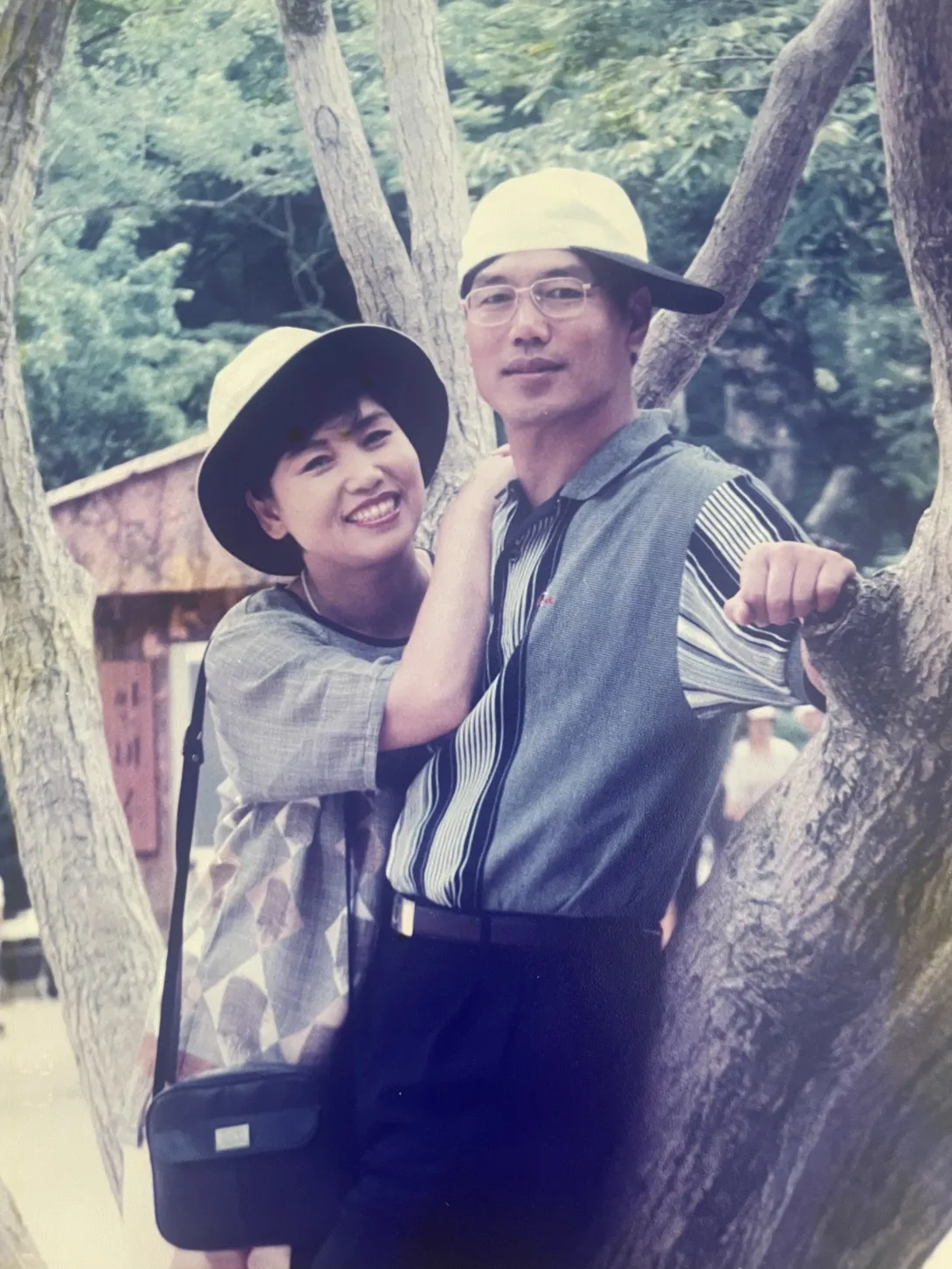
When he was in college, Hong Yeo's father died in his sleep from a heart attack, and Yeo changed his academic and research efforts as a result. Now, he and his research collaborators have developed a device that monitors vital signs during sleep, and it's the type of thing that may have helped doctors intervene in his father's illness if it had been available. This Sleep Scan device is a type of mask you can easily take on and off, and it has now been tested with human subjects and is close to being available commercially.
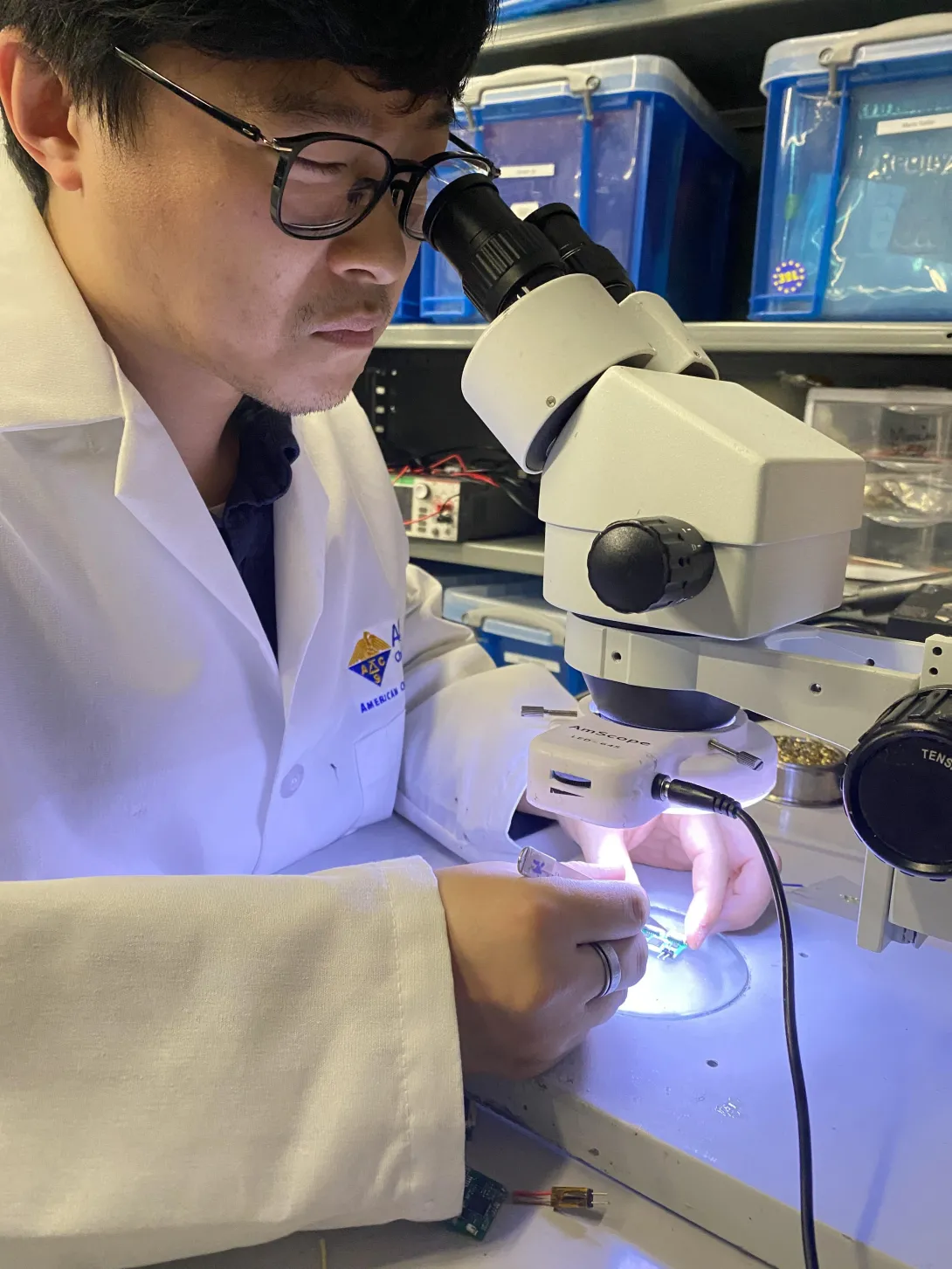
Hong Yeo’s father, Yonghyun Yeo, with his mother in Korea.
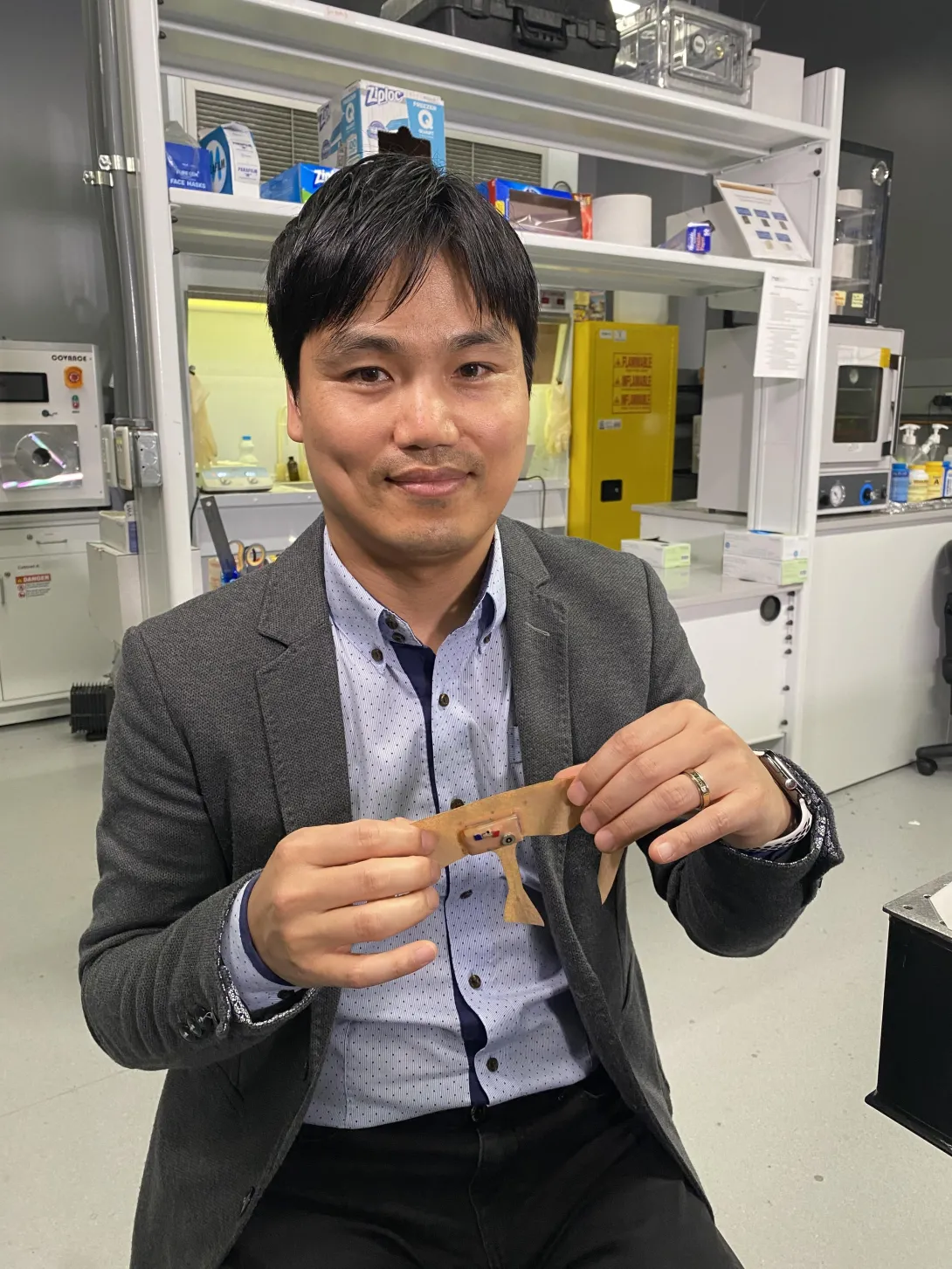
Taewoog Kang, a post-doctoral student in mechanical engineering, works to repair a tiny circuit in Hong Yeo’s lab on Georgia Tech’s campus.
The call from his mom is still vivid 20 years later. Moments this big and this devastating can define lives, and for Hong Yeo, today a Georgia Tech mechanical engineer, this call certainly did. Yeo was a 21-year-old in college studying car design when his mom called to tell him his father had died in his sleep. A heart attack claimed the life of the 49-year-old high school English teacher who had no history of heart trouble and no signs of his growing health threat. For the family, it was a crushing blow that altered each of their paths.
“It was an uncertain time for all of us,” said Yeo. “This loss changed my focus.”
For Yeo, thoughts and dreams of designing cars for Hyundai in Korea turned instead toward medicine. The shock of his father going from no signs of illness to gone forever developed into a quest for medical answers that might keep other families from experiencing the pain and loss his family did — or at least making it less likely to happen.
Yeo’s own research and schooling in college pointed out a big problem when it comes to issues with sleep and how our bodies’ systems perform — data. He became determined to invent a way to give medical doctors better information that would allow them to spot a problem like his father’s before it became life-threatening.
His answer: a type of wearable sleep data system. Now very close to being commercially available, Yeo’s device comes after years of working on the materials and electronics for an easy-to-wear, comfortable mask that can gather data about sleep over multiple days or even weeks, allowing doctors to catch sporadic heart problems or other issues. Different from some of the bulky devices with straps and cords currently available for at-home heart monitoring, it offers the bonuses of ease of use and comfort, ensuring little to no alteration to users’ bedtime routine or wear. This means researchers can collect data from sleep patterns that are as close to normal sleep as possible.
“Most of the time now, gathering sleep data means the patient must come to a lab or hospital for sleep monitoring. Of course, it’s less comfortable than home, and the devices patients must wear make it even less so. Also, the process is expensive, so it’s rare to get multiple nights of data,” says Audrey Duarte, University of Texas human memory researcher.
Duarte has been working with Yeo on this system for more than 10 years. She says there are so many mental and physical health outcomes tied to sleep that good, long-term data has the potential to have tremendous impact.
“The results we’ve seen are incredibly encouraging, related to many things —from heart issues to areas I study more closely like memory and Alzheimer’s,” said Duarte.
Yeo’s device may not have caught the arrhythmia that caused his father’s heart attack, but nights or weeks of data would have made effective medical intervention much more likely.
Inspired by his own family’s loss, Yeo’s life’s work has become a tool of hope for others.
News Contact
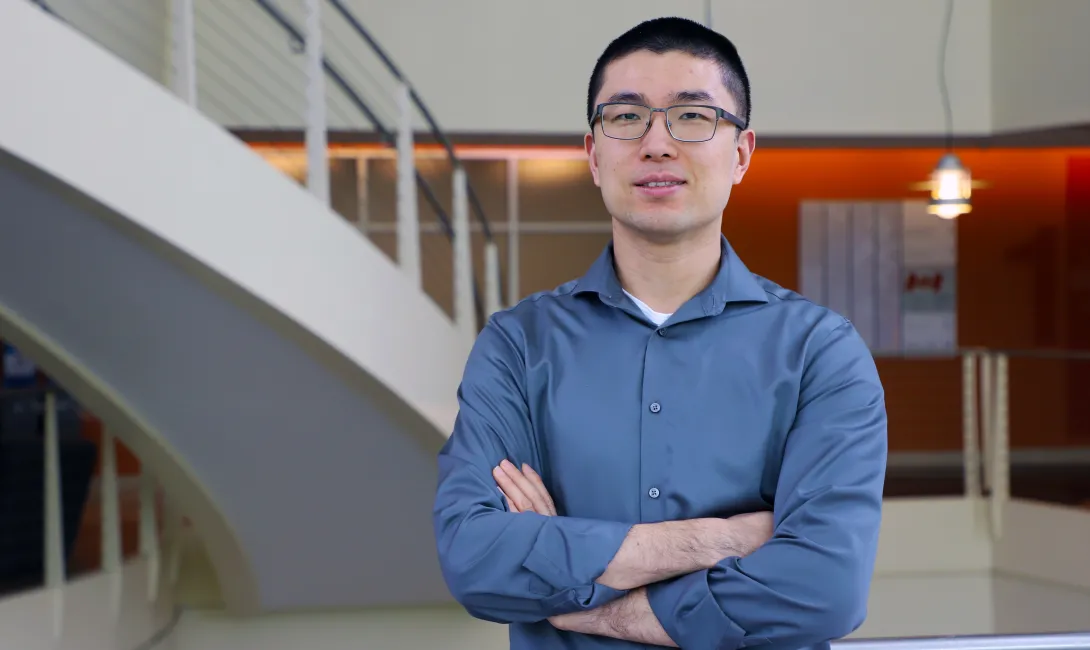
Jie He, assistant professor in the School of Earth and Atmospheric Sciences, wants to predict how rainfall will change in the presence of continuing climate change. — Photo by Jerry Grillo
Georgia Tech researcher Jie He set out to predict how rainfall will change as Earth’s atmosphere continues to heat up. In the process, he made some unexpected discoveries that might explain how greenhouse gas emissions will impact tropical oceans, affecting climate on a global scale.
“This is not a story with just one punch line,” said He, assistant professor in Georgia Tech’s School of Earth and Atmospheric Sciences, whose most recent work appeared in the journal Nature Climate Change. “I didn’t really expect to find anything this interesting—there were a few surprises.”
He is principal investigator of the Climate Modeling and Dynamics Group, which combines expertise in physics, mathematics, and computer science to study climate change. The team’s latest study, a collaboration with Mississippi State University and Princeton University, examines hydrological sensitivity in the planet’s three tropical basins: the central portions of both the Pacific and Atlantic oceans and most of the Indian Ocean, an equatorial belt girding the Earth between the Tropic of Cancer (north) and Tropic of Capricorn (south).
Hydrological sensitivity (HS) refers to the precipitation change per degree of surface warming. Hydrological sensitivity is a key metric researchers use in evaluating or predicting how rainfall will respond to future climate change. Positive HS indicates a wetter climate, while negative HS indicates a drier climate.
“The projection of hydrological sensitivity and future precipitation has been widely investigated, but most studies look at global averages — nobody had yet looked closely at each individual basin,” He said. “And the real impact on global climate change will come from the regional scale.”
In other words, what happens in tropical waters has far-reaching effects.
Long Reach of the Tropics
He wanted to specifically examine the tropical basins because they already have a well-known influence on remote locations: El Niños and La Niñas. These weather patterns that shift every couple of years are examples of tropical oceanic precipitation changes that have a global impact.
“These precipitation changes create heating and cooling in the atmosphere that set off atmospheric waves affecting remote climates across the globe,” He said. During El Niño winters, for example, the southeastern U.S. typically gets more precipitation than usual.
But El Niños and La Niñas are naturally occurring, whereas the tropical precipitation changes He identified are projected as outcomes of human-induced global warming — a simulation, part of a climate model.
Climate models are an essential tool for He and other researchers, who use them to simulate possible future scenarios. These are computer programs that rely on complex math equations to project the atmospheric interactions of energy and matter likely to occur across the planet.
What surprised He was the substantial difference in HS between tropical basins. Essentially, in He’s model the Pacific tropical basin has an HS more than twice as large as the Indian basin, with the Atlantic basin projected as a negative value.
“It was surprising because these differences can’t be explained by the mainstream theories on tropical precipitation changes,” He said. “In other words, none of the theories we knew would have predicted it.”
Modeling the Sensitive Future
The effects of such diverging hydrological sensitivity would be widespread, according to He. For example, his experiments suggest that the continental U.S. will get wetter, and the Amazon will become drier.
“If these model projections are true, these effects will materialize as the climate continues to warm,” said He, who can’t predict exactly how long it will be before these effects can be detected in actual observations of our three-dimensional world.
That’s because they only have reliable observations of oceanic tropical precipitation since 1979. Precipitation changes over decades are strongly affected by internal climate variability — that is, climate change that isn’t caused by humans. When human-induced precipitation changes are significantly greater than internal climate variability, we should be able to detect the wide-ranging effects of diverging hydrological sensitivity.
But the challenges of continuing climate change do not allow the luxury of waiting until every aspect of climate projection becomes a reality, He noted, adding, “We are relying on climate projections to some extent to guide our adaptation and mitigation plans. Therefore, it is important to study and understand the climate projections.”
Based on the scenario projected by climate models used in He’s research, the effects of El Niños and La Niñas on remote climates will become stronger.
“What we can imply is that this strengthening would be partly due to the diverging HS among tropical basins,” He concluded.
While the future effects of HS on El Niños and La Niñas weren’t discussed in this study, He believes it would make a very interesting research subject going forward.
News Contact
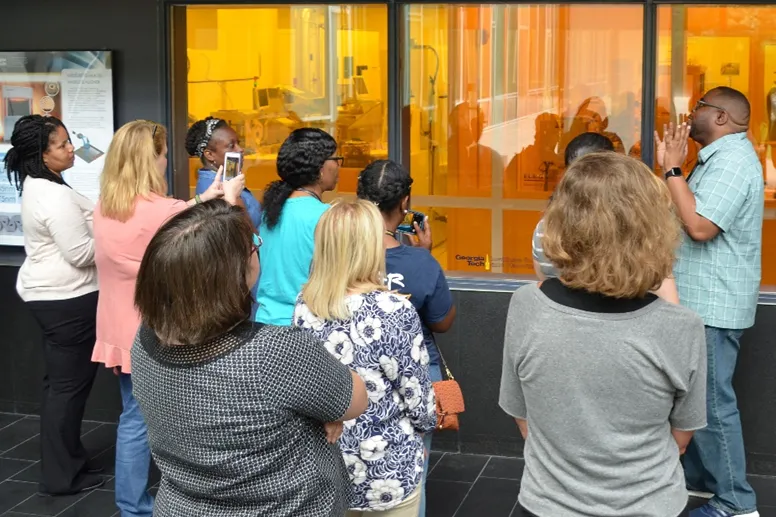
When Amy Bonecutter-Leonard was a second-semester undergraduate at the Georgia Institute of Technology, she applied for a work-study job in the cleanroom at the Microelectronics Research Center (MiRC). There, she learned process techniques for making the same type of electronic chips used in cellphones.
With this new knowledge, she could train and help other students with their research. At the time, Bonecutter-Leonard was a chemical engineering major with no plans to go into microelectronics. Working in the cleanroom changed that.
“I fell in love with microelectronics through exposure to the research and development work performed in the cleanroom,” she said.
What started as a student job led to her taking microelectronics classes — and eventually to a career in the field. “My work-study prepared me with hands-on technical skills I would have never learned from just being in a classroom,” she said. Now, Bonecutter-Leonard works as a microelectronics business chief engineer at defense contractor L3Harris Technologies.
Her story is one of many from the Institute for Electronics and Nanotechnology (IEN, the successor to MiRC), which has been training students from kindergarten to graduate school to be leaders in the microelectronics and nanotechnology space. The goal of IEN’s outreach is to make nanotechnology and microelectronics — such as computer chips and sensors — as accessible as any other science. Ultimately, these efforts will build up the U.S. workforce in the field, ensuring the country remains at the forefront of the technology that powers Americans’ everyday lives.
Building the Workforce
Bolstering the number of workers in the microelectronics industry is imperative to keep the U.S. globally competitive. Right now, 40% of the industry's labor force is older than 50, with practitioners aging out of their careers at a pace new talent cannot match. Additionally, heavy educational barriers to entry, including required degrees and specialized training, prevent more people from pursuing careers in the field. Without dedicated efforts, the entire sector — and the nation — will fall behind.
IEN is working to solve this pipeline problem.
“With the national semiconductor workforce aging, it is important now more than ever that we educate the next generation to move into these jobs,” said Michael Filler, IEN’s interim executive director. “IEN is proud to support the semiconductor industry by providing students with the interdisciplinary skills and hands-on technical training essential for success in this fast-paced, global field.”
Georgia Tech is uniquely positioned to lead this charge with its 28,500 square feet of academic cleanroom space, the largest in the Southeast and among the largest in the U.S. From micro-electro-mechanical systems to electronics fabrication, workers have 100 bays in which to conduct leading-edge research. These cleanrooms are also key teaching and training facilities.
IEN invites anyone from around the world, whether affiliated with the Institute or not, to become a core user of the cleanroom facilities. The center also regularly hosts short courses for external partners — academic, industry, and government — in microfabrication and soft lithography for microfluidics. Over the past three years, more than 700 people went through new-user orientation, and 193 enrolled in the short courses.
Teaching the Next Generation
Making nanotechnology — of which microelectronics is an example — educationally accessible begins before college. Each semester, more than 800 K-12 students participate in IEN’s Introduction to Nanotechnology virtual lesson. Associate Director for Education and Outreach Mikkel Thomas begins his presentations by asking a simple question: What do you know about nanotechnology?
“About 99% of the time, they say that’s what makes Ironman’s suit work,” said Thomas. “That means they’ve learned the wrong lesson — that nanotechnology is a futuristic tech and that you have to be as smart as Tony Stark to work in the field.
“But most people interact with nanotechnology multiple times throughout their day, and they have no idea they're doing it.”
Thomas also emphasizes there is a career path for everyone, even if they don’t plan to get a traditional four-year degree. Part of IEN’s workforce development initiative is to build up the entire pipeline from industry and research lab technicians at the certificate level to postdoctoral researchers.
“It’s important for us to reach kids who don’t know what career options are available in nanotechnology,” Thomas said. “We want them to know that whatever they're interested in, there is a pathway for them.”
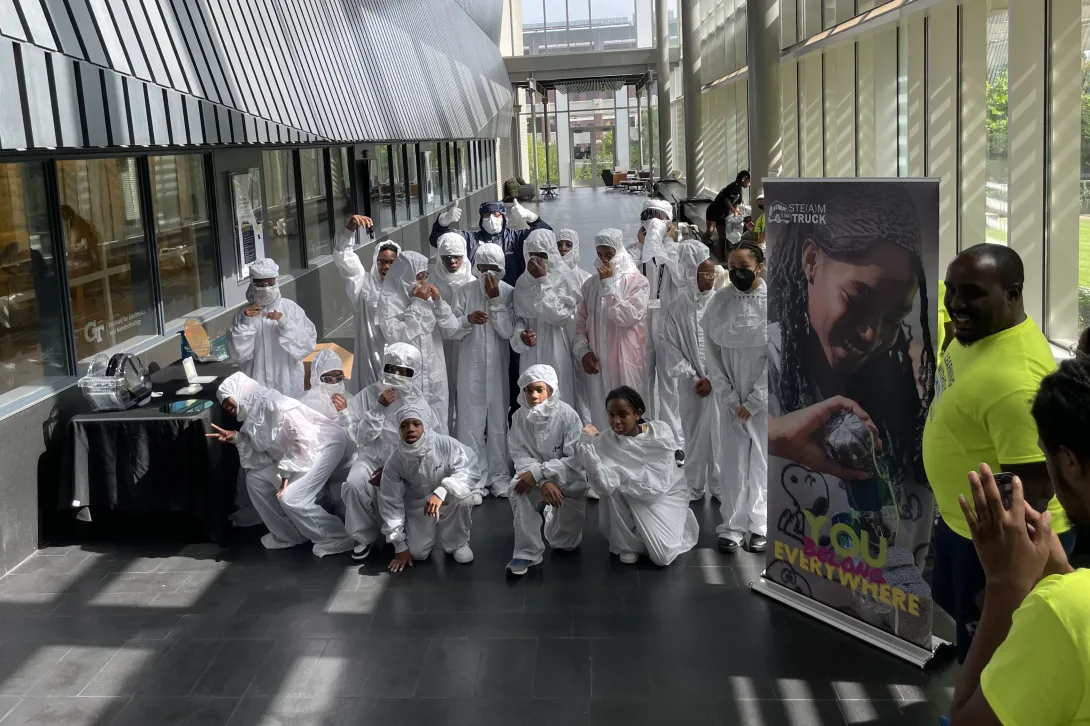
Sixth- through eighth-grade students sparked by this conversation can attend Chip Camp, a three-day STEM summer camp sponsored by Micron. They begin with a day at IEN to learn about thin films, magic sands, ferrofluids, and measuring their height in nanometers. The rest of the camp features hands-on visits to the Materials Characterization Facility (MCF) and the IEN cleanroom, where they can try on the white “bunny suits” technicians wear in the lab.
To further their reach, IEN’s workforce development team collaborates with teachers to bring nanotechnology into classrooms. During the summer, IEN offers the Research Experience for Teachers, a training program for public school and community college teachers to conduct nanotechnology research and learn how to incorporate it into their lessons. Middle school teachers have similar opportunities through the Nanoscience Summer Institute for Middle School Teachers.
Training the Workforce
When these students get to a university like Georgia Tech, IEN hires them for work-study jobs like the one Bonecutter-Leonard had. The hands-on cleanroom training is also vital to graduate students pursuing advanced degrees.
Katie Young earned her Ph.D. in materials science and engineering at Georgia Tech. Learning her way around the IEN cleanroom was essential for her graduate studies.
“My dissertation research involved synthesizing two-dimensional materials — only a single atom thick — for permeation barriers,” she explained. “I often used the cleanroom’s vacuum systems to synthesize and process 2D materials.” Now a research scientist at the Georgia Tech Research Institute, Young still works in the cleanroom on semiconductor device fabrication, building prototype quantum and biological sensors.
IEN opportunities are not limited to graduate research. Annually, about 150 Georgia Tech undergraduate students take microelectronics packaging and devices classes, with labs taught by IEN staff in the teaching cleanroom. These courses include Integrated Circuit Fabrication (ECE 4452), in which students learn to fabricate circuit elements, and the Science and Engineering of Microelectronic Fabrication (ChBE 4050/6050, open to graduate students as well), for students interested in semiconductor materials and fabrication.
Students don’t need to enroll at Georgia Tech to benefit from training, courses, and other opportunities. IEN’s internship program provides technical college students with training to become microelectronics technicians, either through work in the Biocleanroom or in the MCF.
Empowering Future Innovators
IEN also participates in the National Science Foundation Research Experiences for Undergraduates (REU), which provides opportunities for students from underrepresented groups or who attend schools without similar facilities. While enrolled at another university, John Mark Page was introduced to Georgia Tech’s cleanroom through an REU.
“That was my first exposure to any facility of this kind, and it felt like I was looking at the future. Being in a facility that can fabricate devices at or near the atomic level — it was hard to fathom,” Page said. “I had never thought that participating in microelectronics and nanotechnology as a student, especially as an undergraduate, was something I could do.”
As a result of his REU, Page transferred to Georgia Tech — he will graduate this summer with a bachelor’s degree in electrical engineering. He also completed a second REU at the University of North Carolina at Chapel Hill, worked as a student assistant in the IEN cleanroom, and participated in a Vertically Integrated Project (VIP), Chip Scale Power and Energy.
“I was interested in the VIP because it allowed me to spend more time in the cleanroom, familiarizing myself with semiconductor fabrication methods and training on new fabrication equipment,” Page explained. His experiences inspired him to consider a future career in the semiconductor industry.
“It wasn’t only the 10-week experience of the REU that made a lasting impact on me,” he said. “It was also the relationships formed with the people of IEN. The staff there are exceptional representatives of Georgia Tech, and they make IEN a tremendous asset to the future of microelectronics and nanotechnology in the U.S.”
Biya Haile, an ECE Ph.D. student, had a similarly meaningful REU experience. Haile, whose research focuses on creating micro-electro-mechanical systems-based sensors (MEMS), described the REU as “immersive.”
“The REU project enabled me to study chemical micro-sensor technologies, as well as state-of-the-art additive nano-manufacturing techniques, which has contributed to my research,” he said. “I feel lucky that my academic journey has entailed developing new technologies that use nanoscience to solve big problems.”
While Haile is currently focused more on designing and testing rapid processes for fabricating MEMS-based devices, he still occasionally works in the cleanroom on fabrication. He plans to go into the microelectronics industry after graduating.
The Path Ahead
All of IEN’s training and educational offerings align with IEN’s mission to bolster and diversify the microelectronics workforce, according to George White, senior director of strategic partnerships for the Georgia Tech research enterprise. “IEN has been at the forefront of the CHIPS infrastructure buildout, particularly in the area of education and workforce development,” he noted.
IEN’s efforts impact not just Atlanta but the entire country. Georgia Tech’s leadership in microelectronics research trains the innovators and practitioners of the future everywhere and ensures that America stays at the forefront of leading-edge technology. As demand increases for microelectronics, IEN is moving to meet it.
Effective July 1, 2024, the Institute for Electronics and Nanotechnology and the Institute for Materials will evolve into the Institute for Matter and Systems (IMS). This strategic union aims to foster convergent research at Georgia Tech, focusing on the science, technology, and societal underpinnings of cutting-edge materials and devices. Eric Vogel will be the director of IMS, and Michael Filler will be the deputy director.
News Contact
Media Contact: Tess Malone, Senior Research Writer/Editor tess.malone@gatech.edu