

Whether it’s a fire or a flood, a ship’s crew can only rely on itself and its training in emergencies at sea. The same is true for crews facing digital threats on oil tankers, cargo ships, and other commercial vessels.
New cybersecurity research from the Georgia Institute of Technology, however, revealed that crews aboard commercial vessels were often not adequately prepared to manage cyberattacks effectively due to systemic training gaps.
The findings are based on interviews conducted by researchers with more than 20 officer-level mariners to assess the maritime industry’s readiness to handle cybersecurity attacks at sea.
"Historically, cybersecurity research has focused heavily on cyber-physical systems like cars, factories, and industrial plants, but ships have largely been overlooked,” said Anna Raymaker, Ph.D. student and lead researcher.
“That gap is concerning when more than 90% of the world’s goods travel by sea. Recent incidents, from GPS spoofing to ships linked to subsea cable disruptions, show that maritime systems are increasingly part of the global cyber threat landscape.”
The researchers proposed four practical strategies to strengthen maritime cyber defenses and close the training gaps. Their findings were presented recently at the ACM SIGSAC Conference on Computer and Communications Security (CCS).
1. Make Cybersecurity Training Actually Maritime
Many of those interviewed for the study described current cybersecurity training as “boilerplate” — generic modules that don’t reflect real shipboard risks.
Researchers recommend:
- Role-specific instruction: Navigation officers should learn to detect and identify GPS spoofing. Engineers should focus on vulnerabilities in remotely monitored systems.
- Bridging IT and Operational Technology: Crews need to understand how attacks on IT systems can trigger physical consequences in operational technology — including collisions, groundings, or explosions.
- Hands-on delivery: Replace passive PowerPoints with drills and in-person exercises that build muscle memory.
- Accessible standards: Training must account for the wide range of educational backgrounds across crews and be standardized across ranks.
2. Move Beyond “Call IT”
At sea, crews can’t simply escalate a cyber incident to a shore-based IT department and wait. Operational resilience requires onboard readiness.
Researchers recommend:
- Vessel-specific response plans: Ships need clear, actionable protocols for threats such as AIS jamming or radar manipulation.
- Military-style drills: Adopting MCON (Emission Control) exercises — used by the U.S. Military Sealift Command — can train crews to operate safely without electronic systems.
- Stronger connectivity controls: High-bandwidth satellite systems like Starlink introduce new risks. Clear policies and network segregation are essential to prevent new entry points for attackers.
Related Article: When GPS lies at sea: How electronic warfare is threatening ships and their crews by Anna Raymaker
3. Create Unified, Ship-Specific Regulations
Maritime cybersecurity regulations are often reactive and fragmented. Researchers argue the industry needs a cohesive, domain-specific framework.
Key recommendations include:
- A unified global model: Like the energy sector’s NERC CIP standards, a maritime framework could mandate baseline controls such as encryption, network segmentation, and anonymous incident reporting.
- Rules built for real crews: Regulations designed for large naval operations don’t translate well to smaller merchant or research vessels. Standards must reflect actual shipboard conditions.
- Future-proofing requirements: Autonomous ships and remotely operated vessels expand the cyber-physical attack surface. Regulations must proactively address these emerging technologies.
4. Invest in Maritime-Specific Cyber Research
Finally, the researchers stress that long-term resilience requires deeper technical research focused on maritime systems.
Priority areas include:
- Real-time intrusion detection systems tailored to shipboard protocols.
- Proactive security risk assessments of interconnected onboard systems.
- Cyber-physical modeling to better understand cascading failures in complex maritime environments.
The Bottom Line
Cyber threats at sea are no longer hypothetical. Mariners report real-world incidents ranging from GPS spoofing to ransomware that disrupts global trade.
“Through our interviews with mariners, I saw firsthand how much dedication and pride they take in their work,” said Raymaker. “Our goal is for this research to serve as a call to action for researchers, policymakers, and industry to invest more attention in maritime cybersecurity and support the people who risk their lives every day to keep global trade, food, and energy moving."
A Sea of Cyber Threats: Maritime Cybersecurity from the Perspective of Mariners was presented at CCS 2025. It was written by Raymaker and her colleagues, Ph.D. students Akshaya Kumar, Miuyin Yong Wong, and Ryan Pickren; Research Scientist Animesh Chhotaray, Associate Professor Frank Li, Associate Professor Saman Zonouz, and Georgia Tech Provost and Executive Vice President for Academic Affairs Raheem Beyah.
News Contact
John Popham
Communications Officer II School of Cybersecurity and Privacy

2026 Institute Research Award Winners
Georgia Tech has announced the recipients of the 2026 Institute Research Awards, honoring faculty, staff, and research teams whose work has made significant scientific, technological, and societal impact. Presented by the Office of the Executive Vice President for Research, the awards recognize excellence across six categories spanning innovation, mentorship, collaboration, engagement, and research program development and impact. This year’s honorees reflect the breadth of Georgia Tech’s research enterprise — from foundational discovery to commercialization and community partnerships — and will be recognized at the Faculty and Staff Honors Luncheon on April 24.
The in-state rivalry between the Yellow Jackets and the Bulldogs usually heats up when Georgia Tech visits the University of Georgia. However, one Saturday last month, the focus shifted from competition to collaboration.
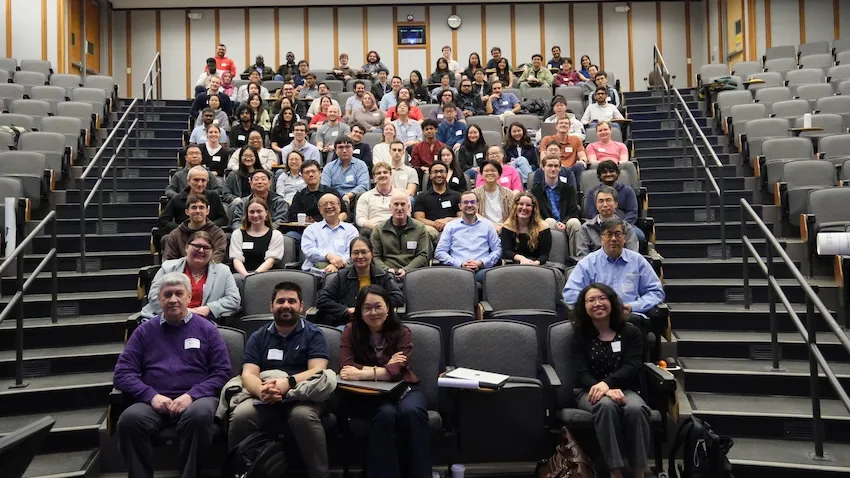
The Georgia Scientific Computing Symposium (GSCS) held its annual meeting on February 21 in Athens. Since 2009, the event has hosted researchers from across the Peach State to showcase homegrown advances in scientific computing.
The symposium highlighted Georgia’s reputation as a computing innovation hub. People from around the world come to Georgia universities to lead computing research. By advancing science, engineering, medicine, and technology, their work improves communities at home and abroad.
Faculty and students from Georgia Tech, UGA, Georgia State University, and Emory University presented at the symposium. Georgia Tech participants came from the colleges of Computing, Engineering, and Sciences.
This year’s organizers agreed to meet in Atlanta for the 2027 symposium. Georgia Tech’s School of Computational Science and Engineering (CSE) will host the 19th GSCS.
“From healthcare to computer chip design, scientific computing underpins many of the technological advances we see in our lives,” said Professor Edmond Chow, associate chair of the School of CSE.
“Scientific computing provides the mathematical models, simulations, and data‑driven tools that make modern innovation possible. It allows people to analyze complex systems, test ideas virtually before building them, and make faster, more accurate decisions across nearly every sector of society.”
Professor Haomin Zhou and Assistant Professor Helen Xu delivered two of the symposium’s five plenary talks.
Zhou presented a new method for solving the Schrödinger equation, a landmark equation in quantum mechanics. Drawing inspiration from the mathematics used in generative artificial intelligence models, his approach develops an algorithm that more effectively simulates waves, particle motion, and other physical systems.
Xu focused on improving how computers move and organize data during complex calculations. Her work uses “cache-friendly” layouts that help computers access data more efficiently, boosting performance for scientific and engineering applications.
“Speaking at GSCS was a great opportunity,” Xu said. “The symposium fostered connections within the scientific computing community and gave us a chance to share exciting research.”
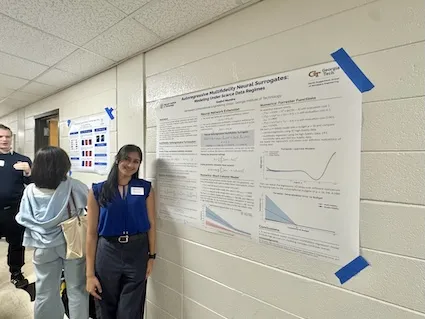
The symposium showcased student work through a poster blitz and a poster session. During the blitz, 36 students each had one minute to introduce their research to the full audience. They then shared more details about their research during the poster session.
The student projects showed the range of fields supported by scientific computing. The session also provided attendees with an opportunity to connect and expand their professional networks, helping grow the field’s future impact.
“As an aerospace engineer by training and aspiring computational scientist, GSCS gave me the platform to network with other researchers in the field while showcasing my own research,” said M.S. student Kashvi Mundra.
“I was able to connect with scientists across different disciplines whose work intersects with my own in unexpected ways. Those conversations pushed my thinking beyond my own lab's perspective, helping me see my work on physics-informed machine learning for inverse problems in a broader scientific computing context.”
Georgia Tech students who presented posters included:
Abir Haque (CSE), Massively Parallel Random Phase Approximation Correlation Energy via Lanczos Quadrature
Antonio Varagnolo (CSE), Physics-Enhanced Deep Surrogates for the Phonon Boltzmann Transport Equation
Ben Burns (CSE), Infinite-Dimensional Stein Variational Inference with Derivative-Informed Neural Operators
Ben Wilfong (CSE), Shocks without Shock Capturing; Compressible Flow at 1 quadrillion Degrees of Freedom without Loss of Accuracy
Daniel Vickers (CSE), Highly-Parallel Fluid-Solid Interactions for Compressible Flows
Eric Fowler (CSE), High-Performance Tensor Contractions in Computational Chemistry
Haoran Yan (Math), Understanding Denoising Autoencoders through the Manifold Hypothesis: A Geometric Perspective
Kashvi Mundra (CSE), Autoregressive Multifidelity Neural Surrogate Modeling under Scarce Data Regimes
Sebastián Gutiérrez Hernández (Math/CSE), PDPO: Parametric Density Path Optimization
Vivian Zhang (AE), Multifidelity Operator Inference: Non-Intrusive Reduced Order Modeling from Scarce Data
Xian Mae Hadia (CSE), Data Efficiency of Surrogate Models: Learning Physics Data from Full Field Data vs. Inductive Bias from Approximate PDE Solvers
Xiangming Huang (CSE), Neural Operator Accelerated Evolutionary Strategies for PDE-Constraint Optimization
Zhaiming Shen (Math), Understanding In-Context Learning on Structured Manifolds: Bridging Attention to Kernel Methods
Zhongjie Shi (Math), Towards Understanding Generalization in DP-GD: A Case Study in Training Two-Layer CNNs
News Contact
Bryant Wine, Communications Officer
bryant.wine@cc.gatech.edu
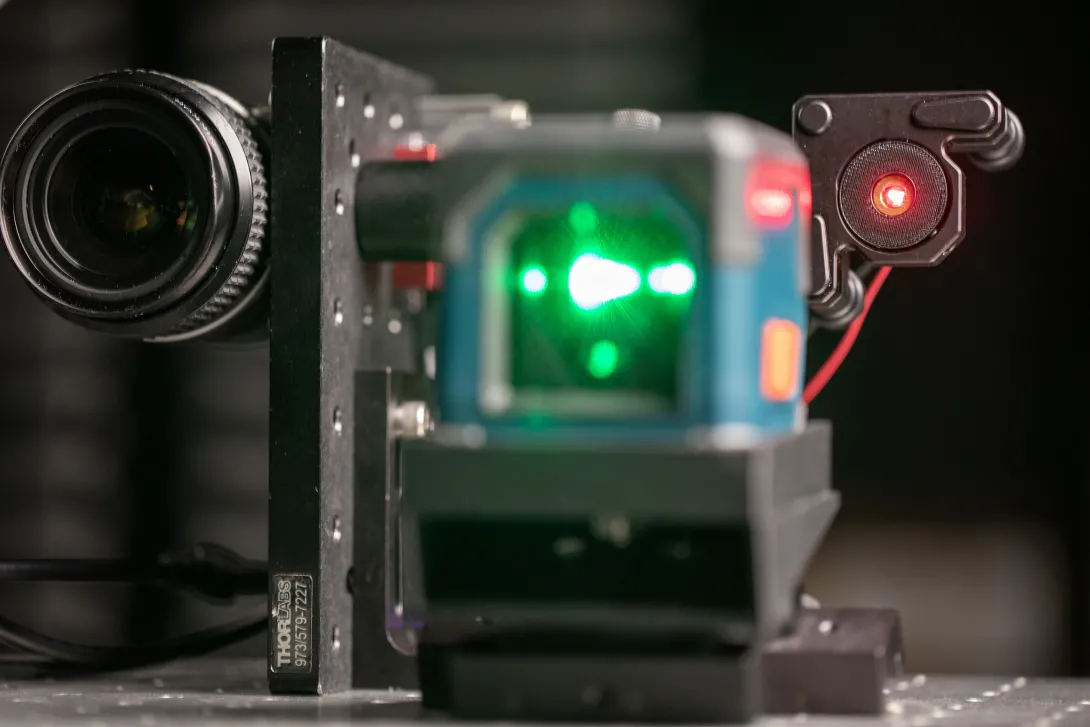
Example of a functional dual-laser prototype using 3D printed materials and off-the-shelf components, highlighting the compact low-cost paradigm exhibited by the Scheimpflug optical ranging technology for wide-domain application. (Credit: Sean McNeil, GTRI)
An optical principle discovered more than a century ago may soon find new applications in such areas as monitoring atmospheric turbulence, tracking airborne objects, and mapping the environment, thanks to researchers at the Georgia Tech Research Institute (GTRI).
Applying the Scheimpflug technique, the researchers are developing inexpensive rangefinder camera technology, advanced sensors and computational techniques to both complement and provide an alternative to established light detection and ranging (LiDAR) technology in certain applications. The technique works best in short- and medium-distance metrology, and can be used passively or in collaboration with laser-based techniques.
“The Scheimpflug technique is a complete alternative to time-of-flight (ToF) LiDAR, and we’re looking for everything we can do with it,” said Nathan Meraz, a GTRI senior research scientist who has been refining the new applications for several years. “It measures things differently, and since it’s a camera sensor, there’s a lot more information to process compared to a LiDAR signal. And there are also data fusion aspects.”
A paper on the technique and its potential remote sensing applications was presented during 2025 at the SPIE Defense + Commercial Systems (DCS) Conference. The research was supported by GTRI’s Independent Research and Development (IRAD) program and also has been advanced by teams of student researchers from the GTRI Research Internship Program (GRIP).
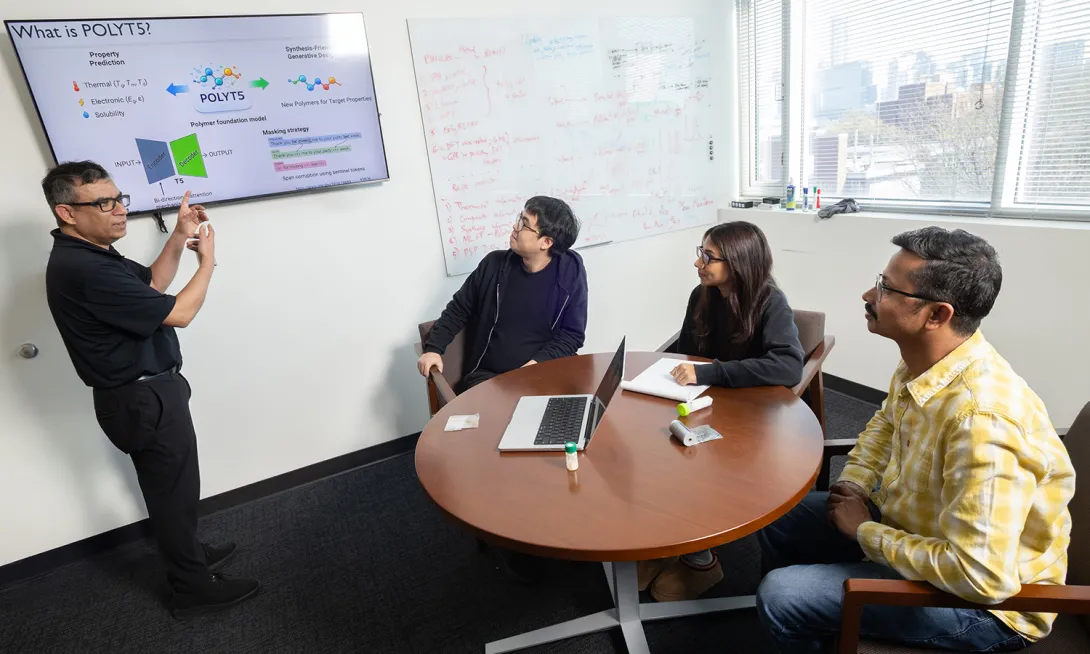
Researchers have created a chemical language AI model to generate new polymer structures based on the properties those polymers need to exhibit. Led by Rampi Ramprasad, standing, the team included postdoctoral scholar Wei Xiong, Ph.D. student Anagha Savit, and research scientist Harikrishna Sahu, who are seated left to right. (Photo: Candler Hobbs)
The words on this page mean something because they are assembled in a particular order and follow the complex rules of grammar and syntax. Creating new chemical polymers follows a similar kind of structure, with rules about what elements and groups of atoms go together and how to assemble them to make sense.
Thinking about polymers in that way has led Georgia Tech materials scientists to create new generative artificial intelligence tools that are like Claude or ChatGPT for new materials.
These are the first foundational models for generative polymer design that have also been validated through physical experiments: users specify the properties they need in a polymer and the model will suggest a chemical structure.
Led by Regents’ Entrepreneur Rampi Ramprasad, the researchers described their latest model this month in the Nature journal npj Artificial Intelligence — including a test material they created and validated in the lab to prove the models work.
News Contact
Joshua Stewart
College of Engineering

Efficiently transitioning from fossil fuels to renewable energy means looking at so much more than just the technology we use.
Reliable energy is required to keep safe in cold winters and hot summers, making it a matter of national security. There are also vying economic policies to consider, political and financial incentives to navigate, and questions of social and economic inequality.
Experts in Georgia Tech’s Ivan Allen College of Liberal Arts examine the challenges we face with the U.S. energy transition, and work to help make it safe, fair, and effective for all.
- Challenge No. 1: Managing National Security — with Adam N. Stulberg, professor and chair of the Sam Nunn School of International Affairs.
- Challenge No. 2: Confronting Inequality — with Bijesh Mishra, a postdoctoral scholar in the Jimmy and Rosalynn Carter School of Public Policy.
- Challenge No. 3: Choosing the Right Economic Policies — with Bobby Harris, an assistant professor in the School of Economics.
- Challenge No. 4: Navigating Financial and Political Incentives — with Kate Pride Brown, a sociologist in the School of History and Sociology.
News Contact
Di Minardi — Ivan Allen College of Liberal Arts
Regents' Professor Marilyn A. Brown and Ph.D. candidate Niraj Palsule co-authored the study.
Putting more electric cars on the road doesn’t just benefit those with enough money to buy the often-pricey vehicles, it also pushes down prices at the gas pump while strengthening U.S. energy security, according to new research from Georgia Tech’s Jimmy and Rosalynn Carter School of Public Policy.
According to the study, published in Energy Policy, widespread adoption of electric vehicles, or EVs, by 2035 would cut energy bills for U.S. households by more than 6% — including more than 4% at the gas pump. It also would drive oil imports down by 7% and increase exports by nearly 4%, the researchers say.
However, those benefits are imperiled by the repeal of national electric vehicle incentives and the recent decision by the federal government to roll back EV-boosting rules meant to increase vehicle fuel efficiency and reduce pollution, according to the study’s authors, Ph.D. candidate Niraj K. Palsule; Marilyn A. Brown, Regents’ Professor and Brook Byers Professor of Sustainable Systems; and former graduate student Suprita Chakravarthy. Their study was conducted prior to the federal decisions.
“Proponents of eliminating fuel efficiency standards and other EV-boosting policies often frame those regulatory approaches as consumer-unfriendly, but our analysis shows that such policies have many long-term benefits, both for consumers and for the nation’s energy security,” Palsule said.
For more on the study, read the full story.
News Contact
Michael Pearson
Ivan Allen College of Liberal Arts

Dr. Nikhil Shah and Dr. Hiep Nguyen, are cofounders of Nephrodite, an ATDC startup.

Jonathan Schwartz, OrthoPreserve’s founder and CEO.
It’s uncommon for any startup to receive the Food and Drug Administration’s (FDA) Breakthrough Devices designation. For the roughly 40% of applicants who receive the designation, it shows that the technology has real potential to improve patient outcomes and should get priority attention from the agency.
The Advanced Technology Development Center (ATDC) in Georgia Tech’s Office of Commercialization announced two of its health technology (HealthTech) portfolio companies, Nephrodite and OrthoPreserve, earned the designation.
Achieving this rare milestone underscores the caliber of founders, science, and support in ATDC’s 30-company HealthTech portfolio, the incubator’s largest focus area. It’s also a win for Georgia because it reflects the strength of the state’s health innovation ecosystem.
“This designation is one of the strongest signals the FDA gives that a technology could change the standard of care,” said Greg Jungles, HealthTech catalyst at ATDC. “For ATDC to have two in the same year is remarkable.”
The Breakthrough Device Program doesn’t waive evidence requirements, but it accelerates learning with the FDA, ATDC’s Jungles said. “That means shorter response times, more frequent meetings, and prioritized review. Teams avoid dead ends and align earlier on study designs and endpoints.”
For the founders of both startups, their technologies come one step closer to moving their innovations to market. Nephrodite’s technology improves the lives of dialysis patients. OrthoPreserve’s device addresses challenges faced by those who suffer from chronic knee pain.
Nephrodite: Advancing Continuous Artificial Kidney Technology
Dr. Nikhil Shah and Dr. Hiep Nguyen, cofounders of Nephrodite, aim to improve care for dialysis patients with end-stage kidney disease who need transplants. These patients often spend three to four hours in a dialysis clinic up to three times a week. Being tethered to stationary machines with needles drawing blood via arm grafts complicates everyday activities — from work tasks to the ability to travel.
Dialysis addresses chronic kidney disease, which means kidneys no longer work properly. The treatments filter out toxins, waste, and other fluids in the blood. Kidney disease costs Medicare $124.5 billion every year, according to the Centers for Disease Control and Prevention. And those costs are expected to rise because of increasing rates of kidney failure and chronic kidney disease.
“Dialysis, while lifesaving when it was pioneered in 1952, is incredibly burdensome,” Shah said. Besides being a long process that keeps the patient in a fixed location, it’s physically tiring. “Taking out your blood continually many, many times over, and over the course of four hours is the equivalent of running the Boston Marathon, hitting the finish line, and then someone saying, ‘You're not done; go do it again,’ ” he said.
A surgeon by training, with expertise in transplantation and oncology, Shah is also an adjunct associate professor in Tech’s School of Interactive Computing. He worked with Nguyen to develop a continuously functioning mechanical artificial kidney, leading to Nephrodite’s formation.
The FDA’s breakthrough designation on its artificial kidney allows the company to pursue approvals to begin tests in human trials.
The company traces its beginnings to a German aerospace facility outside Munich, where Nguyen and Shah watched engineers demonstrate a pediatric artificial heart — the Berlin Heart.
“That’s how we got started,” Shah said. “Seeing an artificial heart that led us to think about doing this for kidneys — because the kidney space has been largely ignored for 70 years.”
Backed by a German federal grant, Nephrodite grew, moving from Germany to Boston, Massachusetts, then to Austin, Texas, before calling Atlanta home. The company joined ATDC and tapped into other Georgia Tech programs. This included the Center for MedTech Excellence and the Georgia Manufacturing Extension Partnership. Nephrodite also drew on student talent as the researchers quietly worked on their continuous mechanical artificial kidney.
Nephrodite began interviewing patients to find out what they wanted the artificial kidney needed to solve.
They learned patients want the ability to be mobile. Patients also desire an alternative therapy to large needles being inserted into arm grafts because the injection sites are prone to infection and the grafts can fail. In addition, the process can be painful and disfiguring. Finally, patients want a quality of life independent of machines.
“Those quality-of-life needs, especially being free and mobile, were absolutely universal,” Shah said.
Nephrodite began developing the technology to build its device — a filter surgically implanted in the pelvis area.
“We developed an implant designed to run constantly, connected to larger blood vessels in the pelvis to avoid arm graft failures, and paired with an external interface that lets patients sleep at night while the system removes toxins and excess fluid,” Shah explained.
The device also has built-in sensors, with data uploaded to the cloud, enabling medical care teams to remotely monitor their patients while freeing patients from frequent in-clinic visits.
Shah said Nephrodite’s device could restore everyday independence, while potentially lowering infection risk.
“It's like having an actual kidney, but without all the issues of an unhealthy one,” Shah said.
OrthoPreserve: Innovating a Minimally Invasive Meniscus Implant
OrthoPreserve’s technology aims to address issues from people have with their meniscus, the C‑shaped piece of cartilage in a knee joint that acts as a shock absorber between the thigh bone and shin bone.
Though patients undergo a now-routine surgery to address it, incomplete recoveries are also common. An estimated quarter of patients later experience recurring knee pain. No FDA-approved implant currently exists for this population. Now, OrthoPreserveis developing a minimally invasive, artificial meniscus implant to restore cushioning, relieve pain, and delay — or even prevent — knee replacement for some patients.
“There are a million meniscus surgeries every year, and 25% of those patients still live with recurring pain,” said Jonathan Schwartz, OrthoPreserve’s founder and CEO.
Patients can face daily pain from ordinary activities, such as prolonged standing or walking a dog. Other activities like jogging and recreational sports can trigger flares that can lead to swelling and prolonged discomfort, Schwartz said. “Those patients have no reliable options today,” he said. “We’re building a minimally invasive implant to restore cushioning and help people get back to the activities they love.”
OrhoPreserve’s durable implant restores cushioning, and it could help people return to normal activities and delay invasive knee replacement. Along with this comes potential cost and recovery benefits for the healthcare system.
Schwartz created the implant as his Georgia Tech master’s thesis in the lab of David Ku in the Lawrence P. Huang Endowed Chair for Engineering Entrepreneurship and Regents' Professor in the George W. Woodruff School of Mechanical Engineering. After industry experience, Schwartz returned to further develop the technology, building on Georgia Tech’s translational expertise
OrthoPreserve has completed mechanical testing and a successful study. The company is raising a $2 million seed to complete validations and begin human trials, which Schwartz expects to start in 18 months.
“The FDA breakthrough designation validates that nothing like this technology exists, and that it has the potential to disrupt the standard of care,” Schwartz said, adding the U.S.’ market opportunity is roughly $1.5 billion. “We finally have a minimally invasive option to bridge the gap between meniscus surgery and knee replacement.”
What FDA Breakthrough Designation Means for ATDC’s HealthTech Startups
Having a faster and clearer path is a derisking milestone for investors who are evaluating capital intensive medical device technologies, Jungles said.
“This breakthrough device designation is a really big deal for medical device companies,” Jungles said, adding that startups often fear navigating the FDA approval process. “But this designation adds to the legitimacy of their technologies and the problemsthey are solving. The designation will help them get to market faster, assuming their data continues to meet expectations.”
ATDC launched its HealthTech vertical in 2018, which is now sponsored by Catalyst by Wellstar ATDC’s HealthTech portfoilo companies include medical devices, biotech, and digital health, among other segments.
ATDC’s Role in Accelerating HealthTech Innovation
Nephrodite and OrthoPreserve’s founders noted ATDC’s coaching and programming as critical in navigating fundraising and regulatory milestones. Another factor, they said, was ATDC’s connection to Georgia Tech’s labs and facilities and prototyping support and clinical advisors from across metro Atlanta.
“We meet with ATDC coaches every two to four weeks to troubleshoot and plan,” Schwartz said. “Having that level of seasoned guidance, all without consultant-level costs, has been huge.”
Jungles added that two Breakthrough device designations in the same year reflects ATDC’s selection rigor, noting he’s evaluated hundreds of technologies since the HealthTech vertical launched.
“It reflects the caliber of the companies in ATDC, specifically in the medical device space,” Jungles said. “It’s the strength of their teams, the persistence of the founders, and the collaboration of the ecosystem in Georgia and Atlanta.”
News Contact
Péralte C. Paul
peralte@gatech.edu
404.316.1210

Pancake-flipping robots could be just around the corner thanks to a new robot learning system from Georgia Tech. (Credit: Adobe Stock)
Robots are increasingly learning new skills by watching people. From folding laundry to handling food, many real-world, humanlike tasks are too nuanced to be efficiently programmed step by step.
With imitation learning, humans demonstrate a task and robots learn to copy what they see through cameras and sensors. While at the leading edge of robotics research, this approach is limited by a major constraint: Robots can only work as fast as the people who taught them.
Now, Georgia Tech researchers have created a tool that smashes that speed barrier. The system allows robots to execute complex tasks significantly faster than human demonstrations while maintaining precision, control, and safety.
The team addresses a central challenge in modern robotics: how to combine the flexibility of learning from humans with the speed and reliability required for real-world deployment. The technology could lead to wider adoption of imitation learning in industrial and household applications and even enable robots to execute humanlike tasks better than ever before.
“The thing we’re trying to create — and I would argue industry is also trying to create — is a general-purpose robot that can do any task that human hands can do,” said Shreyas Kousik, assistant professor in the George W. Woodruff School of Mechanical Engineering and a co-lead author on the study. “To make that work outside the lab, speed really matters.”
The new tool, SAIL (Speed Adaptation for Imitation Learning), was born out of a cross-campus, interdisciplinary collaboration that brought together expertise in mechanical engineering, robotics systems, and machine learning. The research team includes Kousik; Benjamin Joffe, senior research scientist at the Georgia Tech Research Institute; and Danfei Xu, assistant professor in the School of Interactive Computing, along with graduate students and researchers from multiple labs.
Speed Without Sacrifice
Teaching robots to work faster than the speed of human demonstrations is challenging. Robots can behave differently at higher speeds, and small changes in the environment can cause errors.
“The challenge is that a robot is limited to the data it was trained on, and any changes in the environment can cause it to fail,” Kousik said.
SAIL addresses this challenge through a modular approach, with separate components working together to accelerate beyond the training data. The system keeps motions smooth at high speed, tracks movements accurately, adjusts speed dynamically based on task complexity, and schedules actions to account for hardware delays. This combination allows robots to move quickly while staying stable, coordinated, and precise.
“One of the gaps we saw was that our academic robotics systems could do impressive things, but they weren’t fast or robust enough for practical use,” Joffe said. “We wanted to study that gap carefully and design a system that addressed it end to end.”
He added, “The goal is not just to make robots faster, but to make them smart enough to know when speed helps and when it could cause mistakes.”
The team evaluated SAIL’s performance across 12 tasks, both in simulation and on two physical robot platforms. Tasks included stacking cups, folding cloth, plating fruit, packing food items, and wiping a whiteboard. In most cases, SAIL-enabled robots completed tasks three to four times faster than standard imitation-learning systems without losing accuracy.
One exception was the whiteboard-wiping task, where maintaining contact made high-speed execution difficult.
“Understanding where speed helps and where it hurts is critical,” Kousik said. “Sometimes slowing down is the right decision.”
While SAIL does not make robots universally adaptable on its own, it represents an important step toward robotic systems that can learn from humans without being constrained by human pace.
By showing how learned robotic behaviors can be accelerated safely and systematically, SAIL brings imitation learning closer to real-world use — where speed, precision, and reliability all matter.
Citation: Ranawaka Arachchige, et. al. “SAIL: Faster-than-Demonstration Execution of Imitation Learning Policies,” Conference on Robot Learning (CoRL), 2025.
DOI: https://doi.org/10.48550/arXiv.2506.11948
Funding: The authors would like to acknowledge the State of Georgia and the Agricultural Technology Research Program at Georgia Tech for supporting the work described in this paper.
News Contact
Catherine Barzler, Senior Research Writer/Editor

After watching hundreds of mosquitoes buzzing around one of their colleagues and collecting 20 million data points, Georgia Tech and Massachusetts Institute of Technology researchers have created a mathematical model that predicts how and where female mosquitoes will fly to feast on humans.
The new study is the first to visualize mosquito flight patterns and provides hard data for improving capture and control strategies. In addition to being a nuisance, mosquitoes transmit diseases such as malaria, yellow fever, and Zika, which cause more than 700,000 deaths every year.
“It’s like a crowded bar,” said David Hu, a professor in Georgia Tech’s George W. Woodruff School of Mechanical Engineering and the School of Biological Sciences, with an adjunct appointment in the School of Physics. “Customers aren’t there because they followed each other into the bar. They’re attracted by the same cues: drinks, music, and the atmosphere. The same is true of mosquitoes. Rather than following the leader, the insect follows the signals and happens to arrive at the same spot as the others. They’re good copies of each other.”
Read more and watch:
Georgia Tech College of Engineering newsroom and The Conversation
News Contact
Jason Maderer (maderer@gatech.edu)