
Oct. 09, 2025
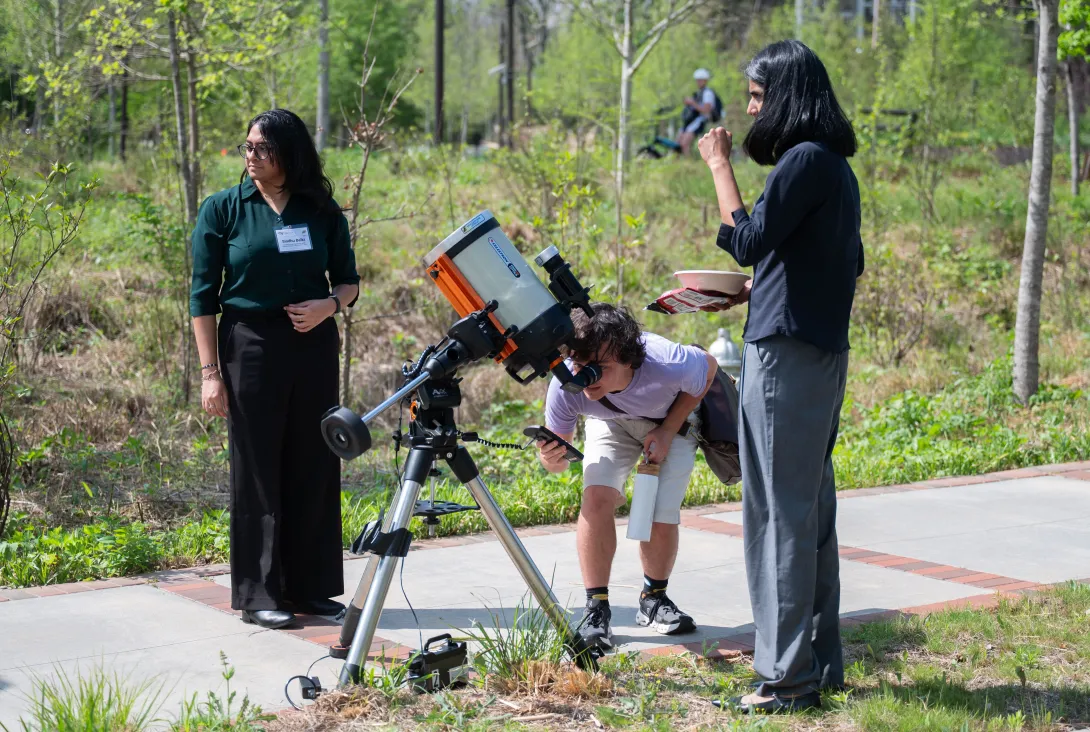
Flooding can be an existential threat, affecting everything from infrastructure to health. Georgia Tech researchers are developing solutions to monitor and forecast flooding, as well as restore ecosystems to prevent future flooding. These efforts support communities’ resilience in the face of climate change and keep the U.S. secure.
Oct. 10, 2025
While plastics help enable modern standards of living, their accumulation in landfills and the overall environment continues to grow as a global concern.
Polyethylene terephthalate (PET) is one of the world’s most widely used plastics, with tens of millions of tons produced annually in the production of bottles, food packaging, and clothing fibers. The durability that makes PET so useful also means that it is more difficult to recycle efficiently.
Now, researchers have developed a method to break down PET using mechanical forces instead of heat or harsh chemicals. Published in the journal Chem, their findings demonstrate how a “mechanochemical” method — chemical reactions driven by mechanical forces such as collisions — can rapidly convert PET back into its basic building blocks, opening a path toward faster, cleaner recycling.
Led by postdoctoral researcher Kinga Gołąbek and Professor Carsten Sievers of Georgia Tech’s School of Chemical and Biomolecular Engineering, the research team hit solid pieces of PET with metal balls with the same force they would experience in a machine called a ball mill. This can make the PET react with other solid chemicals such as sodium hydroxide (NaOH), generating enough energy to break the plastic’s chemical bonds at room temperature, without the need for hazardous solvents.
“We’re showing that mechanical impacts can help decompose plastics into their original molecules in a controllable and efficient way,” Sievers said. “This could transform the recycling of plastics into a more sustainable process.”
Mapping the Impact
In demonstrating the process, the researchers used controlled single-impact experiments along with advanced computer simulations to map how energy from collisions distributes across the plastic and triggers chemical and structural transformations.
These experiments showed changes in structure and chemistry of PET in tiny zones that experience different pressures and heat. By mapping these transformations, the team gained new insights into how mechanical energy can trigger rapid, efficient chemical reactions.
“This understanding could help engineers design industrial-scale recycling systems that are faster, cleaner, and more energy-efficient,” Gołąbek said.
Breaking Down Plastic
Each collision created a tiny crater, with the center absorbing the most energy. In this zone, the plastic stretched, cracked, and even softened slightly, creating ideal conditions for chemical reactions with sodium hydroxide.
High-resolution imaging and spectroscopy revealed that the normally ordered polymer chains became disordered in the crater center, while some chains broke into smaller fragments, increasing the surface area exposed to the reactant. Even without sodium hydroxide, mechanical impact alone caused minor chain breaking, showing that mechanical force itself can trigger chemical change.
The study also showed the importance of the amount of energy delivered by each impact. Low-energy collisions only slightly disturb PET, but stronger impacts cause cracks and plastic deformation, exposing new surfaces that can react with sodium hydroxide for rapid chemical breakdown.
“Understanding this energy threshold allows engineers to optimize mechanochemical recycling, maximizing efficiency while minimizing unnecessary energy use,” Sievers explained.
Closing the Loop on Plastic Waste
These findings point toward a future where plastics can be fully recycled back into their original building blocks, rather than being downcycled or discarded. By harnessing mechanical energy instead of heat or harsh chemicals, recycling could become faster, cleaner, and more energy-efficient.
“This approach could help close the loop on plastic waste,” Sievers said. “We could imagine recycling systems where everyday plastics are processed mechanochemically, giving waste new life repeatedly and reducing environmental impact.”
The team now plans to test real-world waste streams and explore whether similar methods can work for other difficult-to-recycle plastics, bringing mechanochemical recycling closer to industrial use.
“With millions of tons of PET produced every year, improving recycling efficiency could significantly reduce plastic pollution and help protect ecosystems worldwide,” Gołąbek said.
CITATION: Kinga Gołąbek, Yuchen Chang, Lauren R. Mellinger, Mariana V. Rodrigues, Cauê de Souza Coutinho Nogueira, Fabio B. Passos, Yutao Xing, Aline Ribeiro Passos, Mohammed H. Saffarini, Austin B. Isner, David S. Sholl, Carsten Sievers, “Spatially-resolved reaction environments in mechanochemical upcycling of polymers,” Chem, 2025.
News Contact
Brad Dixon, braddixon@gatech.edu
Oct. 09, 2025
As climate change continues to reshape the intensity and behavior of hurricanes, meteorologists and researchers are examining whether the Saffir-Simpson Hurricane Wind Scale, a decades-old classification system, still adequately communicates the full scope of hurricane hazards. While the scale remains a widely recognized tool, experts like Zachary Handlos, director of Atmospheric and Oceanic Sciences at Georgia Tech, suggest that a complementary system could enhance public understanding of the broader risks hurricanes pose.
Developed in 1969 by civil engineer and Georgia Tech alumnus Herbert Saffir, CE 1940, and meteorologist Robert Simpson, the scale classifies hurricanes solely by sustained wind speed, ranging from Category 1 to Category 5. It has long served as the primary tool for describing hurricane intensity in forecasts and media coverage.
“For anyone that follows hurricane coverage on TV, social media, the internet, or in any other form, the Saffir-Simpson scale is the way that hurricanes are described and classified,” said Handlos.
Toward a More Comprehensive Hazard Framework
Handlos noted that while the scale is widely recognized, it does not account for other major hazards such as storm surge, inland flooding, tornadoes, and storm size. “Maximum wind speeds are certainly a threat if one is in the path of a hurricane,” he said, “but several other hazards are also problematic.”
A new scale to complement the Saffir-Simpson scale could be beneficial. It would need to have accurate messaging about all aspects of a hurricane event while also continuing to record Saffir-Simpson scale data for comparison to past events.
Any effort to revise or supplement the scale would require broad collaboration across sectors. Handlos emphasized that input from government agencies, emergency managers, academic researchers, and private industry would be essential, and that formal adoption of any new system would likely involve coordination with the National Oceanic and Atmospheric Administration and the National Hurricane Center.
He added, “If there is a way to update this scale or devise a new scale that both accounts for all types of hurricane hazards and is something that is digestible to the general public, this could be helpful in the future.”
Forecasting Advances and Communication Challenges
Climate change is not currently altering how hurricane strength is measured, but it is changing the conditions in which hurricanes form. Handlos said that with the observed increase in global average temperature over the past several decades, scientists also anticipate sea surface temperature values continuing to rise. This would result in the additional transfer of heat energy from the ocean’s surface to the atmosphere, further fueling hurricanes. It also provides the potential for hurricane development farther poleward in both hemispheres.
He also pointed to changes in atmospheric moisture. As air temperature rises, the atmosphere’s capacity to hold water vapor is expected to increase. One possible consequence of this is that any rainfall associated with hurricanes could be associated with higher rain rates and more total precipitation, which could intensify inland flooding.
Advances in forecasting technology are helping meteorologists improve how hurricane hazards are predicted and communicated. According to Handlos, the integration of traditional numerical weather prediction models with artificial intelligence and machine learning techniques, alongside data from radar, satellites, weather balloons, and aircraft, has significantly enhanced the accuracy of hurricane forecasts over the past two decades.
Still, Handlos cautioned that effectively reaching the public remains a persistent challenge. “Despite repeated warnings and widespread messaging, we often hear stories of individuals choosing not to evacuate, because they’ve weathered previous storms without issue,” he said. “In today’s environment of nonstop social media, constant notifications, and information overload, people can struggle to identify which messages are most important and trustworthy.”
News Contact
Oct. 13, 2025
This fall, 20 Georgia Tech students published a peer-reviewed scientific paper — the culmination of work done during a semester-long laboratory course. During the semester, students analyzed genomes sequenced from marine samples collected in Key West, Florida — doing hands-on original bioinformatics research on par with graduate students and working with bioinformatics tools to explore drug discovery potential.
The course, BIOS 4590, is a research project lab for senior biology majors that provides an opportunity for professors to share their expertise with students in a hands-on environment. In his class, Associate Professor Vinayak (Vinny) Agarwal, who holds joint appointments in the School of Chemistry and Biochemistry and School of Biological Sciences, aimed to introduce undergraduates to advanced bioinformatics tools through applied research using new-to-science raw data.
The resulting paper, “Phylogenomic Identification of a Highly Conserved Copper-Binding RiPP Biosynthetic Gene Cluster in Marine Microbulbifer Bacteria,” which was recently published in ACS Chemical Biology, involves the historically understudied genus of Microbulbifer, a type of bacteria often associated with sponges and corals. These microbial communities are rich sources of natural products, small biological molecules often associated with medicine and drug discovery.
"This class, and the resulting research, is a testament to the transformative power of hands-on learning,” says Susan Lozier, dean of the College of Sciences, Betsy Middleton and John Clark Sutherland Chair, and professor in the School of Earth and Atmospheric Sciences. “The success of this course — and the students’ remarkable achievement — reflects Georgia Tech's commitment to fostering curiosity, collaboration, and scientific rigor and to empowering the next generation of scientists and leaders."
Funded by Agarwal’s 2023 National Science Foundation CAREER grant and Camille and Henry Dreyfus Foundation Teacher-Scholar award, the class also received support from leadership in the College of Sciences, School of Biological Sciences, and School Chemistry and Biochemistry. The study’s lead author, graduate student Yifan (Grace) Tang, served as the class teaching assistant, and was funded in part by a Biochemistry and Biophysics Graduate Assistance in Areas of National Need fellowship.
“The students in this class are working on important, novel work — this cohort worked with real genomic data that had never been sequenced before,” she says. “Typically, researchers might work with one or two genome sequences, but we provided students with 42 — this might be the first time anyone has looked at Microbulbifer at such a wide scope.”
From classroom to publication
To prepare for the class, Tang worked alongside Laboratory Manager Alison Onstine, who manages the School of Biological Sciences teaching laboratory spaces, to sequence the Key West bacterial genomes.
“Our work in the Agarwal Lab is in natural product discovery. We focus on finding new pharmaceutical drugs through marine bacteria — but with a bioinformatics spin,” Tang explains. “We wanted to bring this type of experience to undergraduates, so we gave fully sequenced genomes to students and asked them to look for potential properties.”
Throughout the class, students learned different techniques for analyzing bacterial genome sequences and extracting data with various tools — gaining both lab and computational skills through hands-on experiences, live demos, and troubleshooting sessions.
“The highlight was showing students just how much we can learn about a bacterial genus, especially one that hasn’t been studied at this scale before,” Tang shares. “This is a growing field, so there are so many opportunities for students to make meaningful contributions while learning new skills.”
Empowering future students
For many students, it was their first time using these types of tools, but Agarwal says that it’s something they'll likely encounter in both industry and research. He sees this type of research experience as especially helpful for seniors, who are often deciding between entering the workforce or continuing their education.
“Bioinformatics is increasingly important for analyzing big data. Students need the ability to manipulate and understand data using computational tools, and this class plays an important role in familiarizing them with this process,” he shares. “Our goal is to demystify research and give students the confidence and tools for both graduate school and for the workforce after graduation.”
The class will be offered for a third time in Fall 2026. While the exact course of research hasn’t yet been decided, “we always aim for something new that can produce publication-quality research — students don’t repeat past year’s work,” Agarwal says. This recent cohort of students built on the success of 18 undergraduates who took the class in 2023, who also published a paper. “This course truly underscores Georgia Tech’s commitment to pioneering meaningful undergraduate experiences — no other peer institution I know of is exposing undergraduates to bioinformatics at this level.”
Funding: NSF CAREER and the Dreyfus Foundation
News Contact
Written by Selena Langner
Oct. 07, 2025
Imagine if building new medicines or sustainable materials were as straightforward as snapping together LEGO® bricks. That’s the goal of a new project led by the Georgia Institute of Technology that could help transform the future of biomanufacturing.
The project, headed by Professor Mark Styczynski in Georgia Tech’s School of Chemical and Biomolecular Engineering (ChBE@GT), recently received a $9.2 million grant from the National Science Foundation Directorate for Technology, Innovation and Partnerships (NSF TIP) to accelerate the adoption of cell-free systems in biomanufacturing.
Promising Technology
Biotechnology has largely relied on living cells for production of products such as medicines, fragrances, or renewable fuels. But working with living cells can be complex and expensive.
Cell-free systems, by contrast, strip biology down to its essential parts, the enzymes and molecules that carry out life’s chemical reactions. This can simplify and speed up biomanufacturing, making it easier to scale.
The challenge, Styczynski explained, is that most cell-free projects still require custom-built setups. “Right now, engineering biology is like reinventing the wheel for every application,” he said. “You have to figure out how all the parts fit together each time. We want to change that by making ready-to-use modules that work right out of the box.”
Styczynski’s project, called Meta-PURE (PUrified Recombinant Elements), will create eight standardized modules, each designed for a key function in cell-free systems, such as generating energy, producing proteins, or assembling complex molecules.
“Like interchangeable puzzle pieces, these modules can be mixed and matched to support different applications,” Styczynski said.
Demonstrating Uses
His team will demonstrate the system’s versatility by producing santalene (a plant-derived fragrance used widely in consumer products), GamS protein (a tool that can improve cell-free processes), and a bacteriophage (a virus that can be safely used in research and the development of new therapeutic treatments).
These examples highlight the technology’s potential across industries ranging from pharmaceuticals and agriculture to chemicals and sustainable materials.
“We want to make these tools so that someone in industry can create their molecule or product more quickly and efficiently, and get it out the door,” Styczynski said.
“Right now, cell-free systems are mostly limited to high-value products because the cost is too high. The goal is to drive costs down and productivity up, so we can move closer to commodity chemicals like biofuels or monomers for polymers, not just niche applications. One of our partners recently developed a butanol process that shows where this can go,” he said.
NSF Initiative
Styczynski’s team is one of four recently awarded an inaugural investment of $32.4 million to help grow the U.S. bioeconomy. The initiative is called the NSF Advancing Cell-Free Systems Toward Increased Range of Use-Inspired Applications (NSF CFIRE).
“NSF is resolute in our commitment to advancing breakthroughs in biotechnology, advanced manufacturing, and other key technologies of significance to the U.S. economy,” said Erwin Gianchandani, assistant director for NSF TIP. “The novel approaches from these four CFIRE teams will speed up and expand the adoption of cell-free systems across a variety of industries and ensure America’s competitive position in the global bioeconomy.”
Collaborative Effort
While ChBE@GT is the lead, Meta-PURE is a broad collaboration with partners across academia, industry, and government. Co-principal investigators include Paul Opgenorth, co-founder and vice president of development at the biotech firm eXoZymes; Nicholas R. Sandoval, associate professor of Tulane University’s Department of Chemical and Biomolecular Engineering; and Anton Jackson-Smith, founder of the biotech startup b.next.
Meta-PURE will also train graduate students and postdocs in partnership with industry, government, and other universities, helping prepare trainees to be the future of a highly interdisciplinary U.S. bioeconomy. The team will also engage the scientific community on the implementation of metrics and standards in cell-free biotechnology to better facilitate broad adoption and interoperability of not just the results of the Meta-PURE project, but of cell-free efforts more broadly.
News Contact
Brad Dixon, braddixon@gatech.edu
Oct. 06, 2025
Electric vehicles (EVs) can be environmentally friendly and more cost-effective — until drivers plan a road trip. Charging stations aren’t as prevalent as traditional gas stations, and even if they can be found along the route, they may not be functioning or may already be occupied by other cars.
While EV charging locator apps can show drivers where the nearest charger is, they aren’t always accurate enough to show real-time status, such as whether a charger is working and available. How are drivers supposed to hit the road when they aren’t sure where their next charge is coming from? This uncertainty can be enough to deter drivers from purchasing an EV altogether.
New research from Georgia Tech, Harvard University, and Massachusetts Institute of Technology suggests that state governments should step in to help. The right policy could inspire data transparency by station hosts, ensuring that EV drivers have reliable networks — and thus encourage EV ownership. The researchers presented their findings in the paper, “Charger Data Transparency: Curing Range Anxiety, Powering EV Adoption,” in September’s Brookings.
Data Deserts
The researchers conducted a field experiment to discover the extent of the problem. This analysis showed that just 34% of EV charging stations provide real-time status updates across six major interstates in 40 U.S. states. The researchers found 150 to 350-mile stretches without real-time charger availability, longer than the stated range of many EV models. This leaves thousands of miles of highways in a data desert.
“We just don't have real-time data infrastructure necessary to build confidence in the reliability of charging, especially in communities along transit corridors,” said Omar Asensio, an associate professor in the Jimmy and Rosalynn Carter School of Public Policy. “It's not that the capability isn’t there. It's that there aren't clear incentives to encourage EV charging station operators to do the right thing and share the data.”
Charging Transparency
Government regulation is necessary to improve charging reliability, according to the researchers. State governments could offer funding for charging stations only if the station host agrees to data transparency. A simpler policy proposal would be for all fast chargers on highways to post their real-time status to an application programming interface, where software developers could access it. This approach would provide reliable information on whether a public charger is operational, and it can make government spending more efficient by leveraging network effects. The research team is already collaborating with state governments from Massachusetts to Georgia to discuss how to make this government regulation a reality.
State governments will also benefit, as EVs can help them close the gap on decreasing carbon emissions.
“Electric vehicles are a key strategy for decarbonizing the transportation sector and delivering public health co-benefits, but consumers need to trust that public chargers will work when they need them,” Asensio said. “Until real-time data disclosure standards are addressed, reliable, widespread adoption will be hard. A data-centric approach can enhance the efficiency of existing transportation investments.”
Many states, including Georgia, have also supported EV manufacturing. EV brand Rivian recently broke ground on an assembly plant outside Atlanta. More widespread EV adoption is paramount to making these plants economic successes. Data transparency regulations could be a start toward finally making EVs the ideal road trip vehicle.
News Contact
Tess Malone, Senior Research Writer/Editor
tess.malone@gatech.edu
Oct. 02, 2025
For more than two decades, Nakia Melecio has helped researchers and entrepreneurs translate discoveries into real-world impact across biotechnology, aerospace, defense, energy, and medical technology. He's helped launch and scale more than 1,500 startups worldwide, delivered over 15,000 hours of mentorship and training, and contributed to securing more than $400 million in funding for research-driven ventures. He has also led collaborations with NIH, ARPA-H, DOE, NASA, USAID, and universities across the globe. All of that work has now culminated with his recent recognition of a Fulbright Scholar.
“Being named a Fulbright Scholar is both an honor and opportunity to continue the work I love, helping transform breakthrough research into real-world impact,” said Melecio, director of NSF I-Corps Southeast Hub, director of Georgia Tech’s Center for MedTech Excellence, and principal at VentureLab. “This recognition allows me to collaborate with global partners, strengthen innovation ecosystems, and expand pathways that move discoveries out of the lab and into society.”
Expanding Georgia Tech’s Global Reach
With the Fulbright Scholar recognition, Melecio will share Georgia Tech’s Lab to Market framework with international partners. The seven-week program, which he designed at Georgia Tech, guides teams from lab validation to commercialization and prepares them with customer discovery insights, regulatory strategies, and investor readiness. While newly developed, the framework is already being used at Georgia Tech and will now be extended globally through the Fulbright program.
Through his Fulbright project, Melecio will strengthen global startup ecosystems, share best practices in technology transfer, and support the commercialization of breakthrough research to address urgent societal challenges. He aims to advance research translation, while also building sustainable systems that create industries, jobs, and new economies.
“Nakia’s Fulbright recognition underscores the global reach of Georgia Tech’s innovation ecosystem, and his leadership in international startup development exemplifies our commitment to creating technology that improves lives around the world,” said Raghupathy “Siva” Sivakumar, chief commercialization officer and vice president of Commercialization at Georgia Tech. “We are incredibly proud of Nakia for earning this prestigious honor and look forward to the continued impact of his work supporting entrepreneurs worldwide.”
The Fulbright Scholar Program is the U.S. government’s flagship international academic exchange initiative, designed to strengthen partnerships and foster cross-cultural collaboration. Through this award, Melecio will bring Georgia Tech’s commercialization expertise to global partners, working side by side with researchers and entrepreneurs to accelerate technologies that address urgent challenges in health, energy, and economic development. From Atlanta to Ghanna, Melecio’s work demonstrates the global reach of Georgia Tech’s innovation community.
Oct. 01, 2025
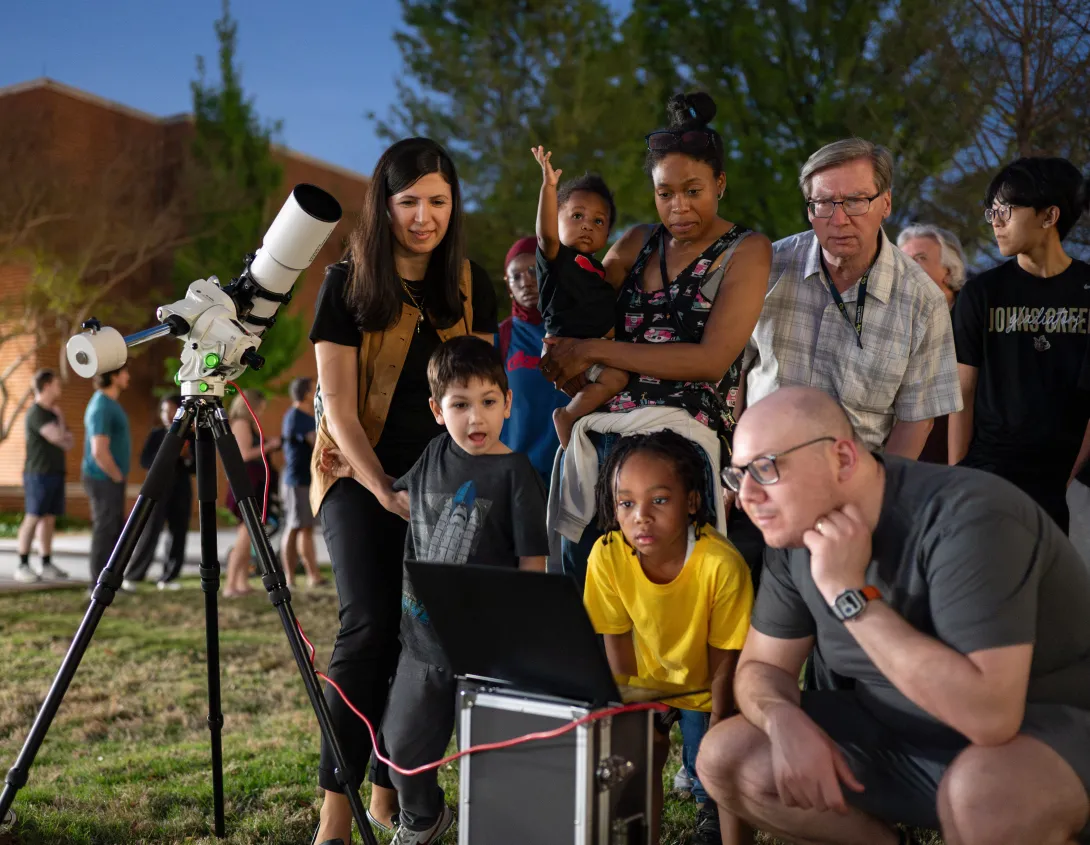
On September 5, more than 130 space researchers gathered for the Space Research Institute’s (SRI) inaugural meeting, held in the Marcus Nanotechnology Building. The event drew a standing-room-only crowd, with attendees from across all of Georgia Tech’s colleges. This marked the SRI’s first major convening since its launch on July 1, offering a platform to discuss its vision and bring Georgia Tech’s space research efforts into closer conversation.
That vision builds on work already reshaping the field. Across campus, Georgia Tech researchers are imaging black holes with unprecedented clarity, flying CubeSats in heliocentric orbits that now trail closer to Venus than Earth to test optical navigation. They are also sending solar cells to the International Space Station, exploring Jupiter, and, this fall, bringing the Lunar Surface Innovation Consortium Fall meeting to campus.
“That breadth is what makes Georgia Tech’s space community so strong,” said Julia Kubanek, vice president for interdisciplinary research. “We have experts in aerospace and biology, in materials and planetary science, in public policy and even researchers who study space through fiction — all taking on some of the most complex challenges of our time. SRI gives us a framework to support that work more deliberately, connecting researchers across colleges and disciplines and aligning with Georgia Tech’s broader vision for research, education, and innovation.”
Jud Ready, director of SRI, opened the session with an overview of the SRI’s goals and near-term plans. He emphasized how SRI will play a role in advancing several of Georgia Tech’s four big bets, including expanding research impact, increasing educational access, bringing value to students and strengthening the Institute’s role as a national hub for innovation.
At the center of that effort is also the newly announced Centers, Programs, and Initiatives (CPI) program, which aims to support faculty pursuing shared research directions.
“Georgia Tech has people already working on everything from sensors and propulsion systems to space policy, design, and sustainability," said Ready. “We’re geared towards linking that work early and giving teams the resources to go after the really big questions.”
Ready noted that the meeting would be the first of many community-building events hosted by SRI in the coming year, aimed at fostering dialogue and identifying opportunities for collective work.
“Most people don’t recognize that they use space in their everyday lives nearly every second of every day. The opportunities for space-based education, R&D, and commercialization are literally infinite,” said Ready. “It’s exciting to be at Georgia Tech where we play a key role in pushing the frontiers of space, and what that could mean for this generation and future ones.”
Faculty interested in future events or proposal opportunities can visit space.gatech.edu or sign up for the SRI mailing list. To view the meeting recording, click here.
News Contact
space@research.gatech.edu
Oct. 01, 2025
Georgia Tech researchers have developed a mathematical formula to predict the size of lakes that form on melting ice sheets — discovering their depth and span are linked to the topography of the ice sheet itself.
The team leveraged physics, model simulations, and satellite imagery to develop simple mathematical equations that can easily be integrated into existing climate models. It’s a first-of-it’s-kind tool that is already improving climate models.
“Melt lakes play an important role in ice sheet stability, but previously, there were no constraints on what we would expect their maximum size to be in Antarctica,” says study lead Danielle Grau, a Ph.D. student in the School of Earth and Atmospheric Sciences. “I was intrigued by the idea of quantifying how much of a role we could expect them to play in the future.”
The paper, “Predicting mean depth and area fraction of Antarctic supraglacial melt lakes with physics-based parameterizations,” was published in Nature Communications. In addition to Grau, the research team includes School of Earth and Atmospheric Sciences Professor Alexander Robel, who is Grau’s advisor, and Azeez Hussain (PHYS 2025).
Their predictions show that the majority of these lakes will be less than a meter deep and span up to 40% of the ice sheet surface area.
“Many models don’t include any data about lakes on the surface of ice sheets, while others simulate these melt lakes growing until the ice collapses,” Robel says. “Our results show that the reality is somewhere in between — and that the maximum size of these lakes can be predicted using these new equations. This gives us real, concrete numbers to use in climate models.”
From summer project to satellite discovery
Grau first started working on the project as an undergraduate student when she applied for a Summer Research Experiences for Undergraduates program hosted by the School of Earth and Atmospheric Sciences.
Inspired by terrestrial lake research, Grau and Robel investigated the “self-affinity” of the Antarctic ice sheet — a property associated with surface roughness across various scales. For example, a landscape like Badlands National Park, with many rolling hills of a wide range of sizes, would have a different self-affinity than a flat prairie with three large volcanoes.
“A previous study had used this property to predict the size of terrestrial lakes and ponds, and we were curious if we could use a similar approach for supraglacial lakes in Antarctica,” Grau says. “Establishing that the Antarctic ice sheet also has this property was the first step in pursuing this research in more depth.”
The mathematics of melt
Grau continued the investigation as a Ph.D. student in Robel’s lab. Together, they unraveled the physics of how meltwater moves across the ice surface, designing a ‘glacier in a computer’ that mimics meltwater accumulation and movement across various topographies.
“We designed an algorithm and integrated it into a model that the GT Ice & Climate Group has used in the past,” Grau says. “From that, we were able to see how lakes would form on different surfaces across thousands of scenarios. This was the foundation for the mathematical equations I developed, which can predict the lake depth and lake surface area based on the self-affinity property.”
To check their results, Grau enlisted the help of Hussain — then an undergraduate in the School of Physics — to examine satellite data from the Landsat satellite program (which captures detailed photography of the Earth’s surface from space) to measure existing supraglacial lakes and surface topography.
“It was exciting to see how our predictions lined up with what we were seeing in the satellite imagery,” Robel explains. “This shows that our solution is a concrete avenue for climate models to realistically incorporate supraglacial lakes.”
Grau is already working to incorporate the team’s equations into an atmospheric model used by NASA in addition to an ice sheet model developed by the NASA Jet Propulsion Laboratory and Dartmouth College.
“By turning complicated models and satellite data into simple predictive equations, we’re giving climate models a new lens to see the future,” she says. “It’s a small piece of the puzzle, but one that helps us understand how ice sheets respond to a warming world.”
Funding: NASA Modeling, Analysis, and Prediction Program
News Contact
Written by Selena Langner
Sep. 23, 2025
Heart failure remains one of the most challenging conditions to monitor outside the clinic. Patients may experience changes in symptoms, such as fatigue or shortness of breath, between visits, yet many current devices provide limited data, leaving physicians without continuous insight into heart function.
“Despite advances in digital health, continuous monitoring of the heart’s mechanical function has remained difficult outside clinical settings,” said Omer Inan, researcher and entrepreneur at Georgia Tech. “Patients and physicians have long needed a tool that provides deeper, real-time insights into heart performance without invasive procedures. We decided to tackle that problem head-on with a wearable device.”
Pagination
- Previous page
- Page 21
- Next page