
Jan. 09, 2023

A new eBook, "Climate Change and the Design of the Built Environment," written by Michael Gamble, Academic and Research Council Chair at the Kendeda Building for Innovative Sustainable Design and associate professor in the College of Design at Georgia Tech is now available!
Written as a series of dialogues with leaders from various disciplines, the book positions design as an essential component of entrepreneurial approaches which explore the sociocultural and eco-political dimensions of climate change. Economist, Architects, Planners, Sociologist, Lawyers, Policy Makers, Landscape Architects, and MBA’s contribute to a spirited discussion around climate change and design.
Global climate change has already resulted in a wide range of impacts across every region of the country. Many sectors of the economy are expected to grow related to climate and health in the coming decades. The design and retrofit of buildings, infrastructure and cities will be a major part of future efforts.
All interviews are Kendeda Building based on Georgia Tech’s Atlanta campus with experts participating from around the world.
Jan. 03, 2023
“Georgia Tech is a beacon of innovation that aims to empower entrepreneurs to create ventures with a positive impact on society and the environment. As a hub of forward-thinking ideas, Georgia Tech is leading Atlanta, Georgia, and the United States into a more sustainable future,” said Andre Calmon, assistant professor of operations management, at the launch event for Sustainable-X. An offshoot of the successful CREATE-X entrepreneurship initiative at Georgia Tech, Sustainable-X gives students, faculty, staff, and community members the tools and confidence to create and grow startups that address social and environmental challenges.
Sustainable-X is supported by Sustainability Next, the implementation roadmap for sustainability goals within Georgia Tech’s Strategic Plan 2020-2030. The new program launches in tandem with a climate action plan, a living learning campus initiative, seed funding for teaching through the lens of the UN Sustainable Development Goals, and more.
CREATE-X and the Ray C. Anderson Center for Sustainable Business (“Center”) are partnering on Sustainable-X programming. Organizers include Scheller College of Business faculty and staff: co-directors Andre Calmon and Karthik Ramachandran (Dunn Family Professor), advisor Beril Toktay (Brady Family Chair and Regents’ Professor), and program manager Kjersti Lukens (program support coordinator for the Center).
The program kicked off with the Social and Environmental Entrepreneurs Bootcamp, held at the Kendeda Building for Innovative Sustainable Design from November 5-6, 2022. Twenty participants from Georgia Tech and the community learned how to tackle complex sustainability problems and create startup solutions. The bootcamp was facilitated by Jackie Stenson, an expert in sustainable innovation and co-founder of multiple social enterprises. Participants progressed through problem framing and ideation exercises to design solutions inspired by the UN Sustainable Development Goals.
The participants shared their projects in a pitch session, where judges and peers listened to an array of business solutions related to STEM education in under-resourced communities, meal preparation kits to help reduce food waste, water management for golf courses, and infrastructure and innovation to accelerate the transition to renewable energy. First prize was awarded to the group that focused on water management. Team members included Isha Dogra (environmental engineering graduate student at Georgia Tech), Emma Vail (student at University of North Georgia), and Michelle Wong (assistant director of the Petit Institute at Georgia Tech ).
Tanju Özdemir, a first-year materials science and engineering major who is also serving as a 2022-23 Scheller College Undergraduate Sustainability Ambassador, remarked, “I signed up for the bootcamp because it felt relevant to my future career goal of being an entrepreneur in the energy sector. The SDG innovation process was completely new to me and exposed me to how difficult and exciting it is to explore solutions to different problems.” The bootcamp revealed to Özdemir how “even the seemingly chaotic process of creativity can have structure.”
Next Steps and Resources
Participants in the bootcamp will be invited to take part in a series of forthcoming events and opportunities related to mentoring, transitioning from idea to prototype (through CREATE-X programming), and funding. The Sustainable-X 2022-23 program will culminate in a showcase in March in which selected participants, along with their counterparts in CREATE-X, will pitch their startups in hopes of obtaining support from investors.
Reflecting on the weekend launch event, Toktay said, “I enjoyed seeing how teams including students, staff members, and community participants – which we intentionally included in the bootcamp – gelled so well. They helped each other stay grounded in real problems while exploring creative solutions.” She said that she and her fellow organizers look forward to the growth of the program. “We believe that the teams have great potential to make a positive impact.”
“With the new Sustainable-X program, Scheller College is creating a new wave of impact at the intersection of sustainability, entrepreneurship, and innovation,” stated Dean Maryam Alavi. She continued, “This program will empower a new generation of Georgia Tech community members as they address some of the most pressing sustainability challenges of our time. I look forward to seeing what results.”
Co-directors Calmon and Ramachandran have worked with student and faculty entrepreneurs at Georgia Tech, INSEAD, and MIT. They recognize Georgia Tech’s potential to produce the next generation of sustainability and climate-impact startups, and look forward to building the pathway to support these startups through Sustainable-X.
Click here to sign up for updates.
Interested in getting involved? Contact Kjersti Lukens for more information.
Written by Jennifer Holley Lux
News Contact
Jennifer Lux, Writer/Editor, Scheller College of Business
Dec. 13, 2022
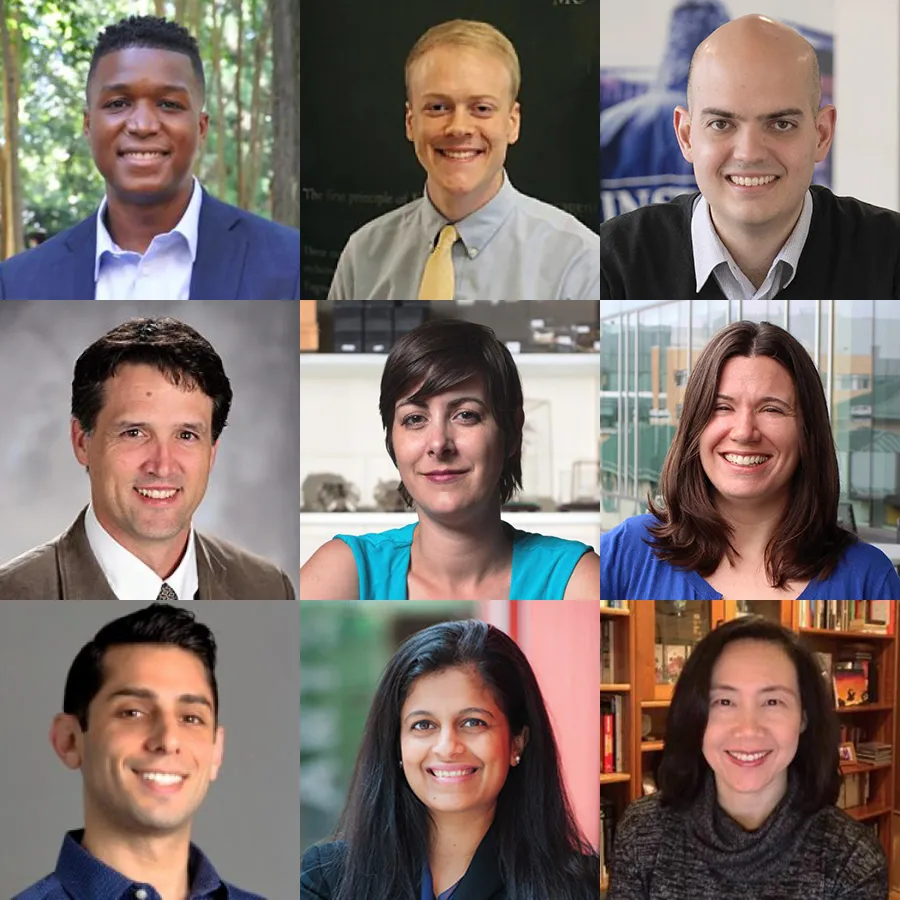
Nine new Faculty Fellows were appointed to the Brook Byers Institute for Sustainable Systems (BBISS). In addition to their own work, BBISS Fellows serve as a board of advisors to the BBISS; foster the culture and community of sustainability researchers, educators, and students at Georgia Tech; and communicate broadly the vision, mission, values, and objectives of the BBISS. Fellows will work with the BBISS for three years, with the potential for a renewed term.
The BBISS Faculty Fellows program has been in place since 2014. Fellows will number between 10 and 15, will be drawn from across all 6 colleges and GTRI at Georgia Tech. It is expected that annual allowances provided to each BBISS Fellow will range from $1000 to $1500 depending on number of fellows in the program and availability of funds.
The new BBISS Faculty Fellows are:
- Joe Bozeman – Assistant Professor, School of Civil and Environmental Engineering
- Dylan Brewer - Assistant Professor, School of Economics
- Andre Calmon – Assistant Professor, Scheller College of Business
- Brian Gunter - Associate Professor, Daniel Guggenheim School of Aerospace Engineering
- Jenny McGuire – Assistant Professor, School of Earth and Atmospheric Sciences
- Jessica Roberts – Assistant Professor, College of Computing
- Ilan Stern – Senior Research Scientist, Georgia Tech Research Institute
- Anjali Thomas - Associate Professor, Sam Nunn School of International Affairs
- Zhaohui Tong - Associate Professor, School of Chemical & Biomolecular Engineering
These faculty members join the current roster of Faculty Fellows:
- Baabak Ashuri - Associate Professor, School of Building Construction
- Kevin Caravati – Principal Research Scientist, Georgia Tech Research Institute
- Ellen Dunham-Jones – Professor, School of Architecture
- Daniel Matisoff - Associate Professor, School of Public Policy
- Kate Pride Brown - Associate Professor, School of History and Sociology
- Perry Yang – Professor, School of City and Regional Planning
More information can be found on the BBISS website.
News Contact
Brent Verrill, Research Communications Program Manager, BBISS
Dec. 07, 2022
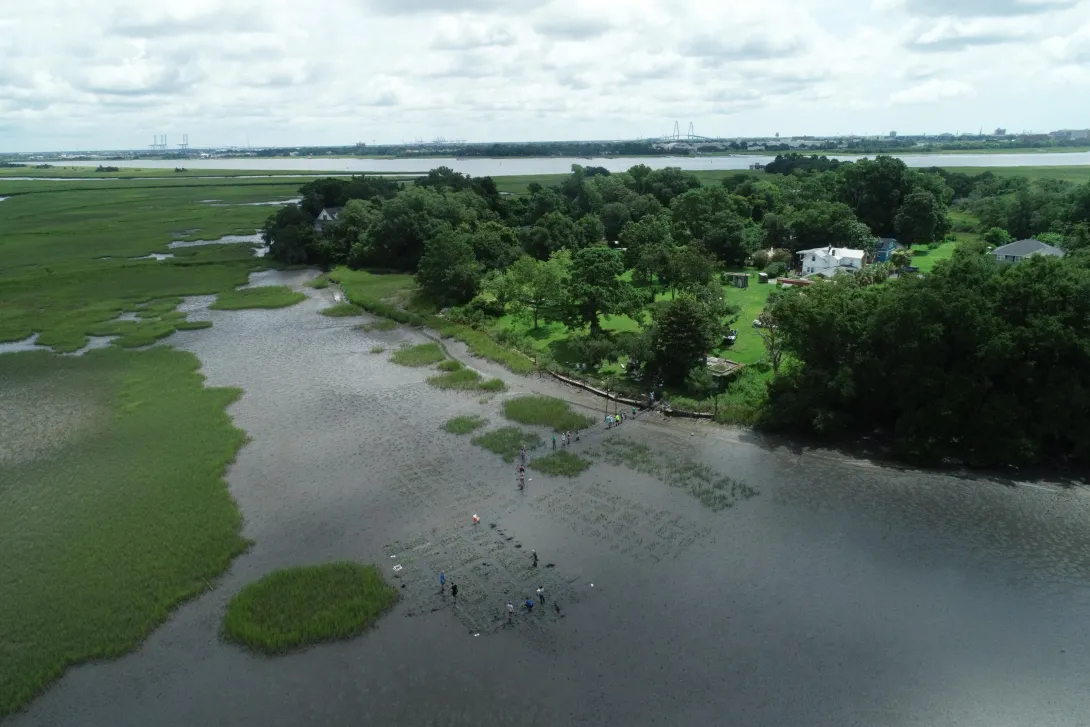
For marine scientist, climate activist, and Tech alumnus Albert George (MS HSTS 2009), the fight against climate change is also a fight for home.
Now, what started as a citizen science initiative led by George has turned into a $2.6 million National Fish and Wildlife Association effort to restore degraded salt marshes in Charleston, South Carolina. As part of the project, Joel Kostka, professor and associate chair of Research in the School of Biological Sciences, will lead a team of researchers to not only monitor these restoration efforts, but gain insights into why the marshes degraded in the first place — and how to prevent it from happening in the future.
Over the past three years, Kostka, who has a joint appointment in the School of Earth and Atmospheric Sciences, has worked with SCDNR and Robinson Design Engineers, a local firm co-led by Tech alum Joshua Robinson (CEE 2005), to develop engineering and design plans for the restoration of the salt marshes.
“That project went really well,” shared Kostka, “and now we have developed engineering and design plans for the actual restoration as we are moving forward with the next phase.”
Work for the current phase of the project is set to begin soon. Over the next four years, community volunteers will work to plant marsh grasses, restore oyster reefs, and excavate the tidal creeks that supply the marsh with sea water.
“Because if we don't do this work,” George shared, “then basically it means a place that I grew up in and a place that I call home will no longer exist.”
News Contact
Writer:
Audra Davidson, College of Sciences
Editor and Contact:
Jess Hunt-Ralston
Director of Communications
College of Sciences at Georgia Tech
Nov. 18, 2022
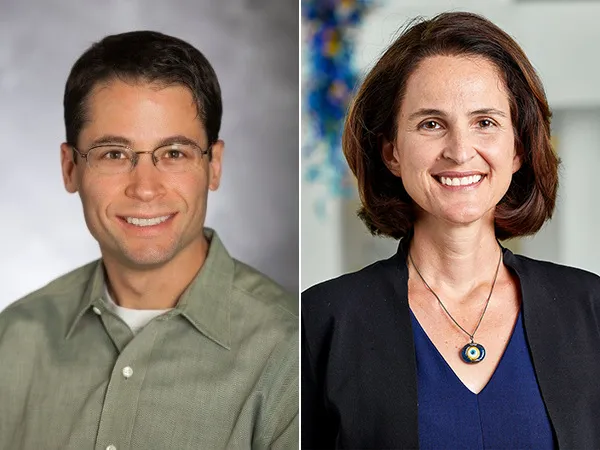
Two Georgia Tech employees are among the 35 faculty and staff members named to the University System of Georgia’s (USG) Executive Leadership Institute (ELI) class for 2022-23.
Josh Rosenberg, senior director of Grants and Contracts Accounting, and Beril Toktay, Brady Family Chair in Management and interim executive director of the Brook Byers Institute for Sustainable Systems, will represent Tech during this training cycle.
Each USG member institution nominates one academic leader and one staff leader to participate. Individuals are selected for the six-month program and participate in a curriculum that includes group learning and assessment, personal reflection, job shadowing and cross-mentoring.
“This is about supporting our own people within the university system,” USG Chancellor Sonny Perdue said. “Many times, the best talent is already among us. We want to give our people the best opportunity to experience this kind of professional development so they can reach their full potential.”
For more than a decade, the USG has hosted ELI for faculty and staff to develop new leaders within the university system and offer professional develop opportunities to help them advance their careers in Georgia.
Oct. 17, 2022
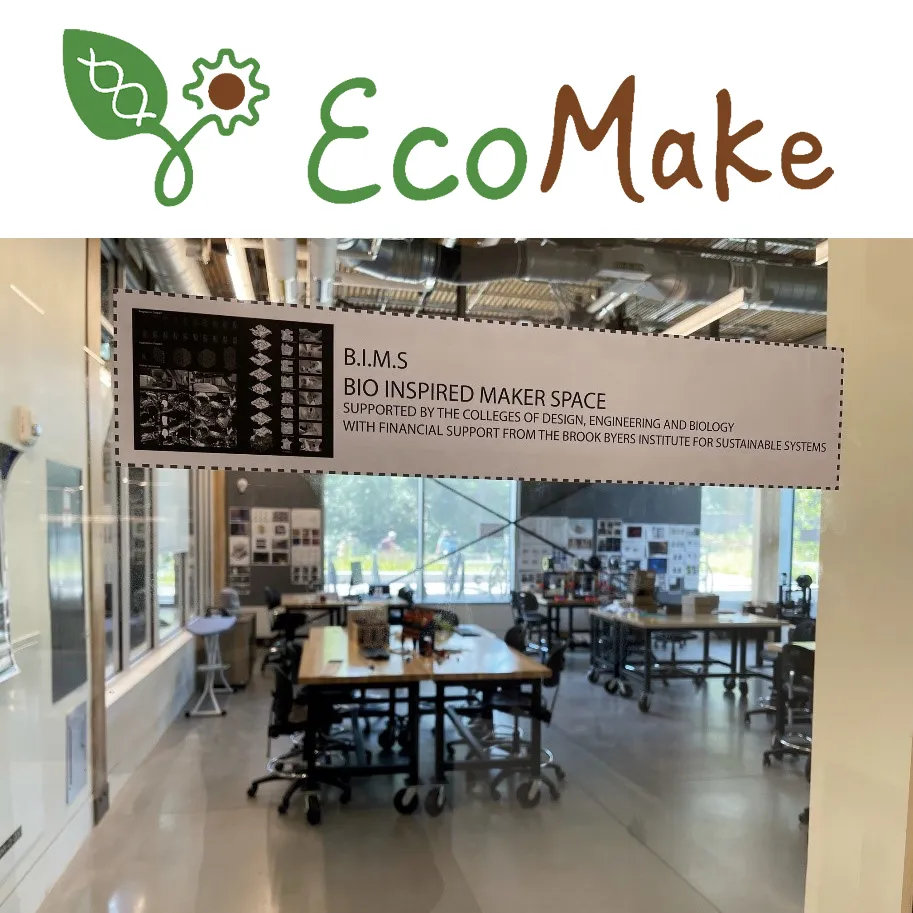
At first glance, the new maker space opening in the Kendeda Living Building for Innovative Sustainable Design might look like many others. However, the space, named EcoMake, has some important differences. Because it is housed in the Kendeda Building, there are strict standards for what types of materials and equipment can be used there in order to maintain its Living Building Certification. For example, you will find several 3-D printers there, like almost all maker spaces, but the plastic filament used in them is made from recycled plastic, perhaps recycled on-site with equipment in the lab itself.
Some might regard such restrictions as too limiting to their creativity or design goals. Viewed another way, this approach opens up a unique set of possibilities. Biologically Inspired and Green Design (BIG-D) is a field of study (sometimes referred to by different names, like “biomimicry”) that has demonstrated a lot of promise in the past few decades. This approach aims to translate the billions of years of knowledge and design wisdom embodied in our biological world into innovative green products. However, no matter how green the design of a product, they are often manufactured with traditional processes with limited consideration for energy, toxicity, water, or material use. Having a lab like EcoMake will help to usher in the field of study of Biologically Inspired and Green Manufacturing (BIG-M). BIG-M will require knowledge, equipment, and resources that are much different than traditional fabrication methods. Like natural systems, this new facility will operate within the means of nature, using no more energy or water than can be generated from its geometric footprint, and producing no more waste than it can assimilate on site.
EcoMake has the following tools and equipment (so far):
- 8 - Prusa I3S+ 3-D Printers
- 5 - Ender 3 Pro 3-D Printers
- EinScan-SP 3-D Object Scanner
- Mark-10 ESM303 Mechanical Tester
- 300-X Digital Microscope
- 3Devo Filament Extruder
- Shini SG-16N Plastic Granulator
- Plastic Chip Dryer
- Singer Heavy Duty 4423 Sewing Machine
- Complement of Standard Fabric Crafting Equipment
EcoMake, the bio-inspired maker space will be open to students from all disciplines. It is supported by the Colleges of Design, Engineering, and Biology, and the Brook Byers Institute for Sustainable Systems. Contact Michael Gamble for more information.
News Contact
Brent Verrill, Research Communications Program Manager, BBISS
Sep. 27, 2022
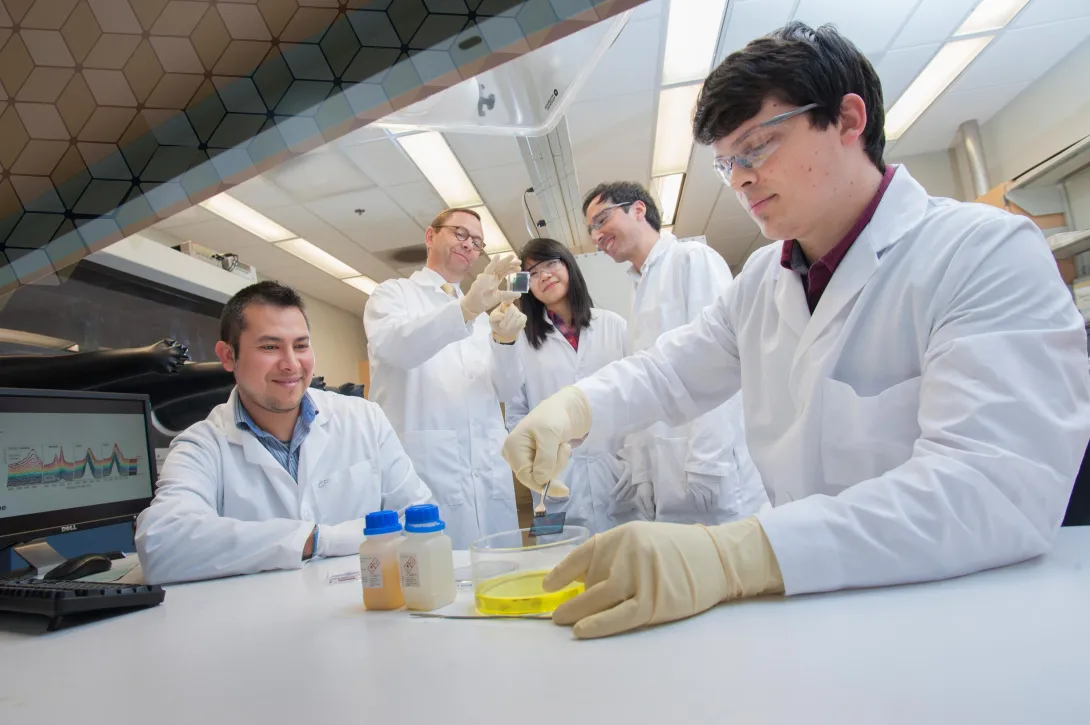
The Scalable Asymmetric Lifecycle Engagement Microelectronics Workforce Development program (SCALE) has announced the program will extend another five years and expand with $10.8 million additional Department of Defense (DoD) funding, with a ceiling of $99 million.
SCALE officials said this expansion of the nation’s preeminent program will further its goal to develop a next-generation workforce that can return the United States to prominence in global microelectronics manufacturing.
Georgia Tech participates in the partnership, which is led by Purdue University and managed by NSWC Crane. SCALE facilitates the training of highly skilled U.S. microelectronics engineers, hardware designers and manufacturing experts. SCALE brings together a public-private-academic partnership of 17 universities and 34 partners within the defense industry and government.
“This is an extremely exciting time in the country and at Tech for microchip design and manufacturing,” said Arijit Raychowdhury, the Steve W. Chaddick School Chair of Tech’s School of Electrical and Computer Engineering (ECE). “These newly announced funds for the SCALE program will help Georgia Tech recruit a new, diverse group of students ready to work in defense microelectronics. We’re thrilled to be a SCALE partner university and honored to be leading many of the project’s specialty areas.”
SCALE provides unique courses, mentoring, internship matching and targeted research projects for college students interested in five microelectronics specialty areas. Georgia Tech ECE faculty members will be the primary investigators for three of the areas:
- system on a chip will be led by Raychowdhury;
- radiation-hardening will be led by John Cressler;
- and heterogeneous integration/advanced packaging will be led by Madhavan Swaminathan.
The other two focus areas are embedded system security/trusted AI and supply chain awareness.
Industry and government partners regularly meet and update a list of knowledge, skills, and abilities important for new entrants to the workforce. The SCALE universities then update their curriculum to ensure the students are prepared for upcoming needs in the rapidly advancing microelectronics field.
Peter Bermel, SCALE director and the Elmore Associate Professor of Electrical and Computer Engineering at Purdue, said the United States will need 50,000 trained semiconductor engineers to meet overwhelming and rapidly growing demand.
“The United States is committed to expanding and strengthening its semiconductor industry and workforce rapidly over the next five years,” Bermel said. “SCALE takes a holistic approach to the microelectronics workforce gap by comprehensively addressing system challenges for workforce training and recruiting.”
Goals for the next five years include:
- Expanding student participation in SCALE fivefold to more than 1,000.
- Developing learning models for K-12 classrooms.
- Collaborating with community colleges nationwide to develop microelectronics classes.
The demand for microelectronics increased by 26.2% in 2021. But while the United States consumes about half of the chips produced worldwide, the country only manufactures about 12%, highlighting the pressing need for the U.S. to strengthen its domestic semiconductor supply chains and increase industrial capacity.
The funding announcement is the latest highlight in Georgia Tech’s leadership role in bolstering microelectronics and workforce development. Tech’s large engineering and science faculty bring a broad set of research expertise to strengthen the country’s semiconductor capacity. The Institute is uniquely positioned to train the microelectronics workforce, drive future microelectronics advances, and provide fabrication and packaging facilities for industry, academic and government partners to develop and test new solutions.
###
The Georgia Institute of Technology, or Georgia Tech, is a top 10 public research university developing leaders who advance technology and improve the human condition. The Institute offers business, computing, design, engineering, liberal arts, and sciences degrees. Its nearly 44,000 students, representing 50 states and 149 countries, study at the main campus in Atlanta, at campuses in France and China, and through distance and online learning. As a leading technological university, Georgia Tech is an engine of economic development for Georgia, the Southeast, and the nation, conducting more than $1 billion in research annually for government, industry, and society.
News Contact
Dan Watson
dwatson@ece.gatech.edu
Aug. 17, 2022
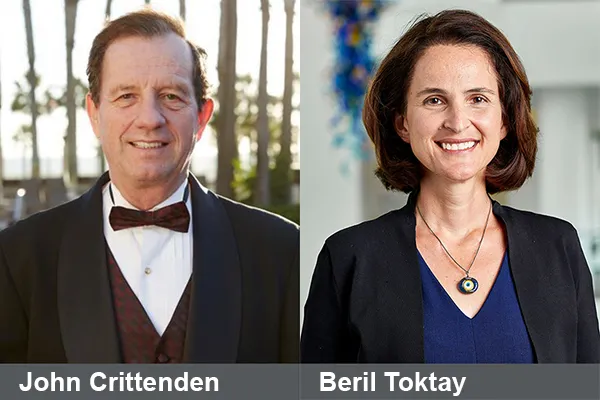
John Crittenden will be stepping down as executive director of BBISS effective August 31, 2022. Beril Toktay, Professor of Operations Management, Brady Family Chairholder, and Regents’ Professor, will serve as BBISS’ interim executive director. Beril said, “John took the inclusion of the word ‘Systems’ in BBISS’ name to heart at a time when large interdisciplinary research collaborations at Georgia Tech were still a rarity. The bold vision now coming out of Georgia Tech’s Strategic Plan 2020-2030 and the Sustainability Next strategic plan initiative can be directly linked to John’s leadership and his challenge to ‘go bigger.’ I am delighted to accept the baton and run the next leg in advancing BBISS’ mission in collaboration with the Georgia Tech sustainability community.”
John will continue as faculty member, educator, mentor, and researcher at Georgia Tech in the School of Civil and Environmental Engineering, maintaining his appointments as GRA Eminent Scholar in Sustainable Technologies. John has led BBISS since 2009, when the prior Institute for Sustainable Technology and Development (ISTD) was renamed in honor of Brook Byers (a Georgia Tech alumnus, sustainability advocate, and founding president of the Kleiner Perkins venture capital firm).
As a world-renowned researcher, John has made, and continues to make, critical contributions in the fields of water treatment (having co-authored the preeminent book on the subject which is used by 300 universities around the world), pollution prevention, energy harvesting technologies, the food-energy-water nexus, sustainable materials, sustainable urban infrastructure, sustainable engineering pedagogy, advanced modeling of urban systems, and urban form and policy.
Among John’s many awards and honors are: Member of the National Academy of Engineering; Fellow of the American Society of Civil Engineers; Member of the European Union Academy of Sciences; Member of the Chinese Academy of Engineering; American Institute of Chemical Engineers 100 Eminent Chemical Engineers in Modern Times; Athalie Richardson Irvine Clarke Prize from the National Water Research Institute; Simon W. Freese Environmental Engineering Award from the American Society of Civil Engineers; and the Chinese Friendship Award. The American Chemical Society will host a special symposium series to honor John’s long-term accomplishments in sustainability and physical chemical treatment processes for engineered water infrastructure systems at the Fall 2022 ACS meeting in Chicago.
As the leader of BBISS, John also fostered a dedicated team of staff, students, and faculty. The many students who have participated in sustainability research inherited his systems perspective and have carried it into their careers. He oversaw the development of several programs to support career development and collaboration, including the BBISS Graduate Fellows, the BBISS Faculty Fellows, and the Brook Byers Professors, all made possible with donations from Brook and Shawn Byers. He has been a tireless sponsor of early- and mid-career researchers, nominating them for awards and memberships on committees, and providing valuable advice. He has hosted visiting scholars from all over the world, engaging them in interdisciplinary research and the development of solutions to global sustainability challenges.
Julia Kubanek, Vice President for Interdisciplinary Research, shared the following comments: “Thank you, John, for the many programs you have initiated and the research that you have supported and inspired while leading BBISS. On behalf of all the faculty, students, and staff at Georgia Tech, I look forward to continuing to engage with you as a faculty member of the School of Civil and Environmental Engineering.”
Beril Toktay has made varied high-impact contributions to sustainability at Georgia Tech since she joined the Institute in 2005. She is the founding faculty director of the Ray C. Anderson Center for Sustainable Business in the Scheller College of Business. Beril served as the co-architect and co-executive faculty director of Serve-Learn-Sustain, Georgia Tech’s campus-wide academic initiative offering students opportunities to collaborate with diverse partners on key sustainability challenges to help create sustainable communities. She was also Scheller College’s ADVANCE Professor, a role dedicated to the advancement of women and underrepresented minorities in academia. Beril is currently serving as co-chair of Sustainability Next, the sustainability and climate-focused strategic planning initiative of Georgia Tech’s Strategic Plan 2020-2030.
Beril is regarded as one of the most influential scholars in the field of sustainable operations management. Her research helped to introduce sustainability into the field of operations management, and she has had a significant hand in shaping its ongoing development, including serving as area editor in Environment, Energy and Sustainability for Operations Research, co-editor of the Business and Climate Change special issue for Management Science, and as department editor in Health, Environment and Society in Manufacturing and Service Operations Management (MSOM). For her pioneering role in advancing sustainable business scholarship and her leadership in building a sustainable operations community, respectively, she was elected Distinguished Fellow of the INFORMS MSOM Society in 2017 and received the MSOM Distinguished Service Award in 2018.
Beril values interdisciplinary research and education. Earlier in her Georgia Tech career, she served as the coordinator of ECLIPS (Georgia Tech Focused Research Program on Expanding Closed-Loops in Production Systems), an interdisciplinary group of faculty from management, engineering, and public policy interested in circular economy solutions. Her NSF-funded research on circular economy enterprise solutions involved collaborators from mechanical engineering and industrial and systems engineering. For her translational work in this area, she received the 2021 Sustainability Champion Award from the Global Electronics Council (formerly known as the Green Electronics Council). In 2017, Beril co-developed the Carbon Reduction Challenge program in collaboration with the Georgia Tech Global Change Program. This program challenges undergraduate student interns to identify a project that achieves significant reductions in carbon emissions and yields cost savings for their host company.
Through her role in the Ray C. Anderson Center for Sustainable Business, Beril has been instrumental in creating the Drawdown Georgia Business Compact, a statewide, business-led, collective action initiative aimed at achieving a just, prosperous, and sustainable transition towards net-zero carbon emissions in the state by 2050. In 2019, the Metro Atlanta Chamber of Commerce selected her as an E3 Impact Award Finalist, an award that recognizes “visionary individuals advancing sustainability in Atlanta.”
“Beril’s sustainability and business expertise as well as her experience leading teams and initiatives will ensure that BBISS remains on a strong footing and can continue to grow its impact,” said Julia Kubanek. “I’m especially excited about new ideas coming out of the Sustainability Next strategic planning effort that can contribute to the evolution of BBISS.”
Beril will lead BBISS until a new executive director is selected through a process that will be announced by the Vice President for Interdisciplinary Research later this year.
News Contact
Brent Verrill, Research Communications Program Manager
Aug. 11, 2022
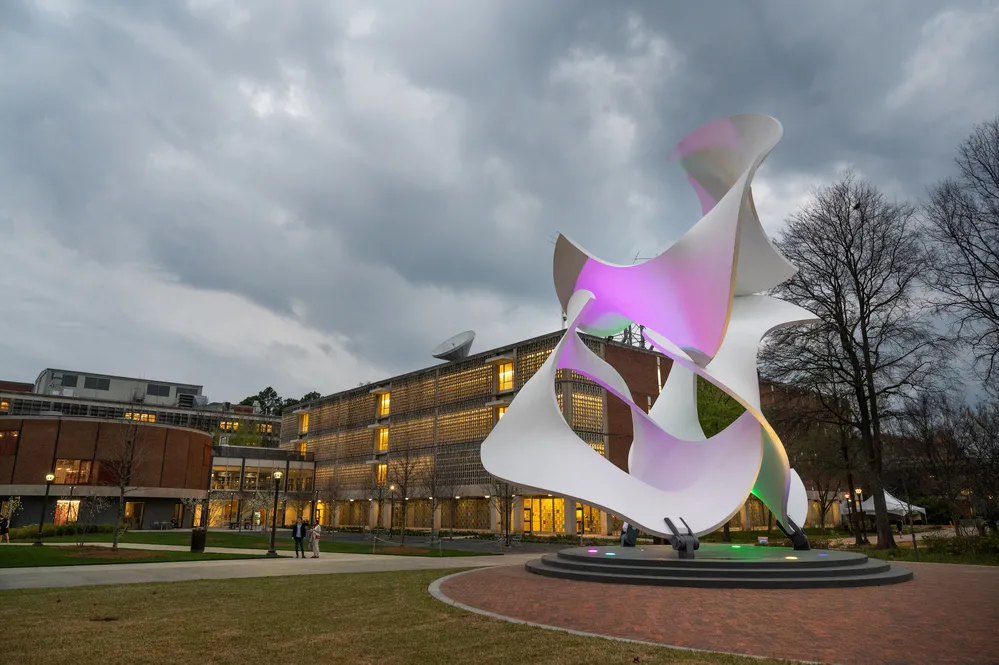
Along with the Georgia Tech faculty tapped and reappointed as Regents’ Professors and Researchers at the Aug. 9 University System of Georgia (USG) Board of Regents meeting were five Georgia Tech professors named to the new distinction of Regents’ Entrepreneur.
Georgia Tech faculty named as the first Regents' Entrepreneurs in the USG include Farrokh Ayazi, Ken Byers Professor in Microsystems, School of Electrical and Computer Engineering; Kirk Bowman, professor, Sam Nunn School of International Affairs; Andrei Fedorov, Neely Chair and professor, George W. Woodruff School of Mechanical Engineering and the Petit Institute for Bioengineering and Bioscience; Mark Prausnitz, Regents’ Professor, J. Erskine Love Jr. Chair, School of Chemical and Biomolecular Engineering; and Gleb Yushin, professor, School of Materials Science and Engineering.
Regents’ Professor First-Time Appointments
The Board of Regents approved the title of Regents’ Professor to Facundo Fernández, professor and Vasser Woolley Foundation Chair in Bioanalytical Chemistry, School of Chemistry and Biochemistry; Willie Pearson, professor, School of History and Sociology; Krishnendu Roy, professor, Robert A. Milton Endowed Chair, NSF Engineering Research Center for Cell Manufacturing Technologies, Wallace H. Coulter Department of Biomedical Engineering; and Beril Toktay, professor of Operations Management and Brady Family Chair, Scheller College of Business.
Regents’ Researcher First-Time Appointments
Those named as Regents’ Researchers include Stephen Balakirsky, principal research scientist, Georgia Tech Research Institute (GTRI); Anton Bryksin, principal research scientist, Petit Institute for Bioengineering and Bioscience; Walter Bradley Fain, principal research scientist, School of Public Policy; and Anita Pavadore, principal research engineer, GTRI.
First-Time Reappointments
Receiving a first-time reappointment as Regents’ Professor was Surya Kalidindi, Regents’ Professor, Rae S. and Frank H. Neely Chair, George W. Woodruff School of Mechanical Engineering. Receiving a first-time reappointment as Regents’ Researcher was Margaret Loper, principal research scientist, GTRI.
Other Reappointments
Regents’ Professor and Researcher designations only require Institute approval for second-time reappointments. Second-time Regents’ Professor appointments at Georgia Tech include Sy Goodman, Regents’ Professor, Sam Nunn School of International Affairs; Nicholas Hud, Regents’ Professor, School of Chemistry and Biochemistry; and Vladimir Tsukruk, Regents’ Professor, School of Materials Science and Engineering. Receiving a second-time Regents’ Researcher reappointment was Alexa Harter, director of the Cybersecurity, Information Protection, and Hardware Evaluation Research Laboratory at GTRI.
New Recognition for Entrepreneurship and Innovation
The board approved the Regents’ Entrepreneur designation in their February 2022 meeting to recognize and support faculty entrepreneurship and innovation. The Regents’ Entrepreneur designation may be granted by the Board of Regents to an outstanding full-time tenured faculty member who has an established reputation as a successful innovator and who has taken their research into a commercial setting. The Regents’ Entrepreneur designation is bestowed by the board only upon the unanimous recommendation of the USG institution president, the chief academic officer, and the chancellor, and upon the approval of the Committee on Academic Affairs.
Farrokh Ayazi
Farrokh Ayazi is director of the Georgia Tech Analog Consortium. His main research interest is in integrated micro and nano electromechanical systems and integrated microsystem design. He is the founder and chief technology officer of Qualtré, which was acquired by Panasonic in 2016. He is currently leading StethX Microsystems, an ATDC company, in commercializing advanced wearable sensors for cardiopulmonary applications.
Kirk Bowman
Kirk Bowman is the Rise Up & Care term chair in Global Development and Identity. In 2014, Bowman founded Rise Up & Care, a nonprofit corporation that employs an innovative model of international community development, combining global development research; high-level performance organizations in the Global South to transform youth; powerful documentary films by top local directors; and children's books illustrated by local street artists. He directs a Georgia Tech Vertically Integrated Project on Global Social Entrepreneurship with 18 undergraduate students.
Andrei G. Fedorov
Andrei G. Fedorov’s research covers atomic scale nanomanufacturing; distributed power generation with carbon dioxide management; instrumentation for biomedical research; and thermal management of electronics and medicine. With his students and collaborators, Fedorov started several technology companies to commercialize his inventions in the space of gene/drug delivery; biomarker discovery and quality control in cell therapy manufacturing; and thermal management of high-power generation devices.
Mark Prausnitz
Mark Prausnitz has co-founded seven companies that have together raised more than $350 million for commercialization of microneedle technologies developed in his lab at Georgia Tech. Three of the companies have products for sale, including an FDA-approved treatment of ocular inflammation. His technologies have been studied in more than 20 human clinical trials. He has almost 80 issued or pending U.S. patents, with additional international filings. Prausnitz has published more than 300 journal articles and supervised 50 Ph.D. students among a total of almost 350 graduate, postdoctoral, or undergraduate researchers in his lab.
Gleb Yushin
Gleb Yushin is a pioneer and globally recognized leader in advanced materials for next-generation Li-ion batteries. He is member of the National Academy of Inventors and fellow of three international professional societies. He has been awarded more than 200 patents, while also being one of the most cited Georgia Tech professors since 2019. He co-founded the most economically successful Georgia Tech startup Sila Nanotechnologies ($3.3B valuation). Yushin has served as a founding faculty advisor for the Entrepreneurs Club at Tech and as an advisor to the Georgia Tech startup CellFE.
Regents’ Professorships and Regents’ Researcher titles may be granted for a period of three years by the Board of Regents to outstanding faculty members of Georgia Tech, Augusta University, Georgia State University, the University of Georgia, and, in special circumstances, other USG institutions.
News Contact
Dawn Baunach, Associate Vice Provost for Faculty
Jul. 29, 2022
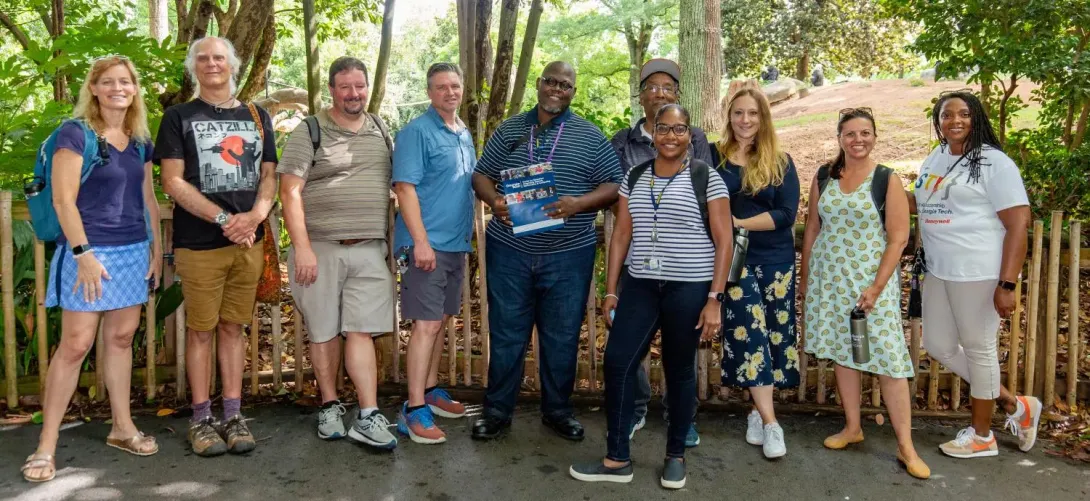
For decades, engineers and scientists have looked to nature for inspiration. One of the most famous examples is Swiss electrical engineer George de Mestral. In 1955, he invented the hook and loop fastener (which he later named Velcro) after studying burdock burrs that kept sticking to his clothes during a hunting trip. For the birth of flight, the Wright brothers studied how birds change the angle of their wings to roll right or left while in the air. They would use the example to refine their control systems in the world’s first successful motor-operated airplane.
A number of Georgia Tech researchers are also focused on biologically inspired design, ranging from the study of how honey bees transport pollen pellets to how small, snakelike lizards move.
With the assistance of a $3 million National Science Foundation grant, Georgia Tech’s Center for Education Integrating Science, Mathematics, and Computing (CEISMC) and the Center for Biologically Inspired Design (CBID) are partnering on a three year research project that introduces biologically inspired design to high school students throughout metro Atlanta.
Read the Full Story at the College of Engineering Website
News Contact
Candler Hobbs, Communications Officer, College of Engineering