
May. 06, 2026

In recognition of her extraordinary teaching, outreach, and mentoring activities, Emily Weigel has been awarded the Eugene P. Odum Award for Excellence in Ecology Education by the Ecological Society of America (ESA). Each year, the award celebrates a singleone individual’s sustained, outstanding work in ecology education.
“I’m honored to receive the 2026 Odum Award,” says Weigel, who is a senior academic professional in the School of Biological Sciences. “Georgia Tech is widely recognized for its research excellence, but teaching is mission-critical to the ways we serve the public good. This award reflects the incredible work happening in our classes and communities that drives science, and science education, forward.”
Weigel is among 10 individuals selected nationwide for annual ESA awards. “This year’s award recipients have each contributed something important to ecology, often in very different ways,” says ESA President Peter Groffman. “These are ecologists whose efforts have shaped the field, supported colleagues and created opportunities for others. I’m glad to see that kind of work acknowledged.”
About Emily Weigel
Weigel’s work focuses on improving biology education by examining how student backgrounds, values, and instructional practices shape learning outcomes. Her impact spans K–12 students, undergraduates, graduates, and members of the Atlanta community.
Known for her teaching innovations, she has pioneered new courses in biology, ecology, and statistics, and is also a leader in the Vertically Integrated Projects program at Georgia Tech.
From studying the dynamics of flu, to using drone aerial footage to monitor Georgia Tech’s changing landscape, to a long-term project monitoring the trees of the Campus Arboretum, Weigel shares that “students thrive when they develop skills through real-world experiences."
Weigel has also creatively infused the traditional “nature” topics and fieldwork found in ecology curricula with modern technology and programming skills used in research. “Effectively introducing professional skills, like programming in the language R, is innovative nationally,” she says. By making R, an open-source programming language, more accessible, “we’re preparing undergraduates for success in graduate school and their careers, and empowering them to learn other programming languages in the future.”
In addition to teaching, Weigel plays a central role in mentoring and supporting students across the Institute. She serves as the undergraduate academic advisor for around one-sixth of Georgia Tech’s Biology majors, mentors graduate and undergraduate teaching assistants, and is an instructor for the “Tech to Teaching” capstone course in the Center for Teaching and Learning.
Apr. 29, 2026
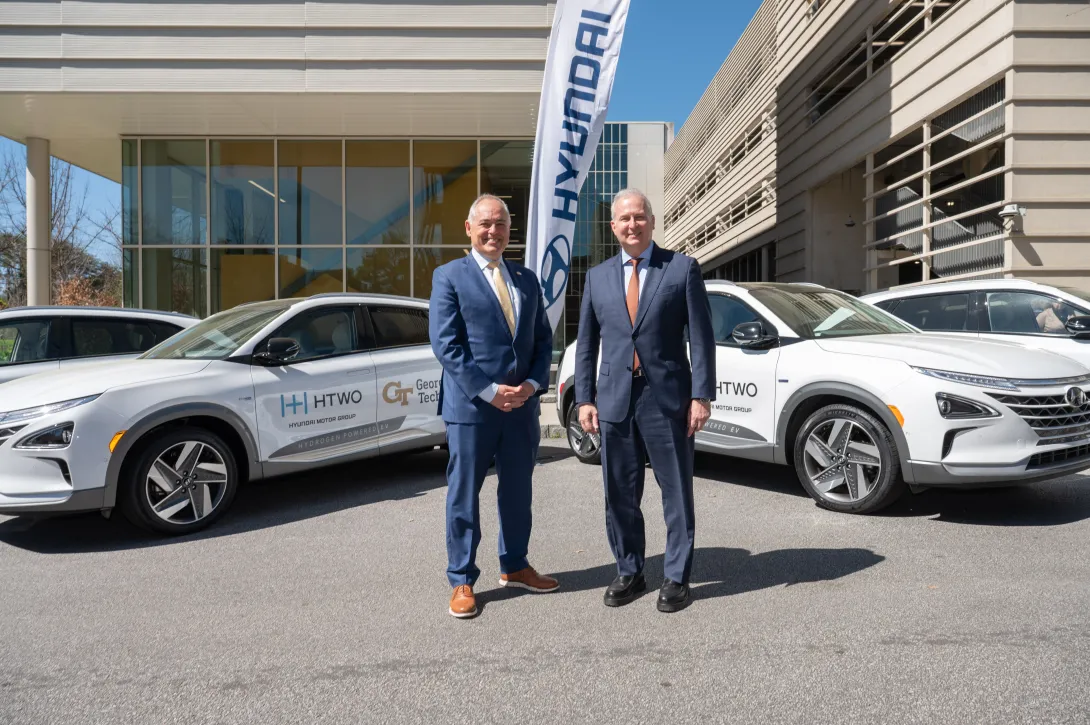
Ángel Cabrera, president of Georgia Tech, and Ken Ramírez, executive vice president and head of Global Energy and Hydrogen Business at Hyundai Motor Group, commemorate MOU to further collaborate on hydrogen mobility development.
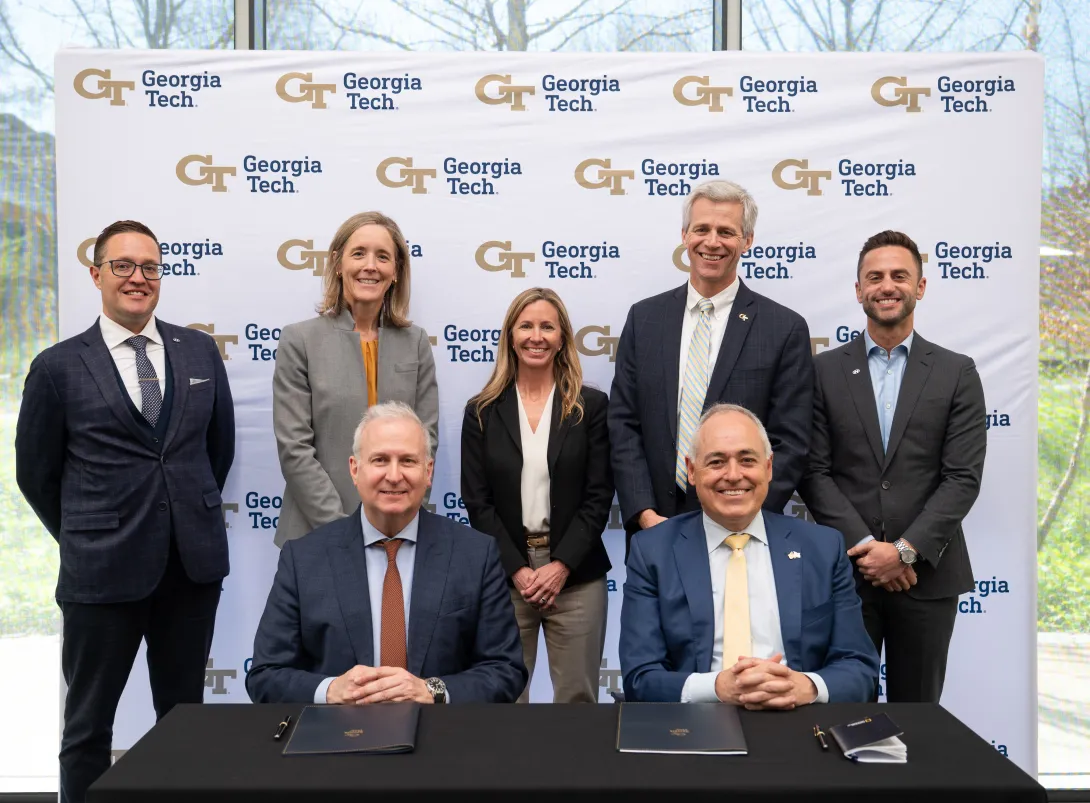
Georgia Tech and Hyundai Motor Group leaders at MOU signing.
Hyundai Motor Group and the Georgia Institute of Technology have announced an expansion of their growing collaboration to advance hydrogen-powered transportation, deepen applied research and education, and accelerate the use of zero-emissions vehicles in Georgia.
Building upon a multifaceted relationship, the two are bringing hydrogen fuel cell vehicles and fueling infrastructure to campus — turning Georgia Tech into one of the nation’s most prominent campus-based examples for hydrogen mobility.
“Hyundai Motor Group is proud to strengthen our collaboration with Georgia Tech as we work together to accelerate the future of clean mobility. Georgia Tech’s leadership in innovation and its commitment to developing the next generation of problem-solvers make it a natural partner in advancing technologies,” said Ken Ramírez, executive vice president and head of Global Energy and Hydrogen Business at Hyundai Motor Group. “By combining the university’s excellent research with Hyundai’s global experience, we are creating the foundation for real-world solutions that will help drive the energy transition and inspire future mobility leaders.”
Ramírez is also a 1991 Georgia Tech graduate and a member of the Georgia Tech Advisory Board.
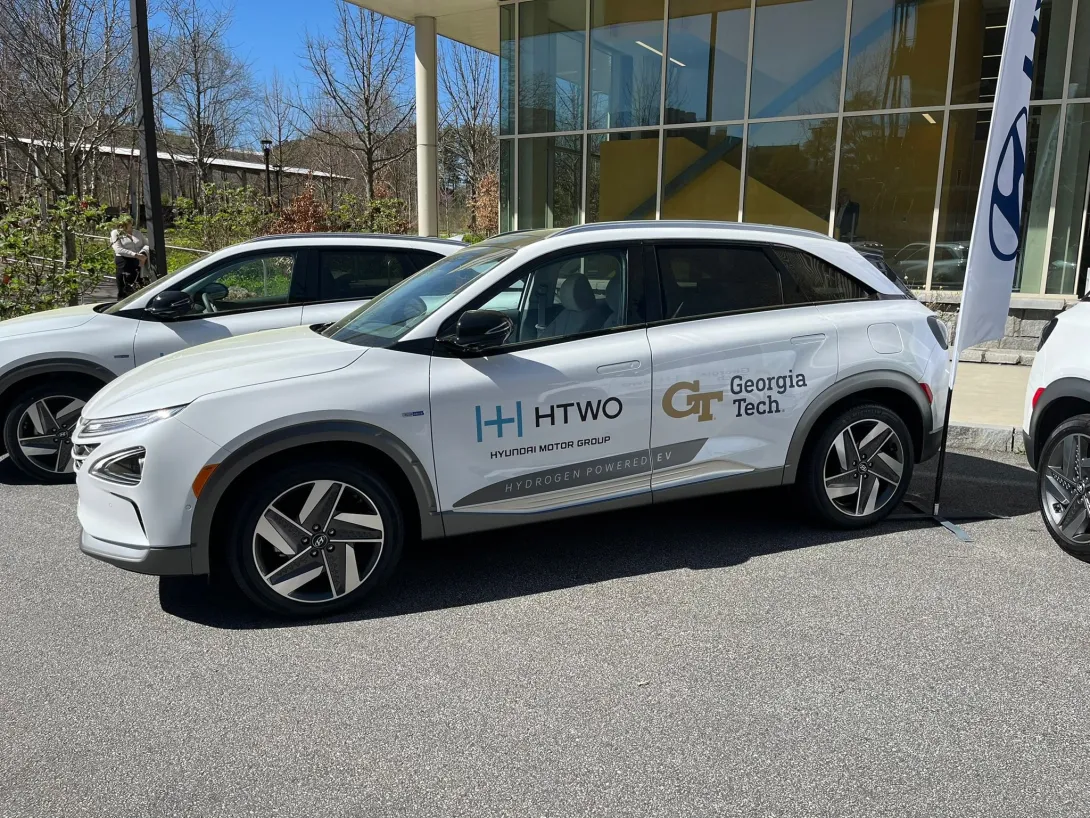
“It’s very fulfilling to donate a handful of our NEXO fuel cell SUVs as part of our expanding relationship with Georgia Tech. Hydrogen-powered NEXO fuel cell vehicles will immediately serve to expand the clean mobility footprint on campus while providing real-world experiences with the cutting edge of zero-emissions transportation technology,” said Randy Parker, president and CEO, Hyundai Motor North America.
“Georgia Tech has a long history of working with industry to move breakthrough technologies from the lab into the real world. By expanding our work with Hyundai, we’re advancing hydrogen research, reducing emissions on our campus, and strengthening Georgia’s role in the future of clean mobility," Georgia Tech President Ángel Cabrera said.
How the Partnership Drives Hydrogen Innovation and Research
The partnership includes the donation of four Hyundai NEXO fuel cell electric SUVs by Hyundai Motor North America and a hydrogen electrolyzer project, which will be installed at Georgia Tech’s North Avenue Research Area, positioning Tech as one of the most visible real-world test beds for hydrogen mobility in the U.S.
The vehicles and infrastructure will support campus operations and interdisciplinary research. Key areas of focus include:
- Engineering: Exploring hydrogen-based systems and mobility solutions.
- Sustainability: Assessing the environmental benefits of hydrogen technologies.
- Energy systems: Understanding the integration of hydrogen fuel cells into current infrastructure.
- Public policy: Evaluating the regulatory and social implications of hydrogen adoption.
This initiative connects Georgia Tech’s research enterprise with campus operations, using the Institute as a living laboratory for clean transportation technologies. Faculty and students will study:
- Real-world performance of hydrogen technology.
- Infrastructure requirements for large-scale deployment.
- Environmental impacts of hydrogen energy systems.
Insights gathered from this initiative aim to inform and accelerate the widespread use of hydrogen technology in campuses, fleets, cities, and freight corridors. The initiative also supports Georgia Tech’s strategic plan, which includes the goal of expanding the use of zero-emissions vehicles powered by sustainable energy sources.
Why Is the Partnership with Georgia Tech Key to Hyundai Motor Group’s Vision?
The collaboration between Hyundai and Georgia Tech is a testament to the power of aligning academic expertise with corporate innovation. Beyond hydrogen energy, the partnership seeks to advance innovation in the areas of:
- Autonomous driving
- Electric vehicle (EV) batteries
- Charging infrastructure
- Materials science
- Cybersecurity
In addition, Hyundai’s presence in Georgia underscores its commitment to the region. Georgia is home to the Hyundai Motor Group Metaplant America and also serves as a hub for zero-emissions transportation through HTWO Logistics, a clean logistics partnership that operates Hyundai XCIENT fuel cell heavy-duty trucks in logistics operations near Savannah. The collaboration with Georgia Tech builds on this regional foundation, reinforcing the link between education, research, and Hyundai's long-term goal of achieving carbon neutrality by 2045.
What’s Next for the Partnership?
The partnership between Hyundai and Georgia Tech represents more than an investment in research. It’s a shared effort to lead the next generation of mobility advancements. Additional announcements about the partnership’s research projects, educational programs, and vehicle deployment are expected in the coming months.
News Contact
Georgia Tech Media Relations
media@gatech.edu
Feb. 18, 2026
Written by: Shweta Ram and Seungho Lee
What does it mean to design systems that endure even after major disruptions? This question framed the 2026 Brook Byers Institute for Sustainable Systems (BBISS) Sustainability Showcase, where conversations over two days spanned the Georgia coast, wildfire modeling, AI data centers, infrastructure, community engagement, and the joy of working for a more sustainable and resilient world. Across disciplines and scales, a unifying theme emerged: resilience is not a single solution. It is a systems-level challenge requiring integration across science and technology, policy, communities, and human experience.
From Coastlines to Communities
The showcase opened with a keynote from President Emeritus G. Wayne Clough on wildlife management and resiliency along Georgia’s coast. The conversation that followed between Clough and BBISS Executive Director Beril Toktay highlighted the interconnection between public policy, wilderness conservation, community leadership, and scientific research. The session highlighted not only the urgency of protecting fragile ecosystems, but also that resilience works best when it is community-focused and community-driven.
Subsequent panels continued this systemic perspective. Sessions on community engagement, biotechnology-derived, climate-resilient plants, the flood resilience of Georgia coastal communities, wildfire prediction and prevention, and infrastructure resilience analytics all emphasized that resilience depends on the synthesis of many disciplines.
Across sessions, researchers emphasized that infrastructure resilience must include governance frameworks informed by good science, community engagement based on trust, and sustained collaboration that seeks to constantly improve the science, policy, and stakeholder relationships. The researchers demonstrated that they understand their role to be greater than merely modeling risk, but as collaborators who translate research into practical solutions that communities can adopt, maintain, and trust.
AI Data Centers: A New Resilience Frontier
Day two shifted attention to data centers, which are emerging as a critical resilience frontier. As artificial intelligence systems scale rapidly, so does the infrastructure that powers them, as well as the growing realization that digital systems are physical systems. Conversations examined the feedback loops that play a significant role in determining environmental impacts, such as chip architecture, AI workloads, data center sustainability, appropriate AI usage, and who makes the decisions on data center infrastructure development.
One of the most fascinating sessions came from Alexandria Smith, assistant professor in the School of Music at Georgia Tech. She presented an artistic yet algorithmic composition that sonified data from AI data centers. Through translating kilowatt-hour usage and interconnection data into immersive soundscapes, she reframed data centers not as static input-output machines, but as adaptive, living systems. Drawing inspiration from Physarum polycephalum, a slime mold without a brain or nervous system known for its innate problem-solving abilities, she invites the listener to imagine infrastructure that senses, adapts, and self-optimizes.
Campus as a Living Laboratory
In her session, Professor Jennifer Chirico, associate vice president of Sustainability, highlighted Georgia Tech’s 2024 Climate Action Plan, focusing on building energy efficiency, renewable integration, materials management, and mobility transitions. The plan frames the Georgia Tech campus as a test bed for resilience strategies — an ecosystem where research, operations, and policy intersect. Chirico highlighted several examples where the alignment between research and implementation was essential in moving projects from modeling to pilot projects to sustained institutional change.
Finding Joy in Climate Action
Rebecca Watts Hull, Matthew Realff, and Christie Stewart led an interactive discussion inspired by Ayana Elizabeth Johnson’s framework for accelerating long-term climate action. Participants were asked three simple questions: What are you good at? What work needs doing? What brings you joy? Sustainability and climate research are fields often defined by serious urgency, crisis narratives, and burnout. This session offered a personal framework for resilience where emotional sustainability, professional fulfillment, and joy matter just as much as the motivation to drive a mission ever forward.
Building a Shared Vision
The Sustainability Showcase concluded with a facilitated visioning session led by Kristin Janacek, associate director for Interdisciplinary Research Impact, and Beril Toktay. In small groups, leaders, researchers, and community members worked to define what resilience looks like for them.
After the conversations, several themes emerged:
- Resilience must move from research to practical and community-based solutions to sustained action.
- Networks create opportunity but require long-term stewardship to endure.
- Choosing the right metrics to measure resilience will galvanize efforts to strengthen it.
- Community capacity is at least as important as built infrastructure.
Over two days, it became clear that Georgia Tech is not approaching resilience as a narrow technical problem. It is approaching it as a systems challenge — one that spans coastlines, campuses, disciplines, data centers, the Appalachian Mountains, data models, the arts, and human relationships. Designing systems that endure requires more than innovation. It requires collaboration, stewardship, and a shared commitment to long-term impact. The conversations launched at this year’s BBISS Sustainability Showcase laid the foundation for continued coordination and ambitious action in the months ahead.
News Contact
Brent Verrill, Research Communications Program Manager, BBISS
Feb. 05, 2026

Jennifer Chirico leads the energy and infrastructure initiative at Georgia Tech’s Strategic Energy Institute. She is a longtime Yellow Jacket, bringing more than 25 years of sustainability experience as the inaugural associate vice president of Sustainability at Georgia Tech. In this role, she oversees the Office of Sustainability and works across the Institute on emissions reductions, clean energy, water management, circular economy, sustainable technology, and strategy.
Chirico led the development and publication of the Institute’s first Climate Action Plan and co-led Tech’s sustainability plan, Sustainability Next. She is LEED Green Associate (Leed GA) accredited and holds certifications in the Carbon Disclosure Project, the Global Reporting Initiative, WaterSense, climate action planning, and Home Energy Survey Professional.
She holds a Ph.D. in public policy from Georgia Tech, a master’s in public health with a major in environmental health, and a bachelor’s degree in management from Georgia Tech. She has published books and written numerous chapters on sustainability related to systems thinking, net zero strategies, adaptive management, and the United Nations Sustainable Development Goals on leadership for the collective well-being.
Below is a brief Q&A with Chirico in which she discusses her focus areas and how her work at Georgia Tech influences the energy and infrastructure initiative here.
- What is your field of expertise, and at what point in your life did you first become interested in this area?
My field of expertise is sustainability, with a focus on the intersection of environmental, social, and economic systems. Although I began my career in finance, I discovered my passion for sustainability during a year I spent working abroad in New Zealand in 2000. That experience opened my eyes to the importance of balancing economic development with environmental stewardship and social responsibility. When I returned to the United States, I pursued a master’s degree in environmental health, followed by a Ph.D. in environmental policy. Over the past 25 years, I’ve dedicated my career to advancing sustainability and creating meaningful impacts. I continue to be inspired by the tangible, positive results that emerge when organizations integrate sustainability principles into their decision-making.
- What questions or challenges sparked your current work at Georgia Tech? What are the big issues facing the campus infrastructure right now as it relates to energy?
One of the most pressing challenges today is strengthening resilience for our infrastructure, well-being, and natural resources. As our environment continues to change, the ability to both mitigate impacts and adapt effectively is essential to our success. In my work, I am committed to advancing a healthier, safer, and more sustainable campus. Much of my work focuses on planning, reporting, and guiding efforts to build a stable, reliable, and clean energy infrastructure. A major part of this involves balancing firm energy sources with intermittent renewable sources in a way that ensures both reliability and sustainability. Georgia Tech has already made meaningful progress by installing over 1 megawatt of solar capacity and piloting the Stryten battery storage system. These projects demonstrate what is possible. We still have a long way to go to reduce our emissions and scale clean energy solutions across campus. Continuing to strengthen our energy resilience and expand renewable integration will be critical to meeting our long‑term goals.
- What interests you the most about leading the energy and infrastructure initiative? Why is your initiative important to Georgia Tech’s energy goals?
What interests me most is the opportunity to collaborate with some of the nation’s top energy researchers to identify the most resilient, scalable, and forward‑thinking energy solutions for our campus. I’m particularly passionate about bridging the gap between research and operations to support turning innovative work into tangible, real‑world applications that strengthen Georgia Tech’s infrastructure. Building strong partnerships across academics, operations, and industry is central to this effort. When these groups work together, we can accelerate progress, pilot new technologies, and create a living-learning campus that demonstrates what a resilient, low‑carbon future can look like.
- What are the broader regional, global, and social benefits of the energy and infrastructure initiative at Georgia Tech?
It creates benefits that reach far beyond our campus. By implementing clean, resilient energy systems, we contribute to regional progress in the Southeast. Our campus can serve as a model and test bed, demonstrating scalable solutions and sharing best practices with peer institutions, local governments, and industry partners. Globally, our research and operational innovations support the broader transition to cleaner, more reliable energy systems. And socially, these efforts promote healthier communities, reduce environmental burdens, and help prepare a skilled workforce for the rapidly growing energy sector.
- What are your hobbies?
My favorite hobbies are hiking, reading, yoga, and paddleboarding. I also love spending time in nature and with family and friends.
News Contact
Priya Devarajan || SEI Communications Program Manager
Feb. 02, 2026


An estimated 4 million Americans have glaucoma, a group of eye diseases that can lead to irreversible blindness. Now, Georgia Tech is home to a Glaucoma Research Fund that will support cutting-edge work to understand and advance treatments for the disease.
The new initiative was sparked by ongoing research at Georgia Tech — and a Yellow Jacket connection: when Postdoctoral Research Fellow Hannah Youngblood’s work on exfoliation glaucoma (XFG) was featured by the BrightFocus Foundation, it caught the attention of Jennifer Rucker, an Alabama resident who was diagnosed with XFG several years ago.
Excited that the research could change outcomes for people like her — and proud that it’s happening at her husband Philip Rucker’s, EE 72, alma mater — Jennifer Rucker reached out to Youngblood and her advisor, School of Chemistry and Biochemistry Professor and Kelly Sepcic Pfeil, Ph.D. Chair Raquel Lieberman.
“As the wife of a Georgia Tech graduate and an individual with pseudoexfoliation glaucoma, I was inspired to support the scientists whose efforts may help me and others,” Jennifer Rucker says. What followed was a meaningful dialogue and a shared sense of purpose — and the creation of the Georgia Tech Glaucoma Research Fund (Wreck Glaucoma! Fund).
“It meant so much that Jennifer took the initiative to reach out to learn more about our research,” says Lieberman. “Moments like this remind me how deeply meaningful it is to connect with people in the broader community who are navigating glaucoma. Opportunities for such personal connections are rare, but they inspire and further motivate us to achieve our lab’s mission to improve the lives of individuals suffering from blindness diseases.”
A Personal Connection
Youngblood’s interest in glaucoma research also stems from a personal connection: her father was diagnosed with glaucoma as a young adult. Now, Youngblood studies the genetic and molecular factors behind XFG in the Lieberman research lab.
“XFG is an aggressive form of the disease with no known cure,” Youngblood says. While scientists know that XFG is the result of abnormal accumulation of proteins in the eye, current treatments only address symptoms rather than treating the root cause of the disease.
“We know XFG is driven by protein buildup, but we still don’t know why it happens,” she explains. “My work studying specific genetic variants aims to uncover this.”
The Genetics of Glaucoma
In particular, Youngblood is researching the role of LOXL1, a protein that plays a role in soft tissue throughout the body, including the eyes.
“Research has shown that people with variants in the genes responsible for this protein are more likely to have XFG,” she says. “That made me curious to see if the variants might be impacting the structure of the LOXL1 protein itself and how those variants might lead to disease.”
Youngblood is currently testing her theory in the lab. “My hope is that new insight into proteins like LOXL1 will bring us closer to treatments that address XFG at its source,” she says. “The new Georgia Tech Glaucoma Research Fund is a tremendous step forward in making that hope a reality.”
Support the Georgia Tech Glaucoma Research Fund
Please visit the Glaucoma Research Fund support page to give to this specific program. To discuss additional philanthropic opportunities, please contact the College of Sciences Development Team: development@cos.gatech.edu
Your investment ensures that these scholars and researchers have world-class resources, facilities, and mentors to excel in this critical work. Thank you for helping us shape the future.
News Contact
Jan. 15, 2026
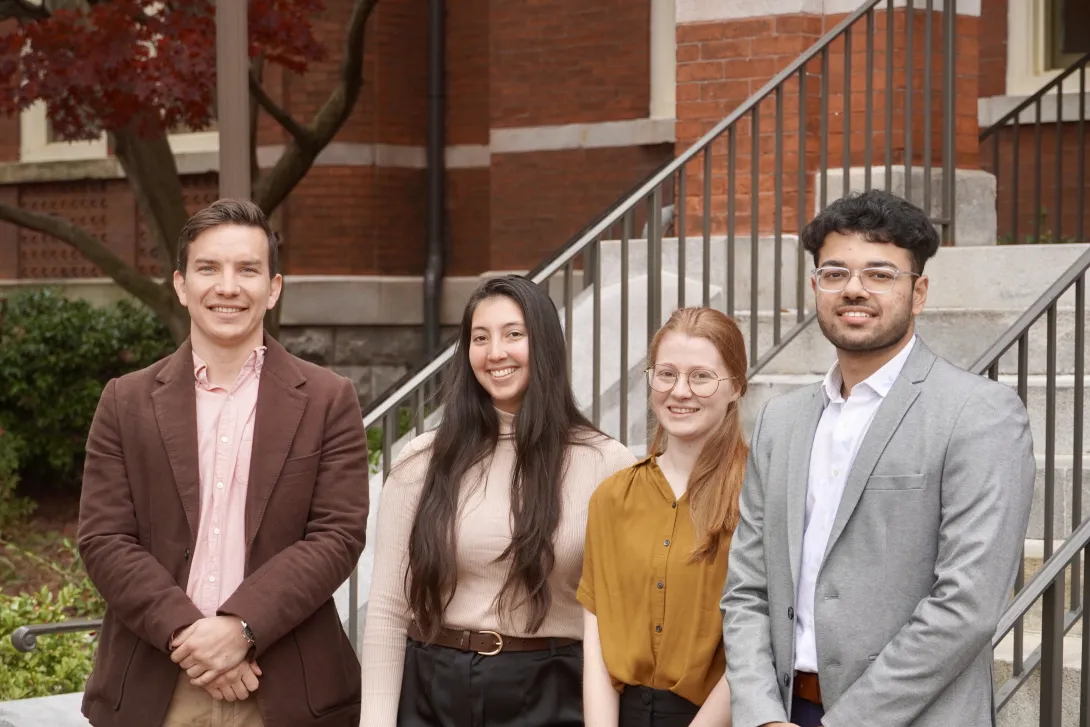
Four graduate students from the College of Sciences were selected for the new Community Engagement Graduate Fellowship, made possible through a gift from Google.
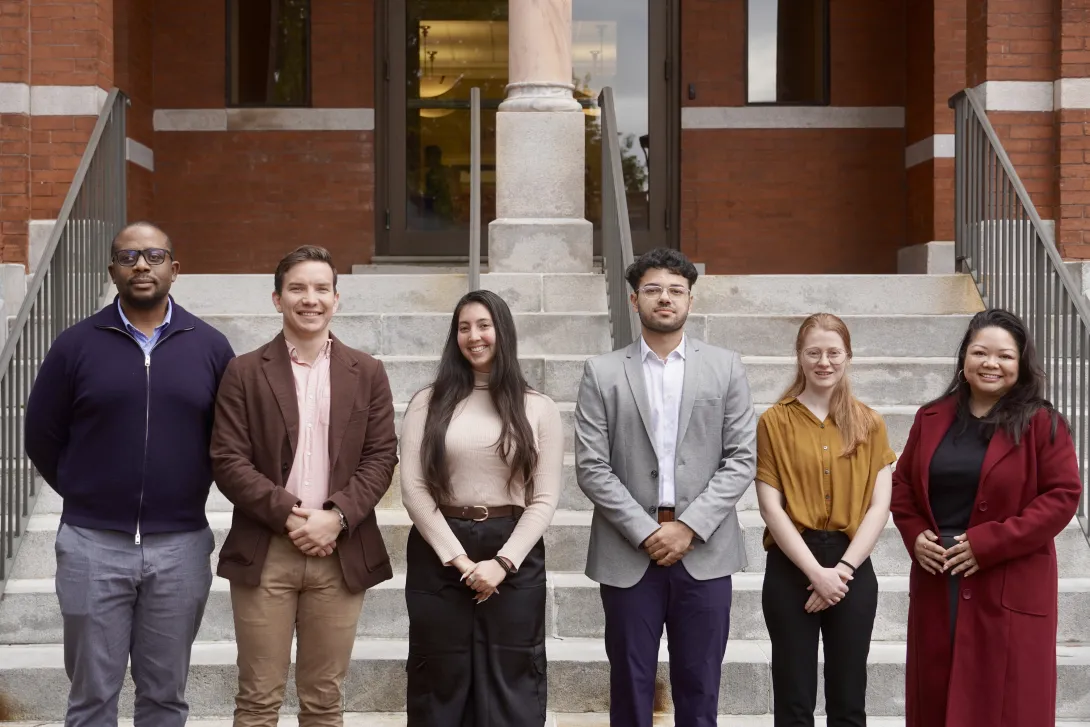
C-PIES Director Lewis A. Wheaton (far left) and Director of Programs Lea Marzo (far right) stand with the inaugural Community Engagement Graduate Fellows (left to right): Nikolai Simonov, Miriam Simma, Aniruddh Bakshi, and Katherine Slenker.
Four graduate students from the College of Sciences were recently selected for the new Community Engagement Graduate Fellowship, made possible through a gift from Google. This one-year research opportunity awards up to $5,000 for each fellow to develop a project with local partners that aims to build stronger communities.
“It has been a pleasure for the Center for Programs to Increase Engagement in the Sciences (C-PIES) to collaborate with Google and the College of Sciences Advisory Board to bring this fellowship, which will positively impact our community and highlight how science can align with public good,” says Lewis A. Wheaton, professor in the School of Biological Sciences and director of C-PIES.
In the year ahead, the fellows will work with C-PIES and community partners on campus and in the metro Atlanta area to develop projects in one of three priority areas: civic and policy engagement, community-engaged research, and K-12 research outreach.
The fellowship was open to all graduate students in the College of Sciences, and four inaugural fellows — Aniruddh Bakshi, Katherine Slenker, Miriam Simma, and Nikolai Simonov — were named based on their exciting, yet feasible applications.
Fellow Aniruddh Bakshi: Strengthening trust in science
Ph.D. student Aniruddh Bakshi studies the problem of drug delivery at the intersections of organic chemistry, biochemistry, and immunology. As mRNA vaccines are closely related to his area of research, he sees the need for a grassroots outreach movement from young academics to help bolster public confidence in rigorous scientific methodology.
In collaboration with local hospitals and nonprofits, his proposed project is to start a social media content series, titled “A Day in the Life of a Ph.D. Student,” to show the realities of graduate school for those interested in this career path while connecting his research to broader public issues.
“Science has the power to solve urgent problems, but only if people understand and trust it,” says Bakshi. “Through this fellowship, I will use my research and outreach efforts to help strengthen that trust — showing how discoveries in drug delivery and vaccine design can make a real difference in people’s lives.”
Fellow Katherine Slenker: Creating a biodiversity data network
Atlanta is often referred to as “the city in a forest,” but according to Ph.D. student Katherine Slenker, wildlife has a difficult time navigating across roads and housing developments, often resulting in human-wildlife conflict.
“Conservation ecologists have long recommended that the movement of wildlife could be eased through the creation of ‘ecological corridors,’ which connect greenspaces and wildlife populations,” she explains. “Determining the movement patterns of wildlife, and where such corridors may be best situated, requires that we first understand what species reside in the metro Atlanta area as well as how they are expected to disperse.”
As a fellow, Slenker plans to build a biodiversity data network by comparing wildlife monitoring at Davidson-Arabia Mountain Nature Preserve and Stone Mountain Park and increasing the coalition of metro Atlanta researchers. This data can be used in the development of ecological corridors to reduce clashing between humans and wildlife, notably animals struck by vehicles, and improve ecosystem health at these parks.
Fellow Miriam Simma: Making structural biology research more accessible
The study of crystallography is vital in academia, industry, and medicine because it enables researchers to decipher the atomic structures of proteins, but it is scarcely taught outside of graduate school. Ph.D. student Miriam Simma wants to change that.
Her proposed project is to introduce protein crystallography to K-12 students and teachers through hands-on activities in local high school classrooms and to the public during the Atlanta Science Festival at Georgia Tech.
“My vision is to make structural biology research accessible, so everyone can engage with cutting-edge scientific research — fostering curiosity and interest in STEM careers,” says Simma. “Long term, I will synthesize these activities into a chemical education article that introduces K-12 students to protein structure and function.”
Fellow Nikolai Simonov: Mentoring middle school scientists
Last year, Ph.D. student Nikolai Simonov became involved in the GoSTEM Club at Lilburn Middle School — leading student activities and recruiting other graduate student volunteers. In partnership with Georgia Tech’s Center for Education Integrating Science, Mathematics and Computing, the club is a weekly afterschool program for students, many of whom come from underserved backgrounds, to grow their scientific curiosity.
“I assembled a team of 10 Tech graduate students who could explain complex scientific concepts in approachable ways for middle school students. Through this fellowship, we are excited to enrich the GoSTEM Club with an ongoing mentorship program and materials for more ambitious science fair projects,” shares Simonov.
As part of the program, club members can meet one-on-one with Georgia Tech mentors to discuss their educational and career goals. “By sharing their stories and connecting scientific ideas to real-world applications, our mentors aim to show students that STEM is not only accessible but a path toward a fulfilling life,” he adds.
News Contact
Jess Hunt-Ralston
Director of Communications
College of Sciences at Georgia Tech
Writer: Annette Filliat
Dec. 05, 2025

Georgia Tech is included in The Princeton Review’s Guide to Green Colleges for 2026, furthering the momentum from its recognition in last year’s report.
The Princeton Review evaluates colleges based on sustainability initiatives through surveys completed by both administrators and students. These surveys targeted more than 400 institutions, reviewing policies, practices, and programs related to sustainability. The guide also considers factors such as campus renewable energy sources, recycling, conservation, and the availability of academic offerings for students looking to participate in sustainability activities or to major in sustainability-related careers.
Jennifer Chirico, associate vice president of Sustainability, emphasized Georgia Tech’s commitment to a sustainable future.
“Georgia Tech remains committed to being an innovative leader in the Southeast. We have advanced the goals outlined in our first comprehensive Climate Action Plan, published last year, and are proud to operate our campus with expanded clean energy strategies, zero-emissions mobility options, and the continued growth of our award-winning EcoCommons.”
These notable advancements were factored into the decision to include Georgia Tech:
- The Kendeda Building for Innovative Sustainable Design, the first Living Building Challenge-certified research and academic building in the Southeast.
- 30 LEED-certified buildings on campus.
- The award-winning EcoCommons, 80 acres of regeneratively designed greenspace.
- Publication of the Institute’s Climate Action Plan.
- A public Climate Story Map.
- The Georgia Tech Arboretum certified as Arbnet Level II.
- The Green Forks initiative, aimed at reducing food waste and supporting student food security.
- New in-vessel composting machine installed for food waste diversion directly on campus.
The Princeton Review highlights the important work of institutions across the country, recommending those included in the report to “students who want their ‘best-fit’ college to also be a green one.”
News Contact
Timothy Sterling
Sustainability Coordinator
Office of Sustainability
Nov. 04, 2025
Today, Velocity Startups joins Georgia Tech’s comprehensive commercialization ecosystem, solidifying the Institute’s role as a national leader and premier hub for research commercialization and startup growth. Velocity Startups serves as a bridge between early-stage startup founders who are focused on scaling their businesses and readying themselves for late-stage accelerators such as the Advanced Technology Development Center (ATDC), Engage, Fusen, and Atlanta Tech Village within the City of Atlanta.
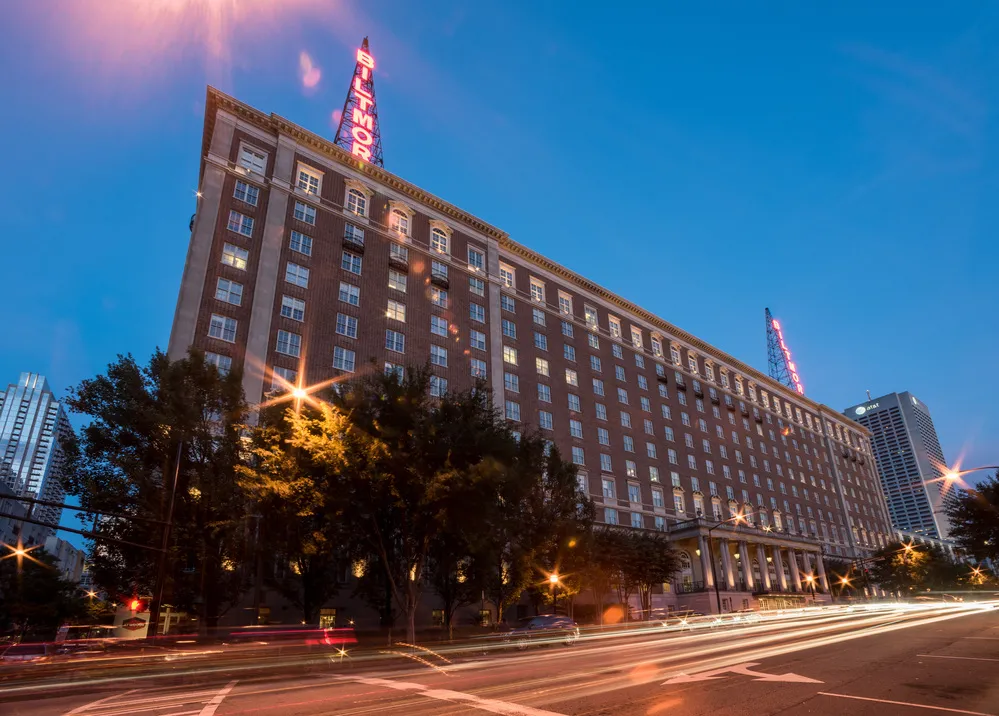
To support emergent startups, the early-stage accelerator will establish a collaborative facility at The Biltmore in Atlanta’s Tech Square, the national innovation district and dedicated area in the city that fosters community growth and meaningful innovation at the heart of the city’s tech scene.
“Atlanta is where innovation becomes opportunity, and Velocity Startups will make that journey even faster,” said Donnie Beamer, senior technology advisor in the Atlanta Mayor’s Office of Technology and Innovation. “By connecting entrepreneurs to the critical resources they need to scale, we are fueling more startups, creating more jobs, and driving economic growth. Ultimately, this will secure Atlanta’s place as a top global destination for innovation, investment, and entrepreneurial success.”
As an early-stage accelerator, Velocity Startups provides resources — including mentorship support, space, tools, networks, and infrastructure — to Georgia Tech students, faculty, researchers, and the greater Atlanta community, bridging the gap from spinoff to viable startup. At Georgia Tech, many startups that complete the CREATE-X Startup Launch program and present at the Demo Day event will gain access to Velocity Startups. The accelerator will also offer strategic programming, funding, and access to Georgia Tech’s research resources and serve as a coordinating entity for Metro Atlanta’s entrepreneurial ecosystem, engaging more than 50 colleges and advocating for policies that support startup success.
“Velocity Startups represents a pivotal step in bringing together the resources, expertise, and entrepreneurial spirit within our ecosystems as we look to further establish Atlanta as a top national tech hub. By uniting these elements, Velocity Startups will help startups scale from their first customer to long-term growth,” said Raghupathy “Siva” Sivakumar, vice president of commercialization and chief commercialization officer at Georgia Tech and president of Georgia Advanced Technology Ventures. “This accelerator enables the communities at Georgia Tech and beyond to translate groundbreaking research into high-impact ventures.”
Velocity Startups is a subsidiary of Georgia Advanced Technology Ventures and will operate in partnership with the City of Atlanta. A national search is currently underway for a director to lead the accelerator.
For additional information about Velocity Startups, visit commercialization.gatech.edu/velocity.
News Contact
Georgia Parmelee
Director of Communications
Office of Commercialization
Oct. 22, 2025
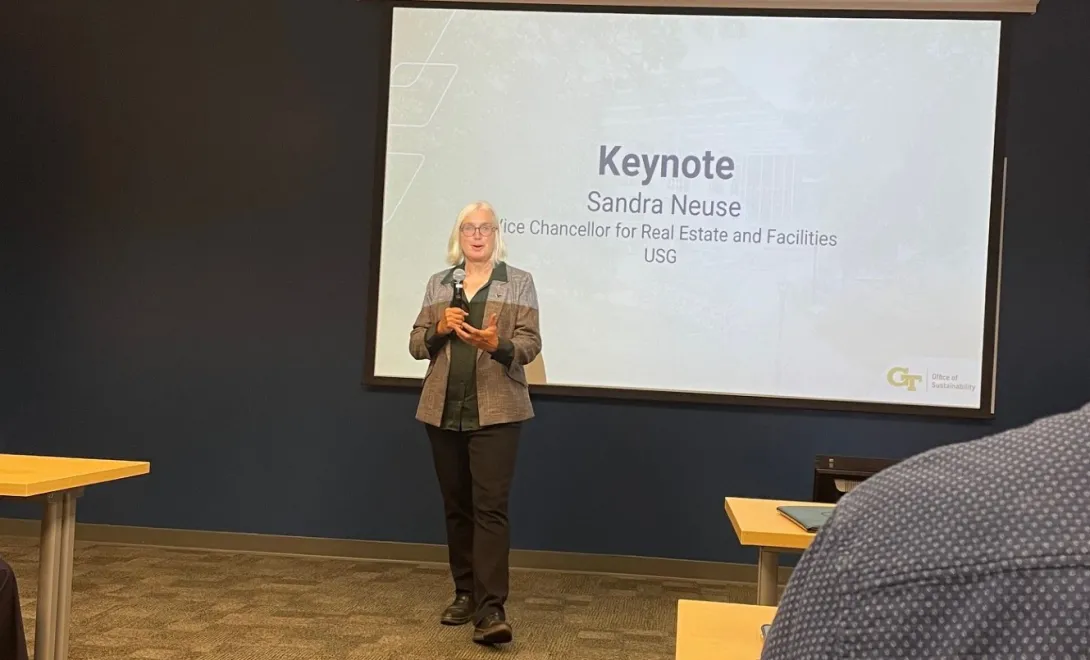
Image of Sandra Neuse, vice chancellor of Real Estate and Facilities, University System of Georgia
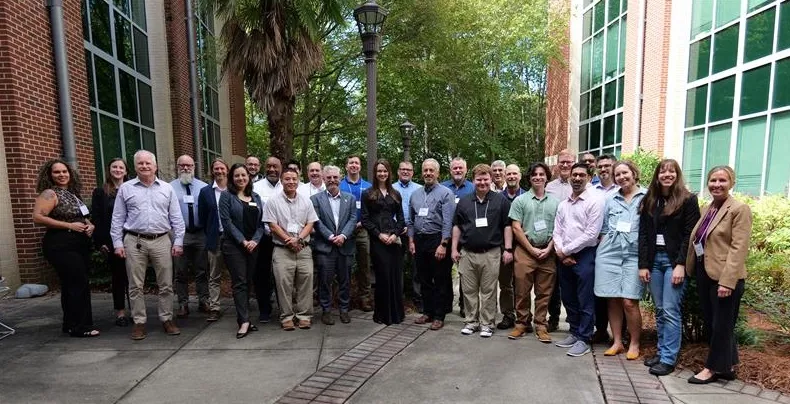
image of participants from the USG Energy Summit held Oct. 1
On Oct. 1, the Office of Sustainability (a department within Infrastructure and Sustainability) led the second meeting of the University System of Georgia (USG) Campus Energy and Resiliency Group (CERG) summit to further the conversation around energy management for campuses statewide. Six Georgia schools participated: Georgia Tech, the University of Georgia, Emory University, Georgia State University, Kennesaw State University, and the University of West Georgia. Staff from the sustainability, utilities, and engineering departments of each of these schools gathered to discuss setting USG energy targets and best practices for reducing energy use, increasing energy efficiency, and establishing shared resources.
USG Vice Chancellor of Real Estate and Facilities Sandra Neuse was the keynote speaker. “I’m thrilled that the Campus Energy and Resiliency Group has come together organically to share their collective expertise in energy efficiency and sustainability,” she said. “Their focus on establishing energy efficiency targets and collaborating with other institutions across the USG will not only avoid costs — it is an investment in the future and a model for our students, who will be the next generation of leaders.”
The call for the development of the summit was inspired by the potential of collaboration throughout the USG, and the acknowledgment that each university has unique expertise, experience, and insight that can aid in energy management strategies for campuses across Georgia.
The key ideas discussed during the summit included:
- Setting statewide USG energy targets.
- Assessing Energy Use intensity, a metric that measures energy use per square foot per year at a building level.
- Developing a framework for best practices within the USG to share strategies for increasing energy efficiency and conservation.
- Developing standards for how utility data is tracked.
Increasing energy management efforts is critical right now as utility rates continue to rise. Jennifer Chirico, associate vice president of Sustainability, presented Georgia Tech’s energy data at the event. “One of the most important aspects of campus sustainability is increasing energy efficiency and setting energy targets to advance progress. We are excited to partner with our peers across USG to share best practices and move this effort forward,” she said.
The Georgia Tech Office of Sustainability plans on continued engagement with other USG campuses across the state, and the next summit is scheduled for Spring 2026 at Kennesaw State University.
News Contact
Tim Sterling
Sustainability Coordinator
Office of Sustainability
Infrastructure and Sustainability
Sep. 29, 2025
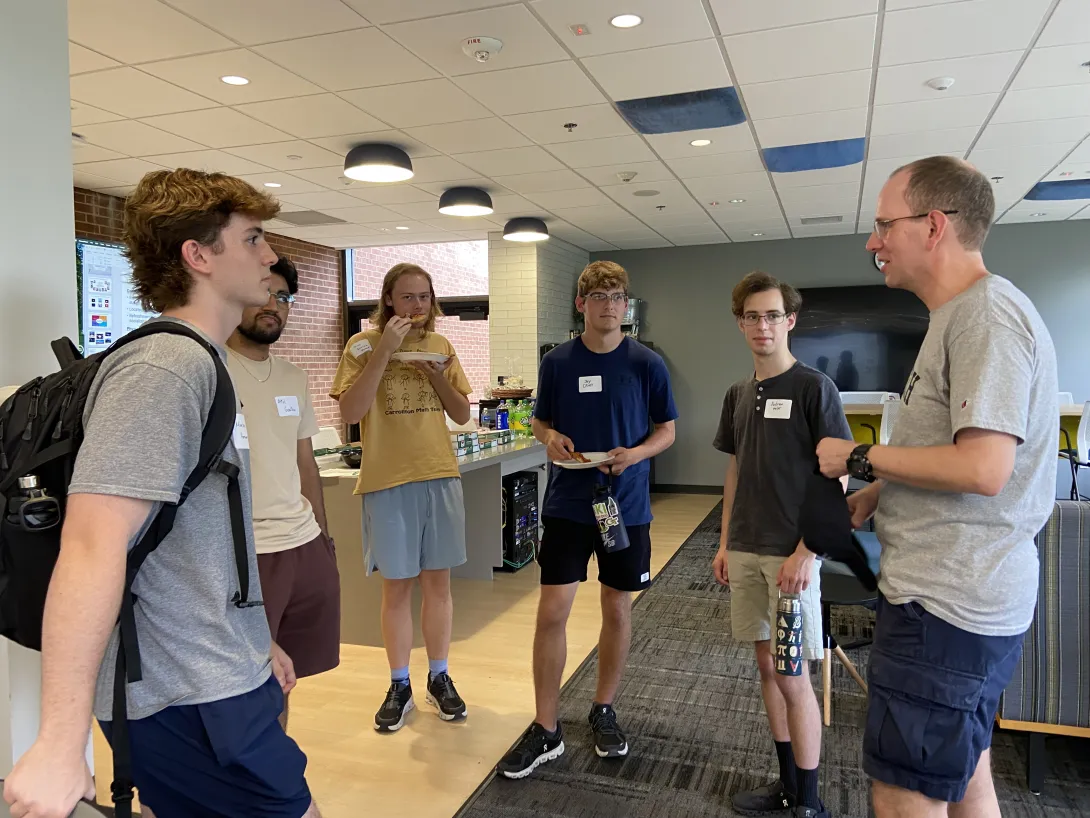
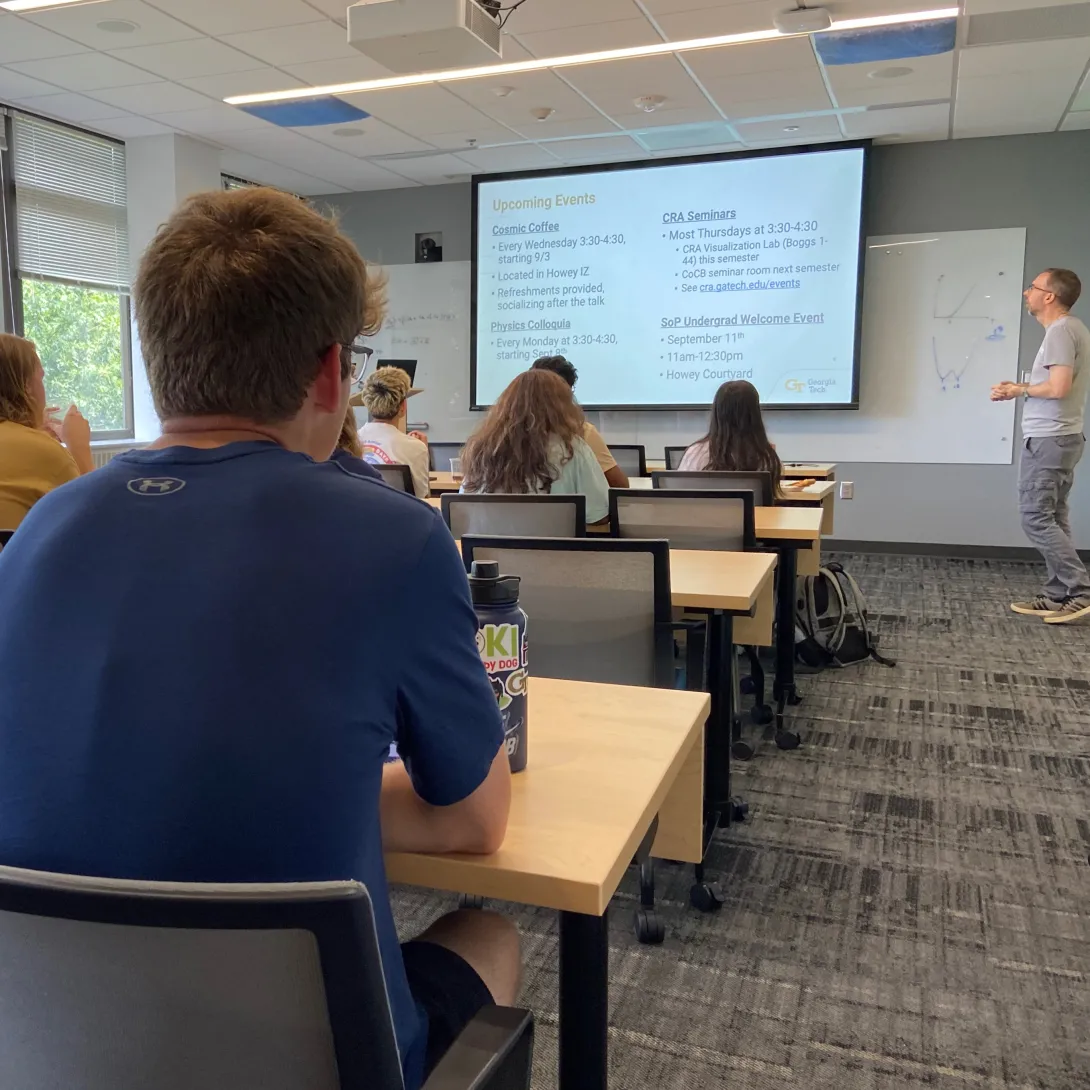

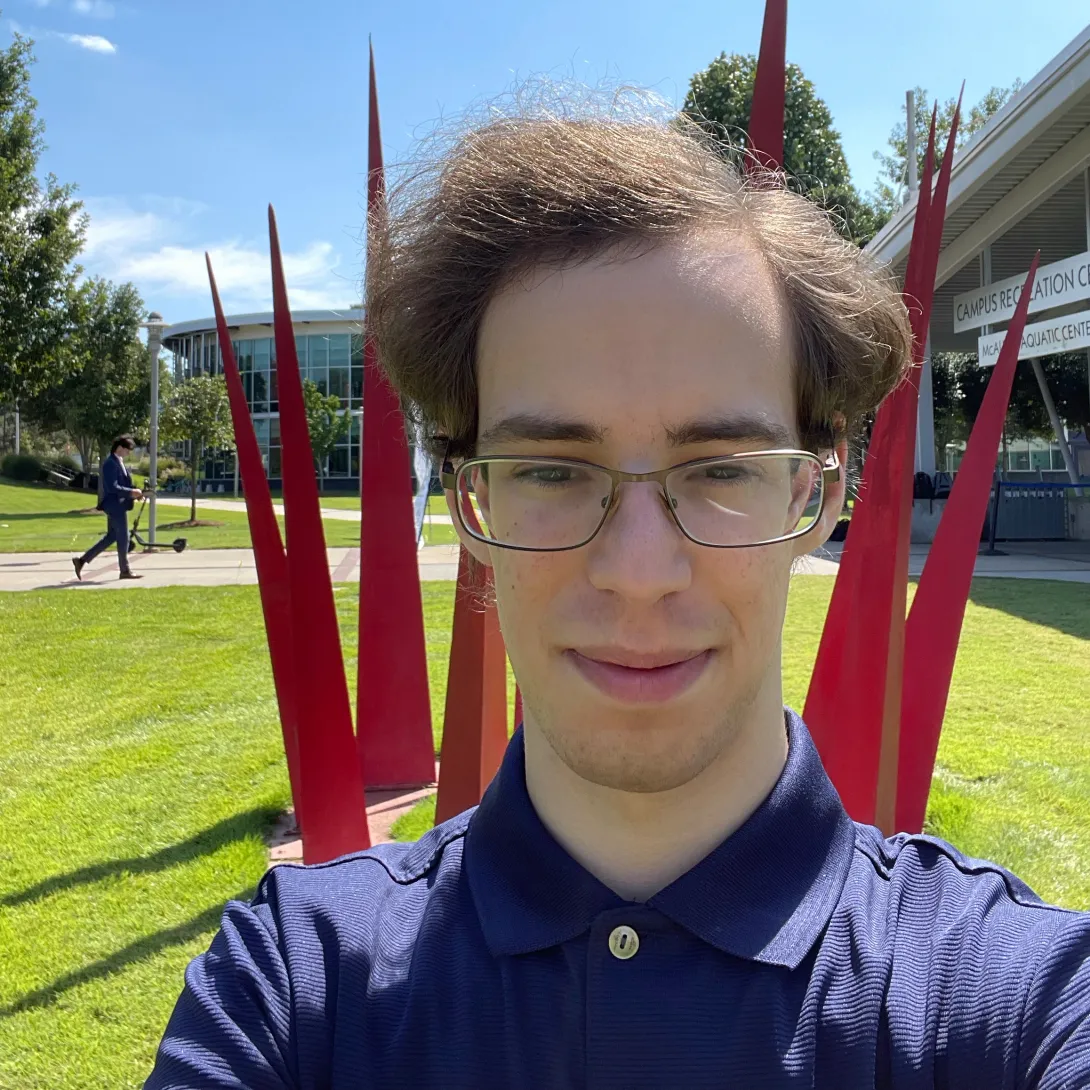

One of Georgia Tech’s newest undergraduate degree offerings — a B.S. in Astrophysics — welcomed its first students in August.
The astrophysics program, which includes both a major and a minor, introduces students to the fundamental physical processes and laws that govern the cosmos. This foundational curriculum is complemented by training in computational and data analysis techniques.
“Our new undergraduate program is forward-facing, focusing on the future of astronomy and astrophysics as well as how big data and computing are driving innovation and discovery,” says Program Director David Ballantyne, associate chair for Academic Programs and professor in the School of Physics.
Designed for students interested in research or non-research career paths, the B.S. in Astrophysics was created in response to growing student demand for courses and research opportunities in the field.
“Astrophysics is a great major at Georgia Tech because it teaches the critical thinking and technical skills students need not just for astrophysics but also for a wide variety of STEM-related careers,” adds Paul Sell, program advisor, senior academic professional in the School of Physics, and director of the Georgia Tech Observatory.
More than two dozen students have already declared the astrophysics major or minor; these numbers are expected to grow as more students learn about the program.
Third-year student Ishita Chintala switched her major from general physics to astrophysics in order to move closer to her childhood dream of working in the space industry.
“Astrophysics brings a certain kind of magic into my life; a kind of magic that helps me not only understand the world around me, but also helps me understand my place in the universe,” she explains.
Students enrolled in the program will have the opportunity to engage directly with the work taking place at the Center for Relativistic Astrophysics (CRA). Established in 2008, the CRA includes more than a dozen faculty and research scientists with expertise spanning high-energy astrophysics, extrasolar planets, gravitational-wave astronomy, and astroparticle physics.
Access to undergraduate research opportunities, including those offered by CRA faculty, is one reason for Marshall Honaker’s enthusiasm about the major.
“I’m most excited about getting hands-on research experience and taking advanced astrophysics classes that dive deeper into topics like cosmology and stellar evolution, especially at Georgia Tech,” says Honaker, a first-year student from Warner Robins, Georgia. He aims to pursue a research career to increase our understanding of the universe.
Andrew Heller, a first-year student from Tucker, Georgia, chose the astrophysics major because of his curiosity about and desire to advance our knowledge of everything beyond Planet Earth.
“As an astrophysics major, I'm very interested in participating in multi-messenger astronomy,” says Heller, referring to a key research focus of the CRA. “The ability to discover different things about an event or object by studying it with different wavelengths or particles is super exciting!”
Undergraduate students interested in declaring the astrophysics major or minor should follow the standard major change or the minor addition/change process.
News Contact
Writer: Lindsay C. Vidal