
Oct. 30, 2024
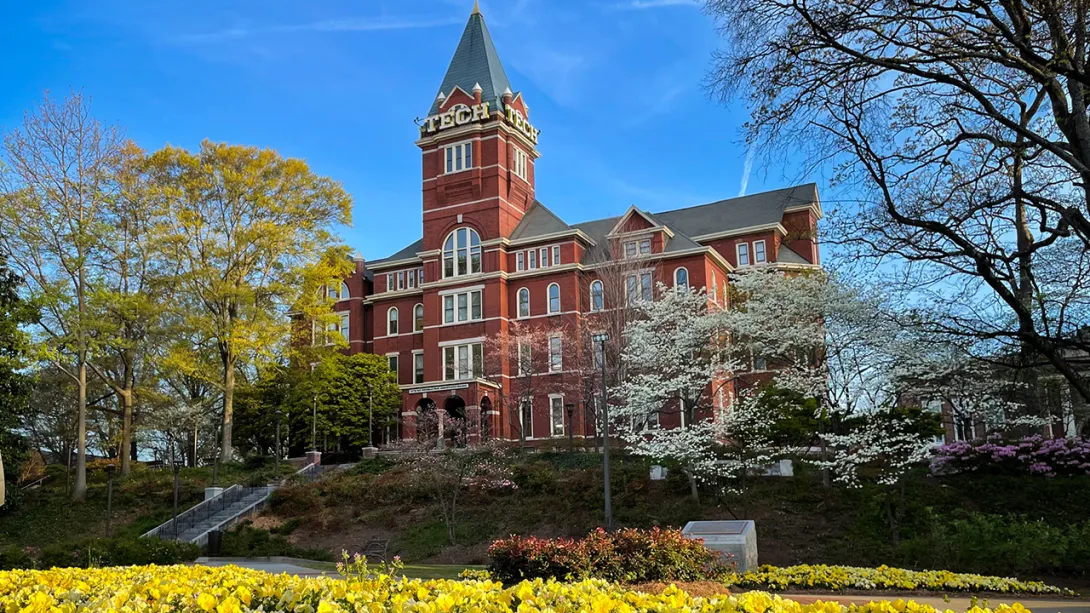
Southern Company, Georgia Institute of Technology (Georgia Tech), Smart Wires, and other partners have announced that they are collaborating on a new U.S. Department of Energy-funded project. Scheduled for 2025, the project will jointly implement advanced power flow control (APFC) and dynamic line rating (DLR) technologies to support the connection of renewable energy sources and new demand more quickly.
This project, led by the Georgia Tech Center for Distributed Energy with professor Deepak Divan as Principal Investigator, was selected by the U.S. Department of Energy in November 2021 as one of four projects to receive funding for grid enhancing technologies (GETs) that improve grid reliability, optimize existing grid infrastructure, and support the connection of renewable energy. It will use Smart Wires’ APFC solution— SmartValve™—in a mobile deployment combined with its DLR software—SUMO—and also develop control algorithms that improve and fine-tune how these solutions can work in synergy to optimize use of the grid.
“The launch of this innovative project represents an important step toward more efficient and reliable integration of cleaner energy sources,” said Tim Lieuwen, interim executive vice president for Research at Georgia Institute of Technology. “This collaboration allows us to identify, develop and test new ways to manage the power grid in Georgia by co-deploying APFC and DLR technologies.”
While the effectiveness of these solutions is well documented in multiple third-party reports, such as RMI’s GETting Interconnected in PJM, this project will be the first large-scale implementation of both technologies together. It will specifically examine their combined impact and result in the development of design control algorithms to unlock the combined power of these solutions and maximize their efficiency.
SUMO identifies when lines have spare capacity based on real-time weather conditions, while SmartValves can redirect power flows to quickly utilize this spare capacity. This also applies in reverse, with SUMO identifying when the dynamic ratings of lines are less than the static rating. If it’s a hot day, for example, SmartValves can redirect power flows away from these circuits to others with capacity, reducing the risk of system faults while improving operational safety.
The mobile deployment of SmartValves can be installed and in-service within one week. This provides a rapidly deployable solution that avoids extended outages and can be easily moved between sites as system needs evolve over time.
“We’re delighted to provide both SmartValves and SUMO in this project to move the dial in terms of deploying multiple GETs in synergy and optimizing their use,” said Joaquin Peirano, General Manager for the Americas at Smart Wires. “The commitment of utilities like Southern Company to get the most from their existing grid with GETs, combined with the positive regulatory developments such as FERC’s recent Order 1920, positions the U.S. to capture the full value these technologies can provide on transmission grids.”
The project will be delivered in 2025 and will involve a one-year performance period to provide Southern Company with operational experience that can be shared with other utilities and pave the way for greater use of GETs in the U.S.
About Georgia Institute of Technology
The Georgia Institute of Technology is a leading research university, committed to improving the human condition through advanced science and technology. Georgia Tech’s engineering and computing colleges are the largest and among the highest-ranked in the nation. The Institute also offers outstanding programs in business, design, liberal arts, and sciences.
With $1.37 billion annually in research, development, and sponsored activities across all six colleges and the Georgia Tech Research Institute, Georgia Tech is an engine of economic development for the state of Georgia, the Southeast, and the nation. Georgia Tech routinely ranks among the top U.S. universities in volume of research conducted; In 2023, the Institute ranked 17th among U.S. academic institutions in research and development expenditures, according to the National Science Foundation’s Higher Education Research and Development Survey.
About Smart Wires
Smart Wires is the world’s leading grid enhancing technology and services provider. We help electric utilities unlock capacity and solve their critical grid issues, using our solutions to create a more flexible, reliable and affordable grid. This enables a faster, more cost-efficient path to meet growing electricity demand with clean energy generation, at lowest cost to consumers. Headquartered in the Research Triangle of North Carolina, Smart Wires has a global workforce of passionate and visionary industry-leading experts across four continents, who work every day to transform grids globally. In collaboration with our customers and partners, we’ve unlocked over 3.5 Gigawatts capacity—enough to power over 2.5 million homes—supporting the faster integration of clean energy and new demand, enhancing security of supply and delivering cost savings to consumers.
Together, we are reimagining the grid for net zero.
News Contact
Priya Devarajan | SEI Communications Program Manager
Oct. 23, 2024
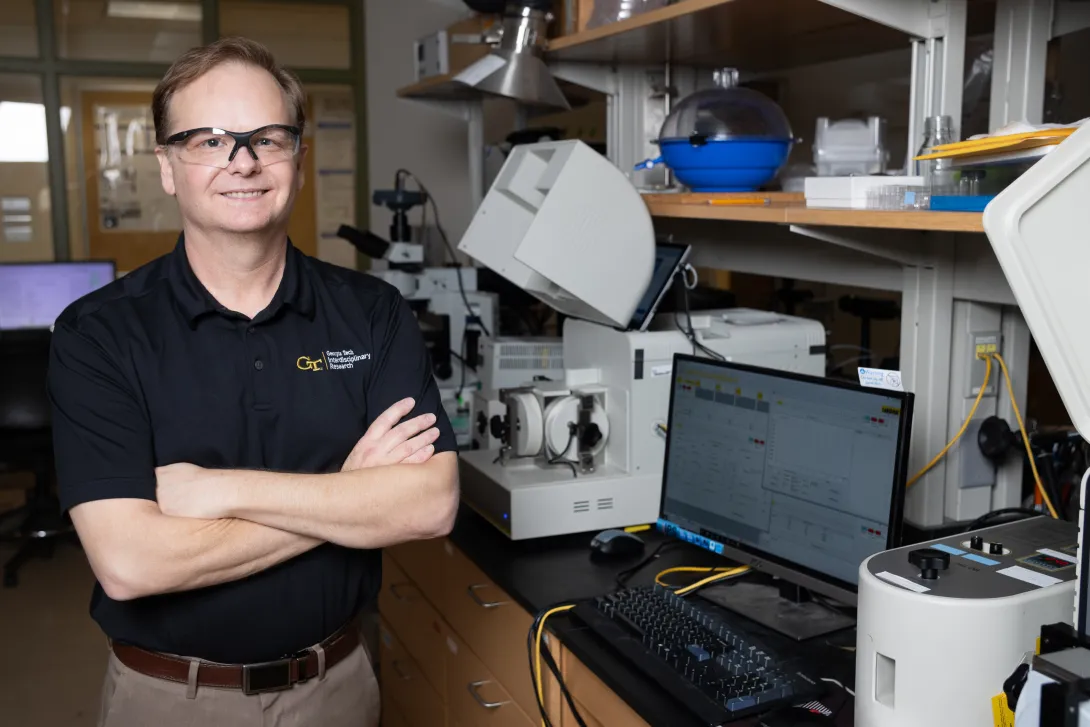
J. Carson Meredith, Executive Director of the Renewable Bioproducts Institute and Professor in Georgia Tech's School of Chemical and Biomolecular Engineering.
J. Carson Meredith, a professor in Georgia Tech’s School of Chemical and Biomolecular Engineering, is the 2024 recipient of the Andrew Chase Award from the American Institute of Chemical Engineers (AIChE) Forest and Plant Bioproducts Division.
Meredith will receive the award at the Annual AIChE Meeting in San Diego California, later this month.
The award recognizes Meredith’s research in nanocellulose chemical modification, composites, and cellulose-based renewable barrier coatings, which has resulted in seven patent applications, one commercial license, and ongoing research projects with six companies, reflecting the impact these advancements are making. His group recently reported the first successful recycling and reuse of nanocellulose gas barrier films and achieved one of the lowest water vapor barrier coatings derived from cellulose to date.
Meredith, ChBE’s James Preston Harris Faculty Fellow, is executive director of Georgia Tech’s Renewable Bioproducts Institute, which aims for future where plant biomass will enable a carbon neutral society and manufacturing infrastructure through traditional and emerging products.
News Contact
Brad Dixon || braddixon@gatech.edu
Sep. 10, 2024
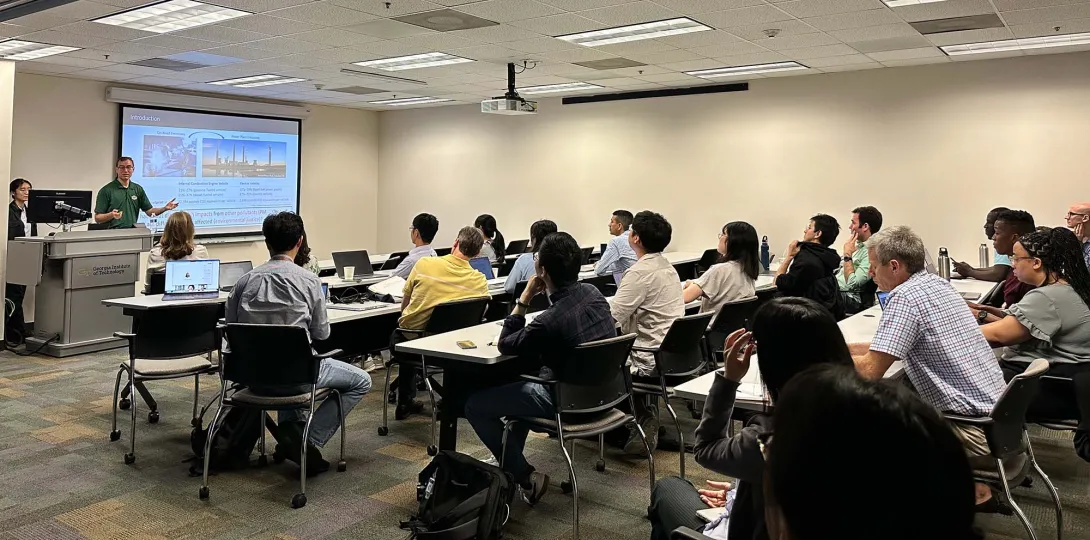
On Friday, May 10th, four Georgia Tech research teams, supported through the Energy, Policy, and Innovation Center ’s seed grant program presented their research findings to an engaged audience of fellow researchers and students.
The research teams included Georgia Tech faculty from across three colleges who presented their interdisciplinary research findings at the intersection of human health and energy systems.
The event began with a welcome address by Laura Taylor, the interim director of EPIcenter followed by EPIcenter’s director of Research Studies, Rich Simmons, who provided an overview of the vision behind the seed grant program. The seed grants were a culmination of a June 2020 workshop that invited researchers to proactively identify and mitigate new energy-health intersections and challenges by developing the knowledge to respond effectively to the interrelated challenges of public health and our current, and future energy infrastructure. The symposium included presentations from:
- Pengfei Liu, professor in the School of Earth and Atmospheric Sciences, on climate-induced air quality deterioration and its health risks in the Southeastern United States.
- Dan Molzahn, assistant professor in Electrical and Computer Engineering, and Xin Xie, professor in Civil Engineering on assessing the impacts of electric vehicle adoption and charging on air pollution and health
- Shuichi Takayama, professor in Biomedical Engineering on improving toxicology models that measure the impact of particulate matter on lung functioning to enhance energy and environmental policy-making
- Laura Taylor, on linking transit-related air pollution to health outcomes using the causal inference framework.
News Contact
Priya Devarajan || SEI Communications Program Manager
Sep. 25, 2024
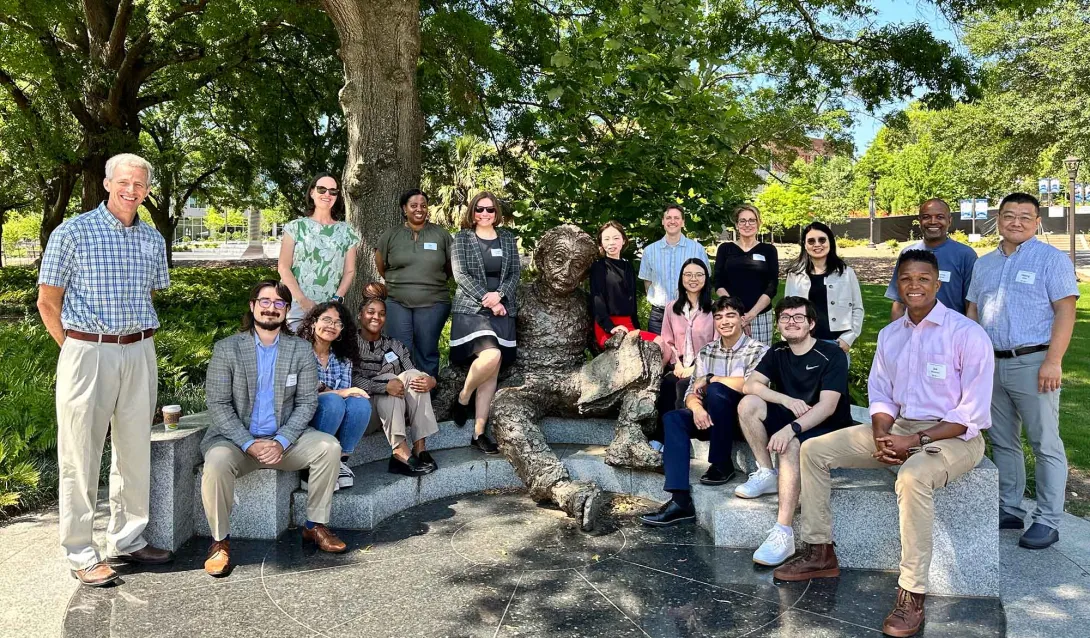
2024 Cohort of the Strategic Energy Institute Summer External Faculty Fellows
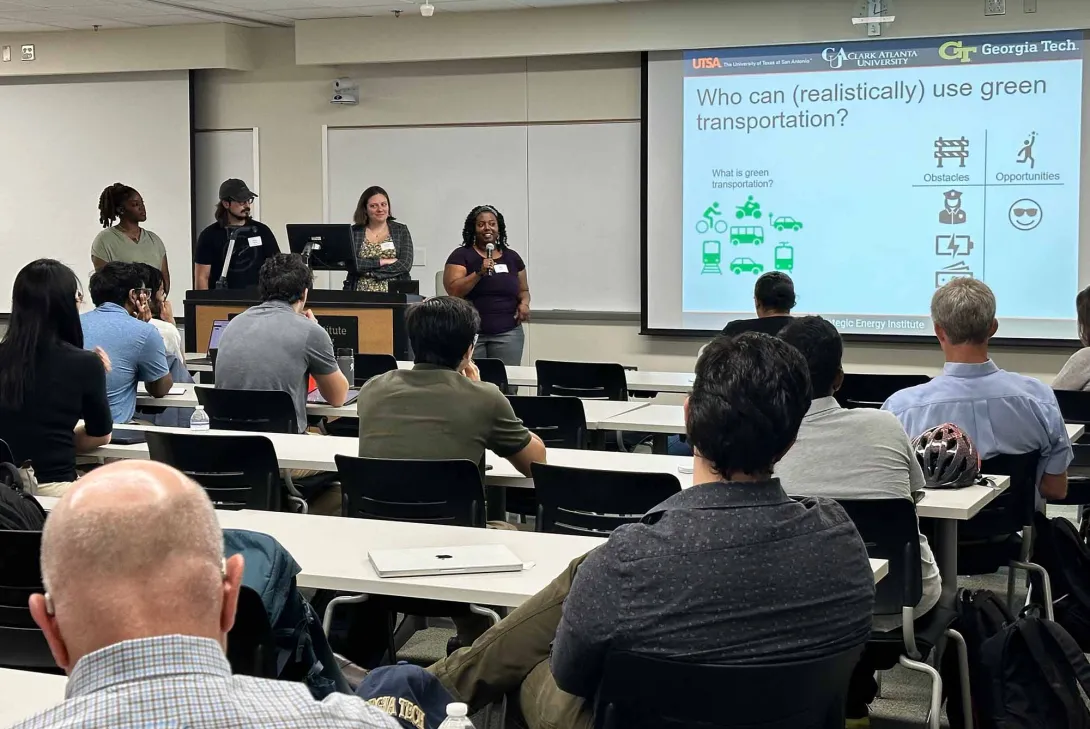
Mila Turner (CAU), and Kristen Brown (UTSA), present their summer research with students Dom Forza and Janiyah White.
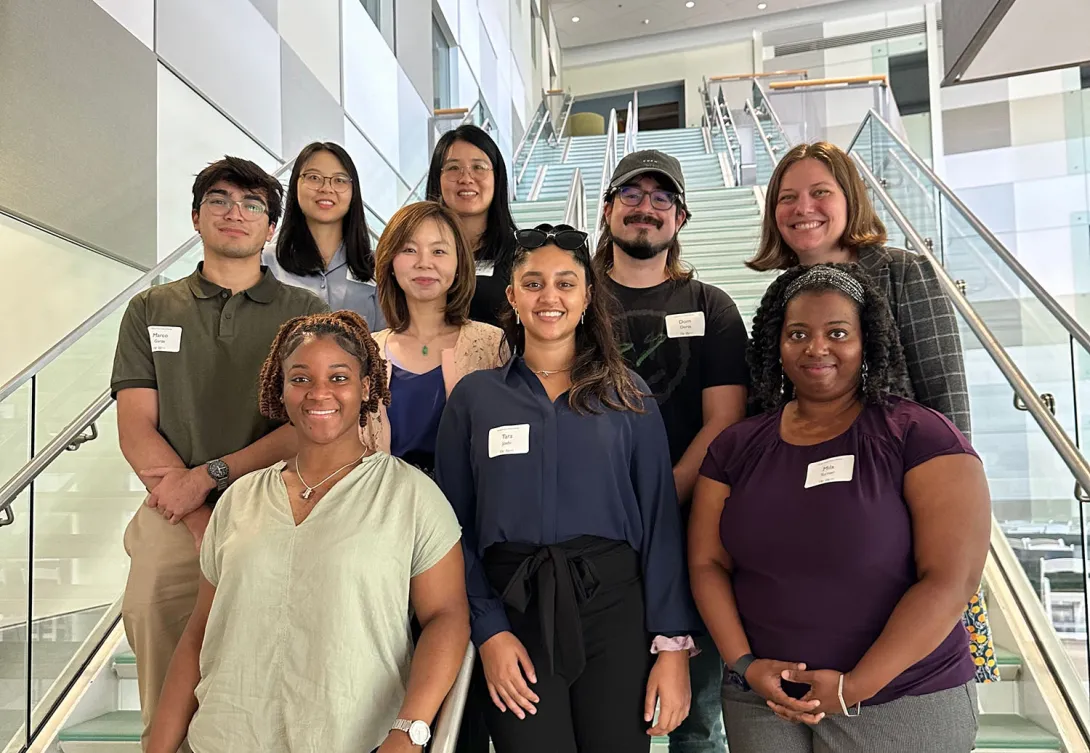
2024 SEI Summer Faculty Fellows along with their students
After completing a 10-week, on-campus fellowship, the members of this year’s Summer Energy Faculty Fellows Program gathered to present their research and discuss their future plans for continuing their research at their home campus.
The fellowship program, sponsored by the Strategic Energy Institute, is designed to connect faculty and students from historically Black colleges and universities and minority-serving institutions with energy research faculty at Georgia Tech and give them an immersive learning experience tailored to their specific interests. The fellows were competitively selected from a nationwide pool of applicants, and this year, the cohort expanded to include 10 participants. Each of the Fellows brought a student and was hosted by a Georgia Tech energy researcher.
The 2024 Faculty Fellows and their students included:
- Kristen Brown and Dom Forza also of the University of Texas at San Antonio (Host: Joe Bozeman III).
- Guenevere Qian Chen with Marco Garza of the University of Texas at San Antonio (Host: Saman Zonouz).
- Beibei Jiang with Tara Joshi of Kennesaw State University (Host: Hailong Chen).
- Milanika S. Turner with Janiyah White of Clark Atlanta University (Host: Joe Bozeman III).
In addition, the cohort also included a collaborator, Zufen Wang from Tennessee State University, with Veronica Kamel (Host: Comas Haynes).
Below is a Q&A about their experiences at Georgia Tech.
Kristen Brown, Assistant Professor, Civil and Environmental Engineering, and Construction Management
How was your overall experience at Georgia Tech?
I had a wonderful time. The team was welcoming, and the facilities were incredibly nice. Atlanta was an enjoyable city to spend time in with tons of great restaurants, and most of the summer wasn't as hot and humid as I had feared.
What would you like to share about your collaborations with Professor Joe Bozeman, Mila Turner, and the team during the past 10 weeks?
It was great to throw around research ideas with the faculty and I enjoyed chatting with the students at Georgia Tech. The students we brought enjoyed Georgia Tech and achieved so much in a short time. The professors who worked together had similar interests and goals for research, which made discussions engaging, and project selection easy.
What are your key takeaways from this program and any work products that you’d like to elaborate on?
The biggest takeaways aren't necessarily surprising — if you focus on something, you can get a lot done in a short amount of time, but you need to start moving quickly and have lots of progress checks.
What would you like to tell your fellow faculty about this program, and will you encourage them to pursue this opportunity?
I would recommend the program to any faculty considering applying. It is an excellent way to make connections and spur new ideas. It also forces you to act on research ideas, rather than having a great discussion and then lacking progress as other projects take priority.
Guenevere (Qian) Chen, Associate Professor, Cloud Technology Endowed Fellow, Electrical and Computer Engineering
How was your overall experience at Georgia Tech?
My experience at Georgia Tech was truly exceptional! The research environment, the amazing people (host and leaders), and the abundant opportunities made it an incredibly rewarding time.
What would you like to share about your collaborations with Professor Saman Zonouz and the student team during the 10 weeks you were in Atlanta?
It was an exceptional experience. Professor Zonouz is one of the most renowned and successful SCADA/PLC researchers both nationally and internationally. I had the privilege of joining their group meetings, and I was thoroughly impressed by the students' motivation, talent, and productivity. The lab consistently produces high-quality publications and fosters a collaborative and welcoming environment. Zonouz’s leadership and mentorship are outstanding, guiding a team of creative, hard-working, and remarkable students. It was an inspiring and enriching experience to work with such an amazing team.
What are your key takeaways from this program and any work products that you’d like to elaborate on?
My key takeaways from this program include the importance of collaboration, innovation, and the impact of strong mentorship. Working alongside such a talented team has reinforced the value of diverse perspectives and the power of collective effort in driving research forward. The hands-on experience with SCADA and 3D printer security has deepened my technical expertise and broadened my understanding of the challenges and opportunities in this field.
In terms of work products, my student Marco Garza, an incoming sophomore, co-authored a paper with Zonouz’s team, which has been submitted to NDSS-25. Furthermore, Zonouz and I are working on proposals for future collaborative projects.
What would you like to tell your fellow faculty at UTSA about this program and will you encourage them to pursue this opportunity?
I highly recommend this program. Midtown Atlanta is a beautiful place with its own unique charm, and the afternoon rains offer a refreshing break — perfect if you're looking to escape the Texas heat. Beyond the pleasant weather, Georgia Tech provides an outstanding research environment where you can engage in cutting-edge work and collaborate with some of the brightest minds in the field. If you're seeking a personally and professionally rewarding experience, this opportunity at Georgia Tech is one you shouldn’t miss!
Beibei Jiang, Assistant Professor of Innovative Materials, Department of Electrical and Computer Engineering
How was your overall experience at Georgia Tech?
Fantastic. I am impressed by the leadership roles of the program team. They have hosted lots of events, including regular faculty meetings, weekly professional training opportunities for undergraduate students, end-of-program presentation opportunities, and more.
What would you like to share about your collaborations with Professor Hailong Chen and the student team during the 10 weeks you were in Atlanta?
The collaboration with Chen’s team was eye-opening and inspiring. We learned a lot of positive lessons through working with his team. One specific lesson is the research team’s management skills, which involve managing research projects and team members, including undergraduate, graduate, and postdoc students. We also learned a lot of practical experimental skills related to battery fabrication and battery testing. We want to establish a long-term collaboration with Chen’s team in the future.
What are your key takeaways from this program and any work products that you’d like to elaborate on?
The key takeaways from the program can be summarized into three aspects:
- We can propose multiple research ideas based on the interdisciplinary techniques between our team and our collaborators’ team at Georgia Tech
- Considering the close geographic distance between KSU and Georgia Tech, many research opportunities at Georgia Tech can be leveraged by KSU students, including research internships at GTRI and graduate programs at Georgia Tech.
- KSU and Georgia Tech can team up on a lot of educational proposals for workforce development by combining the benefits of the two universities.
Is there any other personal information or experience or any feedback that you’d like to share?
As a Georgia Tech alumnus, I am very proud to see the achievements that Georgia Tech has made in the energy field.
What would you like to tell your fellow faculty at KSU about this program and will you encourage them to pursue this opportunity?
Definitely! I am excited to share all the positive feedback about this collaboration experience with my fellow faculty at KSU. I will tell them about the support and professional development opportunities we received from the SEI team and the program. I will also share my experience working with my collaborator at Georgia Tech, including how the project proceeded efficiently through frequent discussions with their team. Finally, I would like to share the wonderful training opportunities and professional development opportunities for our undergraduate students.
Milanika Turner, Associate Professor, Sociology and Criminal Justice
How was your overall experience at Georgia Tech?
I had such a positive experience! This was my first time visiting the campus, and I was impressed. I want to return when it’s buzzing with the energy of the academic year. I regret not visiting the Library this summer. Plus the facilities at CODA were modern, smart, and aesthetically pleasing. Everyone from Georgia Tech that I’ve met has been helpful, professional, and excited about our institutions working together.
What would you like to share about your collaborations with Professor Joe Bozeman, Professor Kristen Brown, and the student team during the past 10 weeks?
This was the smoothest interdisciplinary collaboration I’ve ever engaged in, because we all started from the common point of centering ethics and justice in our work. We all had a lot of fun thinking together and ideated numerous possible projects.
What are your key takeaways from this program and any work products that you’d like to elaborate on?
A key takeaway is that there is still so much work to be done in the pursuit of clean energy, environmental justice, and sustainable climate solutions. We have a lot more good work to do together.
Is there any other personal information or experience or any feedback that you’d like to share?
My program highlight was witnessing the undergraduate students learn and grow into budding researchers. They truly made me proud.
What would you like to tell your fellow faculty at Clark Atlanta about this program and will you encourage them to pursue this opportunity?
I’d tell my fellow faculty that we should get to know our neighbors! Tech is only two miles from CAU so we could easily get together. Plus we’re already working in some of the same local communities. It would be silly for us not to engage more deeply across universities. It’s beneficial for all of us — especially our students — to work together.
Zufen Wang, Assistant Professor, Civil and Architectural Engineering
How was your overall experience at Georgia Tech?
The overall experience was both inspiring and enriching! It was fantastic to connect with numerous outstanding researchers and learn about their remarkable initiatives and intriguing projects.
What would you like to share about your collaborations with Professor Comas Haynes and the student team during the 10 weeks you were in Atlanta?
Professor Haynes has been incredibly supportive throughout our collaboration. He helped connect me with the researchers for current projects and potential collaborations in the future. Additionally, my student conducted research within Comas' team, and I was impressed by the quality of the student's presentation. The most exciting thing is the IAC program that Comas introduced to me. Together with him and my student, we formed a team with a “train the trainer” approach to learn the IAC process!
What are your key takeaways from this program and any work products that you’d like to elaborate on?
Expand research horizons and valuable connections for interdisciplinary collaborations.
Is there any other personal information or experience or any feedback that you’d like to share?
The team at Georgia Tech is exceptionally welcoming and supportive. They generously share their research and project experiences. Their insights have been incredibly valuable to me, especially as I’m in the early stages of my career.
What would you like to tell your fellow faculty at TSU about this program and will you encourage them to pursue this opportunity?
I will highly encourage them to pursue this opportunity. The program goes beyond just the summer experience. It is a crucial foundation for building strong, long-term collaborations.
Dom Dorsa, Undergraduate Student
Working this summer at Georgia Tech greatly informed my decision to attend the institution for graduate school. My work with Bozeman, Turner, and Brown brought me out of my comfort zone and introduced me to areas of my field (namely GIS) that I was otherwise unfamiliar with. Additionally, I was able to make contacts with SEI and with other researchers such as Matthew Realff, with whom I hope to work someday. My biggest takeaway from this program is that research is a team effort. No one researcher uncovers the world. At best, they identify pieces of a larger puzzle. I hope to come back to Georgia Tech, whether for this program or another, and I am eternally grateful to SEI and to the SURE program for having me.
News Contact
Priya Devarajan || SEI Communications Program Manager
Sep. 24, 2024

The inaugural ATL CleanTech Connect held at the CODA building; Panelists include Tim Lieuwen, Executive Director, Strategic Energy Institute, Bill Nussey, Partner, Engage and Tech Square Ventures, Anthony Oni, Managing Partner, EIP Elevate Future Fund, and Andrea Pinabell, Vice President, RE Tech Advisors
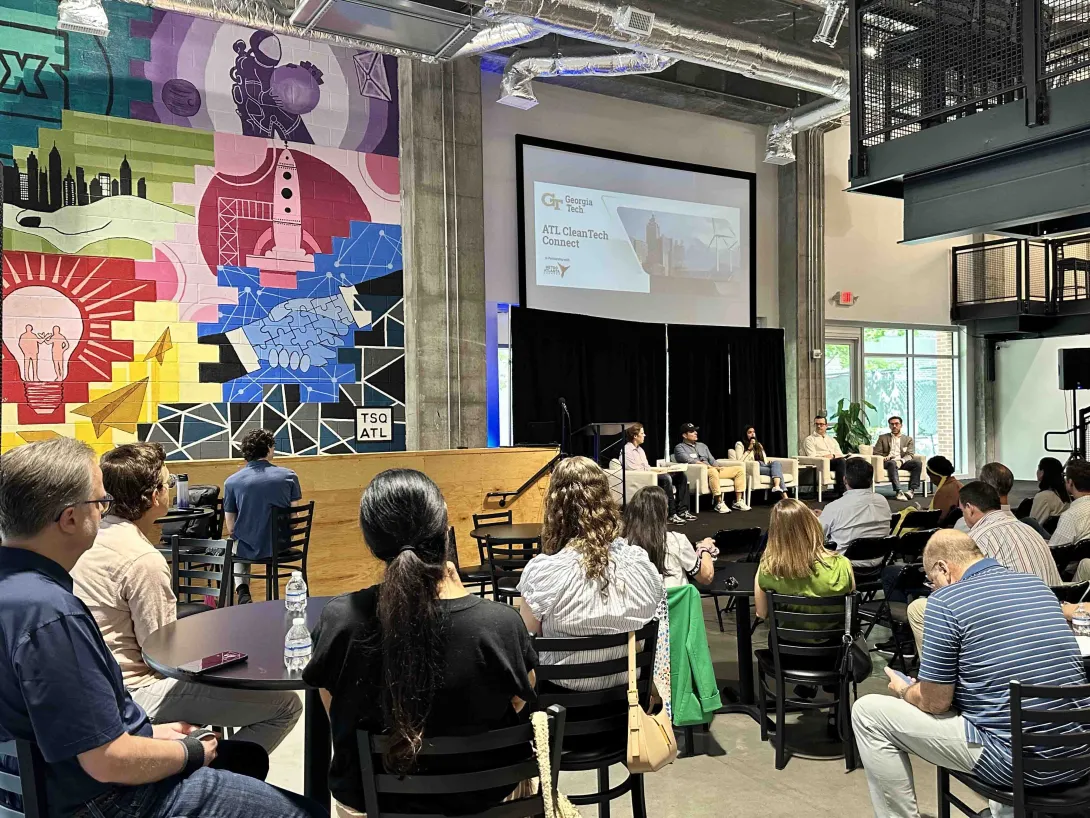
ATL CleanTech Connect Social at the Clubhouse in the heart of Tech Square in Atlanta - July 17, 2024
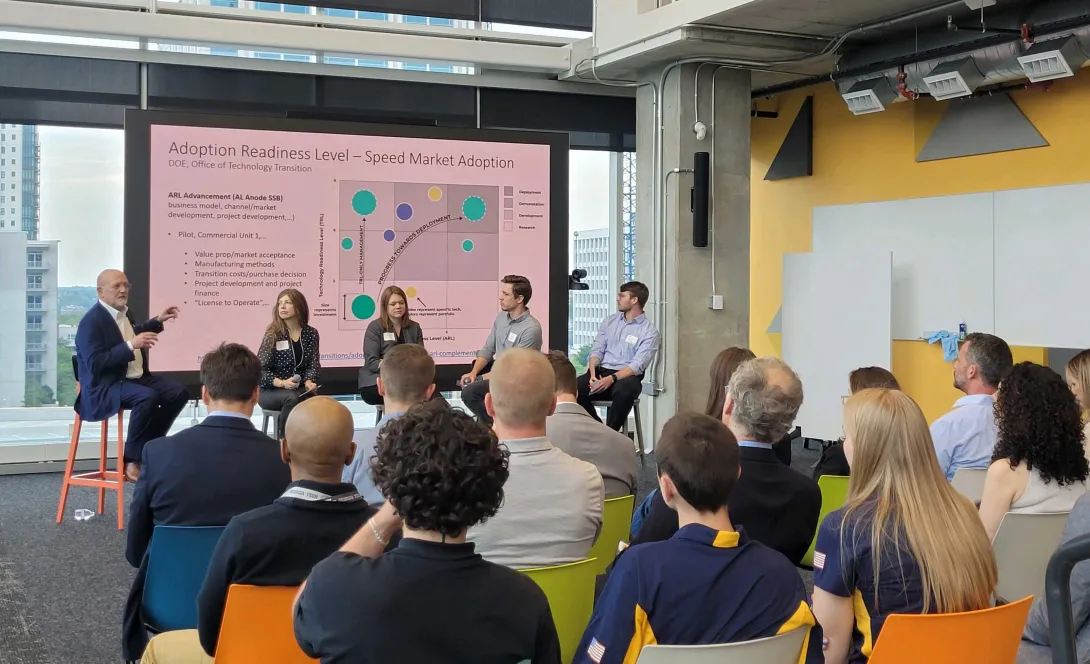
The April ATL CleanTech Connect brought in speakers to discuss the topic "Financing Cleantech Hardtech Startups." Speakers include Will Thorburn, AVP, Cleantech Strategy and Investments, Cox Enterprises, Henk Both, Investment Director, Anzu Partners, Carie Davis, Partnerships Principal, Third Derivative, and Nick Fragnito, Partner, Shorewind Capital
Atlanta's Surge in Clean Tech: A Model for National Leadership
When the City of Atlanta adopted the Clean Energy Atlanta resolution in 2019, setting an ambitious goal to achieve 100% clean energy by 2035, few could have predicted the rapid progress the city would make toward becoming a national leader in clean tech innovation. By 2023, the Atlanta clean energy community had coalesced into a powerhouse of innovation, driving the city closer to its clean energy goals.
In January 2024, the launch of the Atlanta CleanTech Connect social marked a pivotal moment in this journey. Co-sponsored by the Metro Atlanta Chamber (MAC) and Georgia Tech’s Strategic Energy Institute (SEI), this event has quickly become a must-attend gathering for Atlanta’s clean energy leaders. Drawing participants from the startup and VC ecosystem, industry, government, academia, and the nonprofit sector, the social serves as a hub for those eager to learn about and contribute to Atlanta’s clean energy future.
Past socials have been well-received, selling out weeks in advance. Attendees have requested a monthly rather than quarterly social. The event format encourages in-depth discussion about clean energy topics and cleantech startup avenues and fosters valuable networking opportunities among professionals united by a common goal: achieving a 100% clean energy future enabled by starting and rapidly growing successful cleantech companies in Atlanta.
“Atlanta CleanTech Connect is a direct result of SEI’s strategic priority to facilitate conversations that result in trusted relationships between innovators, proven entrepreneurs, potential customers, and cleantech investors, all of whom are critical to speed Atlanta startups’ time-to-market. The ultimate goal is for Atlanta to be recognized globally as a top cleantech startup hub, which we can only achieve by rapidly building and scaling more exceptional cleantech companies here at home,” said Richard Gruber, SEI’s senior fellow. Along with Cynthia Curry, senior director of Cleantech Ecosystem Expansion with the Metro Atlanta Chamber, Gruber plays an integral role in creating the social — from choosing the topics to assembling the moderators and panels that have made the event a great success.
The topics covered at these socials have been both timely and important. Discussions have ranged from "Financing Cleantech Hardtech Startups" and "Decarbonization of the Built Environment" to “Innovations in Sustainable Aviation,” offering insights that are crucial for the advancement of clean technologies. These events, held quarterly, will continue into 2025, and the next gathering is scheduled for Wednesday, Oct. 16.
Atlanta is rapidly evolving into a national leader in electric vehicles, next-generation batteries, sustainable fuels, and advanced solar technologies. Since 2018, companies have invested over $11.5 billion in these sectors across Georgia, with the greater Atlanta region at the epicenter of this activity. By facilitating opportunities for the region’s cleantech experts to connect, network, and share knowledge, the Atlanta CleanTech Connect socials are helping to forge the relationships that will support the continued growth of Atlanta’s cleantech startups.
Miguel Granier, managing director of the new Cox Cleantech Accelerator, explained the importance of these gatherings. “Before the ATL CleanTech Connect events, there wasn’t a regular platform where I could connect with other leaders and supporters of cleantech innovation in Atlanta. Cleantech spans multiple industries, so many of us don’t cross paths regularly. We need events like these to bring us together, building relationships that strengthen the entire ecosystem.”
Atlanta CleanTech Connect stands out among the city’s clean technology initiatives for its emphasis on relationship-building as a tool for supporting and expanding the cleantech ecosystem. Other major initiatives, such as the Georgia Cleantech Innovation Hub and the Cox Cleantech Accelerator, have focused on helping individual businesses overcome barriers to success. Together, these complementary approaches have cultivated a robust clean energy ecosystem in Atlanta, making it an attractive destination for clean energy startups and capital investment firms.
Written by: Sharon Murphy, Research Associate at the Strategic Energy Institute
News Contact
Priya Devarajan || SEI Communications Program Manager
Sep. 17, 2024
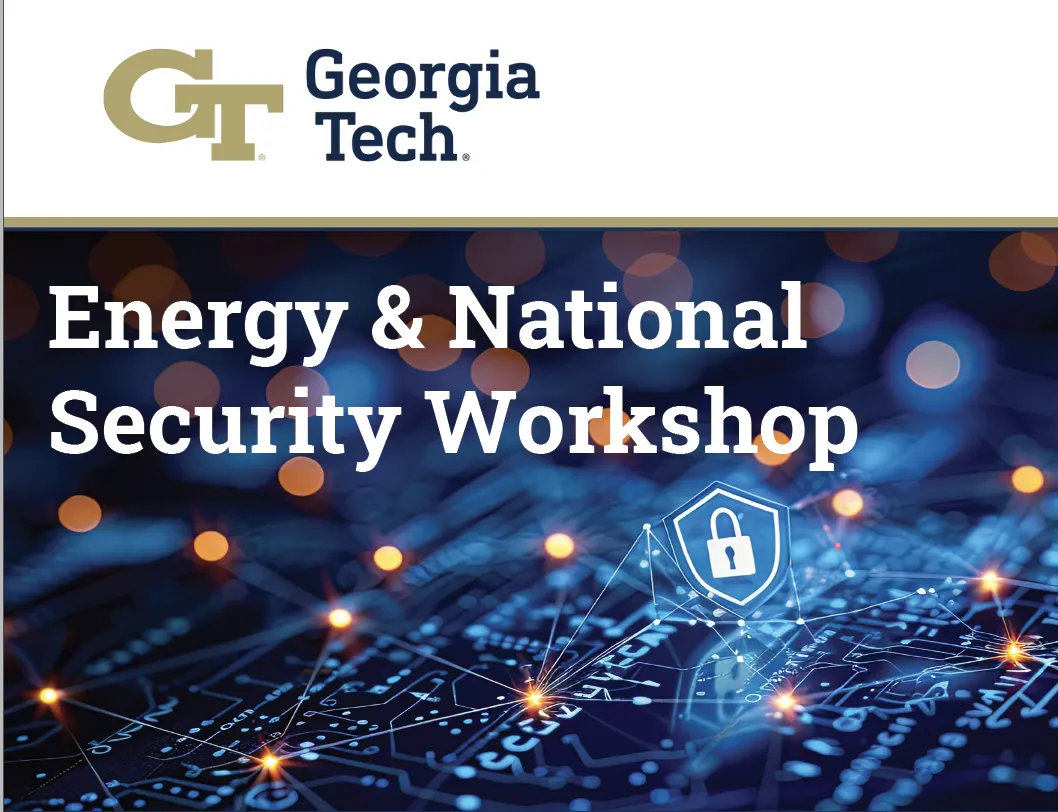
This Summer, the Strategic Energy Institute and GTRI jointly created the Energy and National Security Initiative through an inaugural workshop on July 16.
The initiative included Phase 1 or Category A grants that allowed researchers up to $10,000 in seed funding to understand the viability of their research concepts. The multidisciplinary proposals that won the Category A grants include:
Project Title: Energy Infrastructure Security and Risk Assessment Through Interactive Wargaming
Primary Investigator(s)
Dimitri Mavris (School of Aerospace Engineering)
Scott Duncan (School of Aerospace Engineering)
Michael Balchanos (School of Aerospace Engineering)
Other Investigators
Adam Stulberg (School of International Affairs)
Jenna Jordan (School of International Affairs)
Margaret Kosal (School of International Affairs)
Project Title: International Workshop on Nuclear Cybersecurity: Strengthening Global Leadership and Collaboration
Primary Investigator(s)
Fan Zhang (Nuclear and Radiological Engineering)
Steve Biegalski (Nuclear and Radiological Engineering)
Valerie Thomas (School of Industrial and Systems Engineering)
Alexander Miranda (Electrial and Computer Engineering)
Other Investigators
Guenevere Chen (Electrial and Computer Engineering) (University of Texas San Antonio)
Project Title: Robust Energy Systems Planning by way of Novel Systems Engineering (RESPoNSE)
Primary Investigator(s): Comas Haynes (GTRI)
Other Investigators
Matt McDowell (School of Mechanical Engineering and School of Materials Science and Engineering)
Project Title: Shielding and Microreactor Arrangement Innovation (Samμrai)
Primary Investigator(s)
John Brittingham (GTRI)
Bojan Petrovic (School of Mechanical Engineering)
Other Investigators
Helen Works (GTRI)
Project Title: The Strategic Mineral Economy: Challenges and Opportunities for Critical Resources
Primary Investigator(s)
Bobby Harris (School of Economics)
Matthew Swarts (GTRI)
Other Investigators
Dylan Brewer (School of Economics)
Kevin Caravati (GTRI)
Laura Taylor (School of Economics)
Micah S. Ziegler (School of Chemical and Biomolecular Engineering, School of Public Policy)
Project Title: Trustworthy AI for Critical Power Grid Infrastructure Resilience
Primary Investigator(s):
Glen Chou (School of Cybersecurity and Privacy)
Yatis Dodia (GTRI)
Saman Zonouz (School of Cybersecurity and Privacy, School of Electrical and Computer Engineering)
Phase 2 or Category B of the initiative includes up to $500,000 in seed funding to fund team research proposals, with funds likely to grow to $1.2 million in the coming years. Please note that teams must largely consist of those who participated in or expressed interest via the July workshop.
Georgia Tech researchers and faculty are encouraged to submit the Notice of Intent for Phase 2 (Category B) submissions. While this is not a requirement of the proposal, it will provide the initiative with insights that will help with internal logistics. If you have any questions regarding the Category B Notice of Intent and the grant, please contact the Strategic Energy Institute at connect@energy.gatech.edu.
News Contact
Priya Devarajan || SEI Communications Program Manager
Sep. 13, 2024
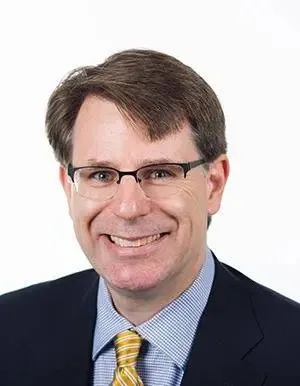
Professor Christopher W. Jones, the John F. Brock III School Chair of Georgia Tech’s School of Chemical and Biomolecular Engineering (ChBE), is winner of the American Chemical Society’s 2025 E. V. Murphree Award in Industrial and Engineering Chemistry.
Jones will receive the award at the American Chemical Society (ACS) meeting in San Diego, in March 2025. The ACS National Awards encourage the advancement of chemistry in all its branches, support research endeavors, and promote the careers of chemists.
The Murphree Award (including $5,000) won by Jones recognizes fundamental research in industrial and engineering chemistry, the development of chemical engineering principles, and its application to industrial processes.
Aug. 28, 2024
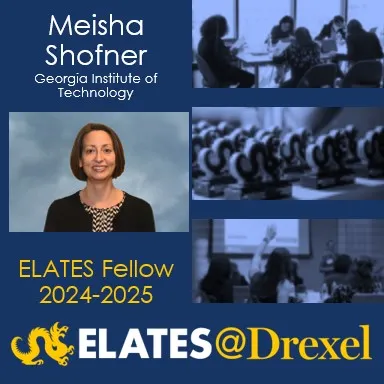
Meisha Shofner, professor in the School of Materials Science and Engineering (MSE), has been selected for the 2024-2025 class of Drexel University’s Executive Leadership in Academic Technology, Engineering and Science (ELATES) program.
The ELATES program is a national leadership development program designed to promote women in academic STEM fields and faculty allies of all genders into institutional leadership roles.
“I am excited to be selected as an ELATES Fellow. I am grateful for the support from Georgia Tech’s College of Engineering that made this opportunity possible and especially support from Dean Raheem Beyah, Associate Dean Kim Kurtis, and MSE School Chair Natalie Stingelin. I am looking forward to learning from this amazing community of women leaders in higher education,” Shofner said.
“I was drawn to the ELATES program because of its focus on developing the skills needed to lead university initiatives with an operational focus, and I will be putting that knowledge into practice as I develop an institutional action project as part of the program.”
May. 17, 2023
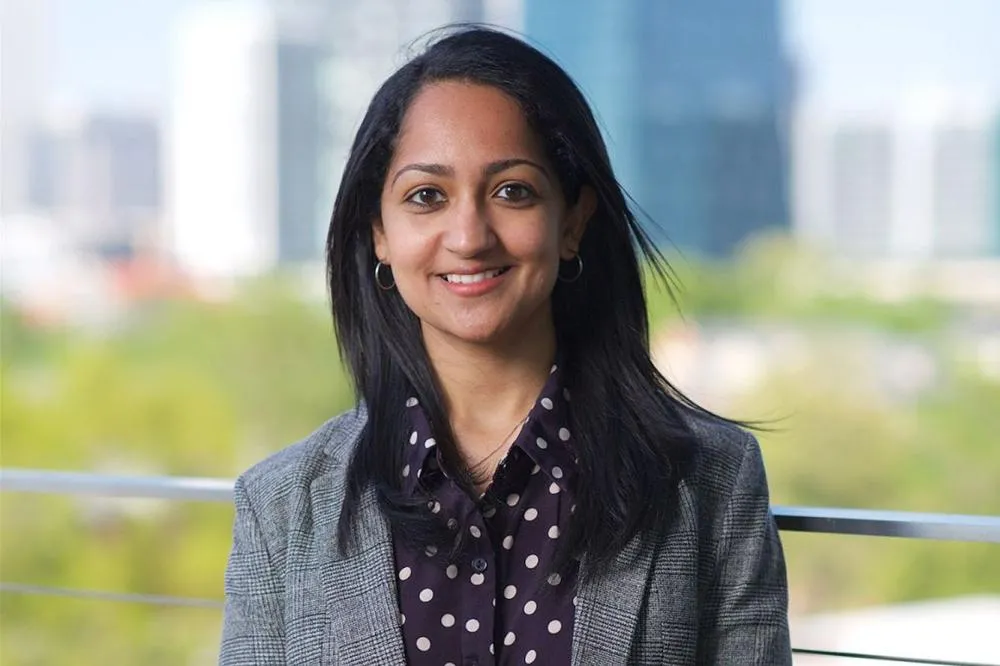
Akanksha Menon, assistant professor in the George W. Woodruff School of Mechanical Engineering, has been selected to receive the 2023 American Society of Mechanical Engineers (ASME) Pi Tau Sigma Gold Medal. The award is presented for demonstrating outstanding achievement in the field of mechanical engineering, within ten years following graduation with a bachelor’s degree.
“I am very grateful to be selected for this award,” said Menon. “As an undergrad just over a decade ago, I served as the President of both the ASME and Pi Tau Sigma student chapters; to now receive this prestigious medal for contributions to the field of mechanical engineering is truly humbling – the journey has come full circle!”
Menon directs the Water–Energy Research Lab (WERL) at Georgia Tech, which focuses on applying thermal science and functional materials to develop sustainable and efficient energy and water technologies. Her research aims to unlock critical fundamental knowledge pertaining to thermally responsive materials with interactions across multiple length and time scales and to engineer them for applications ranging from desalination to thermal energy storage.
The full story is available on the George W. Woodruff School of Mechanical Engineering News Page
May. 09, 2023
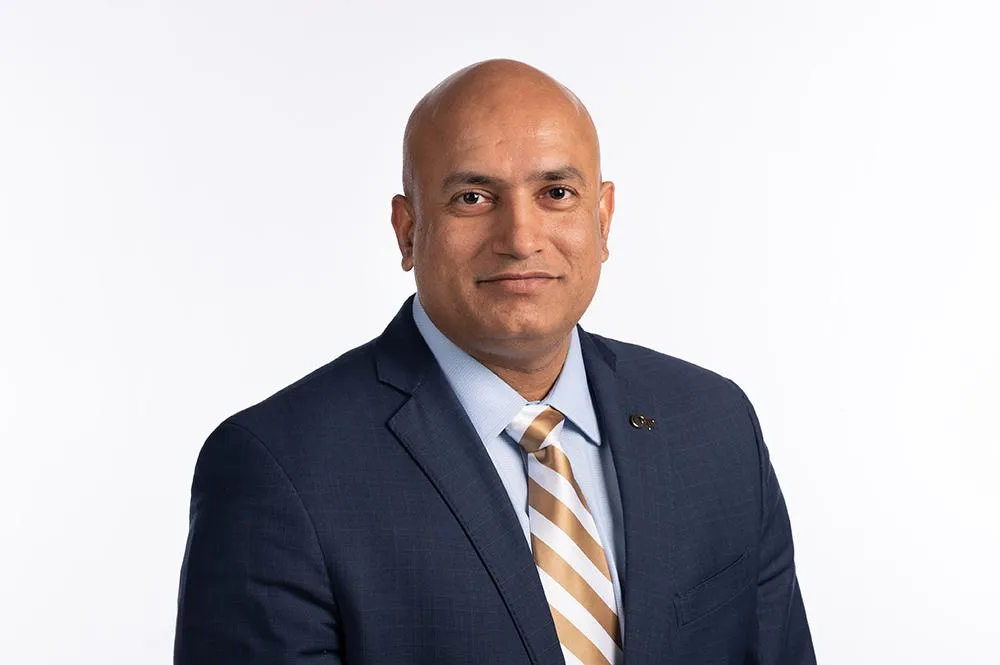
Devesh Ranjan, Eugene C. Gwaltney, Jr. School Chair and professor in the George W. Woodruff School of Mechanical Engineering at Georgia Tech, has been selected to receive the 2023 Gustus L. Larson Memorial Award from the American Society of Mechanical Engineers (ASME) and Pi Tau Sigma. The award is presented to an engineering graduate who has demonstrated outstanding achievement in mechanical engineering, within ten to twenty years following graduation.
Full story is available on the George W. Woodruff School of Mechanical Engineering news page.