
Apr. 23, 2025
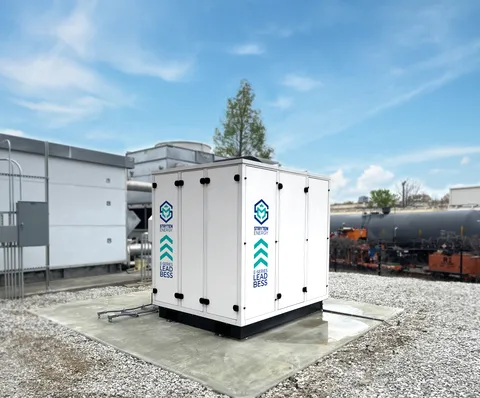
Stryten Energy's Lead Battery Energy Storage System Installed at the Georgia Tech Carbon Neutral Energy Solutions Building
The Georgia Institute of Technology and Stryten Energy LLC, a U.S.-based energy storage solutions provider, announced the successful installation of Stryten Energy’s Lead Battery Energy Storage System (BESS) at the Carbon Neutral Energy Solutions Laboratory (CNES). The CNES building, located in the North Avenue Research Area of the Georgia Tech campus, houses the Strategic Energy Institute (SEI), an interdisciplinary research institute focused on energy research, and multiple research groups dedicated to renewable energy and energy infrastructure-related topics.
The installation aims to create a living-learning lab on campus that supports research and real-world applications of medium-duration energy storage solutions. Lead BESS was selected for this initial installation due to its cost-effectiveness, high discharge rates, and recyclability, backed by extensive research demonstrating its reliable performance. The BESS is a dynamic storage system that integrates renewable energy sources into the existing power mix, providing stable and dependable backup power and reducing grid dependency during peak hours. With its additional components and software, the system is capable of bi-directional charging, allowing current to flow into the battery for charging and out of the battery to power the grid or microgrid.
“Georgia Tech's strategic plan envisions our campus as a dynamic laboratory and experimental test bed, where sustainable practices are seamlessly integrated into our operations,” said Christine Conwell, SEI’s interim executive director. “Through enduring partnerships with organizations like Stryten, we are creating mini ecosystems that yield valuable situational data to help chart a path for innovative energy research well beyond the campus.”
“As solar and other renewables hit the market years ago, large utility-scale implementations were clearly the focus,” said Scott Childers, vice president of essential power at Stryten Energy. “With the introduction of this BESS powered by lead batteries, we see behind-the-meter applications getting their day in the sun. We are particularly excited about deploying this unit in commercial and industrial microgrids and paired with EV charging stations to help the U.S. achieve its energy goals. Georgia Tech has been a tremendous partner, and we are excited about demonstrating the advantages of lead BESS from cost savings, technology, environmental, and safety perspectives.”
Richard Simmons, SEI’s director of research and studies, called the Stryten lead BESS system an enabling piece of the Distributed Energy Resources (DER) puzzle. At the CNES lab, Georgia Tech researchers can now control charging and discharging cycles for the battery in coordination with the existing Solar PV array and the new EV charging test bed. This research tool will allow the time-shifting of peak solar input by several hours to meet late afternoon building loads and store renewable energy for the overnight charging of campus vehicles.
The role of DERs in the broader energy landscape is a crucial area of research, particularly understanding their impact on the grid, their contribution to system reliability, and their effect on energy costs. This research is especially important in the context of the ongoing transition to clean energy.
“It is our hope that the lead BESS will be one of several living lab battery pilots at Georgia Tech,” Simmons said. “Along with regional partners, our researchers are exploring similar R&D and testing projects involving flow batteries that can facilitate longer-duration storage, as well as lithium-ion BESS that may integrate second-life EV battery modules for grid resilience, driving advancements in sustainable energy research.”
About Energy Research at Georgia Tech
The Georgia Institute of Technology is one of the top public research universities in the U.S., developing leaders who advance technology and improve the human condition. Georgia Tech’s leading researchers work across the energy value chain in basic and applied science in EVs, photovoltaics, hydrogen, carbon capture, industrial decarbonization, grid security and resilience, and related social sciences. Georgia Tech is consistently ranked among the top universities in the nation for graduating underrepresented minorities in engineering, physical sciences, and energy-related fields. Most recently, U.S. News & World Report ranked Georgia Tech as the No. 1 public university and No. 3 overall in energy and fuels research. Serving as a regional resource to help communities understand how they can transition to a clean energy economy, Georgia Tech is the leader in achieving regional impact through education and contributions to communities.
About Stryten Energy
Stryten Energy helps solve the world’s most pressing energy challenges with a broad range of energy storage solutions across the essential power, motive power, transportation, military, and government sectors. Headquartered in Alpharetta, Georgia, they partner with some of the world’s most recognized companies to meet the growing demand for reliable and sustainable energy storage capacity. Stryten powers everything from submarines to subcompacts, microgrids, warehouses, distribution centers, cars, trains, and trucks. Their stored energy technologies include advanced lead, lithium, and vanadium redox flow batteries, intelligent chargers, and energy performance management software that keep people on the move and supply chains running. An industry leader backed by more than a century of expertise, Stryten has The Energy to Challenge the status quo and deliver top-performing energy solutions for today and tomorrow.
News Contact
Priya Devarajan || Research Communications Program Manager, Strategic Energy Institute
Apr. 22, 2025

Scott Duncan leads the microgrid initiative at the Georgia Tech Strategic Energy Institute, principally facilitating access to the Tech Square Microgrid for Georgia Tech students and researchers. He is a senior research engineer within the School of Aerospace Engineering, where he is a member of the Digital Engineering Division of the Aerospace Systems Design Laboratory (ASDL).
In his current position, Duncan leads and manages multidisciplinary research teams in projects relating to terrestrial infrastructure systems, including community energy systems comprising grid-interactive efficient buildings, electrified loads, district thermal systems, distributed energy resources (DERs), and microgrids. The teams assess and support the design of these systems by applying techniques from data analysis, modeling and simulation, design space exploration, visualization, optimization, digital twinning, and model-based systems engineering. Duncan also supports the long-running Smart Campus Initiative between ASDL and Georgia Tech Infrastructure & Sustainability (I&S), where researchers analyze and model campus utility systems.
Duncan is a member of the American Institute of Aeronautics and Astronautics (AIAA), serving on its Terrestrial Energy Systems (TES) Technical Committee, as well as a member of the American Society of Heating, Refrigerating and Air-Conditioning Engineers.
Below is a brief Q&A with Duncan, where he discusses his research and how it influences the microgrids initiative at Georgia Tech.
- What is your field of expertise and at what point in your life did you first become interested in this area?
My expertise lies in systems engineering for managing energy infrastructure, with a recent focus on the “grid edge,” where demand-side systems like buildings and community-scale projects intersect with distributed energy resources (DERs) and wider utility grids. Initially, as a research engineer, I worked on optimizing combined cycle power plant design. Over the last decade, my research has shifted towardThank the increasing complexity of energy systems on the demand side, including electrified buildings and vehicle charging. Systems engineering involves techniques to understand, design, and manage large-scale systems, evaluating trade-offs and multi-objective goals. It is a privilege to work in this field, especially within the built environment, which is a burgeoning area for these techniques. Overall, I am passionate about orchestrating large systems rather than focusing on specific disciplinary sciences or smaller mechanical aspects.
- What questions or challenges sparked your current energy research? What are the big issues facing your research area right now?
Since my graduate studies at Georgia Tech, where I completed my Ph.D. in mechanical engineering and was affiliated with a sustainable design and manufacturing research group, I have been deeply interested in sustainability. My research on systems design and life cycle management led me to recognize energy as a critical element in sustainability. The conversation around climate impacts has shifted from avoidance to adaptation, highlighting the need for resilient energy systems. As a systems engineer, I find the complexity of managing interconnected energy systems fascinating. Understanding and co-managing these systems is crucial, as is demonstrating their effectiveness beyond simulations. Over the past few years, I have shifted toward more applied, infrastructure-as-a-laboratory experiments to address these challenges.
- What interests you the most leading SEI’s research initiative on microgrids? Why is your initiative important to the development of Georgia Tech’s energy research strategy?
I manage research operations for the Tech Square Microgrid (TSMG), which was established in partnership with Georgia Power and Southern Company. This urban microgrid serves as a resiliency resource for part of the data center on the Coda block and as a test bed for innovative experiments. Although the TSMG project predates my involvement, I have the privilege of coordinating its broader use by the Georgia Tech community. My work focuses on creating a living lab for microgrids, balancing the operation of a real system with accessibility for research and education. This involves managing the complexity of interconnected systems and ensuring their components are understood and effectively deployed. U.S. national labs and funding agencies are interested in such dual-purpose systems that demonstrate real-world applications while pushing the boundaries of current performance. Over the past few years, I have shifted toward more applied, infrastructure-as-a-laboratory experiments to address these challenges.
We have been collecting several years of streaming data from approximately 800 different parameters of the microgrid. This data is stored in a historian and made accessible to the Georgia Tech community, allowing us to observe the grid while Georgia Power maintains its operations. We have accumulated valuable data on operations, status, and faults, which is available to certain parts of the Georgia Tech community. Our goal is to expand access and build a collective understanding and knowledge around this data. We are especially interested in finding data scientists to help maximize the use of data in understanding TSMG behaviors.
- What are the broader global and social benefits of the research you and your team conduct on microgrids?
The research conducted by my team on microgrids offers significant global and social benefits, particularly in the realm of decarbonization. By integrating non-dispatchable renewable energy sources such as solar and wind with dispatchable storage solutions, fuel cells, and reciprocating engines, we aim to create a resilient and stable energy grid. This microgrid not only supports high-performance computing assets at Georgia Tech but also serves as a demonstrator for backup alternatives and their interoperability. Our work provides valuable insights into the strengths and weaknesses of different energy sources and storage options, contributing to the broader goal of increasing renewable energy use while supporting grid stability.
- What are your plans for engaging a wider Georgia Tech faculty pool with the broader energy community?
To engage a wider Georgia Tech faculty pool with the broader energy community, we are building a community around the Tech Square Microgrid. This initiative fosters collaboration and knowledge sharing among Georgia Tech faculty, Georgia Power, and Southern Company. We have set up a Microsoft Teams site for collaboration and understanding of the microgrid, allowing users to access documents, models, and data. This platform encourages innovative experiments and supports both educational and research purposes. Interested Georgia Tech members can contact me or use this Microsoft Forms link to gain access, ask questions, and share knowledge. We are continuously refining this approach and seeking more participants to expand our community.
- What are your hobbies?
These days, my hobbies revolve around spending time with my family, including hiking and traveling. My kids are developing interests in chess, sports, and engineering, which has rekindled my own passion for technical pursuits and outdoor activities. I also enjoy music and tinkering with new technologies like devices, 3D printing, and software engineering.
- Who has influenced you the most?
I realize my outlook on life is shaped by a mosaic of influences. As a systems engineer, I appreciate the interconnectedness of various elements. But I’d say that my parents, both psychology professors, have been particularly influential. Their academic lifestyle and mode of inquiry inspired me, and their approach to engaging with students and fostering curiosity has been a primary influence in my life.
News Contact
Priya Devarajan || Research Communications Program Manager
Apr. 14, 2025

Railroads are key components of the nation’s critical infrastructure. Jeremy Epstein poses with rail cars on a siding. (Credit: Sean McNeil, GTRI)
To be based at the Georgia Tech Research Institute (GTRI), Jeremy Epstein will serve as co-director of ICARIS, collaborating with PNNL co-director Danny Herrera to identify and develop ways to confront threats against the nation’s critical infrastructure. He will also serve as an adjunct professor in Georgia Tech’s School of Cybersecurity and Privacy, which is partnering with GTRI.
ICARIS was formed to serve as the leading national resource for delivering the technologies, testbeds, and talent necessary to serve the nation’s critical infrastructure.
“Anyone using a mobile phone or laptop computer, watching television, driving a modern vehicle, traveling on a highway controlled by traffic signals – or using electricity for most any purpose – is subject to cybersecurity and privacy issues,” said Epstein. “Everything is now computer-controlled, and the security opportunities are there for deliberate adversaries at the nation-state level or malicious actors. We have to look at the big picture and not simply solve challenges one at a time.”
Apr. 15, 2025
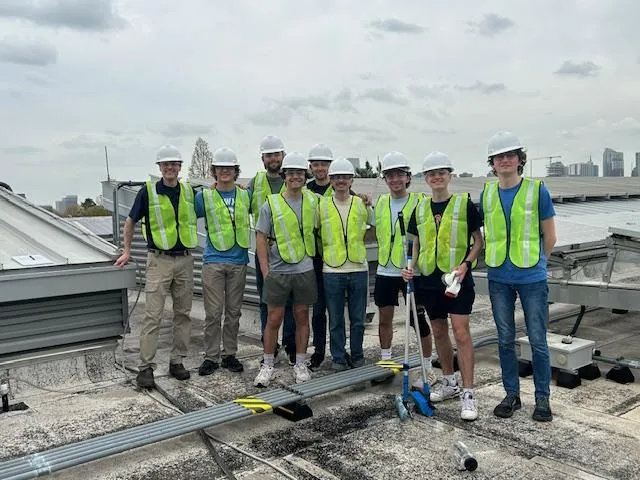
Georgia Tech Beautification Day student volunteers along with Rich Simmons, SEI's director of research and studies, on the rooftop of CNES building with the solar panels in the background
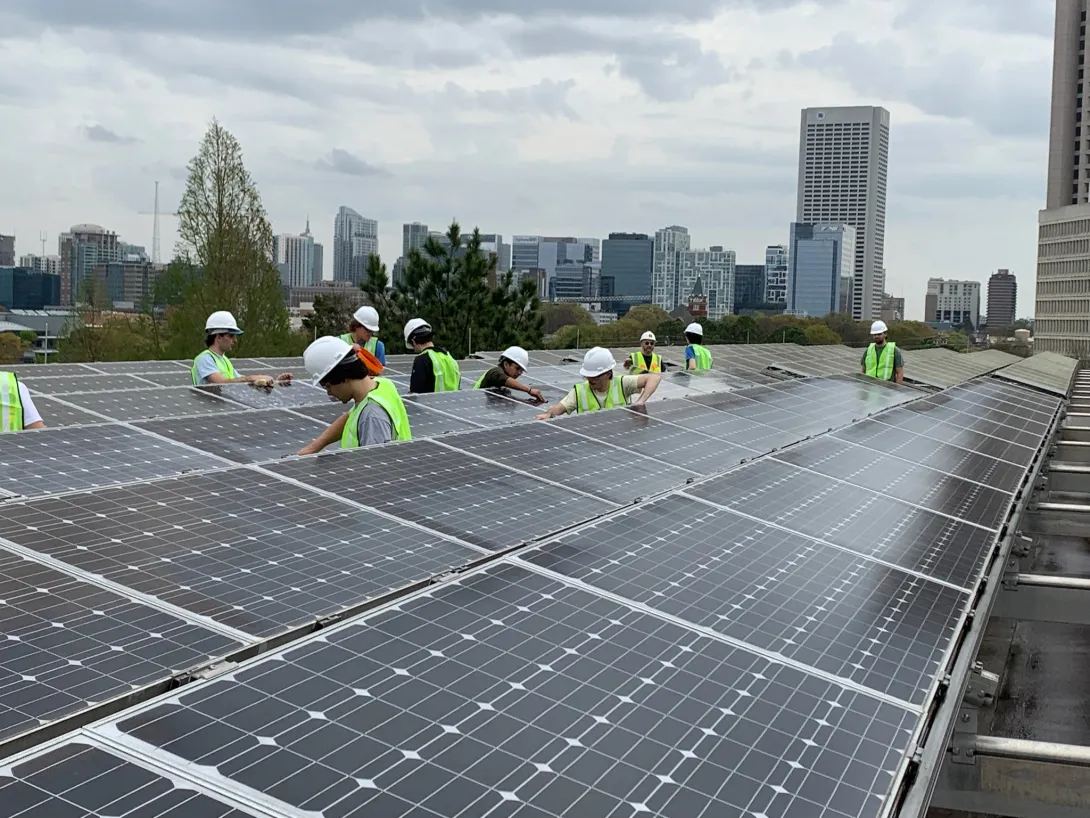
Georgia Tech students busy cleaning the solar PV arrays on the rooftop of the carbon neutral energy solutions building during Georgia Tech Beautification Day
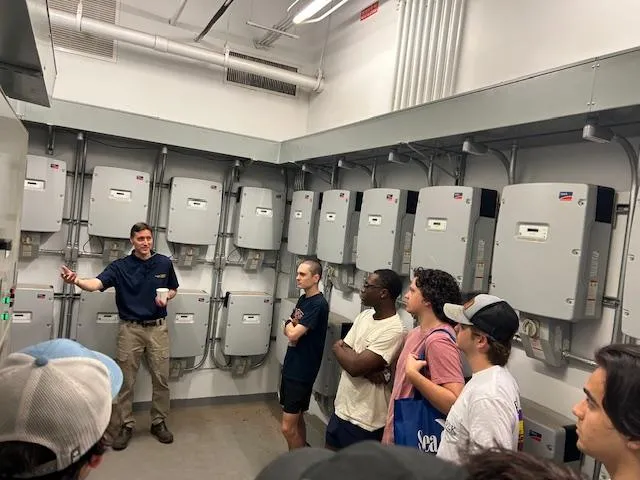
Rich Simmons, providing a tour of the inverter room in the CNES building to the student volunteers
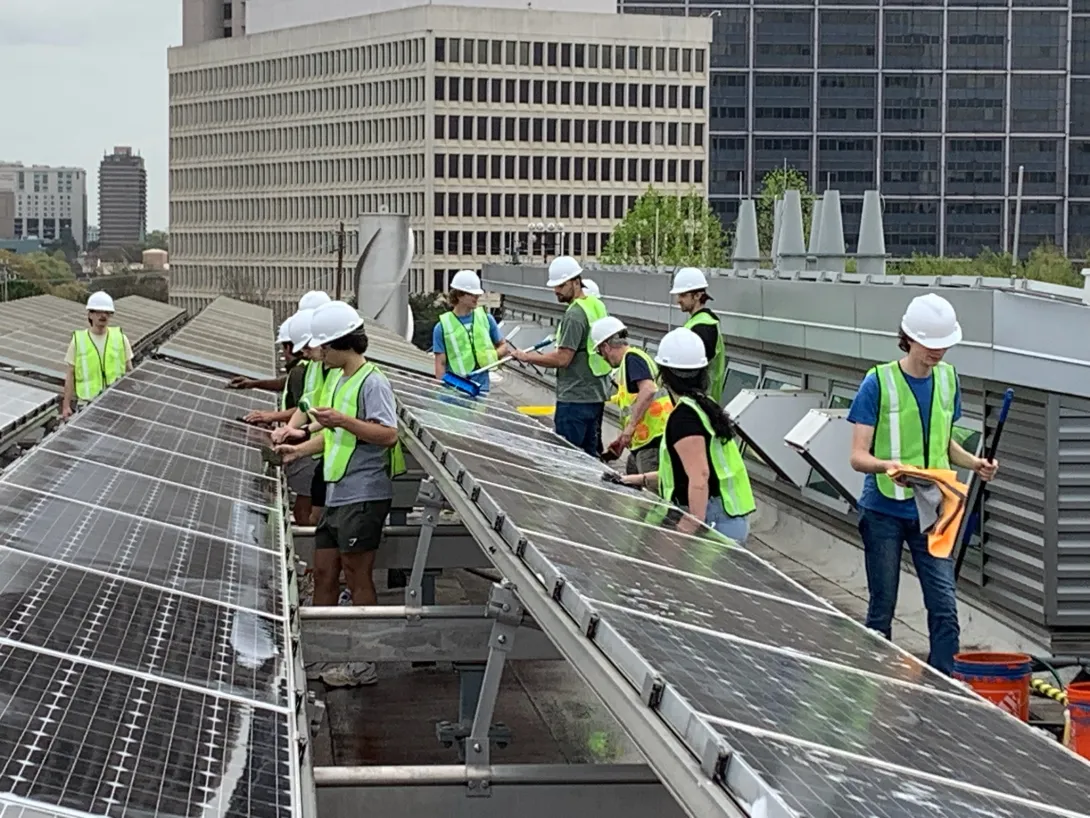
Student volunteers busy at work cleaning the solar panels
On a cloudy spring day in Atlanta, Rich Simmons, director of research and studies at the Georgia Tech Strategic Energy Institute (SEI), led a group of a dozen student volunteers to the roof of the Carbon Neutral Energy Solutions Laboratory (CNES). The students were part of the nearly 300 student volunteers participating in Georgia Tech Beautification Day and visited CNES to clean the building’s rooftop solar array made of photovoltaic (PV) panels. The CNES building entered operation in 2011 and its panels have accumulated grime over the years, impacting their efficiency.
Simmons explained the importance of this project, emphasizing how cleaning the panels restores their efficiency and contributes to ongoing research. "We've used this project to better understand PV efficiency in an urban environment and have instrumented the newly cleaned arrays to continue monitoring. An initial study last year suggested efficiency could increase by 10-20% just from a thorough cleaning. This project is both a handy research tool, an educational conduit, and a means of campus engagement related to sustainability," he shared.
Safety was paramount, and proactive communication between the research, health and safety, and infrastructure and sustainability teams ensured a successful event. Equipped with hard hats, eye protection, and high-visibility safety vests, the students scrubbed the panels with sponges and bristle brushes. The hands-on experience was both educational and rewarding.
After cleaning, Simmons led the group to the inverter room, where the DC electricity generated by the panels is converted into AC so that it can be consumed within the building or exported to the campus grid. He explained that excess solar power can also be stored in the newly installed 150-kWh Stryten battery system or used to charge campus vehicles through the newly installed EV chargers in the building’s parking lot. He demonstrated how magnetic monitoring devices measure the electricity produced by the arrays, allowing for a comparison of the efficiency of panels that were just cleaned, to those that were cleaned last year, and those that have never been cleaned in the 13 years since their installation.
Through initiatives like this, Georgia Tech continues to lead in research and education, inspiring the next generation of innovators and problem-solvers.
This article was written with the assistance of Microsoft Copilot (Apr. 9, 2025) and edited by Georgia Tech EPIcenter's Gilbert X. Gonzalez and Rich Simmons.
News Contact
Priya Devarajan | Research Communications Program Manager
Written by: Gilbert Gonzalez, Rich Simmons, EPIcenter
Apr. 11, 2025
For centuries, innovations in structural materials have prioritized strength and durability — often at a steep environmental price. Today, the construction industry accounts for approximately 10% of global greenhouse gas emissions, with cement, steel, and concrete responsible for more than two-thirds of that total. As the world presses for a sustainable future, scientists are racing to reinvent the very foundations of our built environment.
Paradigm Shift in Construction
Now, researchers at Georgia Tech have developed a novel class of modular, reconfigurable, and sustainable building blocks — a new construction paradigm as well-suited for terrestrial homes as it is for extraterrestrial habitats. Their study, published in Matter, demonstrates that these innovative units, dubbed eco-voxels, can reduce carbon footprints by up to 40% compared to traditional construction materials. These units also maintain the structural performance needed for applications ranging from load-bearing walls to aircraft wings.
“We created sustainable structures using these eco-friendly building blocks, combining our knowledge of structural mechanics and mechanical design with industry-relevant manufacturing practices and environmental assessments,” said Christos Athanasiou, assistant professor at the Daniel Guggenheim School of Aerospace Engineering.
Housing Affordability Solutions
Their work offers a potential solution to the growing housing affordability crisis. As climate-driven disasters such as hurricanes, wildfires, and floods increase, homes are damaged at higher rates, and insurance costs are skyrocketing. This crisis is fueled by rising land prices and restrictive development regulations. Meanwhile, the growing demand for housing places an increasing strain on global resources and the environment. The modularity and circularity of the developed approach can effectively address these issues.
The New Building Blocks
Eco-voxels — short for eco-friendly voxels, the 3D equivalent of pixels — are made from polytrimethylene terephthalate (PTT). PTT is a partially bio-based polymer derived from corn sugar and reinforced with recycled carbon fibers from aerospace waste (scrap material lost during the manufacturing of aerospace components). Eco-voxels can be easily assembled into large, load-bearing structures and then disassembled and reconfigured, all without generating waste. Consequently, they offer a highly adaptable, sustainable approach to construction.
The team tested eco-voxels and found they can handle the pressure that buildings usually face. They also used computer simulations to show that changing the shape of eco-voxels makes them suitable for many different building needs.
The researchers compared the eco-voxel approach to other emerging construction methods like 3D-printed concrete and cross-laminated timber (CLT), finding that eco-voxels offer significant environmental advantages. While traditional and alternative materials are often heavy and carbon-intensive, the eco-voxel wall had the lowest carbon footprint: 30% lower than concrete and 20% lower than CLT.
These results highlight eco-voxels as a promising low-carbon, high-performance solution for sustainable and affordable construction, opening new possibilities for faster, more sustainable building solutions. In addition to residential uses, emergency shelters built with eco-voxels could be used for disaster-relief scenarios, where quick assembly, modularity, and minimal environmental impact are crucial.
“This study exemplifies how advances in structural mechanics, sustainable composite development, and sustainability analysis can yield transformative solutions when coupled. Eco-voxels — our modular, reconfigurable building blocks — provide a scalable, low-carbon alternative that redefines our approach to building in both terrestrial and extraterrestrial environments," said Athanasiou.
Building in Space
Beyond their terrestrial potential, eco-voxels can also offer a promising solution for off-world construction where traditional building methods are unfeasible. Their lightweight, rapid assembly — structures can be erected in less than an hour — and reliance on sustainable or locally sourced materials make them ideal candidates for future Martian or lunar shelters.
“The ability to build these structures quickly is a significant advantage for space construction,” said Athanasiou. “In space, we need lightweight units made from locally sourced materials.”
Perhaps most importantly, the researchers envision a future where the built environment not only minimizes harm but actively contributes to the preservation of planetary health.
This research was led by Georgia Tech, in collaboration with teams from the Massachusetts Institute of Technology, the University of Guelph in Ontario, Canada, and the National University of Singapore.
News Contact
Monique Waddell
Apr. 09, 2025
In July 2024, the Strategic Energy Institute (SEI), in partnership with the Georgia Tech Research Institute (GTRI), launched the Energy and National Security Initiative through a campuswide workshop. The event attracted over 100 participants from units across Georgia Tech and GTRI. John Tien, SEI distinguished external fellow, professor of the practice, and former deputy secretary for the Department of Homeland Security, along with Tom Fanning, former CEO at Southern Company, kicked off the workshop with a discussion on the role of energy in national security and the opportunities for Georgia Tech to align its research with this critical topic.
The event concluded with the announcement of two rounds of seed funding, offering up to $500,000 annually for three years. The first round, announced in September 2024, provided planning grants to six teams to support their initiatives in the fall.
Recipients of the second phase of seed funding have now been announced. This phase will provide research support in the spring, with an option for additional funding through the 2025-26 academic year.
“This seed funding initiative by SEI and GTRI is a significant step toward advancing national security through innovative energy solutions. We believe this support will empower the funded teams to explore critical intersections between energy infrastructure and security, fostering groundbreaking advancements for a safer energy future,” said Christine Conwell, SEI’s interim executive director.
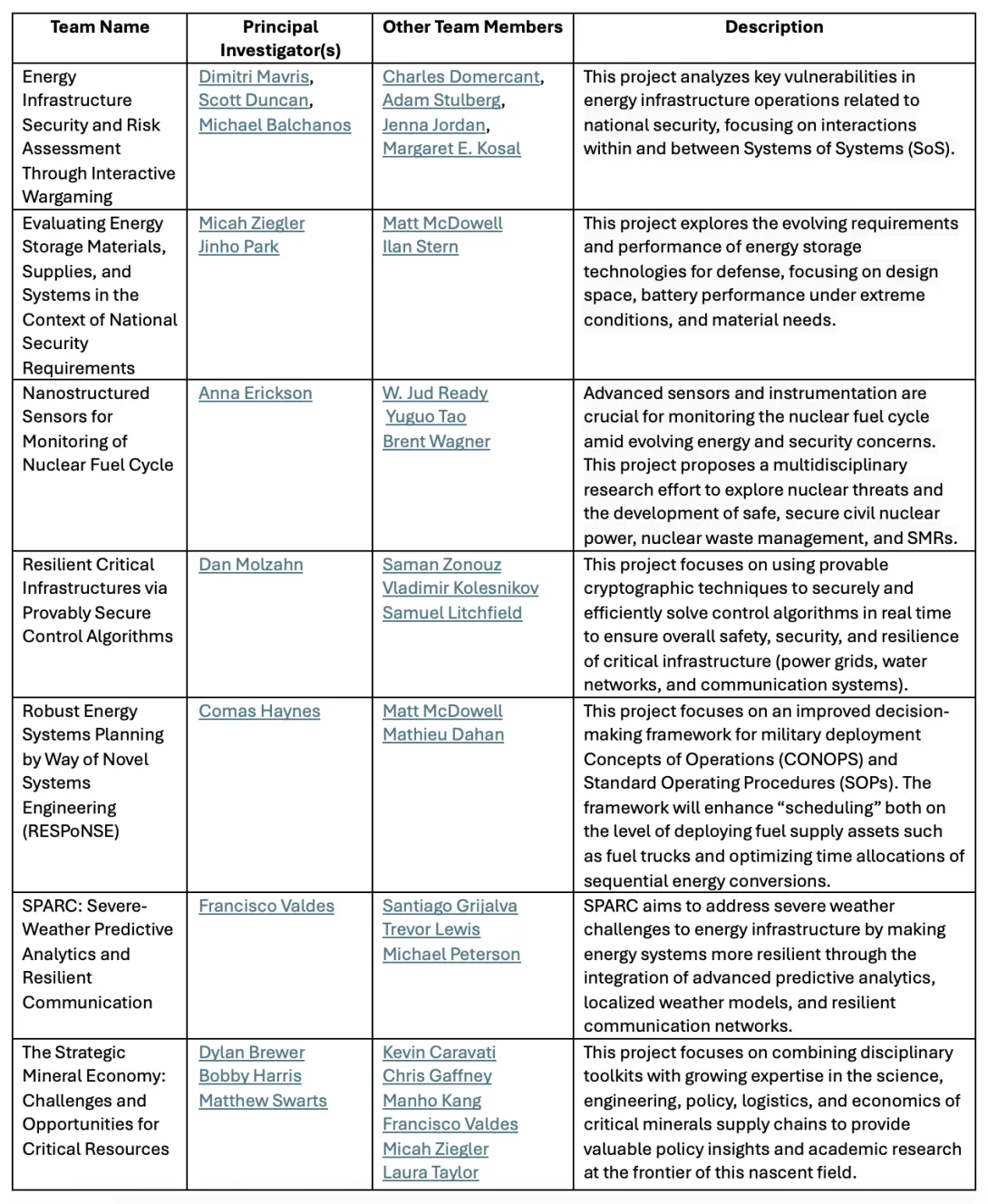
Seven interdisciplinary projects by team members from Georgia Tech and GTRI have been selected for the second phase, also known as Category B (Table 1).
“The seed grant initiative is supporting energy and national security collaboration among researchers from multiple units across the Georgia Tech campus,” said William H. Robinson, interim chief technology officer and deputy director for Research in GTRI’s Information and Cyber Sciences Directorate. “We are very pleased to see the teamwork of these faculty members as they address important issues facing our nation.”
A follow-up workshop will be held this summer to bring together the awardees of the seed grant program. Additionally, a lunch and learn seminar series is planned in the fall to showcase the research progress of the seed grant program. For updates, visit the Strategic Energy Institute event webpage.
News Contact
Priya Devarajan | SEI Communications Program Manager
John Toon | GTRI Communications
Mar. 06, 2025
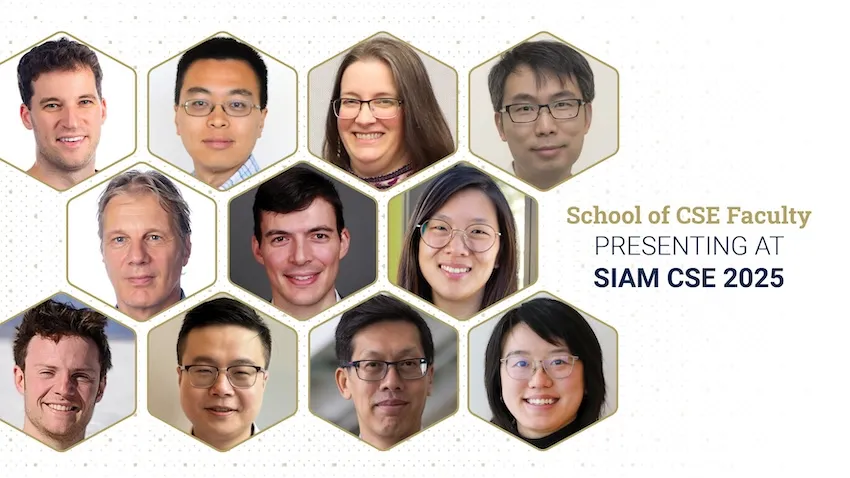
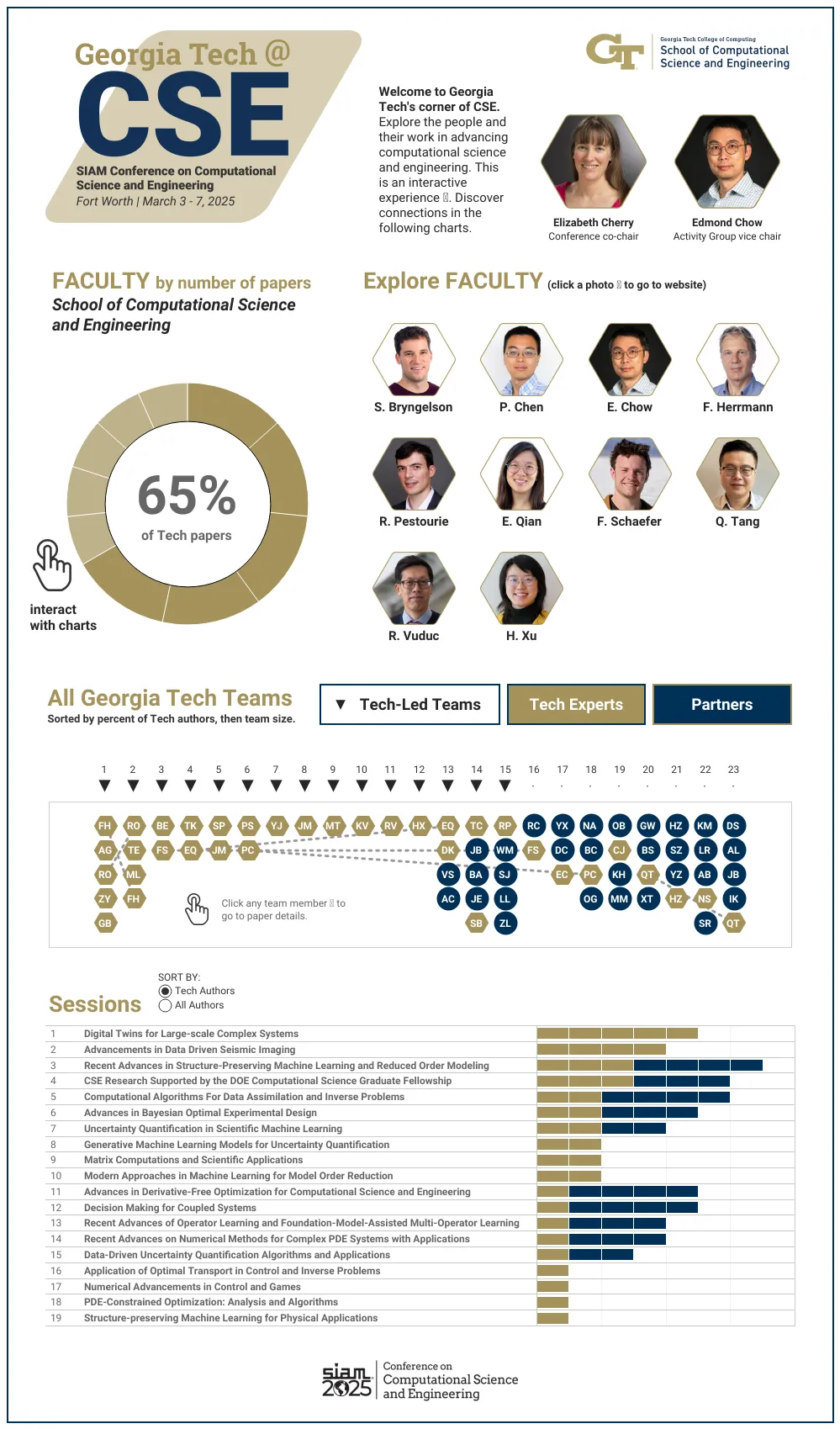
Many communities rely on insights from computer-based models and simulations. This week, a nest of Georgia Tech experts are swarming an international conference to present their latest advancements in these tools, which offer solutions to pressing challenges in science and engineering.
Students and faculty from the School of Computational Science and Engineering (CSE) are leading the Georgia Tech contingent at the SIAM Conference on Computational Science and Engineering (CSE25). The Society of Industrial and Applied Mathematics (SIAM) organizes CSE25, occurring March 3-7 in Fort Worth, Texas.
At CSE25, the School of CSE researchers are presenting papers that apply computing approaches to varying fields, including:
- Experiment designs to accelerate the discovery of material properties
- Machine learning approaches to model and predict weather forecasting and coastal flooding
- Virtual models that replicate subsurface geological formations used to store captured carbon dioxide
- Optimizing systems for imaging and optical chemistry
- Plasma physics during nuclear fusion reactions
[Related: GT CSE at SIAM CSE25 Interactive Graphic]
“In CSE, researchers from different disciplines work together to develop new computational methods that we could not have developed alone,” said School of CSE Professor Edmond Chow.
“These methods enable new science and engineering to be performed using computation.”
CSE is a discipline dedicated to advancing computational techniques to study and analyze scientific and engineering systems. CSE complements theory and experimentation as modes of scientific discovery.
Held every other year, CSE25 is the primary conference for the SIAM Activity Group on Computational Science and Engineering (SIAG CSE). School of CSE faculty serve in key roles in leading the group and preparing for the conference.
In December, SIAG CSE members elected Chow to a two-year term as the group’s vice chair. This election comes after Chow completed a term as the SIAG CSE program director.
School of CSE Associate Professor Elizabeth Cherry has co-chaired the CSE25 organizing committee since the last conference in 2023. Later that year, SIAM members reelected Cherry to a second, three-year term as a council member at large.
At Georgia Tech, Chow serves as the associate chair of the School of CSE. Cherry, who recently became the associate dean for graduate education of the College of Computing, continues as the director of CSE programs.
“With our strong emphasis on developing and applying computational tools and techniques to solve real-world problems, researchers in the School of CSE are well positioned to serve as leaders in computational science and engineering both within Georgia Tech and in the broader professional community,” Cherry said.
Georgia Tech’s School of CSE was first organized as a division in 2005, becoming one of the world’s first academic departments devoted to the discipline. The division reorganized as a school in 2010 after establishing the flagship CSE Ph.D. and M.S. programs, hiring nine faculty members, and attaining substantial research funding.
Ten School of CSE faculty members are presenting research at CSE25, representing one-third of the School’s faculty body. Of the 23 accepted papers written by Georgia Tech researchers, 15 originate from School of CSE authors.
The list of School of CSE researchers, paper titles, and abstracts includes:
Bayesian Optimal Design Accelerates Discovery of Material Properties from Bubble Dynamics
Postdoctoral Fellow Tianyi Chu, Joseph Beckett, Bachir Abeid, and Jonathan Estrada (University of Michigan), Assistant Professor Spencer Bryngelson
[Abstract]
Latent-EnSF: A Latent Ensemble Score Filter for High-Dimensional Data Assimilation with Sparse Observation Data
Ph.D. student Phillip Si, Assistant Professor Peng Chen
[Abstract]
A Goal-Oriented Quadratic Latent Dynamic Network Surrogate Model for Parameterized Systems
Yuhang Li, Stefan Henneking, Omar Ghattas (University of Texas at Austin), Assistant Professor Peng Chen
[Abstract]
Posterior Covariance Structures in Gaussian Processes
Yuanzhe Xi (Emory University), Difeng Cai (Southern Methodist University), Professor Edmond Chow
[Abstract]
Robust Digital Twin for Geological Carbon Storage
Professor Felix Herrmann, Ph.D. student Abhinav Gahlot, alumnus Rafael Orozco (Ph.D. CSE-CSE 2024), alumnus Ziyi (Francis) Yin (Ph.D. CSE-CSE 2024), and Ph.D. candidate Grant Bruer
[Abstract]
Industry-Scale Uncertainty-Aware Full Waveform Inference with Generative Models
Rafael Orozco, Ph.D. student Tuna Erdinc, alumnus Mathias Louboutin (Ph.D. CS-CSE 2020), and Professor Felix Herrmann
[Abstract]
Optimizing Coupled Systems: Insights from Co-Design Imaging and Optical Chemistry
Assistant Professor Raphaël Pestourie, Wenchao Ma and Steven Johnson (MIT), Lu Lu (Yale University), Zin Lin (Virginia Tech)
[Abstract]
Multifidelity Linear Regression for Scientific Machine Learning from Scarce Data
Assistant Professor Elizabeth Qian, Ph.D. student Dayoung Kang, Vignesh Sella, Anirban Chaudhuri and Anirban Chaudhuri (University of Texas at Austin)
[Abstract]
LyapInf: Data-Driven Estimation of Stability Guarantees for Nonlinear Dynamical Systems
Ph.D. candidate Tomoki Koike and Assistant Professor Elizabeth Qian
[Abstract]
The Information Geometric Regularization of the Euler Equation
Alumnus Ruijia Cao (B.S. CS 2024), Assistant Professor Florian Schäfer
[Abstract]
Maximum Likelihood Discretization of the Transport Equation
Ph.D. student Brook Eyob, Assistant Professor Florian Schäfer
[Abstract]
Intelligent Attractors for Singularly Perturbed Dynamical Systems
Daniel A. Serino (Los Alamos National Laboratory), Allen Alvarez Loya (University of Colorado Boulder), Joshua W. Burby, Ioannis G. Kevrekidis (Johns Hopkins University), Assistant Professor Qi Tang (Session Co-Organizer)
[Abstract]
Accurate Discretizations and Efficient AMG Solvers for Extremely Anisotropic Diffusion Via Hyperbolic Operators
Golo Wimmer, Ben Southworth, Xianzhu Tang (LANL), Assistant Professor Qi Tang
[Abstract]
Randomized Linear Algebra for Problems in Graph Analytics
Professor Rich Vuduc
[Abstract]
Improving Spgemm Performance Through Reordering and Cluster-Wise Computation
Assistant Professor Helen Xu
[Abstract]
News Contact
Bryant Wine, Communications Officer
bryant.wine@cc.gatech.edu
Mar. 18, 2025
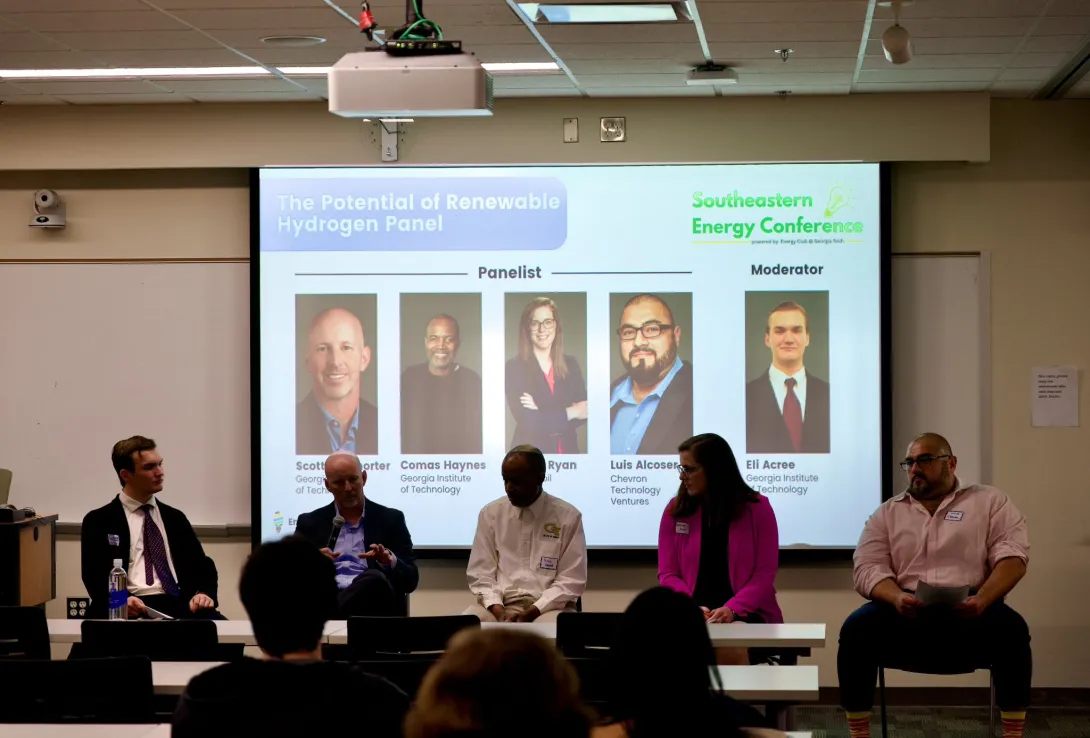
Energy Club's 11th Southeastern Energy Conference Panel on The Potential of Renewable Hydrogen featured Eli Acree, Chemical & Biomolecular Engineering Undergraduate, Georgia Tech (Moderator), Panelists Scott McWhorter, Federal Opportunities and Strategy, Georgia Tech Strategic Energy Institute, and Board Chairman, Southeast Hydrogen Energy Alliance, Comas Haynes, Hydrogen Initiative Lead, Georgia Tech Strategic Energy Institute, Hayley Ryan, Field Engineering Manager, ExxonMobil, Luis Alcoser, GM Future Energy, Chevron Technology Ventures
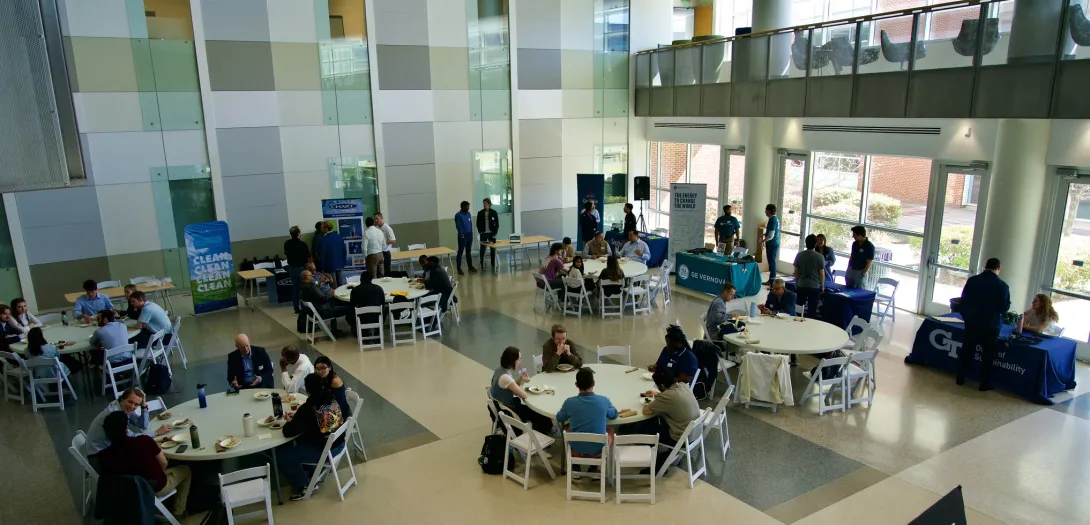
Industry Showcase at the 2025 Southeastern Energy Conference, organized by the student-led Energy Club at Georgia Tech
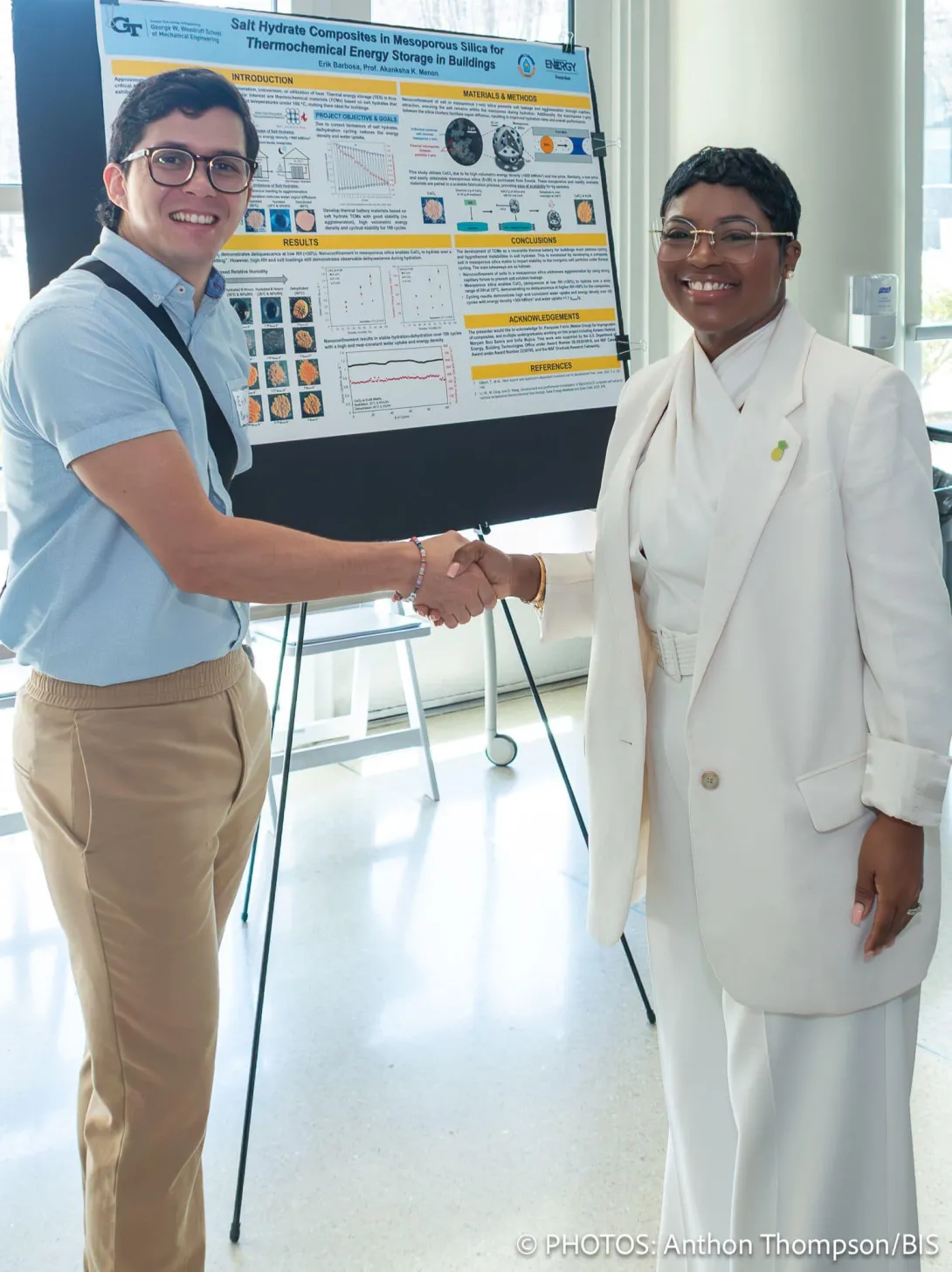
Georgia Tech Student with Hon. Jobeth Lillian Coleby-Davis, Minister of Energy and Transport, Government of The Bahamas during the Student Poster Competition at the 2025 Southeastern Energy Conference.
The 2025 Southeastern Energy Conference, Georgia Tech’s annual student-led energy and sustainability conference, took place from Feb. 28 to March 1, 2025. Organized by the Energy Club at Georgia Tech, the conference welcomed over 100 attendees, including industry leaders, policymakers, researchers, and students, fostering dynamic discussions on the future of energy. The theme for this year’s conference, "Going Global: Energy’s Place on the World Stage," highlighted the international nature of energy challenges and solutions, emphasizing collaboration across borders.
The event kicked off with a keynote address from Hon. John Tien, who provided thought-provoking insights into the evolving energy landscape. Following the keynote, the first panel of the day, "The Ukraine Energy War: Lessons in Energy Security," featured expert analysis from Anna Mikulsa of the IDA Science and Technology Policy Institute and Gabriel Collins of Rice University’s Baker Institute. The session was moderated by Georgia Tech student Grant Espy. This was followed by a discussion on the role of nuclear energy globally, where Seth Grae, president and CEO of Lightbridge Corporation, and CJ Fong, vice president of Regulatory Affairs at Blue Energy, shared their perspectives, moderated by Anna Schafer, a student at Georgia Tech.
Throughout the day, attendees had the opportunity to engage with representatives from 10 local and regional energy companies through the Industry Showcase. Companies such as GE Vernova, Georgia Power, Kimley-Horn, and the Georgia Cleantech Innovation Hub were present, providing valuable networking and career development opportunities for students and professionals alike. The day concluded with an engaging panel on "The Potential of Clean Hydrogen," featuring insights from industry leaders including Comas Haynes of Georgia Tech's Strategic Energy Institute, Hayley Ryan of ExxonMobil, Luis Alcoser of Chevron Technology Ventures, and Scott McWhorter of the Southeast Hydrogen Energy Alliance, moderated by Eli Acree, a student at Georgia Tech.
The second day of the conference opened with a keynote speech from Tim Lieuwen, executive vice president for Research at Georgia Tech, who laid out what a carbon-neutral future could truly look like in energy. The "Cybersecurity for Energy Systems" panel brought together Seymour E. Goodman of Georgia Tech, Jake Braun of the University of Chicago, Juan Villarreal of Villarreal Energy, and Forrest Shriver of Sentinel Devices to discuss the challenges and solutions in securing energy infrastructure. Following that, the "Applications of Solar Microgrids" panel moderated by John Blankenhorn, a Ph.D. candidate at Georgia Tech, featured expert perspectives from Letian Dou of Purdue University, Ben Ollis of Oak Ridge National Laboratory, and Raymond Hill of Emory University’s Goizueta Business School.
One of the standout moments of the conference was the Student Symposium, where seven student researchers had the opportunity to present their work, competing for $500 in prize money. Projects explored topics ranging from photocatalysts to heat-driven desalination to thermal batteries for buildings.
The final panel of the event, "Scaled Sustainable Development," moderated by Conference Chair Sam Woolsey, a student at Georgia Tech, featured Jonathan Elkind of Columbia University’s Center on Global Energy Policy, Miguel Granier of the Cox Cleantech Accelerator, and Hon. Jobeth Lillian Coleby-Davis, Minister of Energy & Transport for the Government of the Bahamas.
Faculty Advisor Dan Molzahn also praised the conference, stating, "I've been incredibly impressed by the student organizers in pulling together such a remarkable and well-executed event. Given all the change occurring in the world today around energy, the students' foresight to focus on this topic by bringing in a broad range of experts was a huge benefit to the Georgia Tech community."
Reflecting on the success of the event, Sam Woolsey shared, "I was honored to serve as Energy Club's 2025 Conference Chair and to see the conference so positively received. It was a pleasure to see the ways this year's conference encouraged Georgia Tech engineers to get out of their comfort zone and discuss the policy and international affairs of energy."
The 11th annual Southeastern Energy Conference set a high standard for future student-led initiatives in energy and sustainability at Georgia Tech, fostering meaningful discussions and connections that will continue shaping the field. With a diverse lineup of experts, engaging panels, and invaluable networking opportunities, this event demonstrated Georgia Tech’s leadership in fostering innovative discussions on global energy challenges. The Energy Club extends its heartfelt thanks to all speakers, panelists, industry representatives, and attendees for making this conference a success. Stay tuned for future events and continued conversations on the evolving energy landscape!
Written by: Energy Conference Committee Members: Braden Queen, Eli Acree, Sam Woolsey, Anna Schafer, Grant Espy, John Blankenhorn
News Contact
News Contact: Priya Devarajan || SEI Communications Program Manager
Written by: Energy Conference Committee Members: Braden Queen, Eli Acree, Sam Woolsey, Anna Schafer, Grant Espy, John Blankenhorn
Feb. 18, 2025
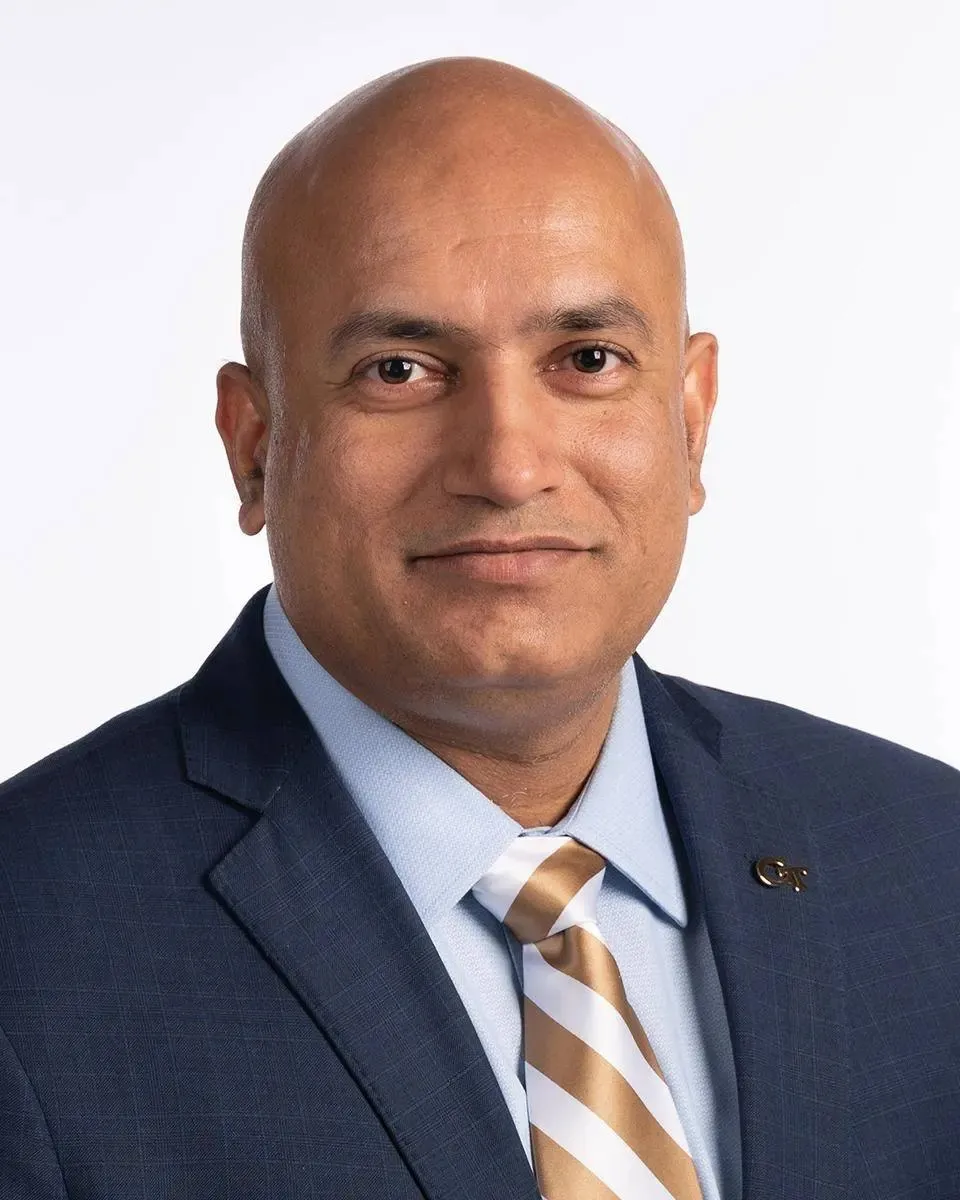
Devesh Ranjan, the Eugene C. Gwaltney, Jr. School Chair of the George W. Woodruff School of Mechanical Engineering, has been named dean of the College of Engineering at the University of Wisconsin-Madison (UW).
Ranjan graduated from UW and has been at Georgia Tech since 2014. He was selected as dean by UW Provost Charles Isbell, a Georgia Tech graduate and former dean of the College of Computing.
Ranjan will lead the Woodruff School through the spring semester. He will join UW in June.
“Devesh is a visionary leader who has created numerous programs to strengthen the Woodruff School community,” said Raheem Beyah, dean of the College of Engineering and Southern Company Chair. “Georgia Tech is my alma mater, and I know there’s nothing like going home. Devesh’s deep commitment and determination will undoubtedly lead to his continued success as he returns to UW to innovate and lead the university’s college of engineering. I’m grateful for his commitment to Tech and the Woodruff School, as well as his valuable guidance and partnership.”
News Contact
Jason Maderer (maderer@gatech.edu)
Mar. 03, 2025
Students in Matthew Oliver’s economics of environment and international energy markets classes likely don’t have a clue about his unusual journey to the lectern: “I was bent on being a rock and roll musician from the time I was 16, and so I ended up dropping out of the University of Memphis after just three semesters,” says Oliver, an associate professor in the School of Economics at the Georgia Institute of Technology. “I was on tour for eight years — and I was starting to feel burned out.”
At a crossroads, Oliver decided to end his musical career — a choice he credits with launching him into academia. “I was 28 and wondering what to do with my life, so I reenrolled in college and discovered economics.” With a longtime love of the environment and growing concern for the climate, says Oliver, “I grew fascinated with solar power and other renewables and the new markets emerging around them.”
Today, his work in energy and environmental economics has implications for policies shaping the energy transition, from subsidies for rooftop solar to the expansion of battery storage.
“The current frontier of energy economics is electricity and renewables, and these are areas I am passionate about,” he says.
PVs and amped up electric use
One of Oliver’s core research thrusts is the solar rebound effect (SRE). This phenomenon involves a quirk of human behavior: When people install solar photovoltaic (PV) panels on the roofs of their homes, they often consume more electricity. “The introduction of solar energy does not perfectly displace grid-supplied energy, but instead reduces demand for grid-supplied energy on a less than one-for-one basis, because the household increases its total electricity consumption,” says Oliver. The bottom line: Solar PV systems may not lead to as much carbon emission reduction as anticipated.
News Contact
Written by: Leda Zimmerman
News Contact: Priya Devarajan, SEI Communications Program Manager