
May. 13, 2024

People using energy-efficient smart thermostats are willing to sacrifice comfort and control to save relatively small amounts of energy that could add up if enough people sign on, a Georgia Tech economist reported in a recent study.
With federal and state energy policies targeting aggressive decarbonization in the next 15 years, smart technologies have the potential to help achieve these goals at a reasonable cost, said Casey J. Wichman, associate professor in the Georgia Institute of Technology School of Economics.
In a forthcoming issue of American Economic Journal: Applied Economics, Wichman and colleagues report that automation within smart thermostats can lead to potentially large reductions in household electricity use and costs.
Utilities look to time-of-use (TOU) pricing — where prices are higher during peak demand and lower during lags in demand — to save consumers money and relieve pressure on the grid.
“From an economics perspective, there's this idea that if you set the price right, everything will work out,” Wichman said. “But if consumers don't actually respond to those prices, that limits the effectiveness of the solution.”
For the study, more than 2,100 Toronto-area residents using Ecobee smart thermostats agreed to share their usage data during the 2019 rollout of a suite of new thermostat features that included an automated component.
Participants opted to allow the thermostats to precool or preheat their homes at times of the day when electricity was less expensive, choosing on a sliding scale how aggressive they wanted the algorithm to be. Degree changes within the homes varied from around 1 to 5 degrees, saving participants up to 30 Canadian cents per day in the summer.
“I have always liked applying economic concepts to simple decisions we make in our daily lives,” Wichman said. “This allows me to answer new questions about how decisions matter for the environment, and how policies or technologies can be designed to generate social change. In this project, we’re leveraging new data sources to try to capture the unaccounted-for costs of those policies.”
Studies on energy savings, he said, often miss the in-home comfort cost. These results showed that people seemed willing to trade relatively small monetary savings for a small increase in discomfort, although discomfort was most pronounced for residents who typically spend more time at home. For the most part, people were willing to sacrifice control over their heating and cooling decisions to an algorithm.
This finding surprised Wichman. “We thought we would see more people turn off the feature,” he said. That didn't happen.
As time-varying electricity pricing rolls out across North America, utilities could provide incentives for customers to opt into energy-saving settings programmed into internet-connected home appliances, like water heaters, pool pumps, and electric vehicles.
The researchers’ results suggest that such programs could be designed in a way that customers will accept. This gives Wichman a sense of optimism for the future.
“What is interesting here is that technology can complement economic incentives,” he said. “You can have technology correct for humans’ inability to remember to set their heating and cooling schedule in a way that's consistent with social goals.”
Author: Deborah Halber
May. 06, 2024

Are you under the impression that air pollution is a dichotomous problem where the air is either polluted or it’s not? What else is there to know about air pollution? The surprising answer to this question lies not with a lab scientist but with an economist.
Assistant Professor Dylan Brewer of the School of Economics studies the health impacts of air pollution and the statistical methods useful for teasing apart factors that can confound those answers, all from the lens of an economist. It turns out that viewing the problem of air pollution through an economic framework and applying statistical methods commonly used in the field of economics can shed light on the multiple factors that influence the health impact of exposure to air pollution on different populations.
Recently, Brewer was the featured guest on the podcast The Health Deli, where the hosts were surprised to find an economist making waves at this critical research intersection. Brewer explains why viewing this problem from the perspective of an economist is so valuable and discusses some of his research team’s surprising findings.
The podcast, hosted by three pharmacists, approaches health news from a scientific bent, which turned out to be a great fit for an economist who studies air pollution. You can listen to the podcast episode, “Is It Safe To Breathe Air? How Is This a Real Question?’ on Apple Podcasts or Spotify, as well as other major podcast providers.
Spotify Link https://open.spotify.com/episode/1PDPUZNGEifWA5IvCnVUNK
News Contact
Written by: Sharon Murphy, Research Associate, SEI
News Contact:
Priya Devarajan, SEI Communications Program Manager
May. 03, 2024
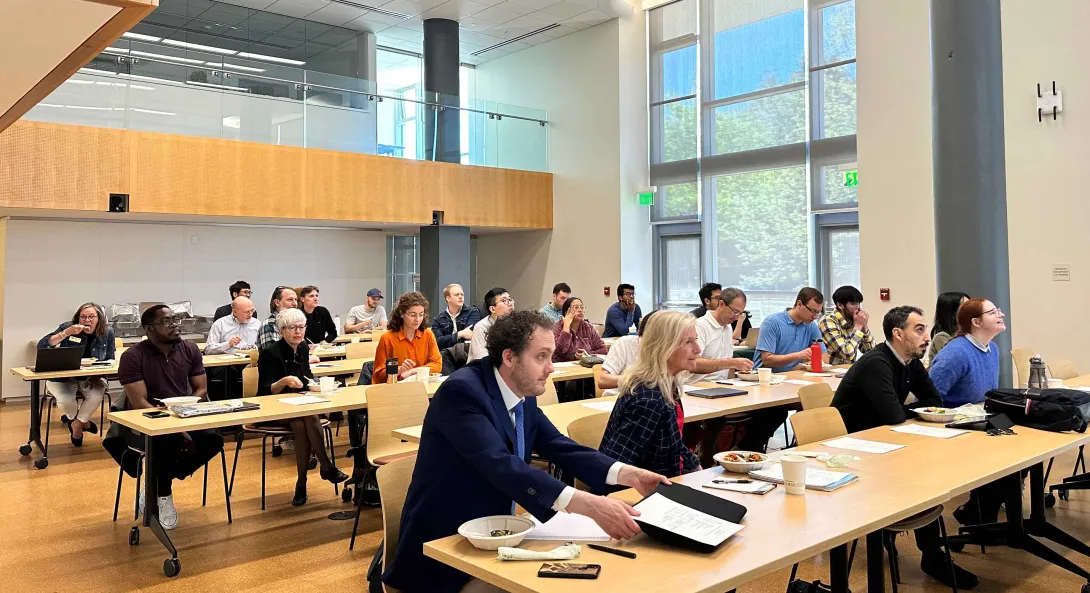
On April 12, the Energy, Policy, and Innovation Center (EPICenter) hosted its second round of the “Friday Lightning Talk Series” at the Scholars Event Network space in the Price Gilbert Library.
Eight multidisciplinary participants from Georgia Tech, including postdoctoral students, graduate students, research faculty, and research associates from public policy, economics, electrical and computer engineering, industrial and systems engineering, and EPICenter, presented an overview of an energy-related research project during the session.
Laura Taylor, chair of the School of Economics and interim director of EPICenter, introduced the organization’s new faculty affiliate program through which affiliates, their students, and postdocs present and share research ideas and receive feedback from the audience.
Topics covered during the session included understanding the social costs of natural gas deregulation, managing EV charging during emergencies, exploring whether daylight saving time saves energy, the green energy workforce, the effects of community solar on household energy use, the Atlanta Energyshed project, clean hydrogen production in Georgia, and household responses to grid emergencies.
The interactive session was well attended with over 25 attendees asking thought-provoking questions and providing suggestions on future areas to explore.
The first round was held on March 1 and was such a success that this second round had a full slate of presenters and a full house of audience members. The agendas for both lightning round talks are available below, along with links to presentation slides.
A unit of the Strategic Energy Institute of Georgia Tech, EPICenter’s mission is to conduct rigorous research and deliver high-impact insights that address the energy needs of the southeastern U.S., while keeping a national and global perspective. EPICenter calls upon broad, multidisciplinary expertise to engage the public and create solutions for critical emerging issues as our nation’s energy transformation unfolds.
News Contact
Priya Devarajan || SEI Communications Program Manager
Apr. 24, 2024
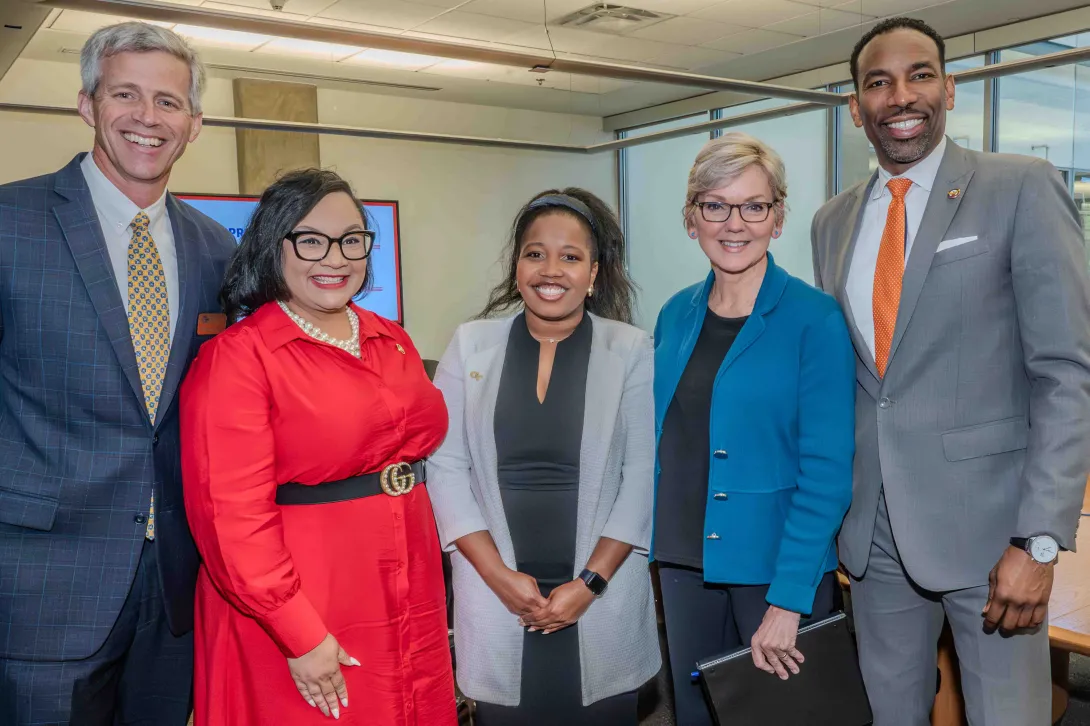
From the Left: SEI Executive Director Tim Lieuwen, U.S. Rep. Nikema Williams, Georgia Tech Student Azell Francis, Secretary Jennifer Granholm, Mayor Andrew Dickens
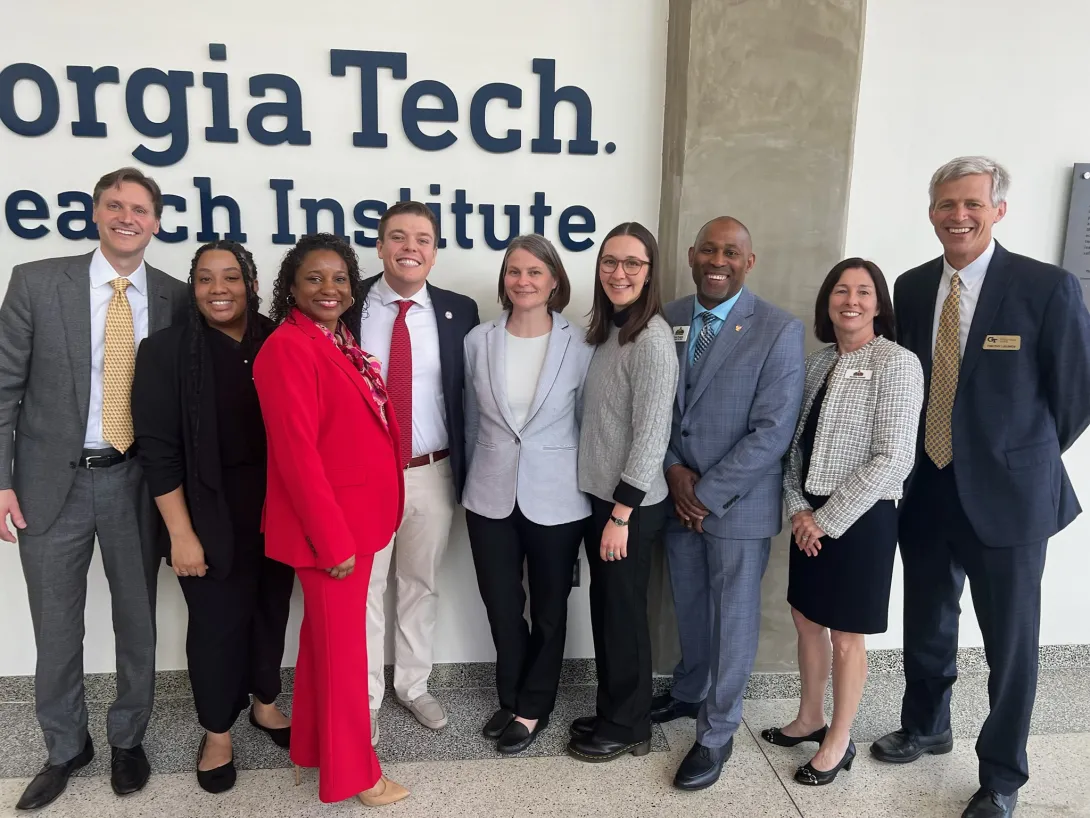
From the Left: Richard Simmons (SEI), Jordann Shields (SEI), Chandra Farley (City of Atlanta), John R Seydel (City of Atlanta), Catherine Mercier-Baggett (Southeast Sustainability Directors Network), Rachel Usher (SSDN), Tony Powers (City of Decatur), Andrea Arnold (City of Decatur), Tim Lieuwen (SEI)
On a recent visit to the Georgia Tech campus, Secretary of Energy Jennifer Granholm announced that a tri-city alliance of Atlanta, Decatur, and Savannah in partnership with Georgia Tech will receive funding to drive clean energy solutions.
The funding is part of DOE’s Energy Future Grants program, and the Atlanta-Decatur-Savannah partners will receive $500,000 during the planning phase to develop initiatives, policies, and tools to promote green energy deployment in their communities. In total, the grants will provide $27 million in financial and technical assistance to support strategies that increase resiliency and improve access to affordable clean energy. The team will compete with other recipients for additional funding in subsequent phases of the program.
The Georgia Energyshed (G-SHED) team, led by Richard Simmons of the Strategic Energy Institute, will partner with the tri-city team in this project. The modeling and simulation-driven analysis from G-SHED will be used by the Tri-City Alliance project to develop deployment-ready blueprints of clean energy innovations focused on community benefits.
The G-SHED team, formed through another DOE grant, is developing a metropolitan energy planning organization informed by an integrated modeling effort that includes technical, social, and community inputs. Georgia Tech is collaborating with the Atlanta Regional Commission and the Southface Institute in this project.
Granholm said announcing the funding at Georgia Tech was fitting because its tools “are going to be magnificent for this project for communities to decide the best path for them based on data.” Atlanta Mayor Andrew Dickens, U.S. Rep. Nikema Williams, and several other dignitaries were present during the announcement. Secretary Granholm toured parts of the Georgia Tech campus including the Carbon Neutral Energy Solutions building during her visit.
“It’s exciting when the Secretary of Energy makes a special trip to campus to announce a new Award. I appreciate Secretary Granholm and the Department of Energy for enabling this innovative energy partnership with Atlanta, Decatur, and Savannah,” said Tim Lieuwen, executive director of the Strategic Energy Institute.
News Contact
Priya Devarajan || SEI Communications Program Manager
Apr. 11, 2024
Faculty Fellow Sofia Perez-Guzman (third from right) joins SCoRE staff on a site visit to the ArtsXchange in East Point to explore mutual interests related to community resiliency (April 5, 2024)
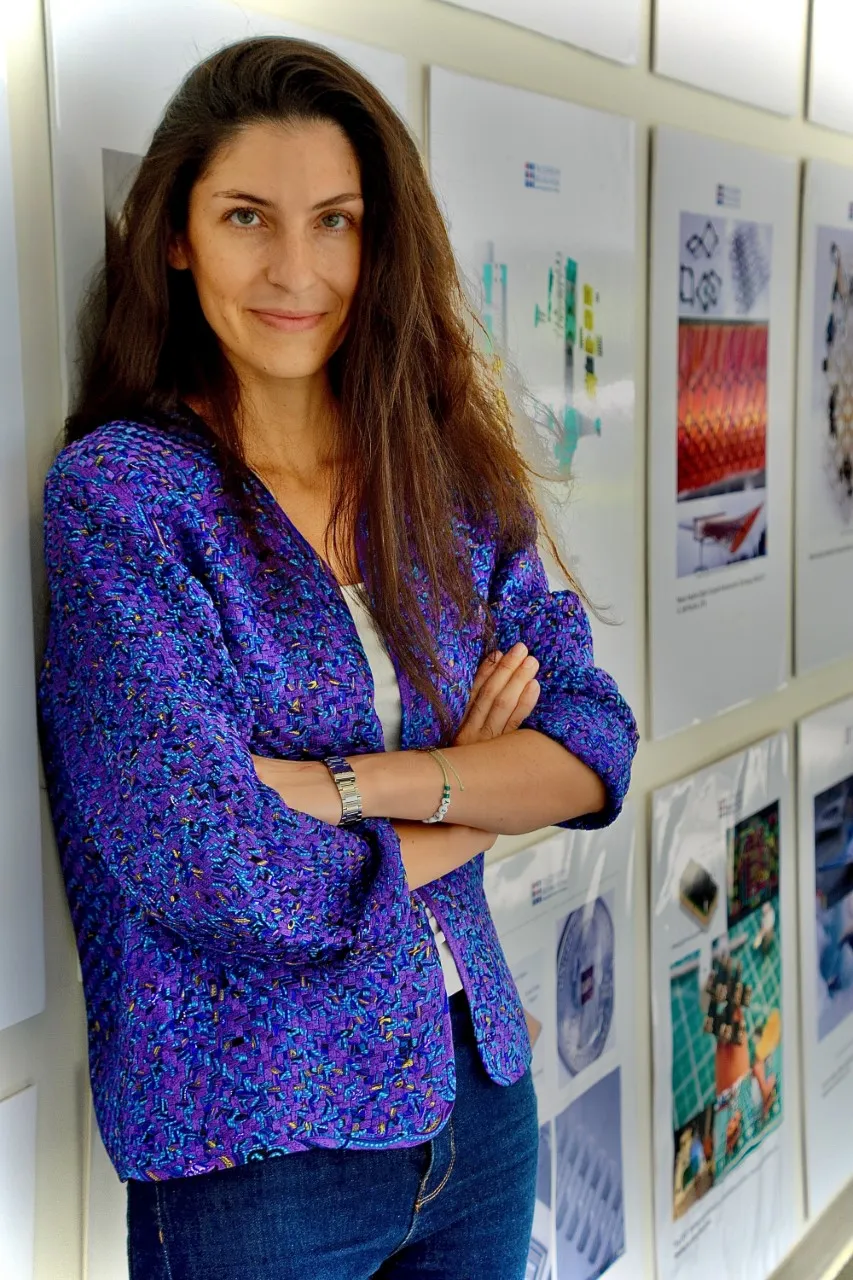
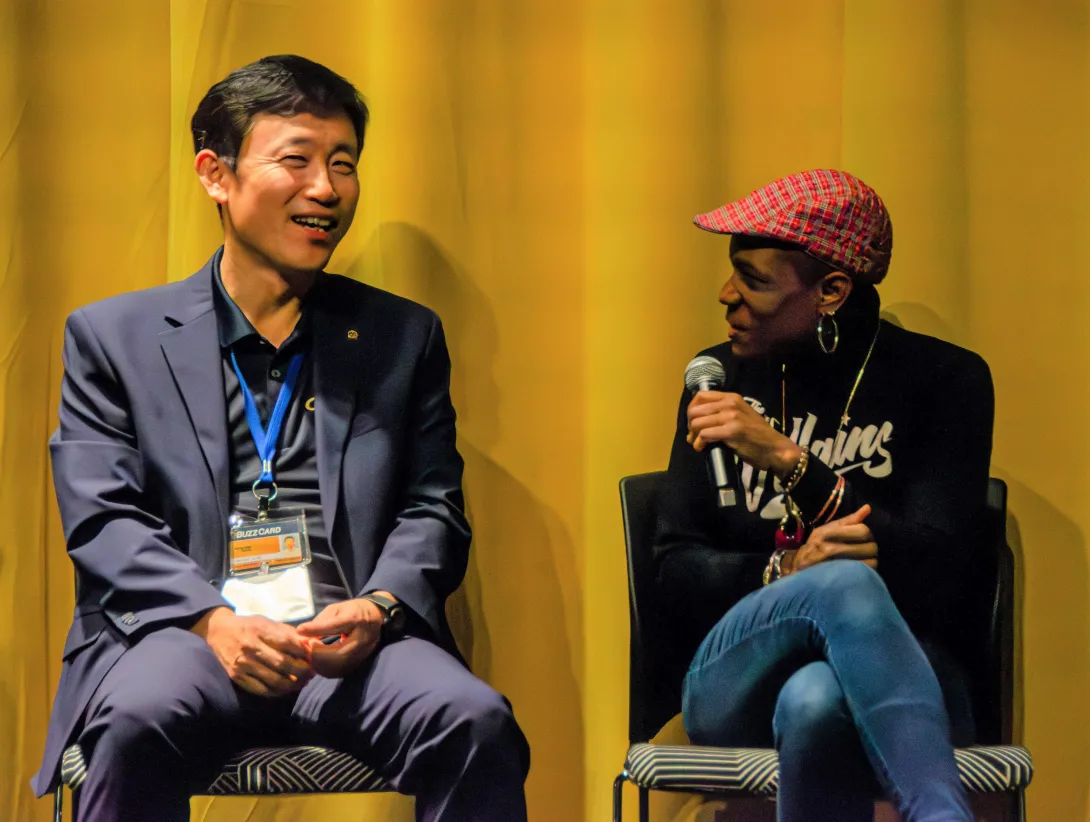
Jung-ho (John) Lewe (left) of the Georgia Tech Aerospace Systems Design Laboratory at Georgia Tech and Erica Holloman-Hill (right), a SCoRE adviser and chief envisioning officer/chief scientific officer of Ayika Solutions, a family-run environmental consulting firm that uplifts community-based climate change strategies, discuss their new partnership at the Georgia Tech Sustainability Showcase (March 2024) in a panel focused on community-engaged research, curated by the Faculty Fellows Program.
The Center for Sustainable Communities Research and Education (SCoRE — formerly SLS), in collaboration with the Strategic Energy Institute (SEI), the Brook Byers Institute for Sustainable Systems (BBISS), the Renewable Bioproducts Institute (RBI), and the Social Equity and Environmental Engineering Lab (SEEEL), launched the Energy Equity, Environmental Justice, and Community Engagement Faculty Fellows Program in November 2023. In this program, Georgia Tech faculty learn how to work with communities, bringing together their academic knowledge and the local expertise of communities that has been developed through lived experience and long-standing social action.
The inaugural fellows include 24 Georgia Tech faculty from five Colleges, as well as a faculty colleague from Georgia Gwinnett College and a partner from the Southeast Energy Efficiency Alliance, who are building relationships with each other and with community partners in the areas of energy equity and environmental justice. Since the launch, they have engaged in a wide array of events, including community benefit and development workshops, site visits to community-based organizations across the Atlanta region, and university-community gatherings and symposia.
The program is expected to result in both collective and individual deliverables. Collective deliverables include the development of network mapping tools to facilitate collaborations inside and outside Georgia Tech, a set of principles for conducting community-engaged research, a reflective essay on faculty training for community-engaged research, and ideas for future activities to facilitate university-community and interdisciplinary team formation. Fellows individually determine their deliverables, which run the gamut from exploring partnerships for a specific research project to writing a societal impact statement for a tenure package.
More broadly, the program aims to grow Georgia Tech’s collaborative expertise in community-engaged research by forming a supportive network of faculty interested in community-engaged sustainability research and education.
Faculty Affiliate: Patritsia Stathatou, Research Scientist, Renewable Bioproducts Institute, Georgia Tech
Sustainable energy sources and environmental justice go hand in hand. Although such technologies aim to minimize environmental impacts of modern societies, without considering issues of environmental justice and energy equity, these solutions can inadvertently perpetuate disparities by disproportionately benefiting certain communities while harming others. Bridging the gap between technological advancements and community benefits is paramount to creating an equitable energy future for all.
This program provides a unique opportunity to explore these interconnections, enhancing my knowledge in integrating community values and concerns into my research on alternative fuels and renewable energy sources. I am particularly excited about the hands-on approach of the program, which emphasizes listening sessions and workshops, allowing fellows to gain direct insights from various stakeholders. I hope that, through active participation in these sessions, I can further my understanding of the challenges faced by local communities and incorporate these insights into actionable solutions in my research.
In my project, I'm in a group crafting a reflective essay about our experiences with Community Engaged Research training. Our goal is to translate the insights gained from this pilot program into a publishable piece. Additionally, I'm acquiring valuable insights into the development of Broader Impact Statements and Community Benefits Plans, crucial parts of proposals for securing federal funding from NSF and DoE, respectively.
Faculty Affiliate: Sofia Perez-Guzman, Assistant Professor, School of Civil and Environmental Engineering, Georgia Tech
The fellowship program has been a fantastic experience. I never imagined how much I would learn from this program about properly engaging with communities. As researchers, we might think we want to hear the needs that communities face to provide them with solutions. That is different than the way community-driven research should work. I’ve learned that researchers need to gain the communities’ trust, be present and participate in their events, and, more importantly, work at their pace and for their interests rather than push our research agendas for our professional benefit. I know there is still a lot more I must continue learning, but what I’ve learned so far has been an eye-opener that is making me rethink how to approach my research and its social aspect.
My project focuses on the social performance of supply chains, and I am seeking to put more emphasis on the “social” part of my research by making it more community-driven. That is why I applied for the fellowship. I am advancing two current projects as part of the fellowship. One relates to increasing food accessibility to vulnerable populations via community-driven freight transportation solutions. I want to bring food closer to people and do it by co-designing solutions with the communities. The second project relates to forming a team to pursue research on enhancing community resilience to extreme weather events for the mobility of people and goods. The fellowship and a Sustainability Next seed grant from BBISS are helping me move forward with this project.
News Contact
Priya Devarajan
Research Communications Program Manager || SEI | RBI
Mar. 14, 2024

In January, Georgia Tech researchers were awarded three grants as a part of the Department of Energy’s Industrial Efficiency and Decarbonization multi-topic funding. The awards include 49 high-impact, applied research, development, and pilot-scale technology validation and demonstration projects that will reduce energy usage and greenhouse gas emissions in conjunction with cross-sector industrial decarbonization approaches.
The Georgia Tech funding includes a project, in the topic area of Decarbonizing Forest Products, on innovative refining, paper forming, and drying to eliminate CO2 emissions from paper machines. Funded at $3.1 million, the project is led by Carson Meredith, professor and James Harris Faculty Fellow in the School of Chemical and Biomolecular Engineering and executive director of the Renewable Bioproducts Institute (RBI). Collaborators include co-PI Cyrus Aidun, professor of mechanical engineering; Patritsia Stathatou, research scientist at RBI; and Aruna Weerasakura, senior research engineer. External collaborators include Fort Valley State University, the National Renewable Energy Laboratory, and several RBI member companies.
Meredith’s project focuses on decarbonization in energy-intensive drying, paper forming, and pulping processes and will combine recent deflocculation breakthroughs in fiber refining with low-water, multiphase paper forming. The innovations will facilitate the cost-effective implementation of advanced electrical drying technologies in the paper industry. By taking advantage of the increasing fraction of non-fossil electricity in the U.S., electrified drying, if implemented partially (50%), has the potential to reduce the generation of non-biogenic emissions by over 10 million metric tons of CO2e annually.
"I am excited because the new project will utilize the multiphase forming laboratory that is under construction in the Paper Tricentennial Building, representing the first major expansion in lab space there since the 1990s,” said Meredith.
Valerie Thomas, the Anderson-Interface Chair of Natural Systems and professor of industrial and systems engineering and public policy, is a co-PI in a $1.45 million project titled “Mild Co-Solvent Pulping to Decarbonize the Paper and Forest Products Sector,“ led by the University of California, Riverside.
Thomas’ project, also under the topic area of Decarbonizing Forest Products, aims to enhance Co-solvent Enhanced Lignocellulosic Fractionation (CELF) technology into a more environmentally sustainable alternative to traditional kraft pulping. CELF technology will be applied to optimize the production of dissolving pulp used in the manufacturing of extruded textile fibers and will also produce dissolving lignin as a by-product that can serve as a natural resin binder or a renewable ingredient for producing industrial adhesives and binders. This technology has the potential to reduce carbon intensity by 50 – 75% and operating costs by 10 – 20%.
Tim Lieuwen, David S. Lewis Jr. Chair and professor in aerospace engineering and executive director of the Strategic Energy Institute, is co-PI along with Vishal Acharya, principal research engineer and Benjamin Emerson, principal research engineer at Georgia Tech in a $3.25 million project titled “Omnivore Combustion System,” led by GTI Energy, an Illinois-based technology company.
Lieuwen’s project, under the topic area of Low-Carbon Fuels Utilization R&D, will design and demonstrate a scaled, adaptable omnivore combustion system (OCS) that can accommodate a continuously varying blend of low-carbon fuels with ultra-low nitrous oxide emissions, including natural gas-hydrogen blends, syngas, and biogas. The project will demonstrate a full-scale OCS for at least 100 hours and will focus on three aspects — improving performance, operation stability and safety, and fuel flexibility — and can potentially be used for industrial furnace applications in high carbon-emitting industries.
“The industrial sector is large in both its significance for our economy and its negative climate impacts, and each of these projects addresses significant challenges for the decarbonization of this critical sector,” Lieuwen said.
The projects are part of DOE’s Technologies for Industrial Emissions Reduction Development (TIEReD) Program, which invests in fundamental science, research, development, and initial pilot-scale demonstrations projects to decarbonize the industrial sector — currently responsible for a third of the nation’s greenhouse gas emissions.
News Contact
Priya Devarajan || Research Programs Communications Manager || RBI || SEI
Mar. 07, 2024
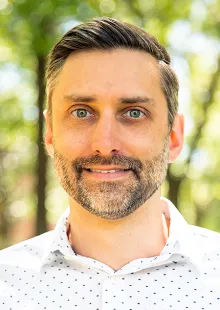
Matthew McDowell, Associate Professor in the George W. Woodruff School of Mechanical Engineering and the School of Materials Science and Engineering and initiative lead for energy storage at the Strategic Energy Institute
Matthew McDowell, Woodruff Faculty Fellow and associate professor in the George W. Woodruff School of Mechanical Engineering and the School of Materials Science and Engineering and initiative lead for energy storage at the Strategic Energy Institute, has received $1.3 million in funding through the Pioneering Railroad, Oceanic, and Plane Electrification with 1K energy storage systems (PROPEL-1K) program. Aimed at accelerating the electrification of the aviation, railroad, and maritime transportation sectors, PROPEL-1K is one of the latest ARPA-E grants with projects to develop energy storage systems that can achieve over 1,000 watt-hour per kilogram and 1,000 watt-hour per liter. These technologies will improve energy density fourfold over current technologies.
Inspired by fuel injectors in internal combustion engines and conventional flow batteries, McDowell’s project will advance an alkali hydroxide triple phase flow battery to enable reversible operation of ultrahigh-energy density battery chemistries. The project’s proposed design will increase energy density by leveraging innovative pumping and handling of molten alkali metal and hydroxide species to maximize the volume of reactants over inactive components.
McDowell will work with Asegun Henry, associate professor in the Department of Mechanical Engineering at the Massachusetts Institute of Technology (MIT). Prior to MIT, Henry was an assistant professor in the George W. Woodruff School of Mechanical Engineering at Georgia Tech.
Created in 2007, the Advanced Research Projects Agency-Energy (ARPA-E) in the Department of Energy advances high-potential, high-impact energy technologies. The agency focuses on transformational energy projects that can be meaningfully advanced with a small amount of funding over a defined period through a streamlined awards process that enables quick action and catalyzes cutting-edge areas of energy research.
News Contact
Priya Devarajan | SEI Communications Program Manager
Feb. 15, 2024
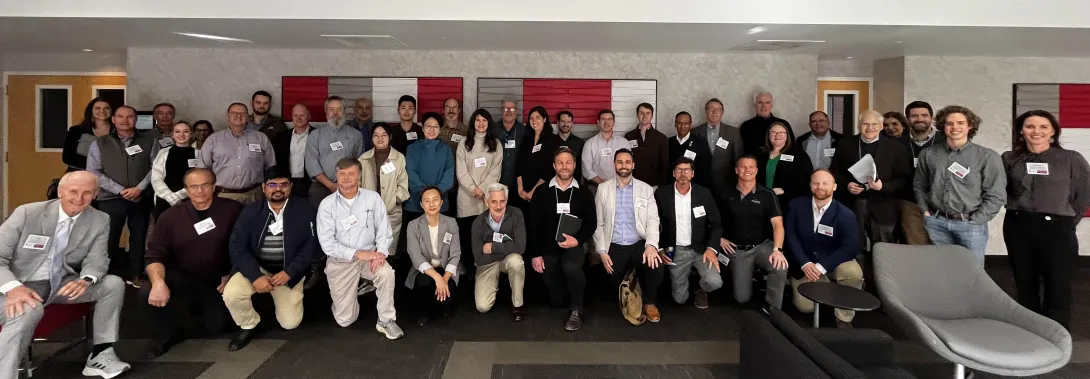
Participants of the 2024 Georgia Partnerships for Essential Minerals (GEMs) Workshop held on February 2, 2024
Demand for critical minerals and rare earth elements is rapidly increasing as the world accelerates toward clean energy transitions. Concerns about price volatility, supply security, and geopolitics arise as reducing emissions and ensuring resilient and secure energy systems become increasingly crucial.
To address this important area, 45 participants from academia, government, industry, and national labs gathered at the University of Georgia for the inaugural Georgia partnerships for Essential Minerals (GEMs) Workshop. The workshop was the first in a series of critical mineral conversations planned by the collaborators of the workshop. The first GEMs Workshop focused on the critical mineral potential in Georgia’s kaolin mining industry.
Key workshop conveners included W. Crawford Elliott, associate professor of chemistry and geosciences at Georgia State University; Lee R. Lemke, secretary and executive vice president of the Georgia Mining Association; Paul A. Schroeder, professor in clay minerology at the University of Georgia; and Yuanzhi Tang, associate professor in the School of Earth and Atmospheric Sciences at Georgia Tech.
Representatives from more than 20 companies, the Environmental Protection Agency, U.S. Geological Survey, Georgia Environmental Protection Division, and Savannah River National Laboratory, as well as faculty members and students from Georgia’s three R1 universities participated in the day-long workshop. Speaker sessions and panel discussions addressed:
- Developing a state and regional ecosystem demonstrating a critical mineral supply chain from resources to solutions to end users.
- A strong emphasis on workforce training for this emerging industry.
- Establishing a regional critical mineral consortium to facilitate resource exploration, characterization, processing, and utilization.
- Creating official industry-university collaborations that included internships, field trips, curricular training, R&D collaboration, and stakeholder liaisons.
Workshop organizers plan to reconvene in six months to continue conversations and build momentum on critical minerals research, from supplies to workforce training and beyond.
News Contact
Priya Devarajan, Georgia Institute of Technology
Alan Flurry, University of Georgia
Anna Varela, Georgia State University
Feb. 15, 2024
Participants of the 2024 Georgia Partnerships for Essential Minerals (GEMs) Workshop held on February 2, 2024
Demand for critical minerals and rare earth elements is rapidly increasing as the world accelerates toward clean energy transitions. Concerns about price volatility, supply security, and geopolitics arise as reducing emissions and ensuring resilient and secure energy systems become increasingly crucial.
To address this important area, 45 participants from academia, government, industry, and national labs gathered at the University of Georgia for the inaugural Georgia partnerships for Essential Minerals (GEMs) Workshop. The workshop was the first in a series of critical mineral conversations planned by the collaborators of the workshop. The first GEMs Workshop focused on the critical mineral potential in Georgia’s kaolin mining industry.
Key workshop conveners included W. Crawford Elliott, associate professor of chemistry and geosciences at Georgia State University; Lee R. Lemke, secretary and executive vice president of the Georgia Mining Association; Paul A. Schroeder, professor in clay minerology at the University of Georgia; and Yuanzhi Tang, associate professor in the School of Earth and Atmospheric Sciences at Georgia Tech.
Representatives from more than 20 companies, the Environmental Protection Agency, U.S. Geological Survey, Georgia Environmental Protection Division, and Savannah River National Laboratory, as well as faculty members and students from Georgia’s three R1 universities participated in the day-long workshop. Speaker sessions and panel discussions addressed:
- Developing a state and regional ecosystem demonstrating a critical mineral supply chain from resources to solutions to end users.
- A strong emphasis on workforce training for this emerging industry.
- Establishing a regional critical mineral consortium to facilitate resource exploration, characterization, processing, and utilization.
- Creating official industry-university collaborations that included internships, field trips, curricular training, R&D collaboration, and stakeholder liaisons.
Workshop organizers plan to reconvene in six months to continue conversations and build momentum on critical minerals research, from supplies to workforce training and beyond.
News Contact
Priya Devarajan, Georgia Institute of Technology
Alan Flurry, University of Georgia
Anna Varela, Georgia State University
Jan. 29, 2024
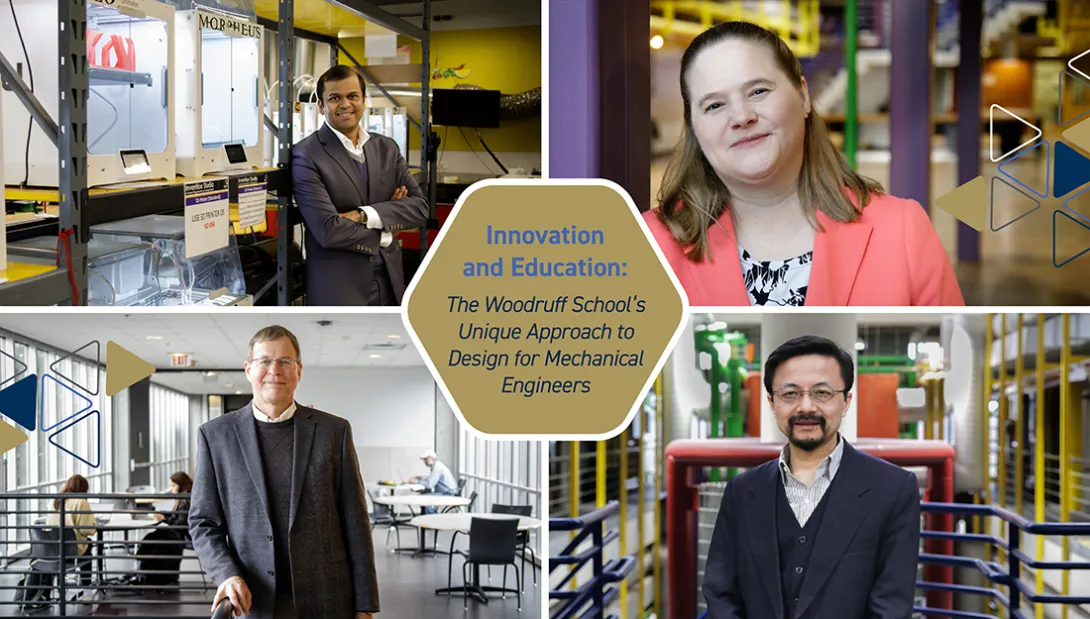
Pictured left to right, top to bottom: Director of Design and Innovation Amit Jariwala, Professor Julie Linsey, Associate Chair for Administration Bert Bras, and Professor Yan Wang.
Mechanical engineering, in the broadest sense of the discipline, touches a vast array of processes and systems, encompassing familiar industries and niche startups. Rapid technology advances mean engineering skills and methods change frequently to adapt to newer materials, tools, or customer needs. At its core, however, the intersection of design and innovation drives engineering, shaping the future of products and manufacturing processes. At the forefront of this intersection is the George W. Woodruff School of Mechanical Engineering at Georgia Tech, well known for its commitment to design education and unique approach to understanding the crucial role design plays in educating future engineers.
News Contact
Ian Sargent