
Feb. 02, 2024
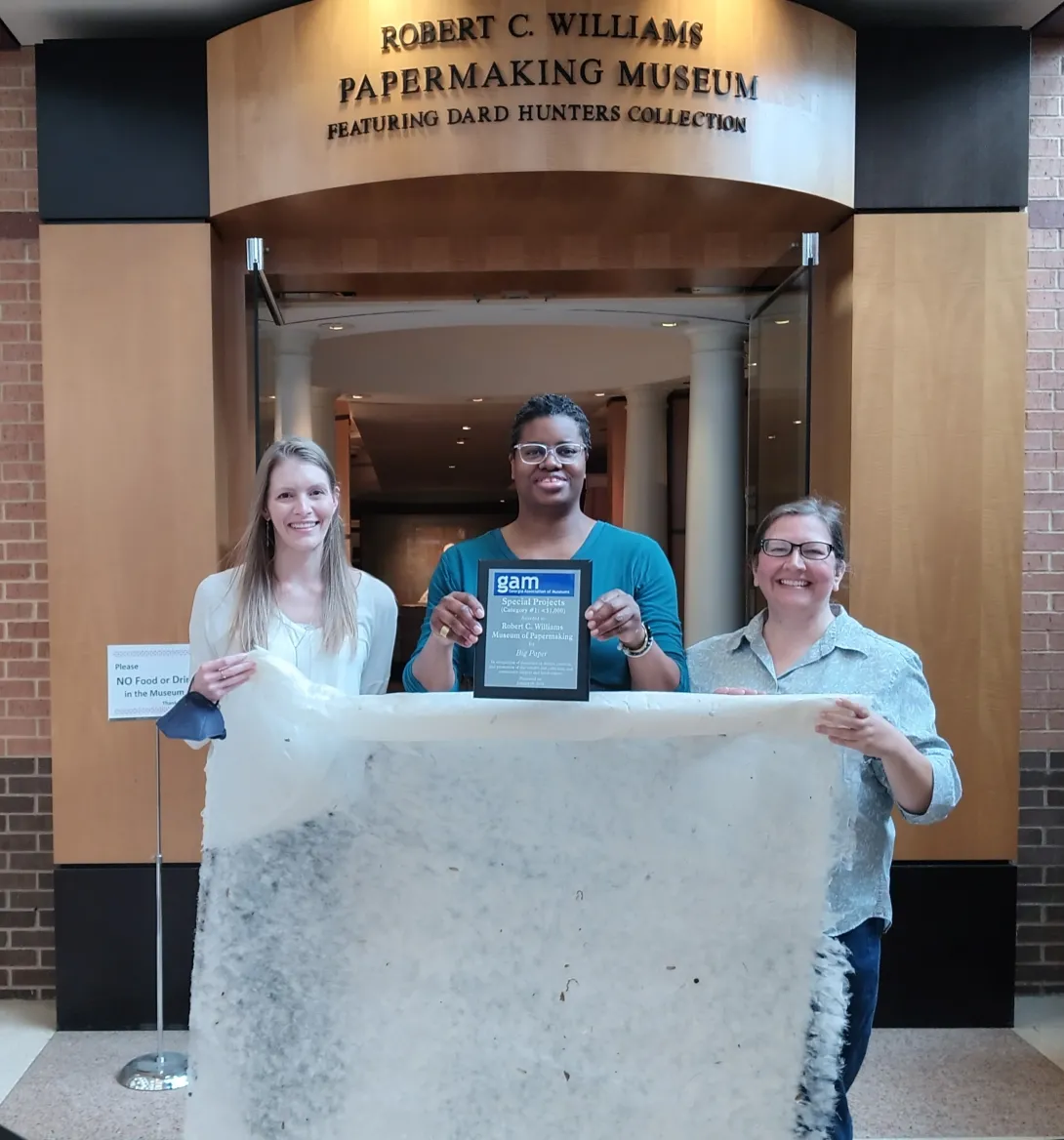
Museum staff Anna Doll, Jerushia Graham, and Virginia Howell pose with a large sheet of paper and an award from the Georgia Association of Museums for the project "Big Paper."
Over 200 museum professionals recently descended upon Athens, Georgia, for the annual meeting of the Georgia Association of Museums (GAM). They arrived from all regions of the state, from Rome to Thomasville to Savannah. The theme of the 2024 conference was “Finding the Right Frequency: Museums and Communities in Harmony.” Attendees participated in a variety of sessions and workshops ranging from developing education programs to designing eye-catching exhibits and visiting with vendors whose products and services target the field. Many Athens-Clarke County museums and cultural institutions opened their doors to attendees for tours and events. The highlight of the week was the annual GAM Awards Luncheon.
This year the Robert C. Williams Museum of Papermaking was presented the Special Project (under $1,000) award by GAM President Marcy Breffle and Award Committee Co-Chairs Melissa Swindell and Karin Dalton for the project “Big Paper.” “We are very pleased to present this award to a very deserving recipient,” said GAM President Breffle. “Our members represent a good cross section of museums and cultural organizations in Georgia’s communities, large and small,” she added. “We are happy to honor institutions, staff members, volunteers, patrons, exhibits, and special projects that have excelled in providing inspiring programs and leadership,” she concluded.
Under the guidance of museum staff Jerushia Graham and Anna Doll, “Big Paper” is a project in which groups from nearby colleges and universities experience making large sheets of paper – 4’ x 6’—in a communal setting. From preparing fiber by hand beating plant material to working together to fill a papermaking mold, students worked together to create something huge! The inaugural event was in April, 2023, and had participants from the University of Georgia, Spelman College, Kennesaw State University, and the Georgia State University Art Club. The event returns in 2024 with noted papermaker Tom Balbo, founding director of the Morgan Conservatory, leading the communal event.
Museum Director Virginia Howell says, “The Paper Museum is honored to receive this award. It is a testament to the hard work of the museum team, and the project has allowed us to build on relationships with so many people who are interested in learning more about the papermaking process and how it can be an incredibly fun yet challenging experience.”
Big Paper returns on April 13, 2024.
News Contact
Virginia Howell
virginia.howell@rbi.gatech.edu
404-894-5726
Dec. 13, 2023
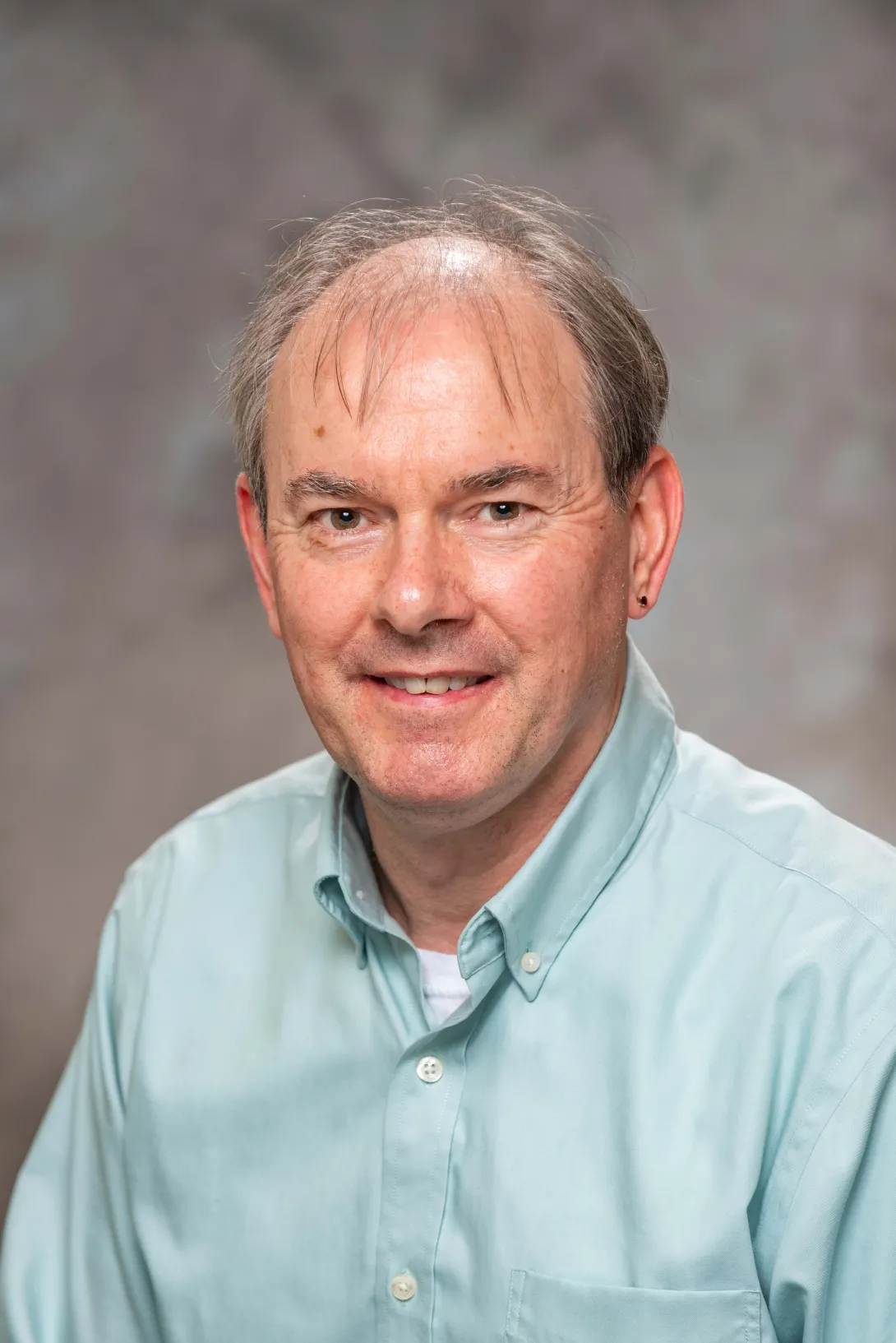
Matthew Realff, professor and David Wang Sr. Fellow in the School of Chemical and Biomolecular Engineering, leads the Circular Carbon Economy Research Initiative in the Strategic Energy Institute and the Next Generation Refineries Research Initiative in the Renewable Bioproducts Institute at Georgia Tech. Realff co-directs the Direct Air Capture Center (DirACC), which coordinates research across the Institute aimed at the removal of carbon dioxide (CO2) from the atmosphere. Realff’s broad research interests are in the areas of process design, simulation, and scheduling. His current research is focused on the design and operation of processes that minimize waste production by recovery of useful products from waste streams, and the design of processes based on biomass inputs. In particular, he is interested in carbon capture processes both from flue gas and dilute capture from air as well as the analysis and design of processes that use biomass.
• What is your field of expertise and at what point in your life did you first become interested in this area?
My background is in chemical engineering with a focus on process design and simulation, which is part of the field of process systems engineering. I have been interested in this general topic since first setting foot on the campus of Imperial College London in 1982, and subsequently pursued it as my Ph.D. topic. I first started thinking about direct air capture of CO2 in 2011 and about circular carbon from CO2 in 2016.
• What questions or challenges sparked your current energy research? What are the big issues facing your research area right now?
I believe that managing CO2 emissions will be the biggest challenge of the next 50 to 100 years. We will need to have negative emissions, as we are emitting too much, and pulling CO2 directly out of the atmosphere will be required because we are going to continue to emit. Creating technological solutions to provide negative emissions is one of the biggest challenges, as they need to be cost-effective and environmentally and socially less damaging than the emissions they capture. The biggest issue facing my research is understanding the phenomena that are involved in direct air capture and translating that understanding into engineered systems that are low-cost, have low environmental impact, and are socially beneficial.
• What interests you the most leading the research initiative on circular carbon economy? Why is your initiative important to the development of Georgia Tech’s energy research strategy?
The circular carbon economy is a systems problem in the broadest sense. This means that we must embrace a multidisciplinary approach to synthesize effective solutions. I want to emphasize the word “effective” here — we must embrace a wide range of measures of performance from energy efficiency to social justice because without improving along many dimensions we will be unlikely to be successful. It is this multidimensional, multidisciplinary research effort that interests me, as I love to find ways to bring people together to synthesize different knowledge into effective solutions. Georgia Tech is a world leader in direct air capture technology — as demonstrated by our new Direct Air Capture Center (DirACC). Our advances in this topic area can provide a base from which to develop approaches to carbon utilization, and other research efforts in electro, bio, and thermo chemical technologies can enable closed pathways using carbon as an energy carrier.
• What are the broader global and social benefits of the research you and your team conduct on circular carbon economy?
One vision for our energy and material systems is to have a much greater local production and consumption of energy using renewable resources. A circular carbon economy based on CO2 from the air; water from local sources including the air; and solar, wind, or biomass-based energy could be local and would have many transactions between local parties. This could serve to not only reduce global emissions but also to provide more opportunities for communities to benefit from the production of energy as opposed to having many transactions that transfer money outside of the community.
• What are your plans for engaging a wider Georgia Tech faculty pool with the broader energy community?
DirACC is one way we hope to connect faculty to the ecosystem of companies that are developing and deploying DAC technology. We hope that the challenges that these companies are articulating can be translated into research topics for the faculty affiliated with the center. The Department of Energy’s efforts to establish the DAC Hubs provides us with other opportunities to engage faculty around social and environmental justice issues associated with deploying energy technologies such as direct air capture. I hope that faculty will see themselves participating in these efforts and reach out to be included in the network of researchers on these topics.
• What are your hobbies?
My main hobby is playing a card game called Magic: The Gathering. I have played this since 1994 and have enjoyed many friendships formed as a dueling wizard. I also enjoy reading, particularly science fiction and steampunk literature, as well as history.
• Who has influenced you the most?
Professor Roger Sargent at Imperial College was one of the founders of the field of process systems engineering. His speech on elevation to the position of professor at Imperial in 1963 has had a profound impact on the direction of my research and educational activities.
News Contact
Priya Devarajan || Research Communications Program Manager SEI || RBI
Nov. 27, 2023
The Renewable Bioproducts Institute (RBI) at Georgia Tech benefits from a substantial endowment that is invested to advance the evolving science and technology needs of the bioproducts industry and emerging bioeconomy through graduate research. The endowment over the years has supported more than 1,500 engineers and scientists and a leading body of scientific research. RBI has released the Request For Proposals (RFP) for the annual year 2024-25 fellowships. Proposals are due on Feb. 1, 2024. The RFP document describing the application process and several important changes for this year can be found at 2024-25 RFP Proposals.
The principal mission of RBI is to incubate and develop interdisciplinary teams of researchers that can establish thought leadership through new bioproduct research directions. Our focus is on pre-competitive, use-inspired research with a technical, economic, or policy focus. All supported work needs to address an aspect of bioproducts and the developing bioeconomy. The RBI Fellowship supports this mission by promoting two objectives:
(1) Helping teams of faculty to establish new concepts, publish early results, and develop competitive federal, industry, or foundation proposals in the future.
(2) Training a diverse group of graduate-level professionals who can support the evolving bioproducts R&D workforce.
***NEW PROGRAM CHANGES***
- Along with Graduate Research Assistant (GRA) stipend and tuition support, RBI will provide $1,000 of materials and supplies funding or a $1,000 credit toward the use of RBI’s analytical facilities.
- The fellowship was formerly called the PSE (Paper Science and Engineering Fellowship). It has been renamed as the RBI Fellowship.
- The fellowship minor requirement has been changed from 12 hours to nine hours. The minor will consist of two core courses and one elective, described here. For students outside of the College of Sciences or College of Engineering, an alternative set of courses can be considered.
- Awards can support GRAs from any school within Georgia Tech and can be advised by teams consisting of faculty from any Georgia Tech school, although the relevance of the disciplines included must be clear.
News Contact
Priya Devarajan || RBI Communications Program Manager
Nov. 09, 2023
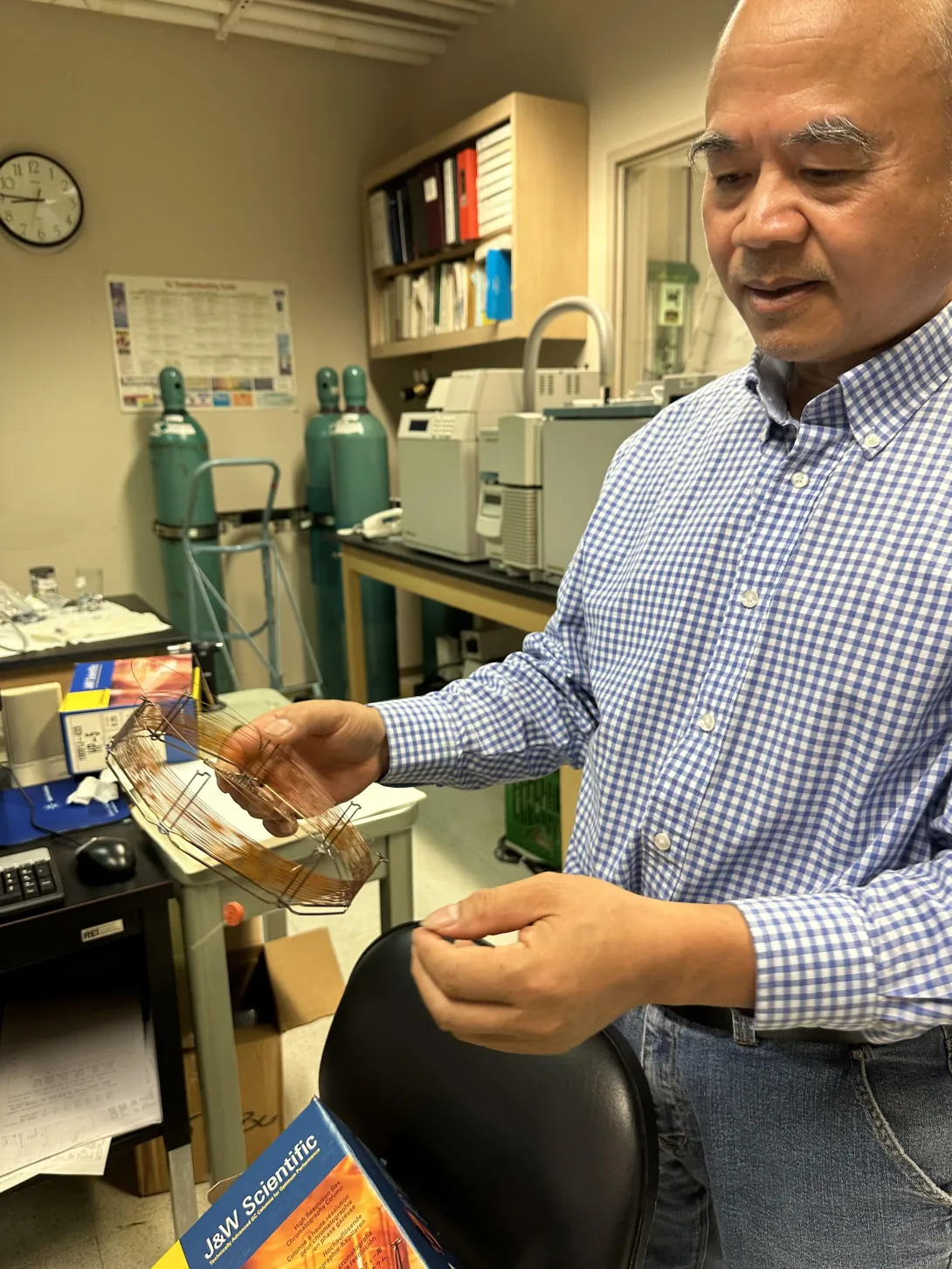
Rallming Yang, Senior Research Scientist and head of the Chemical Analysis Lab explains how FTIR Spectrometer works at the RBI Chemical Analysis Lab
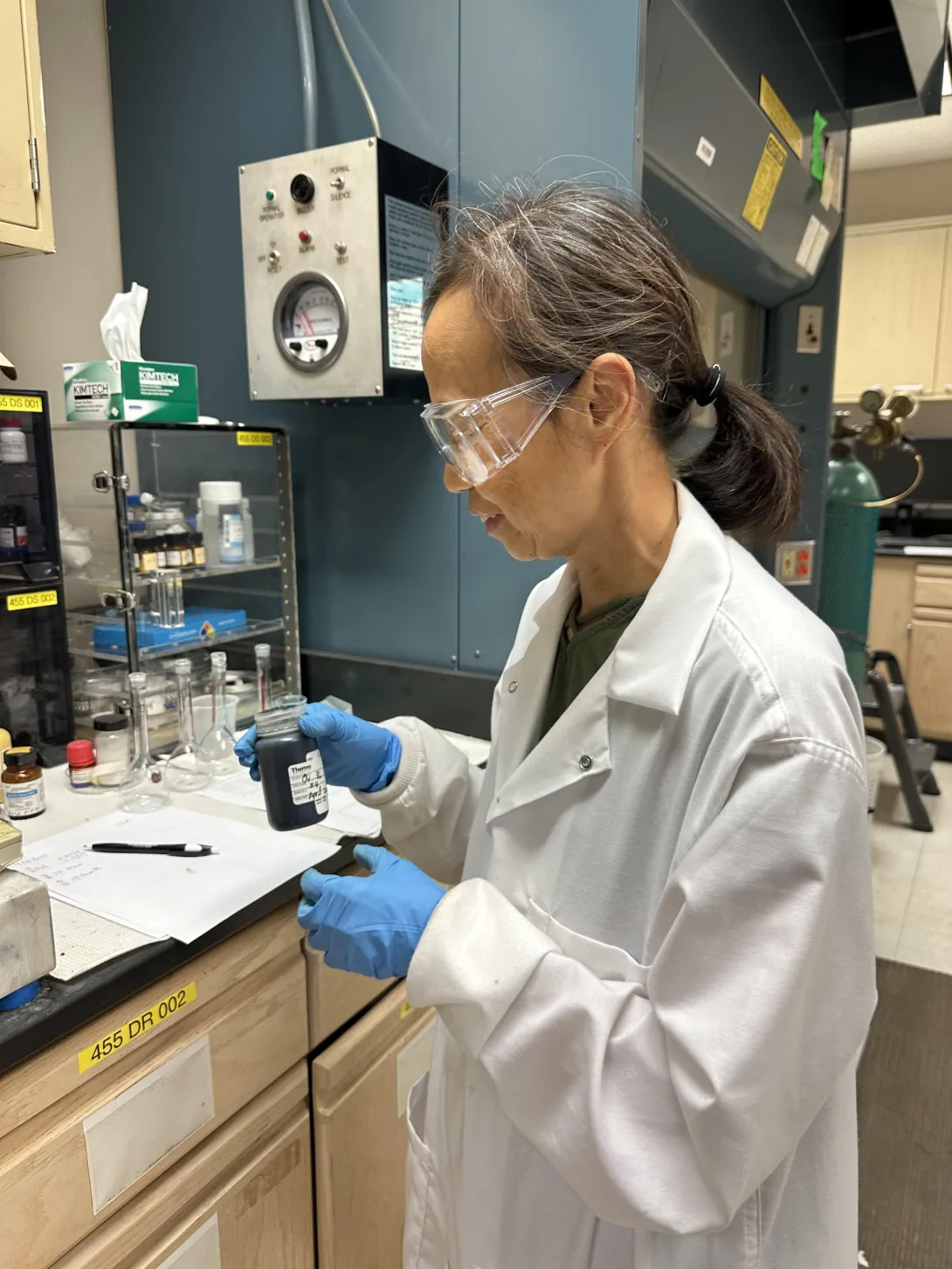
Xiaoyan Zeng, Research Scientist at RBI preparing black liquor for identifying anions
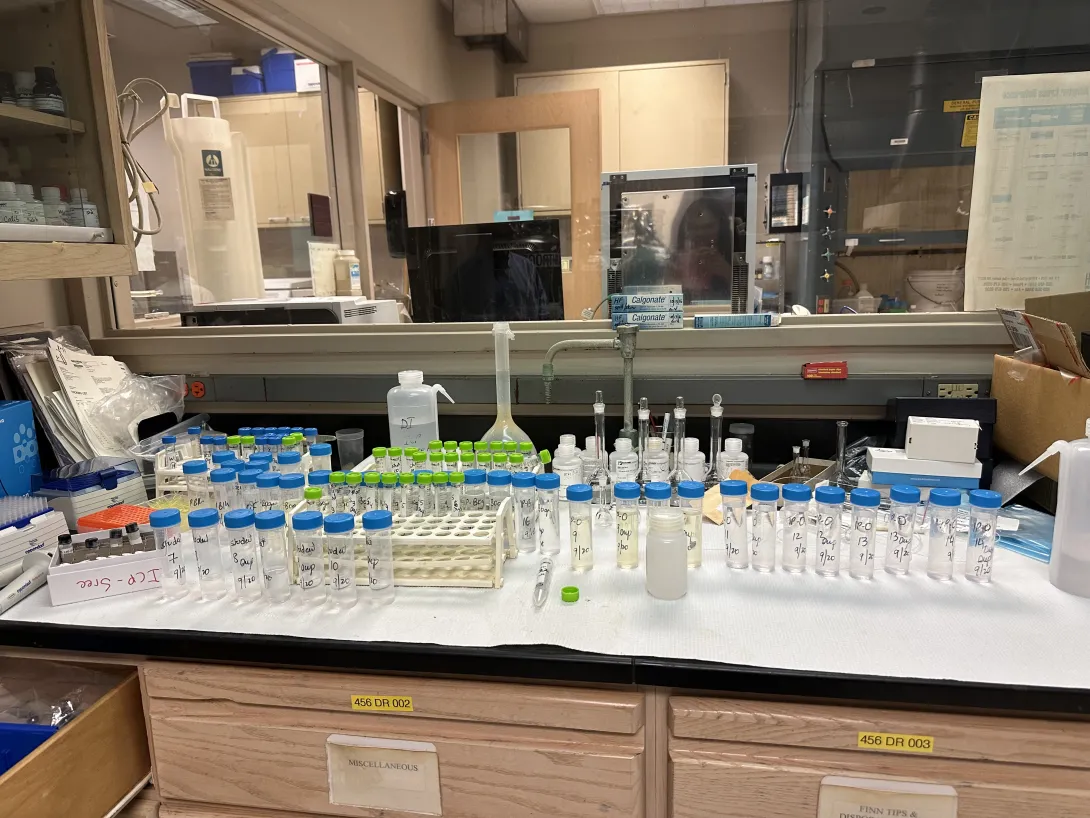
Diluted black liquor ready for testing
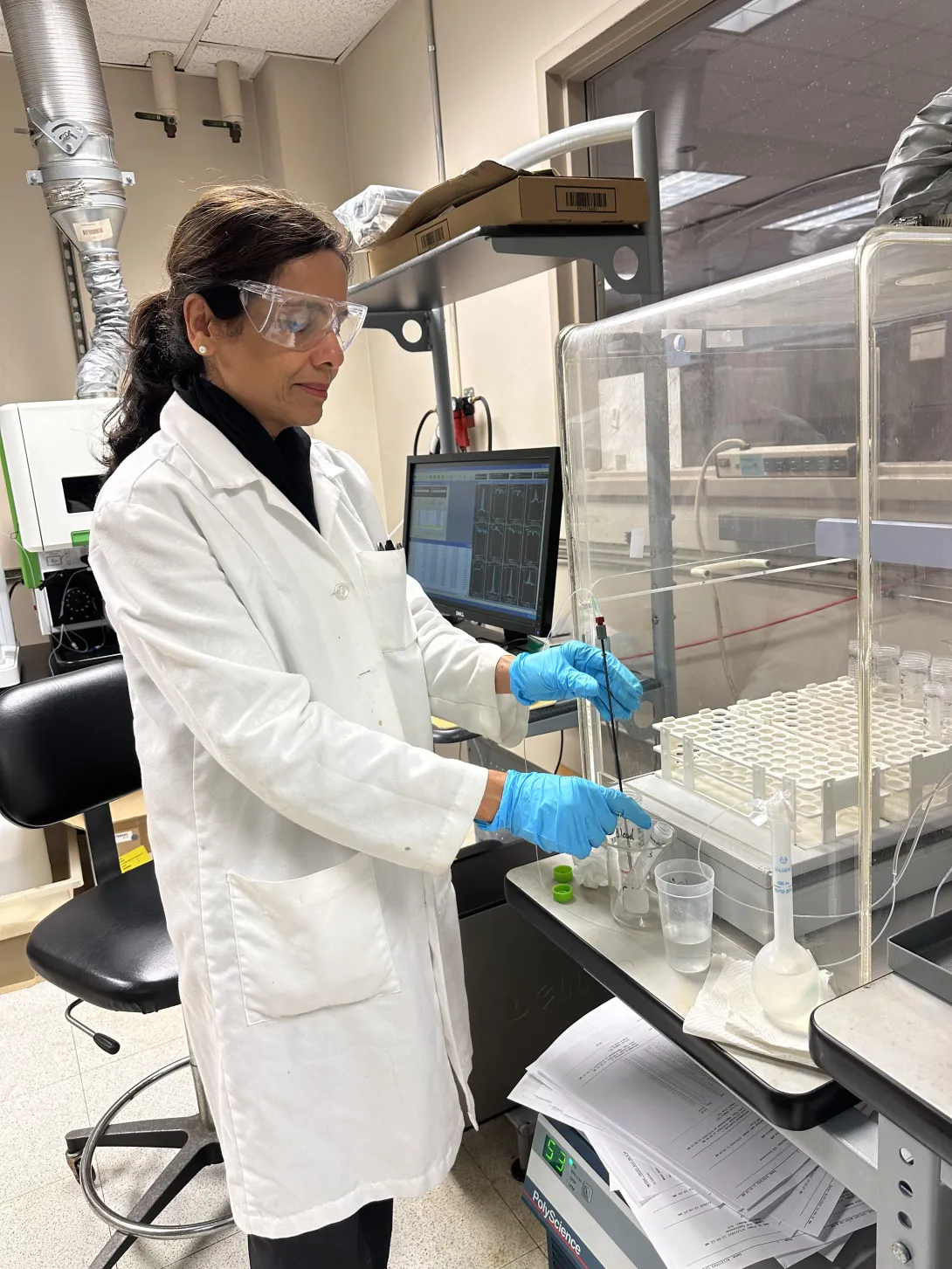
Tabassum Shah, Research Coordinator at RBI, testing black liquor using ICP Emission Spectrometer
Providing research testing services to both internal and external stakeholders is an integral function of the Renewable Bioproducts Institute (RBI). These services include chemical analysis; corrosion; paper, board and box testing; pulp analysis; and pulp recovery analysis. Established over 25 years ago, RBI’s testing services are well-known in the industry for their quality and customer service. RBI is one of the ten interdisciplinary research institutes at Georgia Tech that champions innovation in converting biomass into value-added products, developing advanced chemical and bio-based refining technologies, and advancing excellence in manufacturing processes.
The RBI research testing services is a team of professional scientists and engineers who work together to provide information and offer solutions required by a manufacturers and users of biomass products, as well as Georgia Tech faculty and students engaged in research on campus. The multidisciplinary capabilities of the team make them uniquely qualified to address customers' technical needs in the areas of process and product development, and quality control. Where appropriate, the team involves RBI faculty and other staff experts to arrive at the best possible solution for their customers and users.
In this article, we will focus on a day’s work with the chemical analysis team.Headed by Rallming Yang, senior research scientist in RBI, the team is equipped to follow the Technical Association of the Paper and Pulp industry (TAPPI) standard of testing, which only a small number of labs in the country can do, and has also developed some of its own internal protocols. Yang leads two specific characterization programs within RBI: (1) the pulping and bleaching analysis, paper recycling, and recovery lab, and (2) the chemical analysis lab.
The chemical analysis team is busy year-round with research projects and testing services. In addition, during the Spring semester, the team also provides support to a paper science laboratory course for undergraduate and graduate students. In the recent times, chemical analysis of black liquor from pulp mills has kept the team busy with more than 30 projects completed by the team over three months for various industry customers. Currently, black liquor analysis continues to account for over 50% of the workload of the lab.
Black liquor (BL) is a byproduct of a wood pulping and is released when cellulose fibers are separated from wood chips. BL contains lignin, which is used as a biofuel within the mill, and several other chemicals that are recovered and reused. In most pulp mills, nearly 50-70% of BL is converted into a convenient source of fuel or energy. Due to the important role played by black liquor in a paper mill, it needs to be tested regularly to ensure consistency in composition. The RBI chemical analysis lab gets BL samples from a pulp mill, who contact the lab by email to get their testing request into the queue. The process involved in the testing is very intense and has multiple steps that need to be carefully administered.
In the first step, inorganic elements in BL are identified by digesting it in a precise mixture of acids and filtering the mixture. The filtrate is introduced into an Inductively Coupled Plasma (ICP) Emission Spectrometer that can identify more than 70 different inorganic elements and compounds like sulfur, potassium, sodium, iron, calcium, etc. The next step involves identifying the proportion of anions like sulfate, chloride, thiosulfate. In this step, BL is diluted to a specific level and analyzed using a method called Capillary Ion Electrophoresis (CIE).
The next step involves analyzing BL for organic substances using two methods – gas chromatography mass spectrometry (GC/MS) and Fourier Transform Infrared Spectrometry (FTIR). For organic substances with a lower molecular weight of less than 600 Daltons (Da), GC/MS is employed where the gas chromatography separates the chemical mixture, and the mass spectrometry identifies each of the components.
The final step is to identify organic substances and polymers with higher molecular weights. For example, lignin is one of the main polymers in BL with a molecular weight higher than 600 Da. FTIR is used for testing during this step. Based on vibrations within each molecule, an FTIR spectrum allows identification of molecular groups within lignin. The equipment then uses a computer to identify the substances by comparing the sample spectrum with a built-in library. The RBI team provides detailed lab reports that is used by the pulp mill to adjust their operating parameters for trouble-free operations.
In addition to the chemical analysis of byproducts like black liquor and other chemical compounds, Rallming Yang’s team also conducts studies on pulping and bleaching, repulping, and fiber characterizations.
News Contact
Priya Devarajan || Research Communications Program Manager, RBI
May. 26, 2023
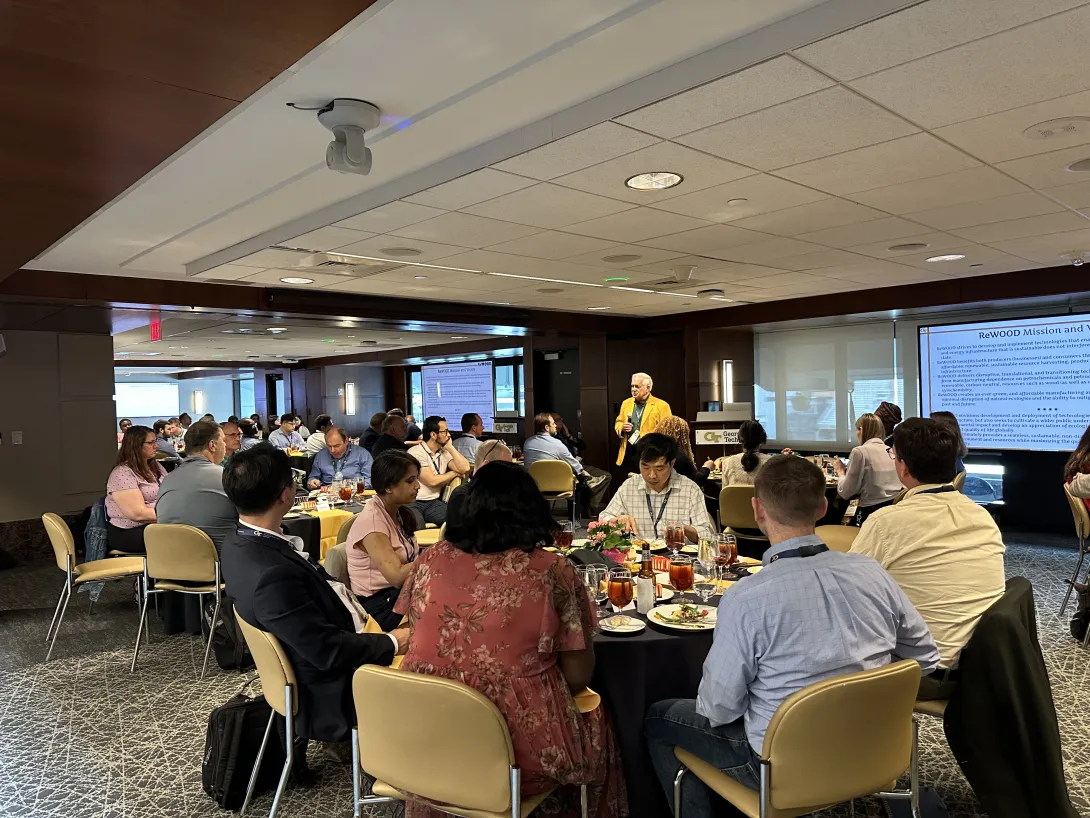
Keynote Presentation during the Spring2023 RBI Workshop on Packaging Innovation and the Circular Economy
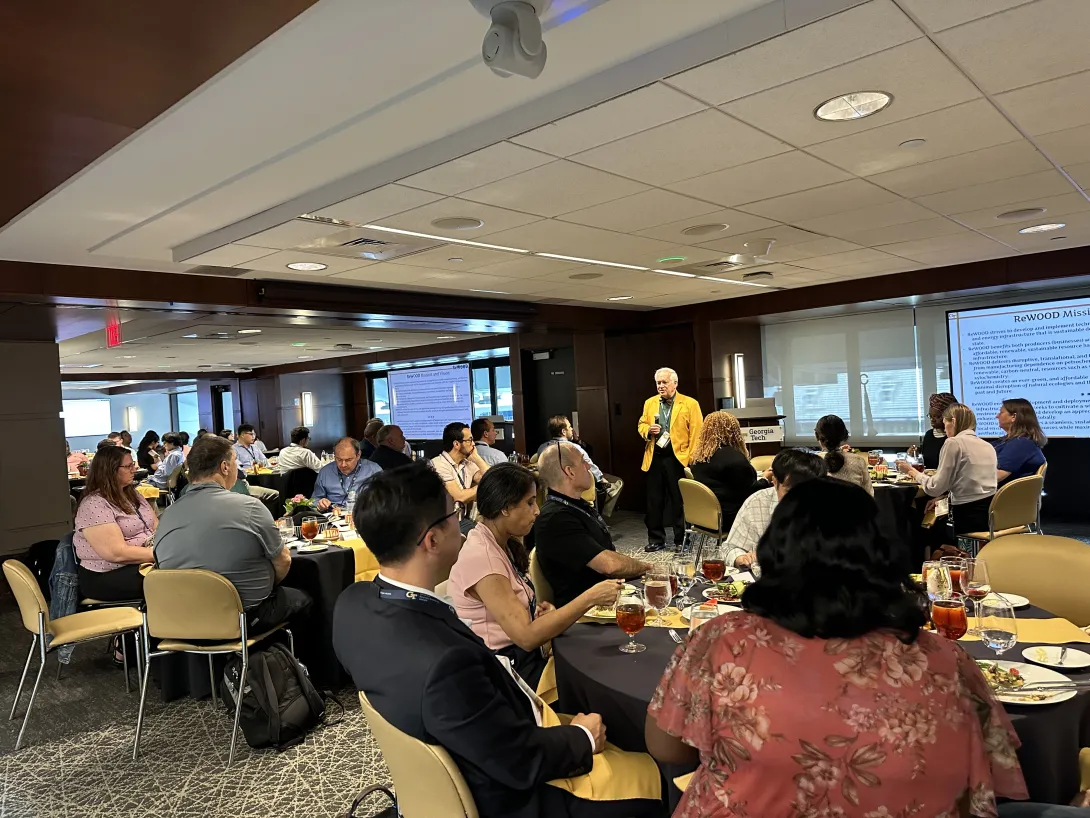
On Thursday, May 11, the Renewable Bioproducts Institute (RBI) of Georgia Tech hosted a workshop on “Packaging Innovation and the Circular Economy” at the Bill Moore Student Success Center on the Georgia Tech campus. More than 90 attendees from academia, national labs, and industry convened and discussed the cutting-edge research and industry developments happening across the world and got an opportunity to network with leading researchers and peers. This unique workshop featured speakers from the USDA Forest Products Laboratory, WestRock, Stora Enso, Georgia Tech, University of Maine, and many others.
The workshop started off with an introduction by Carson Meredith, executive director of RBI, who gave a perspective on the institute’s goals in promoting bioeconomy technology and innovation. Dr. Meredith emphasized RBI’s role in “catalyzing a community of researchers who focus on solving challenges in packaging by investing in team building across interdisciplinary boundaries.”
Research talks began with a presentation from Tequila Harris, professor in the George W. Woodruff School of Mechanical Engineering. Harris shared her team’s research on a continuous coating process of cellulose- and chitin-derived materials to create enhanced packaging barrier films. Meisha Shofner, associate professor and Faculty Fellow in the School of Material Science and Engineering shared her work on mechanical and thermal properties of single use packaging materials and paths to improving circularity.
Carson Meredith, professor in the School of Chemical & Biomolecular Engineering and executive director of RBI informed on renewable barriers from carbohydrates as viable alternatives to plastics and the research methods involved to get more promising results for circular functional barrier packaging materials. Joe Bozeman, assistant professor in the School of Civil and Environmental Engineering at Georgia Tech presented the Systemic Equity framework as it relates to circularity.
Mehdi Tajvidi, professor from the University of Maine, discussed his team’s research to produce particle board and other packaging materials using nanocellulose and the audience got an opportunity to look and get a feel for his research team’s samples.
Discussions from industry experts included material innovations to replace plastics, packaging requirements in the European Union and the United States and how brands drive innovation more than regulations, methods to optimize package size and packing speed for sustainability, paper-based packaging equipment and systems to replace plastics including plastic water bottles, dye choices and the influence of defect detection in waterborne barrier coated papers, and innovations in fiber-based cold chain packaging.
Ken Zwick from the U.S. Forest Products Laboratory discussed managing forests using methods like forest thinning such that the biomass prevents wildfires and what success looks like for his team – less plastic in packaging and less burning of wood. Their Madison building also houses the largest wood library in Wisconsin.
Participants had a chance to interact with Georgia Tech students and get to know their research at the student poster presentation. The dinner keynote was presented by researchers Bo Arduengo and Stefan France from the School of Chemistry and Biochemistry at Georgia Tech. The keynote provided an overview of RBI’s newly created ReWOOD research center. Abbreviated from “Renewables-based Economy from WOOD,” research at the center focuses on using sustainable plant-based raw materials to develop industrial products ranging from jet fuel to solvents to generic pharmaceutical additives and more. The presentation provided a glimpse on the expansion of ReWOOD since its launch through research affiliations from universities across the world. ReWOOD’s partnership list continues to grow as the center focuses on targeted research areas and funding proposals to develop technology and commercial opportunities.
“The workshop turned out to be a huge success with a highly engaged audience of faculty, students, national lab, and industry experts,“ said Carson Meredith, executive director of the Renewable Bioproducts Institute. “RBI will continue to host such events as we are committed to providing thought leadership and be a catalyst of cutting-edge research in the areas of circular materials; bioindustrial manufacturing; and paper, packaging, and tissue.”
News Contact
Priya Devarajan || RBI Communications Manager
May. 03, 2023
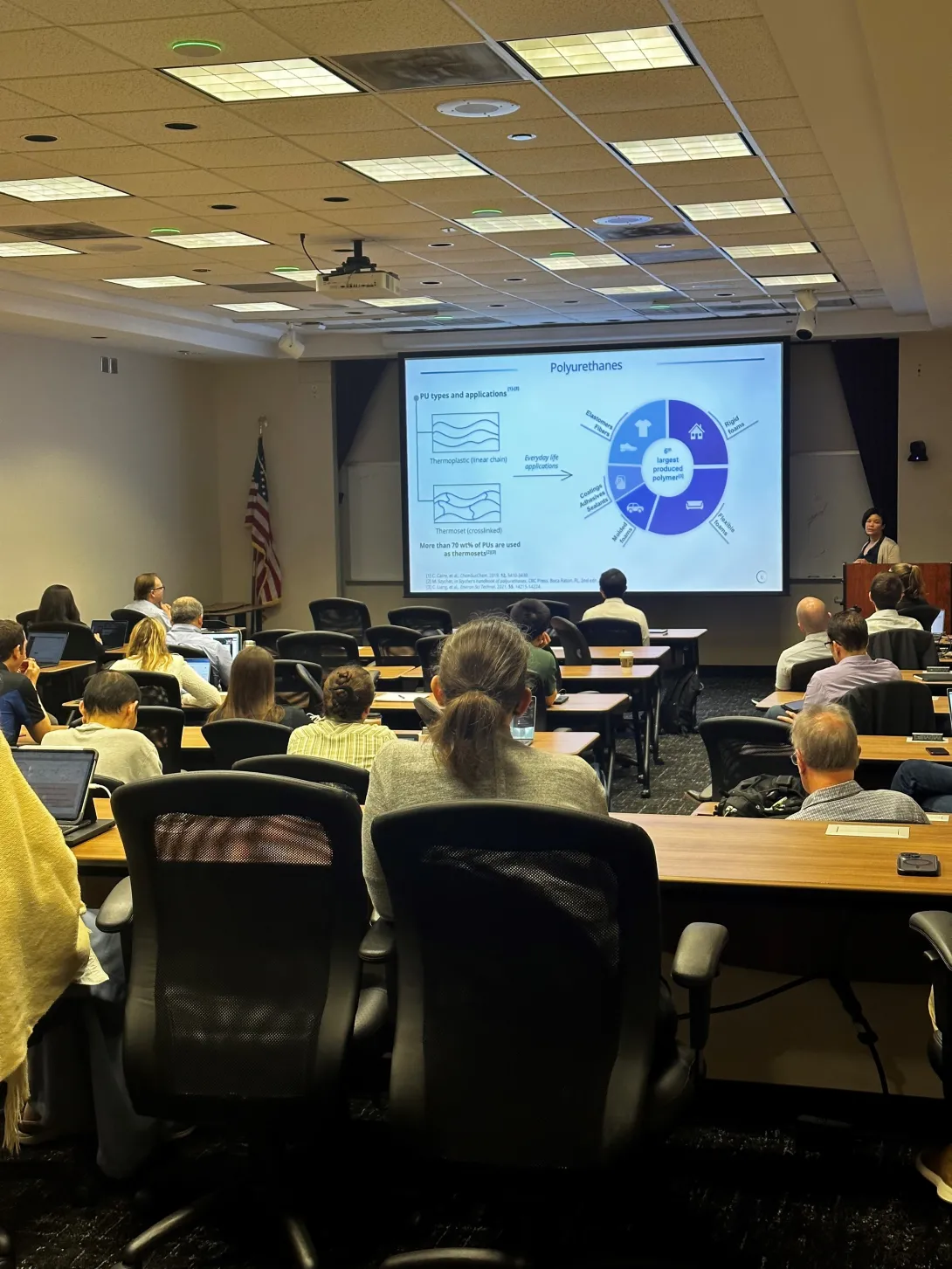
In early April, the Renewable Bioproducts Institute (RBI) along with the Student Polymer Network (SPN) hosted the ninth annual research symposium titled “The Visions for Sustainable Polymers.” The symposium also included SPN's annual poster session at the Molecular Science and Engineering Atrium.
Sustainable polymers are an important component of RBI's Circular Materials research theme. The workshop was planned by Blair Brettmann, assistant professor in the School of Chemical and Biomolecular Engineering, Natalie Stingelin, professor in the School of Chemical and Biomolecular Engineering, Will Gutekunst, associate professor in the School of Chemistry and Biochemistry and Carson Meredith, executive director of Renewable Bioproducts Institute and professor and James Harris Faculty Fellow in the School of Chemical and Biomolecular Engineering and was funded through a Moving Teams Forward seed grant from the EVPR office. The purpose of this seed grant is to develop a community of researchers on campus who focus on the development of new, more sustainable types of plastics and new ways to recycle or upcycle them at the end of life.
The workshop was the culminating event in the Moving Teams Forward seed grant program and involved invited speakers from inside and outside Georgia Tech. Industrial speakers and attendees (Dow, BASF), National Labs (NIST), and faculty from universities across the country participated in the symposium. The speakers represented key thought leaders to connect with and build stronger teams for advancing this field.
News Contact
Priya Devarajan | RBI Communications Manager
May. 02, 2023
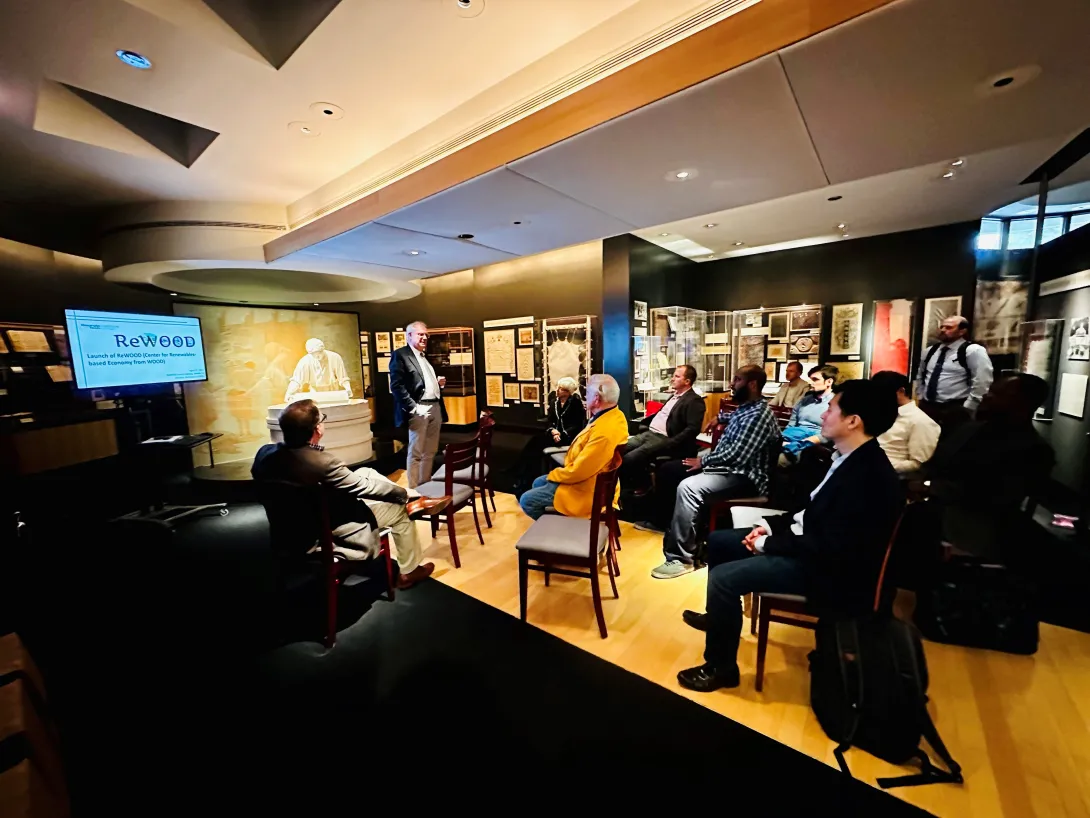
ReWOOD launch at the Renewable Bioproducts Institute on April 27, 2023
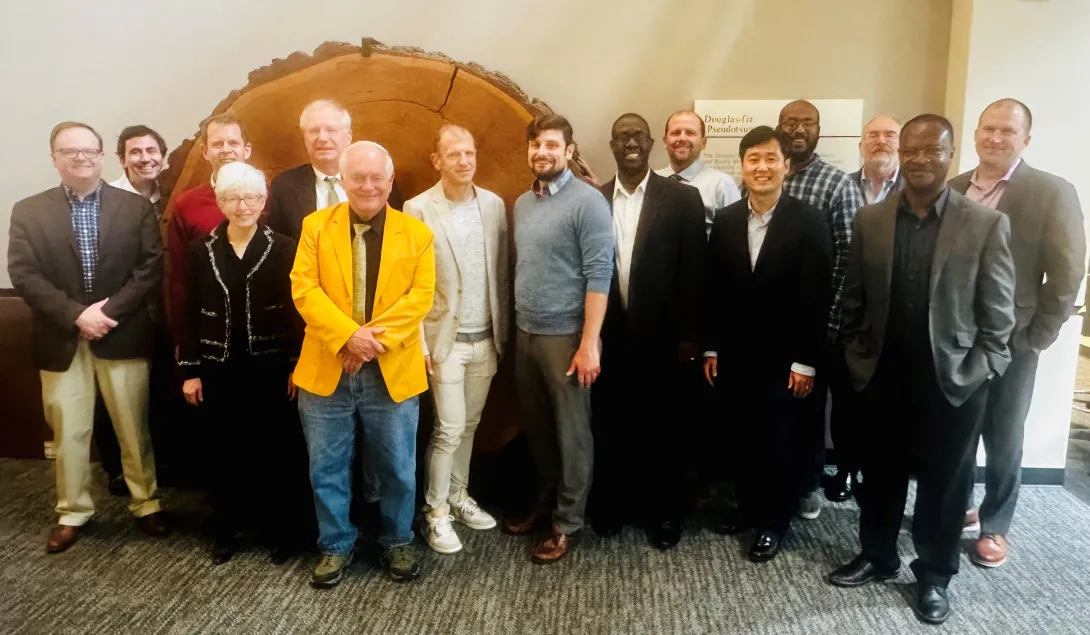
Team of ReWOOD research collaborators on the day of launch
Georgia Tech Launches Wood-Based Renewables Research Center
The Renewable Bioproducts Institute (RBI) at the Georgia Institute of Technology has launched a new science and technology research center called ReWOOD. The ReWOOD launch included a 2-day workshop involving faculty research partners from universities across the Southeast, as well as former Georgia Agriculture Commissioner Gary Black.
ReWOOD, abbreviated from “Renewables-based Economy from WOOD” will focus on a burgeoning field of science called Xylochemistry. Xylochemistry makes use of sustainable plant-based raw materials to develop industrial products ranging from jet fuel to industrial solvents to generic pharmaceutical additives and more. Right now, most of the world production of such materials comes from non-renewable fossil resources or petroleum products. Moving to a renewable source will not only aid in reducing the dependence on fossil fuels but will also help with reducing the overall carbon footprint. ReWOOD is sponsored by RBI through its endowment-funded fellowships and is developing a corporate affiliate program.
“The formation of this internal research center will drive regional momentum for producing carbon neutral chemicals and fuels from wood wastes deriving from the abundant and fast-growing wood in the Southeast,” said Carson Meredith, executive director of RBI. “In fact, the Southeast has a larger percentage of sustainably grown working forests than any other area in the U.S., and Georgia is the number one exporter of forest products in the nation.”
Research on chemical renewables via Xylochemistry has been ongoing at Georgia Tech under a consortium called GT-STANCE (Science & Technology for a Neutral Chemical Economy). GT-STANCE’s researchers have developed seed technologies that aid in the production of wood-based chemical intermediates with potential uses in consumer commodities like pharmaceuticals and plastics. In addition, RBI has made a significant investment of nearly $3 million in building research teams in the related area of lignin conversion in the last five years. The formation of a research center that will coalesce regional thought leadership is the logical next step, as a renewables-based economy has become a national priority with the bioeconomy, climate, and clean energy goals set by the Inflation Reduction Act and the Bipartisan Infrastructure Law.
Raw materials for Xylochemistry could also be sourced from any kind of non-treated wood. For example, wood from demolished construction sites like old homes and wooden buildings provide an excellent opportunity for a circular economy, since this wooden construction waste ends up in landfills now.
Currently ReWOOD has 11 university affiliates that are joining Georgia Tech. In January 2023, faculty from Georgia Tech, the University of Alabama at Tuscaloosa, and Alabama A&M University convened to discuss the plans for a research center on a renewables-based economy from wood to develop renewable biofuels, industrial solvents, pharmaceutical additives, and many other products that culminated in the formation of ReWOOD. Since then, the center has gained the interest of multiple other researchers from the University of Florida, Kennesaw State University, and Clark Atlanta University. In addition, the Mississippi State and Forestry Office and Sandia National Laboratory have become key collaborators within ReWOOD. This collection of expertise includes chemists, engineers, economists, and forest experts, covering a broad range of activities that will include technology, economic, and workforce development, as well as lifecycle and socio-economic analysis. This partnership list will continue to evolve and grow as ReWOOD focuses on specific target research areas and proposals for funding to develop technology and processes in the business sector.
About the Renewable Bioproducts Institute at Georgia Tech
Georgia Tech’s Renewable Bioproducts Institute is one of ten campus interdisciplinary research institutes. RBI champions innovation in converting biomass into value-added products, developing advanced chemical and bio-based refining technologies, and advancing excellence in manufacturing processes. Our three strategic thrusts are circular materials, bio industrial manufacturing, and paper, packaging, and tissue.
RBI serves as a campus conduit for industry-university partnerships and provides a portal to Georgia Tech core laboratories, faculty and students whose work and expertise is focused on biomass and bioproducts.
News Contact
Priya Devarajan | RBI Communications Program Manager
Aug. 31, 2022
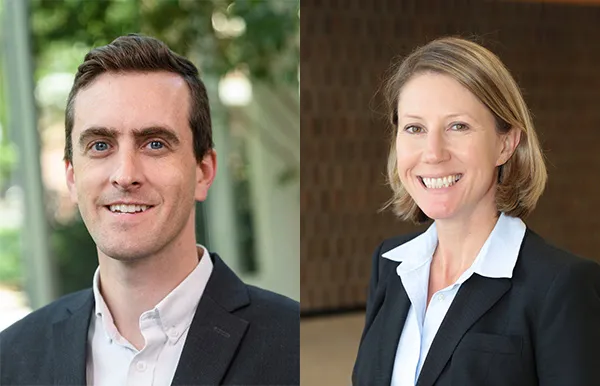
Georgia Tech’s School of Chemical and Biomolecular Engineering has been renewed by the U.S. Department of Energy (DOE) for a third round of funding ($13.2 million over four years) for its Energy Frontier Research Center (EFRC) to study materials used in clean energy technologies.
This multi-institution EFRC, known as the Center for Understanding & Controlling Accelerated and Gradual Evolution of Materials for Energy (UNCAGE-ME), has advanced understanding of how acid gases interact with energy-related materials since its inception in 2014. The Center, with Georgia Tech as the lead participating institution, was first renewed for four years of funding in 2018.
“The selection for a third phase of funding is unusual, and speaks to the impact of the research already reported by the center in its first two phases,” said Christopher Jones, the John F. Brock III School Chair in Chemical & Biomolecular Engineering. “I believe this is attributable to the strong leadership provided by our current and former directors, Ryan Lively and Krista Walton. An additional constant throughout all three phases of the center has been strong collaboration between Georgia Tech, Oak Ridge National Laboratory, Lehigh University, and the University of Alabama.”
In the next four-year phase, UNCAGE-ME will leverage capabilities developed over the last eight years to address basic science questions associated with the evolution of materials to be used in clean energy technologies, including systems designed to capture and convert CO2 from the air into useful chemicals.
“Two of the most basic commodity chemicals in the clean energy economy will be H2 and CO2. A special emphasis has been given to these two molecules with DOE’s Energy Earthshots that were announced in November 2021 – the Hydrogen Shot and the Carbon Negative Shot” said Ryan Lively, a professor in Georgia Tech’s School of Chemical and Biomolecular Engineering and the director of UNCAGE-ME.
“These are all-hands-on-deck calls for innovations in technologies and approaches that will reduce the cost of clean hydrogen by 80% to $1 per 1 kg in one decade and remove CO2 from the atmosphere and durably store it at meaningful scales for less than $100/net metric ton of CO2-equivalent,” said Krista Walton, professor in ChBE as well as the inaugural director of UNCAGE-ME. Walton is also a faculty member in the Renewable Bioproducts Institute at Georgia Tech.
To help reach these goals, UNCAGE-ME will employ an interdisciplinary, matrixed research structure that combines novel materials synthesis, in situ characterization techniques, molecular modeling, and data science approaches to achieve an unprecedented level of design, prediction, and control over (electro)catalysts, sorbents, and membranes.
From 2014 to 2022, the UNCAGE-ME’s research accomplishments (appearing in more than 200 publications) provided detailed descriptions of the impact of acid gas exposure on metal-oxides, metal-organic frameworks, carbons, supported amines, porous organic cages, and other materials. This fundamental knowledge base directly supports the mission of the DOE’s Basic Energy Sciences program to provide the foundational science to guide the development of new energy technologies under realistic process environments.
“The College of Engineering is proud to continue leading this important initiative for an additional four years,” said Raheem Beyah, dean of the College of Engineering and Southern Company Chair. “This second renewal from DOE is a testament to Krista and Ryan’s leadership, as well as the vision and innovation of a science team comprised of Georgia Tech researchers and our collaborators around the nation.”
In addition to Georgia Tech, the partner institutions for UNCAGE-ME include Oak Ridge National Laboratory, the University of Alabama, University of Florida, University of California Riverside, Lehigh University, Sandia National Laboratory, and the University of Michigan.
Julia Kubanek, professor and vice president for interdisciplinary research at Georgia tech, said it takes partnership across the Institute to support faculty in developing complex centers such as UNCAGE-ME.
“Research centers like this one benefit from collaborations among faculty experts and grants administrator staff in our schools and colleges, contracting officials in Research Administration, plus two other sets of critical partners: the Office of Research Development, which supports complex proposal preparation, and the interdisciplinary research institutes IRIs,” Kubanek said.
“The IRIs gather information from our Office of Federal Relations and host workshops to help faculty prepare and form teams. In this case, the Strategic Energy Institute, Institute for Materials, and Renewable Bioproducts Institute were all involved in ensuring that faculty had advance notice of this competition and could make the most of expert advice,” she said.
News Contact
Aug. 08, 2022
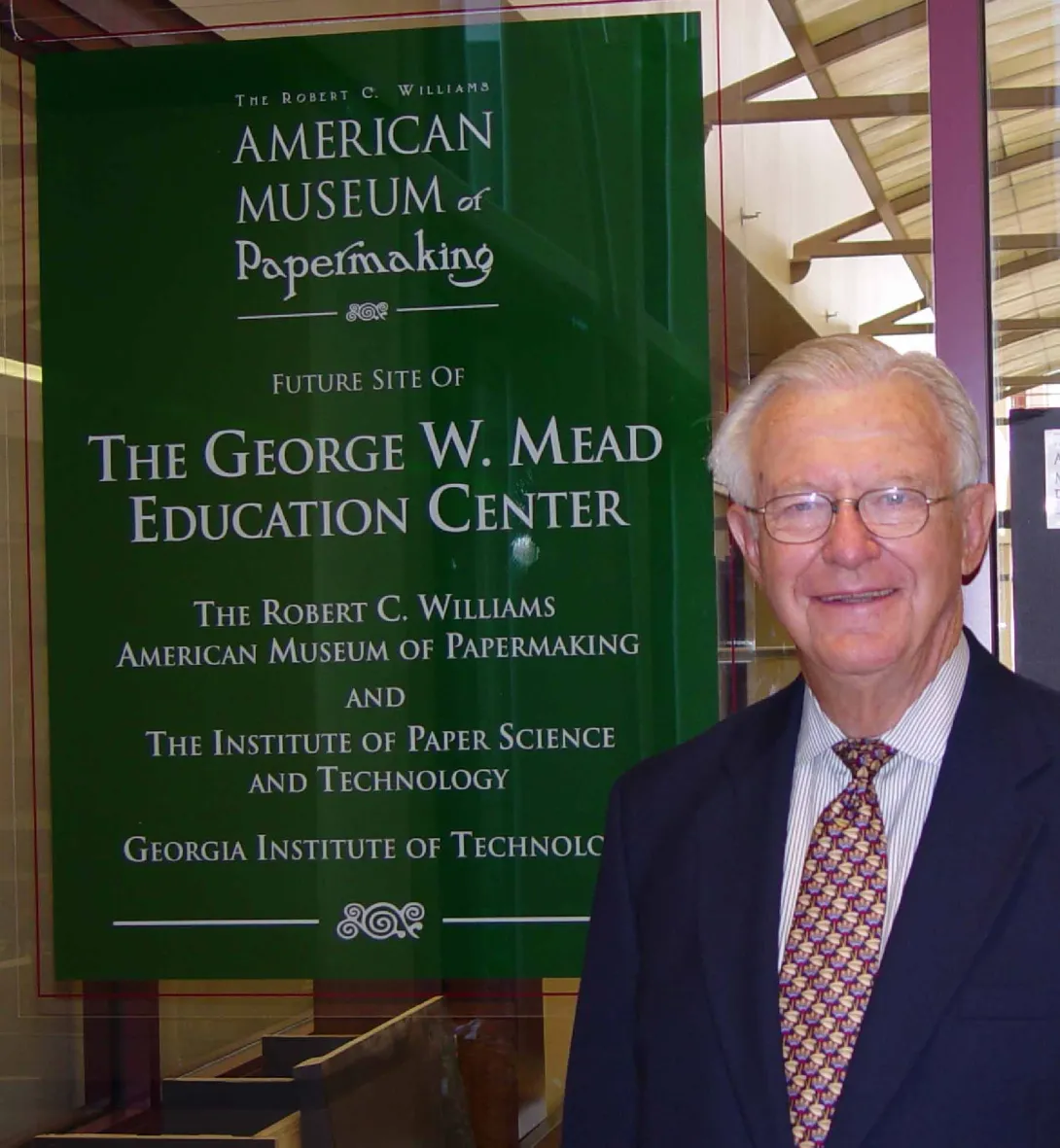

George W. Mead II passed away on July 29, 2022, at the age of 94. He was a long-time supporter of the Robert C. Williams Museum of Papermaking and the Institute of Paper Chemistry (now the Renewable Bioproducts Institute). He graduated from the Institute of Paper Chemistry in 1952, and supported the Institute as a board member and advocate for the paper industry. Through the Mead Witter Foundation, led by George Mead, the Paper Museum was able to establish classroom space in the early 2000s for hands-on experiences, and the George Mead Education Center, which serves as additional exhibition space focused on the industrialization of paper. This support enabled the museum to provide more in-depth experiences for school groups, and develop more intensive programs.
In an interview for the 75th Anniversary of the Institute, Mead said, “I’ve enjoyed my relationship with the Institute tremendously. I’m proud of it and I hope to see it continue to thrive in its own way. It’s been a huge contributor to the industry and a huge contributor to my own success and, as such, I feel obligated to continue my support.” He went on to say, “Our industry was pretty technologically inept when the Institute was first formed. While I don’t think the Institute or its graduates can take the credit for having created the technolical upsurge that has taken place since 1928 or so, the fact is that it couldn’t have taken place without the Institute graduates out there to implement it, to help put it into place. The Institute’s influence on the industry is probably as great as any institution could have possibly had.” He served as Board Chair of the Institute in 1989 – 1990, when the Institute moved to Atlanta from Appleton, Wisconsin. Mead received an honorary doctorate from the Institute of Paper Science and Technology in 2004.
Mead was born October 11, 1927 in Milwaukee, Wisconsin. His great-grandfather, J. D. Witter was a cofounder of Consolidated Water Power and Paper Co. His grandfather, George W. Mead I, and father, Stanton Mead, both served as president of the company. In 1966, George Mead II became president of the company. Mead was named Man of the Year in 1986 by the Paper Industry Management Association, and in 1998 he was inducted into the Papermakers International Hall of Fame. He served as the director of the American Forest and Paper Association, director and chairman for the National Council for Air and Stream Improvement, and was a director of the Technical Association of the Pulp and Paper Industry.
Mead’s philanthropy included the Mead Witter Foundation, which has given over $100 million in support of education, environmental causes, civic organizations, and local scholarships. He also supported the Mead Wildlife Area, a 33,000 acre preserve in Wisconsin. He was active in his community, from the library to the hospital association to the Rotary Club.
Mead is survived by his wife, Susan Feith, three children, two stepchildren, four grandchildren, four step-grandchildren, and four great-grandchildren.
The Robert C. Williams Museum of Papermaking extends condolences to the family and to his community on his passing.
News Contact
Virginia Howell
404-894-5726
virginia.howell@rbi.gatech.edu
Aug. 05, 2022
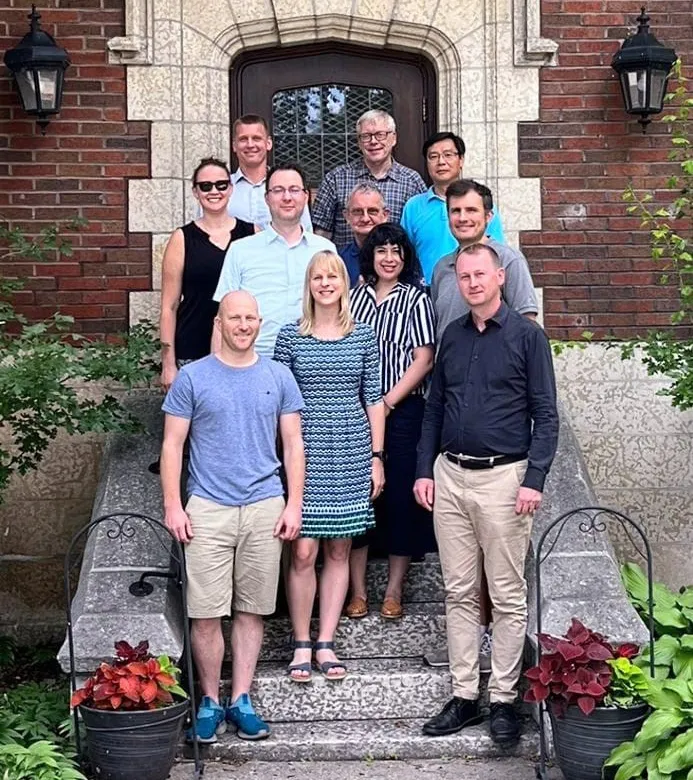
Blair Brettmann, faculty member of the Renewable Bioproducts Institute (pictured left in sunglasses), participated in the IUPAC (International Union of Pure and Applied Chemistry) Subcommittee on Polymer Terminology sessions in Winnipeg, Canada.
She is part of international teams working to define terminology and plan nomenclature recommendations in polymer science. These recommendations enable cross-culture communication, clarity in scientific publications and collaborations and specific language for use in policy, intellectual property, and other drivers in science.
Blair Brettman is an assistant professor in the School of Chemical and Biomolecular Engineering and School of Materials Science and Engineering at Georgia Tech.