
May. 20, 2025
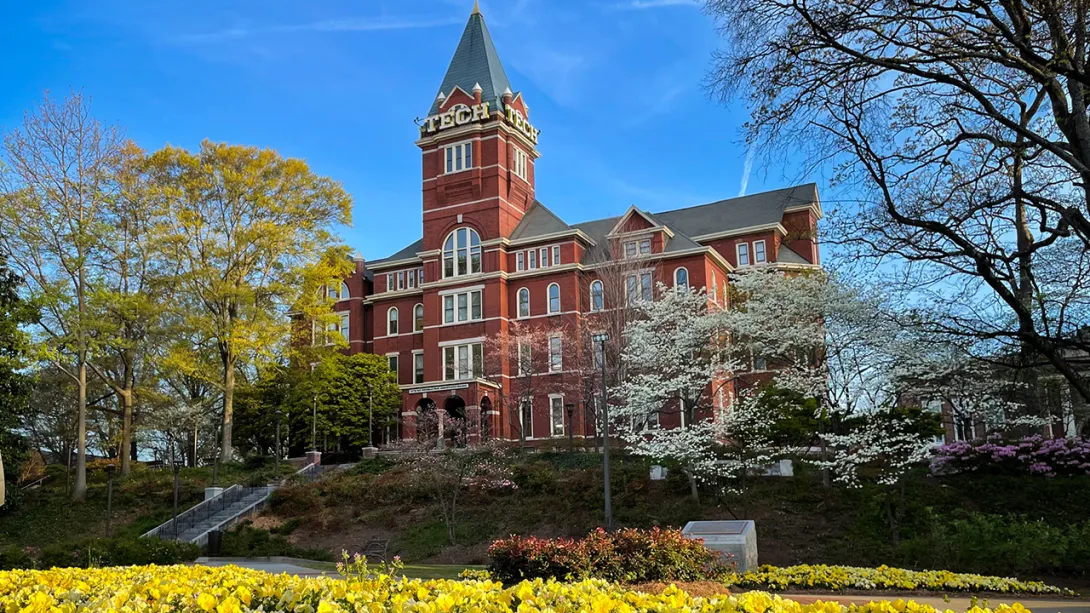
Georgia Tech's Renewable Bioproducts Institute (RBI) is pleased to announce the appointment of Hanjiang (John) Xu as director of the Multiphase Forming Lab. This strategic selection leverages Xu's extensive experience in papermaking, new product and process development, fluid mechanics, and project management.
The only one of its kind in North America, this innovative system significantly reduces the amount of water required to process paper. As a result, the heat and energy needed to dry the paper—typically an energy-intensive process—are also reduced. The Multiphase Forming Lab uses up to 70% less water, which substantially lowers the energy required for drying.
Xu brings over 20 years of experience in managing laboratory paper machines and pilot testing equipment, along with a robust background in fluid mechanics, material science, and instrumentation development. His professional experience includes significant roles at International Paper, AstenJohnson, and Georgia Tech’s George W. Woodruff School of Mechanical Engineering.
"We are thrilled to have John lead the establishment and operation of this new facility," said Carson Meredith, RBI executive director. "His extensive knowledge and industry experience make him the ideal leader to partner with both RBI members and non-members to drive reduced energy consumption and costs.”
Xu's career is marked by innovative research and successful commercialization of new products and processes. At AstenJohnson, he served as a senior research scientist, specializing in forming and press fabrics used in the paper industry. His work led to the commercialization of several new forming and press products, and he managed pilot press stand at AstenJohnson and participated in papermaking trials at different pilot facilities to evaluate the performance of these fabrics.
Prior to AstenJohnson, Xu held positions at International Paper's Corporate Technology Center, where he managed the Microfinishing Lab and Humidity Resistant Liner Lab. His research provided critical insights that influenced the company’s major business decisions. He also developed various unique instruments for different paper mills at International Paper.
Xu earned his Ph.D. in paper science and mechanical engineering from Georgia Tech’s Institute of Paper Science and Technology. His doctoral research focused on the measurement of fiber suspension flow and forming jet velocity profile using Pulsed Ultrasonic Doppler Velocimetry (PUDV). He also holds a B.S. in Material Science and Engineering from Tsinghua University in Beijing, China.
For more information about the Multiphase Forming Lab, please contact: Hanjiang (John) Xu at hanjiang.xu@me.gatech.edu
May. 13, 2025
On May 13, 2025, Georgia Tech celebrated a major milestone in sustainable manufacturing with the ribbon cutting of its new Multiphase Forming Lab in the Paper Tricentennial Building. The event, hosted by the Renewable Bioproducts Institute (RBI), marked the official launch of a pioneering system that promises to revolutionize the papermaking industry.
The Multiphase Forming System, the only one of its kind in North America, dramatically reduces the amount of water needed in the paper production process. By using up to 70% less water, the system also significantly cuts down on the energy required for drying — traditionally one of the most energy-intensive steps in papermaking. This innovation, developed by principal investigator Cyrus Aidun, not only enhances efficiency but also supports broader sustainability goals by lowering greenhouse gas emissions.
The grand opening event featured remarks from Georgia Tech President Ángel Cabrera, Executive Vice President for Research Tim Lieuwen, and Carson Meredith, executive director of RBI, among others. Attendees included industry leaders, researchers, and students, all eager to witness the unveiling of a technology that has been five years in the making.
The Multiphase Forming project has garnered widespread interest from the paper and packaging industries. A recent extension of the research, funded by the U.S. Department of Energy’s Office of Energy Efficiency and Renewable Energy (DOE-EERE), integrates this forming system with cutting-edge refining and drying technologies. Led by Meredith, this initiative aims to further reduce energy consumption and environmental impact in paper manufacturing. John Xu has been appointed to run the facility.
Meredith said, “Today is milestone in RBI’s history, as we continue to partner and innovate with the paper and pulp industry. We’d like to share our gratitude with our researchers, students and industry sponsors International Paper, Kimberly Clark and Solenis.”
May. 06, 2025

Every time you use your phone, open your computer or listen to your favorite music on AirPods, you are relying on critical minerals.
These materials are the tiny building blocks powering modern life. From lithium, cobalt, nickel and graphite in batteries to gallium in telecommunication systems that enable constant connectivity, critical minerals act as the essential vitamins of modern technology: small in volume but vital to function.
Yet the U.S. depends heavily on imports for most critical materials. In 2024 the U.S. imported 80% of rare earth elements it used, 100% of gallium and natural graphite, and 48% to 76% of lithium, nickel and cobalt, to name a few.
Apr. 18, 2025
In mid-April Georgia Tech's Renewable Bioproducts Institute hosted a mini-symposium discussing the challenges and potential solutions to integration at different scales and levels of abstraction.
Challenges Discussed:
-Technical Compatibility: Ensuring biomass-derived feedstocks are compatible with existing refinery processes without causing operational disruptions.
-Economic Viability: Balancing the costs of biomass processing and integration with the potential economic benefits.
-Environmental Impact: Addressing the environmental implications of biomass integration, including emissions and sustainability.
-Infrastructure Adaptation: Modifying existing refinery infrastructure to accommodate biomass feedstocks without significant capital investment.
Proposed Solutions:
-Advanced Hydroprocessing Techniques: Utilizing mild hydro treatment and esterification to make biomass-derived feedstocks compatible with refinery processes.
-Cost-Effective Precipitation Methods: Implementing efficient lignin extraction processes to reduce costs and improve economic viability.
-Green Hydrogen Utilization: Leveraging green hydrogen produced from electrolysis to minimize environmental impact.
-Strategic Infrastructure Investments: Identifying key areas for infrastructure adaptation to facilitate seamless integration of biomass feedstocks.
This workshop underscored the importance of collaborative efforts in advancing biomass integration, paving the way for a more sustainable and economically viable future in the refining industry.
To listen to the workshop:
We’d like to share our thanks with our speakers for their insights:
Joseph Samac - Valorization of Forestry Side-stream
Ana Indes Torres - Biomass integration in Refineries with a Focus on System-Level Modeling and Optimization of Integration Strategies
Michael Reynolds - Advances in Catalysts for Feeds that Contain Blends of Seed and Tallow Oils
Nicholas Carlson Refinery Integration Anaysis: Pathways, Challenges, and Opportunities
Mike Griffin Producing Hydrocarbon Fuels from Woody Biomass via Catalytic Pyrolysis and Refinery Hydrotreating
Ryan Lively Separation of Bioderived Compounds Using Membrane Technology
RBI would love to hear from you on future topics you would like to hear us cover. Share your feedback with Executive Director Carson Meredith.
News Contact
Dec. 09, 2024
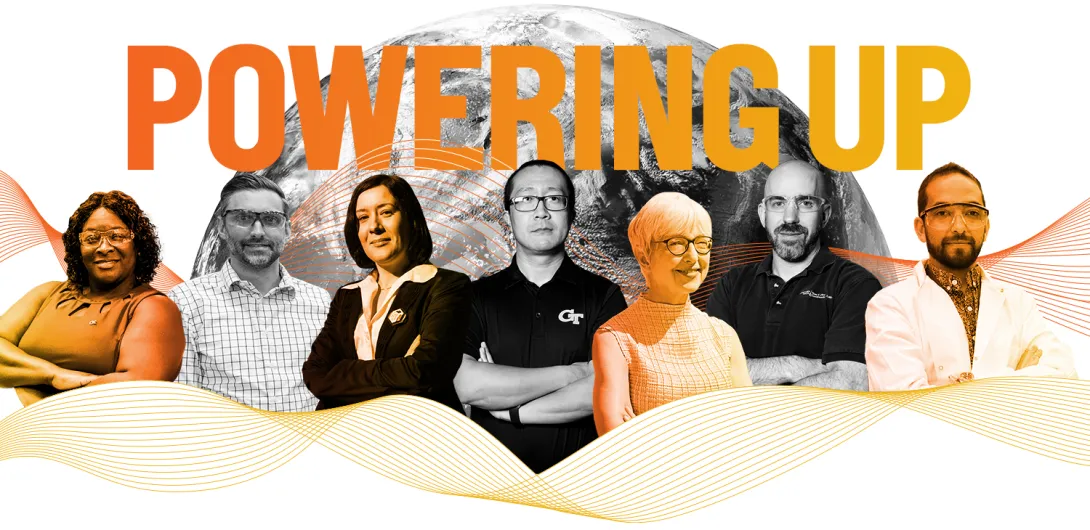
Image with GT researchers Tequila Harris, Matt McDowell, Anna Erickson, Wenting Sun, Valerie Thomas, Adam Steinberg, and Juan-Pablo Correa-Baena
For 20 years, Georgia Tech’s Strategic Energy Institute (SEI) has brought together campus researchers who collectively develop better ways to meet the energy needs of today and tomorrow.
These days, that amounts to more than 1,000 people. Georgia Tech faculty are creating advanced communications and information systems, sensing and control approaches, and transmission and energy storage technologies that will make the nation’s power distribution systems more efficient and cost-effective. Their research also focuses on integrating renewable energy sources and electric vehicles.
“As the nation’s largest technologically focused university, Georgia Tech is playing an integral role in developing solutions that enable more equitable, lower cost, and cleaner generation, storage, distribution, and utilization of energy,” said Tim Lieuwen, Georgia Tech’s interim executive vice president for research. Lieuwen knows SEI better than anyone: he had been its executive director since 2012 until stepping in this summer as interim leader of Tech’s entire research enterprise.
“Georgia Tech researchers are not just helping to create cleaner, more efficient fuel options or mitigate the environmental impact of conventional energy supplies. They also are creating better performing, more economically viable energy options,” he said.
The work at SEI and across Georgia Tech has helped make the state of Georgia one of the nation’s leaders in clean energy, battery technology, and energy sustainability. It’s attracting numerous companies to invest in research and development in the state, including Hyundai, SK Battery America, and solar panel maker Qcells.
News Contact
Jason Maderer (maderer@gatech.edu)
Director of Communications, College of Engineering
Aug. 28, 2024
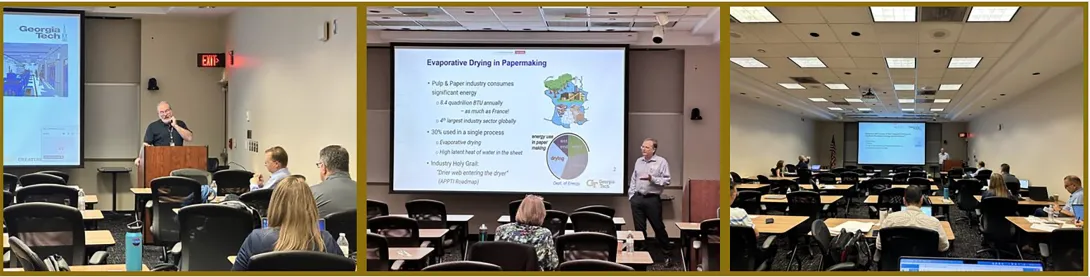
From the Left: Presentations by Chris Luettgen, Carson Meredith and Cyrus Aidun during the 2024 APPTI Net Zero Workshop
The Georgia Tech Renewable Bioproducts Institute (RBI) hosted the APPTI Net Zero Workshop on Decarbonizing the Pulp & Paper Sector during the second week of August.
Over 40 participants from more than 20 organizations participated in the event aimed to educate the pulp, paper, and tissue manufacturing community on current decarbonization technologies ready for immediate deployment, while also exploring the investments needed for future breakthrough innovations.
The workshop kicked off with an overview of APPTI by Chris Luettgen, managing director of APPTI and RBI's lead for process efficiency and intensification of pulp paper packaging & tissue manufacturing. Presentations and discussions revolved around three focus areas for decarbonization--Carbon Capture and Beneficial Use; Biogas Generation from Waste Streams; and Lime Kiln Alternatives to Fossil Fuels. Presenters and panelists consisted of members from the Department of Energy’s Industrial Efficiency and Decarbonization Office (IEDO), academia (North Carolina State University, Abo Academy, University of Toronto, University of Minnesota), and industry (Veolia, Valmet, Metso, FPInnovations, Nexight, Beck and Associates).
RBI’s Carson Meredith, Valerie Thomas, and Cyrus Aidun were among the presenters. Meredith presented his research on felt design to prevent re-wet, while Thomas’ talk was on the topic, life cycle assessment: meeting policy benchmarks for decarbonization, and Aidun presented his work on multi-phase forming.
The workshop concluded with the net zero committee discussing key takeaways from the workshop and potential for a life cycle assessment on the paper industry.
“The outcome of this two-day workshop is a strong feeling about the work RBI and APPTI are doing for the industry. The feedback I received was all very positive,” said Luettgen.
News Contact
Priya Devarajan || RBI Communications Program Manager
Nov. 13, 2024

Julene Tong, Associate Professor and RBI's Lead for the Waste Valorization in Food-Energy-Water Initiative
Zhaohui (Julene) Tong is an associate professor in the School of Chemical and Biomolecular Engineering at Georgia Tech and leads the waste valorization in food-energy-water initiative at the Renewable Bioproducts Institute. Her research addresses challenges in the interdisciplinary fields of bioresource engineering and sustainable chemistry, focusing on developing innovative technologies for producing chemicals, materials, energy, and fuels from renewable resources.
Tong’s current research interests include functional biomaterials for a high-efficiency circular economy, platform chemicals and hydrocarbon fuels from renewable resources, sustainable process control and modeling, nano-biomaterial synthesis and self-assembly, and polymer degradation and recycling.
She earned her bachelor’s degree in chemical engineering from Changsha University of Science and Technology in China and her doctoral degree in chemical engineering from the Georgia Institute of Technology. Her research spans multiple disciplines, including materials, nanotechnology, energy, and sustainability.
Below is a brief Q&A with Tong, where she discusses her research focus areas and how they contribute to maximizing the waste valorization in the food-energy-water initiative at Georgia Tech.
- What is your field of expertise and at what point in your life did you first become interested in this area?
My expertise lies in sustainable materials and catalytical conversion, with a focus on transforming abundant and low-cost bioresources into functional biomaterials, biochemicals, and biofuels. Driven by a strong desire to conduct meaningful research, I aim to contribute to advancements in human health, food security, and environmental sustainability, addressing critical issues such as climate change, water scarcity, and the circular economy.
- What questions or challenges sparked your current renewable bioproducts research? What are the big issues facing your research area right now?
The current economy faces significant challenges, including depleting resources, expensive raw materials, energy-intensive processes, and severe environmental impacts. Research in renewable bioproducts is crucial for addressing these issues. However, renewable bioproducts are still not competitive with petroleum-based products. Therefore, it is of paramount importance to minimize energy and material input during the processing and maximize product value without compromising environmental health.
- What interests you the most in leading the research initiative on waste valorization in food-energy-water? Why is your initiative important to the development of Georgia Tech’s Renewable Bioproducts research strategy?
I am interested in valorizing low-cost and underutilized biomass waste (lignocellulose, lignin, hemicellulose, etc.) into value-added functional products for applications in the food, water, and energy sectors, such as bio-based membranes for contaminant removal and detection. My initiative aims to build connections among multidisciplinary experts from chemical engineering, environmental engineering, agricultural engineering, industrial and systems engineering, and other fields. Polymer chemistry, nanotechnology, and data science all play roles in achieving our goal. My research topic aligns very well with RBI’s central strategic research areas, including the development of a bioeconomy, industrial decarbonization, and sustainable development goals.
- What are the broader global and social benefits of the research you and your team conduct on waste valorization in food-energy-water initiative?
We work on increasing the value of bio-based waste for bioproducts to provide clean water, improve food security, and minimize energy input. First, this promotes the efficient use of biomass resources and minimizes waste generation to form a circular economy. Second, it contributes to industrial decarbonization by providing alternative, renewable sources of energy and materials. Third, the utilization of bio-based waste supports several aspects of sustainable development by simultaneously addressing challenges such as waste variability, technological limitations, and economic viability.
- What are your plans for engaging a wider Georgia Tech faculty pool with the broader renewable bioproducts community?
I plan to leverage symposia from RBI and other sources, as well as existing sustainable centers like the Brook Byers Institute for Sustainable Systems, social events, and established networks. Additionally, I will reach out to other faculty through collaborations on integrated proposals from RBI and external sources.
- What are your hobbies?
In my leisure time, I enjoy baking and cooking. I also enjoy traveling with my family.
- Who has influenced you the most?
I have been influenced by several of my professors during my undergraduate and graduate studies and my first department chair at the University of Florida. Their continuous encouragement and support have been instrumental in shaping my academic career in sustainable chemistry and engineering.
News Contact
News Contact: Priya Devarajan || RBI Communications Program Manager
Nov. 05, 2024
The aviation industry’s commitment to meaningful carbon reduction underscores the need for investing in Sustainable Aviation Fuel (SAF), which provides the most promising solution to achieving net-zero carbon by 2050. According to the International Air Transport Association (IATA), with the right policy measures and financial instruments in place, SAF could help the industry achieve 65% of this reduction. As a key transportation center in the U.S., the Southeast holds immense potential to become a hub for SAF production and adoption.
This prospect was the focus of a recent workshop organized by three Georgia Tech units – the Ray C. Anderson Center for Sustainable Business and its initiative, the Drawdown Georgia Business Compact; the School of Public Policy; and the Strategic Energy Institute; along with the U.S. Department of Energy Bioenergy Technologies Office. The workshop gathered together multiple stakeholder groups representing federal, state, and local government, industry, academia, and the aviation sector to chart a path forward for the Southeast.
News Contact
Titiksha Fernandes | Ray C Anderson Center for Sustainable Business
Sep. 18, 2024
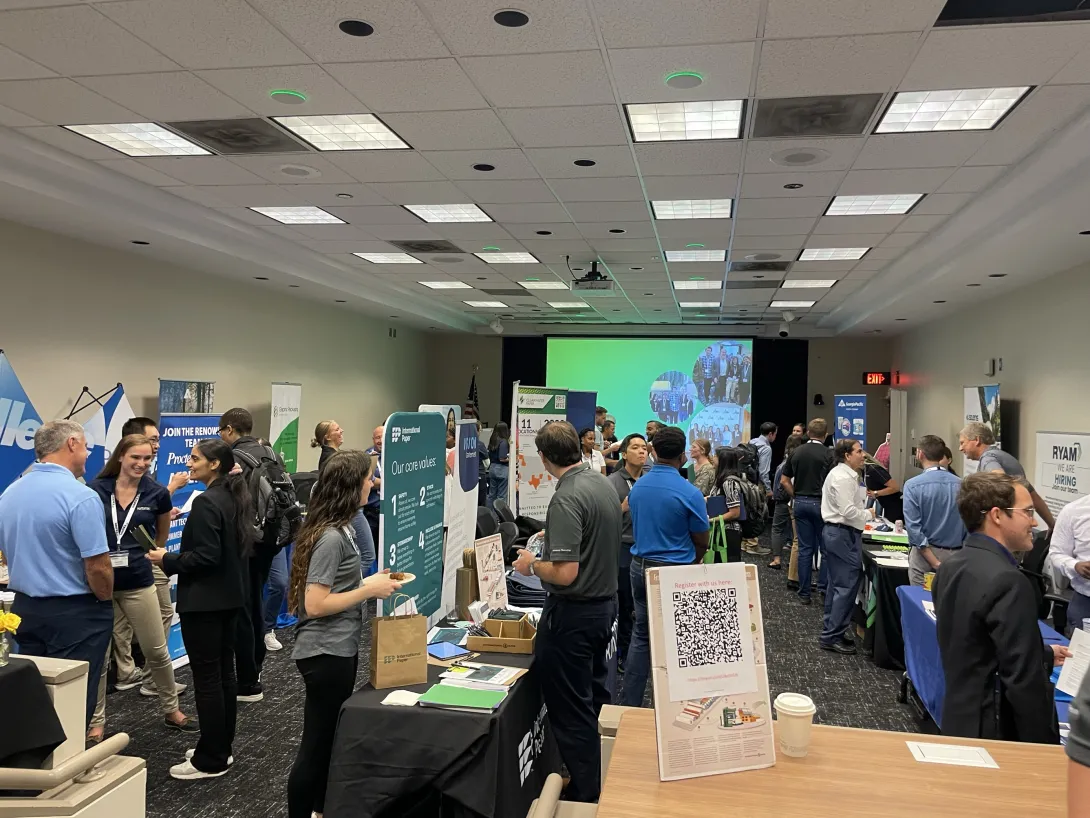
The TAPPI Student Chapter hosted a career fair on Thursday, September 12 at the Georgia Tech Renewable Bioproducts Institute. With nearly 100 students in attendance, the event provided an excellent opportunity for students as well as professionals in the pulp and paper industry, to connect, network, and explore career opportunities. The fair attracted 45 representatives from 15 leading companies in the industry who offered internships, full-time and co-ops for both graduates and undergraduates.
“The TAPPI Student Chapter Career Fair was an incredible opportunity for students to engage directly with industry leaders, explore diverse career paths, and secure valuable internships and job offers. The enthusiasm and participation from both students and companies truly highlighted the strength and potential of our future workforce,” said Chris Luettgen, faculty advisor of the TAPPI Student Chapter and the initiative lead for process efficiency & intensification of pulp, paper packaging, and tissue manufacturing at the Renewable Bioproducts Institute.
News Contact
Priya Devarajan || RBI Communications Program Manager
Sep. 24, 2024
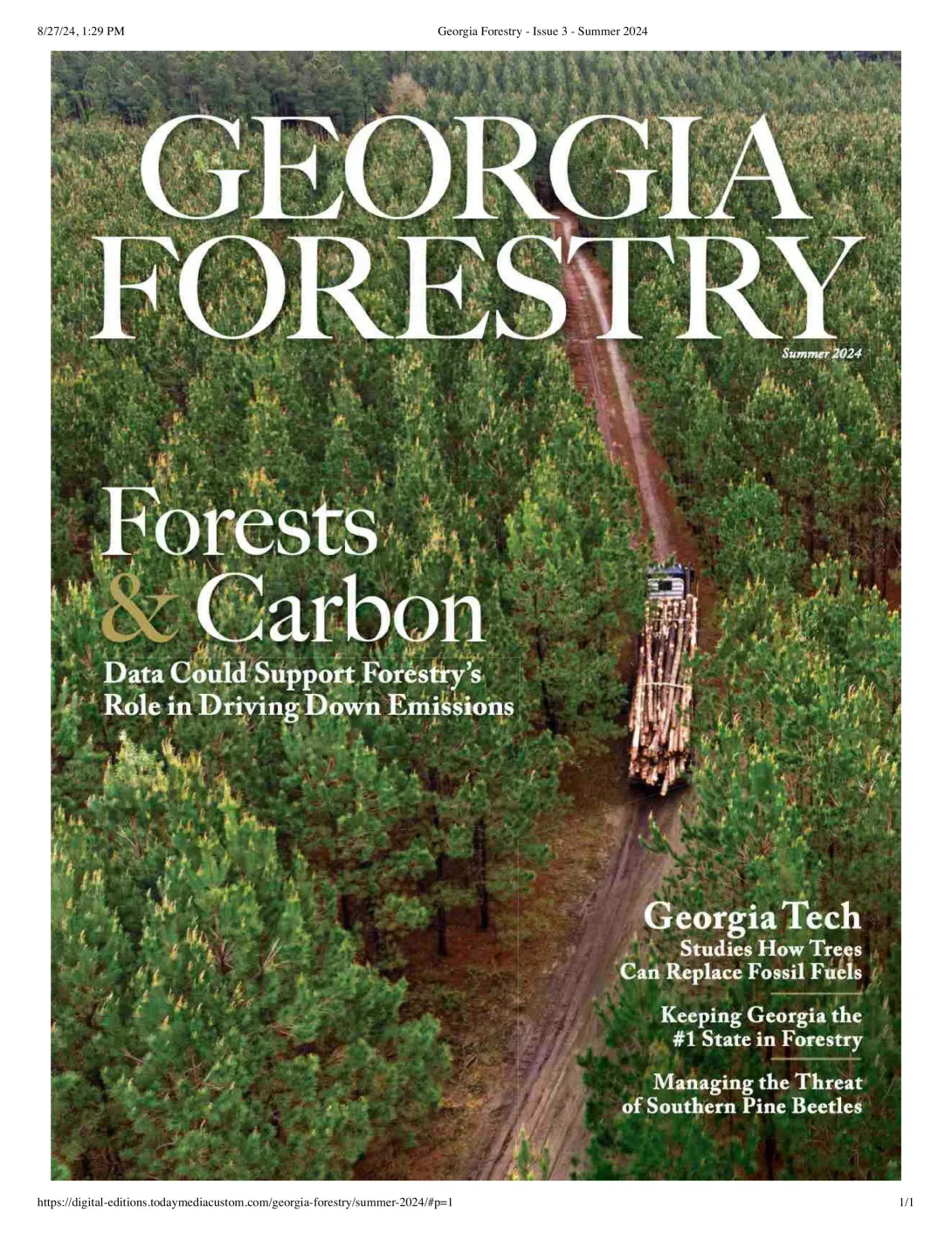
Georgia Forestry Association members receive Georgia Forestry Magazine four times per year. The magazine brings together writers and leaders from the Georgia Forestry Association, Georgia Forestry Commission, and Georgia Sustainable Forestry Initiative. The magazine’s dynamic content is focused on keeping its audience connected to resources and empowered to make good decisions about their forestland asset.
In the Summer 2024 issue, the magazine has featured the Georgia Tech Renewable Bioproducts Institute and its faculty researchers Anthony J. “Bo” Arduengo, professor of practice in the School of Chemistry and Biochemistry, Matt McDowell, Carter N. Paden, Jr. Distinguished Chair and associate professor in the School of Materials Science and Engineering, and Meisha Shofner, professor in the School of Materials Science and Engineering. The feature titled ‘The Green Gusher: How Wood-Based Innovations Are Revolutionizing Sustainability and Technology,’ was written by John Casey and discussed how wood-based innovations are revolutionizing sustainability and technology in the forestry industry and included Georgia Tech’s forestry in focus video that included interviews with the three researchers.
News Contact
Priya Devarajan || RBI Communications Program Manager