
Mar. 03, 2026
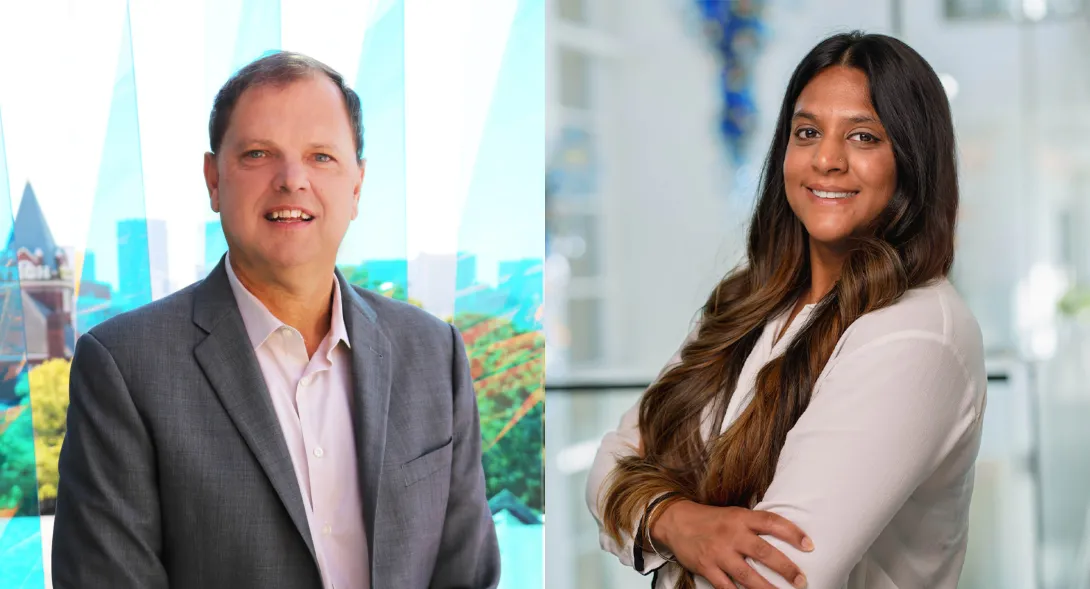
The Renewable Bioproducts Institute (RBI) has appointed two additional Strategic Initiative Leaders (SILs) to help shape the next phase of its research and engagement strategy: Joel Kostka and Titiksha Fernandes.
SILs serve on RBI’s leadership team and play a strategic role in expanding interdisciplinary collaboration, strengthening Georgia Tech’s leadership in the bioeconomy, and catalyzing new research and education initiatives across campus.
“RBI’s work has always been about connecting strong science and engineering to the needs of Georgia’s forestry and renewable materials industries,” said Carson Meredith, director of RBI. “Joel and Titiksha bring leadership that strengthens both sides of that work — advancing the biological foundations of renewable systems while building the business and entrepreneurship capacity needed to translate discovery into durable impact.”
Advancing Microbial Biotechnology for the Forest Bioeconomy
Joel Kostka, Tom and Marie Patton Distinguished Professor and Associate Chair for Research in the School of Biological Sciences, will lead a strategic initiative focused on microbial biotechnology in renewable bioproducts. His initiative leverages microbiology and microbiome engineering in a systems approach to address woody biomass utilization, biorefining, microbial contamination in pulp and paper processing, and the development of forest and plant feedstocks.
The effort complements RBI’s existing strengths in chemistry and engineering, including initiatives such as the Center for a Renewables-Based Economy from Wood (ReWOOD), by bringing cutting-edge microbial science into the modernization of the forest industry.
The initiative centers on two core areas: improving biomass deconstruction and bioconversion, and engineering plant and soil microbiomes to support the development of climate-resilient biomass feedstocks.
“Natural microbiomes, those microbes that are intimately associated with plants and soils, already drive the natural cycles that break down organic matter, recycle nutrients, and help plants to grow better,” said Kostka. “If we understand and engineer those systems more intentionally, we can unlock more efficient bioconversion pathways and help build a forest bioeconomy that is both productive and climate resilient.”
Kostka’s research studies the role of microbes in the functioning of ecosystems ranging from oceans to terrestrial subsurface environments. Through this initiative, he aims to connect that foundational microbial science to use-inspired solutions in renewable bioproducts.
Bridging Business and Bioproducts
Titiksha Fernandes will lead RBI’s initiative to develop structured collaboration with the Scheller College of Business. Her effort will establish a strategic framework for exploring deeper RBI–Scheller engagement across research, education, and entrepreneurship.
The initiative will explore integrating business training into RBI fellowship programs, engaging business graduate students in RBI research, strengthening industry partnerships, and advancing joint entrepreneurship activities that translate scientific discoveries into ventures.
“Scientific innovation alone doesn’t create impact,” said Fernandes. “We need the strategy, entrepreneurship, and systems thinking that allow discoveries to move from the lab into markets and communities. This initiative is about building those pathways intentionally.”
Fernandes currently serves as extension professional for the Drawdown Georgia Business Compact, an initiative of the Ray C. Anderson Center for Sustainable Business. In this role, she advances initiatives in materials circularity and food and agriculture. She holds a Ph.D. in Public Policy and is a Certified Circular Economy Manager, with experience designing sustainability and resource efficiency policy at national and state levels, including work on e-waste reform in India and circular economy implementation in the U.S.
RBI’s Strategic Initiative Leaders are appointed for renewable 12-month terms and are expected to foster new interdisciplinary collaborations that extend beyond their home units. Leaders participate in shaping research directions, reviewing fellowship proposals, developing workshops and symposia, and connecting faculty, students, industry, and national laboratories.
News Contact
Yanet Chernet
Communications Officer I
Georgia Tech
Dec. 18, 2025
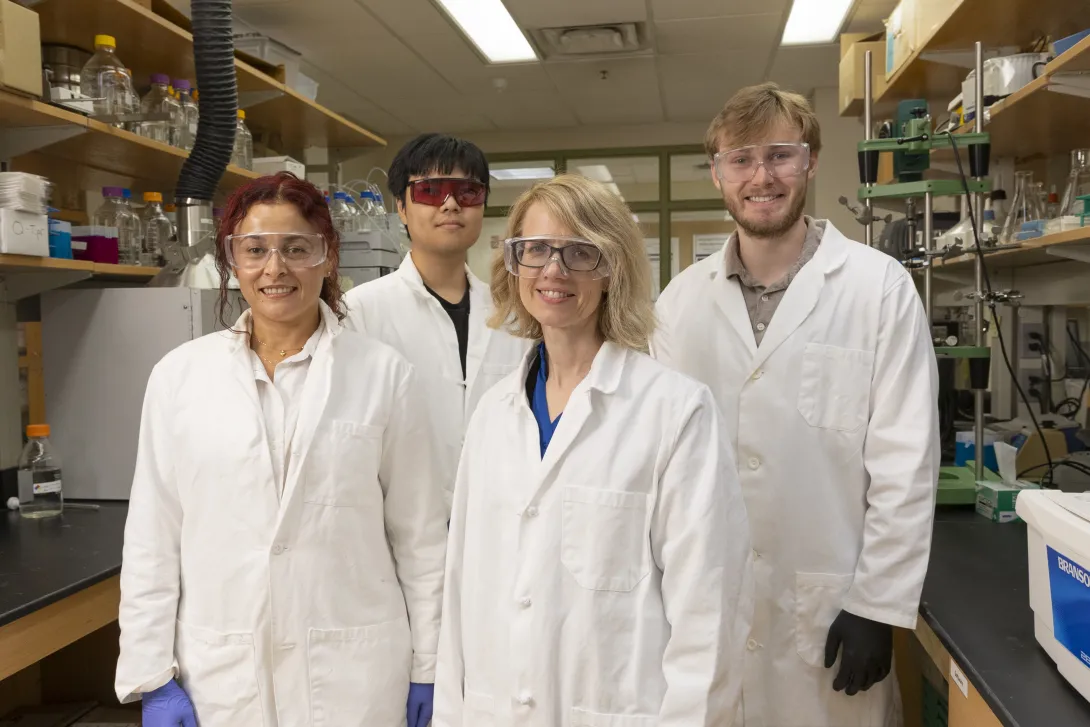
Martha Grover, professor in the School of Chemical and Biomolecular Engineering, with her research team. [Photo by Christopher McKenney]
When people hear “nuclear waste,” they often imagine glowing green sludge leaking into the ground — a scene straight out of science fiction. The truth is far less dramatic and far more manageable. In fact, all the civilian nuclear waste produced by U.S. power plants so far could fit on a single football field stacked just 10 yards high. Managed under strict safety protocols, this byproduct of nuclear energy poses manageable risk compared to the billions of tons of greenhouse gases from fossil fuels. Today, researchers at Georgia Tech and around the world are working on safer reactor designs, advanced monitoring, and innovative recycling methods to turn nuclear waste into new opportunities — from clean energy to ultra-long-lasting batteries and even power for space missions.
News Contact
Priya Devarajan || SEI Communications Program Manager
Dec. 18, 2025
Thank you to the entire RBI community for participating in a transformative 2025. Please enjoy reviewing the accomplishments we made together. We look forward to partnering with you in 2026.
Nov. 20, 2025
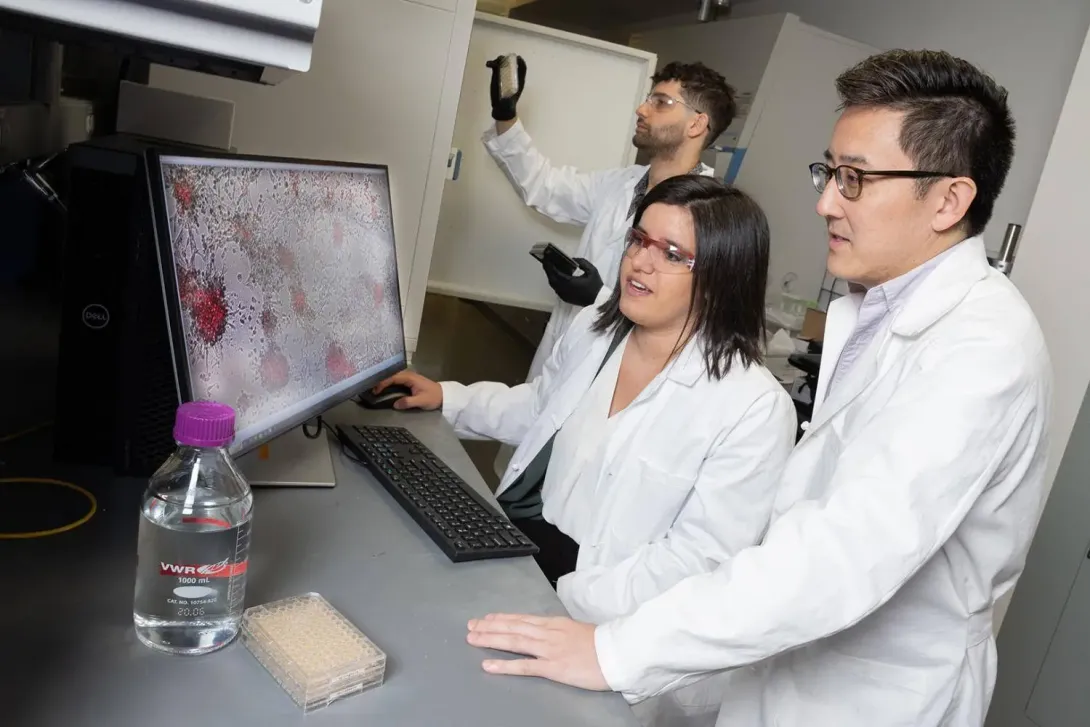
Georgia Institute of Technology has been ranked 7th in the world in the 2026 Times Higher Education Interdisciplinary Science Rankings, in association with Schmidt Science Fellows. This designation underscores Georgia Tech’s leadership in research that solves global challenges.
“Interdisciplinary research is at the heart of Georgia Tech’s mission,” said Tim Lieuwen, executive vice president for Research. “Our faculty, students, and research teams work across disciplines to create transformative solutions in areas such as healthcare, energy, advanced manufacturing, and artificial intelligence. This ranking reflects the strength of our collaborative culture and the impact of our research on society.”
As a top R1 research university, Georgia Tech is shaping the future of basic and applied research by pursuing inventive solutions to the world’s most pressing problems. Whether discovering cancer treatments or developing new methods to power our communities, work at the Institute focuses on improving the human condition.
Teams from all seven Georgia Tech colleges, 11 interdisciplinary research institutes, the Georgia Tech Research Institute, Enterprise Innovation Institute, and hundreds of research labs and centers work together to transform ideas into real results.
News Contact
Angela Ayers
Sep. 06, 2025
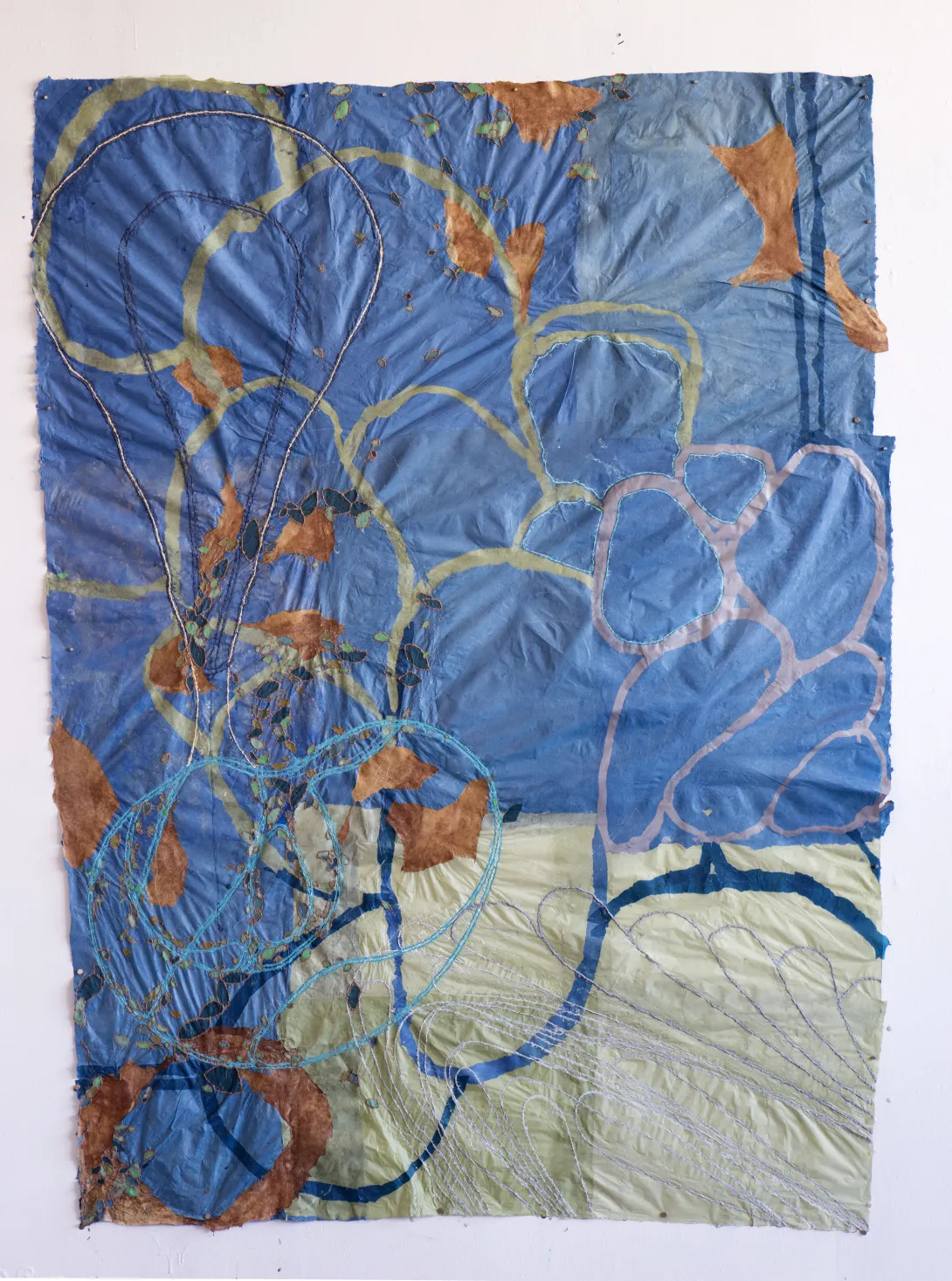
New Exhibition Series Honors Decades of Creative Exploration
ATLANTA, Georgia (August 25, 2025) -- Legacies in Paper: Nancy Cohen, Sara Garden Armstrong, & Helen Hiebert is on view at the Robert C. Williams Museum of Papermaking, September 4, 2025, through January 30, 2026. The exhibit brings together the work of three artists who have incorporated hand papermaking into their artistic practices for years. Nancy Cohen, Sara Garden Armstrong, and Helen Hiebert each describe a formative period of searching for versatile materials with the ability to take on the qualities required for two and three-dimensional work; could mimic textures of nature and the body; and could facilitate installation work of various scales. Individually, each artist found that the unique medium of hand papermaking could be transformed to encompass their visions, and it quickly became integral to their artwork.
Armstrong, Cohen, and Hiebert build on the legacy of a community of artists pushing the craft of papermaking forward into contemporary forms. They bring unique voices to the medium: Hiebert’s luminous constructions explore the interplay of light and structure; Cohen’s sculptural works reflect ecological fragility and resilience; and Armstrong’s immersive environments blur the boundaries between the organic and the engineered. Together, their works speak to the transformative potential of paper—not only as a surface for expression but as a sculptural, spatial, and conceptual force. Through their hands, paper becomes a language of memory, a vessel of emotion, and a bridge between past and present.
Join the museum staff and featured artists for a reception, 4-7 pm, Thursday, September 4, 2025 at 500 Tenth St. NW, Atlanta, GA 30332. This event is free and open to the public.
A full listing of associated programs can be found at https://paper.gatech.edu/program-listing
Sara Garden Armstrong received her Master of Fine Arts from the University of Alabama and a Master of Art Education from UAB. A past recipient of the Joan Mitchell Foundation CALL (Creating a Living Legacy) project, Armstrong’s national and international exhibition record extends over a period of more than 40 years. Her artist’s books can be found in the collections of the Museum of Modern Art, New York, and the Victoria and Albert Museum, London, among others. Atrium commissions have focused on scientific phenomena and their interactions with the human condition. Armstrong currently lives and works in Birmingham, Alabama.
Nancy Cohen has an M.F.A. from Columbia University and a B.F.A from Rochester Institute of Technology. Awards include a Pollock Krasner Foundation Grant, The Murry Reich Distinguished Artist Award and six fellowships from the New Jersey State Council on the Arts. Museum collections include the Asheville Art Museum, Memphis Brooks Museum, Montclair Museum, NJ State Museum, Smith College Museum, Tang Teaching Museum, Weatherspoon Art Gallery, Yale University Art Gallery and the Zimmerli Museum. Cohen has completed large scale paper installations for the Noyes Museum, the Katonah Museum, the Power Point Gallery at Duke University and New Jersey City University, The CODA Museum in the Netherlands and the NTCRI Museum of Craft Design in Taiwan. She lives in Jersey City, New Jersey.
Helen Hiebert is a Colorado artist who constructs installations, sculptures, films, artists’ books and works in paper using handmade paper as her primary medium. She teaches, lectures and exhibits her work internationally and online, and is the author of several how-to books about papermaking and papercrafts. Helen has an extensive network of paper colleagues around the world and her interest in how things are made (from paper) keeps her up-to-date on current paper trends, which she writes about in her weekly blog called The Sunday Paper. She interviews papermakers and paper artists on her podcast Paper Talk, and she holds an annual paper retreat and papermaking master classes in her Red Cliff studio.
Sep. 05, 2025
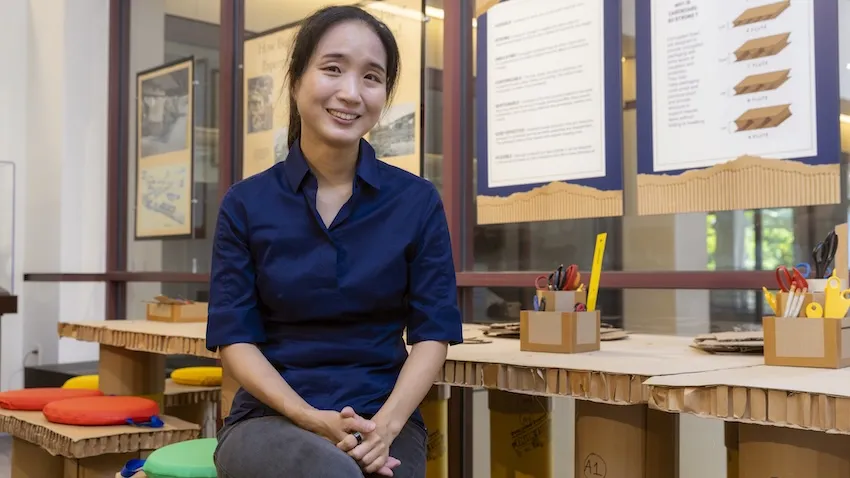
A new educational initiative is set to teach Atlanta high school students how to create electronics, wearable devices, and other technologies that are built on paper and craft materials.
Workshops hosted by the Robert C. Williams Museum of Papermaking and led by Georgia Tech Assistant Professor HyunJoo Oh will introduce about 60 students from Atlanta Public Schools to paper-based electronics through hands-on workshops.
The Williams Museum will open an exhibit titled “The Future of Paper” that displays designs created in the workshop alongside visionary examples of paper-based technologies from Georgia Tech researchers.
The exhibit, funded by the National Science Foundation, is slated to open to the public in 2027.
Oh is a researcher with joint appointments in the School of Interactive Computing and the School of Industrial Design. She leads the Computational Design and Craft (CoDe Craft) Group at Georgia Tech, where her team integrates everyday craft materials with computing to support creative exploration.
Oh believes paper could be widely used to support prototyping printed circuit boards (PCBs) as a sustainable alternative to silicon. While silicon is the most prominent material used by technology companies to build computer chips, it isn’t biodegradable. And it can be harmful to the environment and contribute to e-waste.
Paper, however, provides an eco-friendly platform for printing conductive traces and mounting small electronic components. With the expansion of printed electronic tools and techniques, paper and similar materials have become more popular among technologists who develop sensing technologies and wearable devices.
“It’s widely available and accessible,” Oh said. “I can’t think of anything more affordable and approachable that young makers and the broader maker community can use for circuits than paper.
“Printed electronics traditionally required expensive equipment, but with recent innovation in materials science, conductive materials such as conductive pens and paint available in local arts and crafts stores can be used to build circuits on paper. We can also print circuits using a regular office inkjet printer with silver ink.”
Shared Vision
Shortly after arriving at Georgia Tech in 2019, Oh knew she had to develop a project that would let her partner with the Williams Museum.
“I was captivated by the museum’s space and its celebration of paper,” she said. “I wanted a collaboration that would integrate technology in a way that complemented and respected the museum’s existing beauty.”
Museum director Virginia Howell said the project was a perfect match for the museum, which has documented the history of papermaking since it was founded in 1939 by the Massachusetts Institute of Technology. Georgia Tech became the new home of the museum in 2003.
With more than 100,000 objects in its collection — some dating back as far as 2,000 years ago — the museum is unique, Howell said. Most papermaking museums are typically located at an historic mill, but the Williams Museum covers the history of papermaking.
Howell said that before she met Oh, she had been looking for an exhibit that would display the possible future of papermaking.
“We do the past of paper fantastically well, and we do the present of paper well through our changing exhibitions,” Howell said. “The future of paper is something we haven’t spent a lot of time interpreting.”
Crafting the Future
Oh and Howell agree that young people will shape that future. Oh said paper is commonly linked to art in the education sphere. As the material’s use in technology increases, however, it can funnel the interests of students toward engineering and computing.
Incorporating paper and craft materials can invite more students to explore engineering and computing concepts. After all, a circuit board created on paper isn’t so different from one built on a silicon PCB, Oh said.
“This approach can excite the kind of students who usually feel disconnected from electronics and computing,” she said. “It gives those who only see themselves as creative or artistic a way to enjoy technology and resonate with it.
“Usually when I work with young students, especially girls, if I start with something technical, their interest wanes. But when I present those same ideas through art using familiar materials like paper, they become more engaged and confident. That’s when they start to flourish.”
Oh and Howell will hold three rounds of 10-week workshops for the students — spring 2026, fall 2026, and spring 2027. The best designs from those workshops will be displayed in the exhibit.
“They’ll feel more comfortable with computing and engineering as an introductory experience,” Howell said. “When they successfully build on it and realize they did this on a sheet of paper, it’s exciting to think what they’ll do when they get more sophisticated tools and access.”
News Contact
Nathan Deen
Sep. 04, 2025
The National Science Foundation (NSF) has awarded School of Materials Science and Engineering (MSE) Professor & Regents’ Entrepreneur Rampi Ramprasad a $2 million grant to advance research at the intersection of artificial intelligence (AI) and polymer science. He and a multidisciplinary team of Georgia Tech researchers will design next-generation polymer-based packaging materials that can easily be recycled or biodegraded at the end of their use. The project addresses one of the most pressing challenges in global sustainability: plastic waste.
Read more on the Georgia Tech Materials Science and Engineering Newspage
Jun. 24, 2025
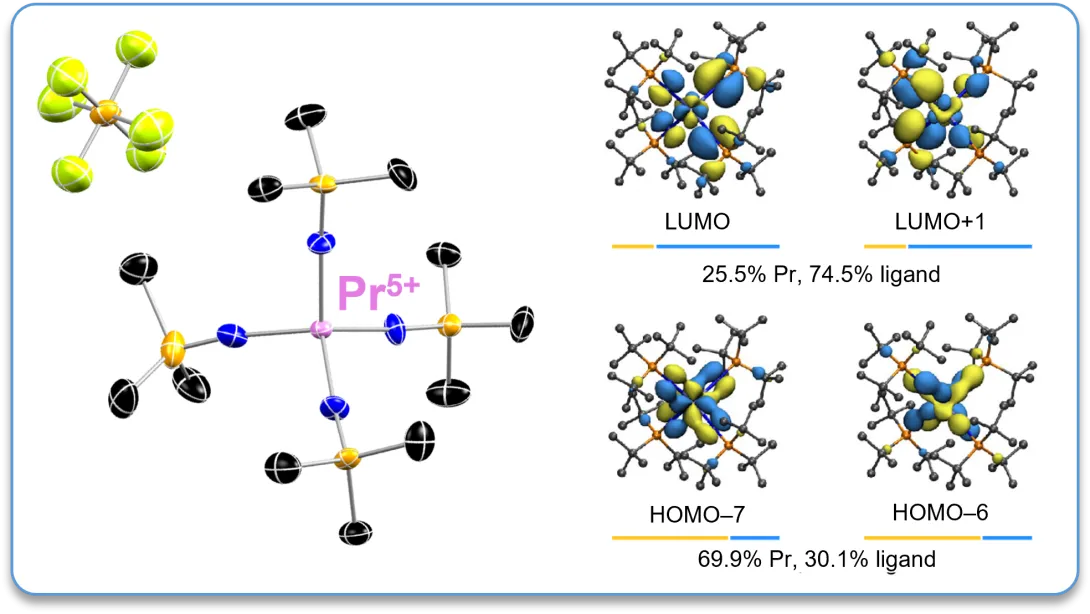
A longstanding mystery of the periodic table involves a group of unique elements called lanthanides. Also known as rare earth elements, or REEs, these silvery-white metals are challenging to isolate, given their very similar chemical and physical properties. This similarity makes it difficult to distinguish REEs from one other during extraction and purification processes.
The world has come to depend on lanthanides’ magnetic and optical properties to drive much of modern technology — from medical imaging to missiles to smart phones. These metals also are in short supply, and because they’re found in minerals, lanthanides are difficult to mine and separate. But that may change — thanks to a Georgia Tech-led discovery of a new oxidation state for a lanthanide element known as praseodymium.
For the first time ever, praseodymium achieved a 5+ oxidation state. Oxidation occurs when a substance meets oxygen or another oxidizing substance. (The browning on the flesh of a cut apple, as well as rust on metal, are examples of oxidation.)
As far back as the 1890s, scientists suspected lanthanides might have a 5+ oxidation state, but lanthanides in that state were too unstable to see, said Henry ”Pete“ La Pierre, an associate professor in Georgia Tech’s School of Chemistry and Biochemistry. Discovering an element’s new oxidation state is like discovering a new element. As an example, La Pierre noted how plutonium’s discovery opened up a whole new area of the periodic table.
“A new oxidation state tells us what we don’t know and gives us ideas for where to go,” he explained. “Each oxidation state of an element has distinct chemical and physical properties — so the first glimpse of a novel oxidation presents a roadmap for new possibilities.”
La Pierre and colleagues at University of Iowa and Washington State University recently discovered the 5+ oxidation state for lanthanides.
“It was predicted but never seen until we found it,” said La Pierre, corresponding author of the study, “Praseodymium in the Formal +5 Oxidation State,” which was recently published in Nature Chemistry. “Lanthanides’ properties are really fantastic. We only use them commercially in one oxidation state — the 3+ oxidation state — which defines a set of magnetic and optical properties. If you can stabilize a higher oxidation state, it could lead to entirely new magnetic and optical properties.”
The researchers’ breakthrough will broaden the lanthanides’ technical applications in fields such as rare-earth mining and quantum technology and could lead to new electronic device architectures and applications.
“Research in lanthanides has already yielded significant dividends for society in terms of technological development,” La Pierre added.
The researchers hope to discover new tools for mining critical REEs, including improving lanthanide separation and recycling processes. When mining these elements, lanthanide elements are frequently mixed together. The separation process is painstaking and inefficient, generating a significant amount of waste. But with increasing global demand for REEs, the U.S. faces a supply issue. Figuring out how to improve lanthanides separation, potentially through oxidation chemistry, will ultimately enhance the supply of these critical elements.
— Anne Wainscott-Sargent
Funding: This research was supported by grants from the National Science Foundation and the U.S. Department of Energy.
News Contact
Shelley Wunder-Smith
Director of Research Communications
May. 25, 2025
The Renewable Bioproducts Institute (RBI) 2025 Spring Workshop, held May 12–13, brought together leading researchers, industry professionals and students to explore innovations in pulp and paper manufacturing. Hosted at the Kendeda Building and the Paper Tricentennial Building, the event opened with remarks from Carson Meredith, RBI executive director, and featured presentations on energy and resource efficiency, carbon accounting and competitiveness.
Highlights included talks on membrane separations, electrochemical processing and low-carbon fuels, with contributions from experts such as Chris Luettgen, Jose Gonzalez, Sankar Nair, Marta Hatzell and Dave Beck.
Insights from the 2025 RBI Spring Workshop
- Revolutionizing Kraft Pulping with Graphene Oxide Membranes
Georgia Tech’s rGO membrane technology is transforming the kraft pulping process. These membranes enable efficient black liquor dewatering, organic acid recovery and lignin fractionation—leading to significant energy savings, water recycling and new revenue streams from bioproducts. - North America’s Dual Challenge: High Emissions, High Opportunity
While North America remains a pulp and paper powerhouse (15% of global capacity), it also has one of the highest carbon intensities. This presents both a challenge and an opportunity to lead in emissions reduction through asset renewal and innovation. - Biogenic CO₂: From Emission to Asset
Kraft pulp mills emit large volumes of biogenic CO₂—an untapped resource. With carbon capture and utilization (CCUS), mills could generate up to $300 million annually in carbon removal credits, turning emissions into economic value. - Integrated Biorefineries: The Future of Pulp Mills
The vision for pulp mills is evolving—from single-product facilities to multi-product biorefineries. Innovations like lignin-based materials, organic acid conversion to biofuels and advanced nanofiltration are paving the way for circular use of carbon in manufacturing. - Decarbonization Is a Strategic Imperative
With increasing regulatory and consumer pressure, especially from global brands targeting Scope 3 emissions, pulp and paper producers must act. Embracing technologies like rGO membranes and CCUS is not just sustainable—it’s essential for competitiveness. - Electrochemical Carbon Capture and Conversion for On-Site Fuel Production
Hatzell’s lab is pioneering the use of bipolar membrane (BPM) electrolysis to convert captured carbon (from bicarbonate solutions) into valuable fuels like CO and H₂. This approach enables:- 100% carbon utilization with more than 70% Faradaic efficiency for CO production.
- Integration with pulp and paper processes to valorize CO₂ emissions instead of storing them.
- Use of acid-stable single-atom nickel catalysts to improve selectivity and efficiency.
- The PAPER-ZERO Initiative
This initiative explores transformative pathways to decarbonize the pulp and paper industry by:- Evaluating scenarios that eliminate combustion of black liquor and waste wood.
- Investigating renewable energy integration and alternative uses for black liquor.
- Assessing the cost, energy and environmental trade-offs of emerging technologies.
The workshop also featured a student poster session, networking opportunities and updates on APPTI collaborative projects. The event concluded with a meeting of the RBI Industry Advisory Board, reinforcing the institute’s role as a hub for partnership and innovation in renewable bioproducts.
“We’re grateful to our industry member partners for sharing their time and expertise,” said Belinda Vogel, research engagement manager. “The advisory board meeting highlighted how essential collaboration is in advancing basic science and renewable bioproduct manufacturing.”
May. 15, 2025
Cyrus Aidun has been a distinguished professor at Georgia Tech’s George W. Woodruff School of Mechanical Engineering since 2003. His career is marked by groundbreaking research and significant contributions to fluid mechanics and bioengineering, establishing him as a leading figure in these fields.
In particular, Aidun has focused on industrial competitiveness. His efforts to reduce energy and water consumption in fiber composite products have attracted significant attention and funding. This research is critical for developing sustainable and cost-effective manufacturing processes while reducing environmental impact.
As principal investigator, Aidun has received funding for major projects from the Department of Energy’s Office of Energy Efficiency and Renewable Energy (DOE-EERE, with Devesh Ranjan as co-principal investigator), the DOE’s Advanced Research Projects Agency-Energy, and the Defense Advanced Research Projects Agency (with Art Rangauskas at the University of Tennessee). These projects are affiliated with Aidun’s development of the Multiphase Forming Lab at Georgia Tech’s Renewable Bioproducts Institute (RBI).
The only one of its kind in North America, this innovative system significantly reduces the amount of water required to process paper. As a result, the heat and energy needed to dry the paper — typically an energy-intensive process — are also reduced. The Multiphase Former uses up to 70% less water, which substantially lowers the energy required for drying. This research, which began about five years ago, has drawn broad interest from industry. A more recent project, funded by DOE-EERE and led by Carson Meredith, combines Multiphase Forming with the latest technologies in refining and drying.
Aidun earned his bachelor’s and master’s degrees from Rensselaer Polytechnic Institute and completed his Ph.D. at Clarkson University in 1985. He joined the Woodruff School in 2003 after serving two years as a program director at the National Science Foundation. He began at Georgia Tech in 1988 as an assistant professor at the Institute of Paper Science and Technology. Previously, he was a research scientist at Battelle Research Laboratories, a postdoctoral associate at Cornell University, and a senior research consultant at the National Science Foundation’s Supercomputer Center at Cornell.
Aidun has received several national and international honors, including the National Science Foundation Presidential Investigator Award, the Gunnar Nicholson Fellowship, and the L.E. Scriven Award from the International Society of Coating Science and Technology.