
May. 18, 2026
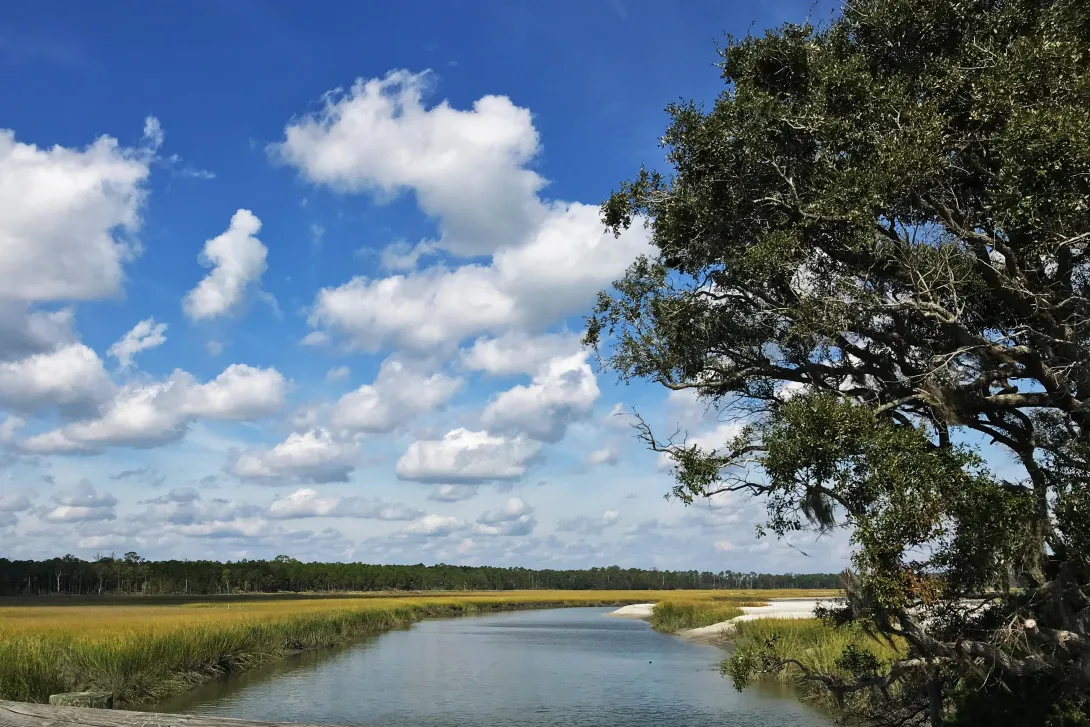
Spartina alterniflora lines a marsh environment on Sapelo Island. (Credit: Jess Hunt-Ralston)
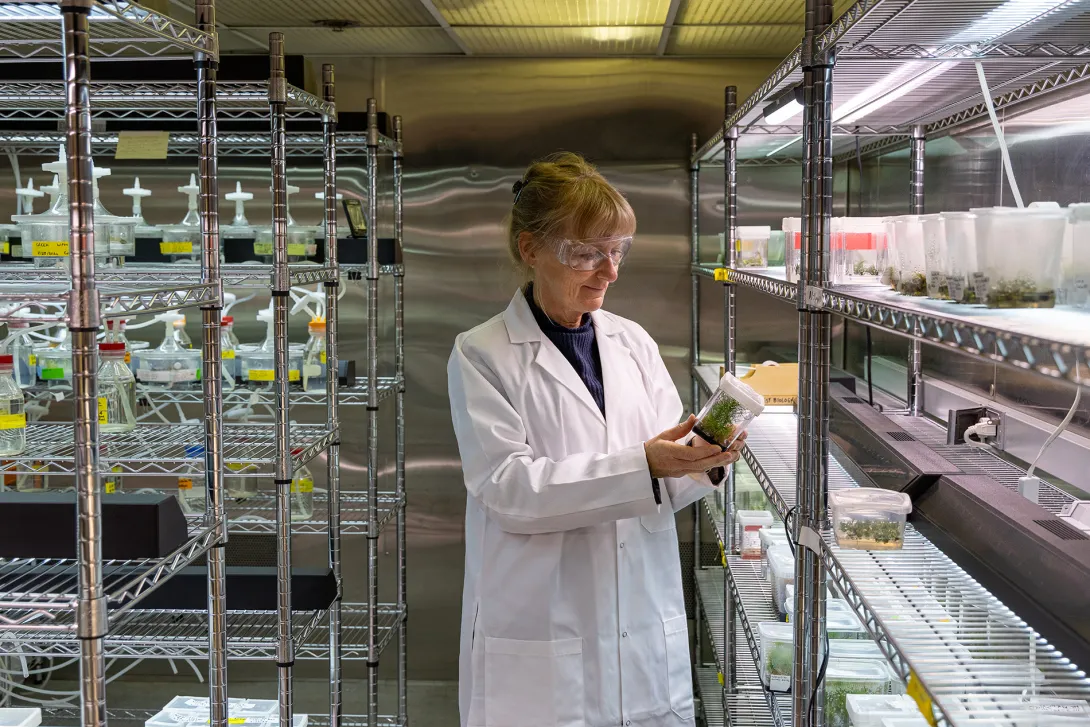
Ulrika Egertsdotter is a principal research scientist in the Renewable Bioproducts Institute and a renowned expert in seed cloning. She designs and develops automated technologies that produce valuable plants for the state’s forestry, agriculture, and horticulture industries. (Credit: Christopher McKenney)
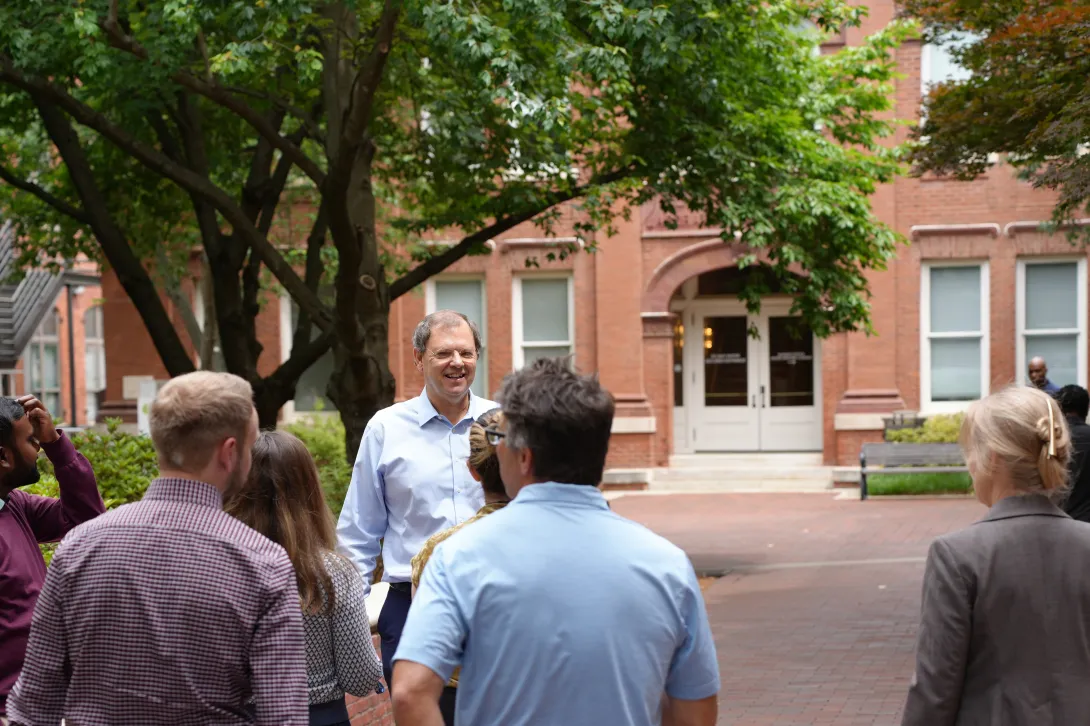
Joel Kostka and co-presenters at the RBI 2026 Spring Workshop. An international leader in ecosystem biogeoscience, Kostka is the inaugural faculty director of Georgia Tech for Georgia's Tomorrow, as well as Tom and Marie Patton Distinguished Professor and associate chair for Research in the School of Biological Sciences. He holds a joint appointment in the School of Earth and Atmospheric Sciences. (Credit: Jess Hunt-Ralston)
A Georgia Tech-led project advancing coastal resilience and ecosystem restoration has been selected for the inaugural Climate Resilience Fund cohort, awarded by Revive & Restore. The award is one of ten in a new $3.4 million fund to leverage genetic rescue for marine and coastal ecosystems under threat from climate shifts.
Led by Joel E. Kostka, Tom and Marie Patton Distinguished Professor and director of Georgia Tech for Georgia’s Tomorrow (GT²), the research effort will help restore coastal salt marshes through AI-enabled micropropagation and developing probiotics for plants. It is the only salt marsh-focused effort funded nationally in the cohort.
The award supports both the development of more climate-resilient salt marsh plants, as well as new capacity for coastal restoration in Georgia — an effort that aligns closely with GT²’s mission to connect research, innovation, and community needs to address critical environmental and community challenges.
Healthy Coasts
Salt marshes are among Georgia’s most important natural resources, helping buffer communities from storms, support fisheries, and sustain coastal economies. Yet the state currently lacks a reliable source of salt marsh seedlings needed for large-scale restoration.
The funded project addresses that gap by advancing the production of hardier marsh plants and laying the groundwork for a broader restoration economy.
“The opportunity here is to build something that doesn’t currently exist in Georgia — a scalable, science-driven supply of salt marsh plants for safer, healthier coastal communities and ecosystems,” Kostka says. “By combining biotechnology, ecology, and partnerships across the region, we are accelerating coastal resilience while supporting long-term environmental and economic benefits.”
Kostka will work with project co-researchers Else-Marie Ulrika Egertsdotter (Georgia Tech Renewable Bioproducts Institute) and Caitlin Petro (Georgia Tech Biological Sciences), Heather Joesting (Georgia Southern University), Emily Coffey and Lauren Eserman-Campbell (Atlanta Botanical Garden), and Sydney Williams (University of Georgia and Georgia Sea Grant) — along with several anticipated regional partners, including University of Georgia Marine Institute, GA/SC/NC Departments of Natural Resources, Southeastern Plant Conservation Alliance, and Bald Head Island Conservancy.
The team will create a “Climate-Ready Spartina Toolkit” with automated plant tissue culture, AI-based screening tools, a culture collection that serves as probiotics for plants, a seed bank and library of preserved plant materials, step-by-step instructions for successful growing, and ready for regional deployment.
The project also continues the evolution of Kostka’s collaborative research Egertsdotter and the Georgia Tech Renewable Bioproducts Institute. “RBI shares the goal of using biotechnology to produce climate-resilient plants that benefit society,” Kostka says. “Their expertise in plant tissue culture and automation make this work possible. It also is a great example of collaboration between GT Sciences and Engineering — the automation of plant tissue culture was developed by mechanical engineers in RBI.”
Regional Resilience
The new award builds on growing momentum for Georgia Tech for Georgia’s Tomorrow and its expanding network of collaborators focused on coastal resilience. Based in the College of Sciences, GT² is designed to align discovery science with technological innovation and data-driven tools to deliver practical solutions for communities across the state.
In April, GT² launched a formal research fund and partnership with the Bald Head Island Conservancy (BHIC), connecting Georgia Tech researchers with BHIC’s Johnston Center for Coastal Sustainability in North Carolina to advance shared work in coastal sustainability, ecosystem health, and environmental resilience.
The partnership combines BHIC’s applied, field-based conservation work with Georgia Tech’s strengths in technological innovation and data analysis, creating new opportunities for graduate research, community engagement, and real-world implementation.
Better Together
These “all hands on deck” approaches reflect a broader strategy to scale tangible solutions across regional ecosystems by connecting researchers and partners with community stakeholders.
“Together, we hope these projects will demonstrate that genetic rescue is a powerful lever for the blue carbon ecosystems that underpin both ecological and human communities in the face of climate change,” said Liv Liberman, Director of Ocean and Climate at Revive & Restore and program manager for the Climate Resilience Fund.
The efforts reflect GT²’s goal of creating pathways from research to implementation, working across sectors to deliver measurable outcomes for the southeastern environment and its communities.
“This award recognizes the kind of integrated, real-world research that GT² is built to deliver,” says Kostka. “We’re bringing together researchers, agencies, and community partners to move from science to scalable solutions — especially along southeastern coasts, where the need is urgent and the opportunities are significant.”
###
About Georgia Tech for Georgia’s Tomorrow
Georgia Tech for Georgia’s Tomorrow (GT²) is a College of Sciences–based initiative that connects discovery science, innovation, and partnerships to address pressing challenges in environmental and community resilience across Georgia. The initiative works with state agencies, industry, non-profits, and local communities to develop solutions that improve quality of life and strengthen the state’s future.
About Revive & Restore
Revive & Restore is a nonprofit conservation organization that develops and promotes genetic rescue technologies to protect and restore endangered and extinct species. Founded in 2012 by Stewart Brand and Ryan Phelan, the organization works across birds, mammals, coral, and marine ecosystems to demonstrate that biotechnology is an essential tool in the conservation toolkit.
News Contact
Jess Hunt-Ralston
Director of Communications
College of Sciences at Georgia Tech
Elizabeth Bennett
Communications Director
Revive & Restore
May. 11, 2026

After more than 25 years at Georgia Tech, including six years leading the Renewable Bioproducts Institute (RBI), Executive Director Carson Meredith will depart the Institute this summer to begin a new role at the University of Tennessee, Knoxville.
Effective August 1, Chris Luettgen will assume the role of interim director of RBI.
“Carson has made lasting contributions to Georgia Tech and to RBI during his time as executive director,” said Julia Kubanek, vice president for Interdisciplinary Research. “We are grateful for his leadership and wish him continued success in this next chapter.”
During his tenure, Meredith helped expand RBI’s research footprint, strengthen partnerships across academia and industry, and advance the Institute’s leadership in sustainable bioproducts and bio-based innovation. His work helped position RBI as a key driver of collaboration and research in the forest products and renewable materials sectors.
Luettgen brings extensive experience in forest-based and bio-based research, industry collaboration, and technical leadership. He has held leadership roles at Georgia Tech and has longstanding ties to the Institute of Paper Science and Technology (IPST), working extensively at the intersection of academic research and industry collaboration. He currently serves as Professor of the Practice in the School of Chemical and Biomolecular Engineering, where he teaches in Georgia Tech’s pulp and paper program and serves as RBI’s strategic lead for Pulp and Paper.
Before joining Georgia Tech, Luettgen spent many years at Kimberly-Clark and Scott Paper Company, where he held senior technical and research leadership positions focused on translating research into commercial impact. He is also widely recognized for his longstanding involvement with the Technical Association of the Pulp and Paper Industry (TAPPI), reflecting his commitment to advancing innovation, workforce development, and collaboration across the forest products and bioproducts industries.
“Chris brings deep expertise, strong industry connections, and a clear understanding of RBI’s mission and community,” Meredith said. “I’m confident he will provide steady leadership and continuity for the Institute during this transition.”
RBI will share additional details regarding the transition in the coming months.
News Contact
Yanet Chernet
Communications Officer I
Apr. 24, 2026
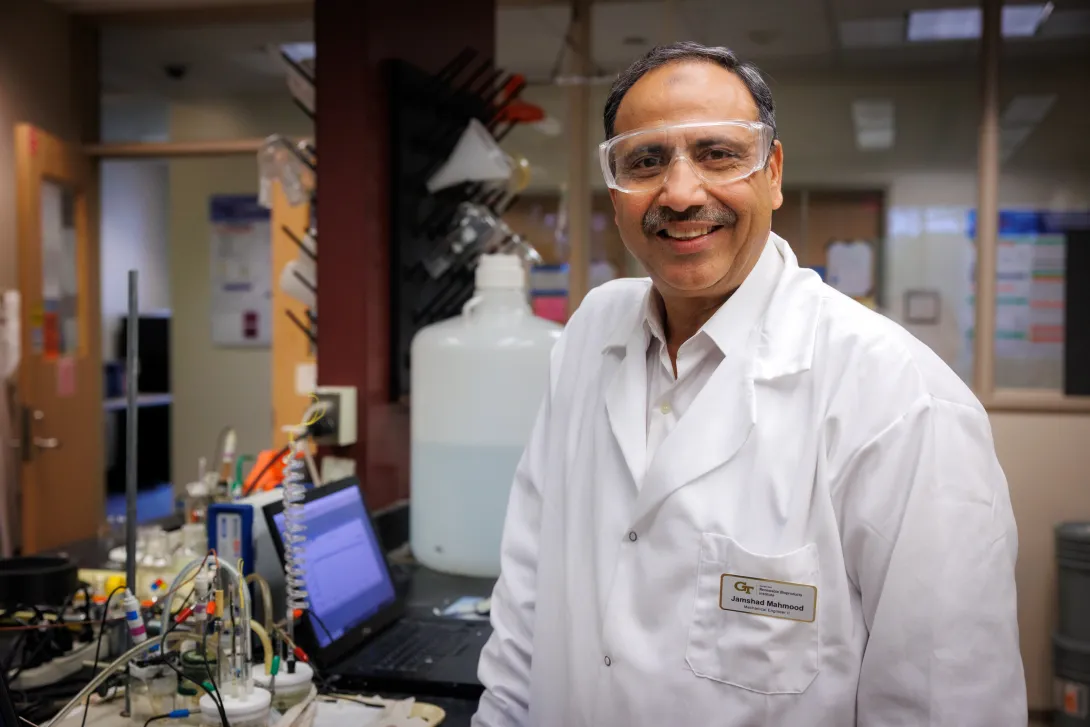
Corrosion remains a critical challenge across pulp and paper operations as well as a wide range of manufacturing processes and materials. It directly impacts the performance and longevity of equipment such as recovery boilers, digesters, reactors, storage tanks, piping systems, and paper machines. At the Renewable Bioproducts Institute (RBI), Jamshad Mahmood leads efforts to evaluate and mitigate these challenges through laboratory testing and field analysis.
Mahmood is a mechanical engineer with more than 23 years of experience in corrosion testing and the manufacturing of recovery boilers and pressure vessels. His work focuses on understanding material behavior under real operating conditions and identifying approaches to improve equipment reliability and safety.
At RBI, Mahmood oversees corrosion laboratories and chemical inventories that support both industry partners and research initiatives. His work includes slow strain rate testing, electrochemical analysis, high-temperature aqueous corrosion testing, and molten salts corrosion studies—methods used to assess material performance and inform industrial decision-making.
In parallel, Mahmood conducts field studies in operating facilities, evaluating in-situ corrosion in critical equipment such as recovery boiler tubes, digesters, paper machines, and storage systems. This combination of laboratory and field work provides a more complete understanding of corrosion mechanisms and their impact on industrial processes.
Through this work, Mahmood contributes to RBI’s efforts to improve the reliability, efficiency, and sustainability of industrial systems.
News Contact
Yanet Chernet
Communications Officer
Apr. 24, 2026
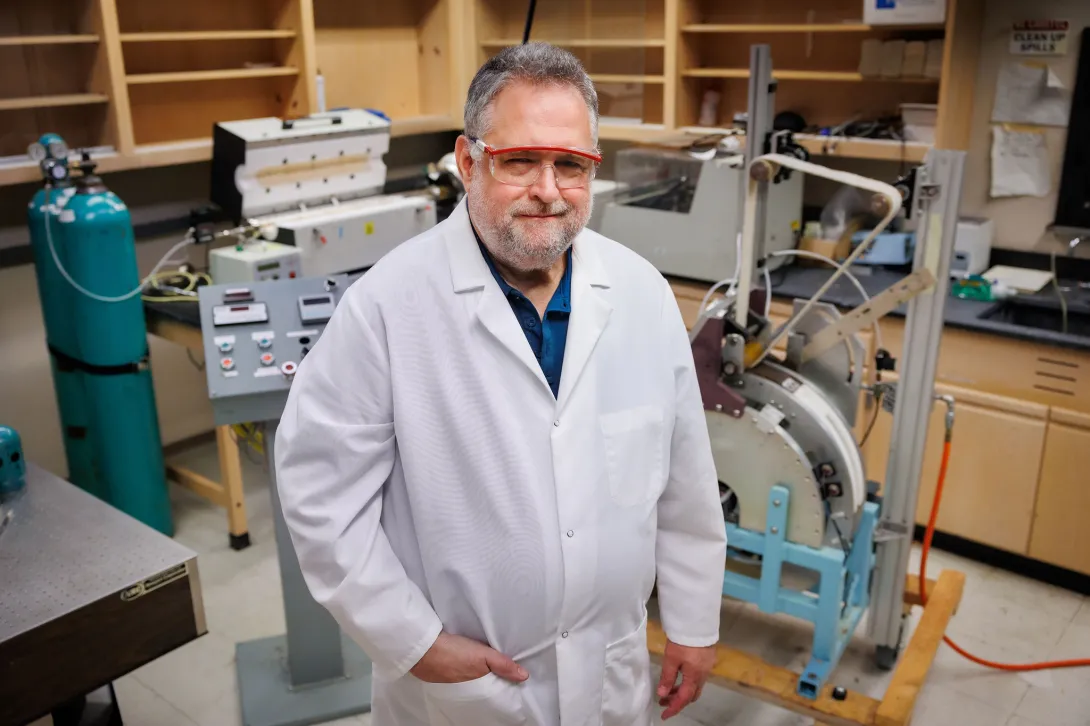
Scott Sinquefield is a senior research engineer at Georgia Tech’s Renewable Bioproducts Institute (RBI), where he leads research on black liquor gasification and advanced chemical recovery systems.
His work at Georgia Tech is closely tied to the development and operation of the Pressurized Entrained Flow Reactor (PEFR), one of the largest university-operated reactors of its kind used for high-temperature, high-pressure research. The system enables testing under conditions that reflect industrial recovery processes, supporting both fundamental research and applied work with industry partners.
Sinquefield brings more than two decades of experience in chemical engineering, with a focus on pilot-scale reactor design, control systems, and thermodynamic modeling of aqueous electrolyte systems. He has also worked extensively on boiler fire-side fouling, a persistent issue in industrial recovery operations that affect efficiency, maintenance, and cost.
Before joining Georgia Tech, Sinquefield completed his Ph.D. in Chemical Engineering at Oregon State University and conducted experimental combustion research at Sandia National Laboratories’ Combustion Research Facility in Livermore as part of the Multi-Fuel Combustion Group.
Across his work, Sinquefield focuses on developing and operating systems that support more efficient and reliable recovery processes, with applications in both industry and research.
Learn more about RBI’s Recovery Testing
News Contact
Yanet Chernet
Communications Officer
Apr. 15, 2026
Hanjiang (John) Xu serves as director of the Multiphase Forming Lab at Georgia Tech’s Renewable Bioproducts Institute (RBI), where he leads efforts to advance more efficient and sustainable approaches to paper formation.
The Multiphase Forming Lab is the only system of its kind in North America, designed to significantly reduce the amount of water required in the papermaking process. Lowering water usage—by up to 70 percent—the system also reduces the heat and energy needed for drying, one of the most energy-intensive stages in production. This work has direct implications for improving efficiency, reducing costs, and supporting more sustainable manufacturing practices across the industry.
Xu brings more than 20 years of experience in laboratory and pilot-scale papermaking systems, with expertise spanning fluid mechanics, materials science, instrumentation development, and process design. His work has consistently focused on bridging research and application, supporting both product development and process optimization.
Xu works with RBI members and industry partners to apply research insights to real-world manufacturing challenges, with a focus on reducing energy consumption and advancing next generation bioproducts.
Apr. 16, 2026
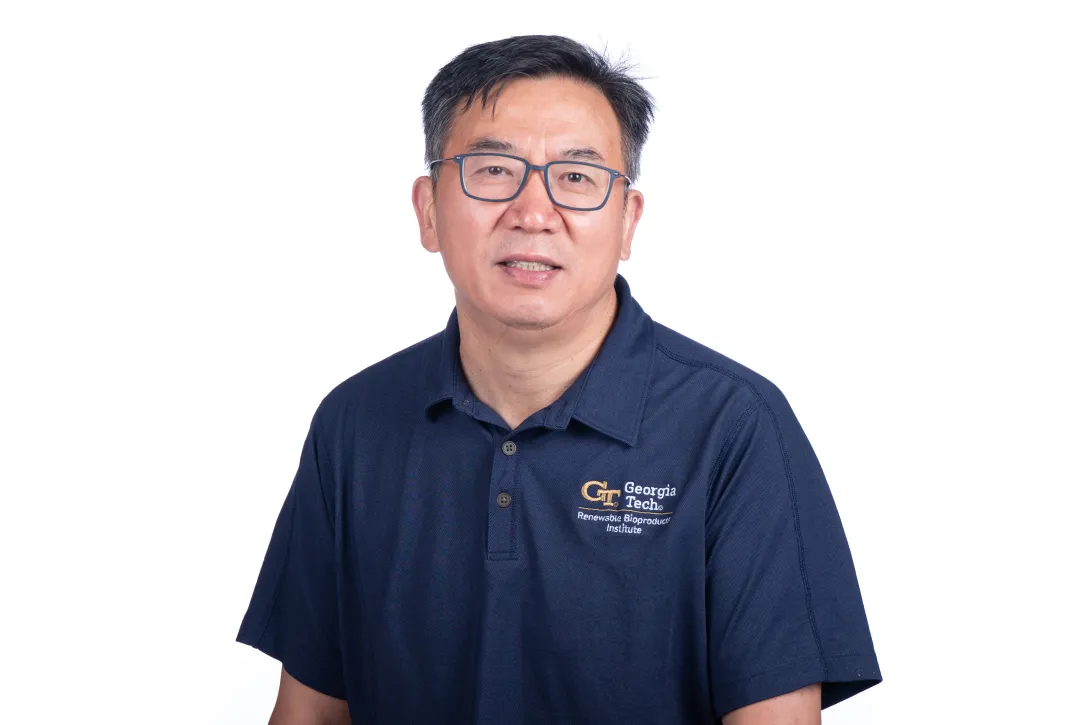
Hanjiang (John) Xu serves as director of the Multiphase Forming Lab at Georgia Tech’s Renewable Bioproducts Institute (RBI), where he leads efforts to advance more efficient and sustainable approaches to paper formation.
The Multiphase Forming Lab is the only system of its kind in North America, designed to significantly reduce the amount of water required in the papermaking process. Lowering water usage—by up to 70 percent—the system also reduces the heat and energy needed for drying, one of the most energy-intensive stages in production. This work has direct implications for improving efficiency, reducing costs, and supporting more sustainable manufacturing practices across the industry.
Xu brings more than 20 years of experience in laboratory and pilot-scale papermaking systems, with expertise spanning fluid mechanics, materials science, instrumentation development, and process design. His work has consistently focused on bridging research and application, supporting both product development and process optimization.
Xu works with RBI members and industry partners to apply research insights to real-world manufacturing challenges, with a focus on reducing energy consumption and advancing next generation bioproducts.
News Contact
Yanet Chernet
Communications Officer
Apr. 16, 2026
The Renewable Bioproducts Institute (RBI) has announced its newest cohort of 12 fellowship projects, an expansion that reflects both growing interest and a broader vision for bioproducts research at Georgia Tech.
This year’s cohort is one of the largest in recent years, signaling renewed momentum in the research areas it supports.
“This year’s projects reflect the strength of our core areas while also showing how the field is expanding,” said Carson Meredith, executive director of RBI. “We’re seeing faculty from more disciplines engage in bioproducts research in ways that open up new opportunities for collaboration and impact.”
That expansion is reflected in where the fellowships are being awarded. For the first time, RBI has selected faculty from the School of Architecture (ARCH) in the College of Design and the School of Biological Sciences (BIOS) in the College of Science, continuing to broaden participation beyond its traditional base in chemistry and engineering.
The projects themselves reflect that shift. This year’s projects work on topics ranging from microbial approaches to strengthening forest health to developing next-generation packaging materials, including high-performance barrier coatings and cellulose-derived materials.
The projects also advance the use of AI and machine learning in bioproducts development, the physics of fiber networks, and converting biomass into pharmaceuticals and synthetic leather.
Many of these efforts align closely with industry priorities, particularly in packaging, papermaking, and sustainable materials—areas where demand for scalable, sustainable solutions continues to grow.
Together, the 2026 cohort points to a program that is expanding its reach across disciplines while staying focused on real-world applications of bioproduct research.
The 2026 RBI Fellowship projects and associated faculty are listed below.
Physics-Guided Learning of Mechanical Behavior in Forming-Stage Fiber Networks
Shuman Xia*, Ting Zhu*, John Xu (ME/RBI)
Upcycling Wood-Derived Cellulose Nanomaterials into Circular Barrier Coatings for Postharvest Preservation
Vida Jamali*, Amirali Aghazadeh*, Lily Cheung (ChBE/ECE)
Reimagining Southern Forests: Microbial Biotechnology for High Value Climate-Ready Biomass Feedstocks
Joel Kostka*, Ulrika Egertsdotter (BIOS/RBI)
Integrated Experimental-Computational-ML Framework for Accelerated Evaluation and Design of Biodegradable Barrier Coating for Paper-Based Packaging
Aditya Kumar*, YuHang Hu*, Danny Smyl* (CEE/ME)
Direct Method for Analysis of Fiber Orientation in Multiphase Forming
Suhas Jain*, Cyrus Aidun (ME)
Robust Packaging Insert via Phase-Separated Lignin Aerogel Particle-Supported Cellulose Hydrogel Composites
Shucong Li*, Julene Tong (MSE/ChBE)
Towards Continuous Processes from Biochar to Pharmaceuticals
Andy Bommarius, Anthony "Bo" Arduengo, Jesse McDaniel (ChBE/CHEM)
ALD Modification of Nanocellulosic Films for Ultra-High Barrier Performance
Mark Losego, Meisha Shofner (MSE)
Biomass-Derived Glycosyl Furans for the Development of Novel Value-Added Materials
Stefan France, Chris Jones (CHEM/ChBE)
Design and Scale-Up of Mechanochemical Reactors for Cellulose Biorefining
Fani Boukouvala, Carsten Sievers (ChBE)
Xylohyde™: The Sustainable Production of Synthetic Leather from Cellulose
Anthony "Bo" Arduengo, Chris Luettgen (CHEM/RBI/ChBE)
Tailorable PLA-Alginate High-Performance Bio-Nanocomposites via Chitosan Cationic Bridging of Sargassum-Derived Alginate and Polylactic Acid (PLA)
Karl Jacob, Ingebourg Rocker*, Kyriaki Kalaitzidou, Hamid Garmestani (ME, ARCH, MSE)
*Indicates first-time RBI fellowship recipients.
News Contact
Yanet Chernet
Communications Officer
Apr. 15, 2026
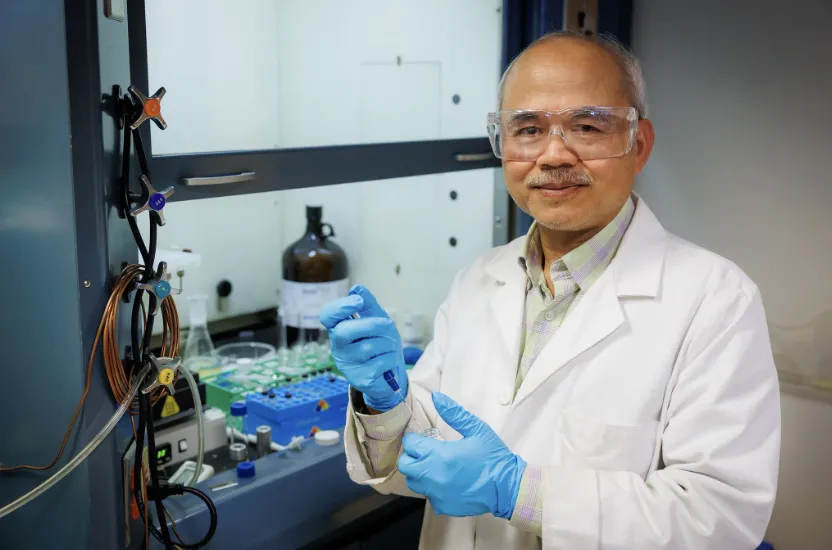
Georgia Tech’s Renewable Bioproducts Institute (RBI) supports industry and research partners through a range of testing and analysis services—and much of that work runs through the labs led by Rallming Yang, a senior research scientist at the institute.
With a Ph.D. in Environmental and Resource Engineering from the SUNY College of Environmental Science and Forestry and earlier degrees in pulping and paper engineering from the South China University of Technology, Yang brings decades of experience in wood chemistry, chemical analysis, analytical method development, and lab management. He joined Georgia Tech in 2000 and has since taken on increasing leadership roles across RBI’s lab operations.
Yang’s work sits at the intersection of research and industry. His team provides research, chemical testing and analysis for manufacturers working with biomass—everything from pulp and paper mills to research groups developing new bio-based products. The goal is straightforward: understand what’s in the material, how it behaves, and how to make processes more efficient and reliable.
Today, he oversees research and testing services that support both industry partners and academic communities. These services range from chemical composition analysis to process troubleshooting, helping companies better understand materials derived from biomass and optimize their operations.
In addition to leading lab operations, Yang also teaches the Pulp & Bleaching Lab course at Georgia Tech, giving students hands-on experience with the same analytical techniques used in industry. As industries continue to look for more efficient and environmentally responsible ways to use natural resources, Yang’s work and his labs play a critical role in making that transition possible.
Learn more about the Chemical Analysis Lab and Pulp Analysis Lab.
News Contact
Yanet Chernet
Communications Officer
Mar. 17, 2026
Jie Wu, an engineering graduate student, was studying a type of striking white beetle found in Southeast Asia and attempting to figure out how to mimic its brilliant color when an unexpected discovery upended the experiment.
Jie and I had been hoping to identify naturally occurring whitening pigments that could be used in paper and paints. The beetle’s white exoskeleton is made from a compound called chitin, which is a type of carbohydrate – one that is also commonly found in crab and lobster shells.
Read the full article in The Conversation here: https://bit.ly/4uBteYr
News Contact
Yanet Chernet
Communications Officer I
Georgia Tech
Mar. 10, 2026
Georgia Tech is pleased to partner with the Georgia Forestry Commission on the approved $8.9 million Georgia Forestry Innovation Initiative included in Gov. Brian Kemp’s amended FY 2026 budget.
Georgia’s forest industry has long been a pillar of the state’s rural economy. But in recent years, mill closures and shifting markets have put pressure on landowners, workers, and entire communities, particularly in south Georgia. A recently approved $8.9 million Georgia Forestry Innovation Initiative will help chart a new path forward, creating more value from Georgia’s abundant forest resources and expanding opportunities for the people and regions depending on them.
Georgia Tech is pleased to partner with the Georgia Forestry Commission on the approved $8.9 million Georgia Forestry Innovation Initiative included in Gov. Brian Kemp’s amended FY 2026 budget. This effort aims to transform low-value wood and mill byproducts into high-value materials, strengthening Georgia’s forest-based economy and supporting new commercial opportunities across the state. The initiative will establish pilot facilities and accelerate technology to business transfer in partnership with industry, with the long-term goal of enabling multiple manufacturing sites across Georgia.
“We appreciate the state’s investment in helping move these innovations from the lab to Georgia businesses,” said Carson Meredith, executive director of Tech’s Renewable Bioproducts Institute (RBI). “We also acknowledge the critical support of industry collaborators and partners like the Georgia Forestry Association and Georgia Forestry Foundation.”
The work builds on collaborative interdisciplinary research at Georgia Tech involving School of Chemical and Biomolecular Engineering Professors Andreas Bommarius, Chris Luettgen and Meredith; School of Chemistry and Biochemistry Professor Stefan France and Professor of the Practice A.J. “Bo” Arduengo; and H. Milton Stewart School of Industrial Systems and Engineering Professor Valerie Thomas. Gary Black, RBI program manager, has also contributed to this effort. It is led by RBI’s Center for a Renewables-Based Economy from Wood (ReWOOD.) The effort reflects years of cross-disciplinary collaboration among faculty and staff committed to advancing sustainable, wood-based technologies.
News Contact
Media Contact:
Jennifer Martin
jennifer.martin@research.gatech.edu