
May. 18, 2026
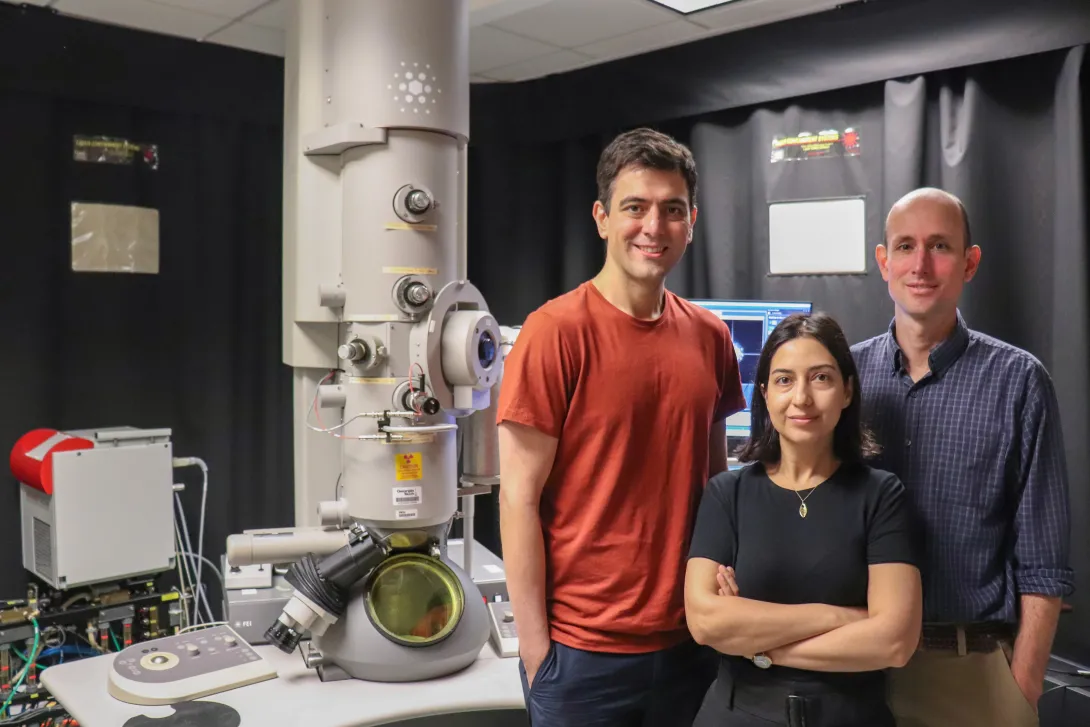
A photo of Vida Jamali, assistant professor the School of Chemical and Biomolecular Engineering; Amirali Aghazadeh, assistant professor in the School of Electrical and Computer Engineering; and Josh Kacher, associate professor in the School of Materials Science and Engineering standing in front of a TEM at Georgia Tech.
Scientific discovery is often portrayed as the result of long hours alone in a lab, but true science is inherently collaborative. The most robust experimental processes are developed through partnerships across multiple areas of research. The need for specialized, multidisciplinary teams slows experiment design, execution, data analysis, and process updates, delaying technological validation and deployment. But if the increasingly automated tools scientists already use in the lab could contribute to this team process of experimental design, the timeline for these goals could be greatly accelerated.
This concept of “lab tool as lab assistant” is the premise of a recent paper in npj | Computational Materials titled “Thinking Microscopes: Agentic AI and the Future of Electron Microscopy,” by Vida Jamali, assistant professor the School of Chemical and Biomolecular Engineering; Amirali Aghazadeh, assistant professor in the School of Electrical and Computer Engineering; and Josh Kacher, associate professor in the School of Materials Science and Engineering.
In the paper, the team introduces the concept of “thinking electron microscopes,” in which agentic AI systems are directly integrated with the instrument. This allows microscopes to move beyond their conventional role as characterization tools and toward functioning as co-scientists for human users.
Drawing on advances in specialized large language models, or LLMs, that demonstrate their ability to collaborate, reason over data, and integrate prior knowledge, the team envisions specialized LLM-based agents assigned to specific roles and areas of knowledge expertise. By explicitly incorporating domain knowledge into specialized agents and distributing information across multiple agents with focused expertise, the approach enables parallel evaluation of competing hypotheses, clearer separation of roles — such as planning, simulation, and critique — and more transparent and robust reasoning.
Within the experimental pipeline, these agents can analyze materials’ properties, physical data, chemical processes, and other relevant parameters. They could also collaborate with an agent that specializes in experimental design, refining iterative closed-loop experimentation, and real-time scientific discovery.
Although the research focuses on AI collaboration, the team notes that human researchers must retain accountability for the accuracy and integrity of both the experimental process and the results reported. This oversight begins with advocating for greater open access to research materials in all formats, building community-driven data repositories, and adopting standardization in how experimental parameters and metadata are reported. Equally important, researchers should be willing to report data from failed experiments as well as successful outcomes. Finally, organizations should work together to standardize secure APIs that enable shared, remote access to infrastructure across distances.
We see this as a step toward scientific instruments that do more than acquire data; systems that can reason over experiments, adapt measurements, and participate in the scientific discovery process alongside researchers. - Vida Jamali, assistant professor the School of Chemical and Biomolecular Engineering
The team is already developing these systems by connecting cloud-based, agentic infrastructures to microscopes at the Institute for Matter and Systems at Georgia Tech. With the addition of agentic AI, the goal is to accelerate discovery and engineering of new nanoscale materials for energy and quantum applications, as well as advance capabilities in cryo-electron microscopy and structural biology. These tools can optimize data collection, link real-time microscope observations with structural models of proteins, and dynamically adjust and prioritize experiments. The team sees this work as the first step toward the next generation of “thinking” electron microscopes, as well as an advancement in scientific discovery across domains.
- Christa M. Ernst
This research is supported by the Institute for Data Engineering and Science and the Institute for Matter and Systems
Original Publication
Jamali, V., Aghazadeh, A. & Kacher, J. Thinking microscopes: agentic AI and the future of electron microscopy. npj Computational Materials 12, 149 (2026). https://doi.org/10.1038/s41524-026-02077-y
News Contact
Apr. 28, 2026
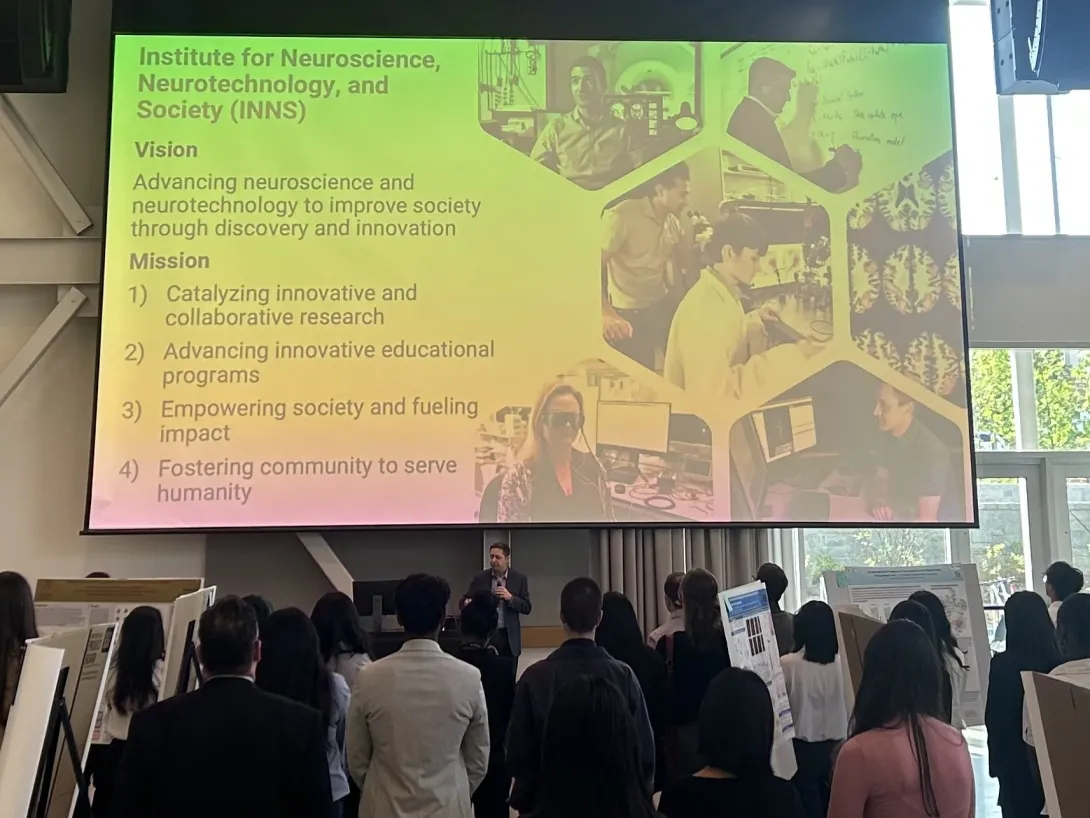
Chris Rozell is giving the opening remarks at the ATL Neuro Networking and Symposium Night.
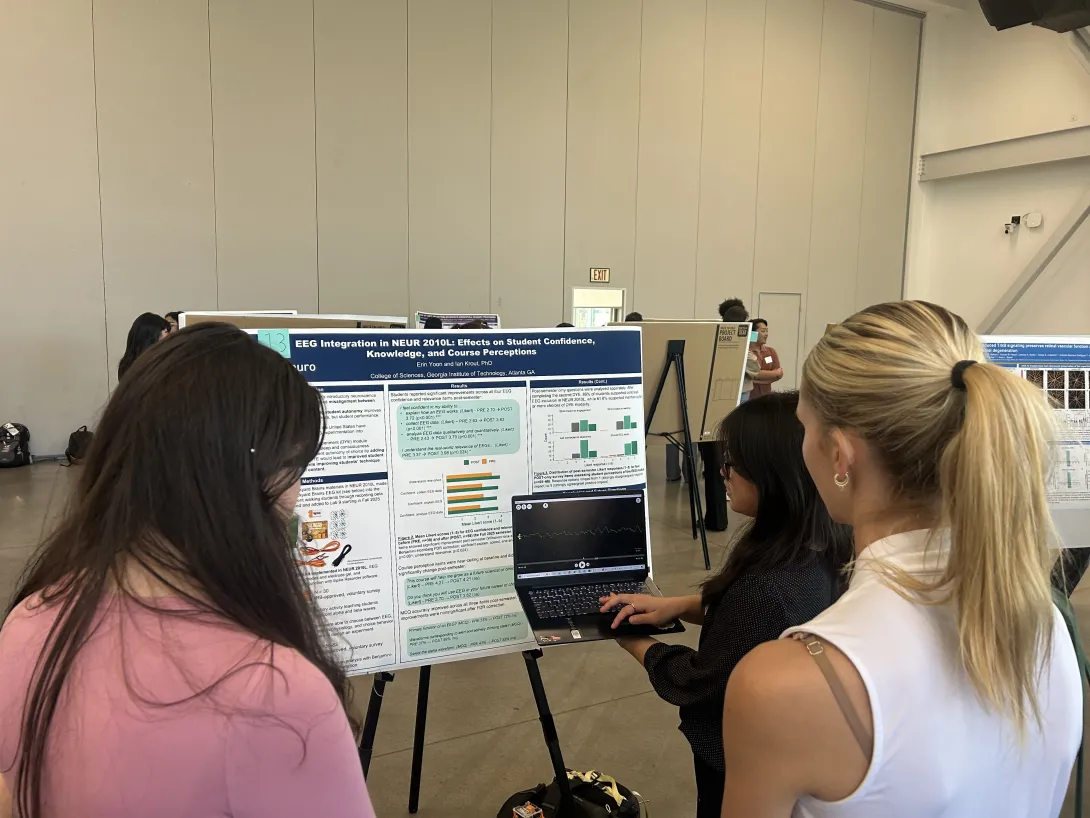
A group of students is discussing a poster, and the presenter is giving an example during the first poster session.
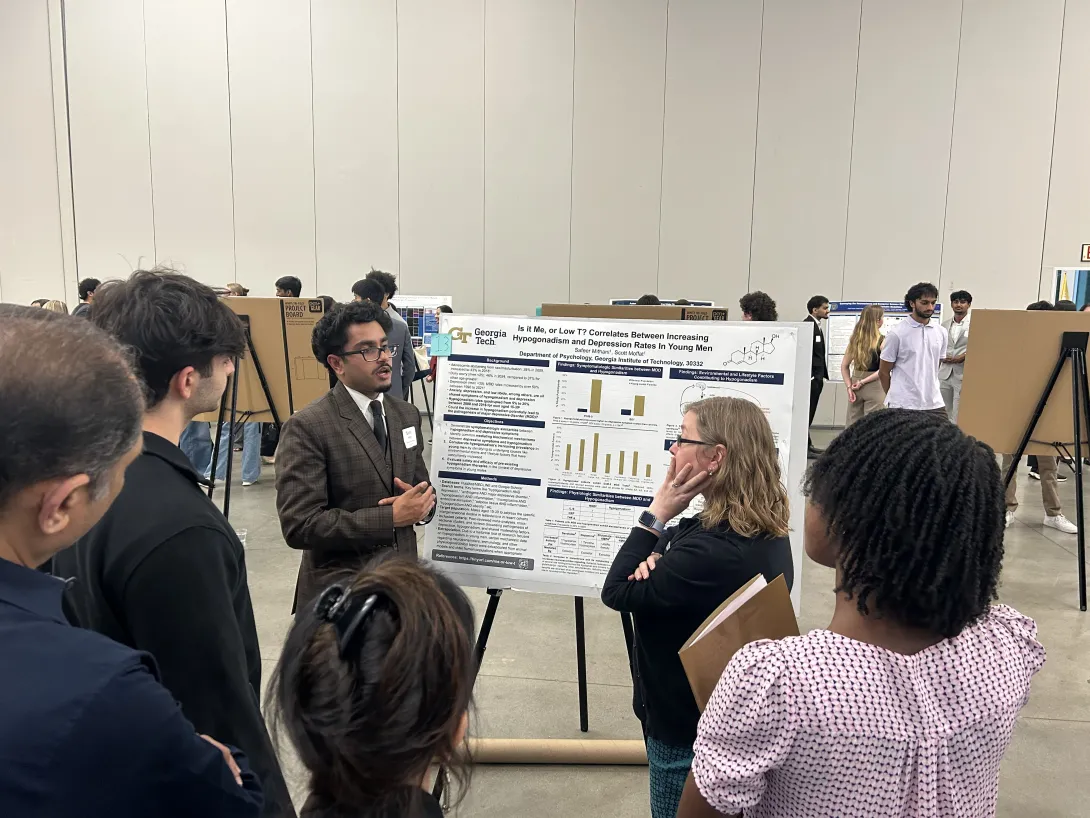
A group of students and faculty is discussing a poster during the second poster session.
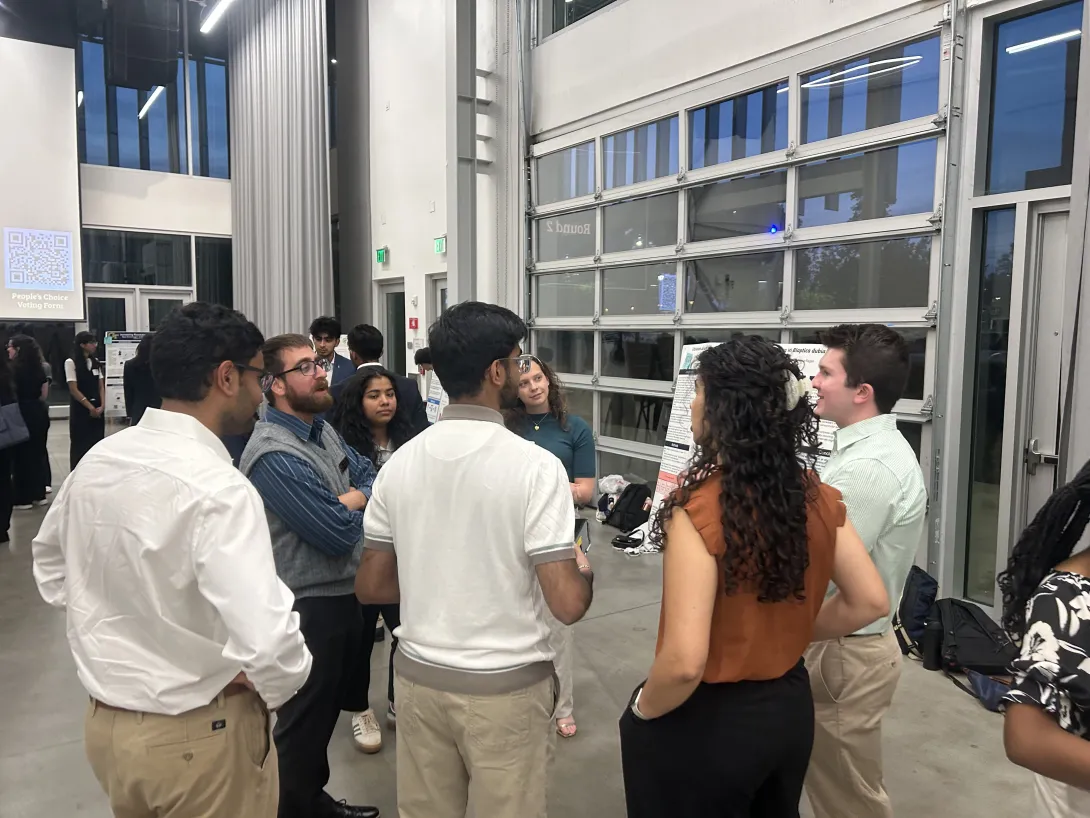
A group of students and faculty is discussing a capstone poster during the second poster session.
At Georgia Tech, undergraduate students are an integral part of the research enterprise – particularly when it comes to neuroscience. That dedication to undergraduate research was on full display on April 8, when more than 100 students from Atlanta-area universities gathered for the annual ATL Neuro Networking and Symposium Night.
This student-run event, hosted by the Georgia Tech Student Neuroscience Association (SNA) and co-sponsored by the Institute for Neuroscience, Neurotechnology, and Society (INNS) and the Neuroscience Undergraduate Program at Georgia Tech, aimed to bring together students and faculty from the broader Atlanta neuroscience community for an evening of data-blitz talks showcasing faculty research, undergraduate poster presentations, and catered networking.
“Our goal was to bridge the gap between Atlanta’s institutions and showcase the diversity of undergraduate research,” says Harshin Vijay, symposium director of SNA. “By bringing these groups together through SNA, we’re fostering an ecosystem where the next generation of scientists can exchange ideas and build collaborative networks essential for future innovation."
The impact of undergraduate neuroscience research is “more than bench to bedside,” said INNS Executive Director Chris Rozell at the event. “It’s about advancing neuroscience and neurotechnology to improve society through discovery and innovation. Undergraduate research catalyzes innovation – invigorating and advancing educational programs through collaboration that empowers society – fueling impact and fostering the community of next-generation scientists.”
Featuring more than 40 undergraduate posters, research topics ranged anywhere from the impact of music on associative memory to the role of taste projection neurons in Drosophila. Some students even examined their own coursework, either as a TA or their involvement with capstone research.
“There are neuroscientists in every College at Georgia Tech, and we have undergraduate neuroscience students performing research all over campus and in the broader Atlanta neuroscience community,” says Katharine McCann, the director of Undergraduate Research for Georgia Tech’s neuroscience program. “Events like this bring those students together to learn from each other and broaden their networks. It is exciting to see so many students passionate about their research.”
Four posters were awarded for their work:
Best Poster Design: “Role of Taste Projection Neurons in Drosophila Taste Processing”
- Hanti Jiang, Emory University
Best Presentation: “Neuroscience and Computer Science Roots of Pattern Recognition”
- Rishi Polepally, Georgia Tech
- Aryan Kumar, Georgia Tech
- Vedanth Natarajan, Georgia Tech
Best 4001 Group: “Evaluating Cognitive Engagement in AI-Generated VS. Human-Created Educational Content”
- Hannah Ammari, Georgia Tech
- Shobini Palaniappan, Georgia Tech
- Rayhan Quraishi, Georgia Tech
- Aryan Shah, Georgia Tech
- Divya Tadanki, Georgia Tech
People's Choice Award: “Vibration as an effective facilitation of sensorimotor learning in Blaptica dubia cockroaches”
- Diana Sethna, Georgia Tech
- Jacob Hayes, Georgia Tech
- Ellie Kate Watson, Georgia Tech
- Arya Oak, Georgia Tech
Esha Panse, Georgia Tech
- Hersh Mathur, Georgia Tech
News Contact
Writer: Hunter Ashcraft
Communications Student Assistant
Institute for Neuroscience, Neurotechnology, and Society
Media Contact: Audra Davidson
Research Communications Program Manager
Institute for Neuroscience, Neurotechnology, and Society
Mar. 25, 2026
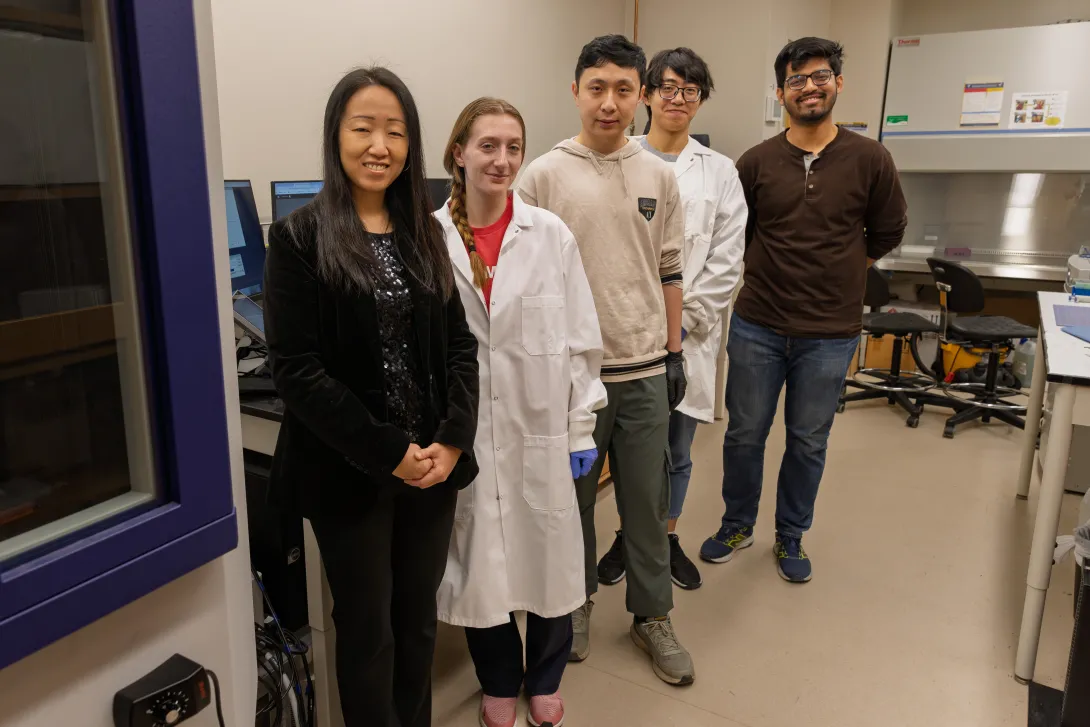
Most plastic and rubber materials remain in a fixed shape from the moment they leave the mold. Their size and function are the same until they wear out or break. But what if synthetic materials could behave more like living organisms, growing or repairing themselves when needed?
A research team led by Yuhang Hu, associate professor in the George W. Woodruff School of Mechanical Engineering and the School of Chemical and Biomolecular Engineering, has created a new material designed to do exactly that. In a new study published in Advanced Materials, Hu and her collaborators describe a groundbreaking class of “living” polymers that can grow, shrink, heal, and even regenerate long after fabrication.
Their work combines advances in chemistry, mechanics, and materials design into a polymer platform that could reshape how engineered products are built, maintained, and recycled.
Read the full story on the George W. Woodruff School of Mechanical Engineering website.
News Contact
Ashley Ritchie
George W. Woodruff School of Mechanical Engineering
Mar. 27, 2026

Taken aboard Apollo 8 by Bill Anders, this iconic picture shows Earth peeking out from beyond the lunar surface as the first crewed spacecraft circumnavigated the Moon, with astronauts Anders, Frank Borman, and Jim Lovell aboard. (Credit: NASA)

Advik Vira
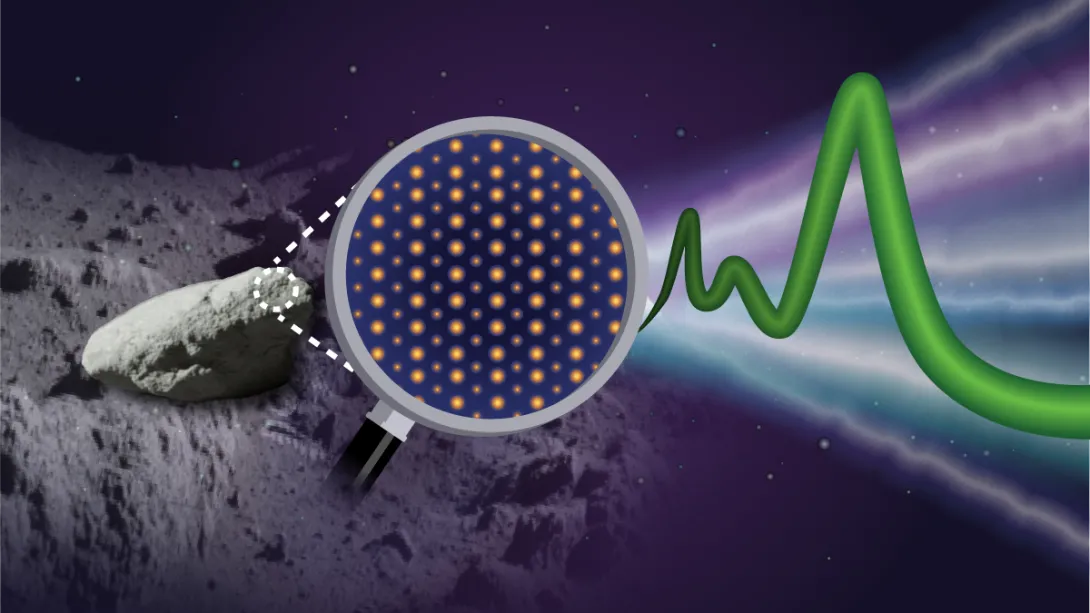
An illustration of the Apollo rock 75035 on the Moon, an atomic image of the sample, and its spectral signature. (Credit: August Davis)

An optical image of the chip from the lunar rock the team investigated.
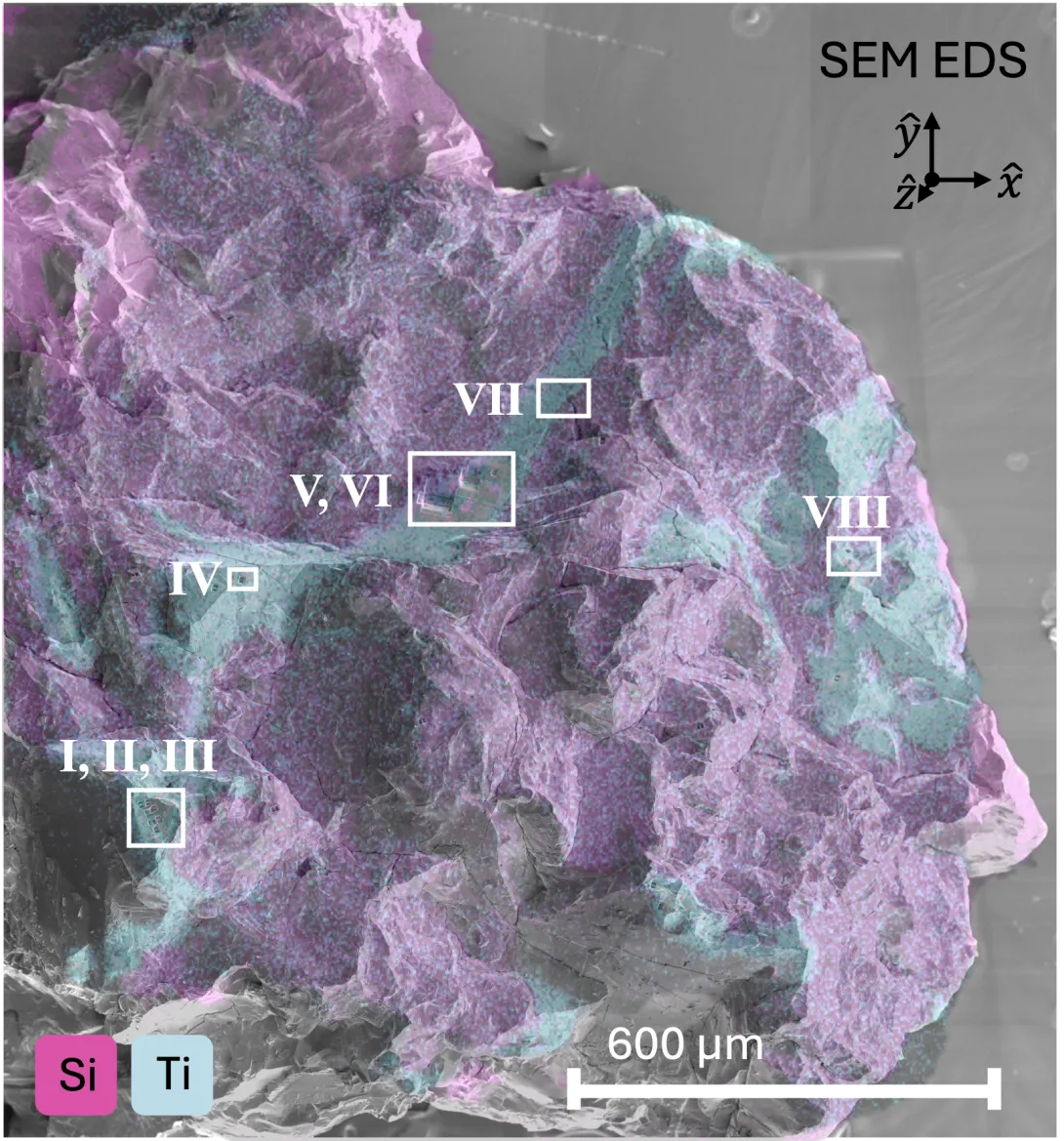
An image of the chip from the sample, imaged using scanning electron microscopy. Titanium is shown in light blue, and white boxes show areas where samples were extracted to analyze the ilmenite crystal.
A chemical signature hidden in a 3.8‑billion‑year‑old lunar rock is offering new insights into the availability of oxygen within the young Moon.
Published today in the journal Nature Communications, the paper “Trivalent Titanium in High-Titanium Lunar Ilmenite” confirms titanium in a reduced, trivalent state in a black, metal-rich lunar mineral called ilmenite. It’s a state only possible in low-oxygen environments, conditions researchers refer to as “reducing.”
“Models have suggested that these reducing conditions may have varied at different locations and times across the surface of the Moon,” says lead author Advik Vira, a graduate student in the School of Physics who recently earned his doctoral degree. “We hope our microscopy technique can be a valuable step in mapping and understanding the Moon’s 4.5-billion-year history.”
The team anticipates that their technique could be used on many of the lunar samples collected more than 50 years ago by the Apollo missions in addition to the Apollo Next Generation Samples — a group of lunar samples that have been stored under pristine conditions — and new samples from the planned Artemis missions, with Artemis II slated for launch this spring. The technique might also be applicable to samples collected from the far side of the Moon and returned in 2024 by the Chang’e-6 mission.
“The Moon holds clues not only to its own past, but also to the earliest eras of Earth’s evolution — history that has long since been erased from our planet,” Vira says. “This study is a step toward understanding the history of both and a reminder that there is still so much left to learn from the lunar rocks we’ve brought back to Earth.”
The School of Physics research team included corresponding authors Vira and Professor Phillip First; in addition to graduate student Roshan Trivedi; undergraduate students Gabriella Dotson, Keyes Eames, Dean Kim, and Emma Livernois; and Professor Zhigang Jiang, along with Institute for Matter and Systems Materials Characterization Facility Senior Research Scientist Mengkun Tian; School of Chemistry and Biochemistry Senior Research Scientist Brant Jones and Thom Orlando, Regents' Professor in the School of Chemistry and Biochemistry with a joint appointment in the School of Physics.
The Georgia Tech team was joined by Addis Energy Senior Geochemist Katherine Burgess; Macalester College Assistant Professor of Geology Emily First; along with Lawrence Berkeley National Laboratory Research Scientist Harrison Lisabeth, Senior Scientist Nobumichi Tamura, and Postdoctoral Fellow Tyler Farr, who recently earned a Ph.D. from Georgia Tech’s George W. Woodruff School of Mechanical Engineering.
CLEVER research
The investigation began with a dark gray rock called a lunar basalt. Formed when ancient magma erupted on the Moon’s surface, minerals crystallized as it cooled — preserving key information in their structures. Billions of years later, the rock was brought to Earth by the 1972 Apollo 17 mission, where a small piece is now stored at Georgia Tech’s Center for Lunar Environment and Volatile Exploration Research (CLEVER), a NASA Solar System Exploration Research Virtual Institute (SSERVI) center led by Orlando.
As a NASA virtual institute, CLEVER supports researchers exploring lunar conditions and developing tools for the upcoming crewed Artemis missions, and provided the lunar samples for this research. The SSERVI also plays a critical role in training the next generation of planetary researchers: both Vira and Farr earned their Ph.D.s while on the CLEVER team.
“At CLEVER, we are very interested in understanding the impacts of space weathering,” Vira says. “We implemented modern sample preparation and advanced microscopy techniques to image samples at the atomic level, and were curious to apply it more broadly to the collection of Apollo rocks in the Orlando Lab. This sample caught our attention.”
“When we imaged an ilmenite crystal from the lunar basalt, what struck us first was how uniform and perfect the crystal structure was,” he recalls. “We found no defects from space weathering and instead saw an undamaged, pristine crystal — undisturbed for 3.8 billion years.”
To investigate further, the team analyzed small chips of the rock with Burgess, a member of the RISE2 SSERVI team and then a geologist at the U.S. Naval Research Laboratory. Using state-of-the-art electron microscopy and spectroscopy techniques, Vira determined the oxidation state of the elements in the ilmenite present.
In spectroscopy measurements, each element leaves a distinct ‘signature,’ Vira explains. “When we brought our results back to Georgia Tech’s Materials Characterization Facility, Mengkun (Tian) noticed something unusual: the signature showed titanium might be present in the trivalent state.”
The presence of trivalent titanium had long been suspected in this lunar mineral. The team was intrigued.
A new window into old rocks
With funding from Georgia Tech’s Center for Space Technology and Research (CSTAR), Vira returned to the U.S. Naval Research Laboratory to analyze additional samples. The results confirmed that more titanium was present than the mineral’s formula (FeTiO₃) predicts — indicating a portion of the titanium present was trivalent.
“That led me to place our measurements in terms of the broader geological context,” Vira shares. Working with First, Vira explored how ilmenite with trivalent titanium could help reconstruct the nature of ancient magmas from the Moon, especially the chemical availability of oxygen.
“Because its location on the Moon was noted during the Apollo mission, we know exactly where this rock is from, and we can determine how old the rock is,” he explains. “When coupled with our trivalent titanium measurements, we can use that information to estimate the reducing conditions for this specific region at the specific time our rock formed.”
If the upcoming Artemis missions return samples suitable for the team’s technique, these rocks could provide a new window into ancient lunar geology. The research also highlights that many lunar samples already on Earth could be reexamined to look for trivalent titanium.
“There is still so much to learn from the lunar samples we have already brought to Earth,” Vira says. “It’s a testament to the long-term value of each sample return mission. As technology continues to advance, this type of work will continue to give us critical insights into our planet and our place in the universe for years to come.”
DOI: 10.1038/s41467-026-69770-w
Funding: This work was directly supported by the NASA SSERVI under CLEVER. Researchers were also supported by the NASA RISE2 SSERVI and the Heising-Simons Foundation. Funding for collaborations between the U.S. Naval Research Laboratory and Georgia Tech for the investigation of lunar minerals was provided by the Georgia Tech Center for Space Technology and Research. Sample preparation was performed at the Georgia Tech Institute for Matter and Systems, which is supported by the National Science Foundation. This work utilized the resources of the Advanced Light Source, a user facility supported by the U.S. Department of Energy, Office of Science, Office of Basic Energy Sciences, and was supported in part by previous breakthroughs obtained through the Laboratory Direct.
Mar. 06, 2026
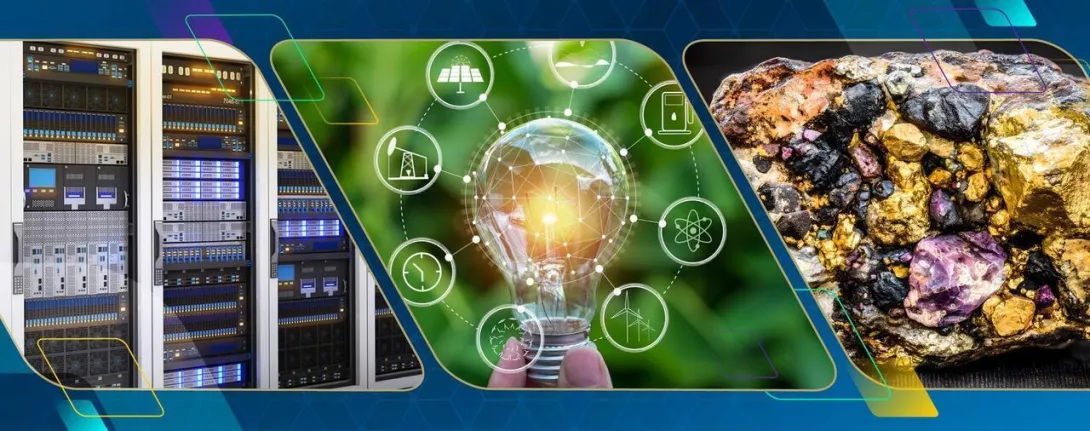
Georgia Tech Energy Day returns this year on March 19 with an expanded focus and a new collaborative momentum. Cohosted by the Georgia Tech Institute for Matter and Systems (IMS) and the Strategic Energy Institute, (SEI) with plenary session support from the Energy Policy and Innovation Center, Energy Day 2026 convenes leaders from academia, industry, government, and students to address the challenges associated with meeting the rapidly growing electricity demand driven by artificial intelligence (AI) and high-performance computing.
Set in the heart of Tech Square on the Georgia Tech campus, this year’s event explores how energy systems, materials, technologies, supply chains, and policy must evolve in response to AI’s accelerating impact. As digital infrastructure expands and computation intensifies, the need for reliable, resilient, and sustainable power has never been more urgent.
“Energy Day reflects Georgia Tech’s strength in connecting world-class research in materials and components with the infrastructure and partnerships needed to translate discovery into scalable energy technologies that serve industry, society, and the future economy,” said Eric Vogel, executive director of the IMS and the Hightower Professor in Materials Science and Engineering.
Energy Day 2026 also marks an important milestone with the introduction of its first group of corporate sponsors: GE Vernova, Southern Company, Georgia Power, ExxonMobil, Southwire Spark, Gems Setra, and Tektronix. Their support reflects a shared commitment to advancing energy solutions.
“Tektronix is excited to be part of Energy Day because advancing the future of energy starts with precise measurement and trusted insights,” said Christopher Bohn, president of Tektronix. “From power electronics and high voltage systems to grid scale renewables and AI driven control technologies, the breakthroughs discussed here directly align with the innovations we support through our products and solutions. Collaborating with Georgia Tech allows us to engage early with emerging research and the next generation of engineers—critical collaborators in building a cleaner, smarter, and more resilient energy ecosystem.”
The keynote address will be delivered by Vanessa Z. Chan, a nationally recognized leader at the intersection of innovation, commercialization, and emerging technologies. Chan will provide insights on accelerating technological discovery, emphasizing how AI is transforming energy and materials design. She will discuss how commercialization strategies must rapidly evolve across multidisciplinary energy domains from grid modernization to advanced batteries and clean manufacturing.
Building on the themes introduced in the keynote, the program transitions into a fireside chat with Georgia Tech EVPR Tim Lieuwen featuring Amit Kulkarni and Jim Walsh. Kulkarni is vice president of Product Management and Strategy for the Gas Power business within GE Vernova, where he oversees the world’s largest portfolio of power generation equipment. Walsh, vice president of GE Vernova’s Consulting Services, leads teams providing innovative solutions across the full spectrum of power generation, delivery, and utilization.
Next comes a policy-focused panel that will explore the surge in power demand driven by AI, how the United States is addressing today’s most urgent energy challenges, and the long-term implications of today’s decisions for a sustainable energy future. Bringing together leading voices in U.S. environmental and energy policy, the panel features Joe Aldy of Harvard University and former special assistant to the president for Energy and Environment; Al McGartland of New York University’s Institute for Policy Integrity and former Environmental Protection Agency lead economist and director of the National Center for Environmental Economics; and Kevin Rennert, fellow and director of the Comprehensive Climate Strategies Program at Resources for the Future and former staff member on the U.S. Senate Committee on Energy and Natural Resources.
The second panel focuses on critical materials — the foundation of advanced energy systems and digital technologies. As AI, data centers, and advanced energy technologies drive demand for critical materials, securing them now requires integration and coordination across the entire value chain. Panelists include Rachel Galloway, British consul general in Atlanta; Vijay Murugesan, head of Materials Intelligence and Digital Innovation at Amazon; Colin Spellmeyer, executive strategic sourcing leader at GE Vernova; Charles Sims, Tennessee Valley Authority Distinguished Professor of Energy and Environmental Policy at the University of Tennessee; and Nortey Yeboah, principal engineer at Southern Company. Together, they will offer perspectives on the policy and economic frameworks shaping the energy supply chain, from developing raw resources to manufacturing the technologies essential to future energy systems.
In the afternoon, participants can dive deeper into specialized topics through three focused technical tracks.
- “Meeting the Demand for Power” will examine how emerging technologies, advanced nuclear systems, and renewable integration can work together to deliver reliable, resilient electricity.
- “Data Center Infrastructure and Resources” will explore innovations in thermal management technologies, energy-efficient computing, and the broader resource impacts of expanding digital infrastructure.
- “Grid Technologies and Markets” will highlight strategies for strengthening grid capacity, incorporating demand-side management, and optimizing carbon performance as energy systems evolve.
“Meeting the rapidly rising electricity demand driven by AI requires bold ideas, coordinated action, and research that moves at the speed of innovation,” said Yuanzhi Tang, executive director of the SEI. “Energy Day 2026 brings together the people and expertise needed to shape resilient, sustainable energy systems for the future. At Georgia Tech, we see this event as a catalyst for new partnerships, new solutions, and a shared commitment to strengthening the nation’s energy foundation.”
Energy Day 2026 is designed for researchers advancing emerging energy technologies, policymakers navigating shifting regulatory and geopolitical landscapes, industry professionals seeking insight into emerging tools and supply chains, and students preparing to enter one of the most consequential sectors of the decade. It also welcomes anyone interested in AI, sustainability, electrification, and critical materials.
Join us to explore the future of energy. To learn more and register, visit: Energy Day 2026.
News Contact
Priya Devarajan | Communications Program Manager
Feb. 19, 2026

Sarah Goodman’s work is at the heart of Georgia Tech’s mission. As a lecturer in the School of Materials Science and Engineering, she works to equip future engineers with the skills and knowledge needed to succeed, one material at a time.
As a recipient of an Undergraduate Sustainability Education Innovation grant, Goodman received financial support to redesign MSE 2001 Principles and Applications of Engineering Materials using the UN Sustainable Development Goals.
These goals provide a blueprint for “peace and prosperity for people and the planet, now and into the future.” They tackle challenges like improving health and wellbeing, building sustainable communities, and fostering social and ecological resilience.
The Project
For Goodman, the course redesign was more than a short-term goal; it was a way for her to have a long-term impact on the world around her. Together with Lily Turaski, the course coordinator for MSE 2001, Goodman created assignments that challenged students to think critically about how the choices they make impact the planet.
“We wanted to highlight sustainability in our course in a way that didn't silo it in one or two topics, but allowed us to touch on sustainability throughout the entire semester, ” said Goodman. “Every engineer is going to be working with materials and of course they're going to be thinking ‘Does this have the mechanical properties I want, and the electrical properties I want, and does the cost make sense?’ But we also want to put sustainability and ethics into the front of everyone's mind as something that needs to be considered when you're doing a material selection.”
Thanks to the grant, Goodman was able to hire three undergraduate students to assist with the course redesign over the summer: Syona Gupta, Swayam Trivedi, and Laura Mae Killingsworth. “We spent a lot of time brainstorming! The topic of sustainability is so broad and there are so many great examples. Having not only my ideas and Lily’s ideas but also the ideas of three additional people on our team [helped us] think about what students would find interesting.”
Goodman noted that MSE 2001 can be formula heavy. By incorporating sustainability into the course, Goodman was able to create a personal connection that helped students become more excited about the work.
Design challenges were one of the ways Goodman brought sustainability to life for her students. One example involved asking the class to think about producing a cutting board for students. Because the designated audience was students, the materials needed to be inexpensive; however, Goodman also asked her class to avoid microplastics.
Using a tool called Granta Ansys Edupack, students were able to identify sustainability metrics – for example, how much water is used to produce a material, or what happens to the material at the end of its life – for all different materials, and incorporate that knowledge into their decision-making.
Over the summer, Goodman and her three student assistants conceptualized a “Sustainable Shark Tank” project where students created a product proposal tied to the UN Sustainable Development Goals. Goodman challenged her students to think about the human condition: the people working in plants making the materials. “Are they being treated well? Where are we sourcing the material from, and are we taking into account the social and environmental factors involved?”
These projects increased classroom engagement and discussion. “I think a lot of students care very deeply about sustainability,” said Goodman. “For a lot of people that’s the reason they picked their major.”
Developing Global Leaders Who Improve the Human Condition
Goodman’s work embodies Tech’s mission to develop leaders who improve the human condition. “Materials Science is a really intuitive place to incorporate sustainability because everything is made out of a material. Somebody made a decision to [choose that material], and that decision has ramifications for the user of the material, the people making the material, and the people who live in the place where the raw materials are sourced. Our decisions have a global impact.”
“In MSE, we have intentionally integrated sustainability into our core courses,” said Associate Chair Mary Lynn Realff. “Professor Goodman has expanded our reach to students outside the Materials Science & Engineering major through MSE 2001. Georgia Tech students care about sustainability and Professor Goodman helps the students see how to integrate sustainability into their engineering solutions in thoughtful and meaningful ways.”
Get Involved: Sustainable Development Goals in Action
During UN SDG Action and Awareness Week, higher education institutions promote awareness of the UN Sustainable Development Goals (SDGs) and inspire faculty, staff, and students to further the goals on campus.
Join Georgia Tech as we recognize SDG Week March 2nd-6th, 2026. The Center for Teaching and Learning offers two events related to sustainability education: a Climate Teach-In on March 3rd and a workshop on engaging students using real-world challenges on March 5th.
Feb. 10, 2026

Mechanical engineer David McDowell is among the newest members of the National Academy of Engineering (NAE), the organization announced Feb. 10.
McDowell is one 130 new members and 28 international members in the 2026 class. Election to the NAE is among the highest professional recognitions for engineers and an honor bestowed on just 2,900 professionals worldwide. New members are nominated and voted on by the Academy’s existing membership.
McDowell is Georgia Tech’s 50th NAE member. He is Regents’ Professor Emeritus in the George W. Woodruff School of Mechanical Engineering and the School of Materials Science and Engineering.
Read the full story about McDowell on the College of Engineering website.
News Contact
Joshua Stewart
College of Engineering
Jan. 05, 2026
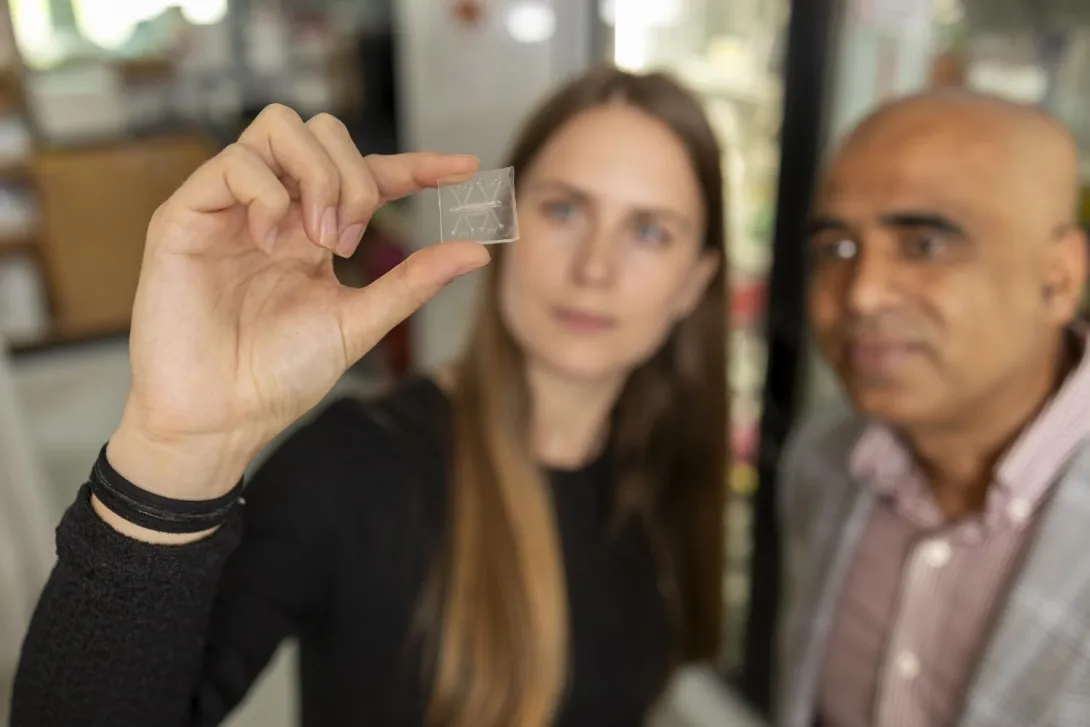
University research drives U.S. innovation, and Georgia Institute of Technology is leading the way.
The latest Higher Education Research and Development (HERD) Survey from the National Science Foundation (NSF) places Georgia Tech as No. 2 nationally for federally sponsored research expenditures in 2024. This is Georgia Tech’s highest-ever ranking from the NSF HERD survey and a 70% increase over the Institute's 2019 numbers.
In total expenditures from all externally funded dollars (including the federal government, foundations, industry, etc.), Georgia Tech is ranked at No. 6.
Tech remains ranked No. 1 among universities without a medical school — a major accomplishment, as medical schools account for a quarter of all research expenditures nationally.
“Georgia Tech’s rise to No. 2 in federally sponsored research expenditures reflects the extraordinary talent and commitment of our faculty, staff, students, and partners. This achievement demonstrates the confidence federal agencies have in our ability to deliver transformative research that addresses the nation’s most critical challenges,” said Tim Lieuwen, executive vice president for Research.
Overall, the state of Georgia maintained its No. 8 position in university research and development, and for the first time, the state topped the $4 billion mark in research expenditures. Georgia Tech provides $1.5 billion, the largest state university contribution. In the last five years, federal funding for higher education research in the state of Georgia has grown an astounding 46% — 10 points higher than the U.S. rate.
Lieuwen said, “Georgia Tech is proud to lead the state in research contributions, helping Georgia surpass the $4 billion mark for the first time. Our work doesn’t just advance knowledge — it saves lives, creates jobs, and strengthens national security. This growth reflects our commitment to drive innovation that benefits Georgia, our country, and the world.”
About the NSF HERD Survey
The NSF HERD Survey is an annual census of U.S. colleges and universities that expended at least $150,000 in separately accounted for research and development (R&D) in the fiscal year. The survey collects information on R&D expenditures by field of research and source of funds and also gathers information on types of research, expenses, and headcounts of R&D personnel.
About Georgia Tech's Research Enterprise
The research enterprise at Georgia Tech is led by the Executive Vice President for Research, Tim Lieuwen, and directs a portfolio of research, development, and sponsored activities. This includes leadership of the Georgia Tech Research Institute (GTRI), the Enterprise Innovation Institute, 11 interdisciplinary research institutes (IRIs), Office of Commercialization, Office of Corporate Engagement, plus research centers, and related research administrative support units. Georgia Tech routinely ranks among the top U.S. universities in volume of research conducted.
News Contact
Angela Ayers
Assistant Vice President of Research Communications
Georgia Tech
Nov. 26, 2025
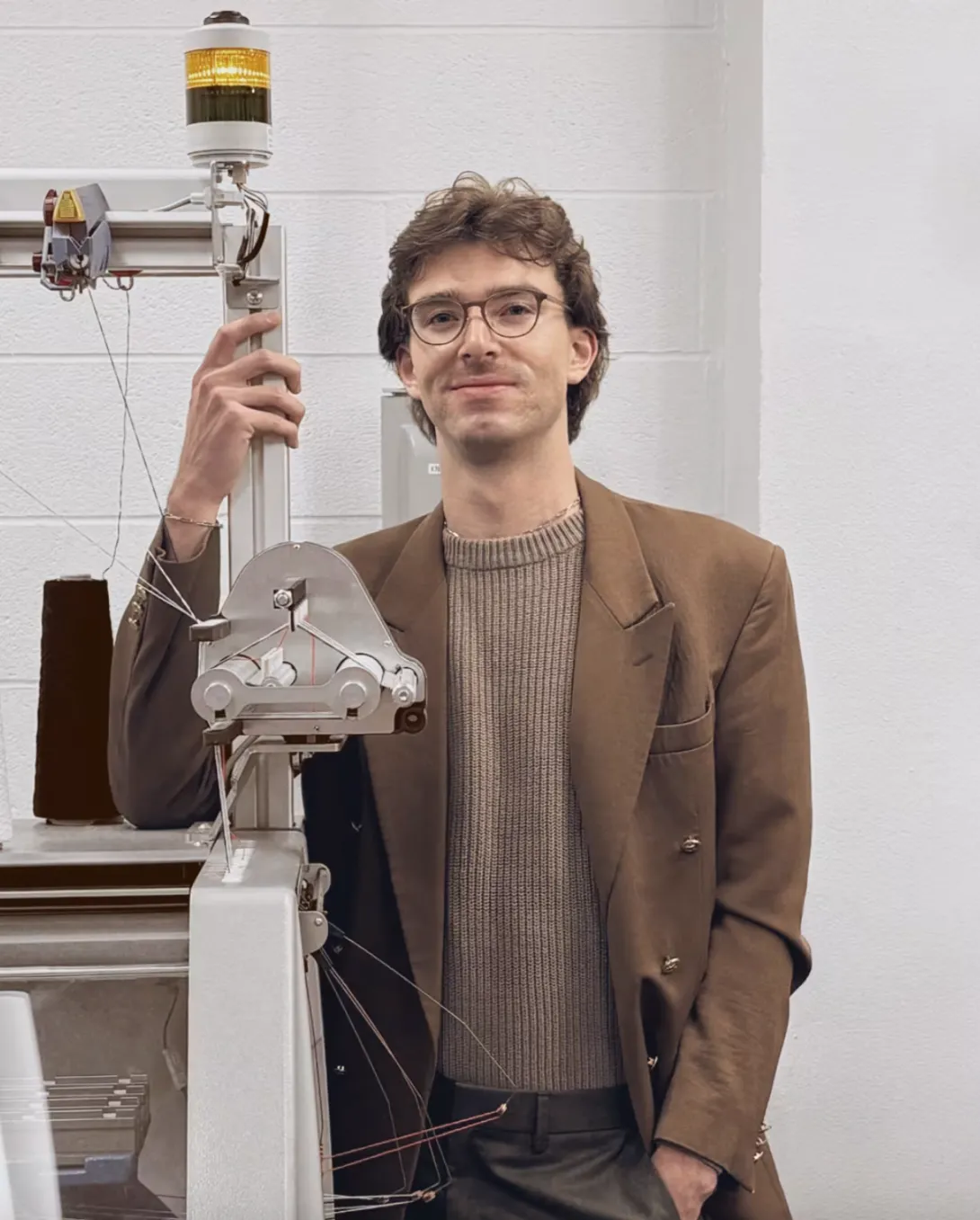
School of Physics Ph.D. student Alexander Cachine has been selected as a 2025 recipient of the prestigious Steve Jobs Archive (SJA) Fellowship for his work in solving modern medical challenges using ancient textile techniques.
“This fellowship with the Archive is a fantastic opportunity for me as a physicist. There is an incredible community of creatives that I get to be a part of and draw inspiration from,” he says. “It’s also very validating that an organization with as much prestige as the SJA finds value in the work we’re doing here in the lab. I’m so grateful that people believe in me and the work that we’re doing.”
Cachine is one of just eight individuals selected this year from a nationwide pool. The one-year fellowship supports work at the intersection of technology and the liberal arts, and will provide essential support for his creative trajectory, including a stipend, mentoring, and a robust community of peers.
At Georgia Tech, Cachine is the lab manager and lead experimentalist for the Matsumoto Group where he works alongside his advisor, School of Physics Associate Professor Elisabetta Matsumoto.
“As a physicist who studies craft, I often see that this is an overlooked area of research, especially in women’s health,” Cachine says. “I hope that beyond building a pathway to improved patient outcomes, my work this year will show people that crafting traditions are incredible technological feats — they are entire knowledge systems waiting to be explored. There is so much we can learn from craft.”
News Contact
Written by Selena Langner
Nov. 20, 2025
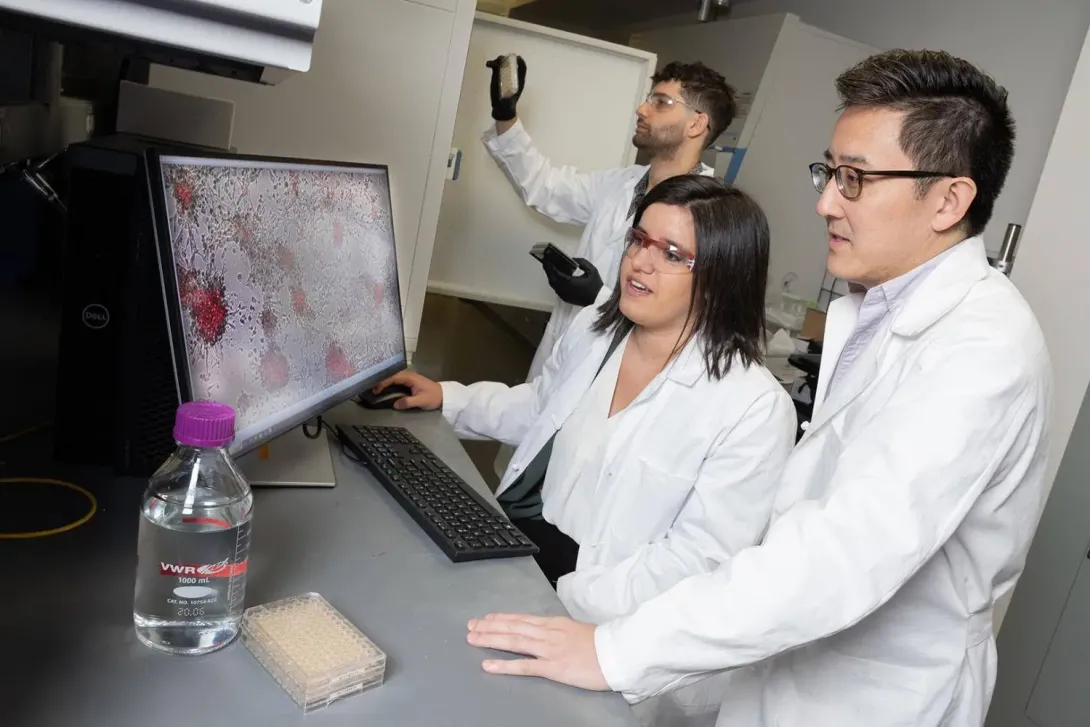
Georgia Institute of Technology has been ranked 7th in the world in the 2026 Times Higher Education Interdisciplinary Science Rankings, in association with Schmidt Science Fellows. This designation underscores Georgia Tech’s leadership in research that solves global challenges.
“Interdisciplinary research is at the heart of Georgia Tech’s mission,” said Tim Lieuwen, executive vice president for Research. “Our faculty, students, and research teams work across disciplines to create transformative solutions in areas such as healthcare, energy, advanced manufacturing, and artificial intelligence. This ranking reflects the strength of our collaborative culture and the impact of our research on society.”
As a top R1 research university, Georgia Tech is shaping the future of basic and applied research by pursuing inventive solutions to the world’s most pressing problems. Whether discovering cancer treatments or developing new methods to power our communities, work at the Institute focuses on improving the human condition.
Teams from all seven Georgia Tech colleges, 11 interdisciplinary research institutes, the Georgia Tech Research Institute, Enterprise Innovation Institute, and hundreds of research labs and centers work together to transform ideas into real results.
News Contact
Angela Ayers