
Aug. 29, 2024
Between revitalized investments in America’s manufacturing infrastructure and an increased focus on AI and automation, the U.S. is experiencing a manufacturing renaissance. A key focus of this resurgence lies in improving the resiliency of supply chains in the U.S., particularly in crucial sectors like defense.
“If we were to suddenly have a seismic shift in defense manufacturing needs,” asks Aaron Stebner, professor and Eugene C. Gwaltney Jr. Chair in Manufacturing in the George W. Woodruff School of Mechanical Engineering, “do we have the supply chain and manufacturers who could meet that sudden increase in demand? How do we do that in a way that’s sustainable for long periods of time as a nation if that need arises?”
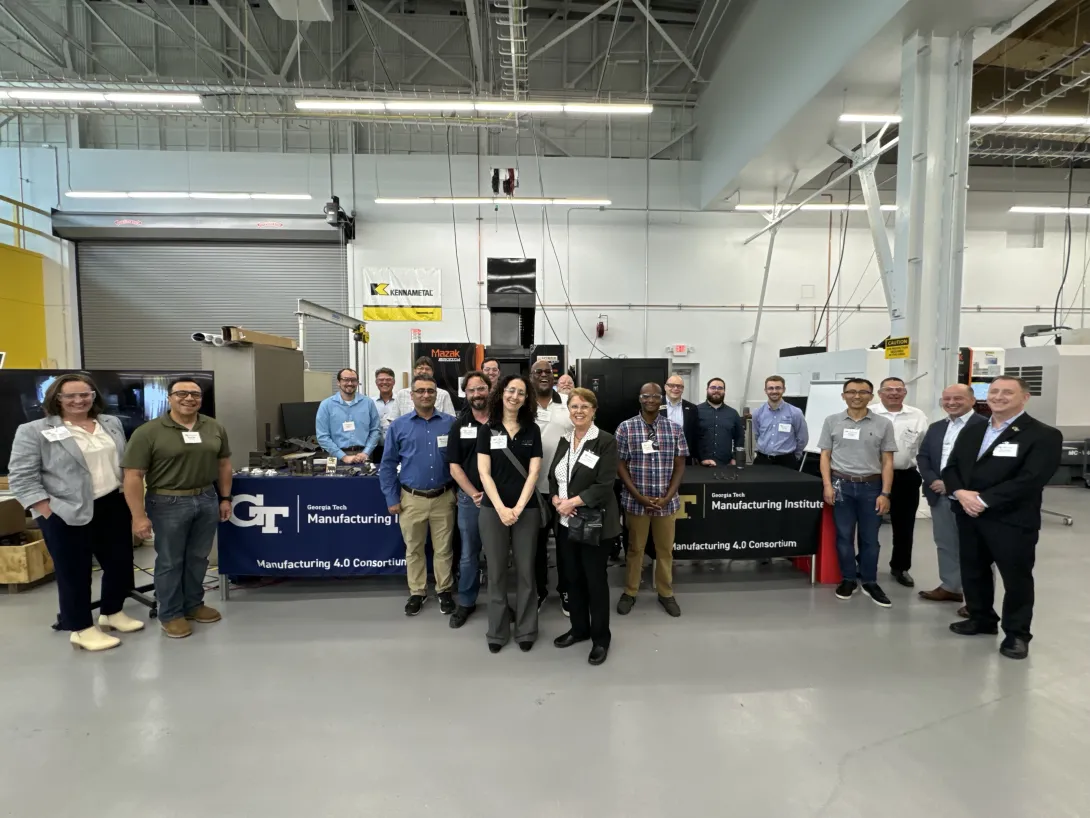
The Georgia Tech Manufacturing Institute (GTMI) officially launched the Manufacturing 4.0 Consortium in 2023 to address that need. Designed to form a network of engaged manufacturers from across the country, the Consortium serves as a key connection point between Georgia Tech and industry partners — and as fertile ground for collaborative innovation.
“By bringing us all together,” says Stebner, who serves on the board of the Consortium, “we can do bigger, more meaningful things and find unique ways and opportunities to get money flowing back to the companies and Georgia Tech.”
With over 25 founding company members, the Consortium celebrated its first official year of operation in August.
Creating a Resilient Network
The Manufacturing 4.0 Consortium originally grew out of an 18-month pilot project funded by the Department of Defense Office of Local Community Cooperation aiming to increase defense supply chain resilience, assist Georgia manufacturers in adopting new technologies, and foster collaboration by connecting manufacturers across Georgia.
Those goals and more are tackled by the Consortium’s focus on “networking, engagement, and collaboration,” says Stebner. “It's not just a consortium for Georgia Tech to take money from industry and do stuff with their money — the goal is to create new resources that enable us to collaborate in bigger ways than we could otherwise.”
To join the Consortium, industry members pay up to $10,000 annually to access its network, intellectual property, and facilities. With a 10% membership discount for Georgia businesses and a 75% discount for small businesses, the Consortium especially aims to promote growth for small Georgia manufacturers.
“Memberships come with time at the Advanced Manufacturing Pilot Facility, which we’re expanding to be this test bed for autonomous maturation of research and development,” says Stebner. “The fact that we have what’s going to be an almost $60 million facility behind us as a mechanism and a playground for all these companies is unique.”
“Having a shared use facility that is fully equipped to solve manufacturing’s most interesting challenges is not only a perk of Consortium memberships,” said Executive Director Steven Ferguson, “but it also serves as a hub for innovation in manufacturing.”
Industry Innovation
Many consortiums founded by academic institutions are primarily focused on academic research.
“The Manufacturing 4.0 consortium has an industry focus,” said Branden Kappes, founder and president of Consortium member company Contextualize LLC. “It's more about how we take this capability that, at the moment, is trapped in a lab and transition from a wonderful concept into a wonderful product.”
The Consortium achieves that translation through shared intellectual property agreements, collaborative research initiatives, and an emphasis on creating an engaged and open network of members.
“I see camaraderie inside the Manufacturing 4.0 Consortium,” says Kappes. “I see companies that overlap and compete in some areas, are complementary in others, and are willing to build a bridge to advance the capabilities of both sides and the community as a whole. That type of mentality is very exciting.”
“This is one of the most highly engaged groups I have interacted with in a professional setting,” said John Flynn, vice president of Sales at Consortium member company Endeavor 3D. “It is an incredibly dynamic melting pot of all the different facets of industry 4.0 and digital manufacturing, bringing everyone together from that part of the supply chain to create what I know will be important and value-added projects, ultimately resulting in intellectual property.”
“We are able to connect Consortium members with subject matter experts at Georgia Tech and within the Consortium who have ‘been there and done that,’” said Ferguson. “At the same time, we are working with manufacturers to create novel solutions to complex problems through research engagements. Blending all of those activities into one organization is part of the magic that is the Consortium.”
News Contact
Audra Davidson
Communications Manager
Georgia Tech Manufacturing Institute
Jul. 22, 2024

GTRI is leading the development of an integrated artificial intelligence response hub for Southwest Georgia to help communities streamline disaster management and logistics.
As artificial intelligence continues to transform countless areas of society, the Georgia Tech Research Institute (GTRI) is applying it to another critical area: disaster management.
GTRI is leading the development of an integrated artificial intelligence response hub for Southwest Georgia to help communities streamline disaster management and logistics. The hub aims to enhance resilience and response efficiency of these communities, potentially saving lives and reducing economic losses. GTRI is collaborating in this effort with the Southwest Georgia Regional Commission (SWGRC), a regional planning agency that serves 14 counties and 44 cities in Southwest Georgia. The SWGRC focuses on ecosystem building in the areas of manufacturing in food production, manufacturing start-ups, supply chain logistics and workforce development.
“This will be a centralized platform that key stakeholders in Southwest Georgia can use to manage various disruption scenarios,” said GTRI Senior Research Engineer Francisco Valdes, who is leading this project.
This project is one of several initiatives undertaken by Georgia Artificial Intelligence in Manufacturing (Georgia AIM), a $65 million federal grant awarded to Georgia Tech and a coalition of partners across the state, including the Georgia Tech Manufacturing Institute.
Read the full story on the GTRI website >>>
News Contact
Writer: Anna Akins
Photos: Sean McNeil
Media Inquiries: michelle.gowdy@gtri.gatech.edu
Apr. 14, 2023
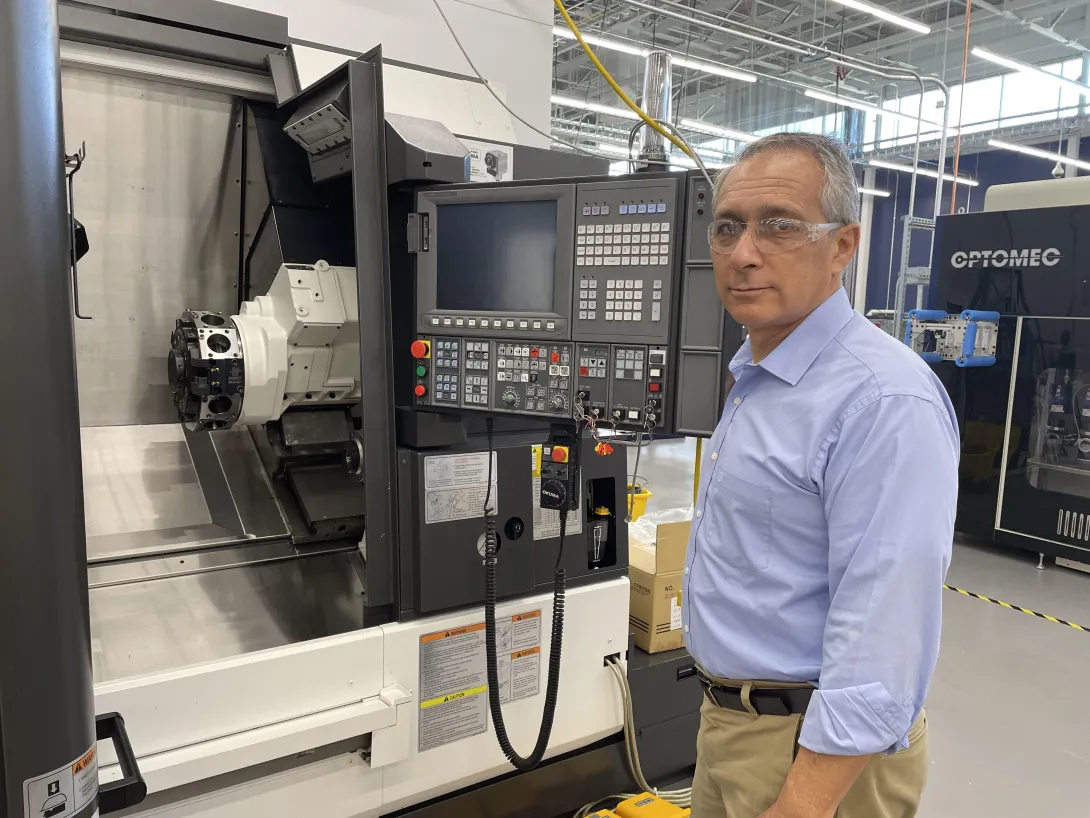
Professor Horacio Ahuett Garza from the Tecnológico de Monterrey recently settled into the Georgia Tech Manufacturing Institute (GTMI) community as a visiting scholar. Ahuett is a leading faculty member in the Mechanical Engineering and Advanced Materials Department at Tecnológico de Monterrey located in Monterrey, Mexico. He earned his mechanical engineering masters and doctorate from Ohio State University more than 25 years ago. Ahuett will be interacting with Georgia Tech faculty to explore research areas in Smart Manufacturing and Industry 4.0.
“My home university has 30 campuses across Mexico with the main campus being in Monterrey—where I was born. I’ve known professor Tom Kurfess, executive director of GTMI, for more than 20 years. He has a faculty appointment at Tecnológico de Monterrey similar to a distinguished professor due to an agreement with Georgia Tech,” said Ahuett. “We’re both involved with advanced manufacturing but in different countries with similar processes. However, the facilities at Georgia Tech are far more advanced, such as the Advanced Manufacturing Pilot Facility (AMPF) operated by GTMI. Some of our graduate students periodically come to participate in research at Georgia Tech.”
Ahuett, who has ample manufacturing research experience, was extended an invitation to visit Georgia Tech this spring. He is using this visit as a sabbatical to further his understandings and learn more about new advanced manufacturing topic areas.
He recently attended The Hershey Company lecture at GTMI presented by Will Bonifant, vice president of the US and Canada supply chain, and Chris Myers, vice president of engineering at Hershey. The topic was modernizing a century-old, iconic snacks company leveraging Industry 4.0 digital and technology solutions.
“Today, Hershey provided a good understanding of smart manufacturing and how Hershey uses its fast access to data to make quick decisions that are implemented inside the factory and its processes,” said Ahuett. “They deployed smart manufacturing processes to use fewer resources, reduce waste, yet make factory equipment changes in a timely manner and safe manner to deliver targeted product quantities based on customer demand.”
Ahuett indicated that the proliferation of sensor technology and corresponding data can be used to benefit manufacturing by reducing waste, saving energy, and generally making companies more agile with better use of resources in factory settings. One example would be understanding performance parameters for tooling where you generally know the life cycle of a cutting tool and are able to measure the tool’s degradation in real time so that you can make plans to replace the tool at the best time to minimize your downtime of that tool versus waiting for it to break unexpectedly and shut down the process.
His strongest research interest during his GTMI visit is the topic of digital twins.
“The topic of digital twins is not new -- it has been around for at least 40 years. A good example is that during the Apollo moon missions NASA had digital twins. They had instruments on earth that replicated the instruments sent on the moon missions so they could simulate actions [using data] on earth that would occur on the actual spaceships,” said Ahuett.
“The concept of digital twins generates confusion. The first impulse is to think of a digital image as the twin of a physical entity. In principle, the digital twin simulates the behavior of the physical twin to model and make predictions. Not all processes can be modelled in real time, but some can which provides beneficial information in a timely manner given how fast computer processors are today. Today, we have more and better tools that use data to give us greater insights.”
Ahuett will be working with robots and co-robots in collaboration with Kyle Saleeby, research engineer at GTMI, to help automate accurate measuring during a manufacturing process. A piece of their research project will be building models so a part’s characteristic data can be tracked and stored in a digital twin that represents a specific instance of each part manufactured and which will also include external data associated with the manufacturing of the part.
“I’m hoping my sabbatical at Georgia Tech will help me develop new competencies, new skills, and new knowledge on critical topics. I want to move research further in some areas and part of being here is to figure out some things that I didn’t know before with the help of GTMI,” said Ahuett.
News Contact
Walter Rich
Jun. 26, 2023
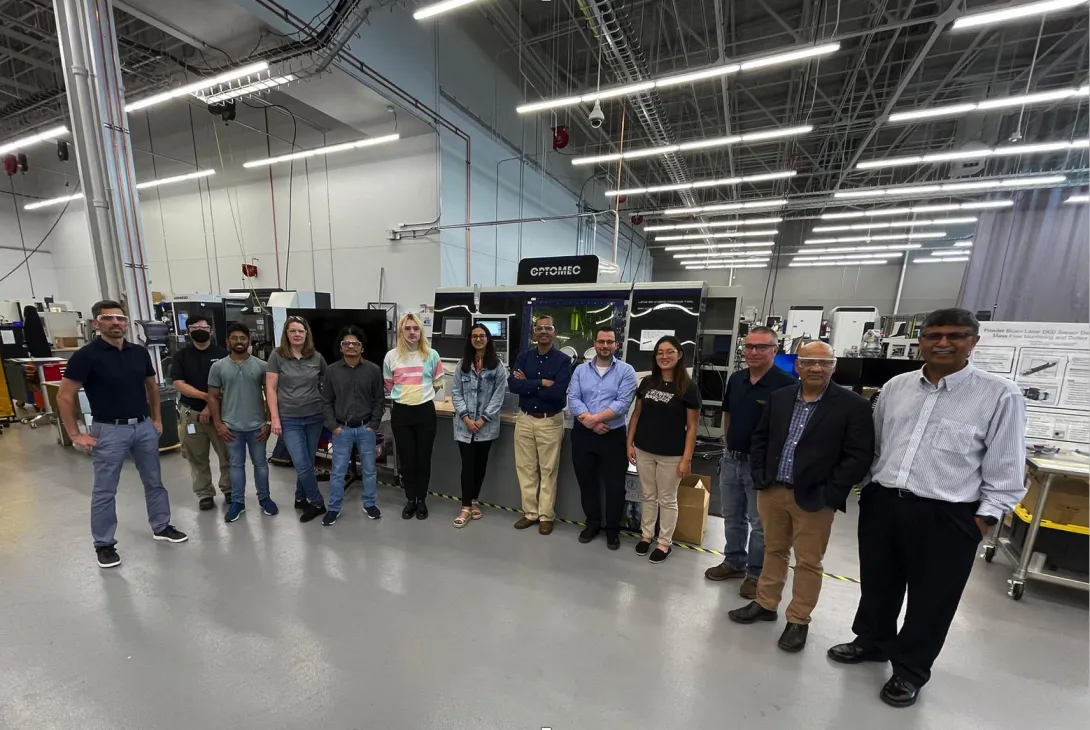
Novelis scientists and engineers in the GTMI Advanced Manufacturing Pilot Facility. More than 50 scientists and engineers from Novelis attended the AI workshop.
The Novelis Innovation Hub at Georgia Tech organized a "AI Applications Workshop" on June 8, 2023. This hybrid event took place on the Georgia Tech campus and brought together a diverse group of participants, including over 50 scientists and engineers from Novelis, as well as faculty members, scholars, and administrators from Georgia Tech. The main purpose of the workshop was to identify synergies between the areas of interest and needs within Novelis and the research and capabilities of Georgia Tech faculty in the fields of artificial intelligence (AI) and machine learning (ML). The aim was to explore how the two organizations could collaborate effectively in leveraging AI/ML technology. Through presentations and discussions, potential areas of interest aligned with Novelis's objectives were identified, focusing on machine learning for system modeling, diagnostics, and prognostics in manufacturing systems, materials informatics, digital engineering including digital twins, model-based system engineering, and the integration of AI/ML. The open discussion session focused on collaboration opportunities to accelerate discovery, development, and optimization of materials and manufacturing processes of relevance to Novelis. The desired outcomes of the event were to define follow-up actions, specifically focusing on developing collaborative proposals and statements of work (SOWs) between Novelis and Georgia Tech. By facilitating this collaborative environment, the workshop aimed to foster meaningful partnerships and to enable the exchange of industry needs and academic research expertise, ultimately paving the way for future collaborations and advancements in AI applications. More photos from the event >>.
News Contact
Walter Rich
Aug. 21, 2024


In a rapidly evolving global landscape, predicting the future of supply chains is akin to trying to catch lightning in a bottle. By examining past trends and disruptions, we can glean invaluable insights into what the future might hold and how to navigate it effectively. This article, drawing from Chris Gaffney's extensive experience in the beverage industry, explores the inherent challenges of forecasting supply chain trends, reflects on past predictions that didn't pan out, and suggests proactive strategies to stay ahead of the curve.
Introduction
Predicting the future of supply chains has always been a challenging endeavor. As someone who has spent more than 25 years in the beverage industry, I’ve witnessed firsthand how even the most well thought out predictions can miss the mark. Yet, understanding where we went wrong in the past can equip us with the tools to better anticipate and adapt to future challenges.
In this article, I want to explore the complexities of forecasting in the supply chain realm, reflect on some past predictions that didn’t quite hit the target, and suggest actionable strategies that can help us navigate the uncertainties ahead.
The Challenge of Predicting Supply Chain Trends
The supply chain, particularly in the beverage industry, is a complex web of interdependencies. As we push for innovation—from new ingredients to advanced packaging—our supply chains often struggle to keep pace. Historically, the challenges of maintaining quality, managing costs, and ensuring timely delivery have been compounded by global disruptions, technological advancements, and evolving consumer expectations.
In the 1990s, for example, the advent of RFID technology was hailed as a gamechanger, promising unparalleled visibility and efficiency. While RFID has undoubtedly transformed many aspects of supply chain management, its adoption has been slower and less impactful than originally anticipated. Similarly, the introduction of Enterprise Resource Planning (ERP) systems was expected to revolutionize the way businesses managed their operations. Yet, the promised seamless integration and real time data accuracy have often fallen short, leading to frustrations and costly implementations.
These examples highlight a critical lesson: while technological advancements hold great promise, their real-world application can be fraught with challenges that delay or dilute their impact.
Lessons from Past Predictions
One of the most striking examples of a prediction that didn’t pan out as expected is the Just in Time (JIT) manufacturing model. Initially, JIT was celebrated for its potential to minimize waste and reduce inventory costs. However, the COVID-19 pandemic exposed the vulnerabilities of this approach. As supply chains were disrupted worldwide, many companies found themselves unable to meet demand due to the lack of buffer stock. This has led to a reevaluation of the JIT model, with many businesses now looking to build more resilience into their supply chains by maintaining higher levels of inventory.
Another lesson comes from the early 2000s, when global sourcing was predicted to be the ultimate cost saving strategy. While it did lead to significant cost reductions, it also introduced new risks—ranging from quality control issues to geopolitical tensions—that have since prompted companies to reconsider the balance between cost savings and supply chain security.
The Inherent Risks of Relying on Predictions
One of the inherent risks in predicting supply chain trends is that it often leads to an overreliance on certain strategies or technologies. For instance, the push towards automation and robotics, while offering substantial benefits in terms of efficiency and cost savings, has also led to significant challenges. The initial costs, integration difficulties, and the need for upskilling workers have often been underestimated, leading to delays and unfulfilled promises.
Moreover, as we’ve seen with technologies like blockchain and AI, the hype often outpaces the reality. While these technologies have immense potential to transform supply chain management, their implementation has been slower and more complex than initially expected. This lag can create a false sense of security, leading companies to delay the adoption of alternative strategies or to underinvest in more immediately impactful areas.
Strategies for Navigating the Uncertainty
Given the inherent challenges of predicting the future, how can companies better prepare for what lies ahead? Here are a few strategies that can help:
- Embrace Flexibility and Resilience: Instead of betting on a single prediction or technology, companies should build flexibility into their supply chains. This might involve diversifying suppliers, maintaining higher inventory levels, or investing in modular production systems that can be quickly adapted to changing circumstances.
- Invest in Predictive Analytics: While past predictions have often fallen short, advances in AI and machine learning are making it possible to better anticipate supply chain disruptions and demand fluctuations. By investing in predictive analytics, companies can gain more accurate insights into future trends and make more informed decisions.
- Foster Stronger Relationships with Partners: As supply chains become more complex and globalized, the importance of strong relationships with suppliers and partners cannot be overstated. By working closely with partners, companies can ensure better alignment of goals, improved quality control, and more effective collaboration in the face of disruptions.
- Prioritize Sustainability: As consumer expectations shift towards more sustainable products, companies that prioritize sustainability in their supply chains will be better positioned to meet future demand. This might involve investing in sustainable sourcing practices, reducing waste, or adopting circular economy principles.
- Continual Learning and Adaptation: Finally, companies should foster a culture of continual learning and adaptation. By staying informed about the latest trends, technologies, and best practices, businesses can more effectively navigate the uncertainties of the future and seize new opportunities as they arise.
Conclusion
Predicting the future of supply chains is a daunting task, but it’s one that we must continually strive to master. By learning from past mistakes and adopting a proactive, flexible approach, we can better navigate the challenges ahead and turn potential disruptions into opportunities for growth and innovation. As we look to the future, let’s remember that while predictions can guide us, it’s our ability to adapt and respond to the unexpected that will ultimately determine our success.
FAQ
What are the biggest challenges in predicting supply chain trends?
The biggest challenges include the complexity of global supply chains, the rapid pace of technological change, and the unpredictable nature of global disruptions. These factors make it difficult to accurately forecast future trends and adapt to new developments.
How can companies build more resilient supply chains?
Companies can build more resilient supply chains by diversifying their suppliers, maintaining higher inventory levels, investing in flexible production systems, and fostering strong relationships with partners. Additionally, leveraging predictive analytics can help companies anticipate disruptions and respond more effectively.
What role does technology play in modern supply chains?
Technology plays a critical role in modern supply chains, offering tools for real-time tracking, predictive analytics, and automation. However, the implementation of new technologies often comes with challenges, such as high costs and integration difficulties, which must be carefully managed.
Why is sustainability important in supply chain management?
Sustainability is increasingly important as consumers demand more environmentally friendly products. Companies that prioritize sustainability in their supply chains can reduce waste, improve efficiency, and better meet the expectations of consumers and regulators.
How can companies stay ahead of future supply chain challenges?
To stay ahead, companies should embrace flexibility, invest in new technologies, foster strong partnerships, prioritize sustainability, and continually adapt to new developments. Staying informed about industry trends and best practices is also crucial.
What lessons can be learned from past supply chain disruptions?
Past disruptions, such as the COVID-19 pandemic, have highlighted the importance of resilience, flexibility, and strong partnerships. Companies that learn from these events and adapt their strategies accordingly will be better positioned to navigate future challenges.
Chris Gaffney, SCL Managing Director
Jul. 30, 2024
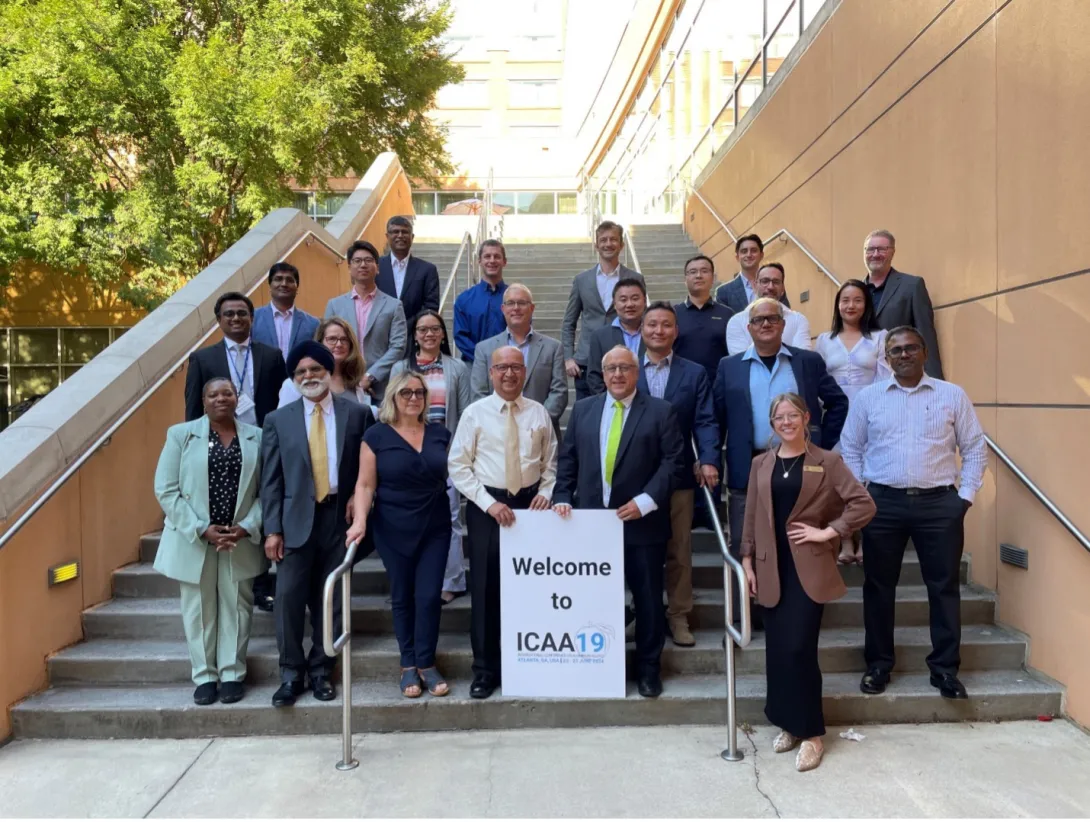
A group photo of several researchers at ICAA19.
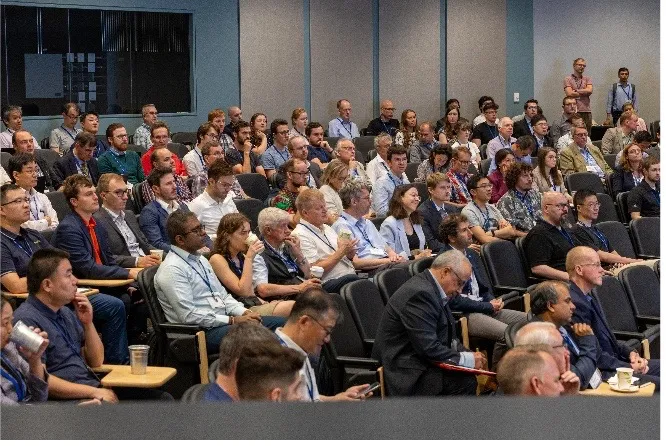
Attendees at ICAA19.
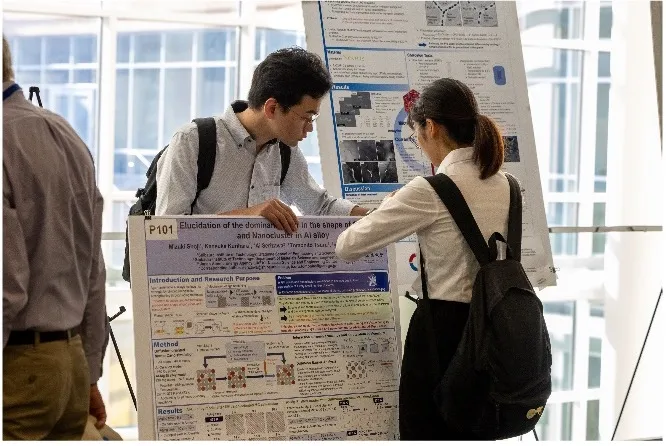
ICAA19 also included a poster session.

Novelis Chief Technology Officer Philippe Meyer.

Georgia Tech Executive Vice President for Research Chaouki Abdallah.
From airplanes to soda cans, aluminum is a crucial — not to mention, an incredibly sustainable — material in manufacturing. Since 2019, Georgia Tech has partnered with Novelis, a global leader in aluminum rolling and recycling, through the Novelis Innovation Hub to advance research and business opportunities in aluminum manufacturing.
Novelis and the Georgia Institute of Technology recently co-hosted the 19th International Conference on Aluminum Alloys (ICAA19). Held on Georgia Tech's campus, this event brought together the brightest minds in aluminum technology for four days of intensive learning and networking.
Since its inception in 1986, ICAA has been the premier global forum for aluminum manufacturing innovations. This year, the conference attracted over 300 participants from 19 countries, including representatives from academia, research organizations, and industry leaders.
“The diverse mix of attendees created a rich tapestry of knowledge and experience, fostering a robust exchange of ideas,” said Naresh Thadhani, conference co-chair and professor in the School of Materials Science and Engineering
ICAA19 featured 12 symposia topics and over 250 technical presentations, delving into critical themes such as sustainability, future mobility, and next-generation manufacturing. Keynote addresses from leaders at the Aluminum Association, Airbus, and Coca-Cola set the stage for insightful discussions. Novelis Chief Technology Officer Philippe Meyer and Georgia Tech Executive Vice President for Research Chaouki Abdallah headlined the event, underscoring the importance of Novelis’ partnership with Georgia Tech.
Marking the fifth anniversary of the Novelis Innovation Hub at Georgia Tech, Hub Executive Director Shreyes Melkote says that “ICAA19 represents a prime example of the close collaboration between Novelis and the Institute, enabled by the Novelis Innovation Hub.” Melkote, a professor in the George W. Woodruff School of Mechanical Engineering, also serves as the associate director of the Georgia Tech Manufacturing Institute.
“This unique center for research, development, and technology has been instrumental in advancing aluminum innovations, exemplifying the power of partnerships in driving industry progress,” says Meyer. “As we reflect on the success of ICAA19, we remain committed to strengthening our existing partnerships and forging new alliances to accelerate innovation. The collaborative spirit showcased at the conference is a testament to our dedication to leading the aluminum industry into a more sustainable future.”
News Contact
Audra Davidson
Research Communications Program Manager
Georgia Tech Manufacturing Institute
Jul. 29, 2024

People often ask me how I stay up to date with the latest trends and developments in the dynamic world of supply chain management. Given the rapid pace of change in our field, it's essential to leverage a variety of resources to maintain a comprehensive and current understanding. Here, I’d like to share some of the resources I find most effective. These include weekly newsletters, podcasts, and key LinkedIn follows. The combination of these resources provides a broad spectrum of insights, covering supply chain, transportation, fulfillment, technology, and the economy.
Why the Economy Matters
While supply chain, transportation, and technology are obvious areas to focus on, the inclusion of economic insights might seem less intuitive. However, understanding the economy is critical. Supply chains are fundamentally about balancing supply and demand, justifying investments, and fostering business growth. Many inputs are global, the employment market drives wages and employment quality, and macroeconomic factors like growth and interest rates influence numerous aspects of supply chains. Hence, keeping an eye on economic trends is indispensable for any supply chain professional.
Essential Supply Chain Newsletters
Bloomberg’s Supply Lines
One of my top choices for supply chain news is Bloomberg’s Supply Lines. This multi-weekly newsletter offers concise, high quality updates on global supply chain developments. It’s a free resource from a reputable source, making it an accessible way to stay informed about major trends and events affecting our industry.
Dynamo Ventures Dispatch
Another excellent resource is Dynamo Ventures’ Monday newsletter. This newsletter aggregates a wealth of information on current supply chain issues, with a particular focus on supply chain technology and venture capital (VC) and investor interest in the field. It’s an invaluable tool for understanding the intersection of innovation and investment in supply chains.
Must Listen Podcasts
Freightvine with Chris Caplice
For those who prefer podcasts, "Freightvine" hosted by Chris Caplice is a must listen. Caplice is a legend in the world of transportation, and his podcast covers all the key topics in the industry. From transportation management to logistics challenges, Freightvine provides deep insights and expert perspectives.
What Is Going On in Shipping?
If global freight movement is your area of interest, "What Is Going On in Shipping?" on YouTube offers an inside scoop on macro issues in global port and freight flow. The channel provides timely and in-depth analyses of the challenges and trends affecting global shipping, making it an excellent resource for those focused on international logistics.
Macro Musings
I like this one because it goes deep into how the Fed makes decisions on economic policy and actions and includes linkage to business conditions and the macro economy.
Key LinkedIn Influencers
Brittain Ladd
For fulfillment and ecommerce insights, I recommend following Brittain Ladd on LinkedIn. Although I don’t always agree with all of his views, Brittain provides detailed and thought provoking opinions on all aspects of fulfillment. His posts are well researched and cover a wide range of topics, offering valuable perspectives for anyone involved in ecommerce and order fulfillment.
Bridging Supply Chain and Economics
Bloomberg’s Odd Lots Podcast
Lastly, for the intersection of supply chain and economics, Bloomberg’s "Odd Lots" podcast is unparalleled. During the pandemic, the podcast delved deep into supply chain issues, and it continues to feature great guests who provide actionable insights on everything from procurement strategies to retail pricing. The discussions on macroeconomic issues are particularly relevant, offering a broader context that helps in understanding the economic forces shaping supply chains.
Conclusion
In conclusion, staying current in the supply chain field requires a multifaceted approach. By leveraging newsletters like Bloomberg’s Supply Lines and Dynamo Ventures, listening to podcasts like Freightvine and Odd Lots, and following industry influencers on LinkedIn, you can gain a comprehensive understanding of the trends and issues shaping our industry. Each of these resources brings a unique perspective, helping to ensure that you are well informed and prepared to navigate the complexities of modern supply chains.
I also consume many other resources and apologize if I didn’t include your site. I won't hype my own work, but it is out there to consume. How do you stay current in the world of supply chain? We'd love to hear from you about your go to sources and will do a follow up based on crowdsourcing the audience's best resources to stay current in all things supply chain. Please email me at info@scl.gatech.edu with your Go Tos and we’ll create a better list together.
By combining these resources, you can stay ahead of the curve, continuously enhancing your knowledge and skills in this ever evolving field.
Chris Gaffney, SCL Managing Director
News Contact
info@scl.gatech.edu
Jul. 23, 2024
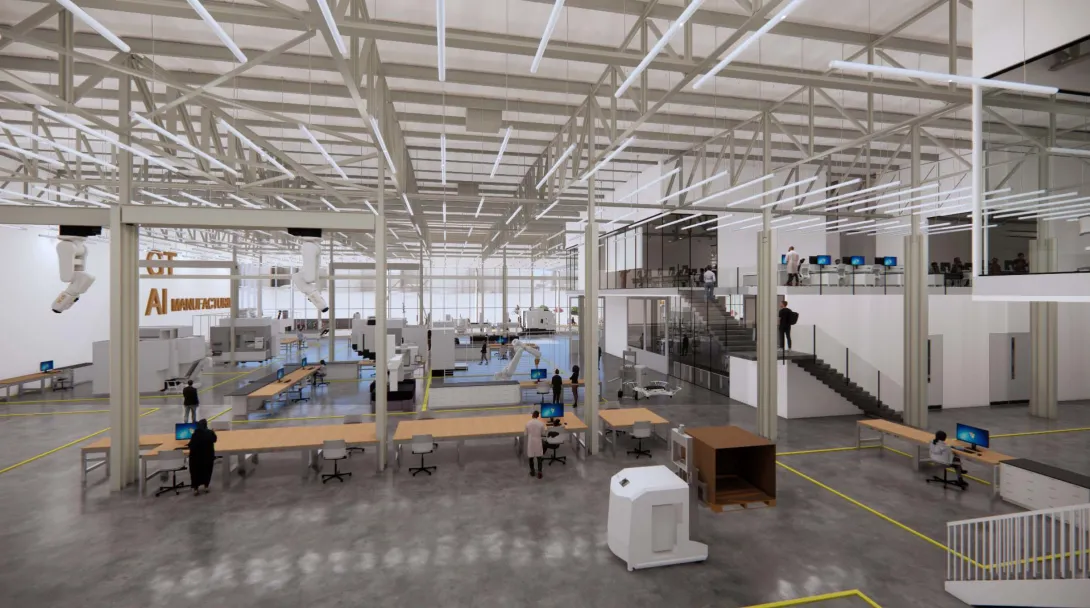
An early rendering of the main expanded research area at the Advanced Manufacturing Pilot Facility (Credit: Lord Aeck Sargent).
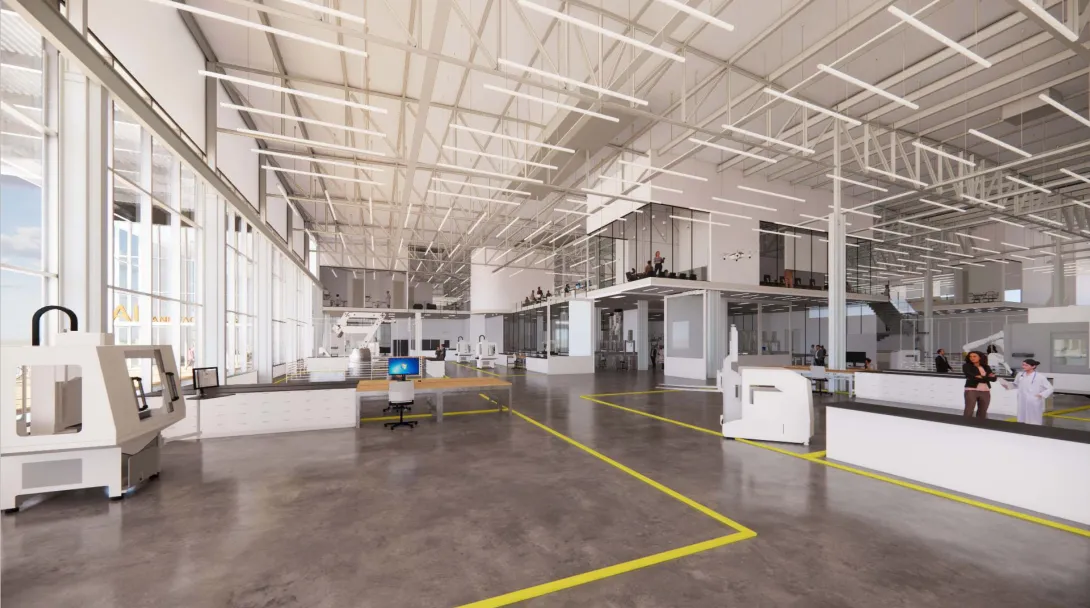
An early rendering of the main expanded research area at the Advanced Manufacturing Pilot Facility (Credit: Lord Aeck Sargent).
When it comes to manufacturing innovation, the “valley of death” — the gap between the lab and the industry floor where even the best discoveries often get lost — looms large.
“An individual faculty’s lab focuses on showing the innovation or the new science that they discovered,” said Aaron Stebner, professor and Eugene C. Gwaltney Jr. Chair in Manufacturing in the George W. Woodruff School of Mechanical Engineering. “At that point, the business case hasn't been made for the technology yet — there's no testing on an industrial system to know if it breaks or if it scales up. A lot of innovation and scientific discovery dies there.”
The Georgia Tech Manufacturing Institute (GTMI) launched the Advanced Manufacturing Pilot Facility (AMPF) in 2017 to help bridge that gap.
Now, GTMI is breaking ground on an extensive expansion to bring new capabilities in automation, artificial intelligence, and data management to the facility.
“This will be the first facility of this size that's being intentionally designed to enable AI to perform research and development in materials and manufacturing at the same time,” said Stebner, “setting up GTMI as not just a leader in Georgia, but a leader in automation and AI in manufacturing across the country.”
AMPF: A Catalyst for Collaboration
Located just north of Georgia Tech’s main campus, APMF is a 20,000-square-foot facility serving as a teaching laboratory, technology test bed, and workforce development space for manufacturing innovations.
“The pilot facility,” says Stebner, “is meant to be a place where stakeholders in academic research, government, industry, and workforce development can come together and develop both the workforce that is needed for future technologies, as well as mature, de-risk, and develop business cases for new technologies — proving them out to the point where it makes sense for industry to pick them up.”
In addition to serving as the flagship facility for GTMI research and the state’s Georgia AIM (Artificial Intelligence in Manufacturing) project, the AMPF is a user facility accessible to Georgia Tech’s industry partners as well as the Institute’s faculty, staff, and students.
“We have all kinds of great capabilities and technologies, plus staff that can train students, postdocs, and faculty on how to use them,” said Stebner, who also serves as co-director of the GTMI-affiliated Georgia AIM project. “It creates a unique asset for Georgia Tech faculty, staff, and students.”
Bringing AI and Automation to the Forefront
The renovation of APMF is a key component of the $65 million grant, awarded to Georgia Tech by the U.S. Department of Commerce’s Economic Development Administration in 2022, which gave rise to the Georgia AIM project. With over $23 million in support from Georgia AIM, the improved facility will feature new workforce training programs, personnel, and equipment.
Set to complete in Spring 2026, the Institute’s investment of $16 million supports construction that will roughly triple the size of the facility — and work to address a major roadblock for incorporating AI and automation into manufacturing practices: data.
“There’s a lot of work going on across the world in using machine learning in engineering problems, including manufacturing, but it's limited in scale-up and commercial adoption,” explained Stebner.
Machine learning algorithms have the potential to make manufacturing more efficient, but they need a lot of reliable, repeatable data about the processes and materials involved to be effective. Collecting that data manually is monotonous, costly, and time-consuming.
“The idea is to automate those functions that we need to enable AI and machine learning” in manufacturing, says Stebner. “Let it be a facility where you can imagine new things and push new boundaries and not just be stuck in demonstrating concepts over and over again.”
To make that possible, the expanded facility will couple AI and data management with robotic automation.
“We're going to be able to demonstrate automation from the very beginning of our process all the way through the entire ecosystem of manufacturing,” said Steven Sheffield, GTMI’s senior assistant director of research operations.
“This expansion — no one else has done anything like it,” added Steven Ferguson, principal research scientist with GTMI and managing director of Georgia AIM. “We will have the leading facility for demonstrating what a hyperconnected and AI-driven manufacturing enterprise looks like. We’re setting the stage for Georgia Tech to continue to lead in the manufacturing space for the next decade and beyond.”
News Contact
Audra Davidson
Research Communications Program Manager
Georgia Tech Manufacturing Institute
May. 31, 2024
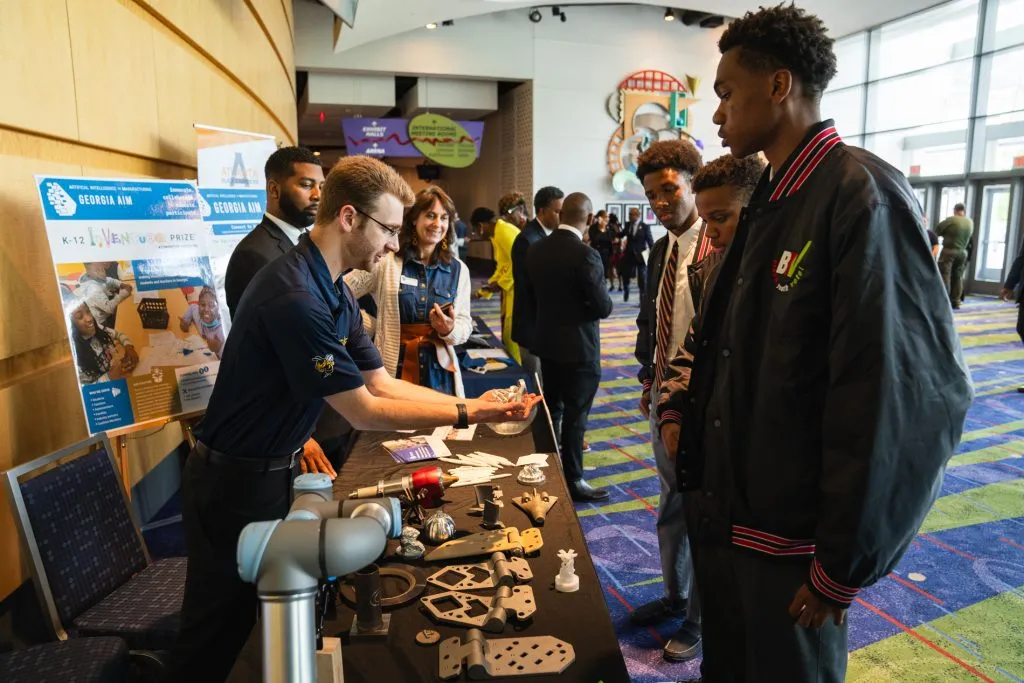
Kyle Saleeby, a research engineer with the Georgia Tech Manufacturing Institute, shows visitors how robotics can be used in manufacturing and an array of 3-D printed industrial materials.
Work done by Georgia AIM (Artificial Intelligence in Manufacturing) is translating into success stories across the state. Recently, these success stories framed another achievement: Helping to host Vice President Kamala Harris as she kicked off her Economic Opportunity Tour in Atlanta at the end of April.
The multi-state tour was designed to showcase ways the Biden-Harris administration has built economic opportunity, supported communities, and is investing in traditionally underserved areas. Georgia AIM is an example of this, as it helps to expand technology training, job opportunities and advances for manufacturing across the state. Along with Georgia AIM, the Georgia Minority Business Development Agency Business Center (Georgia MBC), and Southeast Business Hub, programs of Georgia Tech’s Enterprise Innovation Institute, also attended the event at the Georgia International Convention Center, near Hartsfield-Jackson Atlanta International Airport.
“This event was a great opportunity to introduce the vice president to the work of Georgia AIM,” said Donna Ennis, co-director of Georgia AIM, which works to drive adoption of AI in U.S. manufacturing. “We were founded as part of the federal government’s Build Back Better plan. It’s important for her to see how we are putting the grant to work to deliver equity in artificial intelligence for manufacturing in Georgia.”
Prior to the arrival of Vice President Harris, attendees could visit tables set up in the entry hall and learn about a number of organizations, from banks to nonprofits to governmental agencies, that are working to level the playing field for underserved Georgians. Attendees included representatives from the Environmental Protection Agency, Rise, and Brunswick Job Corps Center.
The Georgia AIM table, staffed by Ryan Scott, the community engagement manager, and Kyle Saleeby, research engineer with Georgia Tech Manufacturing Institute (GTMI), was a popular stop, thanks to the tabletop “cobot” showing how robotics can be used in manufacturing and an array of 3-D printed industrial materials.
The program featured a conversation with Harris and financial literacy and business advice podcasters Rashad Bilal and Troy Millings, from Earn Your Leisure. The podcast has an audience of about 2 million people, a majority of whom are Black. Harris spoke to the crowd of approximately 400 people about the administration’s focus on access to capital for minority small businesses and entrepreneurs.
“One of the compelling reasons for me to start this tour now,” Harris said, “is to ask all the leaders here for help in getting the word out about what is available to entrepreneurs and small businesses. Because we are in the process of putting a lot of money in the streets of America.”
Some of those funds have gone to Enterprise Innovation Institute programs, including $65 million for Georgia AIM.
Georgia senators Jon Ossoff and Raphael Warnock and Rep. Nikema Williams also spoke at the event. Prior to the event, they joined Harris at the Russell Innovation Center for Entrepreneurs(RICE), a partner project with Georgia AIM. RICE is developing a mobile lab with researchers at the University of Georgia College of Engineering that will showcase AI-based technologies to communities across the state.
“It was exciting to hear first-hand about the administration’s commitment to equity in small businesses and entrepreneurship,” Ennis said. “It dovetails perfectly with the commitment of the programs of the Enterprise Innovation Institute.”
News Contact
Kristen Morales
Marketing Strategist
Georgia AIM (Artificial Intelligence in Manufacturing)
Jun. 10, 2024
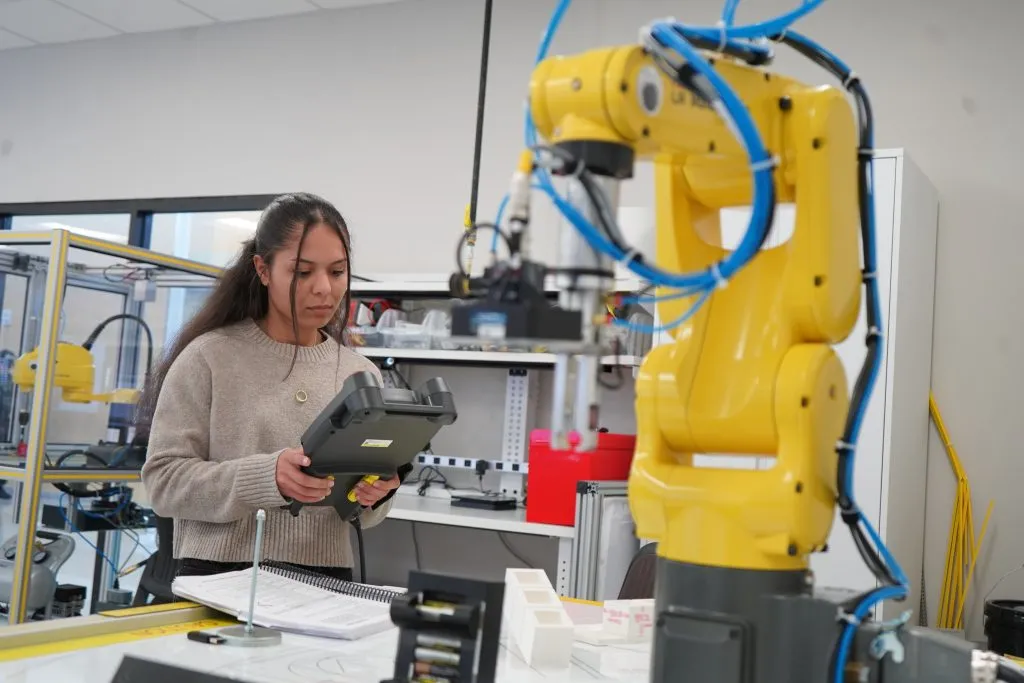
Naiya Salinas is one of a half-dozen students enrolled in the new AI Enhanced Robotic Manufacturing program at the Georgia Veterans Education Career Transition Resource (VECTR) Center, which is setting a new standard for technology-focused careers.
Naiya Salinas and her instructor, Deryk Stoops, looked back and forth between the large screen on the wall and a hand-held monitor.
Tracing between the lines of code, Salinas made a discovery: A character was missing.
The lesson was an important, real-world example of the problem-solving skills required when working in robotics. Salinas is one of a half-dozen students enrolled in the new AI Enhanced Robotic Manufacturing program at the Georgia Veterans Education Career Transition Resource (VECTR) Center, which is setting a new standard for technology-focused careers.
The set-up of the lab was intentional, said Stoops, who designed the course modules and worked with local industry to determine their manufacturing needs. Then, with funding from the Georgia Tech Manufacturing Institute's (GTMI) Georgia Artificial Intelligence in Manufacturing (Georgia AIM) project, Stoops worked with administrators at Central Georgia Technical College to purchase robotics and other cutting-edge manufacturing tools.
As a result, the VECTR Center’s AI-Enhanced Robotic Manufacturing Studio trains veterans in industry-standard robotics, manufacturing modules, cameras, and network systems. This equipment gives students experience in a variety of robotics-based manufacturing applications. Graduates can also finish the 17-credit course with two certifications that carry some weight in the manufacturing world.
“After getting the Georgia AIM grant, we pulled together a roundtable with industry. And then we did site visits to see how they pulled AI and robotics into the space,” said Stoops. “All the equipment in here is the direct result of industry feedback.”
Statewide Strategic Effort
Funded by a $65 million grant from the federal Economic Development Administration, Georgia AIM is a network of projects across the state born out of GTMI and led by Georgia Tech’s Enterprise Innovation Institute. These projects work to connect the manufacturing community with smart technologies and a ready workforce. Central Georgia received around $4 million as part of the initiative to advance innovation, workforce development and STEM education in support of local manufacturing and Robins Air Force Base.
Georgia AIM pulls together a host of regional partners all working toward a common goal of increasing STEM education, access to technology and enhancing AI among local manufacturers. This partnership includes Fort Valley State University, the Middle Georgia Innovation Project led by the Development Authority of Houston County, Central Georgia Technical College, which administers the VECTR Center, and the 21st Century Partnership.
“This grant will help us turn our vision for both the Middle Georgia Innovation Project and the Middle Georgia STEM Alliance, along with our partners, into reality, advancing this region and supporting the future of Robins AFB,” said Brig. Gen. John Kubinec, USAF (ret.), president and chief executive officer of the 21st Century Partnership.
Georgia AIM funding for Central Georgia Technical College and Fort Valley State focused on enhancing technology and purchasing new components to assist in education. At Fort Valley State, a mobile lab will launch later this year to take AI-enhanced technologies to underserved parts of the state, while Central Georgia Tech invested in an AI-enhanced robotics manufacturing lab at the VECTR Center.
“This funding will help bring emerging technology throughout our service area and beyond, to our students, economy, and Robins Air Force Base,” said Dr. Ivan Allen, president of Central Georgia Technical College. “Thanks to the power of this partnership, our faculty and students will have the opportunity to work directly with modern manufacturing technology, giving our students the experience and education needed to transition from the classroom to the workforce in an in-demand industry.”
New Gateway for Vets
The VECTR Center’s AI-Enhanced Robotics Manufacturing Studio includes FANUC robotic systems, Rockwell Automation programmable logic controllers, Cognex AI-enabled machine vision systems, smart sensor networks, and a MiR autonomous mobile robot.
The studio graduated its first cohort of students in February and celebrated its ribbon-cutting ceremony on April 17 with a host of local officials and dignitaries. It was also an opportunity to celebrate the students, who are transitioning from a military career to civilian life.
The new technologies at the VECTR Center lab are opening new doors to a growing, cutting-edge field.
“From being in this class, you really start to see how the world is going toward AI. Not just Chat GPT, but everything — the world is going toward AI for sure now,” said Jordan Leonard, who worked in logistics and as a vehicle mechanic in the U.S. Army. Now, he’s upskilling into robotics and looking forward to using his new skills in maintenance. “What I want to do is go to school for instrumentation and electrical technician. But since a lot of industrial plants are trying to get more robots, for me this will be a step up from my coworkers by knowing these things.”
News Contact
Kristen Morales
Marketing Strategist
Georgia AIM (Artificial Intelligence in Manufacturing)