
Aug. 06, 2020
BioFabUSA, a Department of Defense-funded Manufacturing Innovation Institute within the Manufacturing USA network, has awarded the Georgia Institute of Technology and industry partner, Akron Biotech, a project titled, “Supply Chain and Process Modeling Algorithms, Methods, and Tools for Tissue Manufacturing and Distribution”. This project will address significant national supply chain issues related to distributing tissue engineered medical products (TEMPs) to U.S. patients in need.
The project aims to create the first simulation-based supply chain model for the rapidly evolving and future facing TEMPs industry, to minimize manufacturing and logistics costs and risks, incorporate Department of Defense (DOD) and other stakeholders’ perspectives into supply chain modeling, inform standards development, and support workforce development.
“Having a supply chain model will be instrumental in helping new and existing companies plan for the most efficient process flows, resource usage, and cost savings,” said Stephanie Robichaud, technical project manager with the Advanced Regenerative Manufacturing Institute. “Many startup companies do not realize some of the intricacies in managing their supply chain and many established companies realize the importance of it after experiencing inefficiencies. Having a model that these companies can use will help advance the field of tissue engineering as they plan for scale-up.”
According to Ben Wang, executive director of the Georgia Tech Manufacturing Institute (GTMI) and professor in the Stewart School of Industrial and Systems Engineering, “hundreds if not thousands of patients are waiting for tissues and organs in order to have a normal healthy life. Our project is a bold initiative to democratize distribution of replacement tissues and organs by streamlining national supply chains. This project will develop simulation-based tools to enhance the efficiency and resilience of the TEMPs supply chain, making these personalized medicines more affordable and more accessible.”
The growth of the TEMP industry is going to change the supply chain of medical tissues disruptively. To embrace this change, a system-level decision support tool is essential for adopting more cost-effective manufacturing processes and making better investment decisions. To ensure successful commercialization and adoption of this new supply chain decision support tool, the project team will engage multiple stakeholders including DOD, government, regulatory bodies, standards setting organizations, patients, industry, academia, policy experts, education and workforce development experts.
Georgia Tech project leads include Ben Wang, Ph.D., Chelsea C. White III, Ph.D, and Kan Wang, Ph.D. Ben Wang is Gwaltney Chair in Manufacturing Systems, professor in the Stewart School of Industrial & Systems Engineering and School of Materials Science and Engineering at Georgia Tech. In addition, he serves as executive director of the Georgia Tech Manufacturing Institute (GTMI). Chelsea C. White III is the Schneider National Chair in Transportation and Logistics and professor in the H. Milton Stewart School of Industrial and Systems Engineering at Georgia Tech. Kan Wang is lead researcher of additive manufacturing in the Bio-Engineering Research Laboratory at GTMI.
Leading the project for Akron Biotech is Ezequiel Zylberberg, Ph.D, who is vice president of product development and planning. According to Ezequiel, “the future of regenerative medicine depends on more than our ability to address the scientific challenges of generating the next generation of advanced therapies. Advancing these novel treatments in a way that is scalable will require significant advances in manufacturing innovation. We are eager to collaborate with our colleagues at Georgia Tech, at BioFab USA, and throughout the regenerative medicine industry to confront the challenge of scalability and supply chain resilience through this modelling effort.”
About the Georgia Institute of Technology
The Georgia Institute of Technology, also known as Georgia Tech, is one of the nation’s leading research universities — a university that embraces change while continually Creating the Next. The next generation of leaders. The next breakthrough startup company. The next lifesaving medical treatment.
Georgia Tech provides a focused, technologically based education to more than 36,000 undergraduate and graduate students. The Institute has many nationally recognized programs, all top-ranked by peers and publications alike, and is ranked among the nation’s top five public universities by U.S. News & World Report. It offers degrees through the Colleges of Computing, Design, Engineering, Sciences, the Scheller College of Business, and the Ivan Allen College of Liberal Arts. As a leading technological university, Georgia Tech has more than 100 centers focused on interdisciplinary research that consistently contribute vital research and innovation to American government, industry, and business. https://www.gatech.edu/
About Akron Biotech
Akron is a leading materials manufacturer and services provider to the regenerative medicine industry, accelerating the development and commercialization of advanced therapies. Founded in 2006, Akron is an ISO 13485-certified company that operates in line with cGMPs and international standards, enabling advanced therapy developers to de-risk their supply chains and facilitate regulatory approval. The company's unique business model emphasizes knowledge, flexibility and unparalleled service—from development through to commercialization. For more information, please visit www.akronbiotech.com.
About BioFabUSA
BioFabUSA, is a DOD-funded Manufacturing USA Innovation Institute (MII) sustained by the Advanced Regenerative Manufacturing Institute (ARMI) is a non-profit organization located in Manchester, New Hampshire. ARMI's mission is to make practical the scalable, consistent, cost-effective manufacturing of tissue engineered medical products and tissue-related technologies, to benefit existing industries and grow new ones. https://www.armiusa.org/
Georgia Tech Manufacturing Institute
813 Ferst Drive, NW
Atlanta, GA 30332 USA
Media Relations Contact: Walter Rich (walter.rich@research.gatech.edu)
News Contact
Jul. 28, 2020

Jialei Chen, a Ph.D. student in the H. Stewart School of Industrial & Systems Engineering at Georgia Tech and a research assistant in the Georgia Tech Manufacturing Institute, was awarded the Ellis R. Ott Scholarship For Applied Statistics and Quality Management from the American Society for Quality. The Ellis R. Ott Scholarship Governing Board selected Chen to receive this year's award in the Ph.D. category and he will receive a check in the amount of $7,500.
Chen’s research interests are in statistical modeling, machine learning, and experimental design with applications to mechanical engineering, biomedical engineering, advanced manufacturing, and healthcare. He is especially interested in engineering-driven data analytics for real-world challenges.
One of Chen’s research topics is to improve the surgical success rate of a common, yet severe heart disease called aortic stenosis. Specifically, he developed a 3D-printing-enabled “virtual patient” framework for in-vitro studies as pre-surgical planning. In order to make the “virtual patient” pathologically identical to the actual patient, he proposed to use a bio-inspired metamaterial design and a statistical emulation model for structure optimization. With the proposed method, the printed heart can mimic both the geometry and the mechanical property of a specific patient.
He previously worked on chimeric antigen receptor T cell therapy with the goal of developing new impedance sensing hardware and software.
Chen’s current research focuses on tackling two healthcare challenges resulting from COVID-19 by developing novel methodologies in the fields of statistics, quality engineering, and advanced manufacturing. The healthcare problems he is addressing include how to improve the recovery rate of a treatment, and how to reduce the cost to make the treatment available to everyone.
News Contact
Walter Rich
Jul. 28, 2020
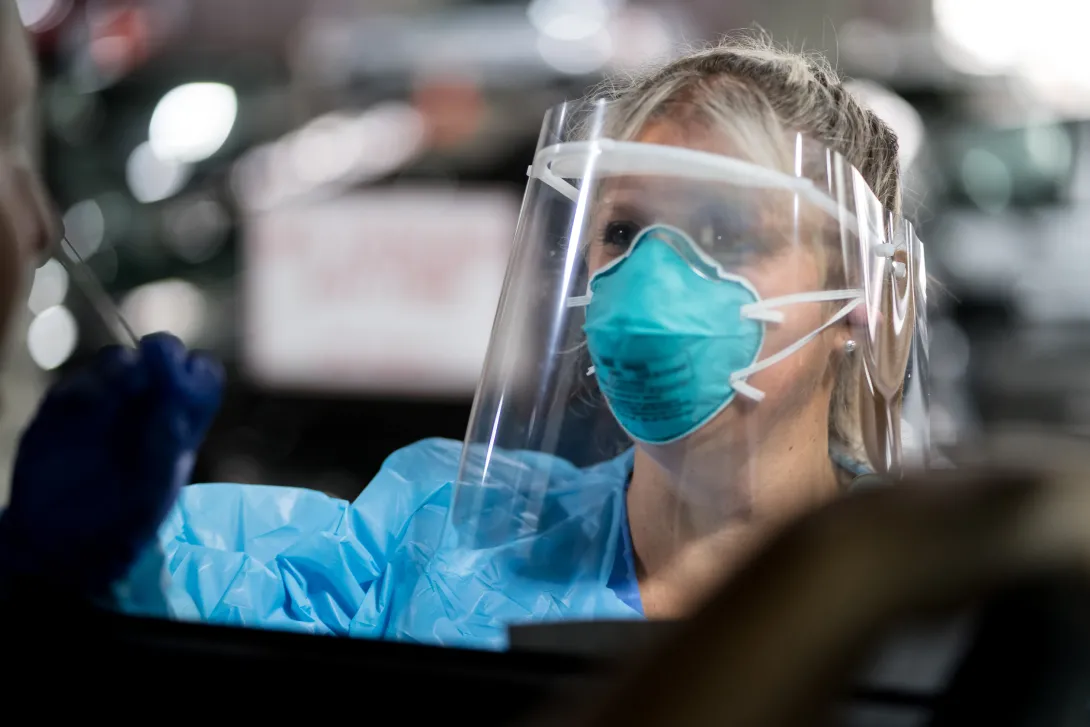
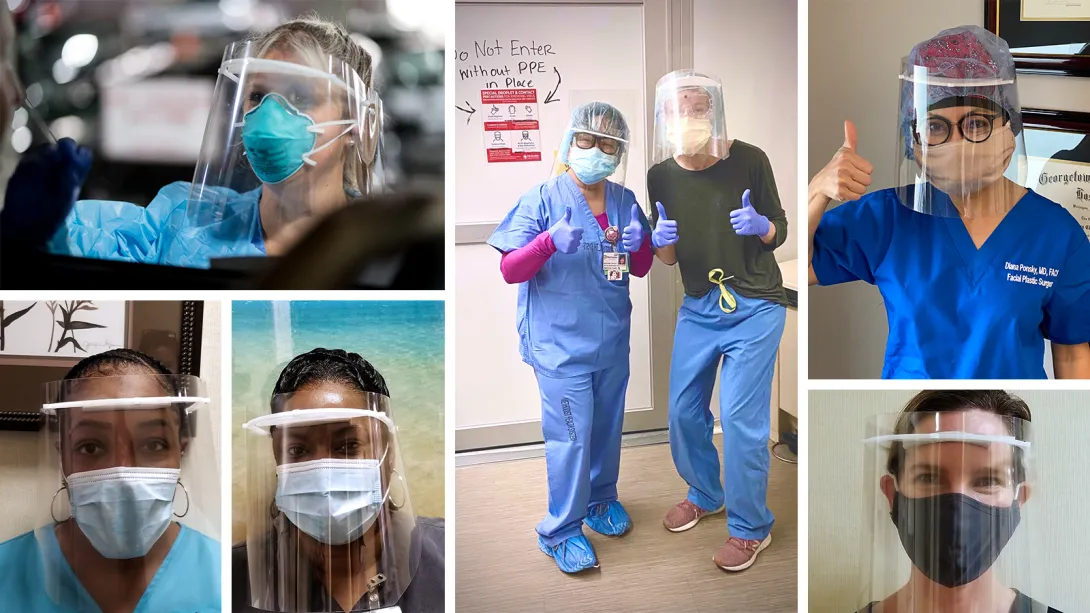
Personal initiatives by a pediatrician and by researchers to make face shields for medical workers have transformed into an industry collaboration that by June had delivered 1.8 million shields to hospitals and other organizations around the country with plans to produce 2.5 million all total. A $2 million donation from Aflac Incorporated for personal protective equipment (PPE) financed the bulk of the shields.
To make it happen, a team of researchers and industry partners convened at the Global Center for Medical Innovation (GCMI), a Georgia Tech-affiliated nonprofit that guides new experimental medical solutions to market. The group combined the physician’s vision with the researchers’ original designs, adjusted them to pass FDA emergency guidelines, and then coordinated mass production and distribution.
A physician’s wisdom
The project grew wings in mid-March, after Dr. Joanna Newton became concerned that the nationwide shortage of PPE was leaving healthcare workers across the country vulnerable. Newton is a physician specializing in improving healthcare safety through technology at Children’s Healthcare of Atlanta, and she was already collaborating with Georgia Tech on other projects.
She grabbed the phone to leverage the connection.
“I called Sherry Farrugia to tell her about my idea to 3D-print PPE. We needed to quickly find a solution for the PPE shortage around the country, and I knew we had the right team here in Atlanta to help,” said Newton, a pediatric hematologist/oncologist at the Aflac Cancer and Blood Disorders Center of Children’s.
“The situation was urgent, and I knew who would have the right expertise to get this done,” said Farrugia, chief operating officer and strategy officer of Children’s Healthcare of Atlanta Pediatric Technology Center, which is part of Georgia Tech.
Farrugia had Newton present her idea at GCMI to researchers, advisors, and industry partners who immediately put together a team to address the need for face shields to protect healthcare workers from droplets containing the coronavirus. She also discussed the need with Devesh Ranjan, associate chair of the George W. Woodruff School of Mechanical Engineering, who suggested connecting the effort to a parallel initiative in that school.
Bringing in engineers
At the same time, along with Ranjan, Sam Graham, chair of the George W. Woodruff School of Mechanical Engineering, and Susan Margulies, chair of the Wallace H. Coulter Department of Biomedical Engineering, were coordinating efforts across campus to develop various medical devices in response to the pandemic. Graham, Margulies, and Ranjan quickly connected GCMI with Christopher Saldana and Saad Bhamla, faculty members in Georgia Tech’s College of Engineering, who were leading an simultaneous effort to address the face shield problem with their students using rapid fabrication techniques like 3-D printing, laser cutting, and waterjet cutting.
“The Georgia Tech mechanical engineering team used rapid fabrication equipment and quickly produced multiple face shield designs that could be manufactured in high volumes for the rapid response environment that Covid-19 required,” Saldana said.
Making a few thousand shields in a lab had likely already saved lives, but the Georgia Tech researchers and GCMI put their designs on the internet, where they have been downloaded thousands of times by organizations manufacturing them around the world. And the manufacturing partners they engaged have been turning out hundreds of thousands of shields to save many more lives.
“You may need 45 minutes for a headband with a 3D printer, but manufacturers turn out six of them every 19 seconds. Then making a million face shields becomes a real possibility,” said Mike Fisher, who leads product development at GCMI.
GCMI opened a GoFundMe page, which brought in $20,000, and then engaged their first manufacturing partner, Delta Air Lines.
A manufacturing explosion
“Delta converted one of their groups from manufacturing airplane interiors to doing the face shields. They started off by manufacturing 6,000 shields, and that got the momentum going,” Leiter said. “Two thousand shields went to Mount Sinai Hospital in New York; 2,000 went to Piedmont Healthcare in Atlanta; and 2,000 went to Children’s Healthcare of Atlanta.”
Things began to snowball.
Graham engaged Siemens Industries to fulfill a face shield order from the Georgia Emergency Management Agency (GEMA) for distribution in Georgia. Partners from ExxonMobil began looking for more potential manufacturers. And Aflac contacted Children’s looking for worthy Covid-19 related efforts to support.
“We asked for a donation of $500,000 for manufacturers to retool their operations. Aflac made a gift of $2 million to GCMI to promote the production of PPE,” Farrugia said. “We were able to buy tooling for an automotive plastics manufacturer called Quality Model in South Carolina, and they have made over 750,000 face shields so far.”
GCMI won a bid from the Federal Emergency Management Agency (FEMA) for 1,141,600 face shields, which are being made by Quality Model, where ExxonMobil helped rearrange production lines for shields.
Siemens made an additional 100,000 shields from Aflac’s gift, which is also being used to purchase existing PPE to donate to healthcare workers. Kia Motors quickly produced an initial 15,000 shields, which the company financed itself.
“Kia got the open source design from the Georgia Tech website and ran with it on their own,” Saldana said.
These partners are delivering the following number of shields: Quality Model, 1,251,600; Kia Motors, 300,000; Siemens Industries, 205,000; Delta Air Lines, 106,100; Georgia Tech, 20,000; and EIS, 15,000. And more are still to come.
The shields went across the country, from hospitals in New York City to Prisma Health in South Carolina, to nursing homes in the Pensacola area, and to rural Louisiana and Mississippi, Leiter said.
Thanks in large part to Aflac’s gift, GCMI and Farrugia are coordinating with partners, including Georgia Tech engineers, to produce N95 masks, hospital gowns, and hand sanitizer, all redesigned for the Covid-19 age.
Research News
Georgia Institute of Technology
177 North Avenue
Atlanta, Georgia 30332-0181 USA
Media Relations Assistance: John Toon (404-894-6986) (jtoon@gatech.edu).
Writer: Ben Brumfield
News Contact
John Toon
Research News
(404) 894-6986
Jul. 27, 2020

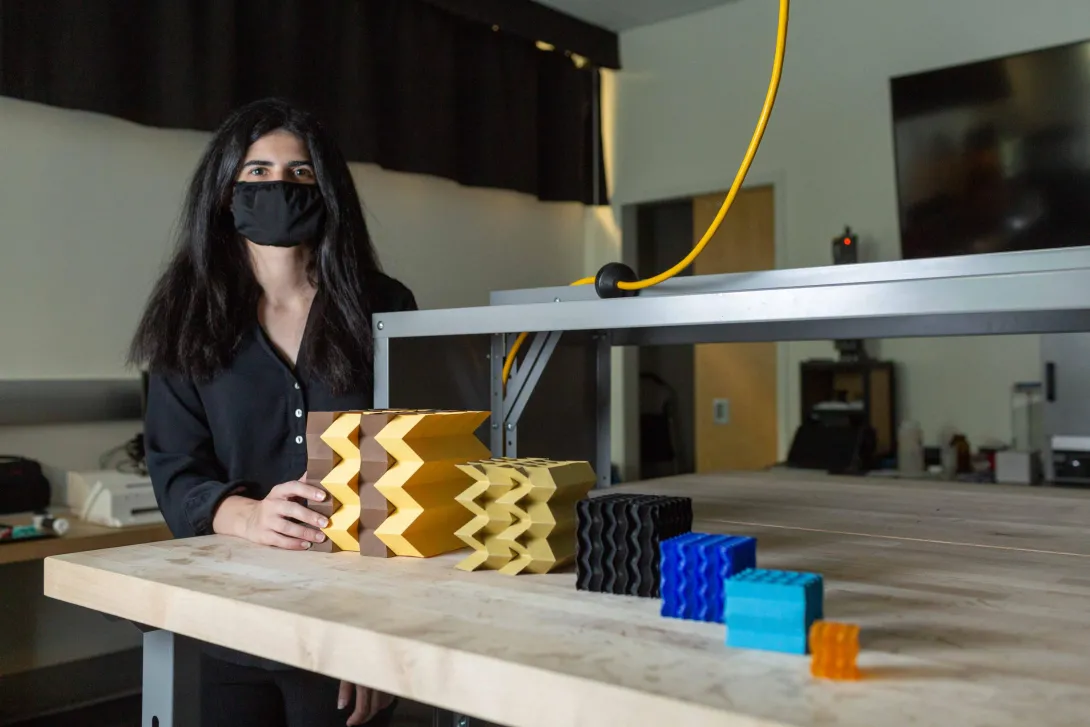

The simplicity and elegance of origami, an ancient Japanese art form, has motivated researchers to explore its application in the world of materials.
New research from an interdisciplinary team, including Northwestern University’s Horacio Espinosa and Sridhar Krishnaswamy and the Georgia Institute of Technology’s Glaucio Paulino, aims to advance the creation and understanding of such folded structures for applications ranging from soft robotics to medical devices to energy harvesters.
Inspired by origami, mechanical metamaterials — artificial structures with mechanical properties defined by their structure rather than their composition — have gained considerable attention because of their potential to yield deployable and highly tunable structures and materials.
What wasn’t known was which structures integrate shape recoverability, pronounced directional mechanical properties, and reversible auxeticity — meaning their lateral dimensions can increase and then decrease when progressively squeezed. Though some 3D origami structures have been produced through additive manufacturing, achieving the folding properties displayed in ideal paper origami remained a challenge.
Using nanoscale effects for an origami design, the team of researchers from Northwestern’s McCormick School of Engineering and Georgia Tech's School of Civil and Environmental Engineering sought to answer that question. They produced small, 3D, origami-built metamaterials, successfully retaining the best properties without resorting to artifacts to enable folding.
“The created structures constitute the smallest fabricated origami architected metamaterials exhibiting an unprecedented combination of mechanical properties,” said Espinosa, the James and Nancy J. Farley Professor of Manufacturing and Entrepreneurship and professor of mechanical engineering and (by courtesy) biomedical engineering and civil and environmental engineering.
“Our work demonstrated that rational design of metamaterials, with a large degree of shape recoverability and direction-dependent stiffness and deformation, is possible using origami designs, and that origami foldability enables a state where the material initially expands and subsequently contracts laterally (reversible auxeticity),” added Espinosa, who serves as director of Northwestern’s theoretical and applied mechanics graduate program. “Such properties promise to influence a number of applications across a wide range of fields encompassing the nano-, micro-, and macro-scales, leveraging the intrinsic scalability of origami assemblies.”
“Guided by geometry, the scaling and miniaturization of the origami metamaterial are exciting in itself and by the unprecedented multifunctionality that it naturally enables,” said Paulino, the Raymond Allen Jones Chair in Georgia Tech’s School of Civil and Environmental Engineering.
“Only an interdisciplinary effort combining origami design, 3D laser printing with nanoscale resolution, and in situ electron microscopy mechanical testing could reveal the unprecedented combination of properties our work demonstrated and their potential impact on future applications,” added Paulino, who contributed to establishing the National Science Foundation Emerging Frontiers in Research and Innovation program named ODISSEI (Origami Design for Integration of Self-assembling Systems for Engineering Innovation).
“Just like nature has architected a wide range of structures using just a few material systems, origami allows us to engineer resilient structural components with distinct physical properties along different directions,” said Krishnaswamy, professor of mechanical engineering.
“We can envision origami-based soft microrobots that are stiff along some directions to carry payloads while maintaining other degrees of flexibility for motion. Origami-metamaterials that exploit reversible auxeticity and large deformation can lead to multifunctional applications ranging from deployable microsurgical instruments and medical devices to energy steering and harvesting,” added Krishnaswamy, the director of Northwestern’s Center for Smart Structures and Materials.
The study presents new avenues to be explored long term, Espinosa said.
“There are a number of possibilities,” he said. “One is the fabrication of origami structures with ceramic and metallic materials, while preserving nanoscale dimensions, to exploit size effects in the mechanical response of the structures leading to superior energy dissipation per unit volume and mass. Another is the use of piezoelectric polymers, which can result in energy harvesters that can drive sensing modalities or power microsurgical tools.”
The research, “Folding at the Microscale: Enabling Multifunctional 3D Origami-Architected Metamaterials” was published in the journal Small on July 27. Along with Espinosa, Krishnaswamy, and Paulino, coauthors include Northwestern’s Nicolas A. Alderete, Zhaowen Lin, and Heming Wei, and Larissa S. Novelino from Georgia Tech.
The research was supported by the Army Research Office (award W911NF1220022), a Multi-University Research Initiative through the Air Force Office of Scientific Research (AFOSR-FA9550-15-1-0009), the Office of Naval Research (grants N00014-15-1-2935 and N00014-16-1-3021), and the National Science Foundation (grant No. 1538830). Nicolas Alderete received a fellowship from the Argentinian Roberto Rocca Education Program and Larisa Novelino from the Brazilian National Council for Scientific and Technological Development (project 235104/2014-0).
Writer: Brian Sandalow, Northwestern University
News Contact
John Toon
Research News
(404) 894-6986
Jul. 14, 2020

Dr. Christine Ries has been invited to serve on a Review Panel for the New NSF Future Manufacturing Program on Eco-Manufacturing.
This new multidisciplinary NSF program supports fundamental research and education of a future workforce that would enable the types of manufacturing that are not existent yet or are at such early stages of development they are not yet viable (Future Manufacturing). Reviews considered impacts on the economy, workforce, human behavior, and society at large.
News Contact
Professor Christine Ries
christine.ries@econ.gatech.edu
Jul. 01, 2020

Jun. 30, 2020
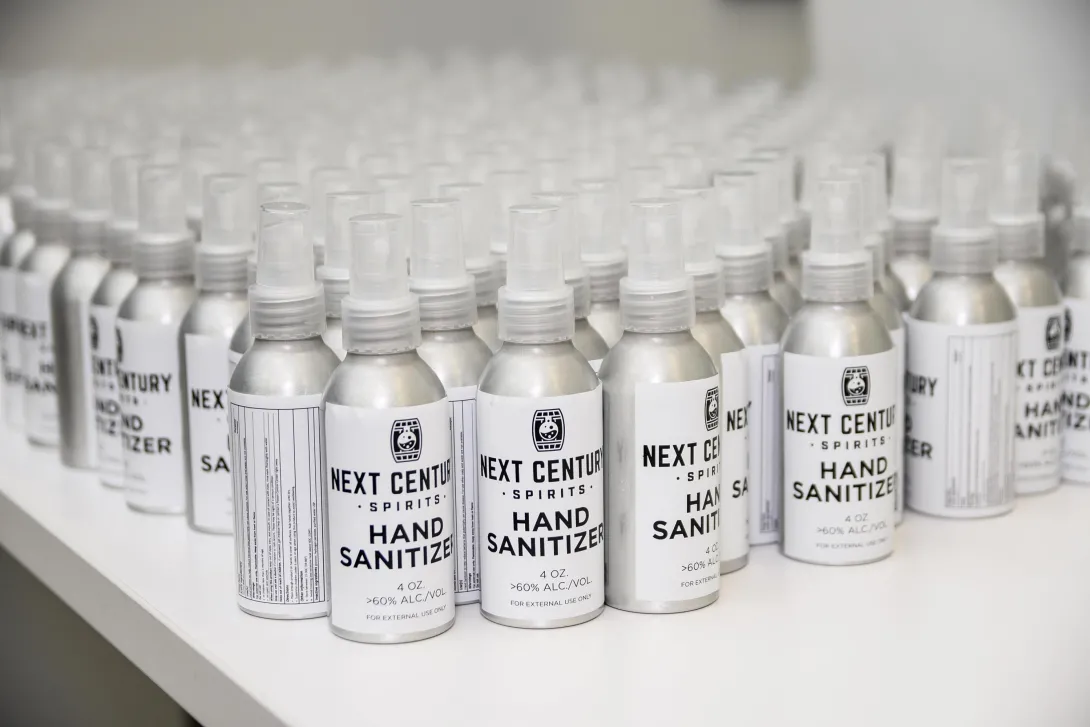
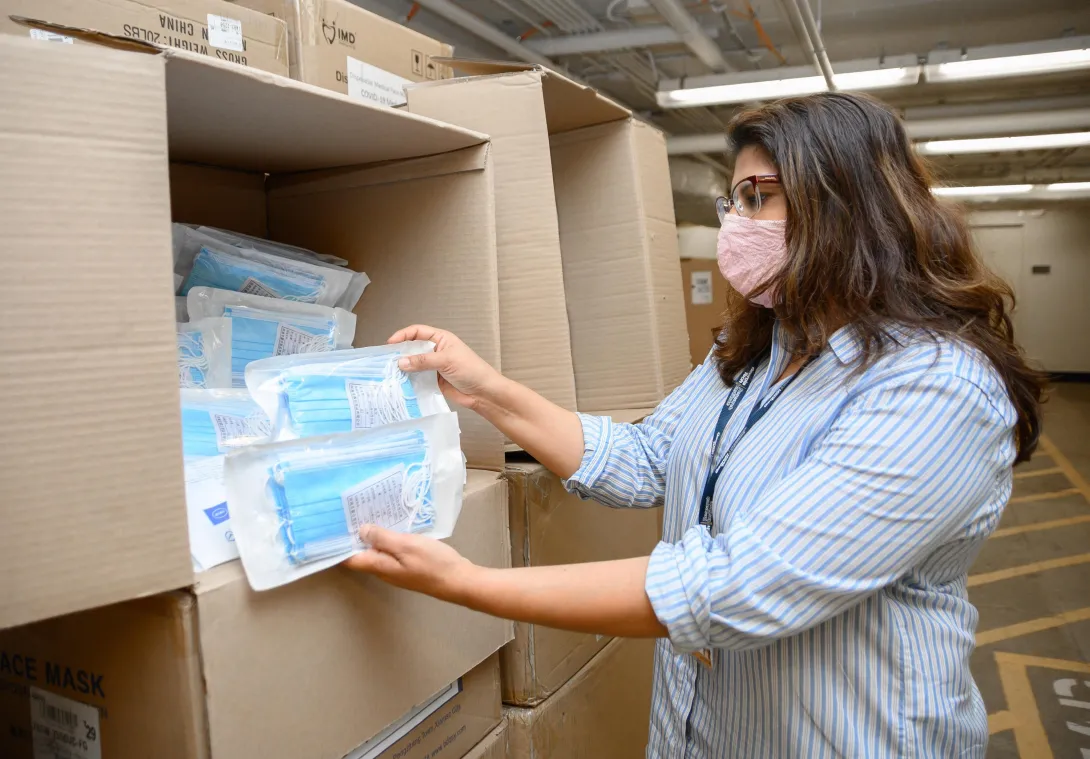
As America’s leading research universities ramp up laboratory operations that were shut down by Covid-19 in March, they’re encountering a perfect storm of challenges in providing personal protective equipment (PPE) – surgical masks, cloth face coverings, gloves, hand sanitizer, and disinfectant materials.
Global PPE supply chains have been severely disrupted by the coronavirus pandemic, producing long lead times and unreliable deliveries. At the same time, Covid-19 precautions are mandating the use of PPE in laboratories where it wasn’t required before, such as computer and electronics labs. And as researchers, staff, and graduate students slowly come back to the lab, predicting how many people will be at work on any given day creates yet another unknown.
At the Georgia Institute of Technology, supply chain and logistics experts have put their knowledge to work on the problem, using the kind of modeling and machine learning technologies that major retailers rely on to keep products on store shelves. In just one month, the research team has built an automated centralized system to replace traditional purchasing systems in which individual labs had to hunt for their own supplies.
By asking researchers to report details of the PPE they use each day, the labs will provide data the system needs to predict demand, allowing Georgia Tech to place large orders and stock a centralized warehouse that will help bridge the gap between supply chain hiccups. Based on usage data, the system will know when each lab’s stock of PPE needs to be resupplied from distribution centers located in 22 major laboratory buildings. The goal will be for each lab to have a robust three-day supply of PPE at all times.
“We need to make sure that every researcher, staff member, and graduate student is going to be protected properly,” said Benoit Montreuil, a professor in Georgia Tech’s School of Industrial and Systems Engineering (ISYE) and director of the Georgia Tech Supply Chain and Logistics Institute. “We are dealing with a very volatile situation for supply capacity, lead times, alternate sources, and reliability. With this system, we can ensure that the distribution of PPE throughout campus will be done in an efficient, seamless, responsive, and fair way.”
With $1 billion in sponsored activity during 2019, Georgia Tech has hundreds of research laboratories studying everything from viral antibodies and stem cells to robotics and electronic defense. In peak times, those researchers are expected to use 400,000 gloves a month and 20,000 surgical masks. With new sanitizing guidelines, they’re expected to use more than 4,000 gallons of hand sanitizer a month – but nobody really knows for sure, because this wasn’t widely required before.
Prior to the Covid-19 pandemic, most labs were responsible for purchasing their own PPE. But with so many labs worldwide now hunting for materials in the same disrupted supply chains, that’s no longer possible.
“Georgia Tech can ensure better success in obtaining PPE by buying in very large quantities instead of asking individual lab managers to try to find stock on their own,” said Robert Butera, Georgia Tech’s Vice President for Research Development and Operations. “We can track down the best suppliers and create a buffer in the system. We’ll also be able to identify who are the most reliable suppliers.”
From individual laboratories, the system needs daily reports of how many gloves, masks, and other PPE are used. The system aggregates the numbers and uses that information to predict future usage, allowing Montreuil and his team to provide information to Georgia Tech’s Environmental Health and Safety (EHS). Baseline information obtained during Phase 1 of the research ramp-up will help plan for PPE needs as the number of researchers increases during Phase 2.
Individual labs won’t need to place orders unless than they encounter an unexpected change in demand.
“Rather than principal investigators requesting PPE for their labs and having to anticipate demand, they will log usage and the platform will do all the back-end work to make sure there’s a three-day supply in each lab and a two-week supply in the buildings,” Butera explained. “We are switching from making requests to logging usage in real time. People have to log their use of PPE on daily basis to make sure they are supplied.”
The new system will supply an estimated 95% of PPE needed on campus. Other items that are purchased less frequently, such as lab coats and shoe coverings, will continue to be ordered through traditional means. Those other supplies may be added to the system later.
“The idea is to focus right now on the key PPEs that are most critical from a supply perspective,” said Montreuil. “We will be revising consumption predictions on a daily basis and transferring this information into an overall demand forecast for PPEs.”
Georgia Tech’s research enterprise is ramping up in two phases over the summer. The first phase began June 18, and the second will start July 13. The new PPE supply system launches July 1.
To initiate the system, EHS has provided a stock of supplies to each lab, and that initial stock will be replenished based on the new system. In Phase 2 of the research ramp-up, the system will grow to include distribution centers in more than 50 campus buildings. At this point, Georgia Tech Research Institute (GTRI) labs will receive their PPE through a separate supply system.
PPE distribution will begin at a campus warehouse managed by EHS. To meet the predicted demand, the warehouse will regularly distribute supplies to buildings, where managers will in turn supply individual labs. How labs receive their supplies will depend on building-level plans developed by managers, Butera said.
The centralized and automated system will for the first time allow administrators to know how much stock of each PPE item is available on campus. Ensuring adequate stock has become increasingly important with the protection needs of the Covid-19 environment.
While researchers who work with biological and chemical materials are accustomed to using and maintaining PPE stocks, keeping up with face masks and disinfectant stocks will be a new practice for others.
“In my lab in ISYE, nobody was using PPE before Covid-19 because we are only around workstations and computer displays,” said Montreuil. “Now, ISYE researchers won’t be able to get into the lab unless they have masks and we will provide hand sanitizer. We will have to get used to this change.”
Georgia Tech has one of the world’s best industrial engineering schools, and supply chain and logistics research is a key part of that. But even that expertise is challenged by the global logistics issues created by the pandemic, he added.
“The basics of inventory replenishment systems are well known,” Montreuil said. “But most of the time, the assumptions made in the models are very different from the environment we have now. With highly disrupted settings around the world, we find ourselves on a new frontier. It’s not a lab problem, a building problem, or a Georgia Tech problem. It’s a global challenge, and it affects everybody.”
Below are some frequently-asked questions about PPE supplies.
Where is the form to log use of PPE?
The form is available at this link.
Which PPE items are covered by the system?
Consumption of the following items should be reported: Pairs of nitrile gloves by size (S/M/L/XL), pairs of latex gloves by size (M/L), pairs of vinyl gloves, individual surgical masks, individual cloth masks, hand sanitizer by bottle, disinfecting spray by bottle, and disinfecting wipes by package.
How should consumption be reported?
Reporting usage by individual lab occupant would be most useful to the system because it will provide the most detailed data for predicting future use. But if labs cannot report usage by individuals working in the lab, they should provide daily data on the entire lab.
When are labs expected to begin reporting their daily consumption of PPE?
The system is operational now, and labs will be expected to start using it July 1.
Will GTRI labs obtain their PPE through this system?
No, GTRI has a separate system for providing PPE.
How will PPE supplies be restocked from buildings to individual laboratories?
Building managers will receive supplies from EHS and will be responsible for determining how labs will receive replenishment.
What should labs do with empty hand sanitizer and disinfectant spray bottles?
Empty hand sanitizer and disinfectant spray bottles should be returned to building managers for refill from bulk supplies. There is a shortage of bottles and reuse will help prevent shortages.
What is the lead time for PPE materials ordered from suppliers?
That varies according to the item. The median lead time for nitrile gloves has ranged from 11 to 53 days depending on glove size, with shortest for various sizes ranging between 7 and 11 days while the longest ranged between 11 and 130 days, depicting a high volatility. Supply chain challenges for hand sanitizer led Georgia Tech to work with non-traditional suppliers to create an alternative supply chain based on ethanol rather than isopropyl alcohol.
If labs will be provided with a robust three-day stock, how much will be at building depots?
Buildings should have a robust two-week supply of critical PPE items. The adjective robust is important as the aim is not to keep a stock covering an average three-day demand in labs, and an average two-week demand in buildings, but rather enough to cover demand considering consumption and supply stochasticity with degree of confidence. The three-day and two-weeks targets will be dynamically adjusted according to learning of the overall demand and supply chain dynamics.
Where can I get more information about accessing the consumption reporting system?
Please visit https://ehs.gatech.edu/covid-19/isye.
What if labs need certain supplies immediately?
An urgent request can be made using the urgent request form. At this point, ISYE is monitoring the requests and will notify the building manager. In the near future, requests will go directly to the building manager (or other point of contact).
Research News
Georgia Institute of Technology
177 North Avenue
Atlanta, Georgia 30332-0181 USA
Media Relations Contact: John Toon (404-894-6986) (jtoon@gatech.edu)
Writer: John Toon
News Contact
John Toon
Research News
(404) 894-6986
Jun. 16, 2020
So many people Seth Marder spoke to didn’t see the hand sanitizer crisis brewing. The country was going to run dangerously short if someone did not act urgently.
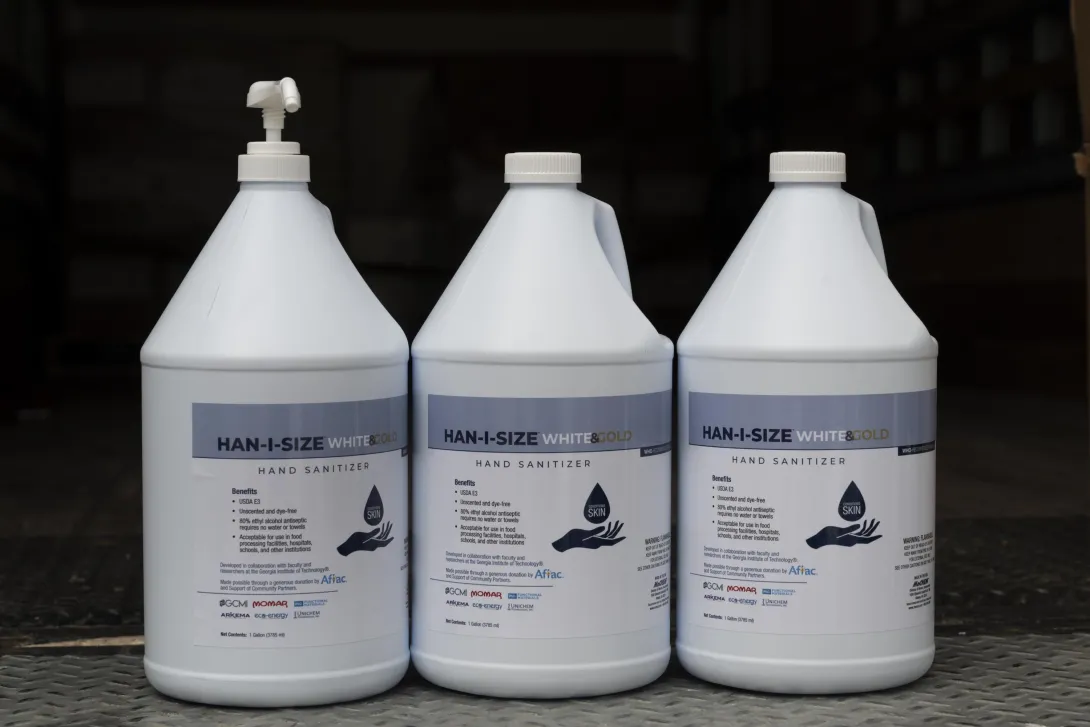
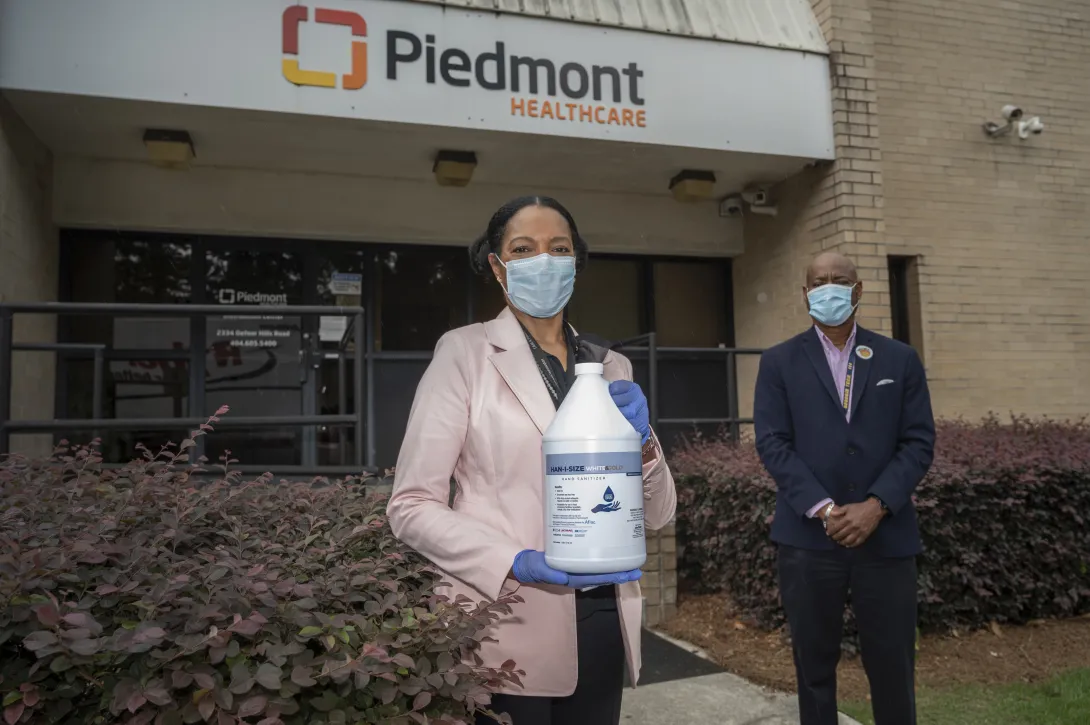
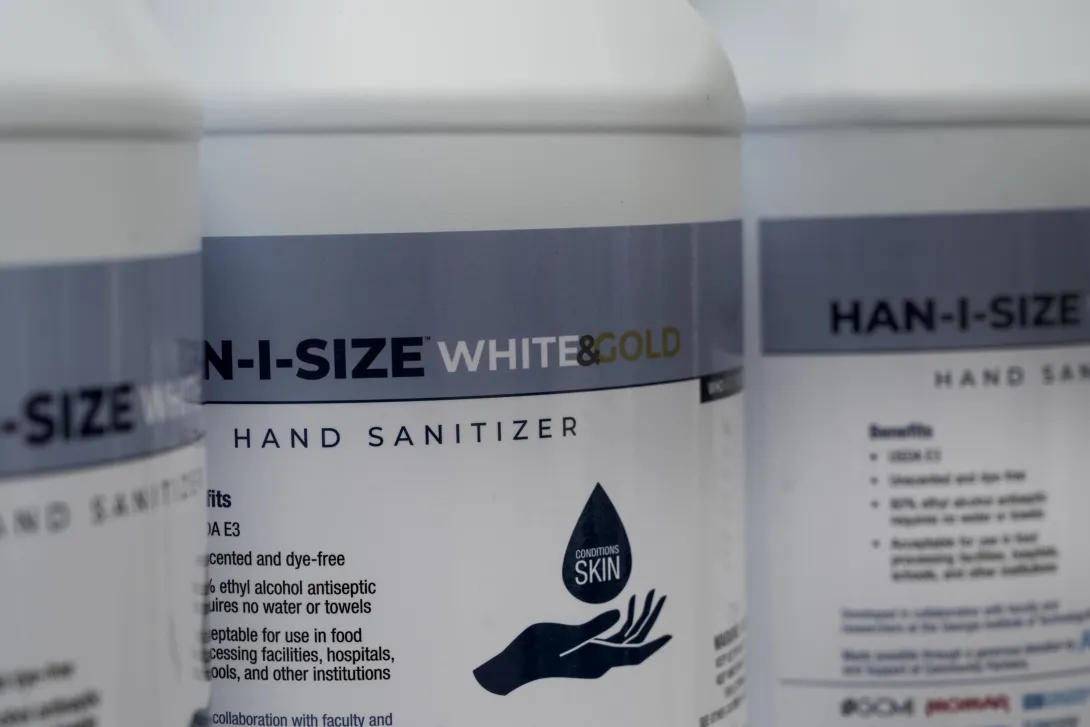
The professor at the Georgia Institute of Technology rallied colleagues and partners around the cause in March, and by early June, they had replaced a key component of hand sanitizer, created a new supply chain, and initiated their own donation of 7,000 gallons of a newly designed sanitizer to medical facilities.
Its name: Han-I-Size White & Gold, named for the colors of Georgia Tech. The new supply chain also may ensure that hand sanitizer producers across the country do not run out of the main active ingredient, alcohol, but the team’s path to success was a stony labyrinth.
“This project was on life support so many times because people did not understand how severe this shortage was going to be,” said Marder, a Regents Professor in Georgia Tech’s School of Chemistry and Biochemistry. “I called hospitals and institutions to assess the need and heard the same thing over and over: ‘No, we just got a delivery. We have no need. You’re wasting your time.’”
Marder was not. Contacts at major chemical suppliers of hand sanitizer ingredients said that a critical shortage of alcohol, particularly the one usually in hand sanitizer, isopropanol, was coming.
“Isopropanol plants in the U.S. were running at full capacity and still didn’t have enough. People were using pharmaceutical-grade ethanol now, too, but it was also in short supply. We weren’t going to have enough of either; I mean the whole United States was running low,” Marder said.
Clean hands cabal
Marder hastily drafted Chris Luettgen, a professor of practice in Georgia Tech’s School of Chemical and Biomolecular Engineering, George White, interim vice president of Georgia Tech’s Office of Industry Collaboration, and Atif Dabdoub, a Georgia Tech alumnus and owner of a local chemical company, Unichem Technologies, Inc.
To the three chemists and the business professional, it seemed simple: Mix alcohol with water, peroxide, and the moisturizer glycerin then bottle and ship it. That bubble burst quickly.
Luettgen, who had worked in the consumer products industry for 25 years at Kimberly-Clark Corporation and knew how to take products to market, had to plow through constant unexpected supply chain barriers and bureaucracy while White forged connections between companies. Neither the supply chain nor the business relationships had existed before, and the teams’ phones stayed glued to their ears night and day as they created them from scratch.
“When I worked for Kimberly-Clark, getting a new product out would take the company nine to 18 months, and the three of us had to get this done in weeks. The demand was there, and people were getting sick in some cases from lack of sanitizing. We felt speed was necessary to meet the growing demand. Seth told me to push this across the goal line, and I put everything into it,” Luettgen said.
“Georgia Tech is about the power to convene. Companies and stakeholders are eager to come to the table here to make things happen,” White said about forging new business ties. “Not everyone has that incredible recognition as a problem solver with the brainpower amassed here.”
Stinking of gin
Purchasing truckloads of alcohol was priority one.
Boutique liquor distilleries in Georgia were already converting to sanitizer ethyl alcohol production, but output was nowhere near enough to meet demand. ExxonMobil connected the team with Eco-Energy, a company that handles fuel-grade ethanol as a gasoline additive.
“The amount of ethanol that’s made for fuel in the U.S. is 1,500 times the amount of the isopropanol made. They could drain off about 1 percent of what is used for fuel and double or triple the amount of alcohol available for hand sanitizer in this country. And the fuel companies wouldn’t even notice it was gone, especially since hardly anyone was driving anymore,” Marder said.
But then prospective hand sanitizer distributors crimped their noses at that ethanol, saying it smelled odd.
“I thought, ‘This has the makings of a screenplay.’ I asked the distributor if we could come over to smell a sample for ourselves,” White said. “It needed a little love.”
Eco-Fuels produced the highly refined ethanol and then processed it through carbon filtration to increase purity and reduce odor. Atlanta-based chemical manufacturer, Momar, Inc., oversaw production, packaging, and distribution of Han-I-Size White & Gold.
The Georgia Tech team garnered funding through a donation from insurer Aflac Incorporated allocated through the Global Center for Medical Innovation (GCMI), a Georgia Tech affiliated non-profit organization that guides new experimental medical solutions to market. Aflac’s gift of $2 million through GCMI has also expedited the development, production, and purchase of other PPE to donate to health care workers.
In addition, GCMI helped guide the hand sanitizer through regulatory processes and to market. In a another development, the U.S. Food and Drug Administration was also aware of the dire shortage of alcohol for sanitizer and issued waivers for the pandemic to allow for use of ethanol in sanitizers without having to meet usual specifications.
Water, water everywhere
Arkema, Inc. donated hydrogen peroxide, which was delivered to PSG Functional Materials, which mixed and packaged the product then shipped with no delivery fee to Atlanta. Though water is ubiquitous, hand sanitizer requires purified water, and the Coca-Cola Company donated a tanker truck of it just when White was pondering desperate measures.
“If I have to get a truck to go pick up water and drive it, I’ll do it myself,” he said.
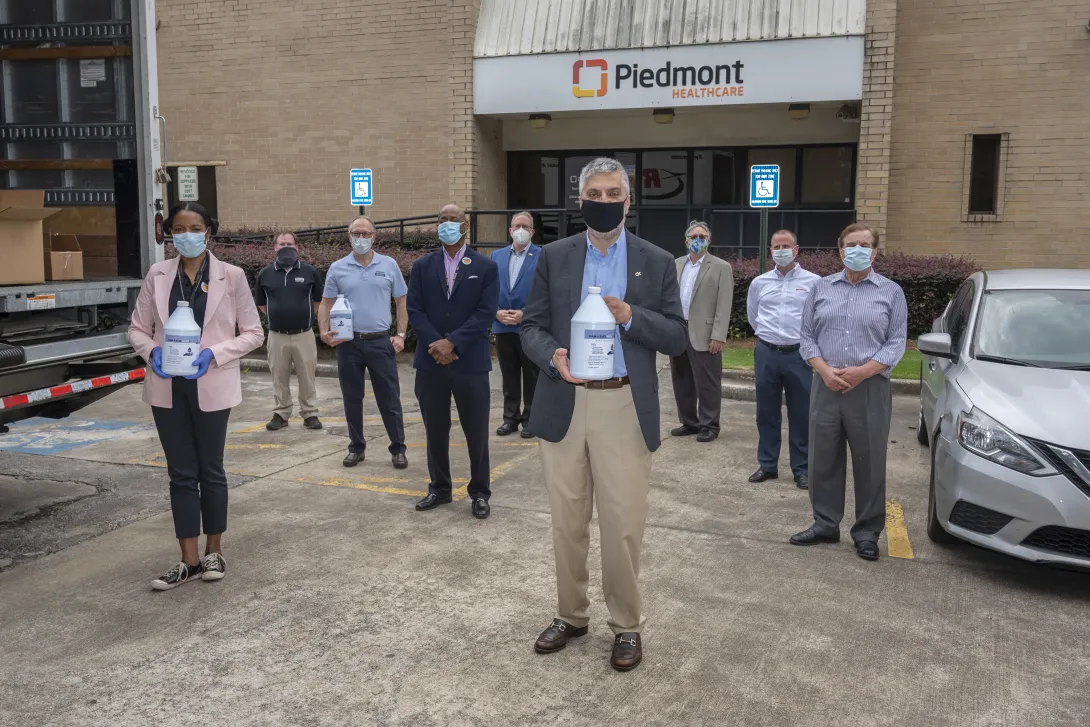
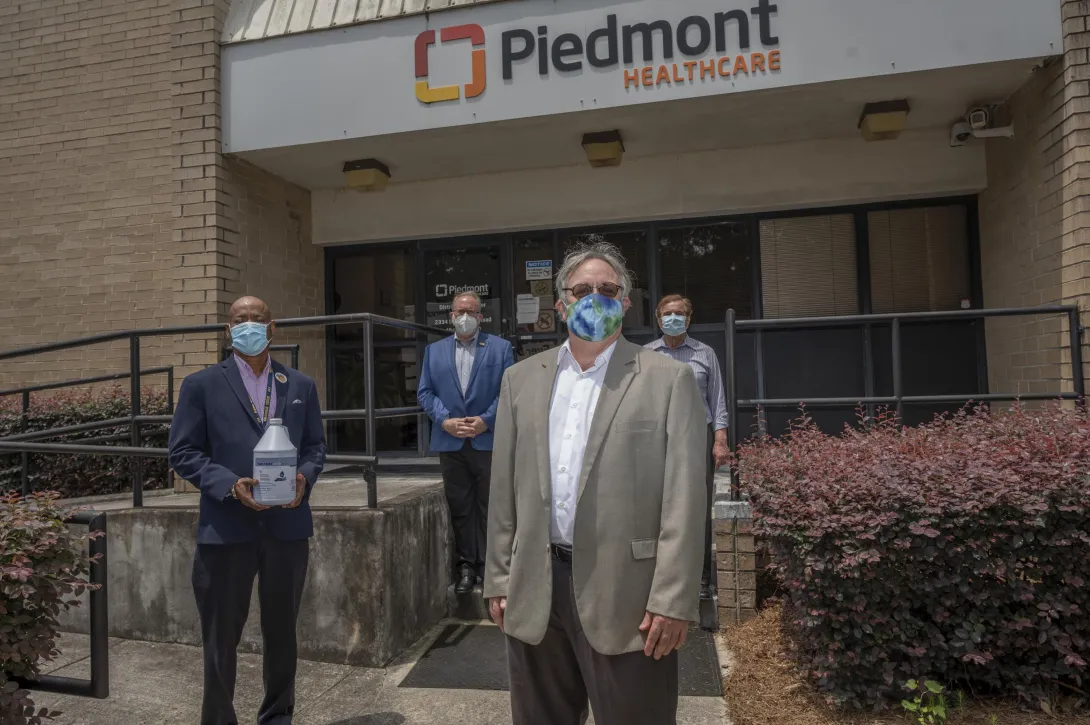
Finally, the first few hundred gallons of donated Han-I-Size White & Gold rolled into Piedmont Healthcare in Atlanta and Brightmoor Nursing Center in Griffin, Georgia, in the second week of June 2020.
GCMI is facilitating donations of the 7,000 gallons nationwide. Separate from the Aflac-financed donations, Momar will continue to manufacture the new hand sanitizing formula commercially to include in its regular product lineup, and Georgia Tech will be able to purchase it at a reduced rate to help protect researchers now returning to their labs.
The new supply chain, the first of its kind, of “waiver-grade” ethanol has given hand sanitizer producers across the country a new opportunity to re-supply America.
“Hopefully, we helped solved a national need,” Luettgen said.
Read about what else we are doing to help in the Covid-19 crisis.
Here's how to subscribe to our free science and technology email newsletter
Writer & media inquiries: Ben Brumfield, ben.brumfield@comm.gatech.edu or John Toon (404-894-6986), jtoon@gatech.edu.
Georgia Institute of Technology
Jun. 15, 2020

Dipayan Banerjee, a rising second-year Ph.D. student studying operations research in the H. Milton Stewart School of Industrial and Systems Engineering, has been awarded a Graduate Research Fellowship (GRF) by the National Science Foundation (NSF). Banerjee, who has a bachelor’s degree in industrial engineering and management sciences from Northwestern University, is co-advised by UPS Professor of Logistics Alan Erera and Leo and Louise Benatar Early Career Professor and Associate Professor Alejandro Toriello.
“Dipayan is a rising researcher in logistics, and the NSF fellowship is yet another accolade testifying to his promising young career,” said Toriello. “I look forward to working with him in the coming years in last-mile logistics and e-commerce, an exciting area where Dipayan has the potential to make a significant contribution.”
Banerjee is studying the tactical design of last-mile delivery systems, which are a challenging supply chain problem. The last mile in a supply chain represents the transport of goods being delivered, for example, from a local warehouse to a home or business. Specifically, Banerjee is looking at issues related to designing delivery fleets and vehicle dispatch policies for cost-effective last-mile delivery within a particular region.
“You can pack a big truck full of bulk quantities of goods and efficiently transport them across the U.S.,” Banerjee explained. “But getting the goods to a consumer’s home is less efficient, since individual items are being delivered. You could also see the importance of last-mile logistics during the Covid-19 lockdowns, when so many people were ordering and receiving their groceries at home.”
Beyond the demand dictated by the pandemic, Banerjee noted that e-commerce supply chains have become fundamental to the average person’s life, and hundreds of companies ranging from bakeries to florists are responding accordingly.
“It’s a really exciting time to be studying transportation and logistics systems,” he says. “There are many fascinating new challenges being faced in the last mile as companies seek to deliver more and more goods on increasingly tighter deadlines. These include issue of accessibility and environmental sustainability. We also have so much data and advanced computing power at our disposal that wasn’t available five or 10 years ago. I’m excited about the opportunity to develop new operations research approaches to solving these problems.”
Established in 1951, the NSF Graduate Research Fellowship is the oldest fellowship of its kind. The fellowship recognizes and supports outstanding graduate students in STEM disciplines who are pursuing research-based graduate degrees at accredited U.S. institutions. Fellows receive a three-year annual stipend of $34,000, along with a $12,000 cost of education allowance for tuition and fees (paid to the institution), opportunities for international research and professional development, and the freedom to conduct their own research at any accredited U.S. institution of graduate education they choose.
May. 28, 2020

IDEaS recently awarded a series of grants to stimulate the research efforts of Georgia Tech’s brightest minds in data science and related disciplines. Faculty and student research programs targeted for IDEaS awards must demonstrate research goals that will be highly cross-disciplinary and emphasize how data science can assist in related research areas.
The Data Science Research Scholarships program will support scholarships for the Spring 2020 semester and focus on Ph.D. student research that enables new collaborative research or adds a data science dimension to established research projects. Each scholarship will fund 50% of the cost of a GRA appointment, with the project PI funding the remaining 50%.
Data Science Research Scholarships 2020 Awards
- JC Gumbart (Physics) & David Sherrill (Chemistry): Force-field Development to Enable Simulations of Xeno-nucleic Acids
- Xiuwei Zhang (CSE) & Haesun Park (CSE): Development of an Integrative Clustering Method for Single Cells
- Vince Calhoun (ECE) & Audrey Duarte (Psych): The Chronnectomics of Memory
- Annalisa Bracco (EAS), Jie He (EAS) & Matt J. Kusner (University College London): Machine-learning Techniques for Cloud Modeling
- Toyya Pujol-Mitchell (ISYE), Nicoleta Serban (ISyE) & Constantine Dovrolis (CS): Network Weight Prediction Using Node Attributes
- Xiaofan Liang (City & Reg Planning), Clio Andris (City & Reg Planning) & Diyi Yang (IC): Advancing Metrics for Spatial Social Networks in the Era of Big Data
- Omar Asensio (Public Policy): Do Micromobility Options Reduce Traffic Congestion? Quasi-experimental Evidence from Uber Movement Data
- Constantine Dovrolis (CS) & Kelly F. Ethun (Emory/Yerkes): Connections Between Social Behavior and Food Intake in Rhesus Macaques
- Diyi Yang (IC) & Mai ElSherief (IC): Defining, Characterizing, and Detecting Implicit Discriminatory Speech Online
- Umakishore Ramachandran (CS) & Zhuangdi Xu (CS): Generating Labeled Vehicle Tracking Dataset for Large-scale Geo-Distributed Camera Networks
- Surya R. Kalidindi (ME/CSE/MSE) & Christopher Saldana (ME): Advanced Materials-Manufacturing Data Curation
- Agata Rozga (IC), Thomas Ploetz (IC) & external: Annotation of Datasets from Severe Behavior Treatment Program at the Marcus Autism Center
Data Science Partnership 2020 Awards
- Diyi Yang (IC): Allen Institute for AI and University of Washington
- Josh Kacher (MSE): Lawrence Livermore National Laboratory
- Rachel Cummings (ISyE): Georgetown University and U.S. Census Bureau
Data Science Speaker Travel Awards supports visits to the Georgia Tech campus by external experts in the areas of data science foundations or data-driven discovery in any discipline. Funds may be used to host a guest speaker for the IDEaS seminar series, or to participate in another on-campus event, conference, or seminar series. Awardees’ invited guests are experts in either mathematical data science or data science engineering.
Data Science Speaker Travel 2020 Awards
- Betsy DiSalvo (IC): Data Work Civic Engagement Panel
- Diyi Yang (IC): Natural Language Processing/Computational Social Science Seminar