
Feb. 26, 2021
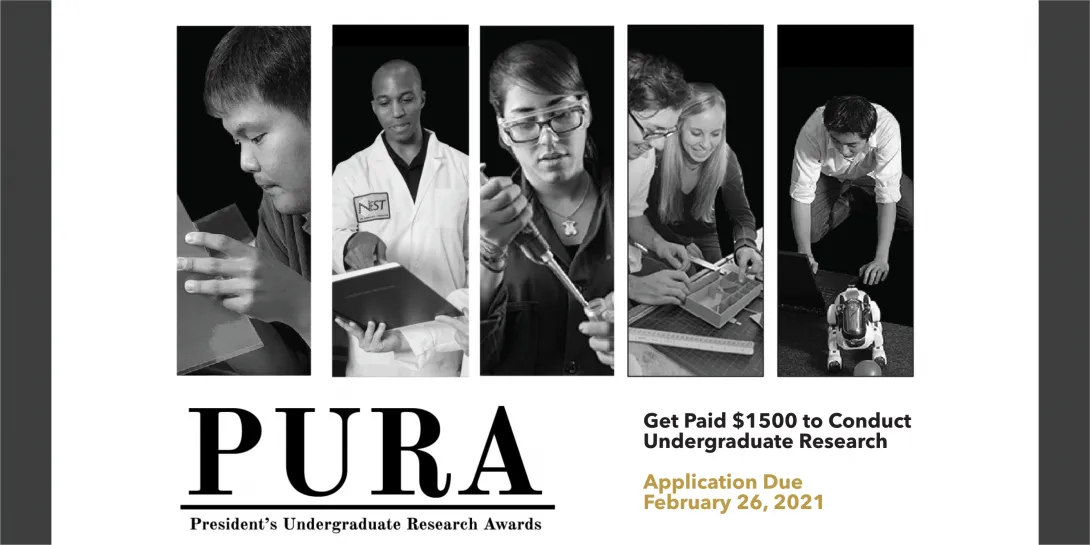
The President's Undergraduate Research Award pays selected students $1500 to conduct undergraduate research. Applications for summer 2021 funding are due on February 26, 2021.
Apply online at urop.gatech.edu
Jan. 29, 2021
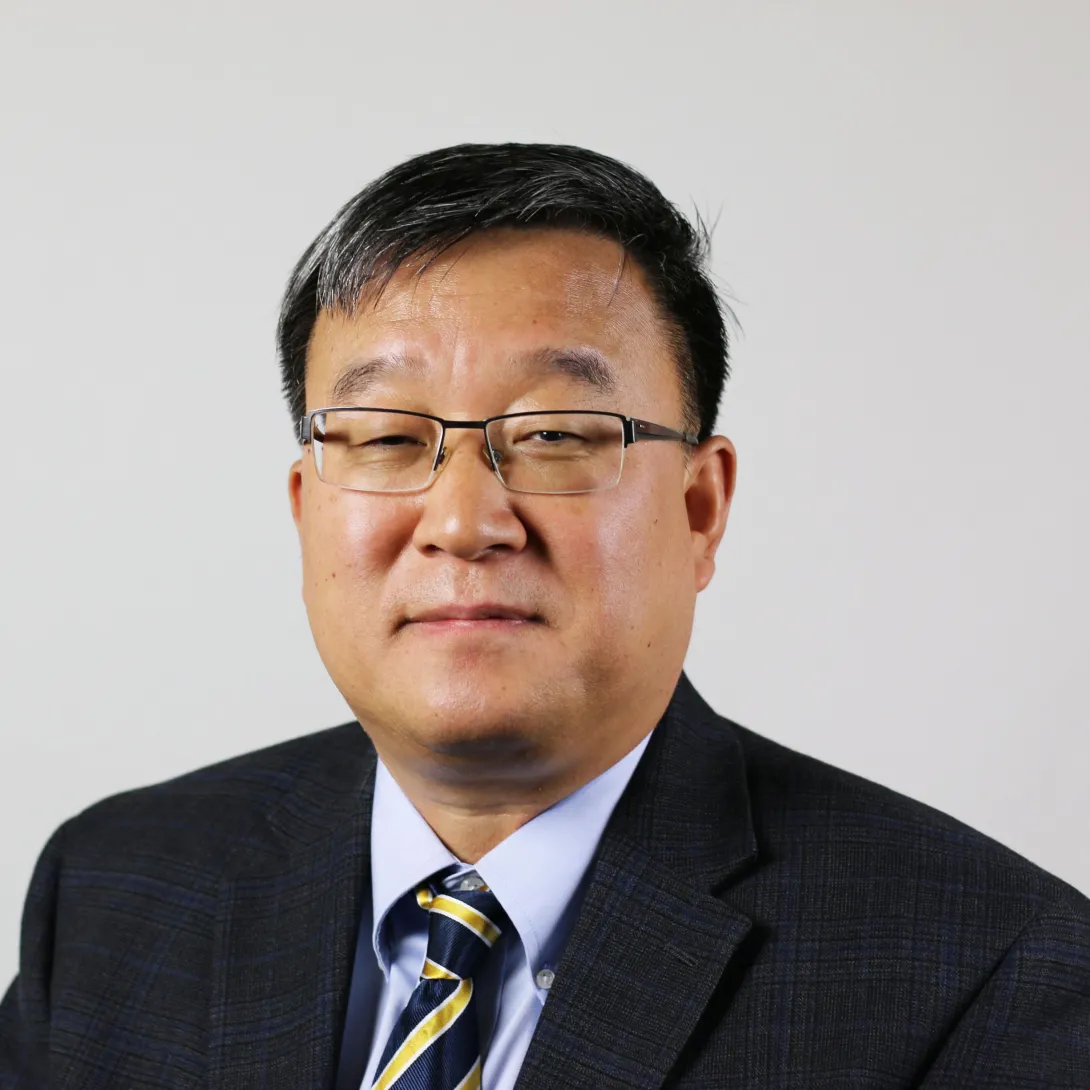
The American Society for Quality (ASQ) announced that Jianjun “Jan” Shi has been awarded the 2021 Walter Shewhart Medal. ASQ cited Shi for "his creative development and implementation of engineering-driven data fusion methodologies to achieve in-process quality improvements (IPQI) in manufacturing systems." Professor Shi is the Carolyn J. Stewart Chair in Georgia Tech’s H. Milton Stewart School of Industrial and Systems Engineering (ISyE). The Shewhart Medal is given to individuals who have made outstanding technical contributions and leadership in the field of modern quality control and improvement.
Shi’s work focuses primarily on the development and application of data-enabled manufacturing. His methodologies integrate system informatics, advanced statistics, and control theory for the design and operational improvements of manufacturing and service systems by fusing engineering systems models with data science methods. The technologies developed in Shi’s research group have been widely implemented in various production systems with significant economic impacts. Additionally, he is the founding chair of the Quality, Statistics and Reliability Division at the Institute for Operations Research and Management Science (INFORMS).
“Congratulations to Jan on winning this prestigious award,” said ISyE School Chair Edwin Romeijn. “His unmatched work in the development and application of data-enabled manufacturing and quality control have made him a true leader in this field. We are proud to have him as a longstanding member of our faculty.”
The Shewhart Medal is the latest in a long line of honors Shi has received for his research. These include the ASQ Brumbaugh Award (2019); the Horace Pops Medal from Wire Association International (2018); and the IISE David F. Baker Distinguished Research Award (2016). In 2018, he was elected to the National Academy of Engineering for "development of data fusion-based quality methods and their implementation in multistage manufacturing systems.”
“I feel extremely honored and humbled to receive the 2021 Walter Shewhart Medal,” said Shi. “The development and implementation of IPQI requires a team effort. I would like to take this opportunity to express my appreciation to my current and former students, collaborators, and sponsors, as well as many people’s efforts to implement the IPQI methodologies in industrial systems.”
Shi has been a faculty member of ISyE since 2008. Prior to his arrival at Georgia Tech, he was the G. Lawton and Louise G. Johnson Professor of Engineering at the University of Michigan.
Feb. 01, 2021

Does a dependency on a smart phone make you a cyborg? Does riding a bicycle? What about throwing spears at wooly mammoths?
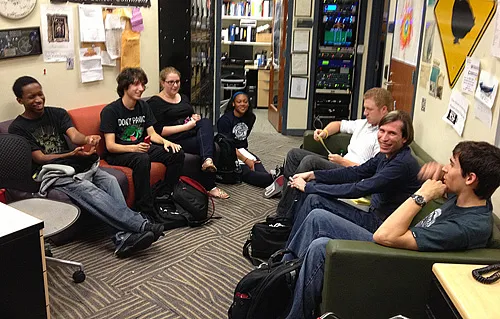
The people behind the mics at the Georgia Tech Sci Fi Lab are deep in discussion. It’s Two-Minute Madness time on the WREK radio show. The hosts and special guests speed-talk through mentions of Dr. Who, iPhones, Lance Armstrong, Luke Skywalker, Neanderthals, the Six Million Dollar Man, Star Trek, Terminator and zombies — all in the quest of determining, what, specifically, makes something a cyborg.
“We can say that this week's topic is ‘cyborgs,’ for example, but that can mean different things to different people: from Darth Vader, to Google Glass, to Daft Punk,” said Adam Le Doux, program manager and a host of the show. When not on the air, he’s a computational media major, a joint studies program between the College of Computing and the School of Literature, Media, and Communication (LMC) in Ivan Allen College of Liberal Arts. LMC is one of the coordinators of Sci Fi Lab along with the Georgia Tech Library and WREK 91.1 FM.
Since 2006, Sci Fi Lab has taken to the radio waves to discuss all things science fiction. Every Thursday at 7 p.m. a group of culture studies researchers and computer thinkers gather to discuss the spectrum of science fiction. The show has been picking up traction with the science fiction community, both locally and nationally.
"Six years into the program, we find that now we're approached by authors and artists who want to appear on the show, and we've even been studied in the University of Liverpool's grad program in Science Fiction Studies as an example of living science fiction," said Lisa Yaszek, a professor in LMC and a behind-the-scenes Sci Fi Lab organizer.
October’s guests included players from the Atlanta Radio Theater Co., the director of an independent zombie apocalypse film, Georgia Tech computing professors and actor Frank Langella from “Robot and Frank.”
“We try to cover the best in current and popular science fiction from all media — literature, film, television — and we try to tie that in with the real science and research that occurs on campus every day,” said Justin Ellis, who shares hosting duties with Le Doux.
Ellis serves as associate producer for the show and works at the Georgia Tech Library. His time on the development committee for the science fiction collection connected him with Yaszek. She thought there was a strong role for the library to provide academic foundations for the show, so Ellis signed on.
“I think the fact that we try and tackle both the ‘pop’ side — literature and entertainment — and the real science, research side is one way to bridge the gap between the sciences and the liberal arts,” said Ellis. “Many of the topics discussed in Sci-Fi literature and media are extrapolated from, or have some root in, real science.”
At the start of two-minute madness during the cyborg hour, Ellis shares his enthusiasm for wearable computing. He muses that he would be game for a cybernetic implant in his arm.
Le Doux quickly counters that that could be problematic in a light saber battle.
It’s a discussion that underscores how Le Doux describes the show, as “a living laboratory for the intersection of liberal arts and science.” It’s a concept with which he identifies personally.
“My studies are evenly split between computer science and the liberal arts — communication, culture, design — so this kind of cross-pollination is something I'm into,” said Le Doux.
It’s also something that’s unique to Georgia Tech and its students. Sci Fi Lab is one way to expand that intersection beyond the campus and into the greater community.
“In the wider culture we tend to have a gap between the arts and the sciences, but both sides would gain a lot if they worked more closely together, and I like to think there is an increasing awareness of this,” said Le Doux. “I think what makes the Sci Fi Lab unique are the combined perspectives of the participants.”
During the cyborg hour, Ellis interviewed Georgia Tech faculty about their work. In a telling demonstration, Thad Starner, associate professor in the School of Interactive Computing, challenged Clint Zeagler, a research scientist in the College of Architecture, to a picture race. Starner tapped his Google Glasses and secured a photo nearly instantaneously. Zeagler was forced to wait for his phone to turn on before launching a photo app.
Then they talked about getting inspiration from fashion design and Terminator movies. The intersection of arts and science is unavoidable. Sci Fi Lab serves as the petri dish for deeper investigation.
Sci Fi Lab airs weekly on Thursdays at 7 p.m., WREK 91.1 FM. Archived shows can be found at www.wrek.org/scifilab. Photos courtesy Jason Ellis.
News Contact
Rebecca Keane
404-894-1720
Feb. 01, 2021
Does a dependency on a smart phone make you a cyborg? Does riding a bicycle? What about throwing spears at wooly mammoths?
The people behind the mics at the Georgia Tech Sci Fi Lab are deep in discussion. It’s Two-Minute Madness time on the WREK radio show. The hosts and special guests speed-talk through mentions of Dr. Who, iPhones, Lance Armstrong, Luke Skywalker, Neanderthals, the Six Million Dollar Man, Star Trek, Terminator and zombies — all in the quest of determining, what, specifically, makes something a cyborg.
“We can say that this week's topic is ‘cyborgs,’ for example, but that can mean different things to different people: from Darth Vader, to Google Glass, to Daft Punk,” said Adam Le Doux, program manager and a host of the show. When not on the air, he’s a computational media major, a joint studies program between the College of Computing and the School of Literature, Media, and Communication (LMC) in Ivan Allen College of Liberal Arts. LMC is one of the coordinators of Sci Fi Lab along with the Georgia Tech Library and WREK 91.1 FM.
Since 2006, Sci Fi Lab has taken to the radio waves to discuss all things science fiction. Every Thursday at 7 p.m. a group of culture studies researchers and computer thinkers gather to discuss the spectrum of science fiction. The show has been picking up traction with the science fiction community, both locally and nationally.
"Six years into the program, we find that now we're approached by authors and artists who want to appear on the show, and we've even been studied in the University of Liverpool's grad program in Science Fiction Studies as an example of living science fiction," said Lisa Yaszek, a professor in LMC and a behind-the-scenes Sci Fi Lab organizer.
October’s guests included players from the Atlanta Radio Theater Co., the director of an independent zombie apocalypse film, Georgia Tech computing professors and actor Frank Langella from “Robot and Frank.”
“We try to cover the best in current and popular science fiction from all media — literature, film, television — and we try to tie that in with the real science and research that occurs on campus every day,” said Justin Ellis, who shares hosting duties with Le Doux.
Ellis serves as associate producer for the show and works at the Georgia Tech Library. His time on the development committee for the science fiction collection connected him with Yaszek. She thought there was a strong role for the library to provide academic foundations for the show, so Ellis signed on.
“I think the fact that we try and tackle both the ‘pop’ side — literature and entertainment — and the real science, research side is one way to bridge the gap between the sciences and the liberal arts,” said Ellis. “Many of the topics discussed in Sci-Fi literature and media are extrapolated from, or have some root in, real science.”
At the start of two-minute madness during the cyborg hour, Ellis shares his enthusiasm for wearable computing. He muses that he would be game for a cybernetic implant in his arm.
Le Doux quickly counters that that could be problematic in a light saber battle.
It’s a discussion that underscores how Le Doux describes the show, as “a living laboratory for the intersection of liberal arts and science.” It’s a concept with which he identifies personally.
“My studies are evenly split between computer science and the liberal arts — communication, culture, design — so this kind of cross-pollination is something I'm into,” said Le Doux.
It’s also something that’s unique to Georgia Tech and its students. Sci Fi Lab is one way to expand that intersection beyond the campus and into the greater community.
“In the wider culture we tend to have a gap between the arts and the sciences, but both sides would gain a lot if they worked more closely together, and I like to think there is an increasing awareness of this,” said Le Doux. “I think what makes the Sci Fi Lab unique are the combined perspectives of the participants.”
During the cyborg hour, Ellis interviewed Georgia Tech faculty about their work. In a telling demonstration, Thad Starner, associate professor in the School of Interactive Computing, challenged Clint Zeagler, a research scientist in the College of Architecture, to a picture race. Starner tapped his Google Glasses and secured a photo nearly instantaneously. Zeagler was forced to wait for his phone to turn on before launching a photo app.
Then they talked about getting inspiration from fashion design and Terminator movies. The intersection of arts and science is unavoidable. Sci Fi Lab serves as the petri dish for deeper investigation.
Sci Fi Lab airs weekly on Thursdays at 7 p.m., WREK 91.1 FM. Archived shows can be found at www.wrek.org/scifilab. Photos courtesy Jason Ellis.
News Contact
Rebecca Keane
404-894-1720
Jan. 21, 2021
Does a dependency on a smart phone make you a cyborg? Does riding a bicycle? What about throwing spears at wooly mammoths?
The people behind the mics at the Georgia Tech Sci Fi Lab are deep in discussion. It’s Two-Minute Madness time on the WREK radio show. The hosts and special guests speed-talk through mentions of Dr. Who, iPhones, Lance Armstrong, Luke Skywalker, Neanderthals, the Six Million Dollar Man, Star Trek, Terminator and zombies — all in the quest of determining, what, specifically, makes something a cyborg.
“We can say that this week's topic is ‘cyborgs,’ for example, but that can mean different things to different people: from Darth Vader, to Google Glass, to Daft Punk,” said Adam Le Doux, program manager and a host of the show. When not on the air, he’s a computational media major, a joint studies program between the College of Computing and the School of Literature, Media, and Communication (LMC) in Ivan Allen College of Liberal Arts. LMC is one of the coordinators of Sci Fi Lab along with the Georgia Tech Library and WREK 91.1 FM.
Since 2006, Sci Fi Lab has taken to the radio waves to discuss all things science fiction. Every Thursday at 7 p.m. a group of culture studies researchers and computer thinkers gather to discuss the spectrum of science fiction. The show has been picking up traction with the science fiction community, both locally and nationally.
"Six years into the program, we find that now we're approached by authors and artists who want to appear on the show, and we've even been studied in the University of Liverpool's grad program in Science Fiction Studies as an example of living science fiction," said Lisa Yaszek, a professor in LMC and a behind-the-scenes Sci Fi Lab organizer.
October’s guests included players from the Atlanta Radio Theater Co., the director of an independent zombie apocalypse film, Georgia Tech computing professors and actor Frank Langella from “Robot and Frank.”
“We try to cover the best in current and popular science fiction from all media — literature, film, television — and we try to tie that in with the real science and research that occurs on campus every day,” said Justin Ellis, who shares hosting duties with Le Doux.
Ellis serves as associate producer for the show and works at the Georgia Tech Library. His time on the development committee for the science fiction collection connected him with Yaszek. She thought there was a strong role for the library to provide academic foundations for the show, so Ellis signed on.
“I think the fact that we try and tackle both the ‘pop’ side — literature and entertainment — and the real science, research side is one way to bridge the gap between the sciences and the liberal arts,” said Ellis. “Many of the topics discussed in Sci-Fi literature and media are extrapolated from, or have some root in, real science.”
At the start of two-minute madness during the cyborg hour, Ellis shares his enthusiasm for wearable computing. He muses that he would be game for a cybernetic implant in his arm.
Le Doux quickly counters that that could be problematic in a light saber battle.
It’s a discussion that underscores how Le Doux describes the show, as “a living laboratory for the intersection of liberal arts and science.” It’s a concept with which he identifies personally.
“My studies are evenly split between computer science and the liberal arts — communication, culture, design — so this kind of cross-pollination is something I'm into,” said Le Doux.
It’s also something that’s unique to Georgia Tech and its students. Sci Fi Lab is one way to expand that intersection beyond the campus and into the greater community.
“In the wider culture we tend to have a gap between the arts and the sciences, but both sides would gain a lot if they worked more closely together, and I like to think there is an increasing awareness of this,” said Le Doux. “I think what makes the Sci Fi Lab unique are the combined perspectives of the participants.”
During the cyborg hour, Ellis interviewed Georgia Tech faculty about their work. In a telling demonstration, Thad Starner, associate professor in the School of Interactive Computing, challenged Clint Zeagler, a research scientist in the College of Architecture, to a picture race. Starner tapped his Google Glasses and secured a photo nearly instantaneously. Zeagler was forced to wait for his phone to turn on before launching a photo app.
Then they talked about getting inspiration from fashion design and Terminator movies. The intersection of arts and science is unavoidable. Sci Fi Lab serves as the petri dish for deeper investigation.
Sci Fi Lab airs weekly on Thursdays at 7 p.m., WREK 91.1 FM. Archived shows can be found at www.wrek.org/scifilab. Photos courtesy Jason Ellis.
News Contact
Rebecca Keane
404-894-1720
Jan. 21, 2021
Does a dependency on a smart phone make you a cyborg? Does riding a bicycle? What about throwing spears at wooly mammoths?
The people behind the mics at the Georgia Tech Sci Fi Lab are deep in discussion. It’s Two-Minute Madness time on the WREK radio show. The hosts and special guests speed-talk through mentions of Dr. Who, iPhones, Lance Armstrong, Luke Skywalker, Neanderthals, the Six Million Dollar Man, Star Trek, Terminator and zombies — all in the quest of determining, what, specifically, makes something a cyborg.
“We can say that this week's topic is ‘cyborgs,’ for example, but that can mean different things to different people: from Darth Vader, to Google Glass, to Daft Punk,” said Adam Le Doux, program manager and a host of the show. When not on the air, he’s a computational media major, a joint studies program between the College of Computing and the School of Literature, Media, and Communication (LMC) in Ivan Allen College of Liberal Arts. LMC is one of the coordinators of Sci Fi Lab along with the Georgia Tech Library and WREK 91.1 FM.
Since 2006, Sci Fi Lab has taken to the radio waves to discuss all things science fiction. Every Thursday at 7 p.m. a group of culture studies researchers and computer thinkers gather to discuss the spectrum of science fiction. The show has been picking up traction with the science fiction community, both locally and nationally.
"Six years into the program, we find that now we're approached by authors and artists who want to appear on the show, and we've even been studied in the University of Liverpool's grad program in Science Fiction Studies as an example of living science fiction," said Lisa Yaszek, a professor in LMC and a behind-the-scenes Sci Fi Lab organizer.
October’s guests included players from the Atlanta Radio Theater Co., the director of an independent zombie apocalypse film, Georgia Tech computing professors and actor Frank Langella from “Robot and Frank.”
“We try to cover the best in current and popular science fiction from all media — literature, film, television — and we try to tie that in with the real science and research that occurs on campus every day,” said Justin Ellis, who shares hosting duties with Le Doux.
Ellis serves as associate producer for the show and works at the Georgia Tech Library. His time on the development committee for the science fiction collection connected him with Yaszek. She thought there was a strong role for the library to provide academic foundations for the show, so Ellis signed on.
“I think the fact that we try and tackle both the ‘pop’ side — literature and entertainment — and the real science, research side is one way to bridge the gap between the sciences and the liberal arts,” said Ellis. “Many of the topics discussed in Sci-Fi literature and media are extrapolated from, or have some root in, real science.”
At the start of two-minute madness during the cyborg hour, Ellis shares his enthusiasm for wearable computing. He muses that he would be game for a cybernetic implant in his arm.
Le Doux quickly counters that that could be problematic in a light saber battle.
It’s a discussion that underscores how Le Doux describes the show, as “a living laboratory for the intersection of liberal arts and science.” It’s a concept with which he identifies personally.
“My studies are evenly split between computer science and the liberal arts — communication, culture, design — so this kind of cross-pollination is something I'm into,” said Le Doux.
It’s also something that’s unique to Georgia Tech and its students. Sci Fi Lab is one way to expand that intersection beyond the campus and into the greater community.
“In the wider culture we tend to have a gap between the arts and the sciences, but both sides would gain a lot if they worked more closely together, and I like to think there is an increasing awareness of this,” said Le Doux. “I think what makes the Sci Fi Lab unique are the combined perspectives of the participants.”
During the cyborg hour, Ellis interviewed Georgia Tech faculty about their work. In a telling demonstration, Thad Starner, associate professor in the School of Interactive Computing, challenged Clint Zeagler, a research scientist in the College of Architecture, to a picture race. Starner tapped his Google Glasses and secured a photo nearly instantaneously. Zeagler was forced to wait for his phone to turn on before launching a photo app.
Then they talked about getting inspiration from fashion design and Terminator movies. The intersection of arts and science is unavoidable. Sci Fi Lab serves as the petri dish for deeper investigation.
Sci Fi Lab airs weekly on Thursdays at 7 p.m., WREK 91.1 FM. Archived shows can be found at www.wrek.org/scifilab. Photos courtesy Jason Ellis.
News Contact
Rebecca Keane
404-894-1720
Jan. 19, 2021
Adolfo Rocco, a graduate student assistant studying under SCL faculty members Alan Erera and Alejandro Toriello, recently earned his PhD after successfully defending his thesis "Service Network Design for Parcel Trucking". Adolfo's research focuses on applications and technologies that use optimization techniques to solve complex real-world problems. Its relevance to supply chain and logistics revolves around last-mile logistics, an essential part of the economy involving the transportation of goods from producers to end-consumers. As a result of the explosive growth of e-commerce in the past decade, e-commerce sales ratios have nearly tripled globally and demand for last-mile delivery is expected to grow 78% globally by 2030. One of the main objectives of last-mile delivery logistics is to deliver packages as affordably, quickly, and efficiently as possible.
Adolfo’s dissertation research involved a large-scale package express service network design in collaboration with one of the largest courier companies in China. The objective of the project was to support the growth and evolution of the intercity logistics network (expanding coverage, offering tighter service levels, and improving efficiency). The challenge was to build flat network models given large problem size, time requirements for package movement, and consideration for relevant operational constraints. The first phase of the project focused on a detailed intracity scheduling service network design problem for megacities and developing a simple rated-based model to design shuttle and commodity paths. The next project phase focused on linehaul consolidation planning, and specifically, determining the most cost-effective hubs for cross-docking activities through developing decomposition greedy approaches that employ smaller tractable integer programming problems. In the final project phase, the focus was on a freight flow plan that conforms generalized in-tree structure and which basically generalize the in-tree concept. A main goal of the project was to build a large-scale plan when hub selection is not a concern, time requirements are relevant, and conformity and enforcement of a generalized in-tree structure that enhances operational realism is accomplished.
When asked why Rocco was interested in this specific research area, he commented, "I am passionate about employing operations research techniques to solve challenging real-world problems. I strongly believe that city logistics plays a major role in the economy because of the growth in world population and e-commerce in past years. City logistics directly impacts the lives of people and, if not addressed correctly, can have a negative impact on quality of life. Advances in scientific methodologies and computer capabilities permit us to employ enabling cutting-edge technology to tackle these challenges appropriately. This is an exciting field that I yearn more people get involved with."
Before being accepted into the PhD program, Adolfo worked for five years at an operations research consulting firm in Chile building optimization models for a Workforce Management technology system. In the summer of 2019 he interned at Delta, developing an approach to increase revenue through routing optimization. In the summer of 2020, Rocco interned with the worldwide capacity planning operations research group at Amazon, enhancing scheduling models for customer service agents. After earning his PhD, Adolfo will join Amazon as a Research Scientist working with the team he previously interned with.
News Contact
web@scl.gatech.edu
Jan. 07, 2021
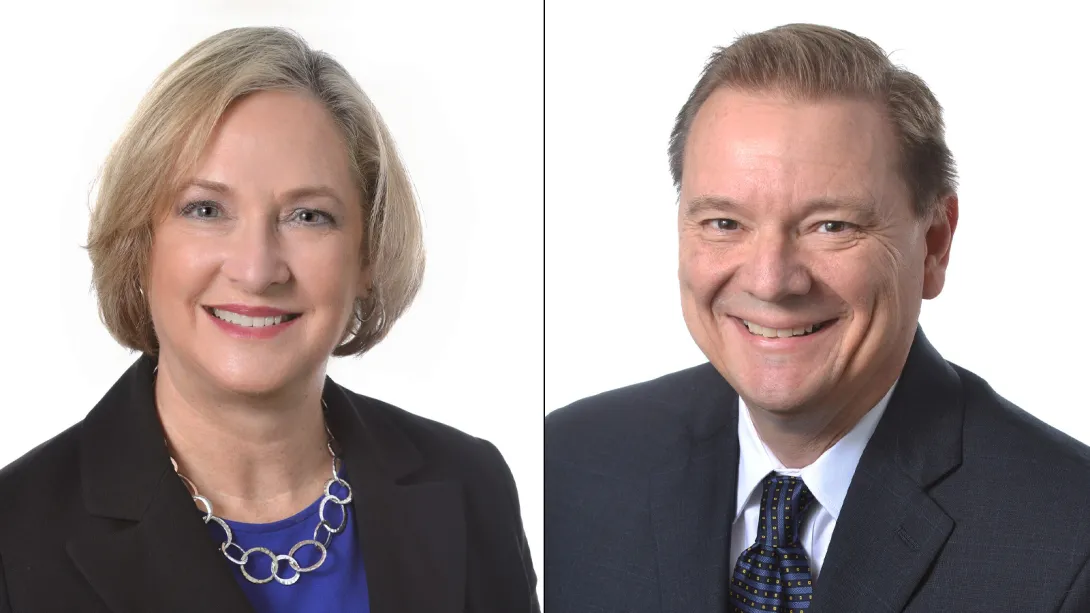
Karen Fite, who, for the past 18 months has led the Georgia Institute of Technology’s economic development efforts as interim vice president and director of the Enterprise Innovation Institute (EI2), has retired after more than 27 years of service.
David Bridges, director of EI2’s Economic Development Lab (EDL), will assume the interim vice president role effective Jan. 1, 2021.
EI2 is the largest and most comprehensive university-based program of business and industry assistance, technology commercialization, and economic development in the United States.
Prior to leading EI2, Fite ran the unit’s Business & Industry Services group of programs, comprised of the Georgia Manufacturing Extension Partnership (GaMEP), EI2’s largest economic development offering. The group also includes the Safety, Health, and Environmental Services (SHES), Atlanta MBDA Centers, Contracting Education Academy, Georgia Tech Procurement Assistance Center (GTPAC), and the Southeastern Trade Adjustment Assistance Center (SETAAC) programs.
Before taking on that role, Fite was GaMEP director.
“Over the years at Georgia Tech, I have been privileged to serve in a wide variety of capacities — assisting companies with government procurement, their implementation of quality management systems and Lean Manufacturing protocols, the launch of a Lean Healthcare initiative, creating community economic development research and strategic plans, and directing the GaMEP,” Fite said.
“As interim vice president, I have had the opportunity to interact with virtually every EI2 employee. Working with such a talented group of employees of EI2 has been an honor because across the board they are passionate about their work, dedicated to Georgia Tech’s mission of progress and service by serving clients, and continually looking to innovate, improve, and expand our services to help create long lasting and meaningful impact not only in Georgia and across the country, but around the world.”
Chaouki T. Abdallah, Georgia Tech’s executive vice president for research said Fite was a valued member of his leadership team.
“She has been a very effective and engaging leader,” Abdallah said. “She’s brought me solutions, given me critical feedback and has been an invaluable partner. Georgia Tech is lucky to have had her contributions for so long.”
Fite has a master’s degree in business administration from the University of Miami and a bachelor’s in health systems from Georgia Tech. In 2018, she achieved the faculty rank of principal extension professional, Georgia Tech’s highest professional extension faculty rank.
“We are fortunate to have someone of David Bridges’ caliber who can not only build on Karen’s legacy but also brings a wealth of experience and economic development successes,” Abdallah said.
Bridges, who joined EI2 in 1994, authored, co-authored or contributed to more than 100 economic development grants totaling more than $40 million. He assisted in the formation of the two proof-of-concept units — the Global Center for Medical Innovation, a Tech affiliate in the medical device space, and I3L, a health information technology innovation hub.
Beyond Georgia, Bridges helped catalyze the development of the Soft Landings program to bring companies from overseas to the United States. He also helped to establish the I-Corps Puerto Rico program as the National Science Foundation’s first I-Corps program ever offered to teams from that community.
He also supported the expansion of technology extension programs in Chile and Colombia, built a new program in professional development around innovation and technology commercialization, and expanded Georgia Tech’s presence by helping to build startup ecosystems around the Institute’s international campuses and in Latin America.
Bridges and his EDL team have also implemented ecosystem building projects for numerous countries including Colombia, Chile, Ecuador, Peru, Panama, Costa Rica, Argentina, Guatemala, South Africa, China, Korea, and Japan.
- Péralte Paul
News Contact
John Toon
Research News
(404) 894-6986
Nov. 17, 2020
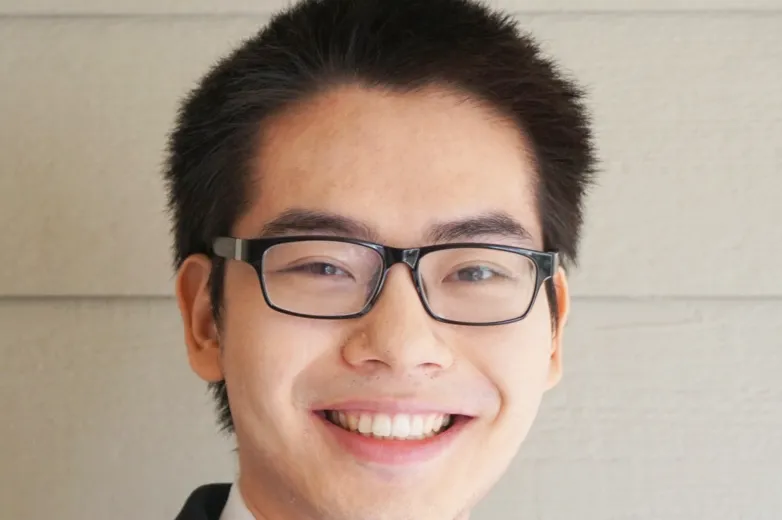
Jialei Chen, a doctoral student in the H. Milton Stewart School of Industrial and Systems Engineering and a graduate research assistant in the Georgia Tech Manufacturing Institute (GTMI), won two Best Student Paper Awards at this year’s 2020 INFORMS Conference. The annual INFORMS conference on business analytics and operations research brings together nearly 1,000 leading analytics professionals and industry experts to share ideas, network and learn about a range of current topics and trends that can help businesses and organizations improve their analytics prowess by applying science to the art of business.
Chen won the Best Student Paper Award in the Quality, Statistics, and Reliability track for “Adaptive Design for Gaussian Process Regression under Censoring.” This paper presented an experimental design and modeling method for censored physical experiments. Censoring is commonly encountered in experimentation due to the limits in a measurement device, safety considerations of the experimenter, and a fixed experimental time budget. To tackle this, he proposed a novel adaptive design method, which first estimates the possibility of censoring and then adaptively chooses design points to minimize predictive uncertainty under censoring. He demonstrates the effectiveness of the proposed method in two real-world applications on surgical planning and wafer manufacturing.
Chen received the Best Student Paper Runner-up Award in the Data Mining track for “APIK: A Physics-Informed Kriging Model with Partial Differential Equations.” This paper presented a learning framework that combines limited data and the auxiliary partial differential equations. One of the key challenges in applying state-of-the-art machine learning methods in real-world engineering applications is that the available measurement data is scarce. In this work, he proposed to incorporate the auxiliary partial differential equations in the learning model and therefore improve the predive performance. The proposed APIK model can leverage linear and nonlinear PDEs and enjoy simple and closed-form prediction and uncertainty quantification. He applied the proposed method to two real-world applications on flow dynamics and thermal processes.
Chen’s advisors for both papers are A. Russell Chandler III Professor Roshan Joseph and Harold E. Smalley Professor Chuck Zhang.
“I’m honored to have won best student paper award in the quality, statistics, and reliability track at INFORMS 2020, and to have another paper win second place in the data mining track,” said Chen. “My research focuses on engineering-driven learning methodologies, and data-driven modeling for complex engineering and manufacturing systems. The two awards are a great encouragement for me and inspire me to accomplish more in-depth and impactful works in the future. I would like to express my highest gratitude to my supervisors, professors Chuck Zhang and Roshan Joseph. I would also like to thank the support and assistance from GTMI, which helped to make the two projects possible.”
News Contact
Walter Rich
Dec. 09, 2020
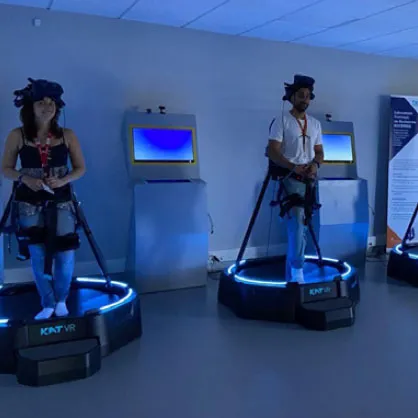
The Georgia Tech Supply Chain and Logistics Institute (SCL) is the largest such group in the world, and it provides researchers with many opportunities to help solve global supply chain and logistics problems. The latest addition is the SIReN (Sentient Immersive Response Networks) Lab, dedicated to research leveraging immersive technologies to enhance human capabilities for engineering and managing supply chains and logistic systems.
The SIReN Lab is an associate international laboratory, the result of a partnership between SCL’s Physical Internet Center and IMT Mines Albi, part of the Mines-Telecom Institute in France. The two organizations have historically collaborated on research surrounding artificial intelligence and its interface with these immersive technologies. The SIReN Lab is an extension and formalization of that relationship.
The U.S. arm of the lab is housed in the H. Milton Stewart School of Industrial and Systems Engineering (ISyE) and is directed by Benoit Montreuil, Coca-Cola Material Handling & Distribution Chair and professor in ISyE. Montreuil is also co-director
of SCL and director of the Physical Internet Center. The French lab is led by Frederick Benaben, head of the Interoperability of Organizations research team at IMT Mines Albi. Because of the virtual nature of the work, it is possible to have researchers from both labs working on the same experiment, in the same environment, at the same time.
SIReN Lab research is centered around four main types of response networks — demand, health, humanitarian, and crisis — and the human response to them. A demand response network focuses on how the supply network responds to demand and how to prepare for this response, rather than the other way around. The health and humanitarian response networks, which have become increasingly visible due to the Covid-19 pandemic, relate to issues like disaster recovery and various healthcare supply chains.
The French lab has a significant emphasis on crisis response networks, in which a group of people work together to respond to a crisis in a smart, fair, and efficient manner.
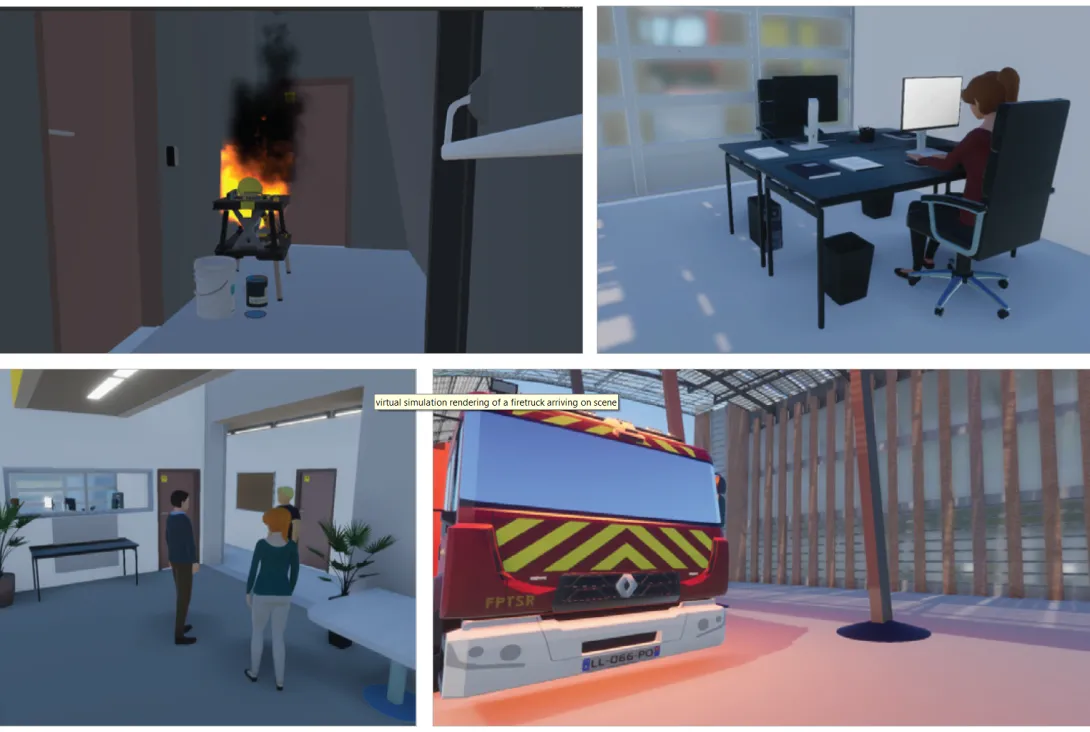
“We currently have a crisis management project where 10 people in France and a few in the U.S. are working together at the same time in a digital twin environment,” said Benaben. “For example, we can have everyone in a building where they can fight a fire, but we can also have some of them in a virtual control room exchanging ideas and making decisions. The options are limitless.”
Researchers are using tools such as dashboards, simulations, games, and in some cases virtual or augmented reality to allow participants to see — and in some cases experience — a vivid picture of a situation with other players in the network.
“In augmented reality, we reinforce what participants see with facts, maps, graphs, and other information that enhance what they are experiencing,” explained Montreuil. “In virtual reality, we project the user into a virtual world, which can be a very vivid representa-tion of the current world, or it can be an abstract world. It can be a very powerful tool.”
“When we put someone in an environ-ment where they can touch, learn, train, experiment, and ultimately decide, it changes the way they approach the problem,” added Benaben.
The French lab launched on Nov. 15, 2019. While the spring 2020 launch of the U.S. lab was postponed due to the Covid-19 pandemic, the team already has several projects underway and is fully operational. Eventually, they would like to see additional SIReN labs join the network to further scale the work being conducted.
“We want to become a global leader in making response networks become more sentient and immersive,” said Montreuil. “This is an exciting new approach that we are bringing to ISyE and to the domain.”
News Contact
Laurie Haigh
Communications Manager