
Jul. 14, 2025

By Chris Gaffney, Managing Director, Georgia Tech Supply Chain and Logistics Institute | Supply Chain Advisor | Former Executive at Frito-Lay, AJC International, and Coca-Cola
Every few weeks these days, a new AI breakthrough makes headlines. Models get sharper and more capable. Language tools get more fluent. Claims of agent breakthroughs and embedded autonomy in tools are everywhere.
And each time, the question resurfaces: What’s left for people to do as this wave progresses?
It’s a fair question. But from what I’ve seen throughout my career—from managing logistics in a Frito-Lay regional DC to transportation and distribution operations at AJC International and Coca-Cola, and now through executive education, consulting, and applied research at Georgia Tech—I believe we’re asking the wrong question.
Instead of asking what AI can do, we should be asking: Where is the human edge—and how do we keep it sharp?
1. Collaboration Across Boundaries Still Wins the Day
Whether in manufacturing, logistics, commercial and customer teams, or strategy, success still hinges on people working together—often across silos, systems, or supply chains. At Coca-Cola, some of the most impactful progress we made didn’t come from technology upgrades. It came from aligning teams that didn’t naturally collaborate—finance with planning, supply chain with sales, bottlers with company.
From what I see in my advisory work and interviews with supply chain leaders, that hasn’t changed. AI can improve visibility. It can suggest decisions. But it doesn’t build consensus, resolve conflicts, or create shared understanding. That’s human work—and it often makes the difference between potential and progress.
2. When the Plan Breaks, People Step Up
During my time in global logistics at AJC International, unexpected events were the norm: shipping delays, capacity shortages, regulatory changes. AI may help flag risks, but when the plan breaks, it’s still people who step in, prioritize under pressure, and find creative solutions.
This same theme came up in a recent SCM Talent podcast conversation. When I asked a senior supply chain leader what traits define her most effective team members, she didn’t hesitate:
“A drive for results. Problem solving. The ability to work in teams. And the ability to influence others.”
Those aren’t going out of style. They’re still what carries teams forward when the data model breaks or the shipment gets stuck.
The professionals I see excelling—especially in moments of disruption—aren’t just technical experts. They’re problem solvers who own the outcome and stay focused when others get stuck.
Drive, persistence, and adaptability aren’t things you automate. They’re human qualities that remain essential.
3. Hands-On Context Isn’t a Field Trip—It’s a Foundation
At Frito-Lay, I worked in a regional distribution center and breakbulk operation managing warehouse activities and dispatching drivers. Later, I spent a full year as an operations manager at one of our plants, where I led drivers and worked with plant warehouse teams and schedulers to ensure load readiness and on-time dispatch to local DCs.
Those weren’t just jobs—they were formative experiences. They taught me how decisions affect execution in the real world, and how the rhythm of operations shapes everything else in the supply chain.
That’s why I firmly believe professionals—especially early in their careers—should spend 3 to 5 years in front-line roles. No AI tool can replicate the kind of intuition you build by seeing how things work, where they break, and how people respond in real time. That foundation lasts an entire career.
4. Communication and Leadership Will Always Matter
In every role I’ve had—from the plant floor to corporate teams to Georgia Tech—I’ve seen that clear communication and authentic leadership are force multipliers. They carry more weight now, not less.
AI might help with drafting, summarizing, or visualizing, but it doesn’t earn trust. It doesn’t mentor a new team member or guide a group through a difficult change. That takes listening, emotional intelligence, and personal credibility.
Those leading change in today’s organizations—whether rolling out a new system or rebuilding after disruption—are the ones who can communicate with clarity and lead with steadiness. That’s not something AI can learn.
5. The Edge Is Where Humans Live
There’s a space at the boundary of every operation—the “edge”—where plans meet real-world variability. And that’s where humans remain essential.
Whether it’s spotting an issue before it escalates, reading between the lines of a conversation, or connecting seemingly unrelated problems across functions, that kind of judgment is rooted in experience. It can’t be downloaded or inferred from data alone.
In my work at Georgia Tech, across executive education, consulting, and applied research, I regularly see the difference it makes when decision-makers bring not just technical knowledge, but lived context from the field. That human edge is where resilience is built—and where strategy becomes reality.
6. Humans and AI: Better Together
To be clear: this isn’t about rejecting AI. The smartest teams I work with aren’t afraid of it—they’re learning how to use it. AI tools can improve productivity, identify trends, and help people make better decisions. But they need to be paired with human insight.
AI suggests. People choose. AI speeds up planning. People keep it grounded. The professionals who combine digital fluency with interpersonal skill, operational awareness, and strategic judgment? Those are the ones who will lead in the next era.
So What Should You Do?
If you want to build a career that endures—and evolves—with AI, here are seven things I recommend:
- Invest in the front line. Not just a tour. Spend 3–5 years in a real operations or customer-facing role. It will shape how you lead for decades.
- Build bridges. Learn how sales thinks. Understand finance’s constraints. Connect systems, teams, and people.
- Volunteer when the extra project comes up. These stretch roles are often tied to strategic initiatives and senior leadership. Saying yes can accelerate learning and visibility—especially when others hesitate.
- Take roles at the intersections—not the cul-de-sacs. Look for positions that connect functions, partners, or ecosystems. Exposure to diverse perspectives sharpens insight and multiplies your value.
- Sharpen your communication. Speak with intent. Write with clarity. Listen deeply. These skills amplify everything else.
- Evolve with AI—or fall behind. You don’t need to code, but you do need to understand how AI is changing your domain. Through continuing education, hands-on learning, or professional development, stay curious and current.
- Never stop learning. At Georgia Tech, I see firsthand how ongoing learning—through executive education, research engagement, or new assignments—helps professionals lead through change. Keep asking: what haven’t I seen yet? Who could I learn from?
Final Thoughts
The future of work isn’t about humans vs. machines. It’s about people who can lead, decide, and connect—with AI as their force multiplier.
We may automate tasks. But judgment, trust, and empathy? Those are human domains. And in times of uncertainty, it’s the people who can navigate complexity, rally teams, and adapt with integrity who make the difference.
So yes, learn the tools. Embrace the change. But never underestimate the power of experience, context, and connection.
That’s your edge. And that’s not going anywhere.
Jun. 23, 2025
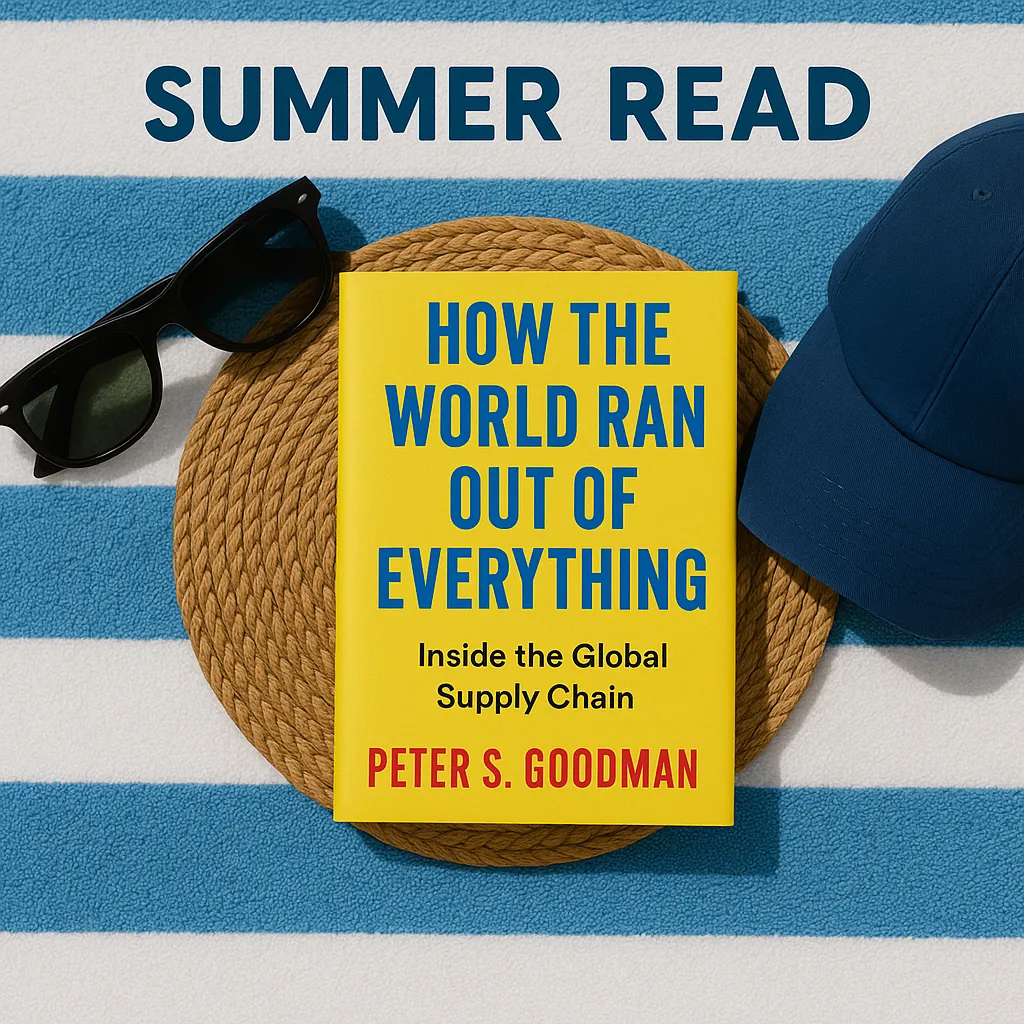
I want to recommend a book that I think is especially timely for anyone working in, studying, or simply trying to understand today’s supply chain landscape. Peter Goodman’s How the World Ran Out of Everything takes you inside the global disruption we all lived through — but it also challenges some of the assumptions we've made about how supply chains are supposed to work.
This isn’t a technical manual. It’s a well-researched, human story — with frontline accounts from truckers, factory workers, port operators, and business leaders — and it puts real names and faces behind the headlines. For those of us who’ve been in this field for a while, many of the companies and consultants referenced will be familiar. I’ve worked in and with those same types of organizations, and I’ll say this plainly: so much of what happens in supply chains comes down to incentives. And that’s a thread this book pulls on again and again.
Why I Think It’s Worth Reading Now
It lays bare the tension between short-term profitability and long-term resilience.
That balance is hard — even for well-run companies. This book doesn’t offer easy answers, but it helps you see the tradeoffs more clearly.
It’s realistic about reshoring and nearshoring.
Yes, they’re happening. But unless you’re Walmart or a top-tier buyer, they’re not easy plays. The book does a good job showing why that’s true.
It tackles the complexity of working with China.
Like many of you, I’ve been in conversations where we talk about moving away from China — and then realize how difficult (and costly) that would be. This book captures that paradox well: we can’t live with them, but we can’t live without them either.
It reminds us that behind every system are people.
This part resonated with me. From seafarers stuck at sea to small businesses trying to stay afloat, it brings the human side of supply chain to the forefront.
Who Might Enjoy This
- Practitioners thinking about how to build more resilient systems
- Early-career professionals who want to see how theory meets practice
- Anyone who wants a thoughtful, readable entry point into the “why” behind the supply chain headlines
As we explore new solutions — whether AI, circular supply chains, or new sourcing strategies — it's worth pausing to ask: what were we solving for before? And are the incentives any different now?
This is a good summer read to help frame that discussion.
News Contact
info@scl.gatech.edu
Apr. 30, 2025

In the world of supply chain management, we spend much of our time searching for ways to make things better — more reliable, more efficient, more resilient. It’s a pursuit that can feel endless because improvement rarely comes from one grand move; instead, it is found in hundreds of small, thoughtful actions over time.
That’s why I’m recommending a summer read that, while not a traditional supply chain book, speaks directly to this spirit of continuous improvement: Better by Atul Gawande.
Gawande, a practicing surgeon and bestselling author, focuses much of his writing on the challenges of delivering better outcomes in medicine. But as you read Better, it becomes clear that the insights he shares transcend healthcare. In fact, many of them connect deeply to the work we do in supply chain. Health care, after all, is a complex supply chain in itself — one that must manage the flow of goods (medicines, equipment) and services (diagnosis, surgery, therapy) under conditions of great uncertainty and high stakes.
Gawande’s work reminds us that the principles that drive improvement in medicine are the same ones that drive improvement in supply chains, manufacturing, transportation, and just about every field where people are trying to do things better every day.
Three Takeaways for Supply Chain Professionals
1. The Relentless Pursuit of Better is Everyone’s Job
One of Gawande’s central points is that better performance is not reserved for “geniuses” or “experts” alone. In medicine, small, consistent improvements — asking an extra question, double-checking a dosage, washing hands properly — save lives. The same is true in supply chain.
In our world, whether it’s taking a second look at an inventory replenishment setting or spending a few extra minutes mapping supplier risks, the incremental pursuit of better outcomes can mean the difference between success and failure. There’s no standing still. Better is a moving target, and everyone on the team has a role in aiming for it.
2. Systems Matter as Much as Skill
Gawande makes a strong case that even the most skilled individuals can fail if the systems around them are poorly designed. A world-class surgeon operating in a broken hospital supply chain still faces high risks of failure.
Supply chains work the same way. Even great people can’t overcome a bad process or poor system design for long. When we evaluate our operations, it’s important to look beyond individual performance and address the structural barriers that prevent consistent execution. Strong systems allow talent to flourish; weak systems exhaust it.
3. Always Ask One More Question
One of my favorite insights from Better is the idea that sometimes, the most powerful thing you can do is simply ask one more question.
Gawande shares examples where small moments of curiosity or concern — asking a patient one more question about their symptoms, or a nurse asking why a process was skipped — led to major improvements or saved lives.
In supply chain, asking one more question can reveal unseen risks, highlight hidden opportunities, and help avoid costly mistakes. When considering a new supplier, a logistics routing change, or a forecasting adjustment, taking the time to dig a little deeper often makes the difference between a smooth operation and a big problem.
As supply chain learners and leaders, developing the habit of curiosity — and the courage to ask that extra question — is one of the simplest and most powerful habits we can cultivate.
Why Better is a Worthwhile Summer Read
What makes Better a great summer read is not just the quality of Gawande’s storytelling, but how accessible and applicable his lessons are. You don’t have to be a doctor to appreciate the challenges he describes, and you don’t have to be in a hospital to face similar decisions about quality, safety, and improvement.
Supply chains, like healthcare systems, are messy, imperfect, and always evolving. Gawande’s stories are a reminder that we improve not by finding perfect solutions, but by persistently chasing better ones — day after day, decision after decision.
If you’re looking for a book that will inspire you to think a little differently about your work, challenge you to ask better questions, and recharge your commitment to doing things better — Better is a worthy addition to your summer reading list.
I hope you’ll find it as insightful and motivating as I did. And as you turn its pages, I encourage you to keep a simple question in mind: What’s one thing I could do a little better today?
News Contact
info@scl.gatech.edu
Apr. 14, 2025
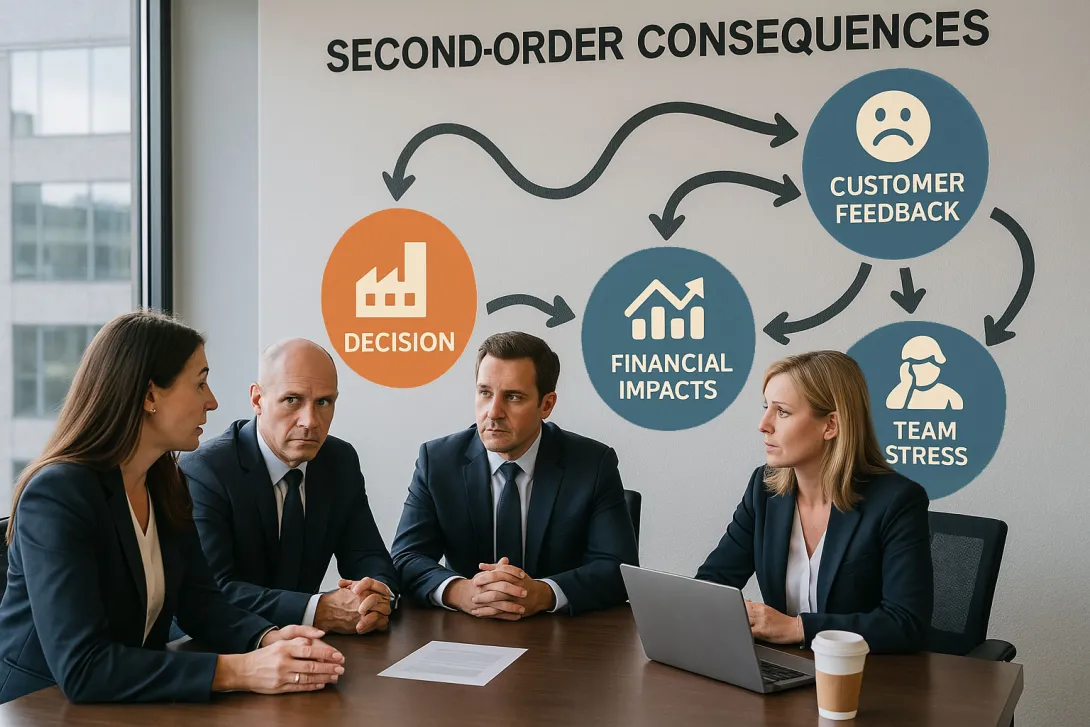
In the world of strategic decision-making—whether in Supply Chain Management and Engineering or in policy—we tend to focus our energy on the immediate problem in front of us. That makes sense. Big decisions like acquisitions, divestitures, or product innovations are complex enough without adding more layers. But in my experience—especially during my time at Coca-Cola and across broader industry engagements—what often gets left out of the room are the second-order effects. These are the unintended consequences that don’t show up in the PowerPoint deck, but show up months or years later on your P&L, in your customer feedback, or in your team’s stress levels.
Some of these outcomes are manageable. Others are problematic. Occasionally, they’re game-changing—but not in the way we hoped.
The Core Challenge: Complexity Crowds Out Curiosity
In my time in industry, I’ve seen high-stakes decisions unfold under tight timelines. The rigor is there: financial models, market analysis, legal due diligence. But the same pressure that brings focus often narrows the field of vision. Once the strategic goal is clear, the push becomes “get the recommendation ready” or “get the deal done.” Often, the team disbands before the ripple effects have even begun to appear.
In fact, studies of managerial behavior find that decision-makers often prioritize short-term outcomes over long-term implications, making it easy to overlook those downstream impacts.
We rarely paused to ask:
- What happens to our partners, our systems, or our people two or three steps down the line?
- Are we shifting bottlenecks or creating future misalignments?
- Could this solution lock us into a path that becomes hard to reverse?
- Will we be happy with this decision in 5 years?
Not asking these questions isn’t negligence. It’s often a result of how we structure decision processes: focused, time-bound, and oriented toward closure.
When Good Decisions Still Cause Trouble
Let's make this real. I've seen:
- Procurement strategies that focused on driving down cost but over time forced suppliers to reduce investment in quality and continuous improvement resources—eventually leading to a significant quality issue for a key customer.
- Multiple outsourcing efforts that reduced future capital requirements but also reduced flexibility in scheduling and responsiveness to rapid demand shifts or new product innovation.
- Plant closures that optimized total network cost on paper but not in reality, because the remaining plants were not actually equipped to take on more volume and increased complexity.
- A new warehouse management system implementation that promised efficiency gains but created chaos in distribution—not because the software was flawed, but due to unforeseen complexities during implementation.
In each of these, the first-order decision was sound. But the downstream effects caught teams off guard, requiring backtracking, remediation, and even reputational repair.
Even recently, retailers trying to fix 2021 product shortages by ordering more stock found themselves “overwhelmed with inventory” in 2022 when demand eased—a textbook second-order surprise. Likewise, logistics executives admitted they “didn’t anticipate” that 2020’s e-commerce boom would spark a warehouse labor crunch—a side effect that underscores how easily ripple effects can catch us off guard.
Why This Matters—and Why It's Often Skipped
Let’s be honest. Most leaders are moving fast. The idea of adding more process—or imagining abstract future problems—can feel like a luxury. Typical objections sound like:
- "We don't have time for hypotheticals."
- "That's someone else's job—let's just move."
- "We'll deal with it if it becomes a problem."
But here’s the catch: in a complex system like a global supply chain or a tightly coupled stakeholder network, second-order effects are not edge cases—they're part of the landscape.
In fact, recent research in supply chain management finds that such second-order effects are likely ubiquitous and must be anticipated rather than ignored. Ignoring them doesn’t make them go away. It just delays the pain—and multiplies the cost.
Where This Applies in Supply Chain
These second-order thinking practices are especially useful in supply chain decisions where complexity and interdependencies are high. Think about:
- Network redesigns or footprint consolidation
- Sourcing shifts or dual sourcing strategies
- Technology implementations like a new TMS or WMS
- Inventory policy changes that affect fulfillment, customer service, or working capital
- Sustainability initiatives that touch suppliers, packaging, and compliance
Each of these decisions may seem straightforward at first glance, but often carry ripple effects that only surface months later—making this kind of foresight not just useful, but essential.
A Pragmatic Playbook: Small Steps, Big Impact
To embed this thinking into your organization’s DNA, you don’t need to launch a task force. You need lightweight, repeatable tools that shift how teams think. Here are a few that punch above their weight:
✅ Pre-Mortem Workshop
- Time: 60–90 minutes
- What It Is: Imagine the decision failed spectacularly. Ask: what went wrong?
- Value: Surfaces hidden risks early and creates a safe space for dissent.
"This is an insurance policy, not red tape.”
✅ Ripple Mapping
- Time: 1–2 hours
- What It Is: Visually chart the impact of a decision across systems, partners, and people.
- Value: Turns abstract consequences into visible risks and opportunities.
"Helps teams see around corners—and ask better questions.”
✅ Mini FMEA (Failure Modes and Effects Analysis)
- Time: 60 minutes
- What It Is: Identify how key decision elements could fail and what to do about it.
- Value: Helps prioritize monitoring and mitigation during rollout.
"Adapt it from engineering—it works just as well for strategic moves.”
✅ Early Warning Indicators
- Time: Minimal setup, integrated into standard dashboards
- What It Is: Define and track metrics tied to second-order risks (e.g., employee attrition, service delays).
- Value: Helps you course-correct before small issues become systemic.
"It's not just about making the right decision—but making the decision work.”
Culture Shift: From Transaction to Trajectory
The real unlock comes when we shift the definition of a successful decision. It’s not just about getting a green light. It’s about ensuring the decision holds up over time—operationally, culturally, and reputationally.
To institutionalize this mindset:
- Add a "second-order checkpoint" to strategic review decks or governance templates
- Ask for a "consequence map" alongside the business case
- Celebrate teams who surface risks early, not just those who execute quickly
- Conduct post-mortems (not just pre-mortems) to harvest lessons
"Strategic foresight is not about predicting everything. It's about avoiding the predictable surprises.”
Backed by Big Thinkers
This isn't just operational wisdom—it's grounded in thoughtful literature:
- Peter Senge, in The Fifth Discipline, emphasizes how organizations struggle when they fail to see the system-wide consequences of localized actions.
- Nassim Nicholas Taleb, in Antifragile, argues that systems become more vulnerable when decisions are made without consideration for stress-testing and adaptive feedback loops.
- Cass Sunstein, writing on regulatory and policy decision-making, promotes the idea of "decision hygiene”—a systematic process to reduce bias and surface risk.
- Atul Gawande, in his book Better and in his commencement address at Stanford, shared how the habit of asking "just one more question" often uncovered crucial, overlooked insights—just like the disheveled detective Columbo. That final question, the one nobody else asks, frequently makes the difference between surface-level understanding and meaningful action.
Sometimes the last question is the best one. The more complex our systems become, the more important it is to keep asking until we find what we didn’t know we were missing.
Closing Thought: Be the Person Who Asks One More Question
As supply chains become more interconnected and policy environments more volatile, decision quality will increasingly depend on ripple-awareness. You don’t need perfect foresight. But you do need a culture that pauses—briefly—to ask: what might happen next?
Those few extra minutes may be the difference between a great decision—and a regrettable one.
News Contact
info@scl.gatech.edu
Mar. 17, 2025
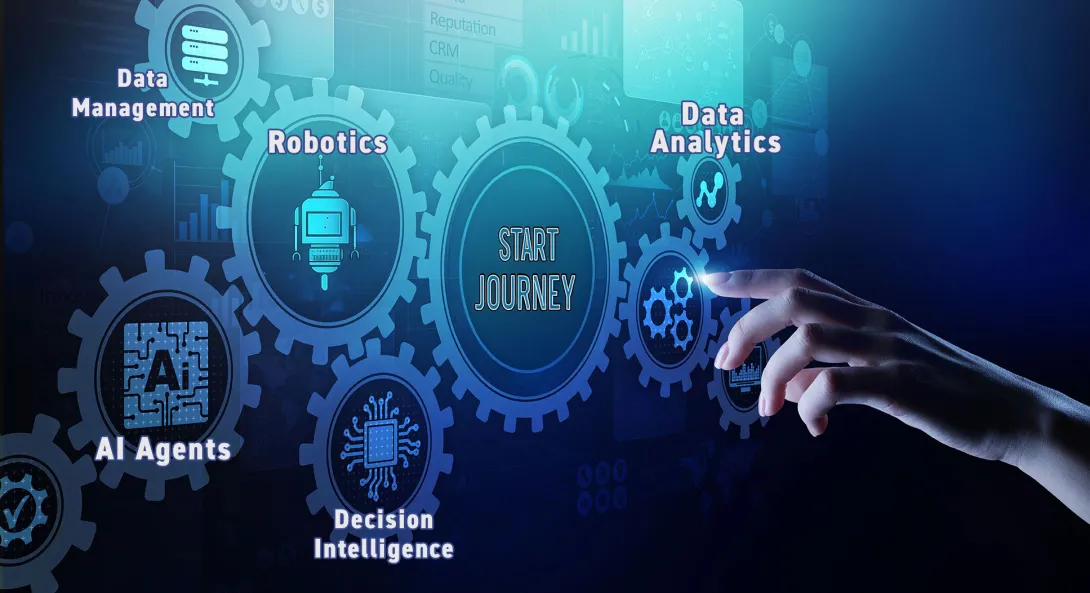
Today's supply chain industry is undergoing a rapid transformation, driven by AI, robotics, and data analytics. These innovations are already delivering measurable efficiency gains, and fast followers – companies that quickly adopt proven technologies – must take action or risk falling behind. Using a "consequence thinking" approach, supply chain professionals and students must ask: What happens if I’m not keeping up with these trends? Those who proactively invest in emerging technologies and their own skills will be better positioned to compete, those who don’t take action in 2025 will struggle with inefficiencies and higher costs. Georgia Tech, a leader in supply chain research and education, is actively exploring these areas, reinforcing that these trends are not just hype but a critical reality.
AI Agents and Decision Intelligence
AI is moving beyond forecasting and analytics into autonomous decision-making. AI agents can rapidly process complex scenarios—such as supply disruptions—and generate optimal responses in real time. This shift reduces reliance on manual problem-solving and enables organizations to respond faster and with greater accuracy. These AI-driven systems also make insights more accessible, allowing non-technical professionals to interact with advanced analytics in natural language.
Georgia Tech’s Supply Chain and Logistics Institute is offering education in Generative AI for supply chain, helping professionals understand and apply these tools effectively. The key takeaway? AI isn’t just for data scientists—it’s becoming essential for all supply chain professionals. Investing in AI literacy and decision intelligence training will be critical to staying relevant in the field.
Physical Automation: AMRs Reshaping Warehouses
Automation in warehouses is no longer experimental—it’s here and delivering results. Autonomous mobile robots (AMRs) are replacing traditional automation solutions, offering greater flexibility and adaptability. Unlike AGVs, which rely on fixed paths, AMRs navigate dynamically using AI and real-time mapping, making them well-suited for evolving warehouse environments.
Companies deploying AMRs report increased throughput, reduced labor costs, and improved safety. These robots optimize workflows, assist human workers, and enable 24/7 operations. Georgia Tech researchers are developing human-collaborative robotics, reinforcing that the future is about augmenting—not replacing—workers. Supply chain professionals should focus on developing skills in automation management and AI-driven operations. Understanding how to integrate these technologies into workflows will be a key differentiator.
Data Management: The Foundation for AI and Automation
AI and automation depend on high-quality, well-integrated data, yet many organizations struggle with fragmented systems and poor data governance. Industry surveys consistently highlight that supply chain leaders cite data silos and quality issues as top barriers to digital transformation. Without a strong data foundation, even the best AI models and automation solutions will fail to deliver their full potential.
Modern supply chain visibility platforms and AI-powered analytics tools are helping companies consolidate data for better decision-making. Georgia Tech researchers are advancing digital twin models that simulate supply chain networks, but these rely on robust data integration. For professionals, this underscores the need to develop data literacy and analytical skills. Those who can navigate, interpret, and leverage data effectively will be indispensable in AI-powered supply chains.
Call to Action: Personal Development and Strategic Planning
Emerging technologies in supply chain—AI, automation, data analytics, and logistics AI—are no longer futuristic concepts. They are delivering tangible benefits now, and the gap between early adopters and laggards is widening. If these innovations are not on your radar, you need to take action.
Where to Start:
- Invest in Personal Development: AI, automation, and data skills are becoming core competencies. Take relevant courses, attend industry events, and seek practical experience.
- Assess Business Applications: Identify where these technologies can solve current challenges and improve efficiency in your supply chain.
- Build Data Competency: Understanding how to structure and leverage data is foundational for AI and automation success.
- Experiment with Emerging Tech: Pilot AI-driven decision tools, AMRs, or logistics optimization models to gain insights into their potential.
The future of supply chain management is being reshaped by these technologies, and those who prepare now will define the next era of supply chain excellence. The question is no longer if these tools will impact the industry—it’s how quickly you can learn to use them to your advantage.
News Contact
info@scl.gatech.edu
Feb. 26, 2025
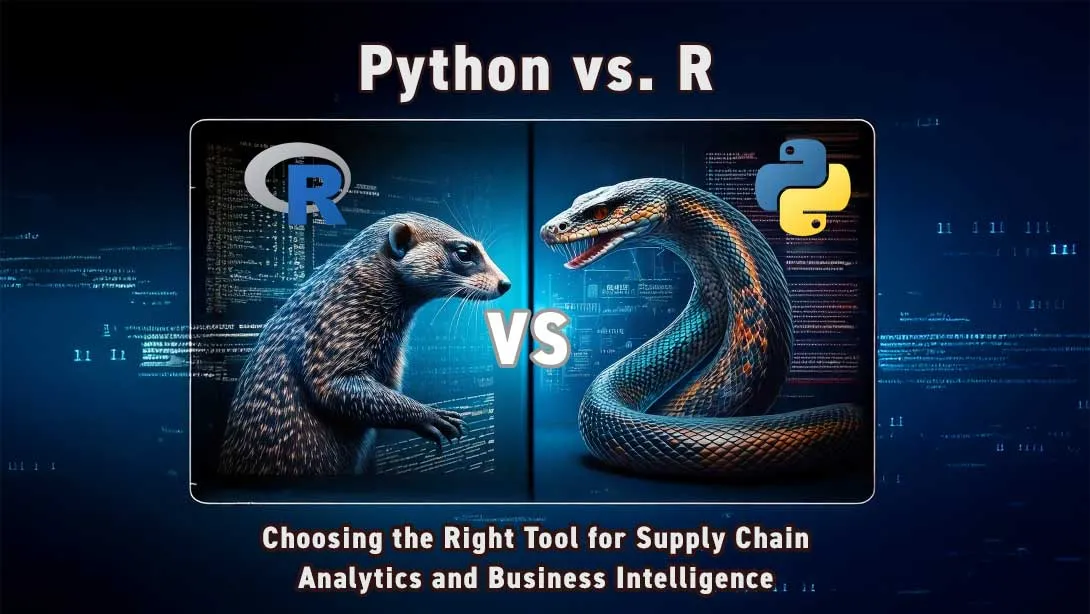
In today's data-driven world, supply chain professionals and business leaders are increasingly required to leverage analytics to drive decision-making. As companies invest in building data capabilities, one critical question emerges: Which programming language is best for supply chain analytics—Python or R?
Both Python and R have strong footholds in the analytics space, each with unique advantages. However, industry trends suggest a growing shift toward Python as the dominant tool for data science, machine learning, and enterprise applications. While R remains valuable in specific statistical and academic contexts, businesses must carefully assess which language aligns best with their analytics goals and workforce development strategies.
This article explores the strengths of each language and provides guidance for industry professionals looking to make informed decisions about which to prioritize for their teams.
Why Python Is Gaining Industry-Wide Adoption
1. Versatility and Scalability for Business Applications
Python has evolved into a comprehensive tool that extends beyond traditional analytics into automation, optimization, artificial intelligence, and supply chain modeling. Its key advantages include:
- Scalability: Python handles large-scale data processing and integrates seamlessly with cloud computing environments.
- Machine Learning and AI: Python’s ecosystem includes powerful machine learning libraries like scikit-learn, TensorFlow, and PyTorch.
- Integration Capabilities: Python works well with databases, APIs, and ERP systems, embedding analytics into operational workflows.
2. Workforce Readiness and Talent Development
From a talent perspective, Python is becoming the preferred programming language for data science and analytics roles. Surveys indicate that Python is used in 67% to 90% of analytics-related jobs, making it a crucial skill for professionals. Employers benefit from:
- A larger talent pool of Python-proficient professionals.
- A lower barrier to entry for new employees learning data analytics.
- The ability to streamline analytics processes across different functions.
3. Industry Adoption in Supply Chain Analytics
Python is widely adopted in logistics, manufacturing, and supply chain optimization due to its ability to handle:
- Demand forecasting and inventory optimization.
- Network modeling and simulation.
- Automation of data pipelines and reporting.
- Predictive maintenance and anomaly detection.
Why R Still Has a Place in Analytics
Despite Python’s widespread adoption, R remains a valuable tool in certain business contexts, particularly in statistical modeling and research applications. R’s strengths include:
- Advanced Statistical Analysis: R was designed for statisticians and remains a leader in econometrics and experimental design.
- Robust Visualization Capabilities: Packages like ggplot2 and Shiny make R a preferred choice for creating high-quality visualizations.
- Adoption in Public Sector and Academic Research: Many government agencies and research institutions continue to rely on R.
Strategic Considerations: Choosing Between Python and R
1. Business Needs and Analytics Maturity
- For companies focused on predictive analytics, automation, and AI, Python is the best choice.
- For organizations conducting deep statistical research or working with legacy R code, maintaining some R capabilities may be necessary.
2. Workforce Training and Skill Development
- Companies investing in analytics training should prioritize Python to align with industry trends.
- If statistical expertise is a core requirement, R may still play a supporting role in niche applications.
3. Tool and System Integration
- Python integrates more seamlessly with enterprise software, making it easier to operationalize analytics.
- R is often more specialized and may require additional effort to connect with business intelligence platforms.
4. Future Trends and Technology Evolution
- Python’s rapid growth suggests it will continue to dominate in analytics and AI.
- While R remains relevant, its role is becoming more specialized.
Final Thoughts: A Pragmatic Approach to Analytics Development
For most organizations, Python represents the future of analytics, offering the broadest capabilities, strongest industry adoption, and easiest integration into enterprise systems. However, R remains useful in specialized statistical applications and legacy environments.
A balanced approach might involve training teams in Python as the primary analytics language while maintaining an awareness of R for niche use cases. The key takeaway for business leaders is not just about choosing a programming language but ensuring their teams develop strong analytical problem-solving skills that transcend specific tools.
By strategically aligning analytics capabilities with business goals, organizations can build a more data-driven, adaptable, and future-ready workforce.
Feb. 19, 2025

Years ago, I wrote a short and very simplistic post that can help explain why a country (or for that matter, any group of people) can run a trade deficit with another country (or again, any other group of people) and still grow their welfare (economy, wealth, etc.) faster than the other country. You can find it here. The post makes a number of basic points using a simple example. I’ll also repeat here that, these years later, I’m still not an economist and I’m not otherwise an expert on certain aspects of international trade. However, I am someone who thinks quite a bit about supply chains and thus, given the configuration of the modern global economy, I do think about international trade and transportation and the potential impact of various import tariffs on supply chains.
First, here is an update on the scale of international trade and its role within the US economy. I’ll use official trade statistics provided by the US Census Bureau. If we look at the trade of physical goods which is the first thing that most people think about when it comes to trade, the US imported US$3.112 trillion worth of goods in FY2023. That is simply a lot of stuff. Note that imported goods can be finished products that are distributed (eventually) through various retail channels to end consumers. But they can also be various inputs to production: supplies, components, or work-in-progress inventory that feeds US manufacturing enterprises. A very good example along these lines is Canadian heavy crude oil, shipped to US petroleum refineries as the key input to the production of refined petrochemicals like gasoline, jet fuel, and other products. You can read elsewhere why the US currently imports heavy crude from Canada when it (already) produces more crude oil than it consumes each year and is thus (already) a net exporter.
Most US consumers understand that large parts of our economy rely on imported goods. Fewer might think about the sheer scale of the US goods export economy. Looking again at FY2023, the US exported US$2.051 trillion worth of goods (includng some of that aforementioned US-drilled crude oil). Wow, again, that is a lot of stuff. But it is true that the balance of trade here currently favors imports over exports. Since we import more goods value than we export, we ran a goods trade deficit with the rest of the world of US$1.061 trillion in FY2023.
A large part of the US economy today is the provision of services and not goods. There are all sorts of services: food service, financial services, educational services, transportation services, consulting services, and so on. And the US does trade in services as well, both importing services from foreign providers while exporting services to foreign customers. In fact, the US ran a trade surplus in services of US$288 billion which reduced the overall net trade deficit to US$773 billion in FY2023.
Now let’s discuss tariffs for a bit, and let’s consider duties on imported goods. If the US places a 10% tariff on a bundle of goods (perhaps a specific category of goods from a specific set of countries), then importers of those goods must pay a customs duty on the declared goods before they can be moved into the US (so-called customs-clearing). As many have noted already, these importers-of-record are firms doing business in the US (or individuals) that have arranged for the importation. Examples of such importers include retailers like Walmart and producers like Ford and ExxonMobil. Customs duties collected go into the US Treasury, similar to personal income taxes, social security and Medicare taxes, and corporate income taxes. However, the fraction of US government revenue raised by tariffs has been very small for a long period of time. In FY2023, the total collected customs duties by the US Treasury was about US$80 billion. In fact, FY2023 trade was down a bit from FY2022 when total goods imports were US$3.35 trillion and total collected duties were US$112 billion, or an average duty of about 3.3%.
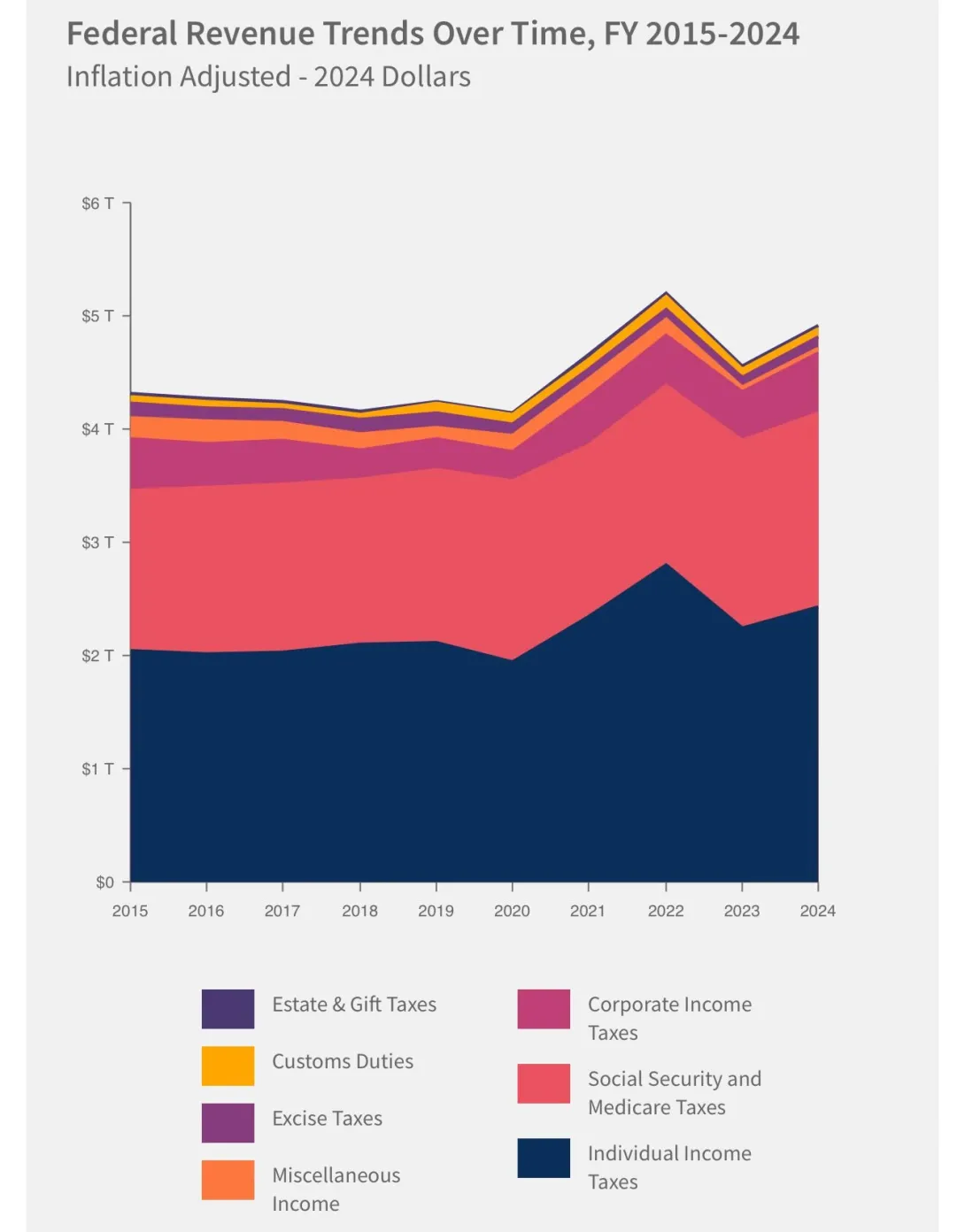
So, how much revenue could be raised by new tariffs? Let’s imagine a strange world where new US import duties did not distort the economy in any way: the same value of goods is assumed to be imported even though both demand for those goods would likely adjust and the purchasing power of each US$ might increase. If the average duty were increased to 10%, the total revenue produced to the US Treasury in FY2023 would have been US$311 billion. How about a 25% average tariff? Well, of course, US$778 billion. For comparison, the US Treasury received US$2.43 trillion in personal and US$530 billion in corporate income taxes in FY2023, an amount nearly equivalent to a universal 100% tariff on the imported goods value basis for all imported goods. The tiny yellow sliver in the figure below shows how little total customs duty revenue has been collected over time and how little changed it has been compared to other revenue sources.
Like any other tax, a tariff can be useful to governments as they seek to design mechanisms to fund (important) government activities while distorting economic activity to favor or disfavor various groups of people, businesses, investors, industries, nations, regions etc. It’s also safe to say that, like any other tax, it can be difficult to determine how economic activity will be specifically distorted by any specific tariffs. In fact, it may be more difficult with tariffs for a few reasons. The first is that unlike a sales tax, a tariff on imported goods occurs upstream of the point-of-sale. Instead, tariffs create increases in supply chain costs for importers, and the impact of tariffs on consumers depends on what happens as a result of these cost increases.
First, it should be noted that some supply chain cost increases cannot be borne at all and can lead to the elimination of some products in the marketplace. Why? A cost increase can lead a producer to decide that a product cannot be profitably produced and marketed, and this is true even if a replacement supply source with a lower (tariff-inclusive) cost of supply can be identified. A retailer may make a similar decision for an imported product. If producers or retailers continue to keep a product in the market, they could decide to lower its quality in some way or to pass on portions of the cost increase directly to its customers. But the supply chain cost persists; perhaps a different supplier could be identified not subject to the tariff, but if that supplier were already providing the same input at the same quality for a lower price they would be used already. Since profitability is likely to be impacted, owners and investors as well as employees of the importer will also likely to be impacted. These interactions are all naturally somewhat complex and the outcome is difficult to predict.
I’ll finish with a thought. If a government wishes to use new tariffs to yield a political outcome beyond simply raising revenue, they will likely need to be designed to produce a significant (and noticeable) distortion to some portion of the economy. If the distortion is mild, no change of behavior seems likely to occur. It seems as if the US is about to attempt some new experimentation with tariffs to both influence the behavior of trade partner nations and to create a significant government revenue source. We will likely get to see firsthand what kind of economic distortion they induce.
News Contact
Jan. 13, 2025
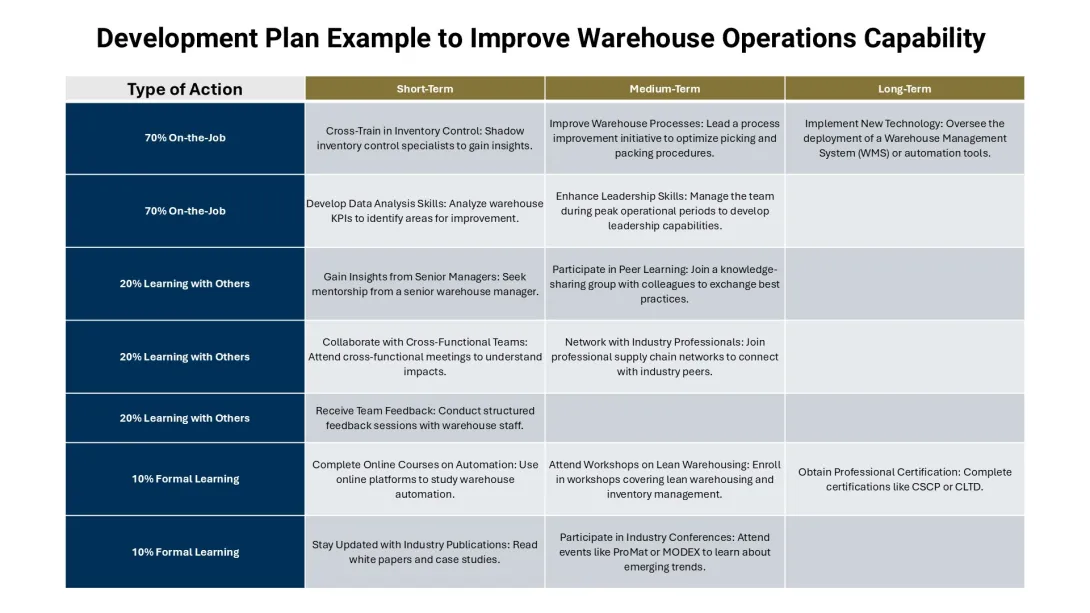

The new year provides a natural opportunity to refocus on professional growth. For busy supply chain professionals, development planning can often fall to the bottom of the priority list, especially amidst the daily challenges of managing operations and responding to disruption. Yet, this intentional focus on skill-building is more critical than ever.
As Managing Director of the Supply Chain and Logistics at Georgia Tech, I’ve seen firsthand how development planning can elevate individual careers, strengthen teams, and improve organizational resilience. However, the key to making it work lies in balancing the demands of day-to-day operations with actionable, targeted development efforts.
The Reality of Development Windows
The structure of the working calendar doesn’t make development planning easy. Between the end-of-year holiday season and summer vacation months, supply chain professionals face two primary windows for development:
- Spring (February through May): Coming off the end-of-year slowdown, spring provides the first extended opportunity to focus on growth.
- Fall (Mid-August through Mid-November): After summer, fall offers a second chance to refocus before the holiday rush begins.
For supply chain professionals, these windows represent critical periods to upskill and prepare for the evolving demands of the industry. The spring window is upon us, making now the perfect time to act with urgency and purpose.
The “Why” of Development Planning
In supply chain, the "why" behind development planning is straightforward: the industry is changing faster than ever. New technologies, shifting global trade patterns, and the increasing complexity of operations demand professionals who are both technically skilled and strategically agile.
The supply chain leaders of tomorrow must excel in areas like:
- Data and Analytics: Understanding data and leveraging it for decision-making is no longer optional.
- Automation and Technology: From warehouse robotics to AI-powered forecasting, supply chain professionals need to be tech-savvy to stay relevant.
- Resilience and Risk Management: Building robust supply chains capable of withstanding disruption is now a core competency.
The “What” of Development Planning: Key Focus Areas
Development can be broken into two primary areas:
1. Core Competencies (In-House):
- Communication: Clear, concise, and persuasive communication is critical for collaboration.
- Problem-Solving: Supply chains are inherently complex, and professionals must excel at diagnosing and resolving issues.
- Leadership and Teamwork: Even non-managers need strong leadership and collaboration skills to succeed in today’s cross-functional environments.
Here is a link to one of the best competency guides out there: FYI Resource Center
2. Technical and Operational Skills:
- Advanced Analytics and Visualization: Skills in tools like Power BI, Tableau, or Python are becoming industry standards.
- Supply Chain Systems and Automation: Understanding the functionality and implementation of WMS, TMS, and other critical systems is vital.
- Sustainability and Compliance: Professionals need to navigate increasingly complex sustainability requirements and global regulations.
Beyond these newer technical areas, there remain significant gaps in the application of many core supply chain processes—gaps that cannot be overlooked:
- Production and Inventory Planning: Effective planning processes are critical, yet many organizations struggle to optimize them to balance demand and capacity.
- Warehouse Operations and Optimization: Opportunities remain to improve material flow, labor efficiency, and space utilization in warehouse environments.
- Manufacturing Asset Reliability and Output: Ensuring consistent and reliable equipment performance is essential to maintaining throughput and meeting customer expectations.
- Tradeoff Analysis for Purchasing Decisions: Striking the right balance between low cost, resilience, and sustainability is an increasingly complex challenge, especially in the face of rising customer and consumer pressure for speed and service.
A Quick Action Plan Using the 70/20/10 Model
For supply chain professionals with limited time and access to leading practices, the 70/20/10 model offers a practical framework for development:
- 70% Experiential Learning: Apply learning directly in your work.
- 20% Social Learning: Learn from others in your network or organization.
- 10% Formal Learning: Invest in structured learning opportunities.
Please see attached figure 1 for Development Plan Example to improve Warehouse Operations Capability
Here is a link to a free Individual development GPT in Chat GPT: Individual Development Plan Builder
Call to Action: Take 30 Minutes to Plan Today
For busy professionals, the biggest hurdle to development planning is often finding the time. But a well-crafted development plan doesn’t have to take hours. Here's how you can get started in just 30 minutes:
- Reflect on Your Growth Needs (10 Minutes): Where do I need to grow most?
- Set Three Development Goals (10 Minutes): Identify experiential, social, and formal learning goals.
- Identify Next Steps (10 Minutes): Write down one immediate action for each goal.
- Schedule time with Manager to review proposed plan and schedule monthly check-ins
Development as a Competitive Advantage
The pace of change in supply chain operations is relentless, but professionals who make development a priority can turn that challenge into a competitive advantage. By leveraging the 70/20/10 model and focusing on intentional, actionable planning, you can position yourself—and your team—for success.
Don’t let this spring window pass without taking steps toward growth. Whether it’s mastering a new technology, improving core processes, or navigating tradeoff decisions, the time to act is now. If your growth plan includes professional education, consider how the Supply Chain and Logistics Institute and Georgia Tech Professional Education might benefit you!
News Contact
Dec. 02, 2024

In the dynamic world of supply chain and logistics, talent development has emerged as a critical differentiator for organizations seeking to stay competitive. As businesses navigate the complexities of global supply chains, disruptive technologies, and shifting market demands, having a skilled and adaptable workforce isn’t just an advantage—it’s a necessity. Moreover, investing in talent development isn’t only about building capability; it’s also a proven strategy for attracting and retaining top talent in a competitive job market.
At the Georgia Tech Supply Chain and Logistics Institute (SCL) and Georgia Tech Professional Education (GTPE), we understand the challenges organizations face in developing their teams. Whether you’re managing a workforce with a mix of new hires and seasoned professionals, undergoing a major organizational transformation, or striving to stay ahead, talent development must remain at the forefront of your strategy.
Why Organizations Choose Georgia Tech
Organizations turn to us for talent development solutions for several reasons:
A Balance of New and Experienced Professionals: Managing talent means addressing the needs of both emerging professionals who bring fresh energy and experienced workers who provide deep institutional knowledge. Our programs cater to this balance, offering foundational courses for newcomers and advanced training for seasoned leaders.
A Competitive Edge in Attraction and Retention: Offering world-class development opportunities signals to current and prospective employees that your organization values growth. This commitment is especially critical in today’s job market, where career development ranks high on employees’ priorities.
Practical, Immediately Applicable Training: Adult learners need training that works in tandem with their day-to-day responsibilities. Our modular programs are designed for immediate real-world application, ensuring learning outcomes translate directly into workplace improvements.
Scalable Solutions for All Organizations: For growing companies, introducing structure and formal training is often the next step in their evolution. For larger enterprises, we complement internal training programs with flexible, impactful learning options that align with organizational goals.
What Makes Our Offerings Unique
We deliver training solutions tailored to the realities of today’s supply chain and logistics landscape, setting us apart in the industry. Here’s how:
Flexible Delivery Options: From self-paced courses to live and virtual classes, public programs, and custom corporate training, we offer a variety of formats to meet your needs. For example, our hybrid Engineering the Warehouse course combines online lectures with in-person lab sessions to maximize convenience and impact.
Bite-Sized, Modular Learning: Our modular approach allows professionals to access content in manageable segments, enabling learning alongside work demands. For instance, our series on supply chain analytics is broken into short, focused modules that let learners immediately apply concepts like inventory optimization and demand forecasting.
Innovative and Relevant Content: We stay ahead of the curve by addressing emerging industry trends. Our new course on Generative AI in Supply Chain equips professionals to leverage advanced technologies for process optimization and strategic planning.
Industry-Informed Solutions: Collaboration with industry leaders ensures our content addresses real-world challenges. For example, our program on Supply Chain Risk and Resilience integrates insights from Fortune 500 companies to help businesses mitigate disruptions effectively.
Grounded in Research: Every program is informed by leading academic research and designed to reflect the best practices of adult learning, ensuring your team gains knowledge that is both current and actionable.
Preparing for 2025: A Competitive Advantage
As we approach 2025, talent development remains central to addressing the challenges of the supply chain industry. Large enterprises continue to seek solutions to skill gaps and organizational transformation, while small and mid-sized organizations increasingly recognize the need for formalized training. Georgia Tech’s offerings serve as a vital resource, ensuring professionals stay competitive, skilled, and current in an ever-evolving landscape.
Investing in your workforce today not only ensures your organization’s readiness for tomorrow’s challenges but also signals a commitment to your team’s growth and success. At Georgia Tech, we are proud to partner with companies of all sizes, providing a unique blend of flexibility, innovation, and industry relevance that drives results.
Whether you need a program to supplement your internal training, build a comprehensive development strategy, or prepare your team for the future, we’re here to help. Contact us at info@scl.gatech.edu to learn more about how we can support your talent development needs.
Let’s work together to ensure your supply chain workforce is ready to lead in 2025 and beyond.
Oct. 16, 2024

In today's increasingly volatile world, the frequency of disruptions—whether due to natural disasters, geopolitical events, or supply chain interruptions—has grown. Recent challenges such as hurricanes, port strikes, wildfires, and global disruptions like the Suez Canal blockage, Panama Canal delays, and Red Sea freight issues have proven that the risk of major interruptions to business and personal life is no longer hypothetical. With the probability of a disruption higher than ever, the key question becomes: What prudent, no-regrets steps can individuals, families, and businesses take to assess and mitigate risk?
Assessing Risk: The First Step
A critical starting point for risk management is assessing the risks specific to you or your business. For individuals and small businesses, this process doesn’t have to be exhaustive. Rapid risk assessments can identify the most significant vulnerabilities with minimal effort, like assessing how a hurricane or supply chain disruption might impact access to essentials such as power or food. Larger businesses or municipalities might benefit from more systematic assessments, which can be conducted as part of an annual review.
Appetite for Risk vs. Potential Impact
Once risks are identified, it's important to balance your appetite for risk with the potential impact. An individual might be able to weather a short-term power outage, but a logistics provider or hospital must maintain continuous operations. For businesses, supply chain vulnerabilities—especially single-source suppliers—present a significant risk. By understanding where dependencies lie and preparing contingency plans, businesses can significantly reduce potential disruptions.
Low or No-Regrets Actions
The next logical step is to focus on low or no-regrets actions. These are relatively simple actions that provide immediate benefits with little downside. For individuals and families, this can be as straightforward as ensuring access to working flashlights, batteries, and emergency staples like water, rice, and beans to last at least a week. Developing communication plans with family or neighbors is another critical preparedness step that costs very little but can be lifesaving.
For businesses, conducting an annual risk review is a no-regrets action that can identify critical risks and supply chain weaknesses. For single source suppliers, it may not be easy or practical to find a second supplier. If not, go deep on that supplier and understand their upstream risks and ensure they are focused on risk mitigation. Small businesses can often a risk review in just a few hours, while larger organizations may need a more comprehensive review. Understanding infrastructure risks—such as power, water, and data reliability—is essential for businesses of all sizes. With each major disruption, such as wildfires or hurricanes, we see large companies caught off guard, often due to inadequate preparation for these well-known risks.
Tools and Resources for Deeper Risk Management
1. Failure Modes and Effects Analysis (FMEA)
FMEA is a widely used tool that helps businesses identify where and how processes might fail. It evaluates the severity, likelihood, and detectability of different failure points, allowing businesses to prioritize actions. In supply chains, FMEA is invaluable for identifying single-source suppliers or fragile logistical routes that could break down under pressure.
2. Business Impact Analysis (BIA)
BIA assesses the potential effects of a disruption on business processes. By identifying critical functions that must continue during an emergency, BIA helps businesses prioritize resources and plan for worst-case scenarios. This is especially useful for small businesses with limited resources, as it pinpoints where to focus recovery efforts during a crisis.
3. Risk Heat Maps
A risk heat map offers a visual way to assess risk by plotting the likelihood and potential impact of various disruptions. By color-coding risks, businesses can quickly see which areas require immediate attention. These maps are especially useful when making quick decisions in the face of a crisis, such as prioritizing responses to supply chain issues or extreme weather events.
4. Scenario Planning
For businesses with complex supply chains or operations, scenario planning helps explore different risk scenarios and develop flexible response strategies. This approach allows businesses to stay agile, with contingency plans ready for natural disasters, industrial actions, or global supply chain disruptions.
Structured Actions: Resources and Support
For those looking to dive deeper into risk management, there are several resources and programs available:
Executive Education Programs: For supply chain professionals, attending executive education programs such as those offered by Georgia Tech’s Supply Chain & Logistics Institute can provide in-depth knowledge and strategies for managing risk. These programs often cover real-world case studies and actionable risk management strategies.
Federal and State Resources: Agencies like the CDC provide accessible resources for disaster preparedness, such as the Zombie Survival Guide, a lighthearted yet effective framework for emergency planning. FEMA also offers guides for Business Continuity Planning (BCP), helping organizations design robust continuity strategies.
State Economic Development Agencies: Many state agencies, chambers of commerce, or small business associations provide business continuity support tailored to specific regions. For example, states prone to hurricanes or wildfires often provide detailed guides on how to prepare for natural disasters and mitigate infrastructure risks.
Building a Resilient Future
The key takeaway for both individuals and businesses is that resilience starts with proactive action. For individuals, preparedness may be as simple as having an emergency kit and communication plan in place. For businesses, risk management should be part of a structured, ongoing process. Annual reviews, risk assessments, and low-regrets actions can protect against significant disruptions, ensuring continuity even in the face of unpredictable events. By incorporating readily available tools and resources, we can all build a more resilient future, whether in supply chain operations, daily life, or community preparedness.
News Contact
info@scl.gatech.edu