
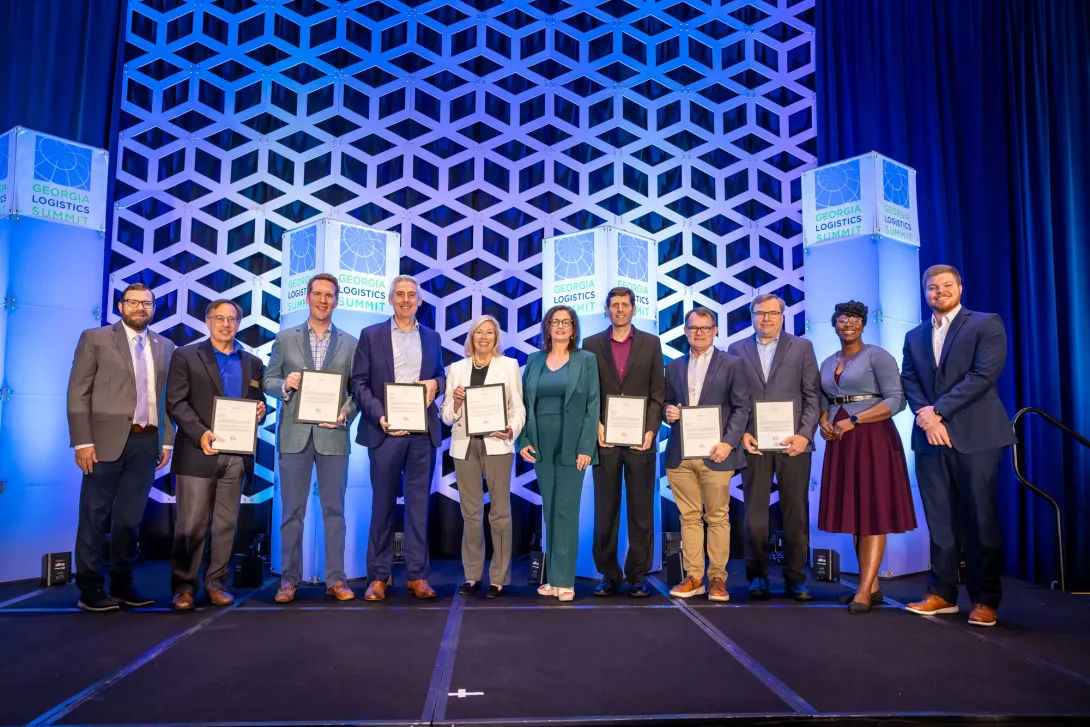
Members of the Georgia Center of Innovation – Logistics Advisory Board gathered at the 2025 Georgia Logistics Summit, where each received a personal note of recognition from Governor Brian Kemp for three years of dedicated service. Their collective efforts have advanced freight and logistics across Georgia—strengthening collaboration between industry, government, and academia to drive the state’s economic growth.
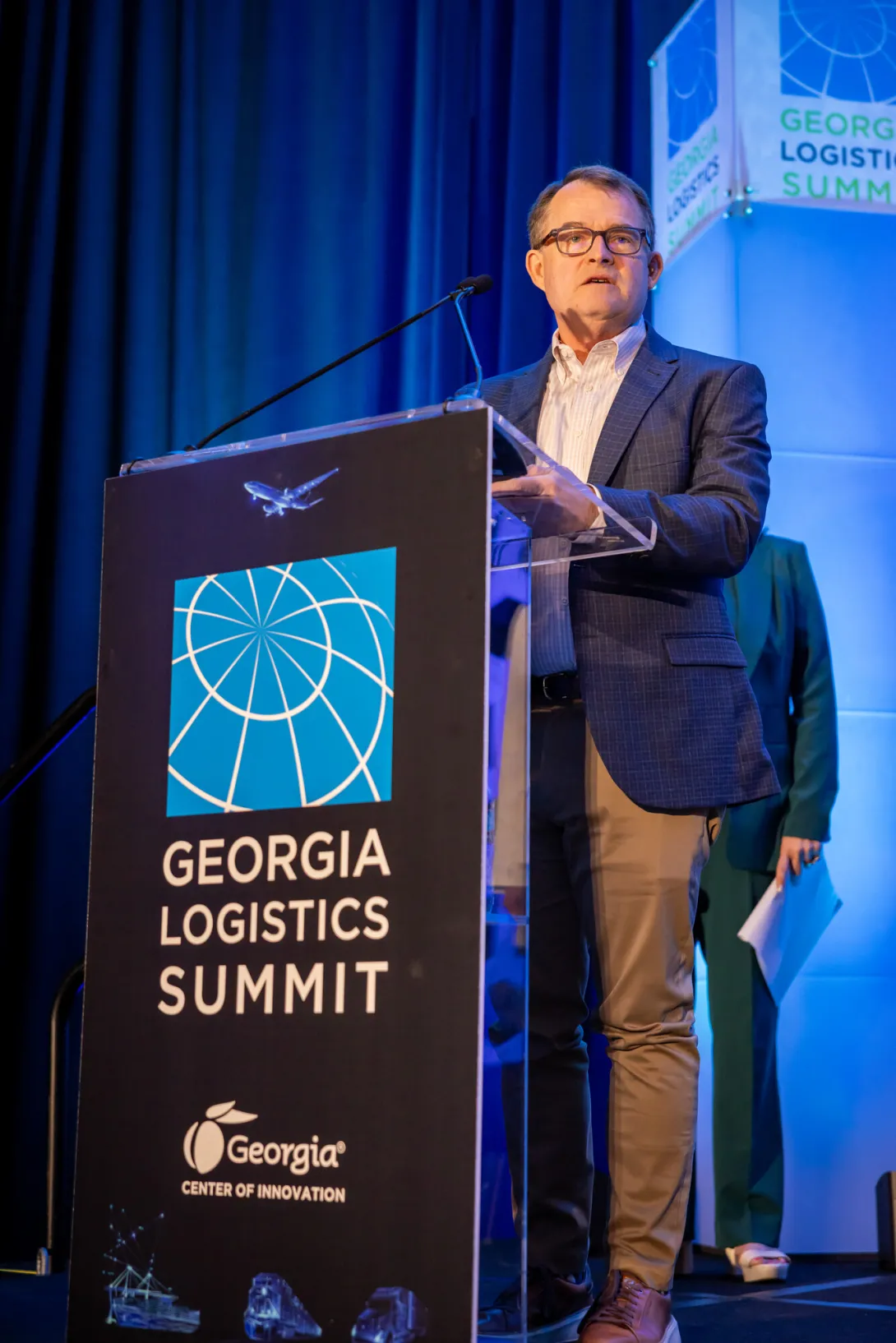
Chris Gaffney of Georgia Tech’s Supply Chain and Logistics Institute addresses the Georgia Logistics Summit, reflecting on the power of public-private collaboration. “It’s that bridge between dialogue and execution that makes this group so valuable. Together, we’re building the capabilities that help Georgia’s communities and businesses grow, thrive, and lead.”
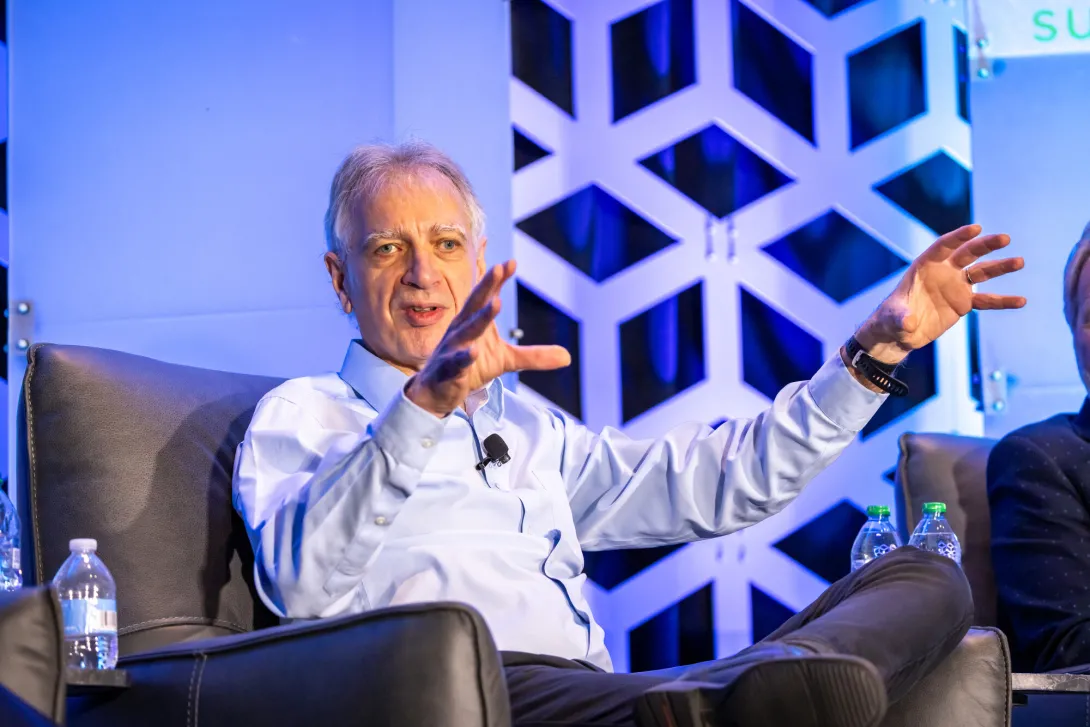
Pascal Van Hentenryck participated in a panel discussion of how AI and digital technologies are reshaping supply chains, including future predictions and real-world examples of their impact on logistics.
The Georgia Center of Innovation, a strategic arm of the Georgia Department of Economic Development (GDEcD), hosted hundreds of attendees at the 2025 Georgia Logistics Summit, where experts offered insights on the intersection of technology and logistics, updates on infrastructure investments, and how the state is preparing the future workforce to support growth. Established in 2009 as the first state-led event of its kind, the Georgia Logistics Summit is one of the Southeast’s key logistics and supply chain events, connecting industry professionals for networking and knowledge-sharing.
The economic impact of Georgia’s transportation and logistics industry was $107 billion in 2023, according to an economic impact study by the University of Georgia’s Selig Center for Economic Growth. These industries supported more than 578,000 Georgia jobs, or one in nine jobs in the state. From 2010 to 2023, transportation and logistics jobs in Georgia grew by 68%, outpacing the national growth rate of 52%. Additionally, in 2023 and 2024 alone, new logistics and distribution sector investments, including cold storage and ecommerce fulfillment centers, totaled $3.8 billion and created over 9,000 new jobs.
“Georgia’s unmatched global connectivity is one of the driving forces behind our economic success. Decades of strategic investment in our logistics and supply chain infrastructure – from our ports and rail lines to our highways and air cargo capabilities – have led to record-breaking economic investments and trade,” said Georgia Department of Economic Development Commissioner Pat Wilson. “The Logistics Summit brings together private sector, government, and education leaders to learn from experts, exchange best practices, and explore opportunities in the rapidly evolving logistics landscape to maximize opportunities. Events like this strengthen collaboration and spark new ideas that keep Georgia businesses competitive on a global scale.”
Georgia Department of Transportation Commissioner Russell R. McMurry highlighted Georgia’s strategic investments and how the Georgia Department of Transportation (GDOT) is leveraging technology to improve freight flow. He cited the leadership of Governor Brian P. Kemp and support from the General Assembly to allocate $1 billion to the newly created Georgia Freight Program over the past two years. Additional investments in transportation infrastructure are advancing the timing for key planned transportation projects that will maintain and improve Georgia’s interstate highway system, roads, and bridges. Georgia’s multimodal transportation network carried nearly half a billion tons of freight in 2019, valued at $673 trillion. Projections show that freight volume is expected to nearly double to 900 million in tonnage and freight value to more than double today’s value by 2050. Working with partners that include the Center of Innovation and the Georgia Institute of Technology, GDOT is focusing on enhancing safety and efficiency, including projects to add 50% more truck parking and installing fiber internet on Georgia interstates.
Georgia Ports Authority Vice President of Operations Susan Gardner provided updates on strategic investments to expand capacity at the ports, and how Georgia Ports Authority (GPA) is leveraging live data to improve safety, track vessel productivity and containers, and eliminate congestion. Gardner emphasized building a technological culture and prioritizing hiring creative employees, as well as harnessing data insights to boost efficiency. GPA is investing in $4.5 billion in improvements over the next decade as part of its port master plan to expand cargo handling capabilities and support future supply chain requirements.
This year’s feature panel, “AI and Beyond: Embracing Digital Transformation in Logistics,” included leadership from The Home Depot, Havertys Furniture, and TOTO USA, as well as research perspectives from the Georgia Institute of Technology. Panelists highlighted the ways digital technologies are reshaping supply chains, including a three- to five-year outlook for the industry, and provided insights attendees can use to shape their strategies to move more efficiently as AI and automation transform the industry.
“Digital technologies are reshaping supply chains in various ways, and Georgia is working to stay ahead of the curve,” said Center of Innovation Executive Director David Nuckolls. “The Center of Innovation and our specialized logistics team work alongside this dynamic industry, helping to position businesses for growth. The annual Georgia Logistics Summit is a powerful opportunity to build connections and equip businesses with crucial knowledge and resources.”
Educating the needed talent was the focus of the event’s final panel, with University System of Georgia Chancellor Sonny Perdue and Technical College System of Georgia Commissioner Greg Dozier providing updates on how the state’s post-secondary institutions are developing a globally competitive workforce. Discussion focused on how these institutions are ensuring the skills they are teaching match the jobs logistics companies are looking for, including creative problem-solving and effective use of new AI and automation tools. The breadth of Georgia’s technical college programs was also discussed, including the High Demand Career Initiatives program and a pilot program called “Dual Achievement” that enrolls students who withdrew from high school in a technical college program, enabling them to earn a high school diploma alongside a technical college certificate, diploma, or degree. Panelists focused on the importance of helping students get where they want to go faster, upskilling the existing workforce, and how connections between industry leaders and educators can help foster greater outcomes.
The Center of Innovation’s Logistics Industry Advisory Board also recognized the winners of the inaugural Future Innovators in Supply Chain competition. The competition invited college students to create videos about supply chain careers, reflecting the Center’s commitment to developing future logistics leaders. Led by professor Parisa Pooyan, student team “The Masters of Logistinomics” from Kennesaw State University won first prize and a $3,000 grant for the university. Eli Hampton, Angeline Harris, Joe Johnson, and Dana Pazhouhesh created the winning video, which can be viewed here.
For additional information on the 2025 Georgia Logistics Summit and to stay up-to-date on next year’s plans, visit galogisticssummit.com.
Participants in the 2025 Georgia Logistics Summit also included leaders from S&P Global Market Intelligence, Boost Phase Ventures, and M.D. Livingstone Consulting.
About the Georgia Center of Innovation
Exclusive to Georgia, the Center of Innovation helps Georgia businesses of all types and sizes find inspired solutions to challenges and opportunities. The Center connects new and expanding businesses with a team of experts, external partners, and independent mentors to tap into the technical expertise and guidance they need. By encouraging collaboration across six key industries: Aerospace, AgTech, Energy Technology, Information Technology, Logistics, and Manufacturing, the Center helps Georgia prepare for growth in strategic industry ecosystems.
About GDEcD
The Georgia Department of Economic Development (GDEcD) is the state’s sales and marketing arm. It is Georgia’s lead agency for attracting new business investment, encouraging the expansion of existing industry and small businesses, and locating new markets for Georgia products. As the state’s official destination marketing organization, it drives traveler visitation and promotes the state as a location for film and digital entertainment projects. GDEcD is responsible for planning and mobilizing state resources for economic development, fostering innovation and the arts to drive opportunity from the mountains to the coast.
News Contact
Allie Dean, Communications Manager, Georgia Department of Economic Development | adean@georgia.org
Chris Gaffney
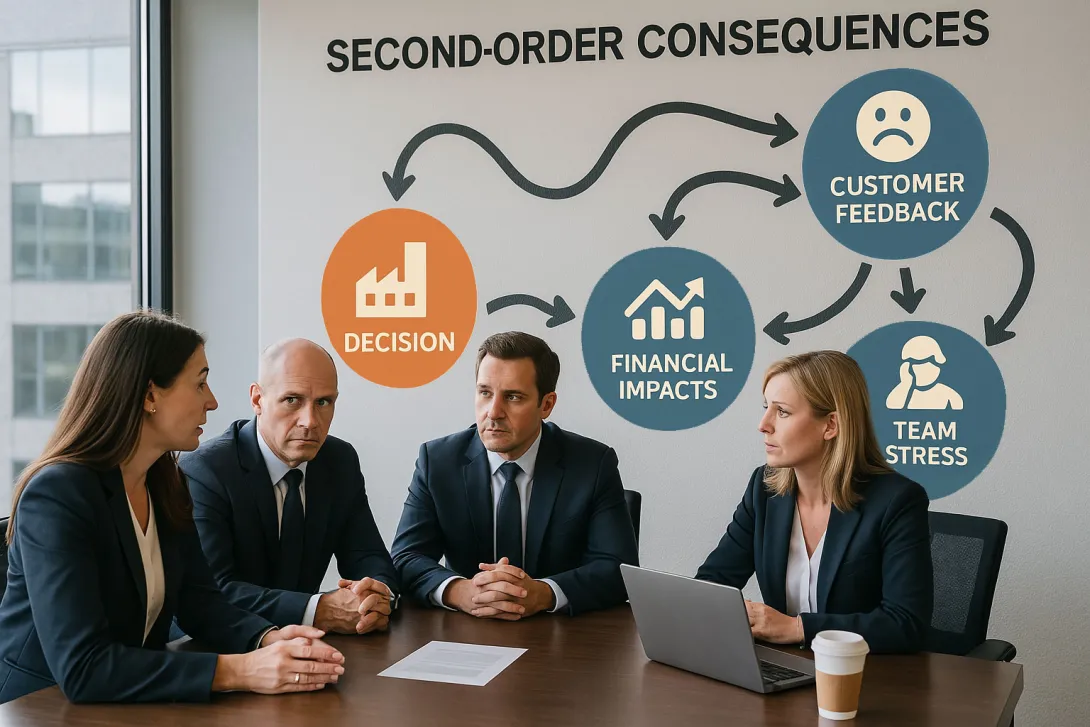
In the world of strategic decision-making—whether in Supply Chain Management and Engineering or in policy—we tend to focus our energy on the immediate problem in front of us. That makes sense. Big decisions like acquisitions, divestitures, or product innovations are complex enough without adding more layers. But in my experience—especially during my time at Coca-Cola and across broader industry engagements—what often gets left out of the room are the second-order effects. These are the unintended consequences that don’t show up in the PowerPoint deck, but show up months or years later on your P&L, in your customer feedback, or in your team’s stress levels.
Some of these outcomes are manageable. Others are problematic. Occasionally, they’re game-changing—but not in the way we hoped.
The Core Challenge: Complexity Crowds Out Curiosity
In my time in industry, I’ve seen high-stakes decisions unfold under tight timelines. The rigor is there: financial models, market analysis, legal due diligence. But the same pressure that brings focus often narrows the field of vision. Once the strategic goal is clear, the push becomes “get the recommendation ready” or “get the deal done.” Often, the team disbands before the ripple effects have even begun to appear.
In fact, studies of managerial behavior find that decision-makers often prioritize short-term outcomes over long-term implications, making it easy to overlook those downstream impacts.
We rarely paused to ask:
- What happens to our partners, our systems, or our people two or three steps down the line?
- Are we shifting bottlenecks or creating future misalignments?
- Could this solution lock us into a path that becomes hard to reverse?
- Will we be happy with this decision in 5 years?
Not asking these questions isn’t negligence. It’s often a result of how we structure decision processes: focused, time-bound, and oriented toward closure.
When Good Decisions Still Cause Trouble
Let's make this real. I've seen:
- Procurement strategies that focused on driving down cost but over time forced suppliers to reduce investment in quality and continuous improvement resources—eventually leading to a significant quality issue for a key customer.
- Multiple outsourcing efforts that reduced future capital requirements but also reduced flexibility in scheduling and responsiveness to rapid demand shifts or new product innovation.
- Plant closures that optimized total network cost on paper but not in reality, because the remaining plants were not actually equipped to take on more volume and increased complexity.
- A new warehouse management system implementation that promised efficiency gains but created chaos in distribution—not because the software was flawed, but due to unforeseen complexities during implementation.
In each of these, the first-order decision was sound. But the downstream effects caught teams off guard, requiring backtracking, remediation, and even reputational repair.
Even recently, retailers trying to fix 2021 product shortages by ordering more stock found themselves “overwhelmed with inventory” in 2022 when demand eased—a textbook second-order surprise. Likewise, logistics executives admitted they “didn’t anticipate” that 2020’s e-commerce boom would spark a warehouse labor crunch—a side effect that underscores how easily ripple effects can catch us off guard.
Why This Matters—and Why It's Often Skipped
Let’s be honest. Most leaders are moving fast. The idea of adding more process—or imagining abstract future problems—can feel like a luxury. Typical objections sound like:
- "We don't have time for hypotheticals."
- "That's someone else's job—let's just move."
- "We'll deal with it if it becomes a problem."
But here’s the catch: in a complex system like a global supply chain or a tightly coupled stakeholder network, second-order effects are not edge cases—they're part of the landscape.
In fact, recent research in supply chain management finds that such second-order effects are likely ubiquitous and must be anticipated rather than ignored. Ignoring them doesn’t make them go away. It just delays the pain—and multiplies the cost.
Where This Applies in Supply Chain
These second-order thinking practices are especially useful in supply chain decisions where complexity and interdependencies are high. Think about:
- Network redesigns or footprint consolidation
- Sourcing shifts or dual sourcing strategies
- Technology implementations like a new TMS or WMS
- Inventory policy changes that affect fulfillment, customer service, or working capital
- Sustainability initiatives that touch suppliers, packaging, and compliance
Each of these decisions may seem straightforward at first glance, but often carry ripple effects that only surface months later—making this kind of foresight not just useful, but essential.
A Pragmatic Playbook: Small Steps, Big Impact
To embed this thinking into your organization’s DNA, you don’t need to launch a task force. You need lightweight, repeatable tools that shift how teams think. Here are a few that punch above their weight:
✅ Pre-Mortem Workshop
- Time: 60–90 minutes
- What It Is: Imagine the decision failed spectacularly. Ask: what went wrong?
- Value: Surfaces hidden risks early and creates a safe space for dissent.
"This is an insurance policy, not red tape.”
✅ Ripple Mapping
- Time: 1–2 hours
- What It Is: Visually chart the impact of a decision across systems, partners, and people.
- Value: Turns abstract consequences into visible risks and opportunities.
"Helps teams see around corners—and ask better questions.”
✅ Mini FMEA (Failure Modes and Effects Analysis)
- Time: 60 minutes
- What It Is: Identify how key decision elements could fail and what to do about it.
- Value: Helps prioritize monitoring and mitigation during rollout.
"Adapt it from engineering—it works just as well for strategic moves.”
✅ Early Warning Indicators
- Time: Minimal setup, integrated into standard dashboards
- What It Is: Define and track metrics tied to second-order risks (e.g., employee attrition, service delays).
- Value: Helps you course-correct before small issues become systemic.
"It's not just about making the right decision—but making the decision work.”
Culture Shift: From Transaction to Trajectory
The real unlock comes when we shift the definition of a successful decision. It’s not just about getting a green light. It’s about ensuring the decision holds up over time—operationally, culturally, and reputationally.
To institutionalize this mindset:
- Add a "second-order checkpoint" to strategic review decks or governance templates
- Ask for a "consequence map" alongside the business case
- Celebrate teams who surface risks early, not just those who execute quickly
- Conduct post-mortems (not just pre-mortems) to harvest lessons
"Strategic foresight is not about predicting everything. It's about avoiding the predictable surprises.”
Backed by Big Thinkers
This isn't just operational wisdom—it's grounded in thoughtful literature:
- Peter Senge, in The Fifth Discipline, emphasizes how organizations struggle when they fail to see the system-wide consequences of localized actions.
- Nassim Nicholas Taleb, in Antifragile, argues that systems become more vulnerable when decisions are made without consideration for stress-testing and adaptive feedback loops.
- Cass Sunstein, writing on regulatory and policy decision-making, promotes the idea of "decision hygiene”—a systematic process to reduce bias and surface risk.
- Atul Gawande, in his book Better and in his commencement address at Stanford, shared how the habit of asking "just one more question" often uncovered crucial, overlooked insights—just like the disheveled detective Columbo. That final question, the one nobody else asks, frequently makes the difference between surface-level understanding and meaningful action.
Sometimes the last question is the best one. The more complex our systems become, the more important it is to keep asking until we find what we didn’t know we were missing.
Closing Thought: Be the Person Who Asks One More Question
As supply chains become more interconnected and policy environments more volatile, decision quality will increasingly depend on ripple-awareness. You don’t need perfect foresight. But you do need a culture that pauses—briefly—to ask: what might happen next?
Those few extra minutes may be the difference between a great decision—and a regrettable one.
News Contact
info@scl.gatech.edu
Chris Gaffney
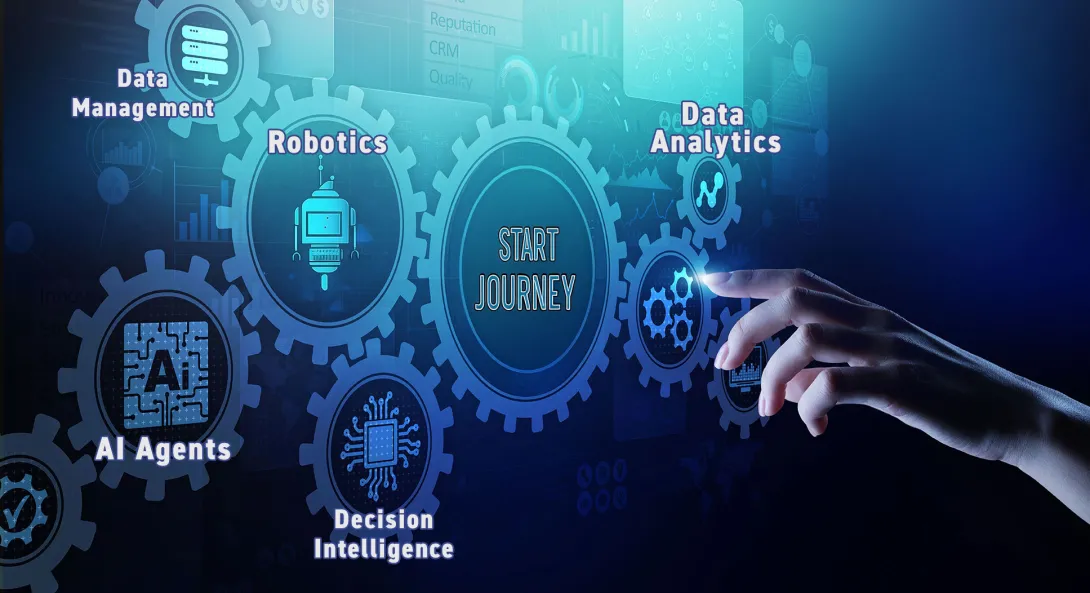
Today's supply chain industry is undergoing a rapid transformation, driven by AI, robotics, and data analytics. These innovations are already delivering measurable efficiency gains, and fast followers – companies that quickly adopt proven technologies – must take action or risk falling behind. Using a "consequence thinking" approach, supply chain professionals and students must ask: What happens if I’m not keeping up with these trends? Those who proactively invest in emerging technologies and their own skills will be better positioned to compete, those who don’t take action in 2025 will struggle with inefficiencies and higher costs. Georgia Tech, a leader in supply chain research and education, is actively exploring these areas, reinforcing that these trends are not just hype but a critical reality.
AI Agents and Decision Intelligence
AI is moving beyond forecasting and analytics into autonomous decision-making. AI agents can rapidly process complex scenarios—such as supply disruptions—and generate optimal responses in real time. This shift reduces reliance on manual problem-solving and enables organizations to respond faster and with greater accuracy. These AI-driven systems also make insights more accessible, allowing non-technical professionals to interact with advanced analytics in natural language.
Georgia Tech’s Supply Chain and Logistics Institute is offering education in Generative AI for supply chain, helping professionals understand and apply these tools effectively. The key takeaway? AI isn’t just for data scientists—it’s becoming essential for all supply chain professionals. Investing in AI literacy and decision intelligence training will be critical to staying relevant in the field.
Physical Automation: AMRs Reshaping Warehouses
Automation in warehouses is no longer experimental—it’s here and delivering results. Autonomous mobile robots (AMRs) are replacing traditional automation solutions, offering greater flexibility and adaptability. Unlike AGVs, which rely on fixed paths, AMRs navigate dynamically using AI and real-time mapping, making them well-suited for evolving warehouse environments.
Companies deploying AMRs report increased throughput, reduced labor costs, and improved safety. These robots optimize workflows, assist human workers, and enable 24/7 operations. Georgia Tech researchers are developing human-collaborative robotics, reinforcing that the future is about augmenting—not replacing—workers. Supply chain professionals should focus on developing skills in automation management and AI-driven operations. Understanding how to integrate these technologies into workflows will be a key differentiator.
Data Management: The Foundation for AI and Automation
AI and automation depend on high-quality, well-integrated data, yet many organizations struggle with fragmented systems and poor data governance. Industry surveys consistently highlight that supply chain leaders cite data silos and quality issues as top barriers to digital transformation. Without a strong data foundation, even the best AI models and automation solutions will fail to deliver their full potential.
Modern supply chain visibility platforms and AI-powered analytics tools are helping companies consolidate data for better decision-making. Georgia Tech researchers are advancing digital twin models that simulate supply chain networks, but these rely on robust data integration. For professionals, this underscores the need to develop data literacy and analytical skills. Those who can navigate, interpret, and leverage data effectively will be indispensable in AI-powered supply chains.
Call to Action: Personal Development and Strategic Planning
Emerging technologies in supply chain—AI, automation, data analytics, and logistics AI—are no longer futuristic concepts. They are delivering tangible benefits now, and the gap between early adopters and laggards is widening. If these innovations are not on your radar, you need to take action.
Where to Start:
- Invest in Personal Development: AI, automation, and data skills are becoming core competencies. Take relevant courses, attend industry events, and seek practical experience.
- Assess Business Applications: Identify where these technologies can solve current challenges and improve efficiency in your supply chain.
- Build Data Competency: Understanding how to structure and leverage data is foundational for AI and automation success.
- Experiment with Emerging Tech: Pilot AI-driven decision tools, AMRs, or logistics optimization models to gain insights into their potential.
The future of supply chain management is being reshaped by these technologies, and those who prepare now will define the next era of supply chain excellence. The question is no longer if these tools will impact the industry—it’s how quickly you can learn to use them to your advantage.
News Contact
info@scl.gatech.edu

The new year provides a natural opportunity to refocus on professional growth. For busy supply chain professionals, development planning can often fall to the bottom of the priority list, especially amidst the daily challenges of managing operations and responding to disruption. Yet, this intentional focus on skill-building is more critical than ever.
As Managing Director of the Supply Chain and Logistics at Georgia Tech, I’ve seen firsthand how development planning can elevate individual careers, strengthen teams, and improve organizational resilience. However, the key to making it work lies in balancing the demands of day-to-day operations with actionable, targeted development efforts.
The Reality of Development Windows
The structure of the working calendar doesn’t make development planning easy. Between the end-of-year holiday season and summer vacation months, supply chain professionals face two primary windows for development:
- Spring (February through May): Coming off the end-of-year slowdown, spring provides the first extended opportunity to focus on growth.
- Fall (Mid-August through Mid-November): After summer, fall offers a second chance to refocus before the holiday rush begins.
For supply chain professionals, these windows represent critical periods to upskill and prepare for the evolving demands of the industry. The spring window is upon us, making now the perfect time to act with urgency and purpose.
The “Why” of Development Planning
In supply chain, the "why" behind development planning is straightforward: the industry is changing faster than ever. New technologies, shifting global trade patterns, and the increasing complexity of operations demand professionals who are both technically skilled and strategically agile.
The supply chain leaders of tomorrow must excel in areas like:
- Data and Analytics: Understanding data and leveraging it for decision-making is no longer optional.
- Automation and Technology: From warehouse robotics to AI-powered forecasting, supply chain professionals need to be tech-savvy to stay relevant.
- Resilience and Risk Management: Building robust supply chains capable of withstanding disruption is now a core competency.
The “What” of Development Planning: Key Focus Areas
Development can be broken into two primary areas:
1. Core Competencies (In-House):
- Communication: Clear, concise, and persuasive communication is critical for collaboration.
- Problem-Solving: Supply chains are inherently complex, and professionals must excel at diagnosing and resolving issues.
- Leadership and Teamwork: Even non-managers need strong leadership and collaboration skills to succeed in today’s cross-functional environments.
Here is a link to one of the best competency guides out there: FYI Resource Center
2. Technical and Operational Skills:
- Advanced Analytics and Visualization: Skills in tools like Power BI, Tableau, or Python are becoming industry standards.
- Supply Chain Systems and Automation: Understanding the functionality and implementation of WMS, TMS, and other critical systems is vital.
- Sustainability and Compliance: Professionals need to navigate increasingly complex sustainability requirements and global regulations.
Beyond these newer technical areas, there remain significant gaps in the application of many core supply chain processes—gaps that cannot be overlooked:
- Production and Inventory Planning: Effective planning processes are critical, yet many organizations struggle to optimize them to balance demand and capacity.
- Warehouse Operations and Optimization: Opportunities remain to improve material flow, labor efficiency, and space utilization in warehouse environments.
- Manufacturing Asset Reliability and Output: Ensuring consistent and reliable equipment performance is essential to maintaining throughput and meeting customer expectations.
- Tradeoff Analysis for Purchasing Decisions: Striking the right balance between low cost, resilience, and sustainability is an increasingly complex challenge, especially in the face of rising customer and consumer pressure for speed and service.
A Quick Action Plan Using the 70/20/10 Model
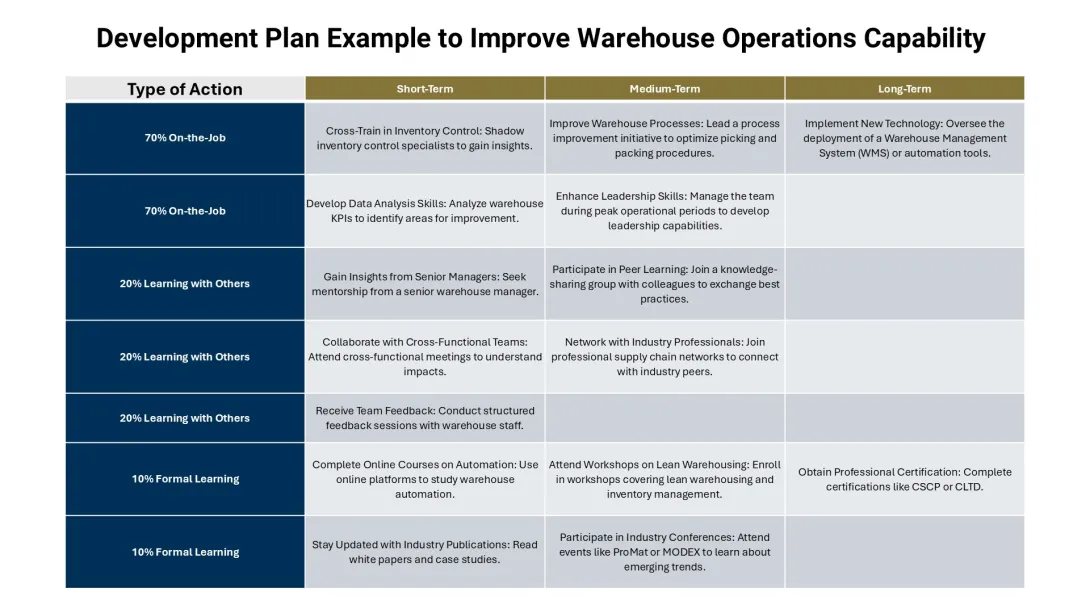
For supply chain professionals with limited time and access to leading practices, the 70/20/10 model offers a practical framework for development:
- 70% Experiential Learning: Apply learning directly in your work.
- 20% Social Learning: Learn from others in your network or organization.
- 10% Formal Learning: Invest in structured learning opportunities.
Please see attached figure 1 for Development Plan Example to improve Warehouse Operations Capability
Here is a link to a free Individual development GPT in Chat GPT: Individual Development Plan Builder
Call to Action: Take 30 Minutes to Plan Today
For busy professionals, the biggest hurdle to development planning is often finding the time. But a well-crafted development plan doesn’t have to take hours. Here's how you can get started in just 30 minutes:
- Reflect on Your Growth Needs (10 Minutes): Where do I need to grow most?
- Set Three Development Goals (10 Minutes): Identify experiential, social, and formal learning goals.
- Identify Next Steps (10 Minutes): Write down one immediate action for each goal.
- Schedule time with Manager to review proposed plan and schedule monthly check-ins
Development as a Competitive Advantage
The pace of change in supply chain operations is relentless, but professionals who make development a priority can turn that challenge into a competitive advantage. By leveraging the 70/20/10 model and focusing on intentional, actionable planning, you can position yourself—and your team—for success.
Don’t let this spring window pass without taking steps toward growth. Whether it’s mastering a new technology, improving core processes, or navigating tradeoff decisions, the time to act is now. If your growth plan includes professional education, consider how the Supply Chain and Logistics Institute and Georgia Tech Professional Education might benefit you!
News Contact
In the dynamic world of supply chain and logistics, talent development has emerged as a critical differentiator for organizations seeking to stay competitive. As businesses navigate the complexities of global supply chains, disruptive technologies, and shifting market demands, having a skilled and adaptable workforce isn’t just an advantage—it’s a necessity. Moreover, investing in talent development isn’t only about building capability; it’s also a proven strategy for attracting and retaining top talent in a competitive job market.
At the Georgia Tech Supply Chain and Logistics Institute (SCL) and Georgia Tech Professional Education (GTPE), we understand the challenges organizations face in developing their teams. Whether you’re managing a workforce with a mix of new hires and seasoned professionals, undergoing a major organizational transformation, or striving to stay ahead, talent development must remain at the forefront of your strategy.
Why Organizations Choose Georgia Tech
Organizations turn to us for talent development solutions for several reasons:
A Balance of New and Experienced Professionals: Managing talent means addressing the needs of both emerging professionals who bring fresh energy and experienced workers who provide deep institutional knowledge. Our programs cater to this balance, offering foundational courses for newcomers and advanced training for seasoned leaders.
A Competitive Edge in Attraction and Retention: Offering world-class development opportunities signals to current and prospective employees that your organization values growth. This commitment is especially critical in today’s job market, where career development ranks high on employees’ priorities.
Practical, Immediately Applicable Training: Adult learners need training that works in tandem with their day-to-day responsibilities. Our modular programs are designed for immediate real-world application, ensuring learning outcomes translate directly into workplace improvements.
Scalable Solutions for All Organizations: For growing companies, introducing structure and formal training is often the next step in their evolution. For larger enterprises, we complement internal training programs with flexible, impactful learning options that align with organizational goals.
What Makes Our Offerings Unique
We deliver training solutions tailored to the realities of today’s supply chain and logistics landscape, setting us apart in the industry. Here’s how:
Flexible Delivery Options: From self-paced courses to live and virtual classes, public programs, and custom corporate training, we offer a variety of formats to meet your needs. For example, our hybrid Engineering the Warehouse course combines online lectures with in-person lab sessions to maximize convenience and impact.
Bite-Sized, Modular Learning: Our modular approach allows professionals to access content in manageable segments, enabling learning alongside work demands. For instance, our series on supply chain analytics is broken into short, focused modules that let learners immediately apply concepts like inventory optimization and demand forecasting.
Innovative and Relevant Content: We stay ahead of the curve by addressing emerging industry trends. Our new course on Generative AI in Supply Chain equips professionals to leverage advanced technologies for process optimization and strategic planning.
Industry-Informed Solutions: Collaboration with industry leaders ensures our content addresses real-world challenges. For example, our program on Supply Chain Risk and Resilience integrates insights from Fortune 500 companies to help businesses mitigate disruptions effectively.
Grounded in Research: Every program is informed by leading academic research and designed to reflect the best practices of adult learning, ensuring your team gains knowledge that is both current and actionable.
Preparing for 2025: A Competitive Advantage
As we approach 2025, talent development remains central to addressing the challenges of the supply chain industry. Large enterprises continue to seek solutions to skill gaps and organizational transformation, while small and mid-sized organizations increasingly recognize the need for formalized training. Georgia Tech’s offerings serve as a vital resource, ensuring professionals stay competitive, skilled, and current in an ever-evolving landscape.
Investing in your workforce today not only ensures your organization’s readiness for tomorrow’s challenges but also signals a commitment to your team’s growth and success. At Georgia Tech, we are proud to partner with companies of all sizes, providing a unique blend of flexibility, innovation, and industry relevance that drives results.
Whether you need a program to supplement your internal training, build a comprehensive development strategy, or prepare your team for the future, we’re here to help. Contact us at info@scl.gatech.edu to learn more about how we can support your talent development needs.
Let’s work together to ensure your supply chain workforce is ready to lead in 2025 and beyond.

Chris Gaffney
In today's increasingly volatile world, the frequency of disruptions—whether due to natural disasters, geopolitical events, or supply chain interruptions—has grown. Recent challenges such as hurricanes, port strikes, wildfires, and global disruptions like the Suez Canal blockage, Panama Canal delays, and Red Sea freight issues have proven that the risk of major interruptions to business and personal life is no longer hypothetical. With the probability of a disruption higher than ever, the key question becomes: What prudent, no-regrets steps can individuals, families, and businesses take to assess and mitigate risk?
Assessing Risk: The First Step
A critical starting point for risk management is assessing the risks specific to you or your business. For individuals and small businesses, this process doesn’t have to be exhaustive. Rapid risk assessments can identify the most significant vulnerabilities with minimal effort, like assessing how a hurricane or supply chain disruption might impact access to essentials such as power or food. Larger businesses or municipalities might benefit from more systematic assessments, which can be conducted as part of an annual review.
Appetite for Risk vs. Potential Impact
Once risks are identified, it's important to balance your appetite for risk with the potential impact. An individual might be able to weather a short-term power outage, but a logistics provider or hospital must maintain continuous operations. For businesses, supply chain vulnerabilities—especially single-source suppliers—present a significant risk. By understanding where dependencies lie and preparing contingency plans, businesses can significantly reduce potential disruptions.
Low or No-Regrets Actions
The next logical step is to focus on low or no-regrets actions. These are relatively simple actions that provide immediate benefits with little downside. For individuals and families, this can be as straightforward as ensuring access to working flashlights, batteries, and emergency staples like water, rice, and beans to last at least a week. Developing communication plans with family or neighbors is another critical preparedness step that costs very little but can be lifesaving.
For businesses, conducting an annual risk review is a no-regrets action that can identify critical risks and supply chain weaknesses. For single source suppliers, it may not be easy or practical to find a second supplier. If not, go deep on that supplier and understand their upstream risks and ensure they are focused on risk mitigation. Small businesses can often a risk review in just a few hours, while larger organizations may need a more comprehensive review. Understanding infrastructure risks—such as power, water, and data reliability—is essential for businesses of all sizes. With each major disruption, such as wildfires or hurricanes, we see large companies caught off guard, often due to inadequate preparation for these well-known risks.
Tools and Resources for Deeper Risk Management
1. Failure Modes and Effects Analysis (FMEA)
FMEA is a widely used tool that helps businesses identify where and how processes might fail. It evaluates the severity, likelihood, and detectability of different failure points, allowing businesses to prioritize actions. In supply chains, FMEA is invaluable for identifying single-source suppliers or fragile logistical routes that could break down under pressure.
2. Business Impact Analysis (BIA)
BIA assesses the potential effects of a disruption on business processes. By identifying critical functions that must continue during an emergency, BIA helps businesses prioritize resources and plan for worst-case scenarios. This is especially useful for small businesses with limited resources, as it pinpoints where to focus recovery efforts during a crisis.
3. Risk Heat Maps
A risk heat map offers a visual way to assess risk by plotting the likelihood and potential impact of various disruptions. By color-coding risks, businesses can quickly see which areas require immediate attention. These maps are especially useful when making quick decisions in the face of a crisis, such as prioritizing responses to supply chain issues or extreme weather events.
4. Scenario Planning
For businesses with complex supply chains or operations, scenario planning helps explore different risk scenarios and develop flexible response strategies. This approach allows businesses to stay agile, with contingency plans ready for natural disasters, industrial actions, or global supply chain disruptions.
Structured Actions: Resources and Support
For those looking to dive deeper into risk management, there are several resources and programs available:
Executive Education Programs: For supply chain professionals, attending executive education programs such as those offered by Georgia Tech’s Supply Chain & Logistics Institute can provide in-depth knowledge and strategies for managing risk. These programs often cover real-world case studies and actionable risk management strategies.
Federal and State Resources: Agencies like the CDC provide accessible resources for disaster preparedness, such as the Zombie Survival Guide, a lighthearted yet effective framework for emergency planning. FEMA also offers guides for Business Continuity Planning (BCP), helping organizations design robust continuity strategies.
State Economic Development Agencies: Many state agencies, chambers of commerce, or small business associations provide business continuity support tailored to specific regions. For example, states prone to hurricanes or wildfires often provide detailed guides on how to prepare for natural disasters and mitigate infrastructure risks.
Building a Resilient Future
The key takeaway for both individuals and businesses is that resilience starts with proactive action. For individuals, preparedness may be as simple as having an emergency kit and communication plan in place. For businesses, risk management should be part of a structured, ongoing process. Annual reviews, risk assessments, and low-regrets actions can protect against significant disruptions, ensuring continuity even in the face of unpredictable events. By incorporating readily available tools and resources, we can all build a more resilient future, whether in supply chain operations, daily life, or community preparedness.
News Contact
info@scl.gatech.edu

School of Industrial and Systems Engineering Professor Pinar Keskinocak was recognized at Georgia Tech’s annual 2022 Faculty and Staff Honors Luncheon with the Class of 1934 Outstanding Service Award. The award recognizes her long service both to the Institute and to her field.
Keskinocak has long served as a leader with the Institute for Operations Research and the Management Sciences (INFORMS). A fellow with the institute, she has served as president, vice president of membership and professional recognition, and is the co-founder and former president of the INFORMS Section on Public Programs, Service, and Needs, and the president of the INFORMS Health Applications Society.
At Georgia Tech she has also served as the College of Engineering Advance Professor for six years and was a leading voice over the past three years of the Covid-19 pandemic. In addition to working with the Georgia Department of Public Health, she served on the Institute’s Covid task force helping to establish an institutional approach to the pandemic.
“It’s an honor, first of all, to have had the opportunity to serve,” she said. “Our communities at Georgia Tech and beyond are wonderful, so to be recognized among all of these outstanding contributors is a great honor.”
Keskinocak’s research focuses on the application of operations research and management science with society impact, particularly regarding health and humanitarian applications, supply chain management, and logistics. She is the director of ISyE’s Center for Health and Humanitarian Systems. Recent work has focused on infectious disease modeling in response to Covid-19.
News Contact


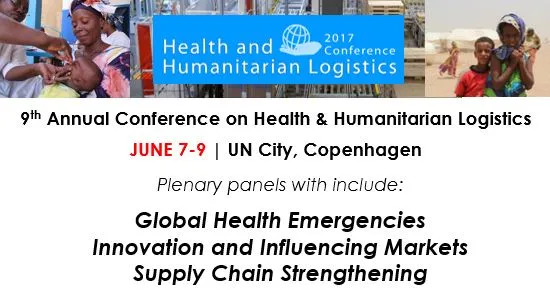
WHEN: June 7-9, 2017
WHERE: UN City, Copenhagen
WHAT: Panels and interactive sessions focusing on topics such as:
- Global Health Emergencies
- Innovation and Influencing Markets
- Strengthening Health Supply Chains
TO REGISTER ONLINE please visit chhs.gatech.edu/conference/2017/registration.
*As the 2017 conference will be hosted at the United Nations City, it will be free of charge. All attendees must be registered online prior to the event and must present an official form of government-issued photo ID to enter the UN City conference venue.
OVERVIEW:
The HHL Conference is pleased to announce the opening Keynote address from Dr. Richard Brennan, Director of Emergency Operations, Emergencies Programme, World Health Organization (WHO) in geneva, who led the Ebola Response from October 2014 to January 2016 as the Director at the WHO HQ. Dr. Brennan now oversees WHO’s response to health emergencies globally as part of the new Emergencies Programme which brings together several departments to streamline WHO’s role in emergencies globally, from prevention and preparedness to response, and from humanitarian emergencies to disease outbreaks. See full bio here.
Each year the Conference on Health & Humanitarian Logistics (HHL) provides an open forum for the discussion of challenges and new solutions in disaster preparedness and response, long-term development and humanitarian aid, and global health delivery. This neutral platform encourages learning and collaboration within and across institutions; promotes system-wide improvements in organizations and the sector as a whole; identifies important research issues; and establishes priorities in terms of strategies, policies and investments.
Speakers and participants in the event come from across global health and humanitarian sectors, from governments, NGOs, foundations, private industry, and academia, and share diverse perspectives in health and humanitarian challenges. The agenda features keynote addresses, panel discussions, focused interactive workshops, oral presentations, lunchtime group discussions, and interactive poster sessions covering a broad set of research topics and applications.
Submissions were accepted for 3 categories this year: interactive workshops, oral presentations, and posters, which explore challenges and solutions for building efficient and effective supply chains for health and humanitarian challenges. Particular topics of interest include public private partnerships, innovative uses of data or technology, and creating sustainable supply chain systems.More information about these sessions is available here. The final list of presentation, workshop sessions, and posters will be online at the links here as they are confirmed.
2017 Conference Co-organizers:
- Özlem Ergun, Northeastern University
- Jarrod Goentzel, Humanitarian Response Lab, MIT
- Etleva Kadilli, UNICEF Supply Division, Copenhagen
- Pinar Keskinocak, CHHS, Georgia Tech
- Julie Swann, CHHS, Georgia Tech
- Luk Van Wassenhove, Humanitarian Research Group, INSEAD
2017 Speakers and presenters include representatives from:
Bill & Melinda Gates Foundation, Centers for Disease Control & Prevention, (CDC), Central Medical Stores Trust of Malawi, Chemonics International, DHL, Earthquake Reconstruction & Rehabilitation Authority (ERRA) Pakistan, GS1 Nigeria, Global Scientific Solutions for health, Imperial Health Sciences, John Snow Inc., Laerdal Global Health, Logistimo India, Medecins Sans Frontieres, National Medical Stores Uganda, National Primary Health Care Development Agency of Nigeria, Nexleaf Analytics, North Star Alliance, Partnership for Supply Chain Management, UCLA, Vienna University of Economics and Business, UNICEF Supply Division, UN World Food Programme, UPS, World Health Organization, USAID, and more.
News Contact
Meghan Smithgall
Center for Health & Humanitarian Systems (CHHS)