
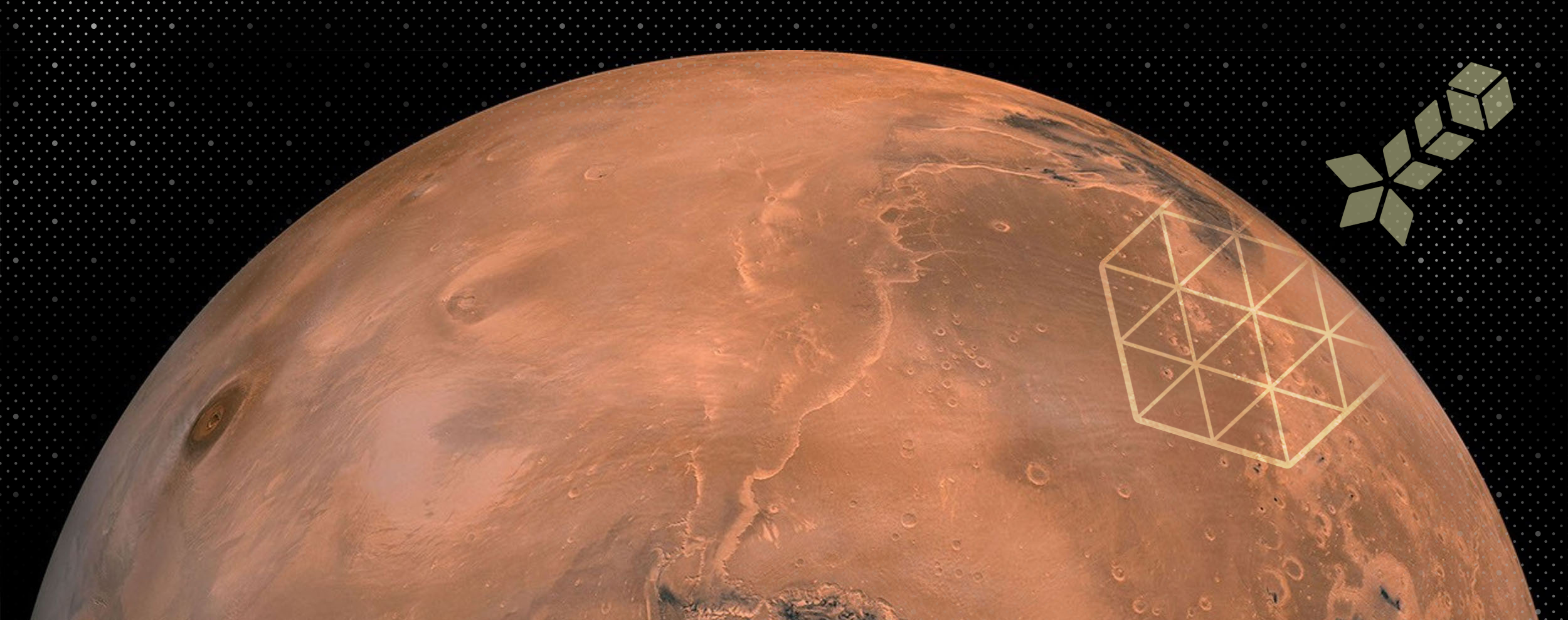
From deserts in Arizona to salty lakes in Canada, these environments give scientists an idea of what Mars and Jupiter’s moons might be like.
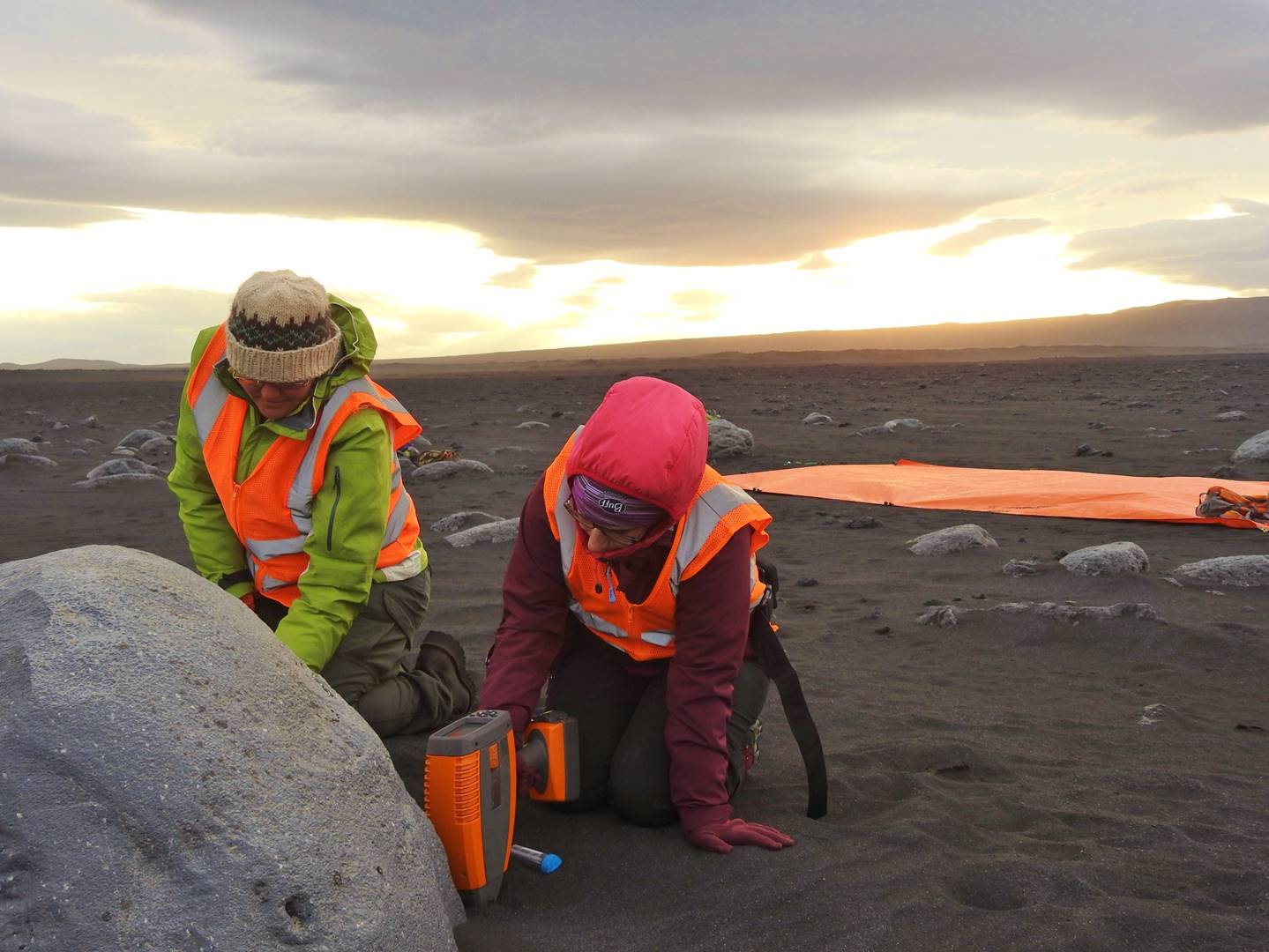
Erika Rader (left) and Elena Amador (right) use handheld portable chemical analysis instrumentation analogous to those used on Mars, but in Dyngjusandur, a basaltic tephra plain in Iceland.
The surface is covered with fine ash. The lava fields stretch for miles, punctuated only by basalt mountains. But life could be found here if you look hard enough.
This barren land isn't Mars or Pluto, but volcanic deserts in Iceland. The environment is so comparable to Mars' arid landscape that researchers can use it as an analog. From Earth, they can extrapolate how planets in our galaxy and beyond could sustain life and what tools humans might need to make homes on these planets.
Georgia Tech researchers explore everywhere from Oregon's mountaintops to Arizona's deserts to better understand space — and life on this planet.
From Microbes to Mars
Amanda Stockton, an associate professor in the School of Chemistry and Biochemistry, develops tools that can survive harsh space conditions. One of Jupiter's moons, Europa, has no atmosphere, making for high-impact landings. For spacecraft to survive this, they either need to be built larger, or the landing gear needs to be stronger. Stockton's team is working on the latter.
To design these tools, they need to better understand what super salty environments are like. At the bottom of the Gulf of Mexico is a depression of water, with even higher salinity than typical ocean water, called the Orca Basin. “It has a lot of cool characteristics that could make it similar to Europa,” Stockton said. “There's no oxygen, so it's anoxic and analogous to these high-salinity moons.” Using chemical analysis tools like capillary electrophoresis and mass spectrometers to analyze the water's chemistry, Stockton can identify how comparable Jupiter's moons and the Orca Basin are.
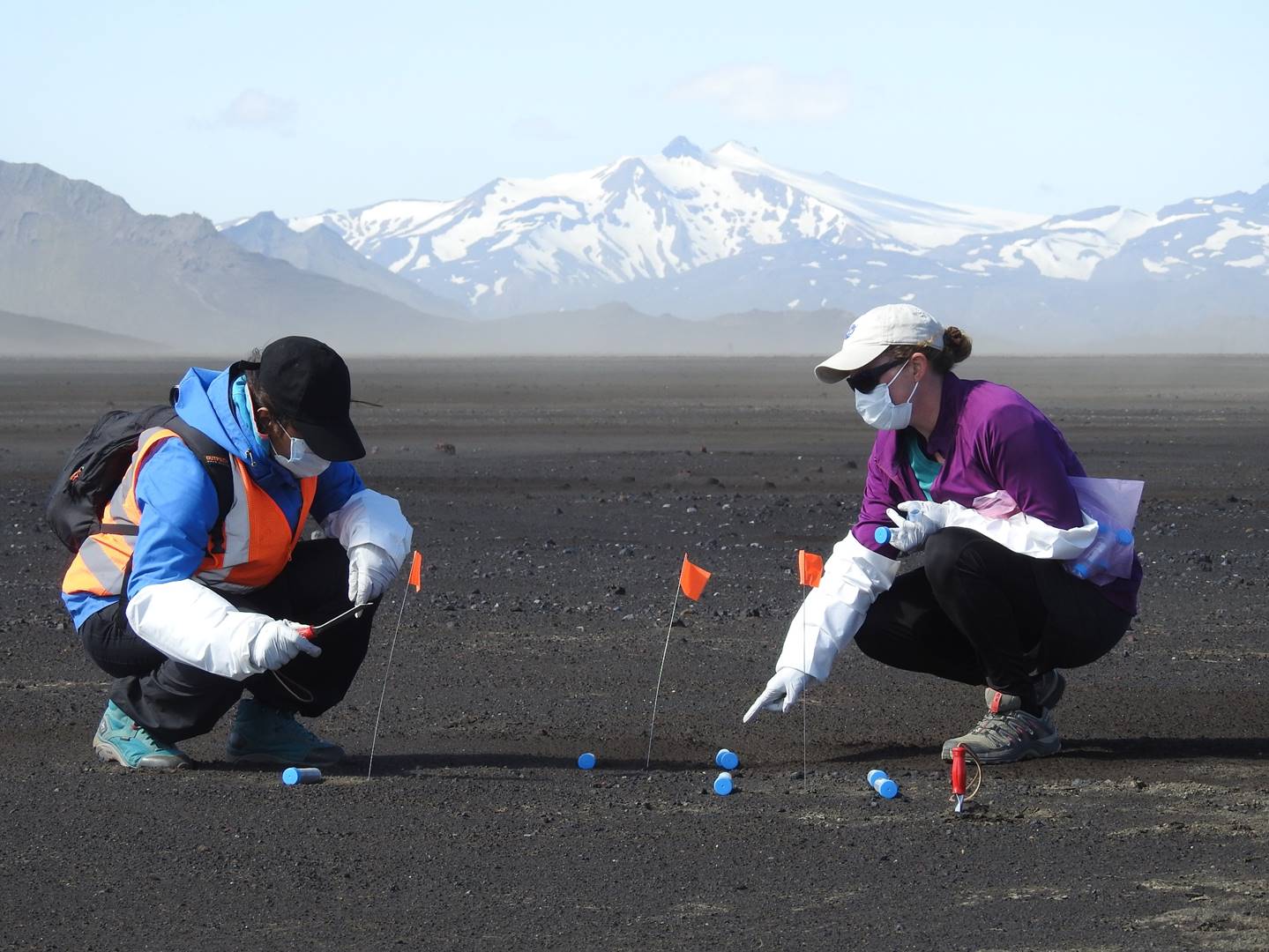
Gayathri Murekesan (left) and Amanda Stockton (right) sampling from Maelifellssandur, a recently deglaciated basaltic tephra desert in Iceland.
They can apply similar logic to Mars. The Red Planet was once believed to be warmer and wetter but has since dried up. To learn how these changing moisture conditions affect life, Stockton's research group studied Western Australia's transient lakes. When rain falls, the lakes fill, but when the rain stops, the lakes disappear.
Stockton's work in Iceland dives deeper into answering the question of how life survives in harsh conditions. The researchers sift through the volcanic sand for microbial life to find clues to how life regenerates after catastrophic events.
“What do these conditions tell us about how we could help convert other basaltic tephra into soil where we could actually grow crops?” Stockton said. “And what does Iceland tell us about how we should search for life that may have arisen on other rocky planets like Mars?”
From Salt Water to New Worlds
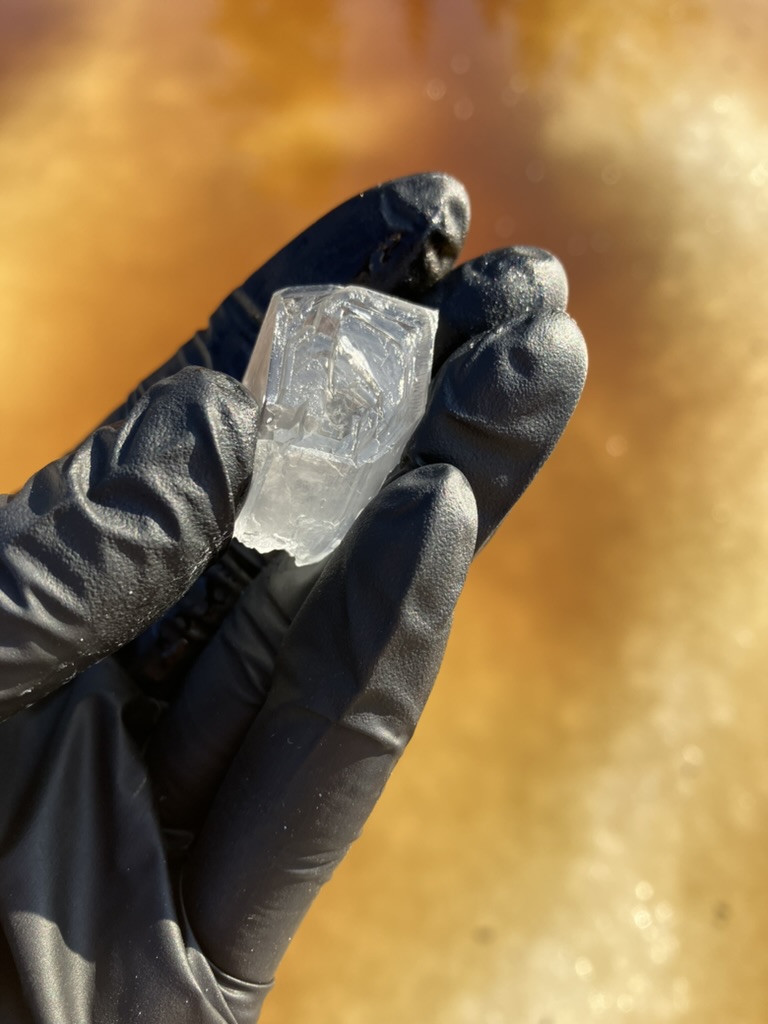
A magnesium-sulfate crystal that forms in a hypersaline, or extremely salty, lake.
Scientists are obsessed with finding water on other planets because water's presence is often a key indicator of life. Planets like Mars haven't had abundant surface water in millennia, but the salt remaining on their surfaces may suggest they were once habitable. School of Earth and Atmospheric Sciences Professor James Wray and Ph.D. student Emmy Hughes study Mars' craters in search of brines indicating salt once dissolved in water there.
“Salts on Mars' surface would have formed through the evaporation or freezing of a brine, and this brine required some amount of water to be present,” Hughes said. “Finding these brines there can help us answer how life on Earth originated and how extensive life is throughout our solar system.”
Of course, the craters of Mars aren't easily accessible from a lab, but Wray's lab has several methods for learning about the environment. The researchers look at how Mars reflects sunlight, a process known as infrared spectroscopy. By splitting up this reflected light by wavelength, a spectrum emerges that can allude to the composition of a planet's surface.
“The wavelengths that get reflected versus absorbed by the surface depend on what the surface is made of,” Wray said. “So, if you measure what wavelengths you receive back, then you can determine that salts are there.”
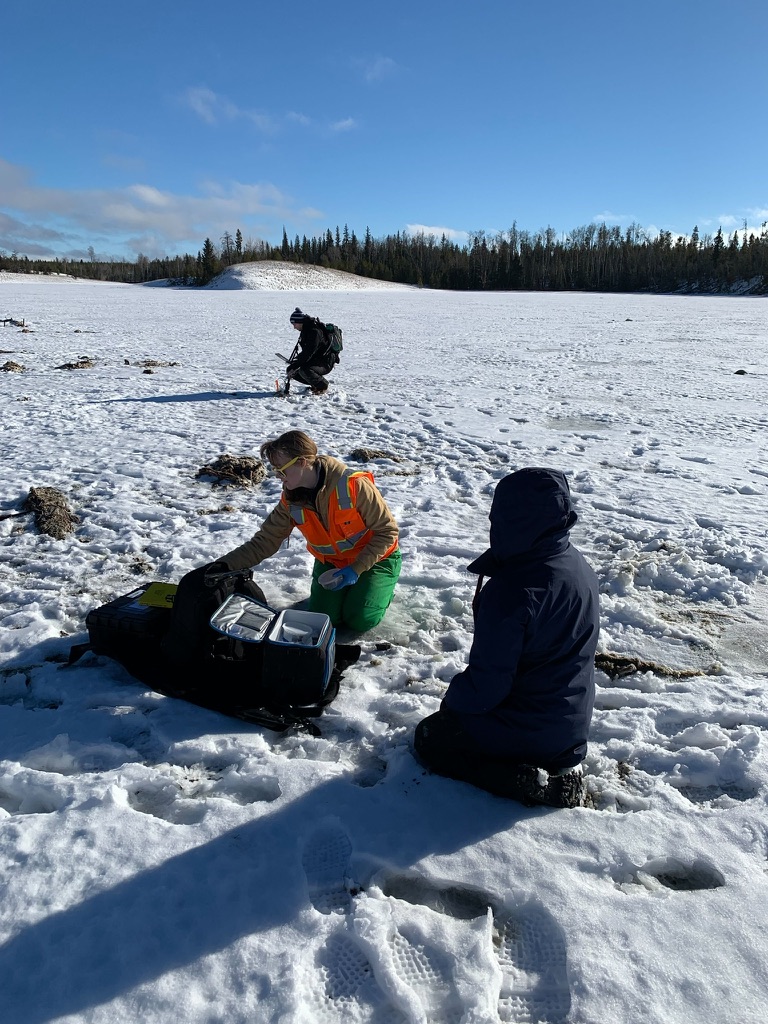
Hughes and researchers in British Columbia.
The team also takes advantage of what Mars' Curiosity Rover can find as it travels along the planet. The rover can ablate the planet's dusty terrain to reveal the rock underneath and determine its composition.
Mars is not the only planet with salt-filled lakes. Back on Earth, in British Columbia, Canada, lakes thick with magnesium sulfate have created layers upon layers of salt. These brines fluctuate throughout the year, sometimes with more dilution and other times with more salinity.
In the summer, for example, the lakes evaporate entirely, and in the winter, they freeze. Each state change shifts the salt composition — in a way that could be comparable to Mars. Hughes applies the same spectroscopy techniques researchers use on Mars and analyzes terrestrial data against Mars' findings. Although only the hardiest organisms can survive these salty landscapes in Canada, they show that life is possible. Hughes is there to collect data across seasons and see if it suggests we aren't alone in the universe after all.
From the Earth’s Past to Its Present
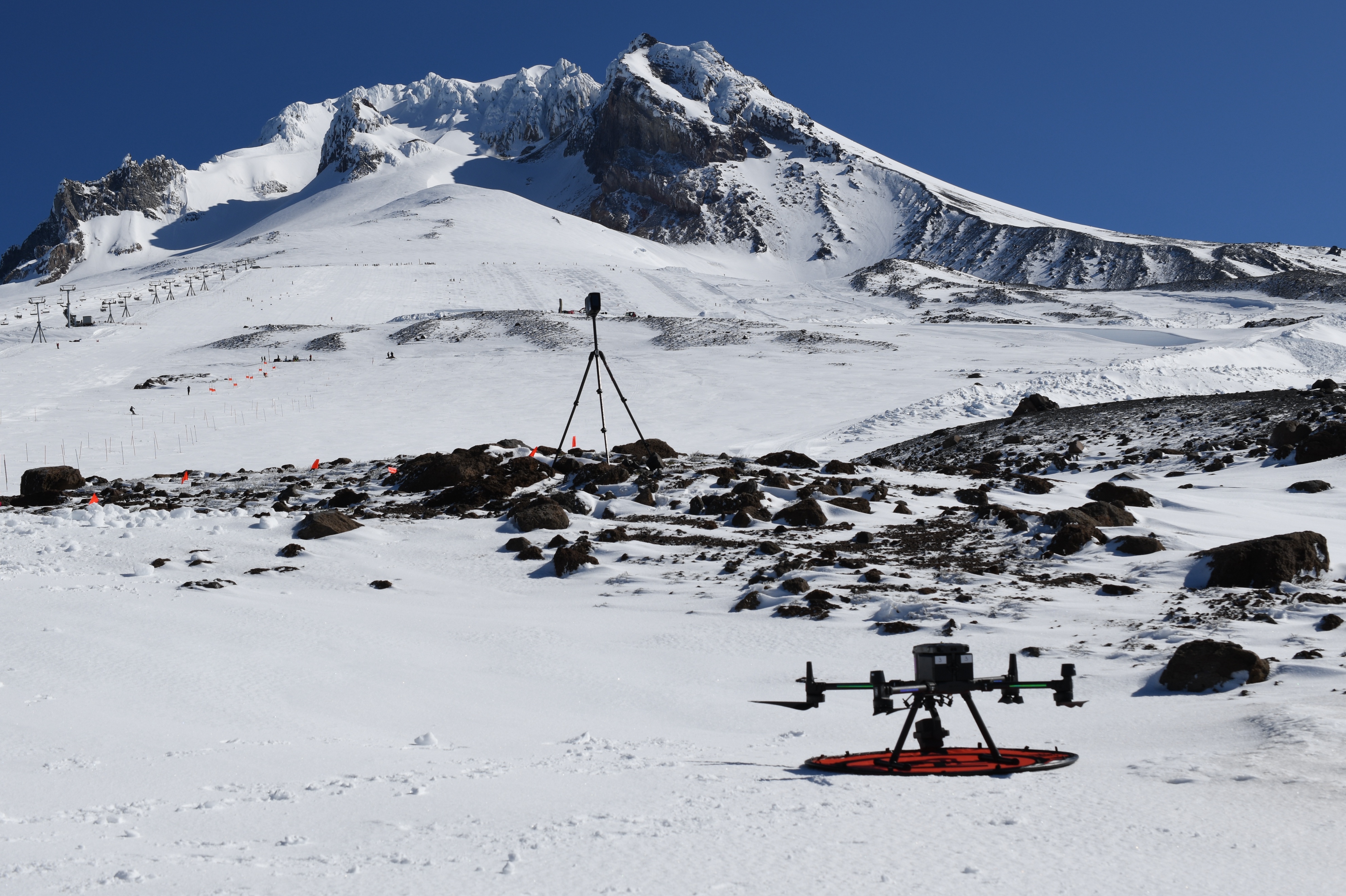
Mount Hood drone work.
We can only comprehend the future of space research by knowing its past. Frances Rivera-Hernández, an assistant professor in the School of Earth and Atmospheric Sciences, studies sedimentary rocks on planets like Mars to extrapolate what their climates were like in the past. The rocks, collected by the Curiosity Rover, can help determine how much liquid water Mars once had, how and where it was distributed, and whether those environments were suitable for life.
From this data, Rivera-Hernández can bring her research down to Earth, literally. She studies places on our planet with environments comparable to Mars' past and even uses the same instruments to measure this. From Oregon's Mount Hood to New Mexico's white sands, Rivera-Hernández can explore Mars without leaving our orbit.
“We make a lot of claims about Mars' environment — maybe there's a lake here based on data — but I always ask whether we've even proven we can find this on Earth,” she noted. “So we go to a valley where people think a lake once existed, and we use the same type of instruments to study that claim.”
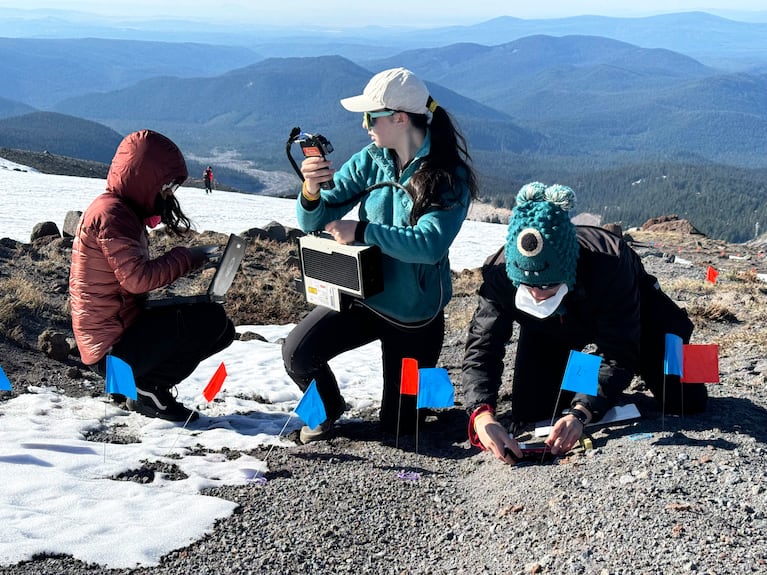
Georgia Tech students Tatiana Gibson (left) and Alivia Eng (center) collaborate with Marion Nachon (right) from Texas A&M. Photo by Courtney Flatt/Northwest Public Broadcasting.
Drones provide a broad view of the area they're studying using thermal infrared cameras and basic visual images, and the team uses mass spectrometers to analyze data on the ground. At Mount Hood, for example, the researchers examine snow-covered environments that transition from snow to rocks and then to environments consisting only of rocks. This can simulate a planet's changing topography, as well as changing weather conditions — something Rivera-Hernández contends is vital to understanding climate change.
“Ultimately, we want to better understand Earth, and the best way to do that is to understand its differences from other planetary bodies,” Rivera-Hernández said. “Mars is one of the few planets that might have looked closer to Earth in the past, and its climate has changed over time, which could inform our perspective on Earth's climate shifts.”
From Gases to Galaxies
Jennifer Glass' research drills down to the smallest level that can have the biggest impacts. “There might be some life deep underground on Mars and maybe some of the moons in the outer solar system because of their oceans, but if we are to find another planet that is teeming with life, it would be outside of our solar system,” said Glass, an associate professor in the School of Earth and Atmospheric Sciences. “That would fundamentally change humanity's perspective on our place in the universe.”
Researchers must rely on the composition of the atmosphere to see if it can sustain life. Glass, for her part, studies the bacteria that play a crucial role in Earth's chemical cycles and create the conditions that lead to life. Her lab focuses on two main areas: methane and nitrous oxide, the greenhouse gases microorganisms produce and consume, and methane hydrates, which are ice-like structures containing methane that can be found on Earth and possibly distant planets. If these gas signatures could indicate life here, then they might detect it on other planets. The implications are just beginning to take shape.
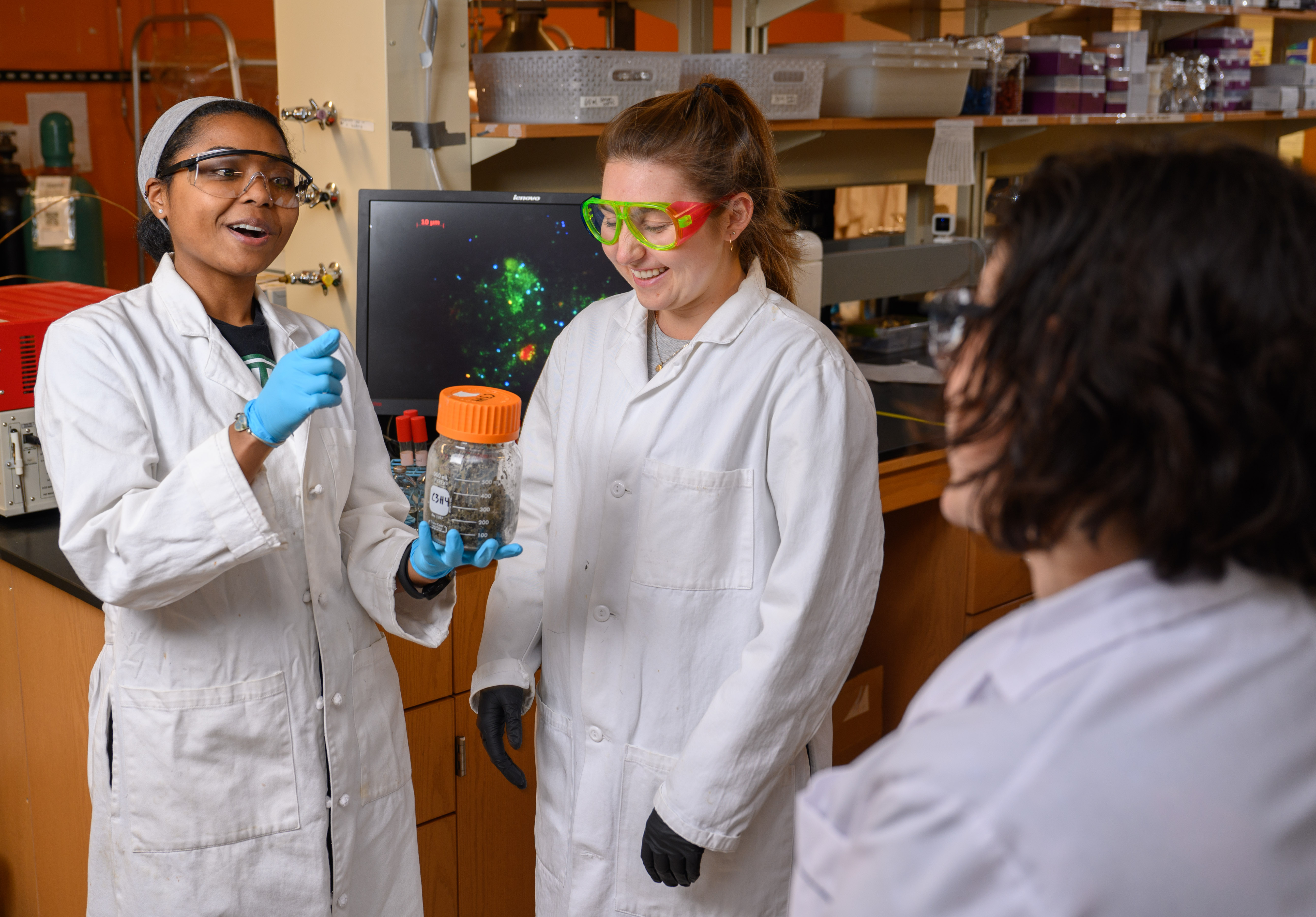
EAS Ph.D. student Lea Adepoju holds sediments from a sediment containing methan-hydrate beneath the seafloor near Oregon. Ocean science and engineering Ph.D. student Claire Elbon (center) and PI Jennifer Glass look on. Photo by Rob Felt.
“Ultimately, we want to better understand Earth, and the best way to do that is to understand its differences from other planetary bodies.” — Frances Rivera-Hernández
“We know the genetic codes of everything, but we are just figuring out what each of those does,” Glass said. “We’re not going to be able to understand what we're seeing on other planets if we don't still really understand what's going on with Earth.”
How humans travel to Mars may still be up in the air, but Georgia Tech researchers bring it closer to home with their research. Each salt crystal or pebble can unlock whole worlds. From a better understanding of the cosmos to exploring life's origins, the possibilities of this research are almost as infinite as space itself.

Writer/Media Contact: Tess Malone | tess.malone@gatech.edu
Photos: Rob Felt and Researchers
Design: Tony Wilson