
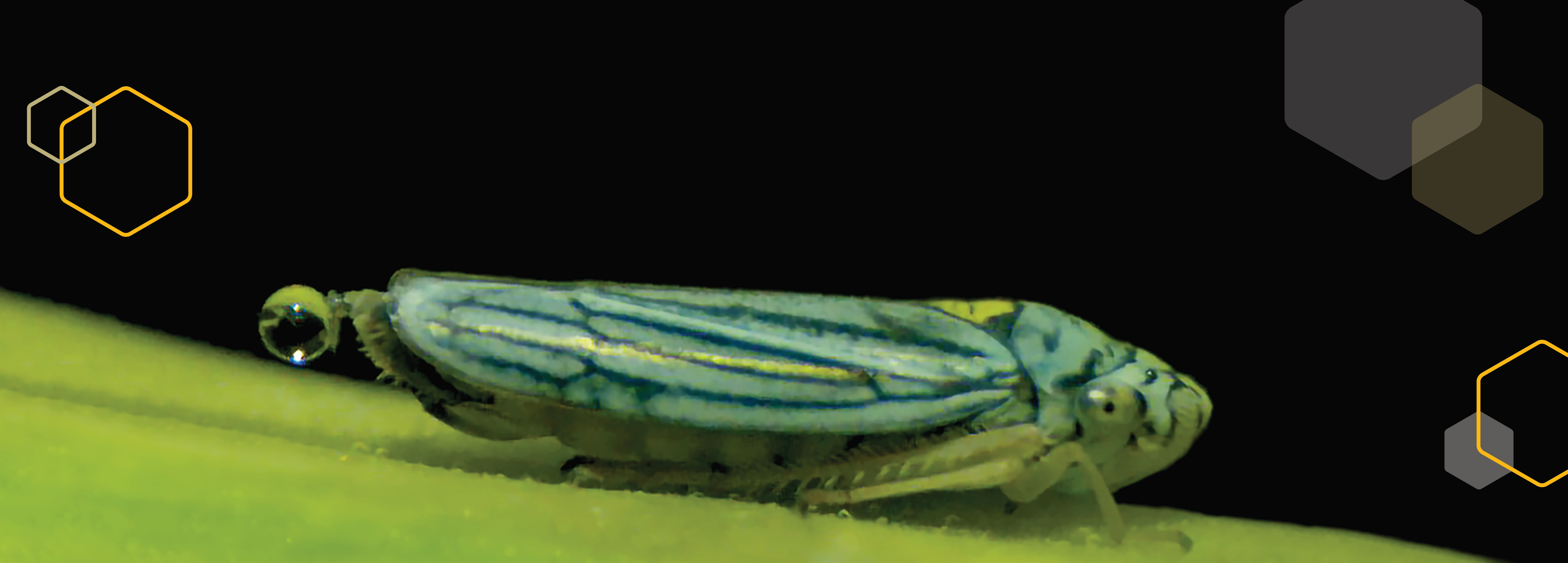
Saad Bhamla was in his backyard when he noticed something he had never seen before: an insect urinating. Although nearly impossible to see, the insect formed an almost perfectly round droplet on its tail and then launched it away so quickly that it seemed to disappear. The tiny insect relieved itself repeatedly for hours.
It’s generally taken for granted that what goes in must come out, so when it comes to fluid dynamics in animals, the research is largely focused on feeding rather than excretion. But Bhamla, an assistant professor in the School of Chemical and Biomolecular Engineering at the Georgia Institute of Technology, had a hunch that what he saw wasn’t trivial.
“Little is known about the fluid dynamics of excretion, despite its impact on the morphology, energetics, and behavior of animals,” Bhamla said. “We wanted to see if this tiny insect had come up with any clever engineering or physics innovations in order to pee this way.”
Bhamla and Elio Challita, a bioengineering graduate student, investigated how and why glassy-winged sharpshooters – tiny pests notorious for spreading disease in crops – excrete the way they do. By using computational fluid dynamics and biophysical experiments, the researchers studied the fluidic, energetic, and biomechanical principles of excretion, revealing how an insect smaller than the tip of a pinky finger performs a feat of physics and bioengineering – superpropulsion. Their research, published in Nature Communications, is the first observation and explanation of this phenomenon in a biological system.

“Little is known about the fluid dynamics of excretion, despite its impact on the morphology, energetics, and behavior of animals.” – Saad Bhamla
Small but Mighty: Observing Insect Excretion
The researchers used high-speed videos and microscopy to observe precisely what was happening on the insect’s tail end. They first identified the role played by a very important biophysical tool called an anal stylus, or, as Bhamla termed, a “butt flicker.”
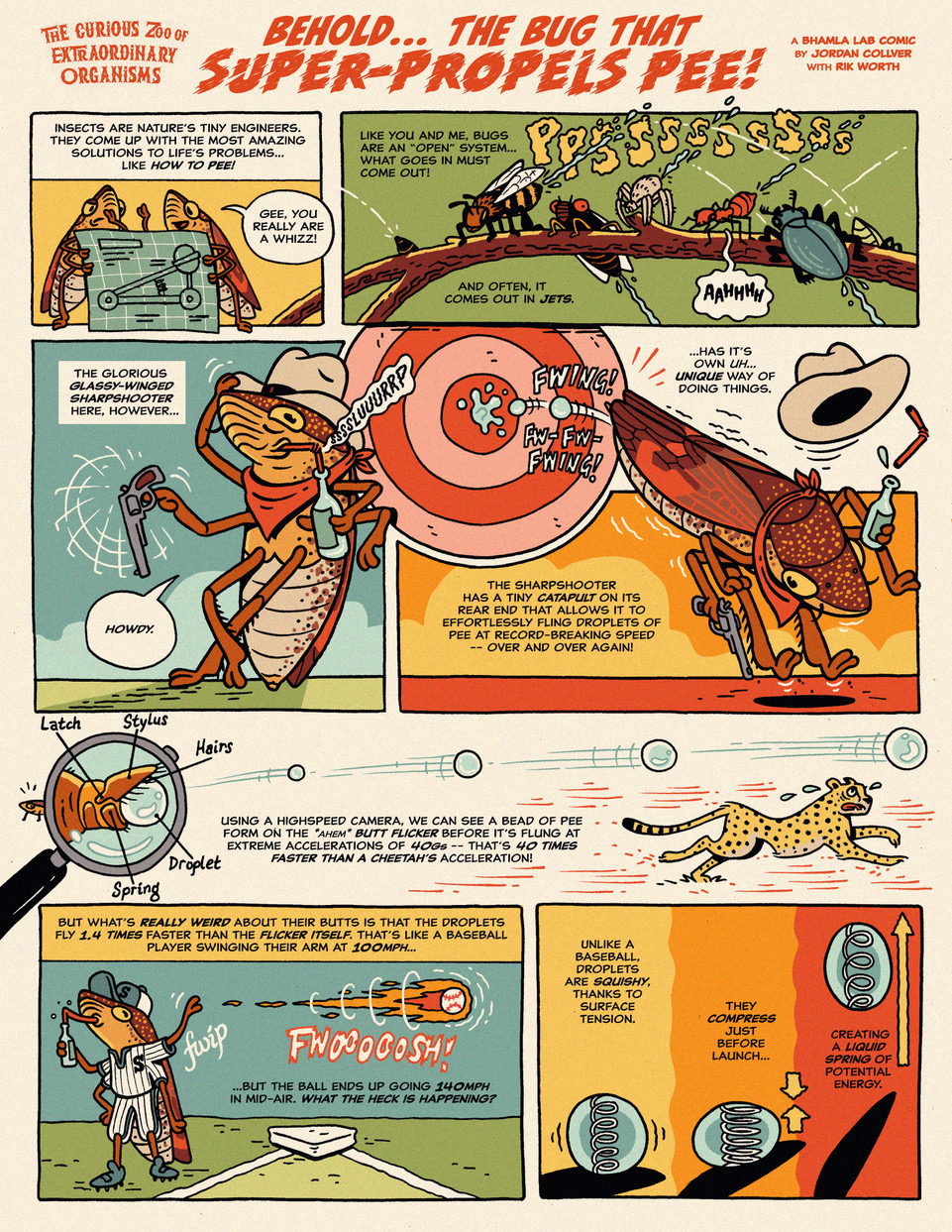
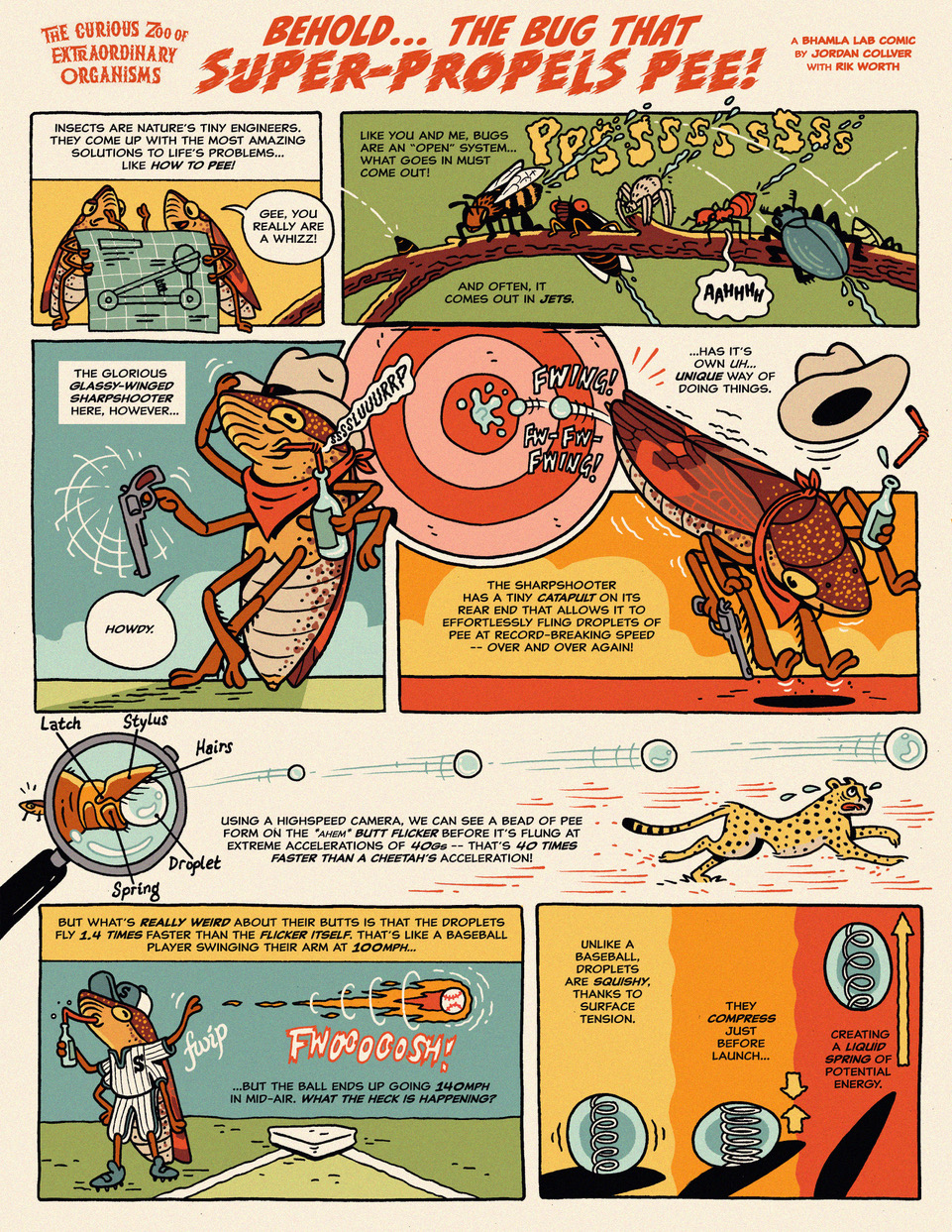
Challita and Bhamla observed that when the sharpshooter is ready to urinate, the anal stylus rotates from a neutral position backward to make room as the insect squeezes out the liquid. A droplet forms and grows gradually as the stylus remains at the same angle. When the droplet approaches its optimal diameter, the stylus rotates farther back about 15 degrees, and then, like the flippers on a pinball machine, launches the droplet at incredible speed. The stylus can accelerate more than 40Gs – 10 times higher than the fastest sportscars.
“We realized that this insect had effectively evolved a spring and lever like a catapult and that it could use those tools to hurl droplets of pee repeatedly at high accelerations,” Challita said.
Then, the researchers measured the speed of the anal stylus movement and compared them to the speed of the droplets. They made a puzzling observation: the speed of the droplets in air was faster than the anal stylus that flicked them. They expected the droplets to move at the same speed as the anal stylus, but the droplets launched at speeds 1.4 times faster than the stylus itself. The ratio of speed suggested the presence of superpropulsion – a principle previously shown only in synthetic systems in which an elastic projectile receives an energy boost when its launch timing matches the projectile timing, like a diver timing their jump off a springboard.
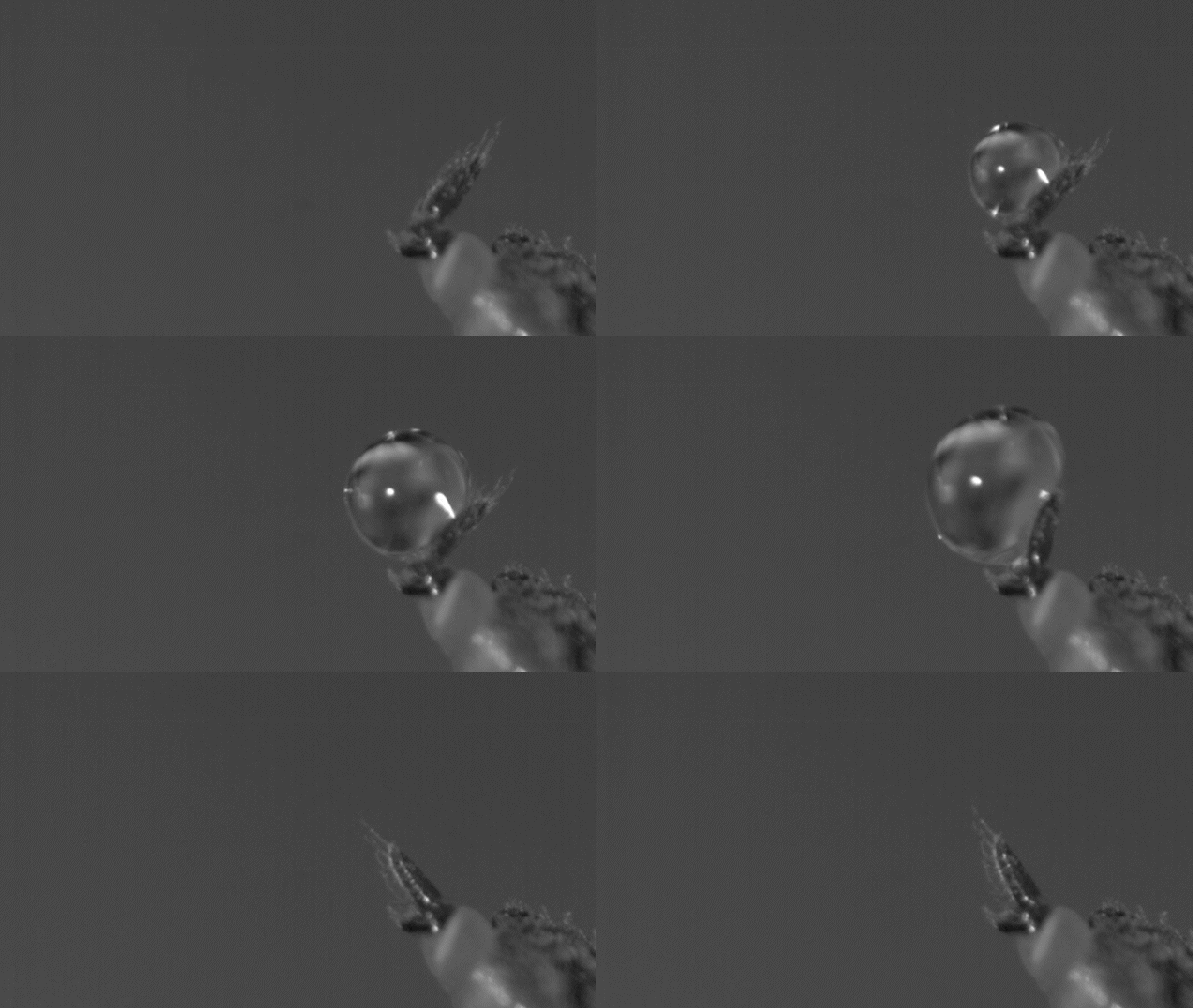
Upon further observation, they found the stylus compressed the droplets, storing energy due to surface tension just before launch. To test this, the researchers placed the water droplets on an audio speaker, using vibrations to compress them at high speeds. They discovered that, at tiny scales, when water droplets are launched, they store energy due to inherent surface tension. And if timed just right, droplets can be launched at extremely high speeds.
But the question of why sharpshooters urinate in droplets was still unanswered. A sharpshooter’s almost zero-calorie diet consists only of plant xylem sap – a nutrient deficient liquid containing only water and a trace of minerals. They drink up to 300 times their body weight in xylem sap per day and are therefore required to constantly drink and efficiently excrete their fluid waste which is 99% water. Different insects, on the other hand, also feed exclusively on xylem sap but can excrete in powerful jets.
The team sent sharpshooter samples to a specialized lab. Micro CT scans enabled Bhamla and Challita to study the sharpshooter’s morphology and take measurements from inside the insects. They used the information to calculate the pressure required for a sharpshooter to push the fluid through its very small anal canal, determining how much energy was required for a sharpshooter to urinate.
Their research reveals that superpropulsive droplet ejection serves as a strategy for sharpshooters to conserve energy per feeding-excretion cycle. Sharpshooters face major fluid dynamic challenges due to their small size and energy constraints, and urinating in droplets is the most energy efficient way for them to excrete.
Promising Applications for Insect Superpropulsion
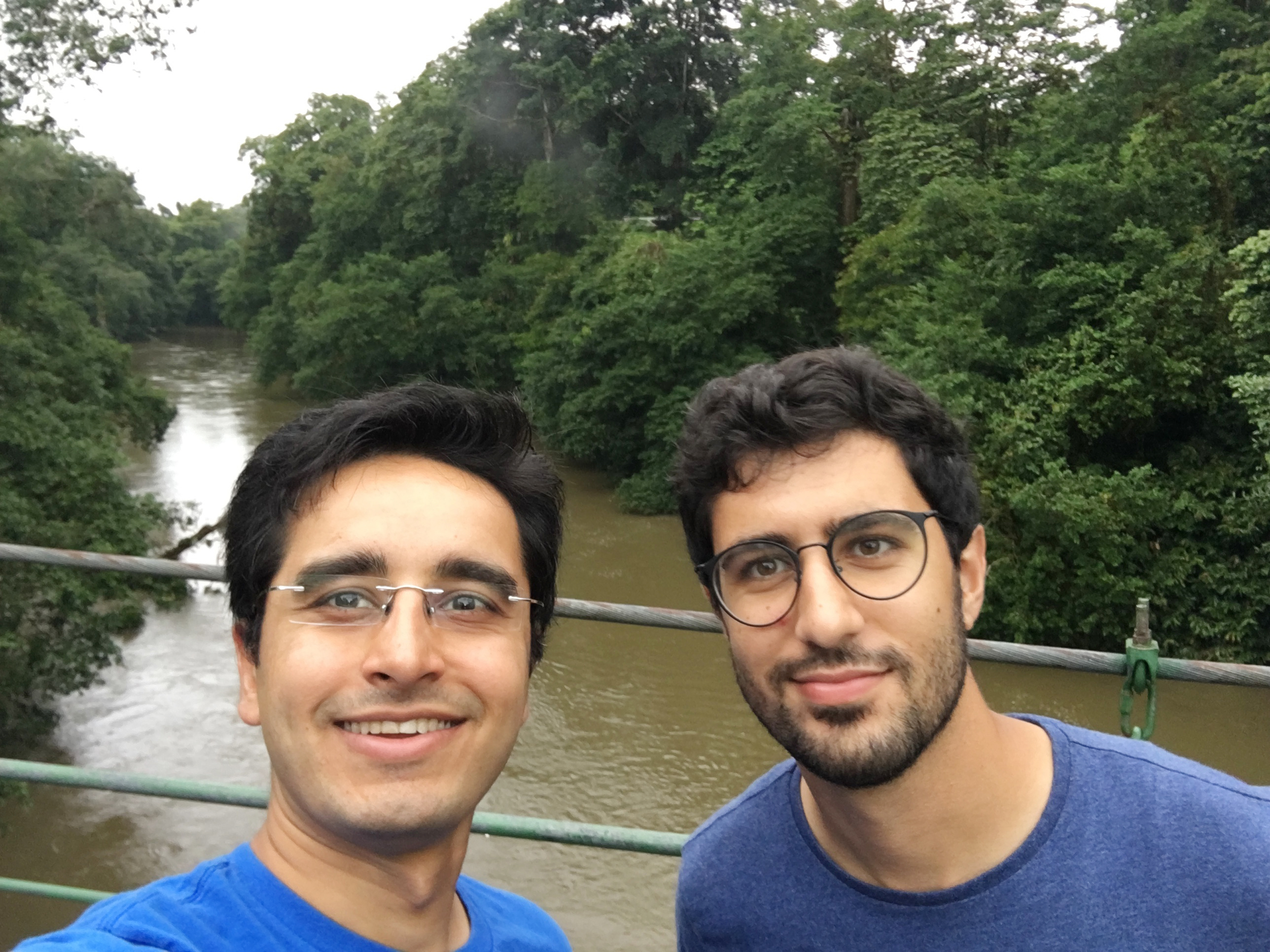
Saad Bhamla (left) and Elio Challita.
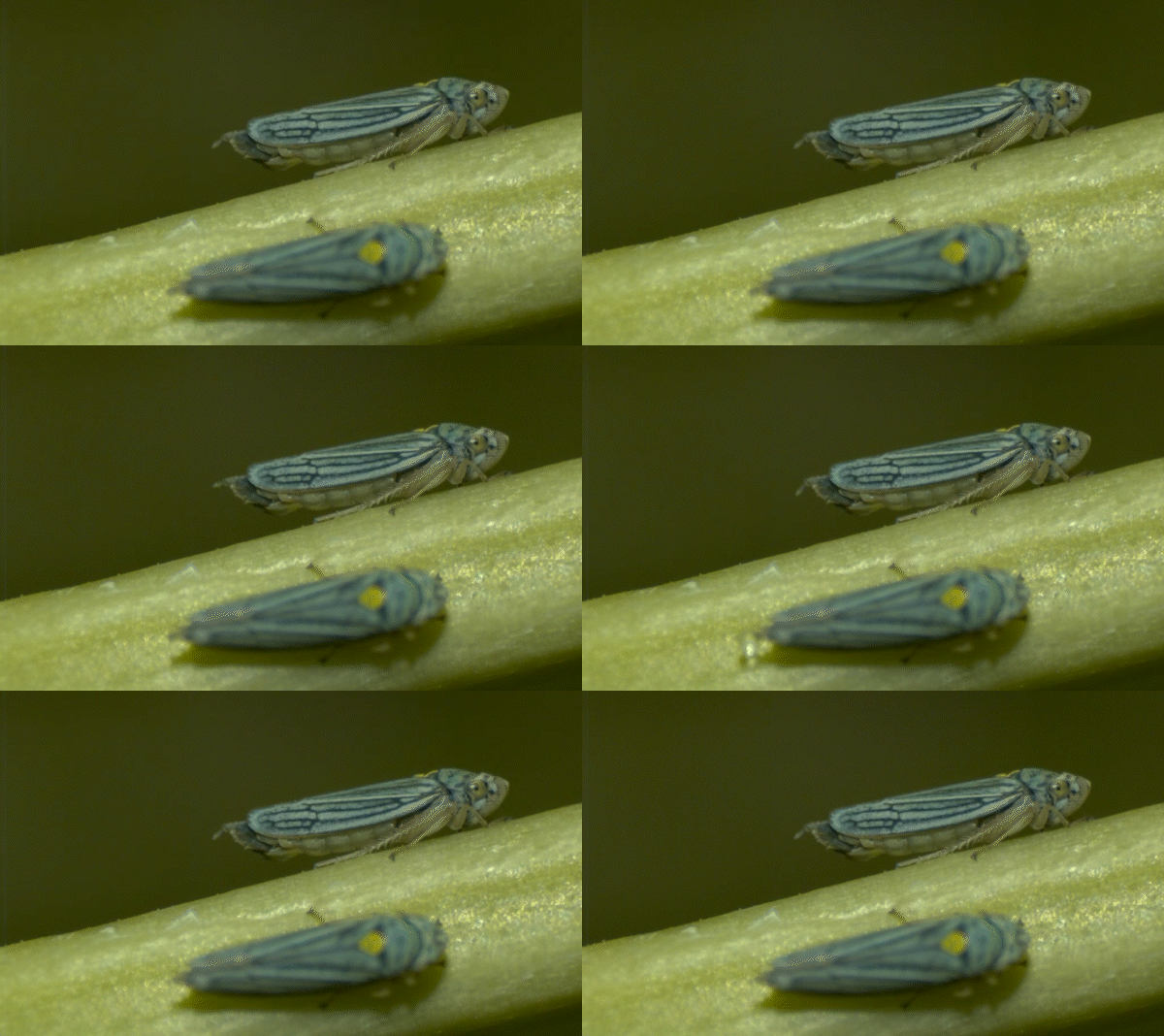
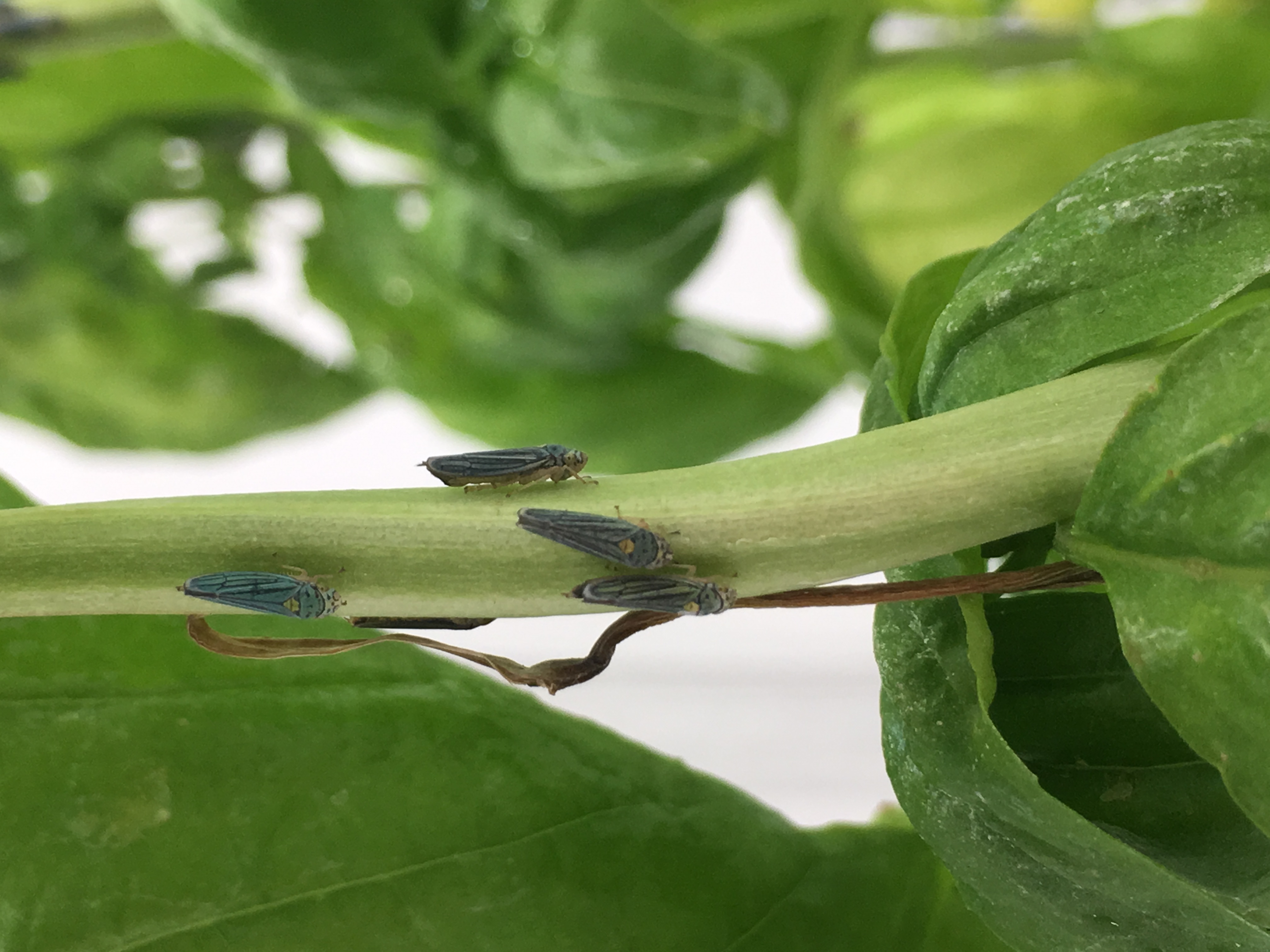
Two sharpshooters on a plant, urinating in droplets (full speed).
Studying how sharpshooters use superpropulsion can also provide insights into how to design systems that overcome adhesion and viscosity with lower energy. One example is low-power water-ejection wearable electronics, such as a smart watch that uses speaker vibrations to repel water from the device.
“The subject of this study may seem whimsical and esoteric, but it’s from investigations like this that we gain insight into physical processes at size scales outside of our normal human experience,” said Miriam Ashley-Ross, a program director in the Directorate for Biological Sciences at the U.S. National Science Foundation, which partially funded the work. “What the sharpshooters are dealing with would be like us trying to fling away a beachball-sized globe of maple syrup that was stuck to our hand. The efficient method these tiny insects have evolved to solve the problem may lead to bio-inspired solutions for removing solvents in micro-manufacturing applications like electronics or shedding water rapidly from structurally complex surfaces.”
The mere fact that insects urinate is compelling on its own, mostly because people don’t often think about it. But by applying the lens of physics to an everyday miniature biological process, the researchers’ work reveals new dimensions for appreciating small behaviors beyond what meets the eye.
“This work reinforces the idea of curiosity-driven science being valuable,” Challita said. “And the fact that we discovered something that is so interesting – superpropulsion of droplets in a biological system and heroic feats of physics that have applications in other fields – makes it even more fascinating.”
Saad Bhamla on Ted Talks

Citation: Elio J. Challita, Prateek Sehgal, Rodrigo Krugner & M. Saad Bhamla. “Droplet superpropulsion in an energetically constrained insect,” Nature Communications (2023).
DOI: https://doi.org/10.1038/s41467-023-36376-5
Writer: Catherine Barzler
Multimedia: Insect photos and footage courtesy of the Bhamla Lab
YouTube Video: Candler Hobbs
Comic: Jordan Collver with Rik Worth
Media Contact: Catherine Barzler | catherine.barzler@gatech.edu