
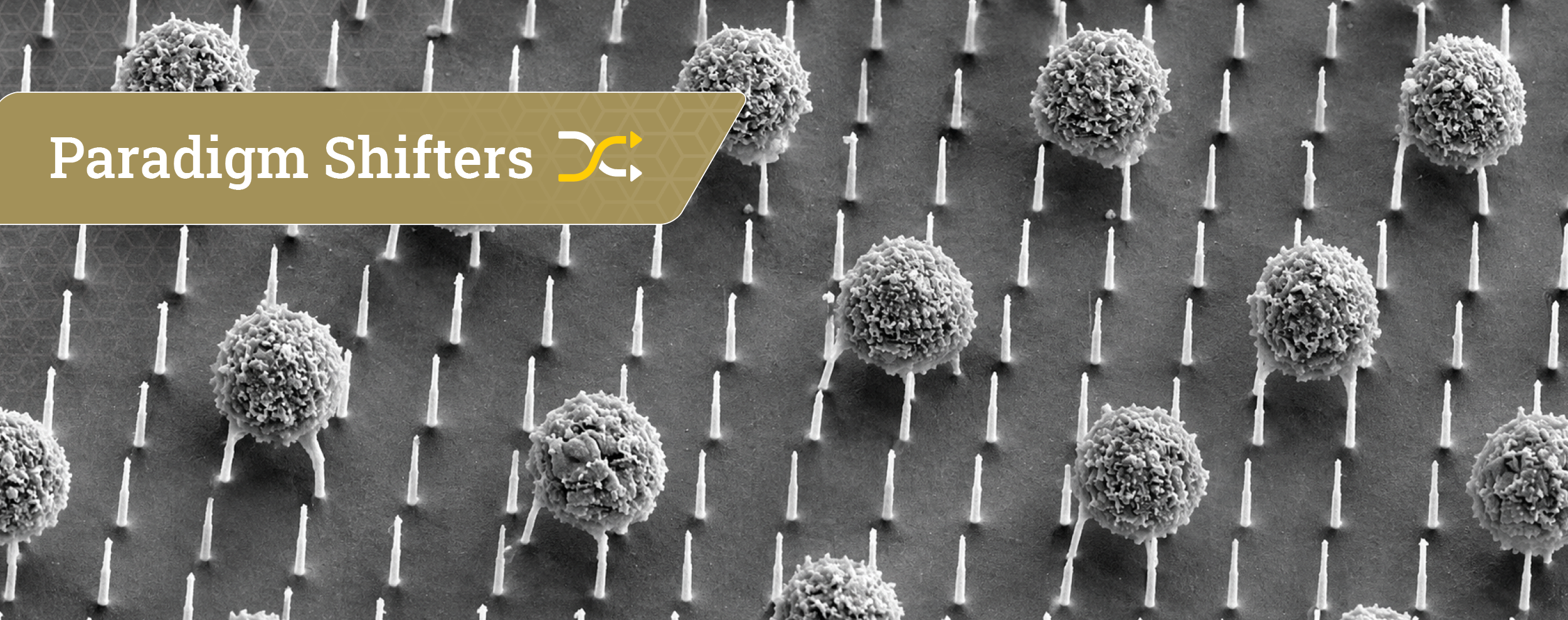
It’s like a shot of espresso for “exhausted” immune systems — a discovery that could restore the body’s defenses against cancer and infection.
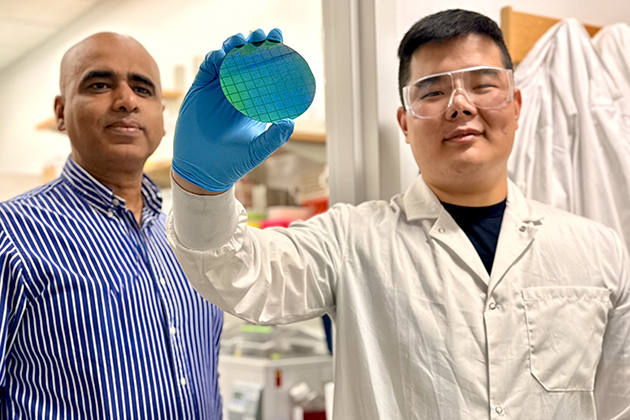
Ankur Singh, left, and Zhonghao (Eric) Dai in the Immunotherapy and Cell Engineering laboratory at the Georgia Institute of Technology. Dai holds a silicon nanowire wafer manufactured as part of a revolutionary effort to reverse aging in human immune cells.
For decades, scientists have accepted that the immune system naturally weakens with age. Georgia Tech biomedical engineer and Carl Ring Family Professor Ankur Singh wasn’t convinced.
Then the Covid-19 pandemic made the stakes impossible to ignore.
Singh said that as older adults struggled to recover from Covid, he recognized the same pattern he had been studying for years in cancer: an aging immune system that could no longer respond the way it once had.
“It pointed us back to the immune system,” said Singh, a faculty member in the Parker H. Petit Institute for Bioengineering and Bioscience and director of the Center for Immunoengineering. “Looking at the number of people who suffered from Covid, and how poorly the immune system was prepared to fight a new infection, it became clear this was a fundamental problem.” A lot of aging research, he noted, “focuses on the brain or physical health. But immune aging is central to so many of these problems, and there are far fewer solutions. Now we’re asking whether we can repair some of its root causes.”
In a study published in Cell Biomaterials, Singh and his collaborators, led by Ph.D. student Zhonghao Dai, set out to answer that question.
If this progresses, then we will have this unique ability to program immune cells of all ages and fix their ability to perform just like a young patient."
– Ankur Singh
Resetting the Immune System
The team focused on T cells, the immune system’s frontline defenders against viruses, abnormal cells, and the earliest signs of cancer.
T cells protect us by responding to new infections and eliminating dangerous cells before they can take hold. As we age, the body produces fewer fresh T cells, and older ones become less effective. “They're exhausted,” Singh said.
He wanted to know whether aging immune cells could recover some of what they had lost. To restore aging immune cells, researchers first have to deliver new biological instructions into T cells. Existing methods have made that difficult, often damaging fragile cells or failing to reach enough of them to be effective.
Using microscopic silicon nanowires, Singh and his team delivered the instructions into more than 90% of aging T cells without damaging them. The goal wasn’t to reverse aging. It was to restore enough of the cells’ lost function to allow them to behave more like younger immune cells.
“These signals act like instructions,” Singh said. “They help reset the cells’ internal programs.”
They’re ready to fight whatever is invading your body. You’ll respond better to vaccines. You’ll simply live a healthier life and get sick less often."
– Ankur Singh
A Second Chance to Fight
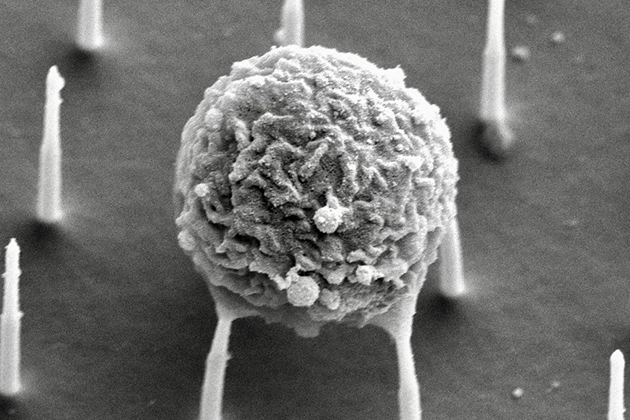
A scanning electron micrograph from the laboratory of Ankur Singh and Zhonghao Dai shows aged human T cells resting on top of a bed of microscopic silicon nanowires, which are engineered to interact directly with the cells and restore their youthful function.
Much like a cup of coffee, the treatment invigorated exhausted immune cells, helping them respond more like younger ones. The treated cells became more active. They multiplied and regained their ability to attack infected and cancerous cells. “What surprised me most was that we only needed to fix four or five of these genes to bring T cells closer to a younger state,” Singh said.
The team then tested immune cells from healthy older adults, cancer survivors, and patients living with cancer. “We started seeing improvement in their T cell function,” Singh said. “That’s when we knew this could work across different conditions and across different people.”
The results held across each group, giving him confidence that the approach could work far more broadly than the team first imagined.
Beyond One Disease
“This technique has wide applications: cancer, infection, inflammatory bowel disease, autoimmunity,” Singh said. ”They’re ready to fight whatever is invading your body. You’ll respond better to vaccines. You’ll simply live a healthier life and get sick less often.”
For now, the effects last about two weeks. Singh and his team are working to make them last longer.
The body’s cells still grow older. But they may not have to act like it.
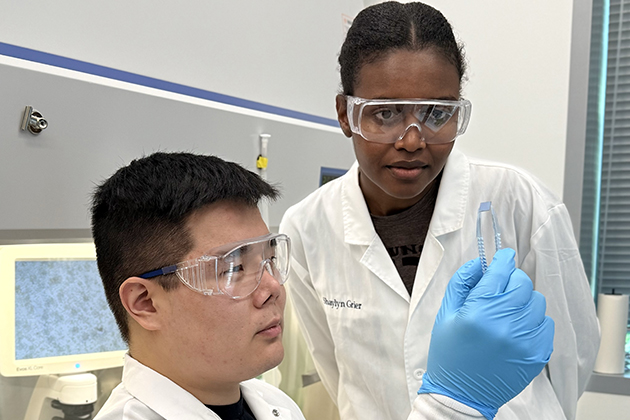
Research scientist Zhonghao (Eric) Dai, left, and graduate research assistant Shaylyn Grier examine a laboratory sample in the Immunotherapy and Cell Engineering Laboratory at the Georgia Institute of Technology. Their research uses microscopic silicon nanowires to deliver therapeutic molecules directly into aging immune cells and restore their youthful function.
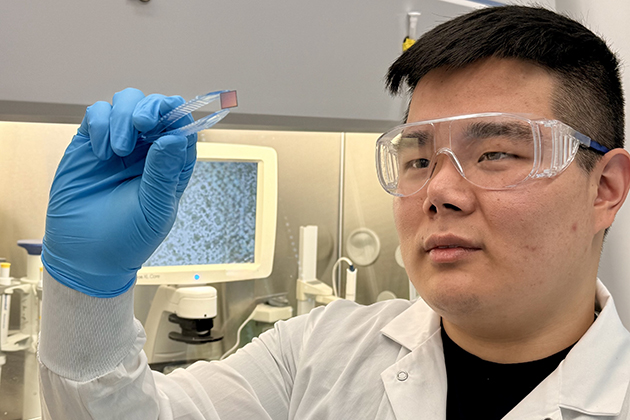
Research scientist Zhonghao (Eric) Dai examines a silicon nanowire wafer developed in the Immunotherapy and Cell Engineering Laboratory. The microscopic nanowires are designed to restore the function of aging immune cells.
Zhonghao Dai is the lead author on the study. Co-authors include Shaylyn Grier, Zhe Zhong, Ameya Dravid, Joscelyn Mejías, and Andrés J. García. Jean L. Koff, associate professor of hematology and medical oncology and director of the Lymphoma Program’s Translational Research Team at Emory’s Winship Cancer Institute, is also a co-author.
This research was supported by the National Institutes of Health, the National Science Foundation, the Curci Foundation, and the Carl Ring Family Endowment.

Writer and Media Contact: Michelle Azriel | mazriel3@gatech.edu
Photos: Courtesy of Ankur Singh
Copyediting: Shelley Wunder-Smith

About Georgia Tech Commercialization
Georgia Tech Commercialization provides a foundation for faculty seeking to translate the Institute's leading-edge research into real-world applications. Commercialization encompasses four pivotal units: CREATE-X, VentureLab, Quadrant-i, and Technology Licensing. These units empower students and faculty to launch startups, provide comprehensive commercialization support, manage intellectual property, and facilitate the transformation of research into viable businesses. The Office of Commercialization’s mission is to provide world-class commercialization services, catalyzing research and innovation to improve the human condition, and enhancing Georgia Tech's position as a leader in technology and entrepreneurial impact.
Paradigm Shifters
At Georgia Tech, cutting-edge research is a constant — it fuels discovery, challenges norms, and inspires progress every day. And occasionally, technologies emerge with the power to fundamentally change life for the better.
These breakthroughs transform how we live, how we work, and even how we heal. Many years and minds in the making, these technologies are the culmination of collaboration, persistence, and ingenuity. These are the paradigm shifters.
Discover these extraordinary innovations as they begin to make their mark on the world. The future is taking shape right here at Georgia Tech.
 Breathtaking Breakthrough: Lung-on-a-Chip Defends Itself
 Target the Tumor. Spare the Body.: A Georgia Tech Researcher Is Working to Send Cancer Drugs to Tumors — and Avoid Healthy Tissue.
 New Wearable Reroutes Lost Sensation, Restores Stability