
Georgia Tech fosters a unique interdisciplinary research environment
At Georgia Tech, innovation flourishes where disciplines converge. By encouraging joint appointments, the Institute breaks down traditional academic silos and enables researchers to revolutionize the energy landscape.
“Energy involves the intersections of society, technology, and policy. To make an impact, you need faculty who can cut across all those sectors,” said Tim Lieuwen, executive director of the Strategic Energy Institute.
Lieuwen explained that cross-college collaborations are vital in creating a clean energy system that benefits everyone. Georgia Tech produces sustainable solutions that are technologically advanced, as well as socially and economically viable, by leveraging its faculty’s diverse expertise.
U.S. News & World Report recently ranked Georgia Tech as the No. 1 public university and No. 3 nationally in energy and fuels research. Lieuwen said this dominance reflects the dynamic research and expertise found at the Institute. “We are not only developing innovative technologies; we are also innovating how we organize ourselves for maximum impact,” he added.
Faculty who hold cross-disciplinary dual appointments are powering Georgia Tech’s pioneering energy research.
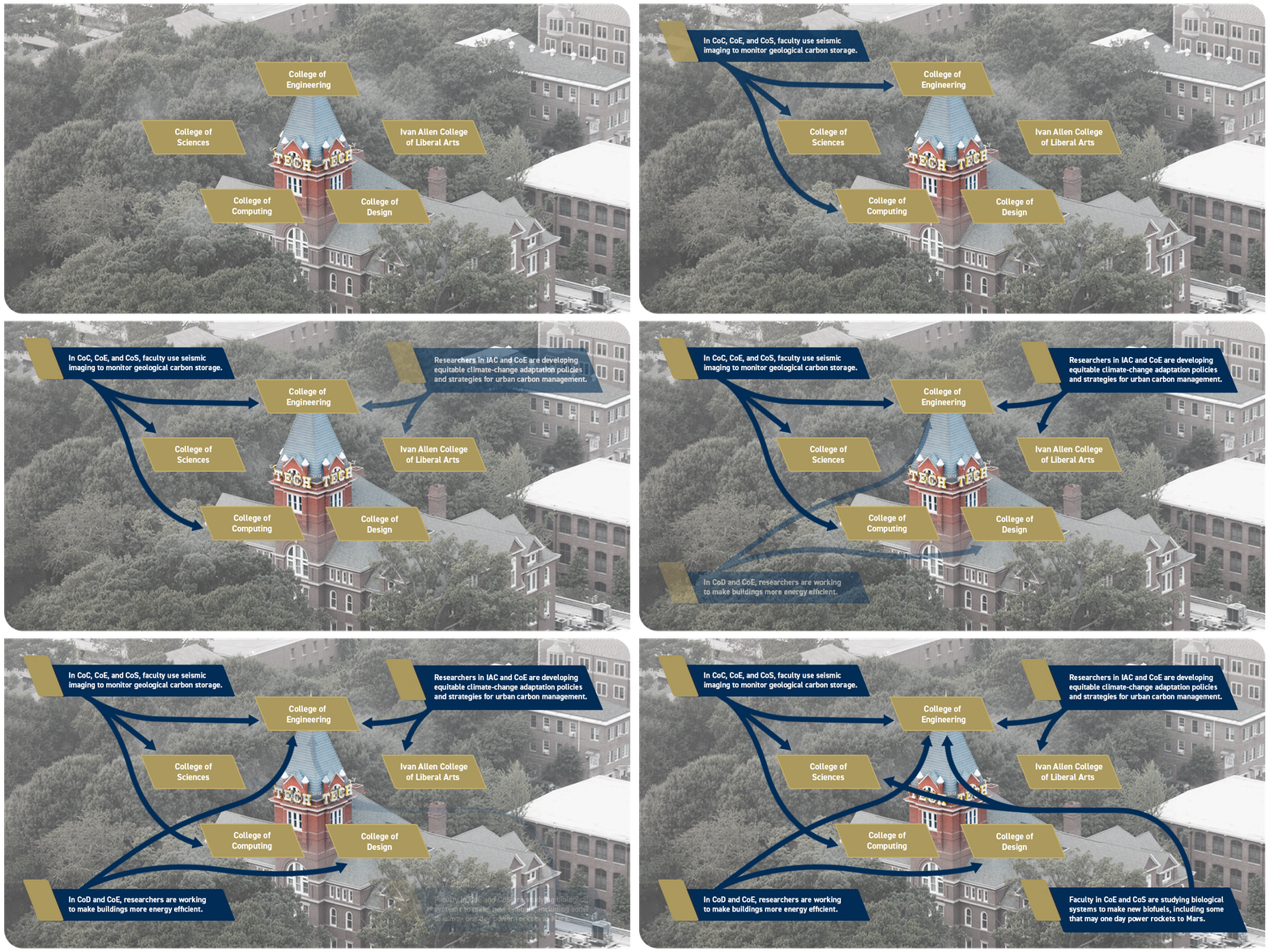
Dual Roles, Singular Vision: Faculty Perspectives on Interdisciplinary Research
Russell Gentry
He holds appointments in the School of Architecture and the School of Civil Engineering.
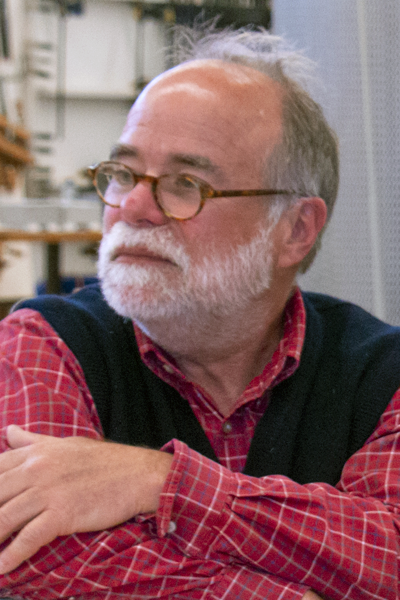
“Architects aren't necessarily scientists and engineers who understand how to make buildings more energy efficient from a fundamental science perspective. Allying myself with folks in civil engineering and in the Strategic Energy Institute is very helpful, because I get to share ideas with people who don't think the same way I do. The boundaries between disciplines aren’t nearly as distinct as they once were. The problems we're struggling with are more complex and harder to solve within one’s narrow slice of the world. So, this cross-pollination is quite powerful.”
Valerie Thomas
She holds appointments in the H. Milton Stewart School of Industrial and Systems Engineering and the School of Public Policy.
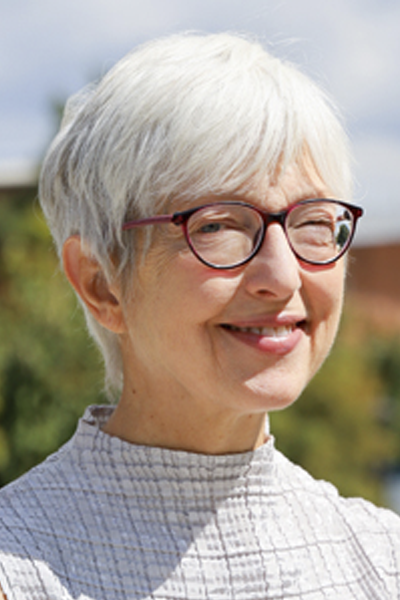
“I approach problems from a technical and quantitative basis. However, my research is strongly related to policy. I work with people who make alternative fuels. If we want to fly airplanes using those fuels, my job in the quantitative area is to calculate the impact on the environment. My dual appointment creates different ways of asking questions and looking at concepts through a unique lens. It’s really a more rounded perspective.”
Beril Toktay
She is interim executive director of the Brook Byers Institute for Sustainable Systems, professor of operations management and Brady Family Chair in the Scheller College of Business, and the faculty director for the Ray C. Anderson Center for Sustainable Business.
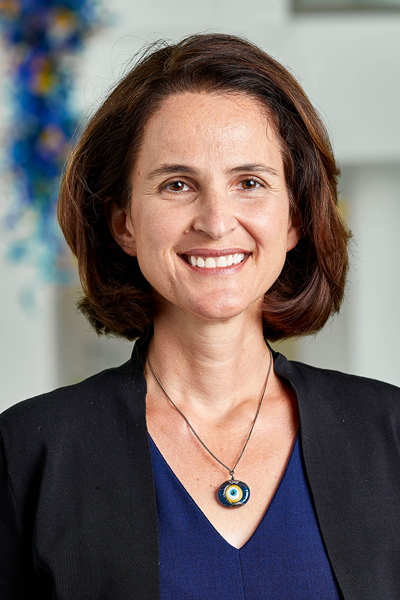
"In the context of the Brook Byers Institute for Sustainable Systems, interdisciplinary work is essential. Our collaborative approach — integrating business models with public policy and economics — allows us to address complex challenges like advancing clean energy solutions. This interdisciplinary spirit is at the core of our research and is pivotal in driving impactful innovations."
Felix Herrmann
He holds appointments in the schools of Earth and Atmospheric Sciences, Computational Science and Engineering, and Electrical and Computer Engineering.
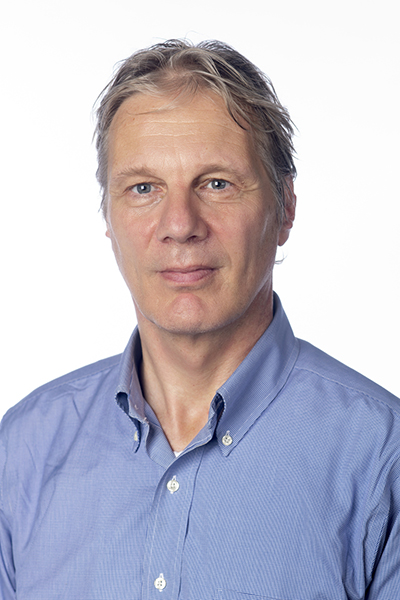
“I'm basically a computational seismologist. I do a lot of monitoring of geological carbon storage. To tackle these complicated problems in the Earth sciences, we need mathematics, statistics, and machine learning. So, without a strong background in these more abstract mathematical areas, I would not have been able to do what I've accomplished in my research.”
Micah Ziegler
He holds appointments in the School of Chemical and Biomolecular Engineering and the School of Public Policy.
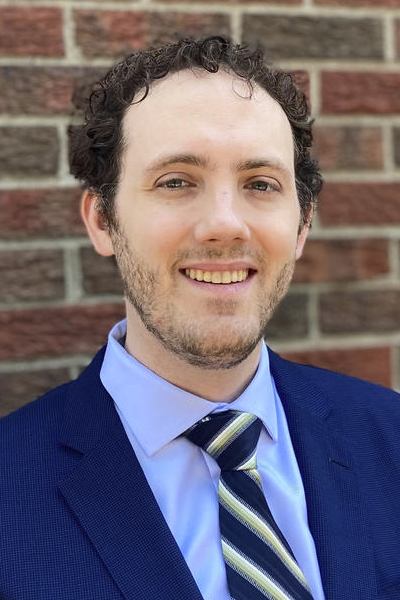
“The joint appointment helps me collaborate broadly, and thus enhances the research I do. It also provides institutional recognition that this type of work is important. I am interested in figuring out how we can accelerate the improvement and deployment of technologies that can help mitigate climate change and address other environmental challenges. To do this, I draw on everything from chemistry, chemical engineering, and material science to economics, public policy, and business. This work is not something I can do in a vacuum; I have to work with great collaborators because this type of research requires lots of expertise — more than any one person can have.”
Pamela Peralta-Yahya
She holds appointments in the School of Chemistry and Biochemistry and the School of Chemical and Biomolecular Engineering
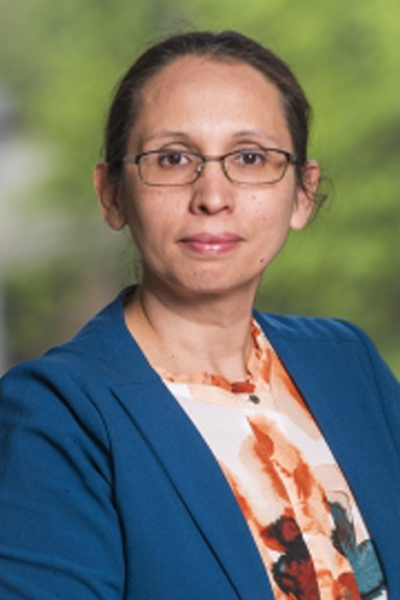
“I chose to come to Tech as an assistant professor with joint appointments because this allows me to work on emerging problems at the interface of science and engineering that do not squarely fit into either college. My work would not be possible if my research group did not comprise chemists, biochemists, chemical engineers, bioengineers, and bioinformaticians. Faculty with dual appointments enrich members of those schools working in similar or complementary research. They support building communities around emerging research areas that may not have a large representation in either school.”

Writer: Michelle Azriel
Media Contact: Shelley Wunder-Smith | shelley.wunder-smith@research.gatech.edu
Video: Christopher McKenney
Animation: Raul Perez