
An interdisciplinary research initiative advances practical energy solutions to strengthen U.S. national security.
Energy and national security have long been connected. Reliable and affordable energy access is vital to power the nation’s economy, as well as military and critical infrastructure. As new energy technologies emerge and cyber threats evolve, anticipating and mitigating potential disruptions to energy infrastructure is essential to national security.
Georgia Tech’s energy and national security initiative, funded by the Strategic Energy Institute (SEI) and the Georgia Tech Research Institute (GTRI), was created to address these challenges. The initiative accelerates energy research that proactively identifies vulnerabilities, protects against cyber threats, and strengthens the resilience of U.S. infrastructure resources.
“Investing in energy and national security research was a strategic decision because we recognized these issues shape the nation’s future for decades to come,” said Yuanzhi Tang, SEI executive director. “This initiative reflects Georgia’s leadership in anticipating emerging challenges and mobilizing expertise to address them.”
Military readiness requires reliable energy access. Our research could help strengthen the resilience of fuel supply networks and improve decision-making during emergencies and unexpected disruptions."
– Comas Haynes
Building an Interdisciplinary Research Foundation
The initiative, launched in 2024, has supported three cohorts of interdisciplinary research teams from Georgia Tech academic units and GTRI.
During the first year, the initiative funded six research teams. Research topics included climate-related threats affecting the electric grid, supply chain security, securing advanced nuclear technologies, renewable energy integration and reliability, and grid cybersecurity.
“U.S. energy systems are largely privatized, while national security remains a public good. This makes it imperative to identify new mechanisms that bridge commercial interests and national security needs,” said John Tien, SEI-GTRI distinguished external fellow, distinguished professor of the practice in the Sam Nunn School of International Affairs and the School of Cybersecurity and Privacy, and former deputy secretary of the U.S. Department of Homeland Security.
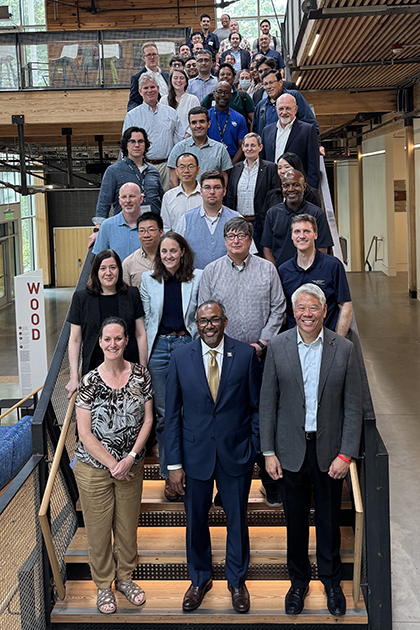
Group photo of the SEI team and the funded team members at the closeout of phase one in June 2025.
“Through the energy and national security initiative, the funded teams are developing technologies and tools for the energy sector that enhance the security and resilience of the power grid, safeguard advanced nuclear systems, and support defense-critical operations,” Tien added. He is a senior advisor to the participating teams.
Moving Research Toward Practical Solutions
During the initiative’s second phase, seven teams received up to $500,000 to move promising ideas from early-stage research toward practical solutions. Their work addressed challenges such as protecting electricity, water, and communications systems from cyber and physical threats; mitigating severe weather disruptions to the power supply; strengthening battery and critical mineral supply chains for defense and energy technologies; and ensuring reliable energy for military missions in disrupted or hostile environments.
Expanding Collaboration and Impact
The initiative’s first two phases strengthened collaborations among Georgia Tech researchers. The third phase focuses on building new collaborations that engage government, industry, and national security partners. Selected projects prioritize generating insights for policymakers and industry leaders, while laying the groundwork for teams to expand their research, pursue larger federal funding opportunities, and collaborate with national labs and other universities.
“The third-phase projects were selected through a highly competitive process that evaluated their relevance to national security priorities, stakeholder impact, practical applications, and potential for real-world implementation,” said Gary McMurray, a GTRI principal research engineer and an advisor to the funded teams. “The selected teams demonstrated clear strategies, meaningful deliverables, and strong foundation for future impact.”
Better preparation can help utilities, policymakers, and emergency managers respond more effectively during disruptions, strengthening the reliability and security of our energy infrastructure."
– Scott Duncan
Three Projects From the Initiative’s Second Phase
Securing the Grid Through Cryptography
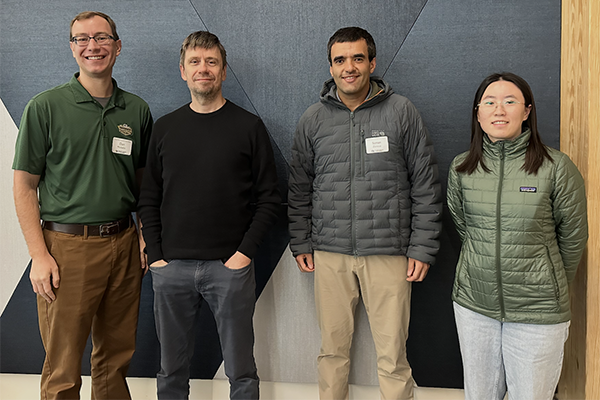
Left to right: Dan Molzahn, Vladimir Kolesnikov, Saman Zonouz, and Youngyu Xie (graduate student).
Power grids, water systems, and communication networks are essential to everyday life. The companies that operate these systems often need to share real-time information about operations and conditions that could affect other systems. Sharing this information can help operators make better decisions and prevent disruptions to consumers, but it can also create cybersecurity and privacy risks if sensitive data is exposed or misused.
Dan Molzahn, an associate professor in the School of Electrical and Computer Engineering, and his team are addressing the vulnerability by combining expertise in power systems, cybersecurity, and cryptography. Their project has developed tools that could allow utilities to coordinate and make decisions without exposing confidential data. Molzahn says, “Our team’s work could enable more secure coordination among utilities, helping safeguard the electric grid and support a more reliable energy future.”
Project Title: Resilient Critical Infrastructures via Provably Secure Control Algorithms
Principal Investigator: Dan Molzahn, School of Electrical and Computer Engineering.
Team: Saman Zonouz, School of Cybersecurity and Privacy; Vladimir Kolesnikov, School of Cybersecurity and Privacy; and Samuel Litchfield, GTRI.
Planning for Fuel Supply Lines
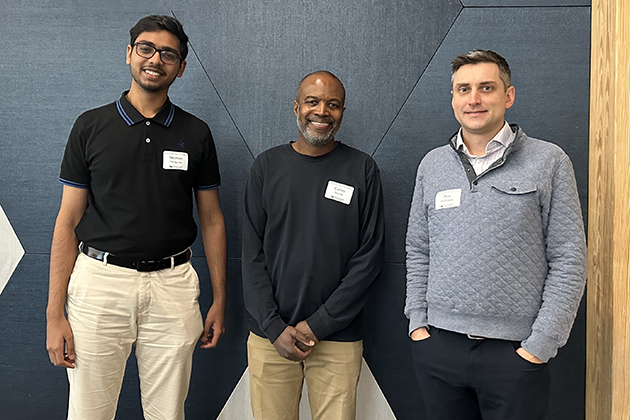
Left to right: Nachiket Suyamindra Nadgauda (graduate student), Comas Haynes, and Matt McDowell.
Severe weather, supply chain disruptions, or attacks by adversaries can interrupt fuel deliveries and complicate military operations. Comas Haynes and his team are developing tools to help decisionmakers anticipate and respond more effectively to these disruptions. “Military readiness requires reliable energy access,” Haynes says. “Our research could help strengthen the resilience of fuel supply networks and improve decision-making during emergencies and unexpected disruptions.”
Their project focuses on improving how military planners manage fuel supplies and energy resources in multiple locations when conditions change rapidly.
Project Title: Robust Energy Systems Planning by Way of Novel Systems Engineering (RESPoNSE)
Primary Investigator: Comas Haynes, GTRI.
Team: Matt McDowell, George W. Woodruff School of Mechanical Engineering and School of Materials Science and Engineering; and Mathieu Dahan, H. Milton Stewart School of Industrial and Systems Engineering.
Simulating Grid Disruptions Before They Happen
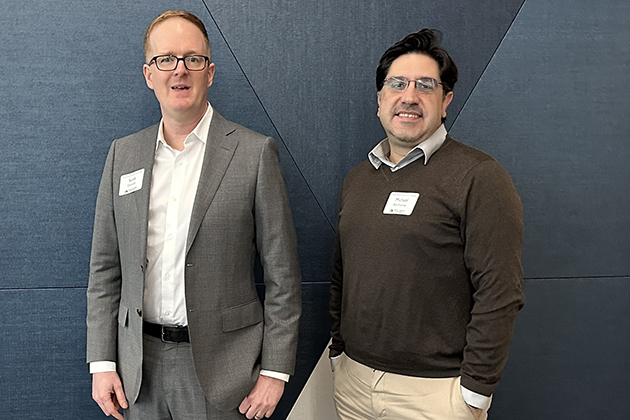
Left to right: Scott Duncan and Michael Balchanos.
Maintaining electrical grid reliability can be challenging with extreme weather, rising energy demand, and cybersecurity threats. Utility companies and policymakers need better ways to anticipate and prepare for potential disruptions.
Researchers from Georgia Tech's Daniel Guggenheim School of Aerospace Engineering and the Sam Nunn School of International Affairs are studying electrical grid vulnerabilities and how interconnected systems can affect one another. The team is developing an interactive tool using real-world data that will help stakeholders visualize potential effects on the grid and identify ways to improve its resilience. Scott Duncan, one of the primary investigators, says, “Better preparation can help utilities, policymakers, and emergency managers respond more effectively during disruptions, strengthening the reliability and security of our energy infrastructure.”
Project Title: Energy Infrastructure Security and Risk Assessment Through Interactive Wargaming.
Primary investigators: Dimitri Mavris, Daniel Guggenheim School of Aerospace Engineering; Scott Duncan, Guggenheim School; and Michael Balchanos, Guggenheim School.
Team: Adam Stulberg, Sam Nunn School of International Affairs; Jenna Jordan, Nunn School; and Margaret Kosal, Nunn School.
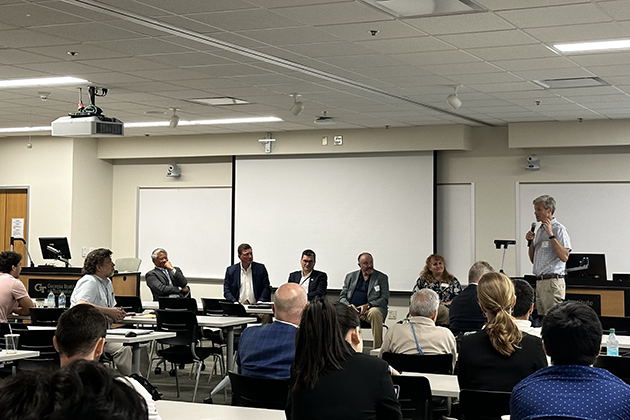
Tim Lieuwen during the kickoff workshop on July 16, 2024. Panel members include John Tien, Tom Fanning, Jim Hudgens, General Phil Breedlove, and Maggie Kosal.
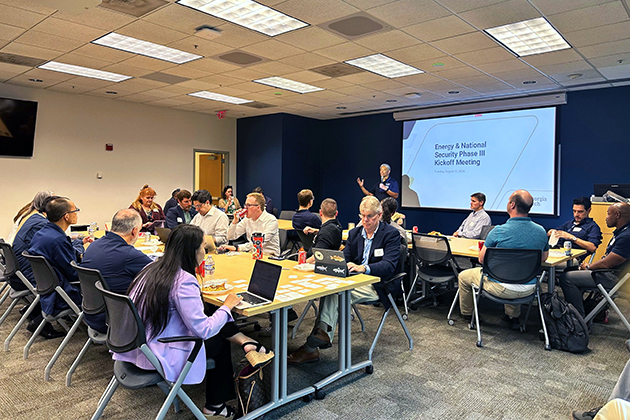
John Tien, senior advisor to the funded teams, speaks at the phase three kickoff meeting in August 2026.
 Writer: Priya Devarajan
Media Contact: Shelley Wunder-Smith | shelley.wunder-smith@research.gatech.edu
Photos: Courtesy of Georgia Tech
Video: Sean McNeil and Kristie Villejoint
Copyediting: Stacy Braukman
