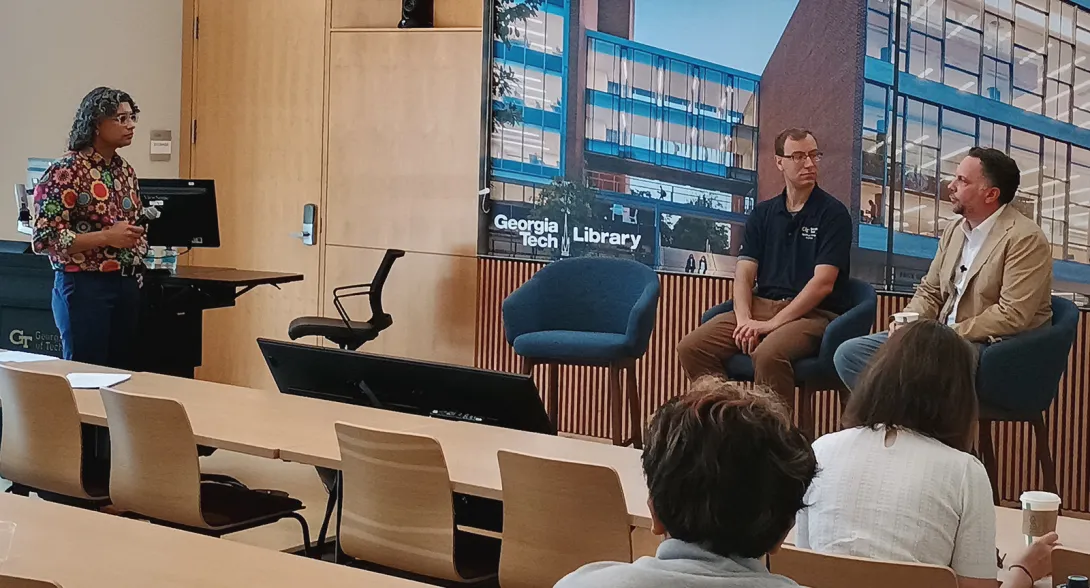
Artificial intelligence is reshaping how society manages complex systems. Its potential to strengthen critical infrastructure is receiving growing attention. The first Brook Byers Institute for Sustainable Systems (BBISS) Insights Series event of the fall semester explored how AI, digital twins, and advanced data analytics are being applied to improve the resilience of energy and water systems. The discussion brought together Dan Molzahn, associate professor in the School of Electrical and Computer Engineering, and Clint Loe, senior digital consultant at Trinnex. Together, they highlighted how AI is beginning to help utilities and communities respond to growing pressures on infrastructure.
Opening the event, Ameet Pinto, BBISS faculty director for Interdisciplinary Research and Collaboration, noted that many critical infrastructure systems are facing unprecedented challenges. Aging assets, climate-related impacts, severe weather events, and growing demands on energy and water systems are testing the resilience of infrastructure that communities depend on. At the same time, infrastructure systems increasingly generate vast amounts of operational data through sensors, meters, and monitoring technologies. The opportunities for AI technologies to transform this data into actionable information and inform policy are just beginning to be explored.
Turning Infrastructure Data into Action
Molzahn's presentation focused on the electric grid and the ways AI-enhanced optimization can support smarter infrastructure management. He described the ongoing transition from large, centralized power plants to more distributed systems that incorporate renewable energy, battery storage, electric vehicles, and other distributed energy resources. While these technologies create opportunities for cleaner and more resilient energy systems, they also introduce new layers of complexity for planners and operators.
Among the examples Molzahn shared was research examining how electric vehicle charging could affect emergency evacuations during disasters such as wildfires. Traditional evacuation planning focuses on optimizing transportation networks for rapidly moving vehicles away from danger. However, with more EVs on the roads, consideration must be given to ensure that EVs will have sufficient charge to travel a safe distance when an evacuation order is given without overloading the electrical grid. By linking transportation and power-system models, researchers are demonstrating how planning strategies can significantly reduce stress on infrastructure while supporting faster evacuations.
Wildfire mitigation was another major focus. In recent years, several devastating wildfires have been linked to electricity infrastructure, prompting utilities to increasingly rely on Public Safety Power Shutoffs during high-risk conditions. Molzahn discussed how machine learning and optimization tools can help utilities make these difficult decisions more quickly by balancing ignition risk and minimizing customer outages.
He also highlighted emerging cybersecurity concerns associated with the trend towards more distributed energy resources. Decentralized and digitally connected energy infrastructure, such as internet-connected solar and battery systems, can be more vulnerable than legacy centralized energy sources. AI is playing an important role in identifying potential vulnerabilities.
Practical Applications in the Water Sector
Loe offered examples of how AI is already being deployed by water utilities and municipalities. One pressing challenge involves identifying lead service lines. New federal regulations require utilities to locate and replace lead service lines, but many organizations lack complete records identifying pipe materials. Loe described how utilities can combine statistical sampling and machine learning models to estimate which service lines are most likely to contain lead. Rather than excavating thousands of suspect locations, utilities can use AI to narrow the search, reducing costs while still meeting regulatory requirements and maintaining confidence in the results.
Loe also explained the overarching challenges of maintaining aging water infrastructure. Utilities across the country have significant backlogs of aging pipes that need replacement but lack the resources to replace every asset at once. Machine learning models can predict which pipes are most likely to fail, while optimization tools can prioritize and package disparate replacement jobs into efficient and practical construction projects for which funding can more easily be obtained. This approach allows organizations to move beyond simple age-based replacement strategies and incorporate factors such as risk, community priorities, paving schedules, traffic impacts, and equity considerations.
The Human Element
Although the discussion centered on AI, both speakers repeatedly emphasized that people remain critical to successful implementation. Panelists and audience members also discussed the importance of keeping "humans in the loop" since utility systems directly affect public safety. AI may generate recommendations, identify risks, or highlight priorities, but engineers, operators, and planners should remain responsible for evaluating those recommendations and making final decisions.
Workforce development emerged as another important theme. Both the water and energy sectors face challenges replacing experienced workers as many long-time professionals approach retirement. AI offers opportunities to preserve and transfer institutional knowledge that could enable smaller workforces, but both speakers stressed that future professionals will need expertise that spans engineering, data science, computing, and domain knowledge.
Looking Ahead
The discussion demonstrated that infrastructure resilience is increasingly both a physical and digital challenge. From wildfire management and grid reliability to lead service line replacements and predictive maintenance, AI and digital twins are enabling new opportunities to improve how critical systems are planned, operated, and maintained. However, better algorithms alone will not be enough to counter our aging infrastructure, climate impacts, cybersecurity risks, and rising resource demands. The thoughtful integration of advanced tools and human expertise and judgment built on a foundation of public trust offers the most effective solutions for keeping essential systems running.
Next in the Insights Series
On October 14, BBISS will hold the next Insights Series at the John Lewis Student Center in the Rafael Bras Meeting Room. The topic will be “AI for Climate Resilience.” This session will explore how artificial intelligence is being leveraged to address pressing sustainability challenges and strengthen communities, infrastructure, and environmental systems in a changing climate. The program will open with an update from Jennifer Chirico on the Georgia Tech Climate Action Plan. Presentations from leading researchers will follow, including Suhas Jain, Ali Sarhadi, Abigale Stangl, and Iris Tien, followed by an interactive panel discussion. Breakfast will be served. Registration is required.
News Contact
Brent Verrill, Research Communications Manager, BBISS