Apr. 28, 2026
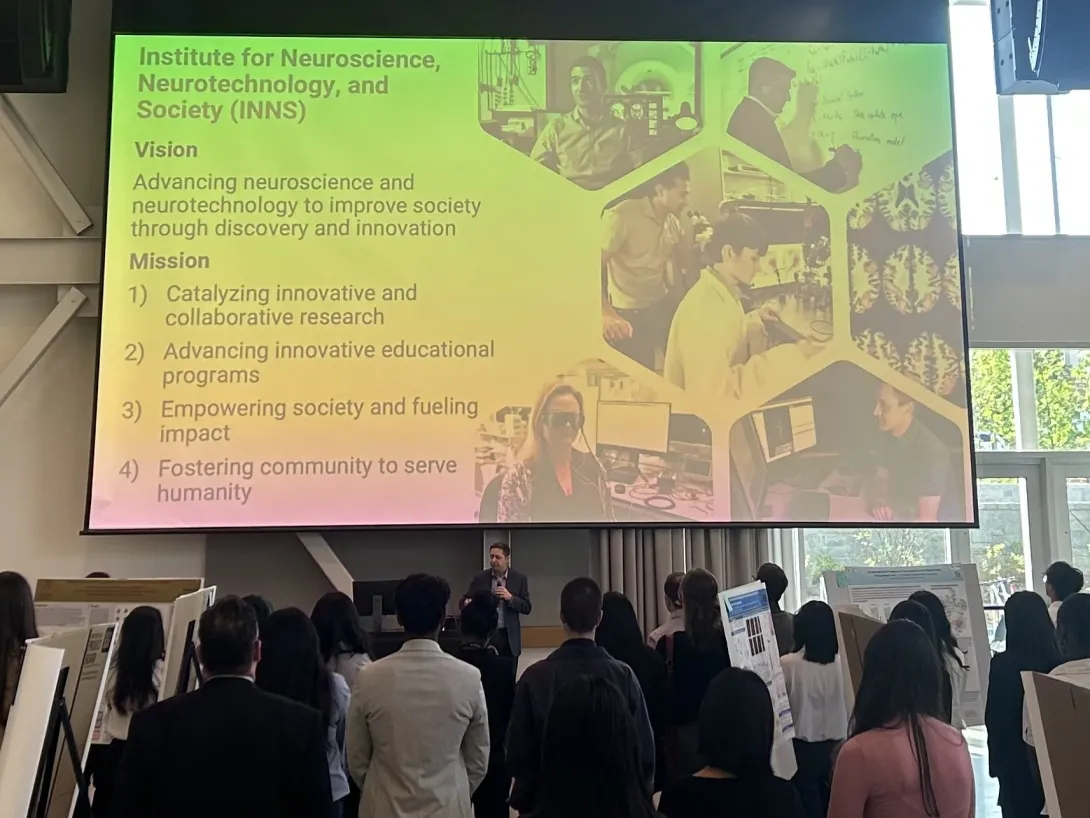
Chris Rozell is giving the opening remarks at the ATL Neuro Networking and Symposium Night.
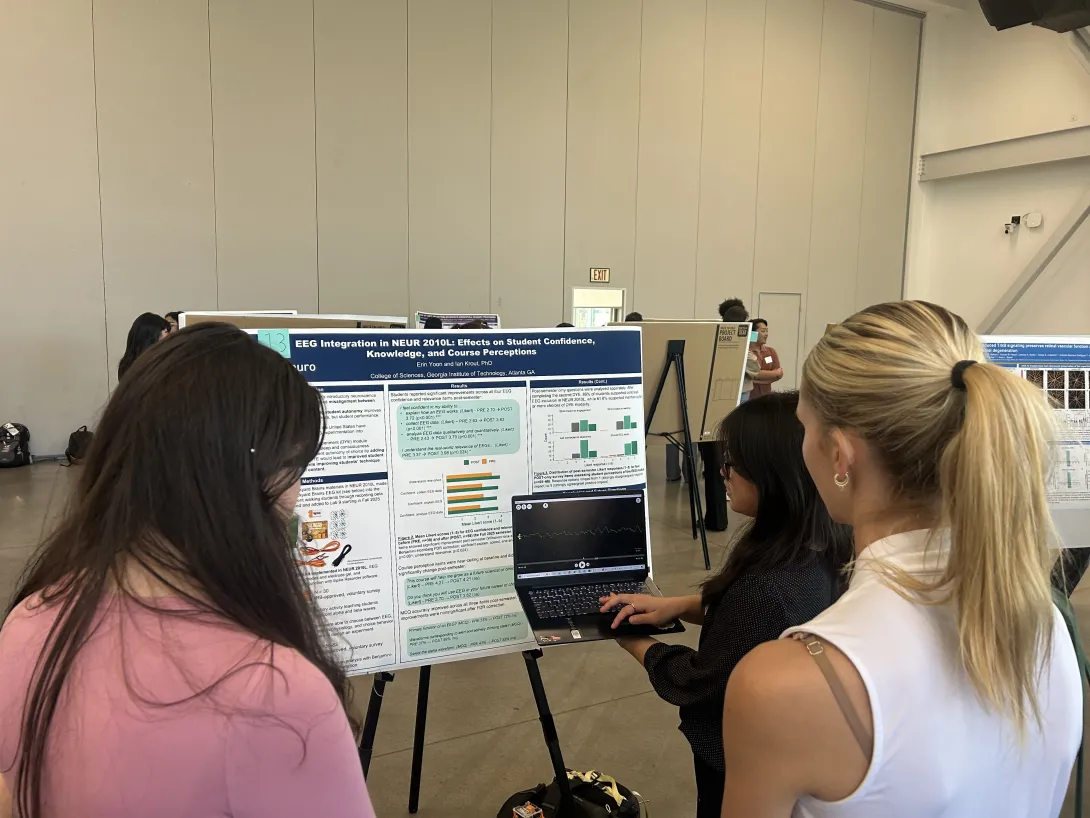
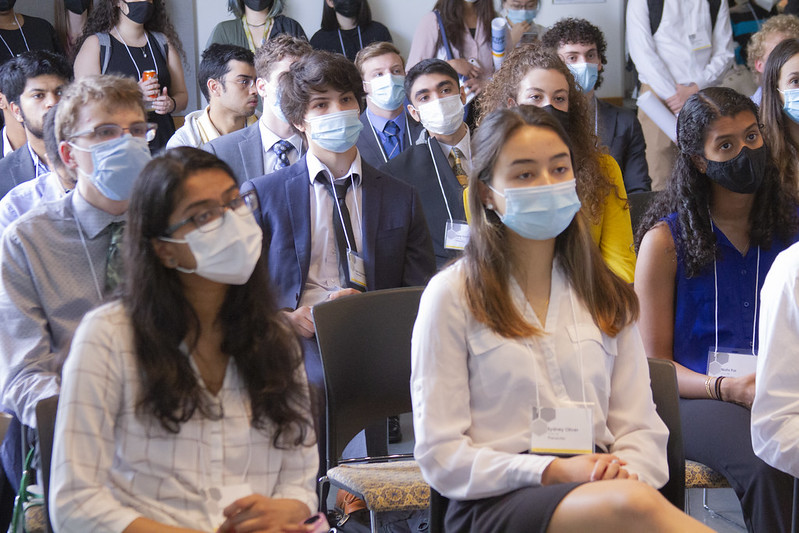
A group of students is discussing a poster, and the presenter is giving an example during the first poster session.
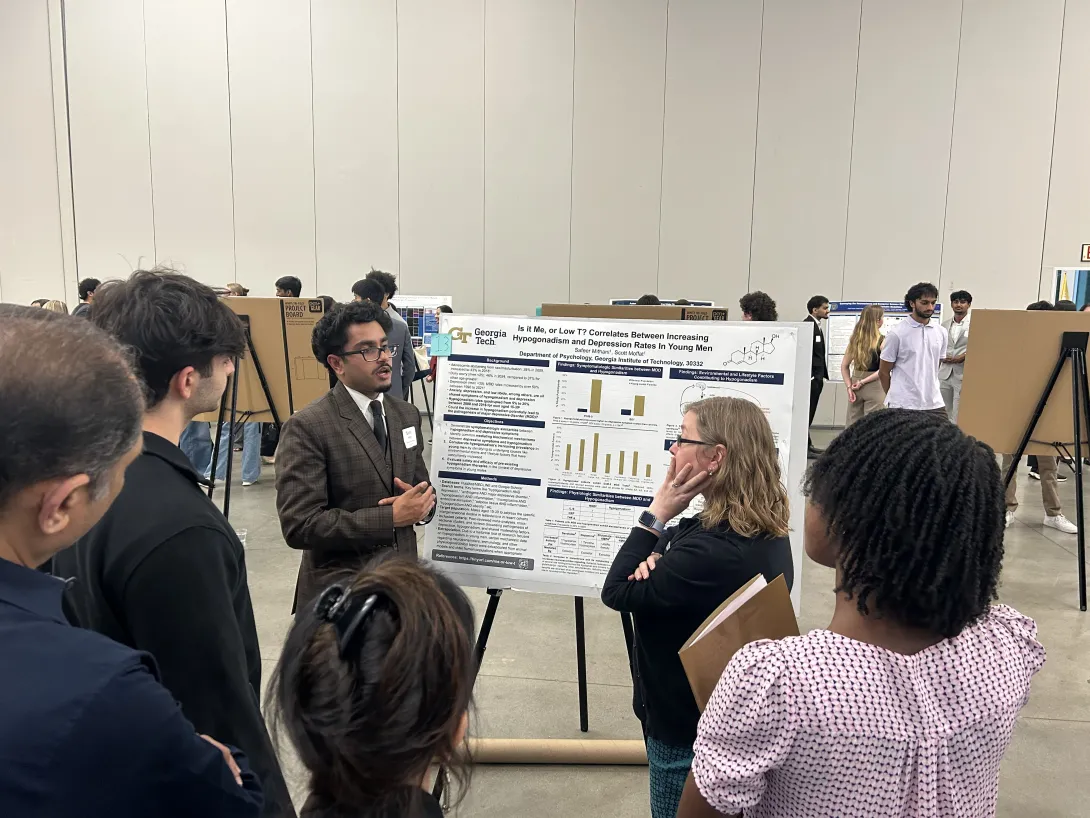
A group of students and faculty is discussing a poster during the second poster session.
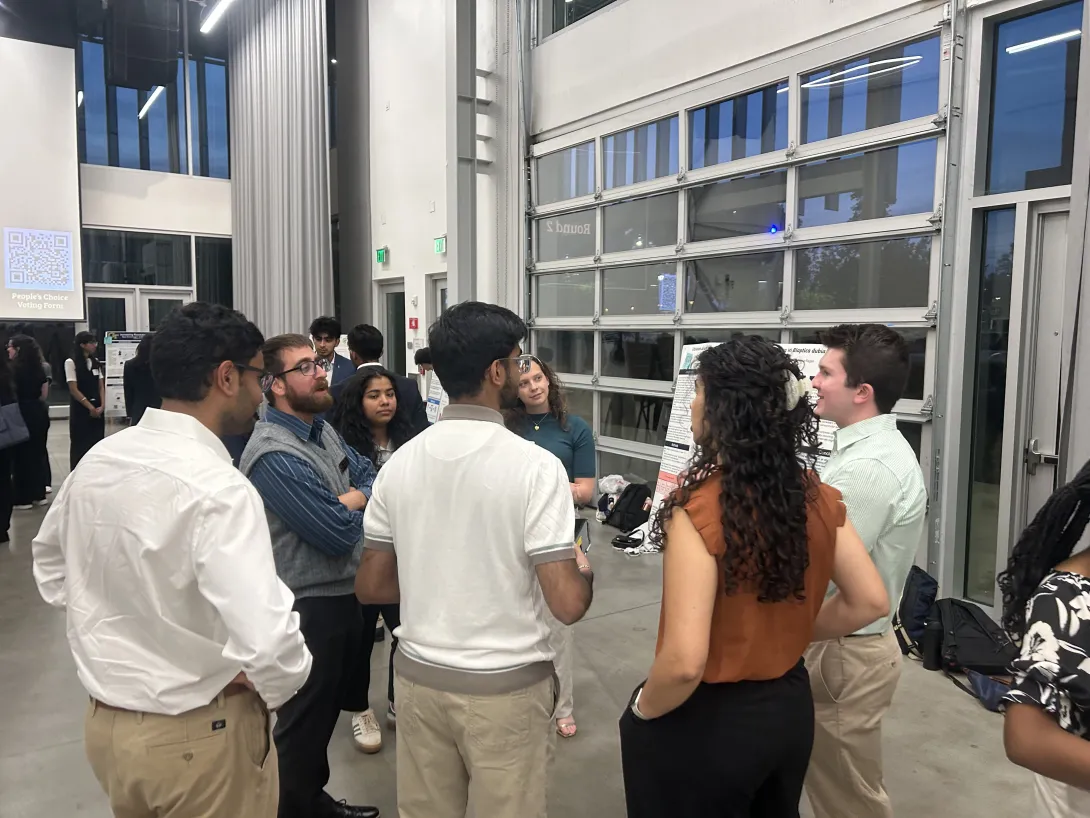
A group of students and faculty is discussing a capstone poster during the second poster session.
At Georgia Tech, undergraduate students are an integral part of the research enterprise – particularly when it comes to neuroscience. That dedication to undergraduate research was on full display on April 8, when more than 100 students from Atlanta-area universities gathered for the annual ATL Neuro Networking and Symposium Night.
This student-run event, hosted by the Georgia Tech Student Neuroscience Association (SNA) and co-sponsored by the Institute for Neuroscience, Neurotechnology, and Society (INNS) and the Neuroscience Undergraduate Program at Georgia Tech, aimed to bring together students and faculty from the broader Atlanta neuroscience community for an evening of data-blitz talks showcasing faculty research, undergraduate poster presentations, and catered networking.
“Our goal was to bridge the gap between Atlanta’s institutions and showcase the diversity of undergraduate research,” says Harshin Vijay, symposium director of SNA. “By bringing these groups together through SNA, we’re fostering an ecosystem where the next generation of scientists can exchange ideas and build collaborative networks essential for future innovation."
The impact of undergraduate neuroscience research is “more than bench to bedside,” said INNS Executive Director Chris Rozell at the event. “It’s about advancing neuroscience and neurotechnology to improve society through discovery and innovation. Undergraduate research catalyzes innovation – invigorating and advancing educational programs through collaboration that empowers society – fueling impact and fostering the community of next-generation scientists.”
Featuring more than 40 undergraduate posters, research topics ranged anywhere from the impact of music on associative memory to the role of taste projection neurons in Drosophila. Some students even examined their own coursework, either as a TA or their involvement with capstone research.
“There are neuroscientists in every College at Georgia Tech, and we have undergraduate neuroscience students performing research all over campus and in the broader Atlanta neuroscience community,” says Katharine McCann, the director of Undergraduate Research for Georgia Tech’s neuroscience program. “Events like this bring those students together to learn from each other and broaden their networks. It is exciting to see so many students passionate about their research.”
Four posters were awarded for their work:
Best Poster Design: “Role of Taste Projection Neurons in Drosophila Taste Processing”
- Hanti Jiang, Emory University
Best Presentation: “Neuroscience and Computer Science Roots of Pattern Recognition”
- Rishi Polepally, Georgia Tech
- Aryan Kumar, Georgia Tech
- Vedanth Natarajan, Georgia Tech
Best 4001 Group: “Evaluating Cognitive Engagement in AI-Generated VS. Human-Created Educational Content”
- Hannah Ammari, Georgia Tech
- Shobini Palaniappan, Georgia Tech
- Rayhan Quraishi, Georgia Tech
- Aryan Shah, Georgia Tech
- Divya Tadanki, Georgia Tech
People's Choice Award: “Vibration as an effective facilitation of sensorimotor learning in Blaptica dubia cockroaches”
- Diana Sethna, Georgia Tech
- Jacob Hayes, Georgia Tech
- Ellie Kate Watson, Georgia Tech
- Arya Oak, Georgia Tech
Esha Panse, Georgia Tech
- Hersh Mathur, Georgia Tech
News Contact
Writer: Hunter Ashcraft
Communications Student Assistant
Institute for Neuroscience, Neurotechnology, and Society
Media Contact: Audra Davidson
Research Communications Program Manager
Institute for Neuroscience, Neurotechnology, and Society