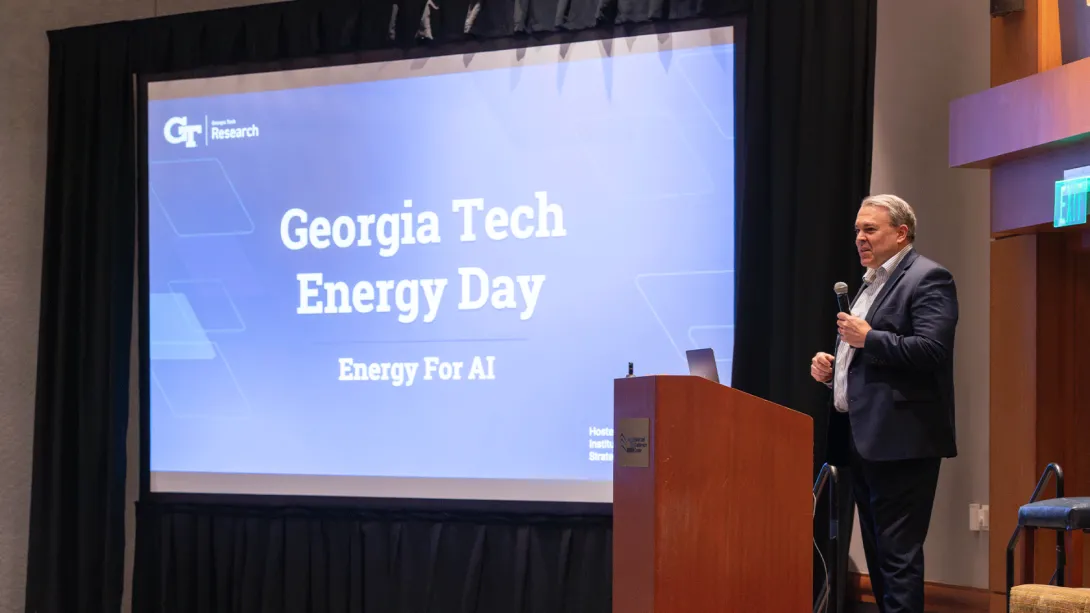
Eric Vogel welcomed attendees to Energy Day.
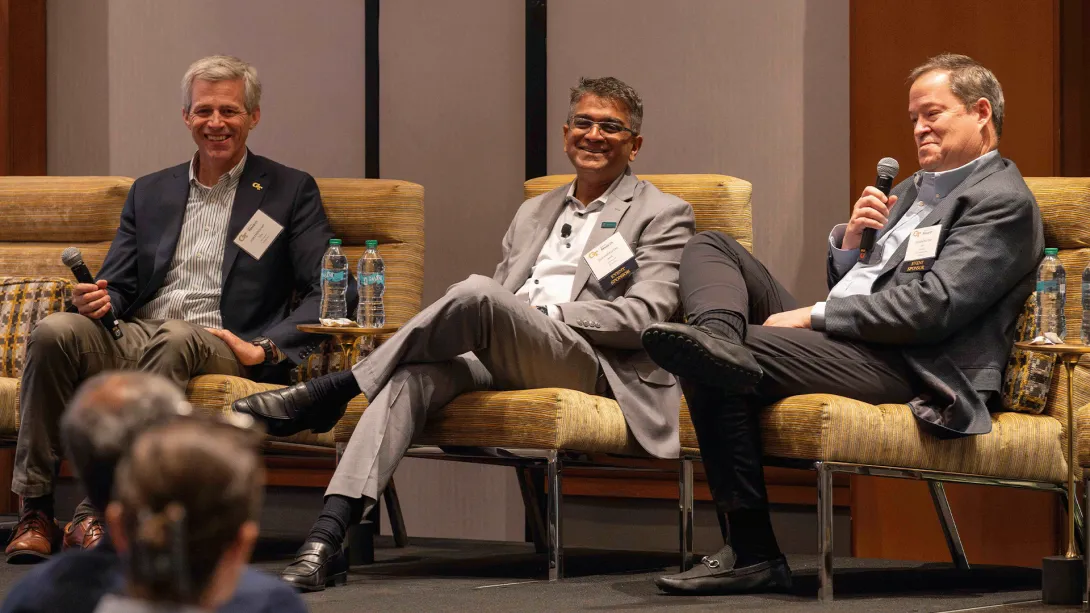
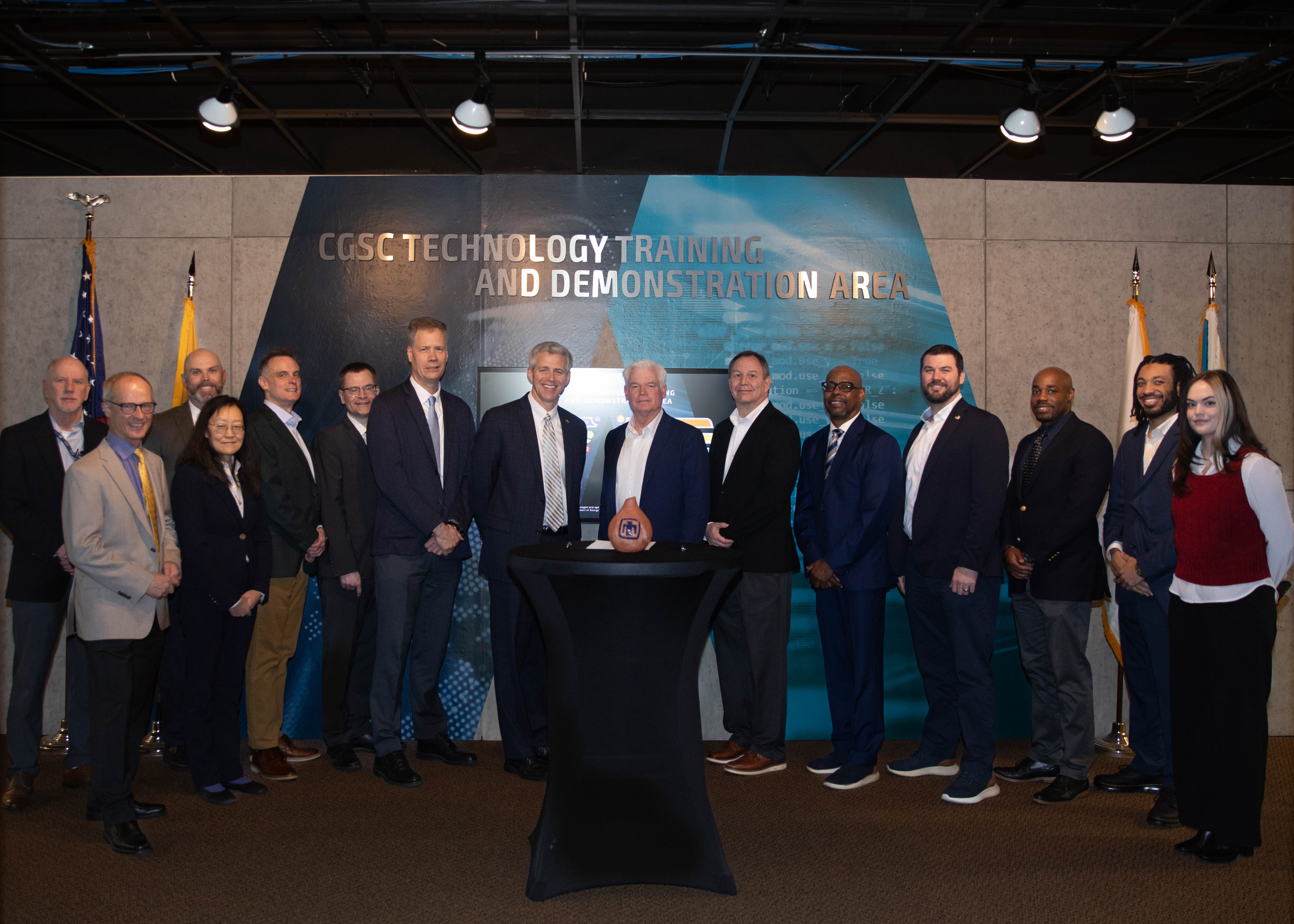
Georgia Tech EVPR Tim Lieuwen (left) with Amit Kulkarni (center) and Jim Walsh (right), both speakers from GE Vernova.
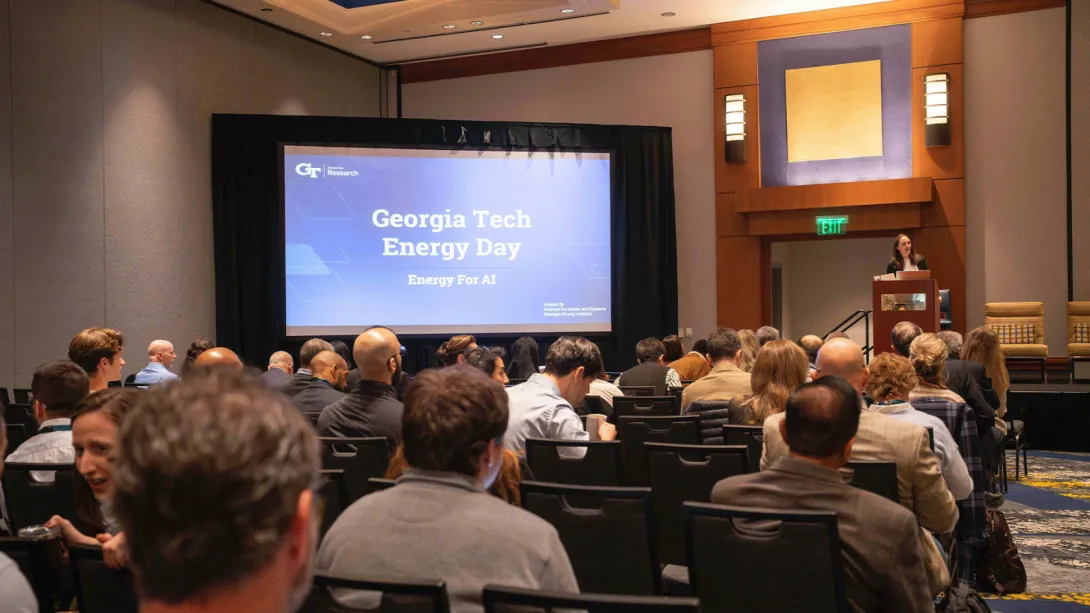
Marta Hatzell served as Energy Day emcee.
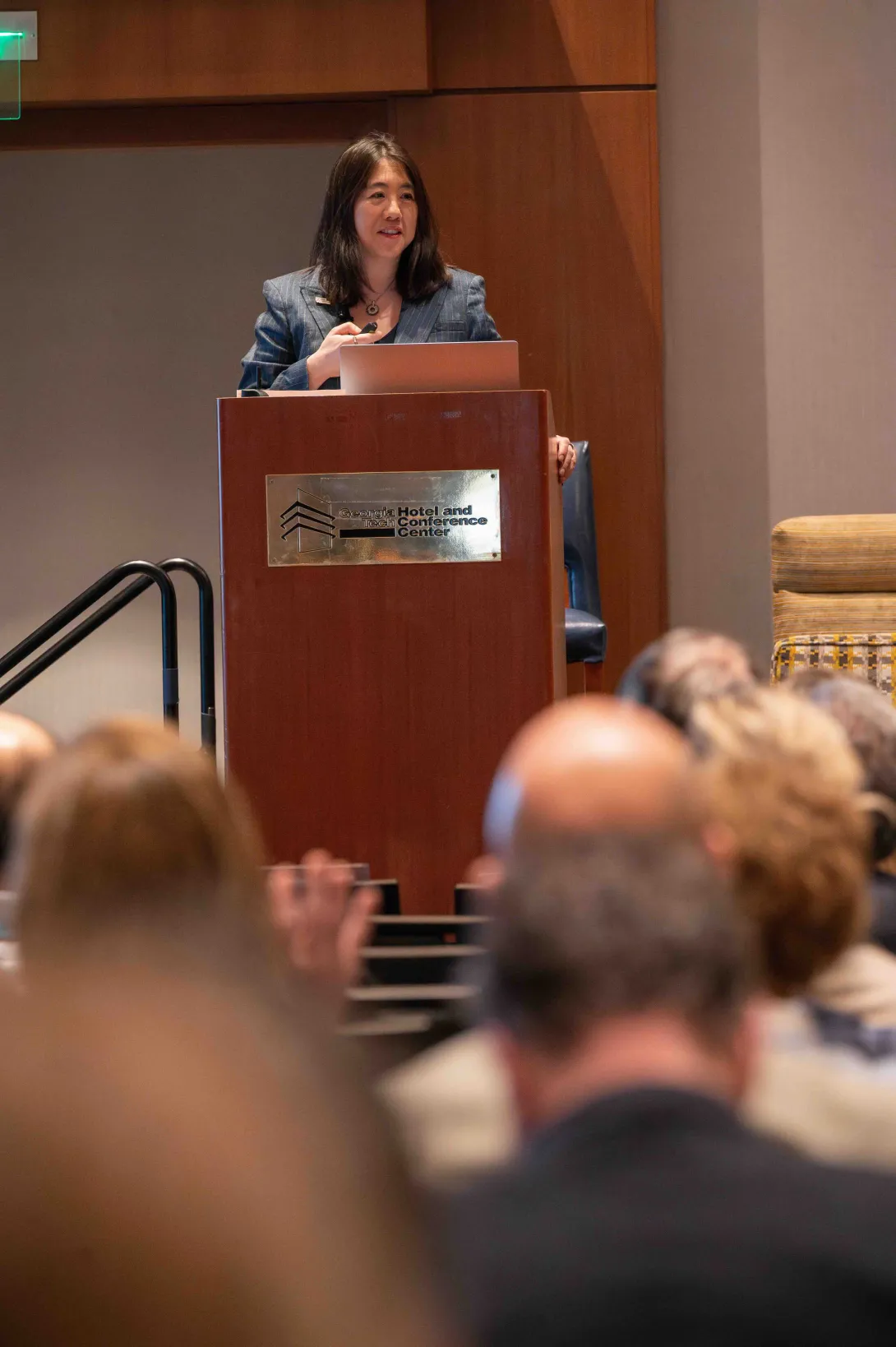
Vanessa Chan gave the keynote presentation at Energy Day.
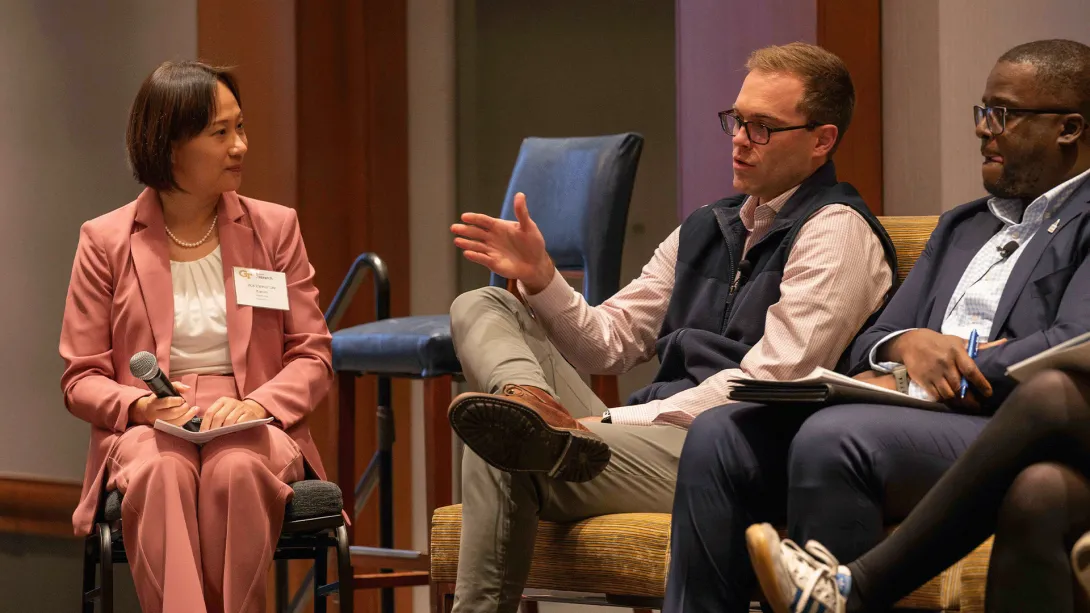
Yaunzhi Tang (left) moderated the Beyond Scarcity: Building Resilient Critical Materials Supply Chains for Energy Systems panel.
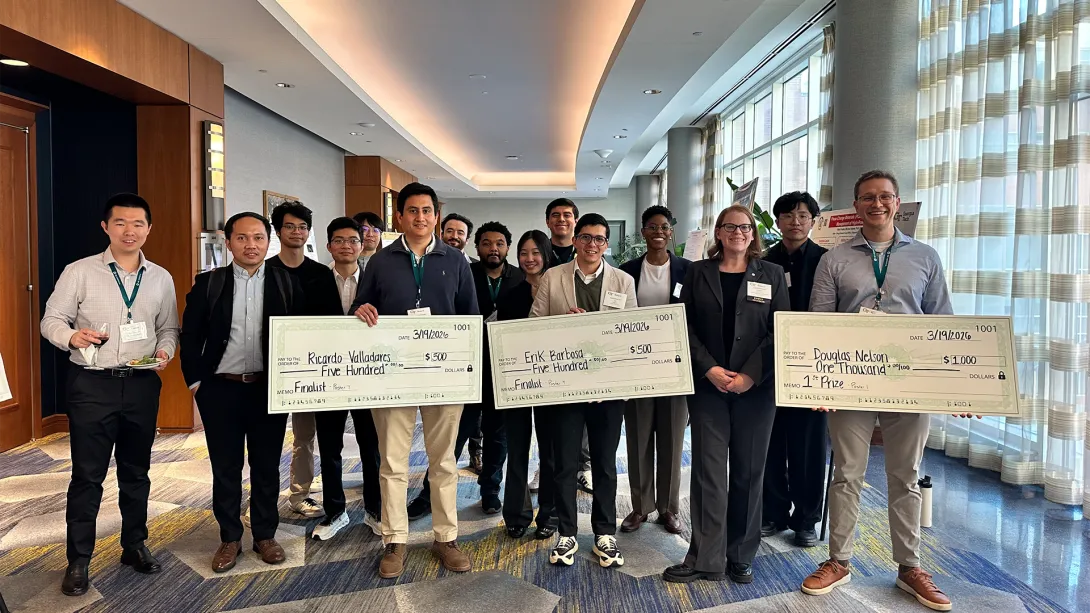
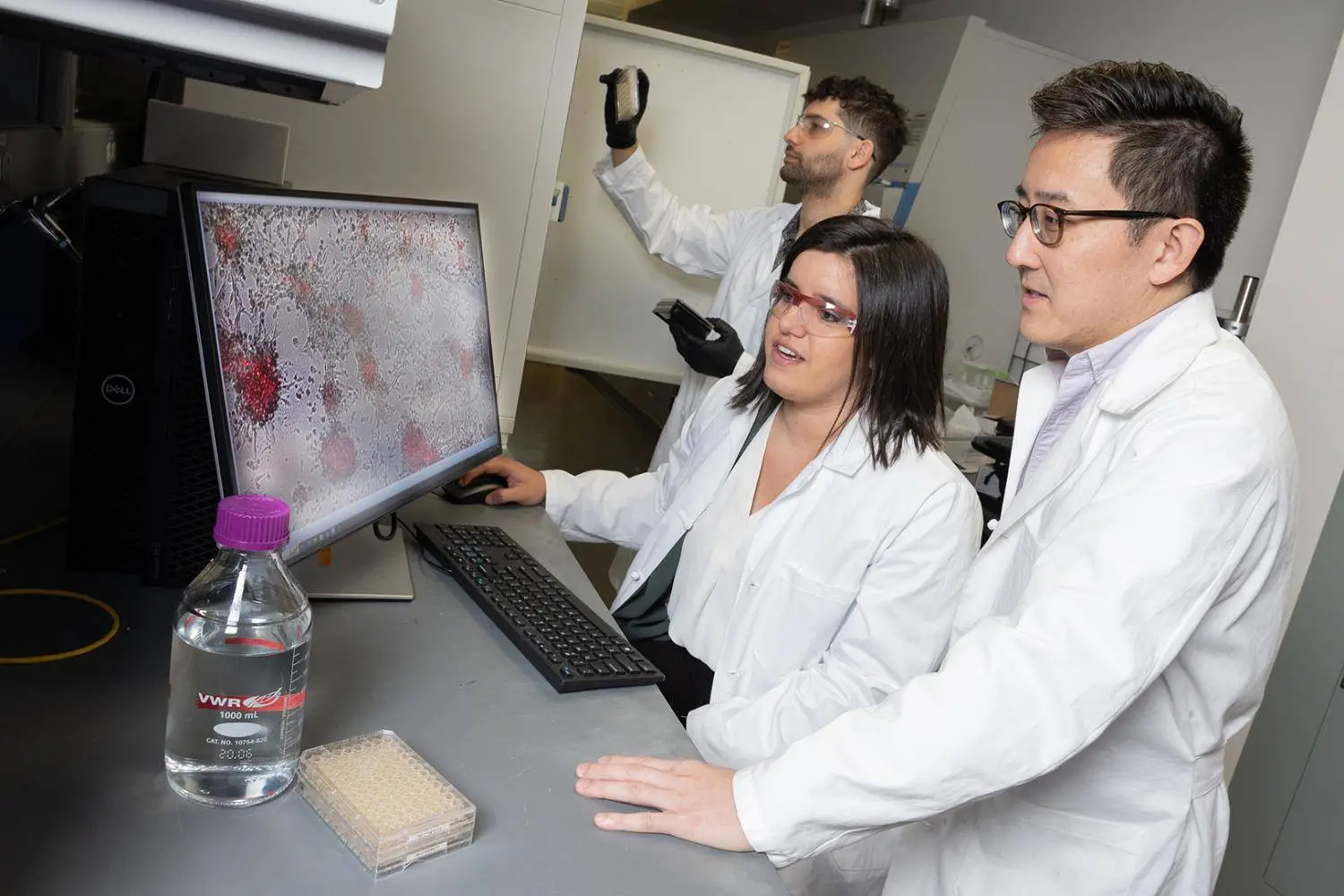
Students participated in the Energy Day poster session.
More than 300 leaders from industry, government, and academia gathered on Georgia Tech’s campus for Energy Day, a one-day conference focused on one of today’s most urgent challenges: meeting the rapidly growing energy demands of artificial intelligence (AI).
Held on March 19, the event was co-hosted by Georgia Tech’s Institute for Matter and Systems (IMS) and Strategic Energy Institute (SEI) with plenary support from the Energy Policy and Innovation Center. This year’s theme, Energy for AI, anchored discussions on how energy systems must evolve to support an increasingly digital and computer-intensive world.
“Energy Day demonstrates how critical it is to align research, industry, and policy to manage rising power demand and modernize our energy systems,” said Yuanzhi Tang, SEI’s executive director. “At Georgia Tech, we are committed to advancing solutions that translate research into impact at the speed innovation demands.”
This year’s Energy Day continued the momentum of past events, beginning with Battery Day in 2023. As research priorities have expanded, the event has grown to highlight Georgia Tech and the state of Georgia as national hubs for next-generation energy innovation, advanced manufacturing, and data-driven infrastructure.
The program was structured to foster high-level dialogue through keynote presentations and panel discussions, as well as deeper, focused tracks on specialized technical topics. The morning session featured a fireside chat between presenting sponsor GE Vernova and Georgia Tech Executive Vice President for Research Tim Lieuwen, followed by a keynote address from Vanessa Chan, former U.S. Department of Energy official and expert in commercialization and innovation, and two panels focused on policy, materials, and the evolving energy ecosystem.
“Great ideas usually come out when you bring together different perspectives,” said Eric Vogel, executive director of IMS. “That’s why we have this event. It helps scientists think more broadly, connects policymakers to science, and demonstrates the strength of Georgia Tech’s research community.”
In the afternoon, attendees split into three technical tracks addressing critical challenges at the intersection of energy and AI — from power delivery and storage to materials, infrastructure, and system resilience.
Designed to bring together researchers, policy makers, industry leaders, and students, Energy Day continues to drive interdisciplinary collaboration. Conversations throughout the day centered on three ideas: the magnitude and certainty of rising global energy demand, the urgency of scaling solutions efficiently, and the necessity of broad collaboration across research, industry, policy, and workforce pathways.
The event concluded with a student poster session featuring more than 20 research presentations, highlighting emerging work from across Georgia Tech. Three were recognized for excellence:
First place: Douglas Nelson — Improving Energy Efficiency in Fume Hoods and Ultra-Low Temperature Freezers
Finalist: Erik Barbosa — Multiscale Approach for Thermochemical Energy Storage in Buildings
Finalist: Ricardo Cruzado Valladares — Energy-Water Nexus for Sustainable AI Data Centers
News Contact
Amelia Neumeister | Communications Manager
The Institute for Matter and Systems