Jan. 12, 2026
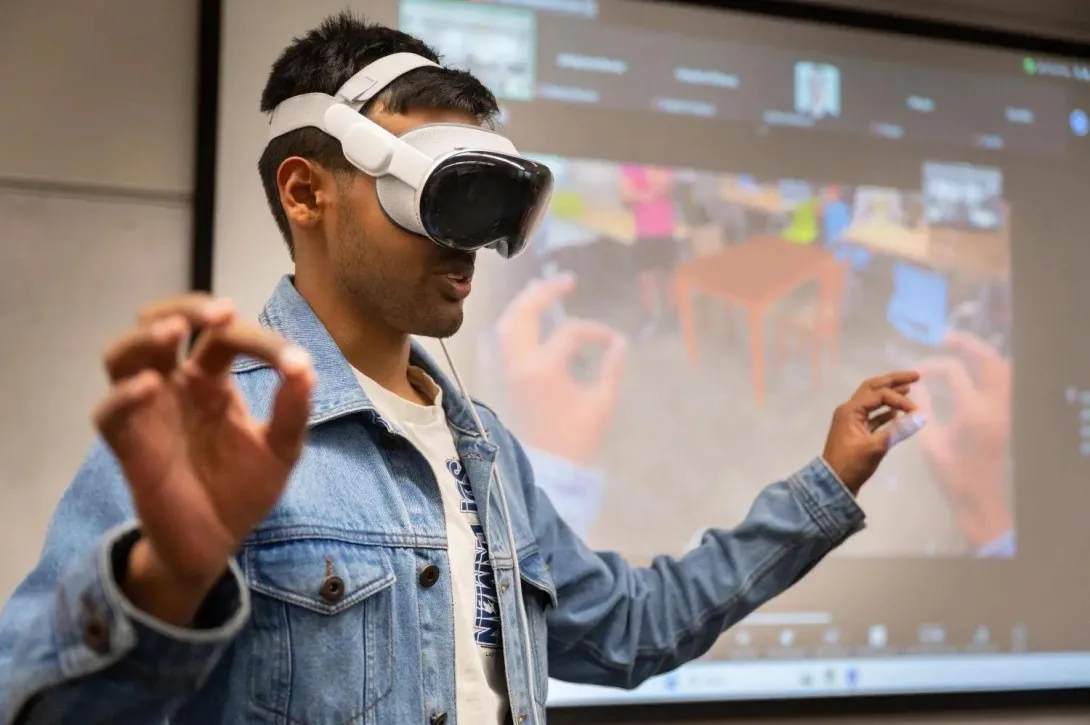
Georgia Tech student Yash Rajgure using an Apple Vision Pro headset device to demo his team's project in ECE 6001 Technology Entrepreneurship: Teaming, Ideation, and Entrepreneurship. Photo: Allison Carter, Georgia Tech
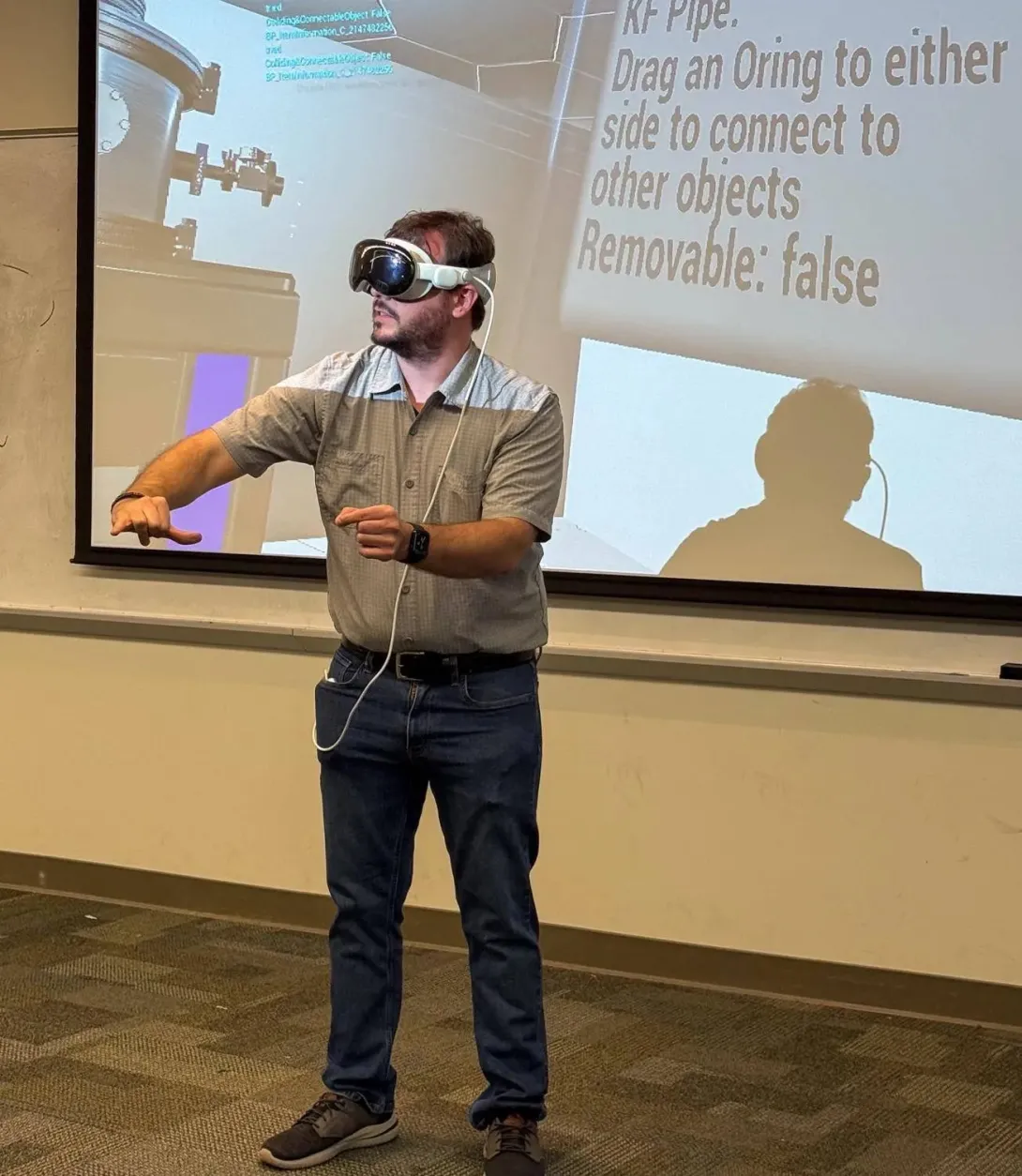
Gallmon showing how Apple Vision Pro can be utilized to train students and workers on sensitive and expensive technical equipment, in this case a cleanroom vacuum system.
Learning electrical and computer engineering has always come with a unique challenge: many of its foundational concepts — electric fields, magnetic forces, semiconductor behavior — are invisible to the naked eye and difficult to visualize.
To make these invisible principles tangible, students in the School of Electrical and Computer Engineering have long used specialized tools and software. Circuit simulators model voltage and current, electromagnetic tools visualize fields, and semiconductor design platforms reveal transistor behavior. These tools turn abstract theory into interactive experiences that prepare students for real-world engineering challenges.
Now, Apple Vision Pro is joining this ecosystem.
The technology introduces spatial computing to learning environments, blending digital content with the physical world.
At the Institute for Matter and Systems, infrastructure lead Alex Gallmon, is collaborating with students and industry partners to create immersive digital twins—virtual models that replicate real-world systems—of semiconductor cleanroom equipment.
“These machines are complex and costly, with parts that can run tens of thousands of dollars,” he said. “Even minor mistakes during operation can lead to expensive damage or downtime.”
Gallmon's team built a virtual replica of a cleanroom vacuum training system. The project serves as a prototype for a workforce development program aimed at high school and college students interested in careers in the semiconductor or vacuum technology fields.
Read the full story from the School of Electrical and Computer Engineering
News Contact
Dan Watson | School of Electrical and Computer Engineering