
Mar. 01, 2012
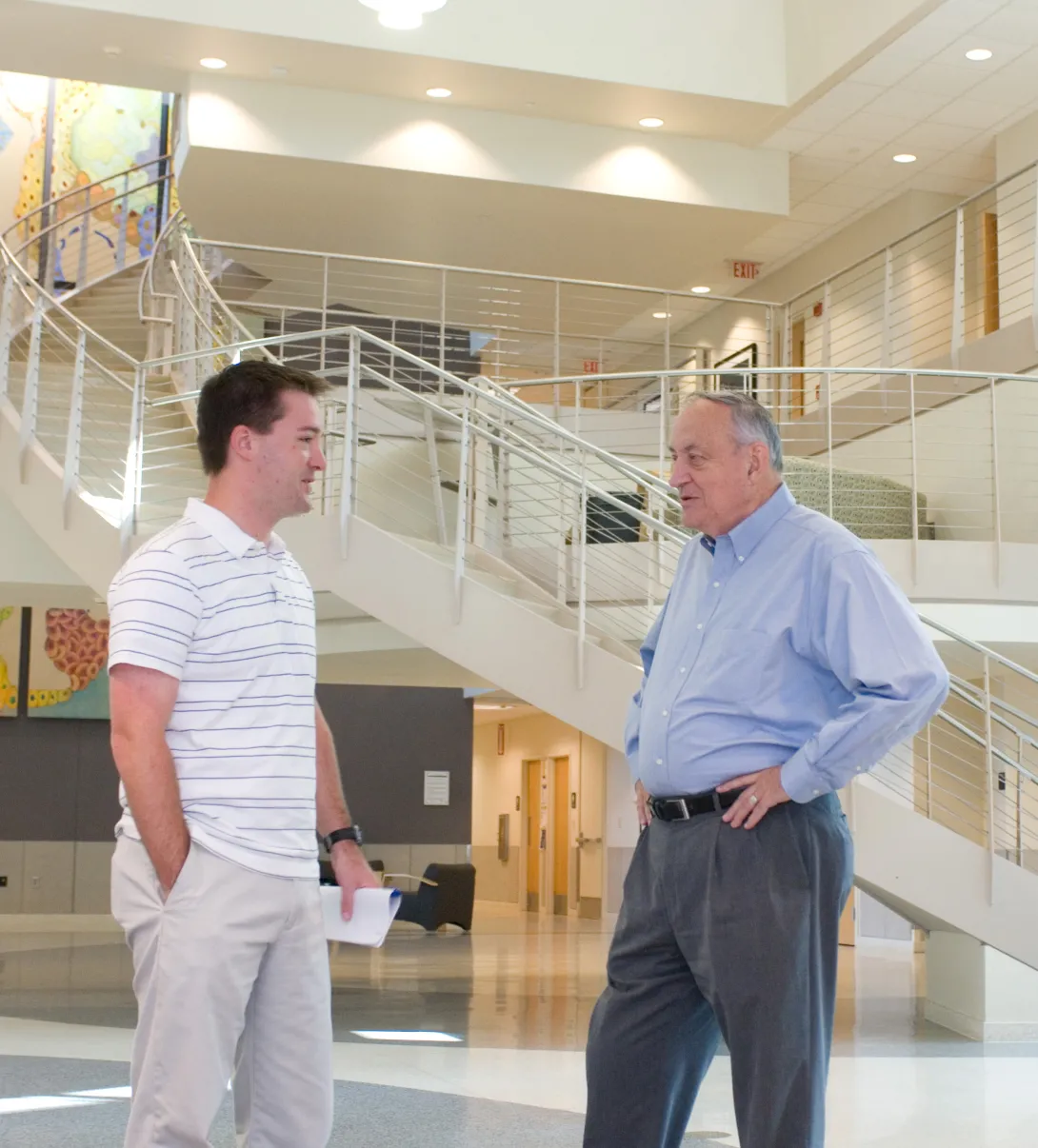
Robert M. Nerem, Ph.D., professor in mechanical engineering and Todd C.McDevitt, Ph.D., director of the Stem Cell Engineering Center at Georgia Tech,were invited by the lead sponsor, Semahat S.Demir Ph.D. of the National Science Foundation (NSF) to take part in aninternational assessment of the stem cell engineering field. Nerem willlead the panel and the findings of this study will result in recommendations tothe NSF and other funding agencies on future research directions andinvestments, recommendations on global initiatives with international partnersand public workshops.
The study, which is being conducted by the World Technology Evaluation Center(WTEC), aims to assess the current status and the trends of stem cellengineering, and compare U.S. research and development programs with thoseabroad. In addition to the NSF, the study is co-sponsored by the NationalInstitutes of Health (NIH) and the National Institute of Standards andTechnology (NIST).
“Tech is fortunate to have two out of the six experts on this panel,” Neremsaid. “It conveys Georgia Tech's nascent leadership in this relatively new andrapidly growing field and it is a great opportunity to provide input andleadership to our funding agencies and help our government understand wherebest to invest.”
President Obama, Congress and numerous states have recognized the value of stemcell research. Knowledge of research activities abroad will help to formulateand prioritize research directions to support President Obama's executive orderfor expanding stem cell research so that it has the greatest potential forclinical and commercial applications.
Dozens of companies have recently entered the stem cell engineering field insearch of clinical and commercial applications. There is clear impetusfor the U.S. to support stem cell research and continue its leadership in thebasic sciences for the betterment of humankind. A Congressional ResearchService report on stem cell research, which reviewed the political, moral andethical issues of the subject, indicated the strengthening interest andeconomic commitment for stem cell research in the U.S. and the rest of theworld.
This study will use WTEC's methodology and an expert panel of six to conductsite visits to overseas laboratories where work in stem cell engineering isdone. The panelists began their study in November, when they traveled to Chinaand Japan, and will continue their evaluation this week in Europe. Thesevisits, combined with the panel's own research experiences and assessments,will help shape a report. Like the previous WTEC studies on the tissueengineering and nanotechnology fields, this effort will act as a guide for U.S.research investments in this emerging field and will help identify key issuesof critical importance to program officers.
“This is an excellent opportunity to learn what other countries are doing andbenchmark against other programs in order to position the U.S. to becomeleaders in stem cell research and development,” said McDevitt, who is also anassociate professor in the Wallace H. Counter Department of BiomedicalEngineering at Georgia Tech and Emory University. “Manufacturing, clinicaltrials and commercializing stem cell-based products, if done strategically, issomething that could boost our nation’s economy.”
This week the scientists will travel to Denmark, France, Germany, Sweden and Switzerland. In addition to Nerem and McDevitt, other panelists include JeanneLoring, Ph.D., The Scripps Institute; Sean Palecek, Ph.D., University ofWisconsin; David Schaffer, Ph.D., University California at Berkeley; and PeterZandstra, Ph.D., University of Toronto.
WTEC is a non-profit 501(c)(3) research institute, which is a spin-off ofLoyola University Maryland. Since 1989, WTEC has provided such assessmentstudies in more than 60 fields of R&D under peer-reviewed grants from NSF.
News Contact
Marketing & Events
Parker H. Petit Institute for Bioengineering and Bioscience
Georgia Institute of Technology