

Glaucoma is the second leading cause of blindness. Nearly 4million Americans have the disorder, which affects 70 million worldwide. Thereis no cure and no early symptoms. Once vision is lost, it’s permanent.
New findings at Georgia Tech, published in January during GlaucomaAwareness Month, explore one of the many molecular origins of glaucoma andadvance research dedicated to fighting the disease.
Glaucoma is typically triggered when fluid is unable tocirculate freely through the eye’s trabecular meshwork (TM) tissue. Intraocularpressure rises and damages the retina and optic nerve, which causes vision loss.In certain cases of glaucoma, this blockage results from a build-up of theprotein myocilin. Georgia Tech Chemistry and Biochemistry Assistant ProfessorRaquel Lieberman focused on examining the structural properties of these myocilindeposits.
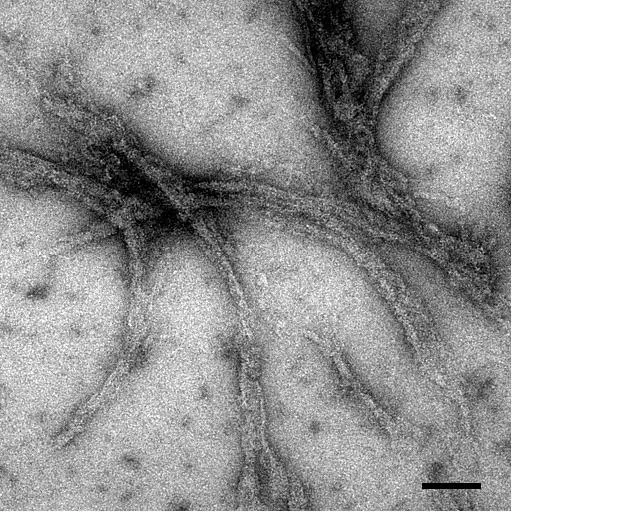
“We were surprised to discover that both genetically defectedas well as normal, or wild-type (WT), myocilin are readily triggered to producevery stable fibrous residue containing a pathogenic material called amyloid,”said Lieberman, whose work was published in the most recent Journal of Molecular Biology.
Amyloid formation, in which a protein is converted from itsnormal form into fibers, is recognized as a major contributor to numerousnon-ocular disorders, including Alzheimer’s, certain forms of diabetes and MadCow disease (in cattle). Scientists are currently studying ways to destroyamyloid fibrils as an option for treating these diseases. Further research,based on Lieberman’s findings, could potentially result in drugs that preventor stop myocilin amyloid formation or destroy existing fibrils in glaucomapatients.
Until this point, amyloids linked to glaucoma had beenrestricted to the retinal area. In those cases, amyloids kill retina cells,leading to vision loss, but don’t affect intraocular pressure.
“The amyloid-containing myocilin deposits we discovered killcells that maintain the integrity of TM tissue,” said Lieberman. “In additionto debris from dead cells, the fibrils themselves may also form an obstructionin the TM tissue. Together, these mechanisms may hasten the increase ofintraocular pressure that impairs vision.”
Together with her research team, Lieberman produced WT andgenetically defected myocilin variants that had been documented in patients whodevelop glaucoma in childhood or early adulthood. The experiments wereconducted in collaboration with Georgia Tech Biology Professor Ingeborg Schmidt-Kreyand Stanford Genetics Professor Douglas Vollrath. Three Georgia Techstudents also participated in the research: Susan Orwig (Ph.D. graduate,Chemistry and Biochemistry), Chris Perry (current undergraduate, Biochemistry)and Laura Kim (master's graduate, Biology).
The National Institutes of Health (award numberR01EY021205 from the National Eye Institute) funded the research. The contentis solely the responsibility of the authors and does not necessarily representthe official views of the National Eye Institute or the National Institutes ofHealth.
News Contact
Jason Maderer
Georgia Tech Media Relations
404-385-2966
maderer@gatech.edu