
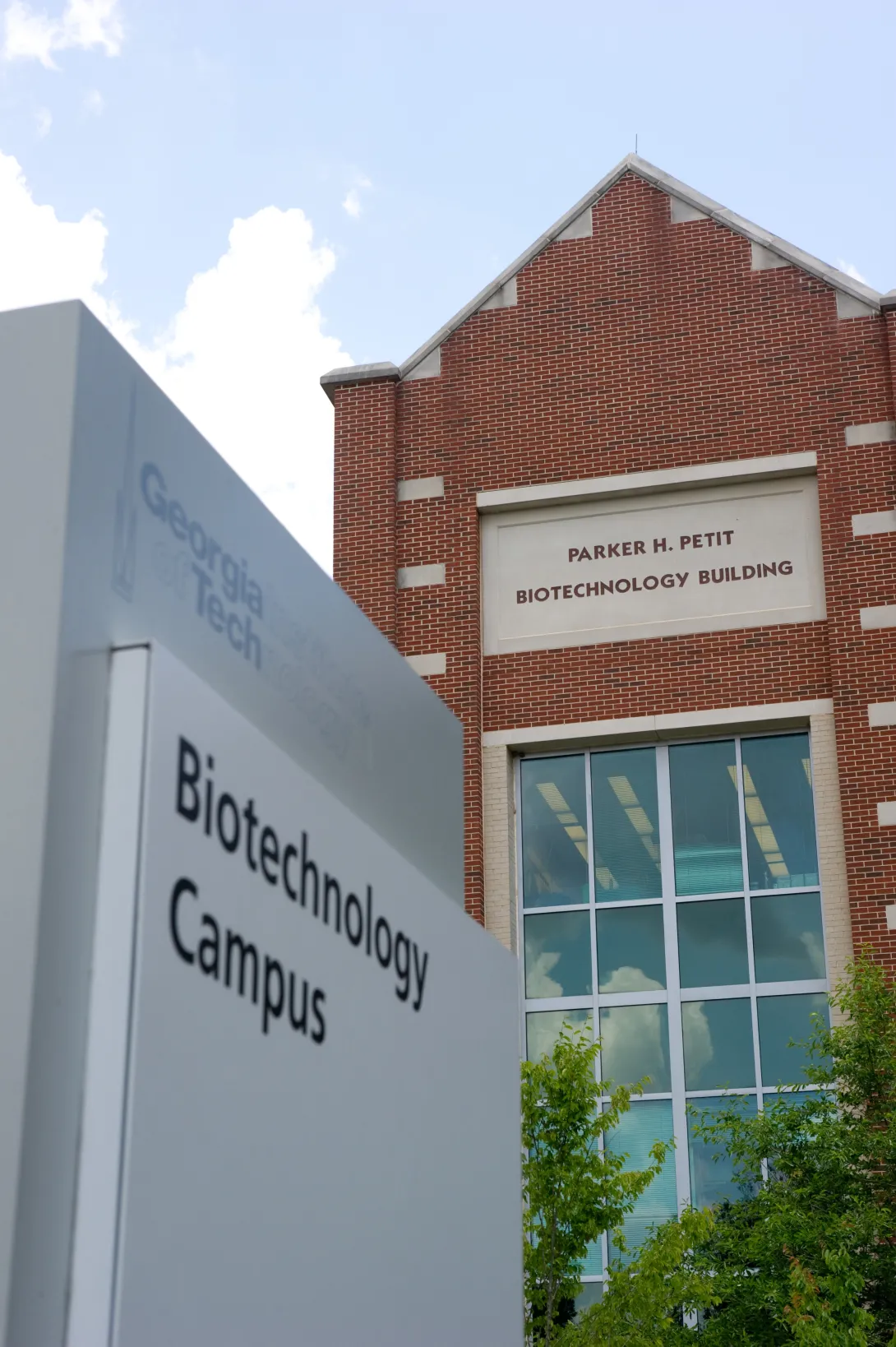
TheParker H. Petit Institute for Bioengineering and Bioscience awarded $100,000 totwo interdisciplinary teams under a new initiative, the PetitBioengineering and Bioscience Collaborative Grant program, which was created to supportearly-stage innovative biotechnology research.
The seed grant recipients address a wide range oftopics including profiling singlecells to understand the heterogeneity of different cell types and newapproaches to traumatic brain injury. Thecall for proposals was welcomed by teams of Petit Institute faculty with onefaculty member from Georgia Tech’s College of Science and one from the Collegeof Engineering.
“This new program aims to promote the collaborationof new teams of researchers and help them establish preliminary results toapply for large external grant proposals,” said Robert Guldberg, PhD, directorof the Petit Institute. “This initiativeis directly in-line with the Petit Institute’s mission, funding cutting-edgeresearch at the interface of bioengineering and the biosciences.”
MelissaKemp, assistant professor in the Wallace H. Coulter Department for BiomedicalEngineering and Greg Gibson, professor in the School of Biology, proposed aproject which aims to develop the measurement tools for relating variability in both genomicand protein information at the single cell level. The ability to conduct this type ofprofiling in single cells represents a remarkable technological advance in thelast two years.
“Studies ofgenomic data often fail to bridge the observed variation in DNA sequences tocellular function, in part due to the variation that is present by both typesof measurement,” Kemp said, “with the technologies this project is developing,we will be able to compare population-averaged data to single cell measurementsin order to gain new insight in relating genes to phenotype.”
MichelleLaPlaca, associate professor in the Wallace H. Coulter Department of BiomedicalEngineering and Al Merrill, professor in the School of Biology, are partneringto merge traumatic brain injury with lipid biology in the hopes of evaluating, for thefirst time, plasma membrane breakdown mechanisms and lipid signaling followingtraumatic brain injury.
“Traumatic brain injury remains a major clinical problem with few effectivetreatments and the devastating sequelae following this type of injury leads tochronic neural deficits,” LaPlaca stated. “We are optimistic that these fundswill propel this important research forward.”
Fundingfor the new seed grants comes chiefly from Petit Institute's endowment as well as contributionsfrom the College of Science and College of Engineering. Each team will receive $50,000 a year for twoyears, however, the second year of funding will be contingent on submission ofan external collaborative grant proposal by July 2012.
News Contact
Marketing Communications Director
Parker H. Petit Institute for Bioengineering and Bioscience
404-385-7001